How Bigpanda Revenue Surged by $35 Million: Insights from CEO Assaf Resnick
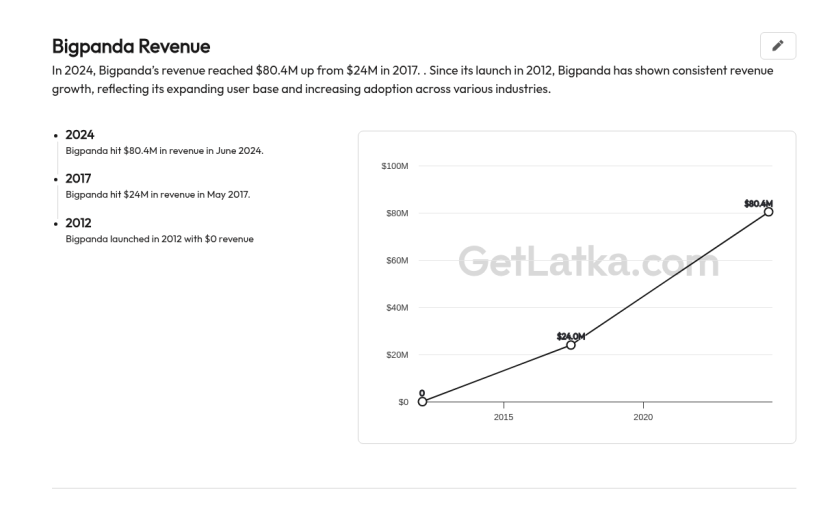

Launching a startup is no small feat, and scaling it to significant revenue benchmarks is an even bigger challenge. Yet, Assaf Resnick, the CEO of Bigpanda, managed to do just that with his company, an algorithmic IT operations platform that has taken the SaaS world by storm. Founded in 2012 in the tech hub of Tel Aviv, Bigpanda now operates out of both Tel Aviv and Palo Alto, employing around 60 individuals split between engineering and go-to-market teams. This post will explore the journey of how Bigpanda achieved its revenue targets, focusing on strategic decision-making, product evolution, and market positioning.
2012: Founding Bigpanda with a Vision
Bigpanda was founded with a clear mission: to simplify and automate how IT operations manage data centers that have radically evolved over the years. Assaf Resnick, who previously worked at Sequoia Capital, identified a significant gap in the market. The world spends over a trillion dollars annually on IT operations, a substantial portion of which is directed toward maintaining and running software and infrastructure. However, with the transformation of data centers, traditional methods were no longer effective, leading to inefficiencies and an overwhelming amount of data noise.
2015: $30 Million Series B and Strategic Growth
Three years into its journey, Bigpanda raised a substantial $30 million in Series B funding, with backing from renowned investors like Sequoia, Mayfield, and Battery. This influx of capital was a strategic move to bolster the company’s balance sheet and prepare for market expansion. The funding allowed Bigpanda to invest heavily in product development and customer acquisition, paving the way for significant growth.
Resnick describes this period as critical for building a robust playbook for scaling the business. The capital raised was not merely a financial buffer but a catalyst for executing a well-defined go-to-market strategy. This strategic approach was essential for securing large enterprise clients, which form the backbone of Bigpanda’s revenue model.
2016-2017: Expanding the Customer Base
During these years, Bigpanda focused on expanding its customer base, particularly targeting Fortune 500 companies. The company secured contracts with at least 20 Fortune 500 clients, showcasing its ability to cater to large-scale enterprises. These contracts, often valued in the high six figures, sometimes scaling to millions of dollars, were pivotal in driving revenue growth.
Bigpanda’s approach was not about acquiring thousands of customers but rather focusing on high-value contracts that could significantly impact the bottom line. This strategy allowed the company to scale its operations efficiently without overextending its resources.
2018: Machine Learning and Product Innovation
A key aspect of Bigpanda’s success has been its innovative use of machine learning to filter and prioritize IT alerts. The platform’s ability to reduce noise and highlight critical issues has been a game-changer for IT operations teams. This innovation not only improved customer satisfaction but also positioned Bigpanda as a leader in the IT operations management space.
The dynamic clustering and machine learning capabilities allowed Bigpanda to provide both reactive and preventative solutions, a unique selling point that resonated well with enterprise clients. This technological edge was crucial in maintaining a competitive advantage in a rapidly evolving industry.
2019: Revenue Milestones and Market Leadership
By 2019, Bigpanda was well on its way to hitting significant revenue milestones. With an average contract value approaching the million-dollar mark, the company had successfully positioned itself as a leader in the IT operations platform market. The strategic focus on large enterprises and the continuous innovation in product offerings were key drivers of this revenue growth.
Bigpanda’s success can also be attributed to its stellar team, which remains evenly split between engineering and go-to-market functions. This balance ensures that the company continues to innovate while effectively reaching and servicing its target market.
2020: Navigating Challenges and Scaling Operations
Like many companies, Bigpanda faced challenges in 2020, but its strong foundation allowed it to navigate these effectively. The company continued to focus on scaling operations and expanding its reach within the Fortune 500. With its headquarters in Palo Alto and a strong engineering base in Tel Aviv, Bigpanda was well-positioned to attract top talent and drive further innovation.
Conclusion: Strategic Growth and Future Prospects
Bigpanda’s journey is a testament to the power of strategic growth, innovation, and market positioning. From its roots in Tel Aviv to becoming a key player in the global IT operations market, the company has consistently demonstrated its ability to adapt and thrive. With a solid base of high-value enterprise clients and a continued focus on product innovation, Bigpanda is poised for ongoing success in the years to come.
For more insights into how other companies are scaling in the AI and machine learning operationalization industry, check out the GetLatka industry category page. Additionally, explore Bigpanda’s company profile on GetLatka and visit their official website at bigpanda.io.
Recent Articles

How 1Mind Achieved Rapid Revenue Growth with AI-Driven Sales Solutions
The journey of 1Mind, under the leadership of CEO Amanda Kahlow, is a remarkable testament to the power of innovative…

How Rev Grew to $10M Revenue Using AI and Strategic Expansion
In the ever-evolving landscape of the automotive repair industry, Rev has positioned itself as a pivotal player, thanks to the…

How Test-Company Achieved $1M ARR and Expanded to 100 Employees
Test-company has emerged as a significant player in the ‘Other Agency’ industry, achieving impressive growth milestones such as reaching $1…