How Arcads Hit $6 Million Revenue in 16 Months With Just 5 Employees


Romain Torres and his team at ARCads.ai just achieved something that should be impossible: $6 million in annual recurring revenue with only 5 employees. That’s $1.2 million in revenue per employee—a metric that would make most SaaS founders weep with envy.
But here’s what makes this story even more remarkable: they’re completely bootstrapped, profitable, and growing at breakneck speed. In fact, they added $1 million in ARR in a single month between April and May 2025.
If you’re a software founder, investor, or advisor wondering how the hell they pulled this off, you’re about to discover the exact playbook Romain used to build one of the most efficient SaaS companies I’ve ever analyzed.
The $5,000 First Week: How to Achieve Instant Product-Market Fit
Most founders spend months or years searching for product-market fit. Romain found it in seven days.
When ARCads.ai launched in January 2024, they hit $5,000 in monthly recurring revenue in their first week. Not their first month—their first week.
This wasn’t luck. Romain had built a 7-figure mobile app called WeFirst, a fasting app for women, and spent months running paid ads and testing UGC (user-generated content) creatives. Through this experience, he discovered a massive pain point: creating winning ads with real UGC actors was expensive, time-consuming, and difficult to scale.
“We realized this is something that’s going to be completely changed with AI and we decided this is a much bigger opportunity than this mobile app studio that we are working on,” Romain explained.
The lesson here isn’t just about identifying problems—it’s about solving problems you’ve personally experienced at scale. Romain wasn’t guessing at market demand; he was living it every day as he spent significant budget on UGC creators for his own app.
Here’s how you can replicate this approach:
Document every friction point in your current business operations. What tasks cost you time, money, or cause you frustration? These are often your best startup ideas.
Validate through your own wallet. If you’d pay for a solution immediately, other people in your situation probably would too.
Start with a micro-niche you understand deeply. Romain started by serving mobile app advertisers because that’s exactly what he was.
The result? When they launched ARCads.ai privately to “a couple of friends in the industry,” they immediately saw demand because Romain had been networking in this exact space for months.
How to Hit $1M ARR in 5 Months: The Product-Led Growth Formula
ARCads.ai crossed $1 million in ARR by June 2024—just five months after their January launch. This trajectory isn’t typical, even for successful SaaS companies.
Their secret was building a product that creates its own marketing content.
“We use our own tool to promote our tool,” Romain said. “We do paid ads on Meta to basically show what the tool can do, and we just prove it works by using it.”
Think about the psychological impact of this approach. When prospects see ARCads.ai’s advertisements, they’re not just seeing marketing copy—they’re seeing a live demonstration of the product’s capabilities. Every ad is proof of concept.
This creates a powerful feedback loop:
- Better ads drive more customers
- More customers provide more data on what works
- More data helps them create even better ads
- Better ads drive more customers
Here’s how to implement this strategy in your own SaaS:
Make your product part of your marketing stack. If you’re building project management software, use it to manage your own marketing campaigns and showcase the results. If you’re building analytics tools, publish case studies showing how you use your own data to grow.
Document everything you learn. Romain mentioned they learned “the tactics and all the genius it takes to scale an app with paid ads” while running their previous business. This knowledge became their competitive advantage.
Start with perfect customer empathy. Because Romain was exactly the type of customer ARCads.ai serves, he knew which features would drive immediate value and which were nice-to-haves.
The result was a product that solved real problems from day one, not theoretical problems discovered through customer interviews.
The $1M Month: How to Add 8-Figure Revenue Growth in 30 Days
Between April and May 2025, ARCads.ai added $1 million in new ARR. In a single month. While adding just one new team member.
This kind of growth doesn’t happen by accident. It happens when you’ve built systems that can scale without human intervention.
Romain’s secret weapon: over 100 AI agents built using Gumloop that handle everything from competitor research to content creation to lead generation.
“I have one that basically will send me messages in Slack every single day when my competitors run new ads that are worth replicating,” Romain explained. “It will scrape the ads libraries, download the ads from Facebook ads of my competitors, take the transcript of this ad, send it to ChatGPT, and then ChatGPT will rewrite the same ads but for ARCads.”
Let that sink in. While most founders manually research competitors and brainstorm ad ideas, Romain has automated the entire process. His AI agents work 24/7, identifying opportunities and creating ready-to-test content.
Here’s the framework he uses to decide what to automate:
Target repetitive, high-volume tasks first. Competitor research, content creation, and lead sourcing are perfect candidates because they require consistent execution but follow predictable patterns.
Focus on tasks where AI excels. “AI is very good at duplicating stuff,” Romain noted. Rather than asking AI to be creative, he feeds it examples of what works and asks it to create variations.
Build feedback loops into your automation. Romain doesn’t just generate content automatically—he has systems that analyze performance and feed that data back into future content creation.
The key insight: Romain isn’t using AI to replace human creativity. He’s using it to amplify human pattern recognition at inhuman scale.
The 3-Channel Growth Engine: How to Build a $6M Revenue Machine
ARCads.ai’s growth comes from three main channels, each optimized for scale and efficiency:
Channel 1: Paid Ads (Primary Driver) Using their own product to create ads for their own product creates a virtuous cycle. Every dollar spent on ads provides two benefits: customer acquisition and product validation.
Channel 2: Content Marketing This includes Romain creating content on LinkedIn and Twitter, but also “partnering with other people who create good content—content creators who are already posting about ads, about how to do marketing, or about AI in general.”
Channel 3: Direct Sales They’ve built AI agents to identify companies spending significant money on paid ads, then use automated outreach to start conversations with these high-value prospects.
The brilliance of this approach is channel synergy. Paid ads drive awareness and demonstrate product value. Content marketing builds trust and thought leadership. Direct sales captures high-value customers who might not convert through self-service channels.
Most importantly, all three channels are enhanced by their AI automation. They’re not just running three separate growth engines—they’re running three AI-enhanced growth engines that operate at scale without proportional increases in headcount.
The 100+ Agent Arsenal: How to Replace $100K Employees with AI
Romain has built over 100 AI agents using Gumloop. These aren’t simple chatbots—they’re sophisticated workflows that handle complex, multi-step processes.
Here’s a breakdown of how he approaches AI automation:
Start with documentation. Before building any agent, Romain documents examples of good performance. For tweet generation, he maintains a Google Doc with examples of high-performing posts. For ad creation, he analyzes competitor ads that drive results.
Feed AI examples, not instructions. Rather than telling AI how to write a good hook, he shows it 30 examples of good hooks and asks it to create something similar. “My understanding of where ChatGPT really excels is not when you give them tips on ‘this is how you write a good hook,’ but it’s more like ‘do this, but in a different way.'”
Build compound workflows. His most sophisticated agents combine multiple steps: scrape competitor data → analyze performance → generate new content → format for specific platforms → send alerts to team members.
Create feedback mechanisms. Many of his agents don’t just create content—they analyze performance data and improve future outputs based on what works.
The economic impact is staggering. A good growth engineer might cost $100,000+ per year. Romain’s AI agents handle the work of multiple growth engineers for a fraction of the cost, allowing his 5-person team to compete with much larger organizations.
The Bootstrapped Advantage: How to Build Profitably from Day One
ARCads.ai is completely bootstrapped and profitable. When I pressed Romain on profit margins, he would only say they maintain “very healthy profit margins.”
This isn’t an accident. It’s a strategic advantage that influences every decision they make.
Forced efficiency: When you can’t raise money to solve problems, you have to build systems and processes that work efficiently from the start.
Customer-driven development: Without investor pressure to hit arbitrary metrics, they can focus entirely on building features customers actually want and will pay for.
Sustainable growth: Every dollar they spend on growth comes from revenue, not investor funds. This means their growth tactics must work immediately and consistently.
Competitive moats: Their AI automation and operational efficiency become true competitive advantages because they’re not easily replicated by well-funded competitors who rely on human-intensive processes.
The lesson for other founders: venture funding can accelerate growth, but it can also mask fundamental business problems. Romain’s approach proves that with the right systems and automation, you can achieve venture-scale growth with bootstrap-level efficiency.
The Revenue Per Employee Secret: How to Hit $1.2M Per Person
$1.2 million in revenue per employee is an extraordinary metric. For context, most successful SaaS companies celebrate when they hit $200,000-$400,000 in revenue per employee.
ARCads.ai achieves this through what I call “AI-amplified human expertise.” Each team member isn’t just executing tasks—they’re building and managing systems that execute tasks at scale.
Here’s how they structure their operations:
Technical leverage: Their engineers don’t just write code—they build AI agents that can perform complex workflows autonomously.
Marketing leverage: Their marketing team doesn’t just create content—they build systems that can identify high-performing content patterns and generate variations automatically.
Sales leverage: Rather than manually prospecting, they’ve automated the entire lead qualification and initial outreach process.
Product leverage: By using their own product for marketing, every feature improvement directly impacts their growth metrics.
The key insight: they’ve eliminated the linear relationship between headcount and output. Adding one employee doesn’t just add one person’s worth of productivity—it adds one person’s ability to build and manage AI systems that can do the work of many people.
The 4,000 Customer Playbook: How to Scale Customer Acquisition
With 4,000 customers and counting, ARCads.ai has proven they can acquire customers efficiently across multiple channels.
Their customer acquisition strategy relies on three core principles:
Product-market fit validation through usage: They don’t just track signup metrics—they track how customers actually use the product. High usage indicates strong product-market fit, which makes acquisition more efficient.
Content-driven education: Many potential customers don’t fully understand what AI actors can do for their advertising. ARCads.ai uses content marketing to educate the market while demonstrating their expertise.
Community amplification: Romain mentioned that some of their most successful customers are “teens, 16 years old” who “go really deep into this strategy using ARCads and sometimes do really, really good revenue. Like sometimes six figures a month without any paid ads budget.”
These power users become natural advocates, sharing their results and attracting other customers organically.
The AI-First Operating System: How to Build Your Own Agent Army
Romain’s success with over 100 AI agents isn’t just about the tools—it’s about the systematic approach to identifying automation opportunities.
Here’s his framework for building AI agents:
Start with high-frequency, low-complexity tasks. Social media posting, competitor monitoring, and lead scoring are perfect starting points because they happen regularly and follow predictable patterns.
Document your best examples before automating. Every agent Romain builds starts with a collection of high-performing examples. This gives the AI clear patterns to replicate.
Build in feedback loops. The best agents don’t just execute tasks—they learn from results and improve over time.
Connect agents in workflows. Individual agents are useful, but connected workflows that span multiple steps create exponential value.
Monitor and iterate constantly. Romain doesn’t just set up agents and forget them. He continuously monitors performance and refines the prompts and workflows based on results.
The result is an operating system that gets more powerful over time, rather than more complex.
The Meta Mastery Model: How to Use Your Product to Market Your Product
One of ARCads.ai’s most powerful competitive advantages is their ability to use their own product for marketing. This creates several benefits:
Credibility: Every ad they run is a live demonstration of their product’s capabilities. Prospects can see exactly what the tool produces.
Continuous improvement: Using their own product daily means they identify improvement opportunities faster than competitors who rely on customer feedback alone.
Cost efficiency: They can test unlimited creative variations because they can generate them instantly with their own tool.
Market education: Many prospects don’t fully understand what AI actors can do. Seeing high-quality examples in ARCads.ai’s own marketing helps educate the market.
Feedback acceleration: Problems with the product become immediately apparent when they affect their own marketing performance.
This approach works for any B2B SaaS company. If you’re building project management software, use it to manage your own projects and showcase the results. If you’re building analytics tools, publish case studies showing how your own data drives decisions.
The Future of Efficient SaaS: Lessons for Every Founder
ARCads.ai’s story represents more than just one company’s success—it’s a preview of how AI will reshape software businesses.
The new leverage: Traditional SaaS companies scale by hiring more people. AI-enhanced companies scale by building better systems. This creates sustainable competitive advantages that are difficult to replicate.
The expertise premium: Companies led by founders with deep domain expertise will have significant advantages in building AI systems that actually work, rather than just generating content.
The automation imperative: As AI capabilities improve, companies that don’t automate repetitive tasks will be at severe cost disadvantages compared to those that do.
The bootstrap renaissance: AI tools level the playing field between bootstrapped companies and venture-funded competitors. Small teams with good systems can compete with large teams using manual processes.
Romain’s success with ARCads.ai proves that the future belongs to founders who can combine deep domain expertise with systematic AI implementation. The companies that figure this out first will build sustainable competitive advantages that are almost impossible to overcome.
The question isn’t whether AI will reshape SaaS businesses—it’s whether you’ll lead the change or get left behind by competitors who embrace it faster.
For software founders, investors, and advisors, ARCads.ai offers a clear roadmap: identify problems you understand deeply, build solutions that create their own marketing content, and use AI to amplify human expertise rather than replace it.
The result? $6 million in ARR with 5 employees, $1.2 million in revenue per employee, and a business model that gets more efficient as it scales.
That’s not just impressive—it’s the future of software businesses.
Recent Articles
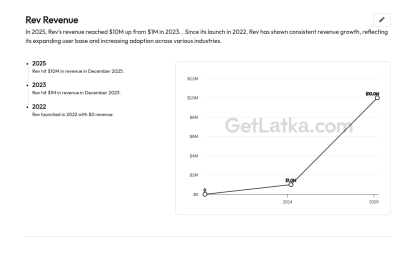
How Rev's CEO Adi Bathla Drove Revenue to $10M by Revolutionizing Auto Shop Workflows
Building a company from scratch and driving it to hit significant revenue milestones is no small feat. Adi Bathla, the…
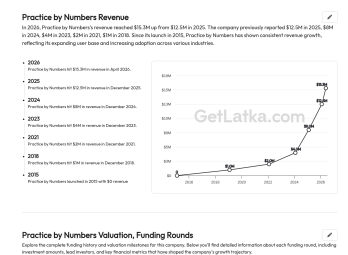
How Practice by Numbers Achieved $16.5M Revenue in 2026 with Innovative SaaS Solutions
2015: Launched Practice by Numbers to Fill a Market Gap Practice by Numbers (PBN), co-founded by Rohit Garg and Dr.…
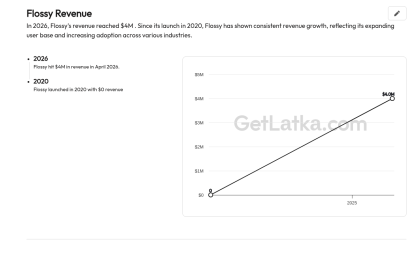
How Flossy Achieved $4M Revenue and Continues to Grow with AI Innovations
In a rapidly evolving world, where technology and healthcare intersect more intricately than ever, Flossy has emerged as a beacon…