7 Key Lessons BrightEdge Used to Grow to $100M in Revenue (ARR)

In an in-depth interview, Jim Yu, co-founder of BrightEdge, provides a roadmap filled with lessons learned during the company’s ascent from a modest startup to a leading SaaS organization, boasting over $100 million in revenue. Yu shares candid insights and strategic wisdom, illuminating the pivotal steps and challenges at each stage of revenue growth.
Jim distilled them down into 7 key lessons.
How Jim Took BrightEdge to Over $100M In Annual Recurring Revenue (ARR)
Here’s a quick overview:
Lessons 1-3 (Companies $1M to $20M):
1. Focus on building a solid team foundation.
2. Determine readiness to scale by perfecting the business model.
3. Establish and run effective operational cadences.
Lessons 4-7 (Companies $20M to $100M+):
4. Strategy becomes paramount in sustaining growth.
5. Leadership quality is critical: “A’s hire A’s, but B’s hire C’s, and your entire organization will get destroyed.”
6. Emphasize understanding the core motivation or ‘why’ of the business.
7. Always be benchmarking
Let’s take a closer look at each of the lessons Jim’s learned in his 17 years building the company.
Lesson 1: Team and Organizational Structure
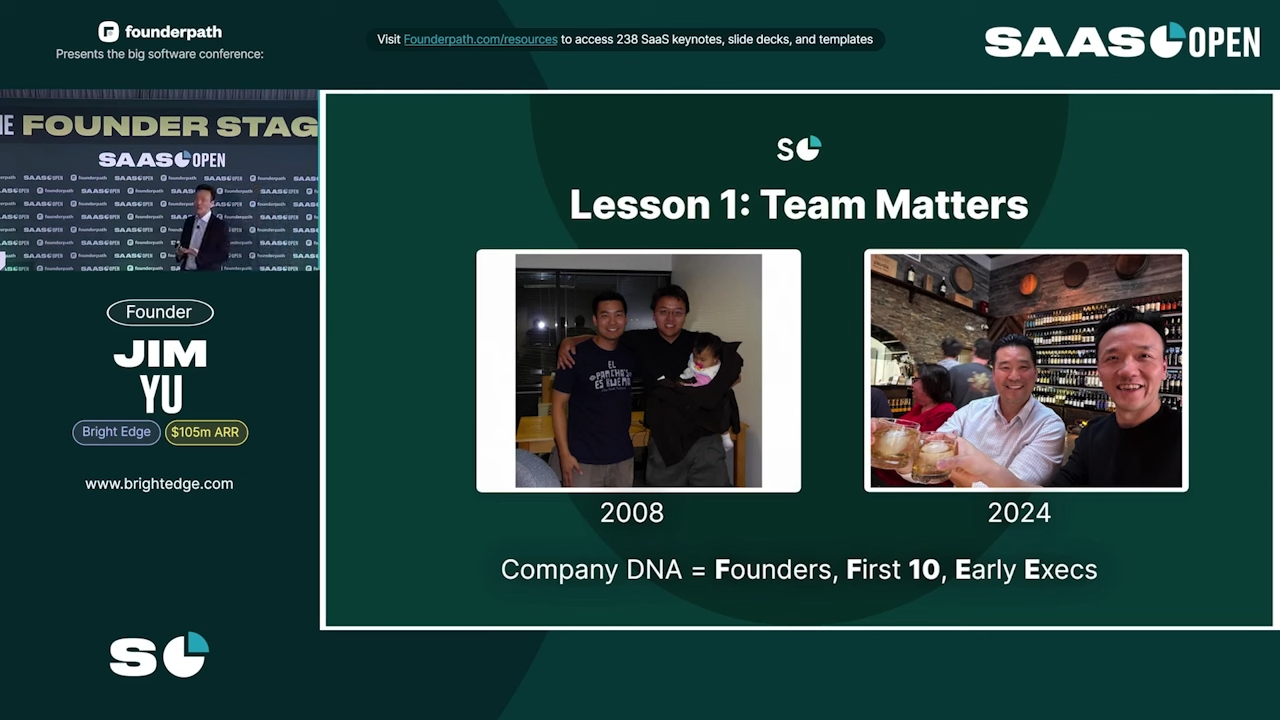
“The DNA of our company springs from the founders and the early team,” Jim Yu emphasizes.
From its inception, BrightEdge was meticulously built on a foundation of shared values and core principles, which were consistently revisited by the founders every 2-3 months. This approach not only influenced their hiring strategy but also laid a strong cultural baseline for the company.
“You end up hiring people for their skills, but you fire them for who they are.”
Yu stressed the importance of alignment in values when recruiting, which ensures resilience in a company’s growth.
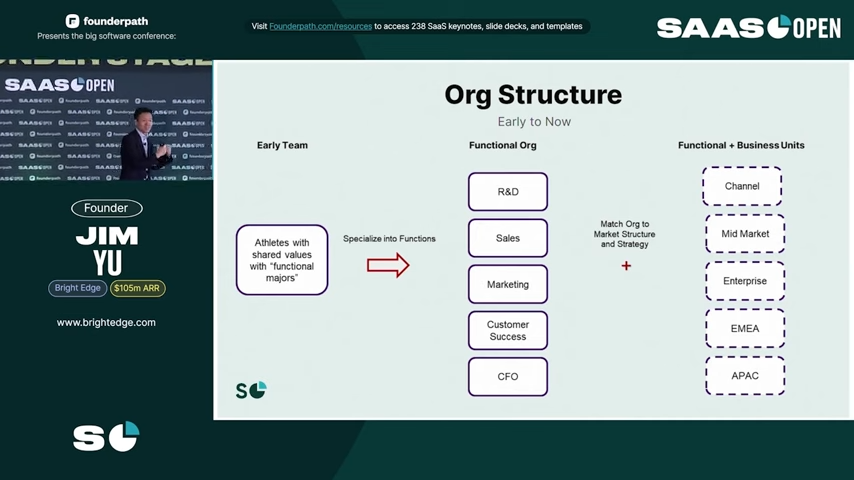
As the company expanded, the need for a more structured organizational framework became evident. Initially operating as a versatile team focused on developing the product and identifying the Ideal Customer Profile (ICP), the company shifted to a phase of specialization once these foundational elements were solidified.
“We systematized sales, finances, and more into scalable playbooks and processes,” Yu explains. This systematization was crucial until the market began showing signs of segmentation, necessitating an organizational overlay to focus effectively on different market segments.
Lesson 2: Nail it Before You Scale It
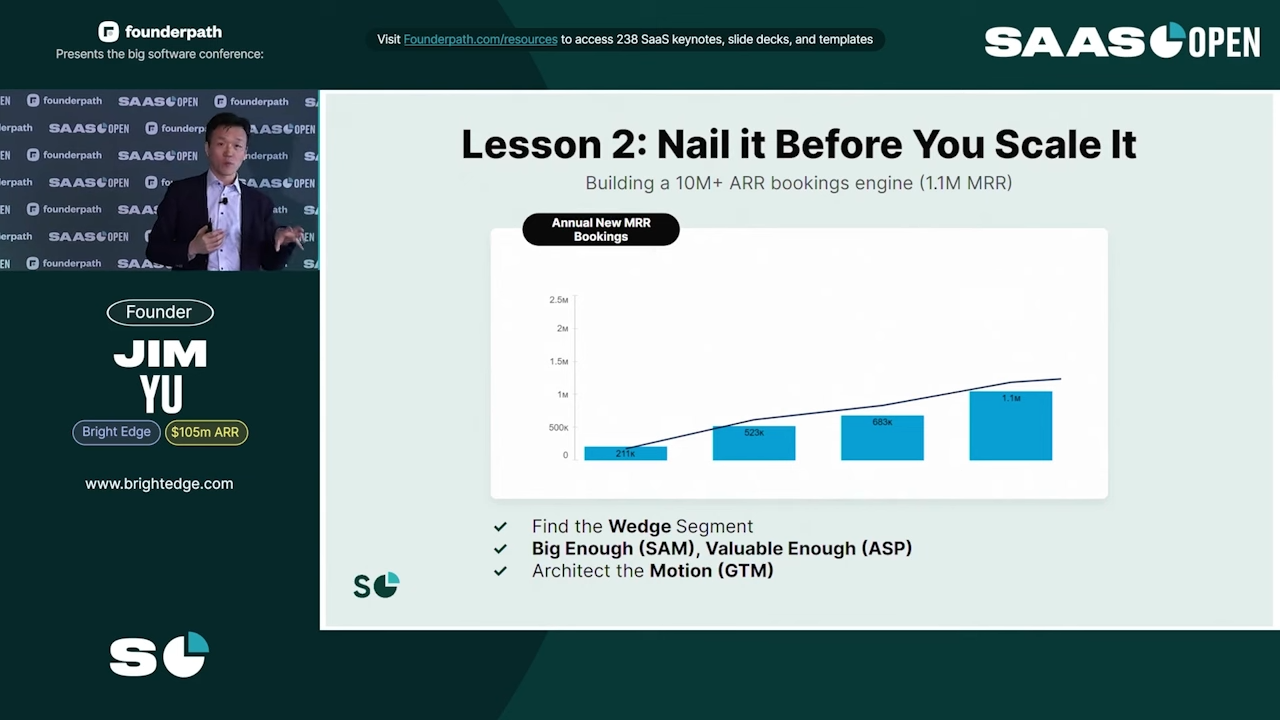
Yu highlighted the importance of careful preparation before scaling. Identifying early adopters and ensuring there is a substantial serviceable addressable market are critical steps.
The Average Selling Price (ASP) must also support the go-to-market strategy, aligning with the economic viability of scaling efforts.
Ask:
- Who are the early adopters?
- Who are the ICPs?
- Is there a large enough serviceable addressable market?
- What can you actually hit?
- Is the ASP high enough to reach Go-To-Market Motion and architecture?
Jim shares when you find the combination of these, and the baseline economics work, then you can scale.
Lesson 3: Run Cadences
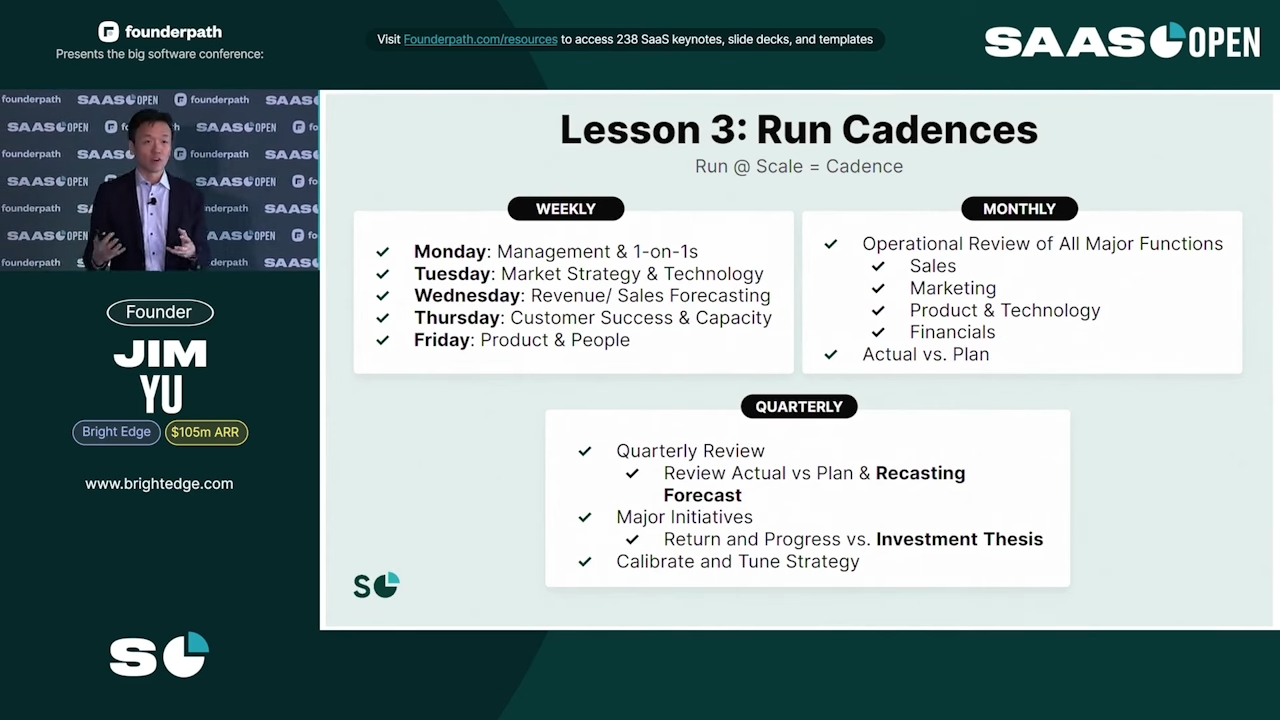
“Cadences become the operating system of your business,” Yu states, underscoring the importance of structured cadences that dictate the weekly and monthly rhythms of business operations.
This approach is vital for managing growth effectively, ensuring every part of the organization is aligned with its growth objectives.
Yu gives examples of how BrightEdge structures its week:
“Mondays are reserved for management meetings and one-on-ones, Tuesdays for marketing strategy, and Fridays focus on people and products.”
These regular meetings are complemented by a monthly product meeting scorecard and a monthly go-to-market and finance review, fostering continuous alignment and focus.
Lesson 4: Strategy Really Matters
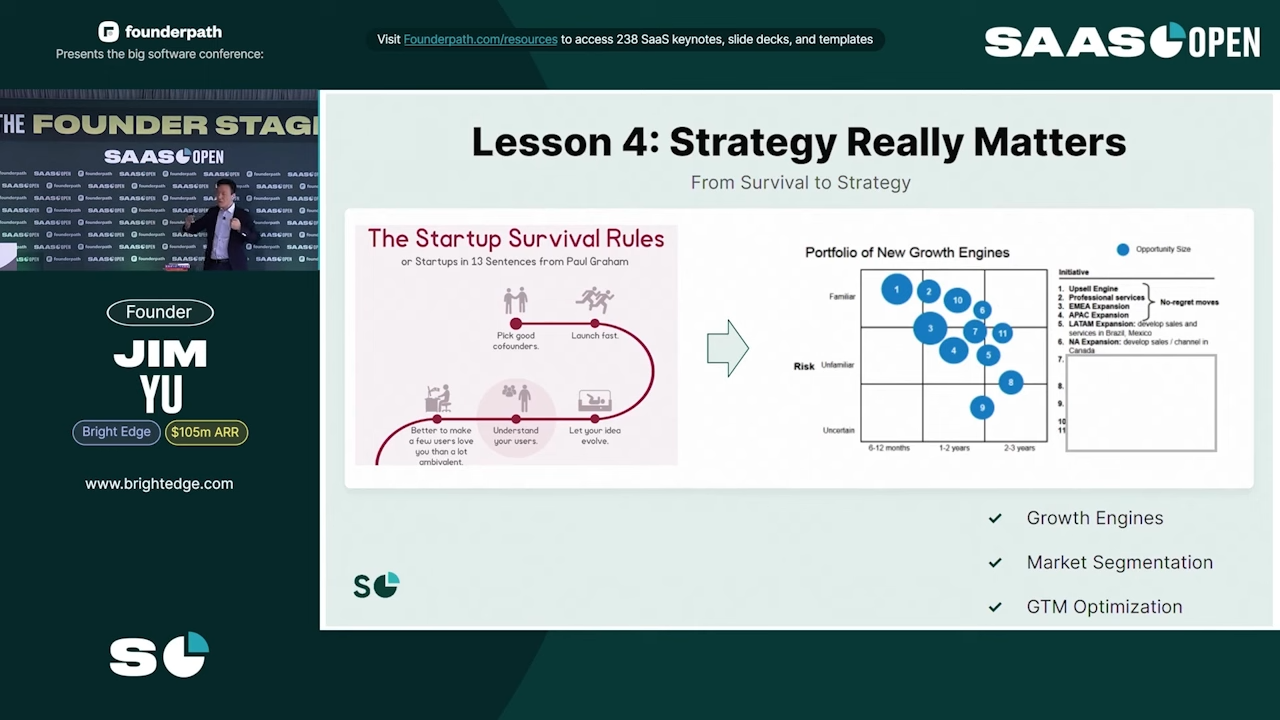
Reflecting on the evolution from survival to strategic planning as revenue scales, Yu points out that the focus shifts significantly once a company approaches $20 million in revenue.
“Initially, it’s all about moving from fire to fire, but as you scale, strategy becomes essential.”
Strategic planning involves deeply understanding the growth engines and market segments, assessed through four key dimensions:
- Opportunity Size
- Associated Risks
- Revenue Timelines
- Required Investments.
This strategic depth ensures that growth is sustainable and aligned with long-term objectives.
Lesson 5: Leadership Quality is Key
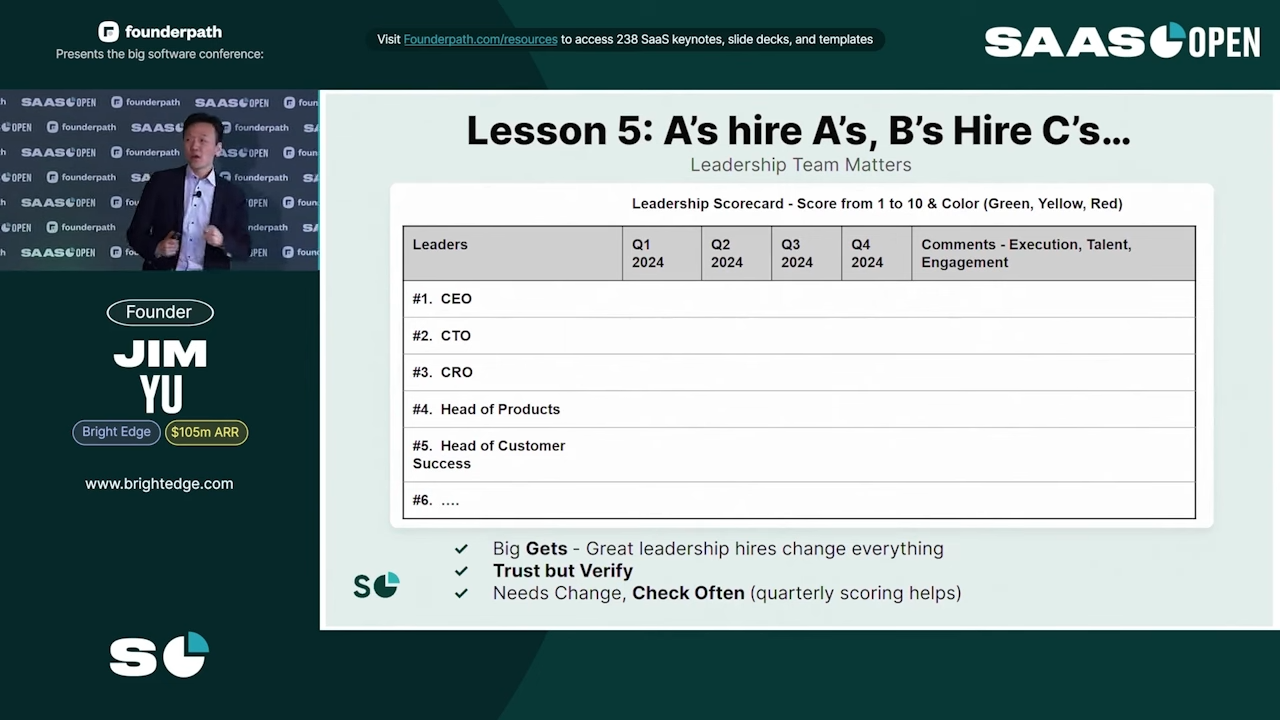
Yu stresses the crucial role of leadership in a scaling company. He explains that transitioning from a founding team to a scalable corporate structure often requires making tough decisions about leadership roles.
“A’s hire A’s, but B’s hire C’s.”
Yu shares that one of the hardest decisions for a founder is balancing loyalty to the business with loyalty to the people who helped build it. “Sometimes you have to make that choice, and it’s a hard, brutal decision,” he admits.
Lesson 6: Know Your ‘Why’

Understanding the underlying motivation—the ‘why’—is vital for long-term sustainability. Yu emphasizes the emotional cost of running a business, which can exceed the financial cost over a decade.
“It’s not just about celebrating wins but also about celebrating resilience after failing hard.”
This resilience, Yu argues, is what truly defines success, far more than fleeting accolades.
Lesson 7: Always Be Benchmarking
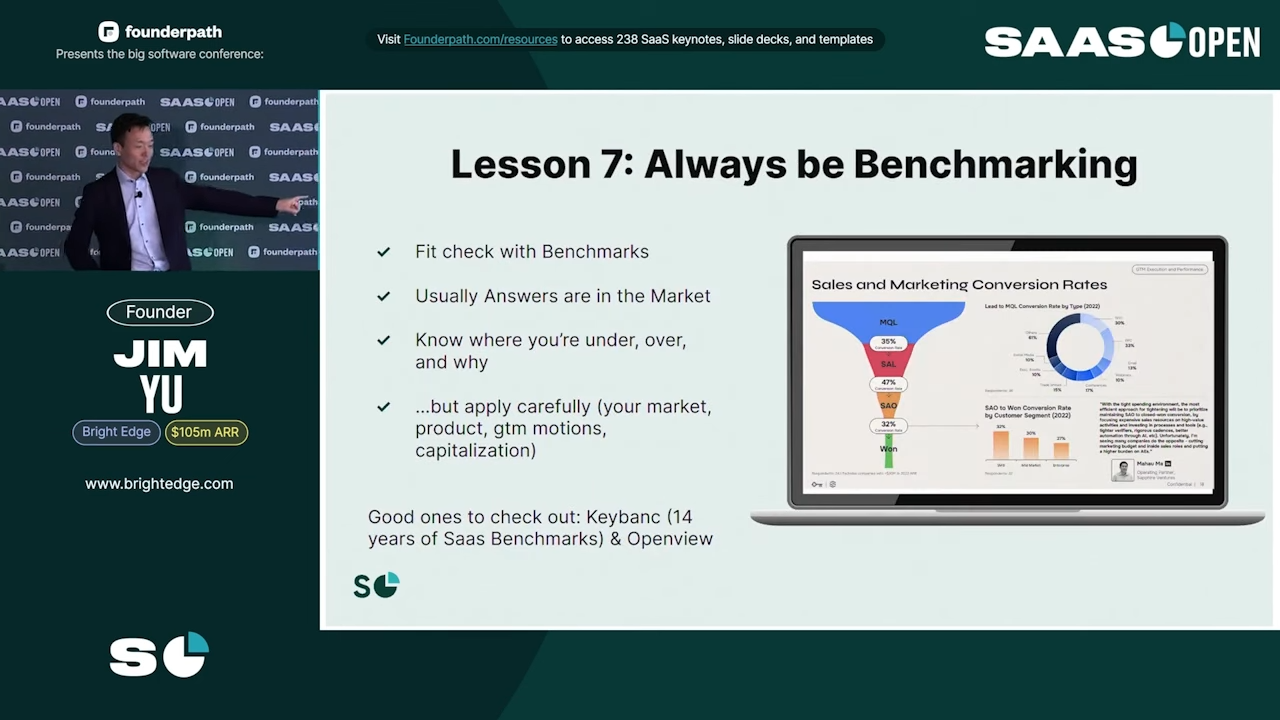
Yu advises regularly checking how your company performs against industry benchmarks as essential. He recommends leveraging resources like Openview and KeyBanc, which provide extensive SaaS benchmarks.
This ongoing assessment allows companies to make informed decisions and adjust strategies as needed.
You can watch Jim’s full interview at SaaSOpen in the video below.

Recent Articles
How Rev's CEO Adi Bathla Drove Revenue to $10M by Revolutionizing Auto Shop Workflows
Building a company from scratch and driving it to hit significant revenue milestones is no small feat. Adi Bathla, the…
How Practice by Numbers Achieved $16.5M Revenue in 2026 with Innovative SaaS Solutions
2015: Launched Practice by Numbers to Fill a Market Gap Practice by Numbers (PBN), co-founded by Rohit Garg and Dr.…

How Flossy Achieved $4M Revenue and Continues to Grow with AI Innovations
In a rapidly evolving world, where technology and healthcare intersect more intricately than ever, Flossy has emerged as a beacon…