Dylan Field is the co-founder and CEO of Figma. He is 32 years old and launched Figma in 2012. Dylan founded Figma with Evan Wallace.
Who Are Figma’s Competitors?
Adobe XD (jump to Adobe information here), Sketch, Canva, InVision
How Many Employees Does Figma Have?
Figma has a total of 2,726 employees and 50,000 customers.
SaaS Database
How Does Figma Generate Revenue?
Figma’s revenue comes from a freemium subscription model with paid tiers for advanced features:
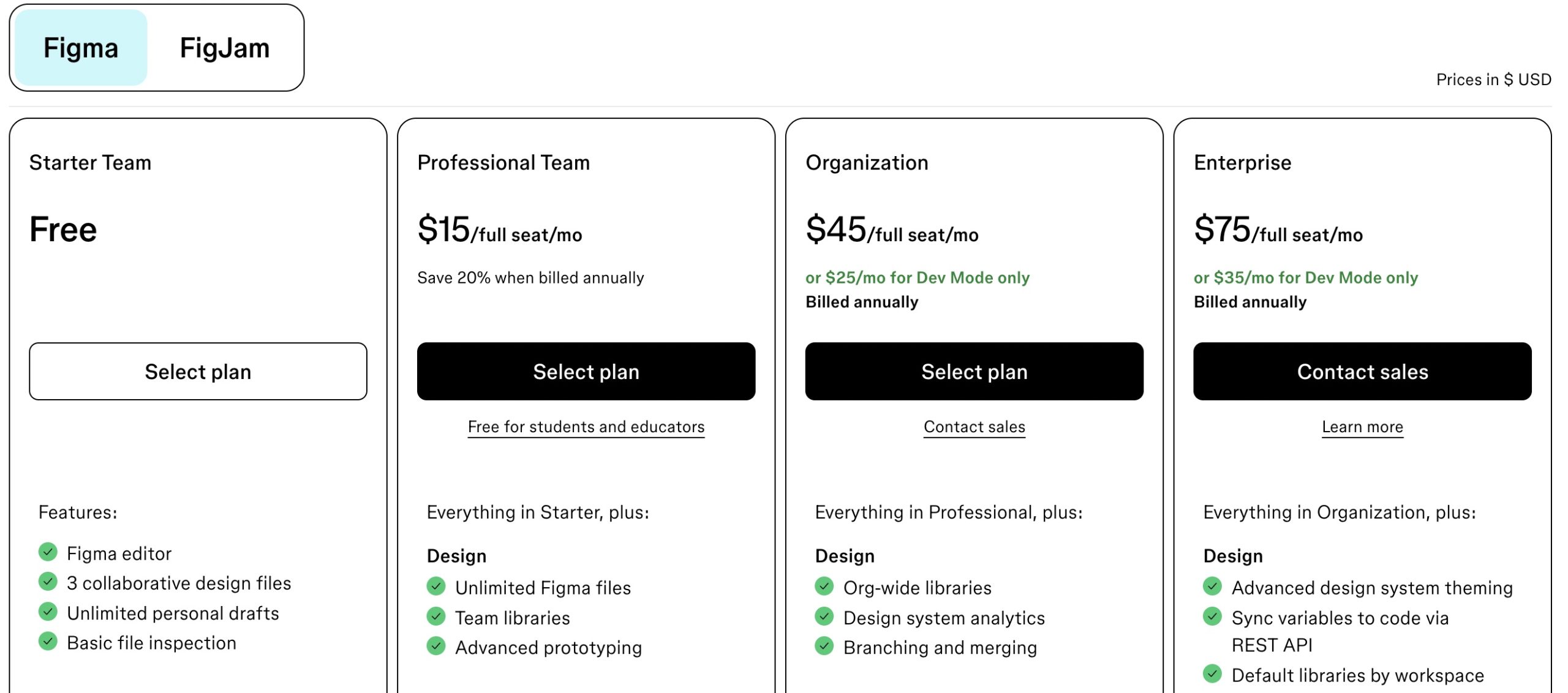
Team & Enterprise Plans: Monthly subscriptions range from $12 to $45 per editor, with enterprise plans offering security, analytics, and custom integrations.
FigJam: A digital whiteboarding tool included in subscriptions, with premium options available.
Marketplace: Designers sell templates and plugins, with Figma earning a small commission.
Product-Led Growth: Free plans drive adoption, leading teams to upgrade as they scale.
In 2012, Dylan Field, a college junior at Brown University left school after winning a Thiel Fellowship, providing him $100,000 to fund entrepreneurial pursuits.
In the beginning, his ideas were all over the place. He had ideas regaurding gaming and other tools, but nothing felt revolutionary enough.
“I wanted to build something transformative, something that could change the way people worked. Design stood out because the tools available felt like they were stuck in the past.”
Dylan partnered with Evan Wallace, a talented computer scientist and a Brown University alum as well.
Evan’s technical expertise was so important for turning their vision into a product.
Together, they aimed to solve one key problem: the lack of collaborative design tools that worked seamlessly across devices.
The idea of building a browser-based design app was bold, especially in 2013, when most software was still desktop-focused.
Their early days were marked by trial and error.
“We knew this was going to be hard. But we were determined to prove that cloud-based tools could match—or even surpass—the performance of desktop applications.”
Securing $3.9M in Seed Funding
Transforming this vision into reality required resources. Dylan and Evan pitched their idea relentlessly, but they faced significant skepticism.
Investors questioned whether professionals would trust a cloud-based design platform, especially one reliant on internet connectivity. Despite these doubts, the potential was undeniable to a few forward-thinking investors.
Greylock Partners led Figma’s $3.9 million seed funding round in 2013, valuing the company at $10 million.
John Lilly, a partner at Greylock, shared why he chose to back Figma in an interview with Forbes:
“Dylan wasn’t just pitching software; he was selling a vision of how the design process could evolve into something far more collaborative and efficient.”
Overcoming Technical Challenges
The funding marked a turning point, allowing the team to start building.
However, translating the concept into a functional product was an uphill battle.
Unlike existing desktop applications, Figma had to be fast, precise, and reliable—all within a browser.
The team tackled this by building their own rendering engine from scratch, focusing on pixel-perfect accuracy and real-time collaboration.
Every prototype brought new challenges. Early builds were functional but laggy, and competing with established tools like Adobe Photoshop seemed daunting.
Yet the small team’s relentless focus on improving speed and usability slowly started paying off.
Winning Over Early Believers
Initially, adoption was slow. Many designers were hesitant to trust a cloud-based tool.
However, the team strategically positioned Figma as more than just a design platform—it was a solution for teams looking to streamline collaboration.
As Figma focused on the needs of creative teams rather than just individual designers, they out a niche that its competitors had overlooked.
As prototypes improved, Figma began winning over its first users. These early adopters, primarily smaller design teams, offered valuable feedback that shaped the platform’s features and functionality.
From $0 to $400M Revenue
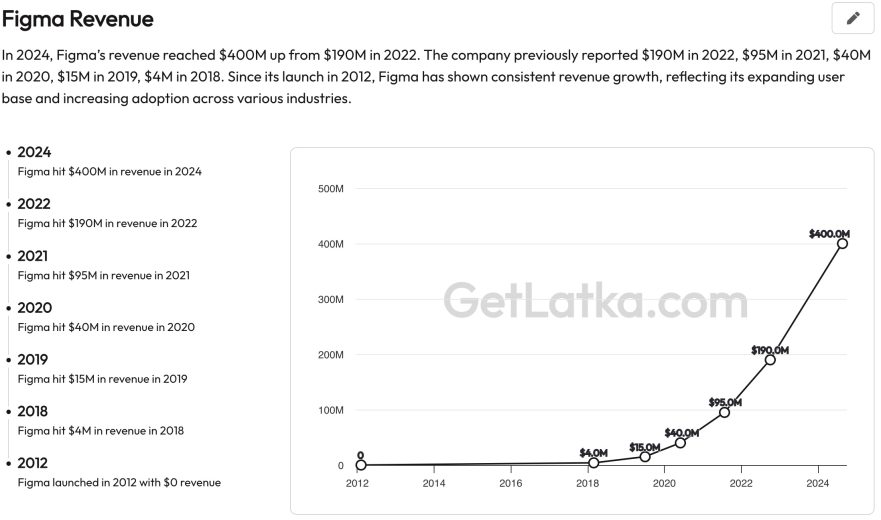
Figma grew from $0 in 2012 to $400M in revenue by 2024. How?
From the start, Figma’s philosophy was simple: let the product speak for itself. Rather than relying on outbound sales, Figma focused on creating a tool so collaborative and intuitive it sold itself.
This approach worked. Designers quickly adopted Figma because it addressed pain points they didn’t even realize could be solved.
The browser-based interface allowed real-time collaboration, making it a must-have for teams working remotely. This wasn’t just a novelty—it became essential for design workflows.
Dylan Field, Figma’s CEO, captured this in 2023 with TechCrunch:
“We didn’t just want users; we wanted advocates. The best growth comes from people who genuinely love what you’ve built.”
Freemium Model
I always find that the most successful companies implement freemium models!
Figma’s freemium model was key to its success. It removed barriers by offering individuals and small teams access to the platform for free.
The free tier included core features, while paid plans unlocked advanced tools like analytics, team spaces, and enterprise-grade security.
Paid subscriptions ranged from $12 to $45 per editor per month. For larger organizations, Figma offered custom enterprise pricing.
This model encouraged small teams to adopt the platform risk-free. As they grew or needed more features, upgrading to a paid plan was an easy choice.
The seamless transition from free to paid users fueled Figma’s explosive revenue growth. It turned adoption into a natural progression rather than a hard sell.
$0 to $400M
Figma’s early growth was steady, reaching $4 million in revenue by 2018. This was largely driven by small design teams drawn to its innovative features.
The next few years saw exponential growth. By 2019, revenue had quadrupled to $15 million. By 2021, Figma crossed $95 million.
The launch of FigJam, Figma’s digital whiteboarding tool, was another major milestone. It expanded Figma’s appeal beyond designers to include broader collaboration.
FigJam contributed significantly to Figma’s revenue growth. By 2022, annual revenue had doubled to $190 million.
In 2024, Figma hit $400 million, cementing its place as a market leader.
What Makes Figma’s Growth Unique
Figma’s approach was a departure from traditional software strategies.
While many companies focused on outbound sales, Figma invested all its energy into building the best product possible.
This product-led growth strategy turned users into its most effective marketers. Designers raved about Figma, sharing it with colleagues and on social media.
Enterprise adoption was another key factor. As Figma matured, larger organizations embraced the platform for its scalability and advanced features.
This transition from serving small teams to large enterprises created a new engine for sustained revenue growth.
The Role of Community
Figma’s community was a significant driver of its success. Events like Config, its annual conference, and interactive workshops fostered a sense of connection among users.
This community wasn’t just loyal; it provided constant feedback. Figma’s team listened closely and prioritized updates that addressed user needs.
This two-way relationship strengthened the bond between Figma and its users, ensuring continued growth and engagement.
The Path to $400M
Figma’s journey from $0 in 2012 to $400 million in 2024 highlights the power of product-led growth.
By removing barriers with a freemium model and building a community of loyal users, Figma became much more than a design tool.
It became a movement.
“When you make something people truly love, growth takes care of itself.”
The Adobe Rivalry and the Failed Acquisition Attempt
Adobe vs. Figma: A Battle for Design Supremacy
Figma and Adobe XD dominate the collaborative design software market.
Adobe had a decades-long head start, but Figma disrupted the space with a fresh, innovative approach.
Figma’s browser-based platform allowed seamless real-time collaboration. Adobe XD initially focused on desktop tools but later added cloud functionality to compete.
Dylan Field, Figma’s CEO, explained the strategy: “
Our goal wasn’t just to replicate what others were doing—it was to rethink design for the modern world.”
Figma’s freemium model lowered barriers to entry. Individuals and small teams could try the product for free, driving widespread adoption.
Adobe XD required a Creative Cloud subscription, making it appealing to existing Adobe users. However, Figma’s focused simplicity attracted those outside Adobe’s ecosystem.
The Failed $20 Billion Acquisition
In 2022, Adobe announced plans to acquire Figma for $20 billion. This move shocked the design world and acknowledged Figma’s growing influence.
Adobe saw an opportunity to integrate Figma’s strengths into its portfolio. However, the proposed acquisition sparked immediate backlash from Figma’s loyal user base.
Users feared Adobe would dilute Figma’s independence. Concerns about rising prices and changes to Figma’s freemium model were hotly debated in forums and social media.
Dylan Field tried to reassure users. He stated:
“Figma will remain Figma. We’ll continue to innovate, operate autonomously, and focus on what we do best.”
Regulatory Scrutiny and the Deal’s Collapse
The acquisition faced regulatory hurdles. The U.S. Department of Justice and European antitrust authorities investigated whether the deal would stifle competition.
Regulators worried Adobe’s dominance could create a monopoly. They argued that absorbing Figma might harm innovation and limit choices for users.
As investigations dragged on, public discussions about the deal faded. By 2024, it became clear the acquisition had failed, though no formal cancellation was announced.
What the Failed Deal Means for Adobe
The failed deal highlighted Figma’s influence. Adobe had sought to neutralize a rival it couldn’t ignore.
Without Figma in its portfolio, Adobe doubled down on improving Adobe XD. The company introduced new features to bolster its collaborative capabilities.
This forced Adobe to innovate faster than it might have otherwise. The rivalry pushed Adobe XD to remain relevant in an increasingly competitive space.
Figma’s Independence
For Figma, the failed acquisition reinforced its identity. The company’s survival as an independent entity reaffirmed its commitment to its users.
Remaining autonomous allowed Figma to stay true to its mission. It avoided compromises that might have come under Adobe’s ownership.
Figma’s reputation as a disruptor solidified. Designers celebrated the platform’s ability to challenge industry giants without being consumed by them.
Collaboration as Figma’s Edge
Figma’s real-time collaboration tools set it apart. Unlike Adobe XD, which evolved its features over time, Figma built collaboration into its DNA from the start.
Users praised Figma’s seamless version history, live editing, and commenting features. These tools became essential for remote and distributed teams.
Adobe XD worked to match these features. However, Figma’s early advantage helped it maintain a strong lead in user loyalty.
Lessons from the Rivalry
The Adobe-Figma rivalry offers key lessons for founders. First, focusing on solving a specific problem—like Figma did with collaboration—can disrupt even the most established players.
Second, user trust is invaluable. Figma’s transparency and commitment to its community helped it weather backlash during the acquisition attempt.
Finally, competition drives innovation. Adobe XD’s improvements in response to Figma’s rise have benefited the design community at large.
Starting with a $10 million valuation in 2013 after its seed funding, the company consistently attracted investor confidence, eventually reaching a $12.5 billion valuation by May 2024.
Each funding round wasn’t just about raising money—it marked a pivotal moment in Figma’s development.
Key milestones like the $200 million Series E in 2021 and the $415.7 million Series F in 2024 signaled confidence in Figma’s ability to disrupt the design space and expand its influence.
Strategic Choices That Paid Off
Figma’s long-term approach is a major factor behind its high valuation. Unlike many startups that rush to exit, Figma chose to remain independent, even amidst intense acquisition interest.
“We believe the best path for Figma’s future is to remain focused on our users, building for them first and foremost.”
This strategy not only strengthened user trust but also preserved Figma’s innovation-centric culture—a key reason investors continued to back the company.
What’s Next for Figma?
With its $12.5 billion valuation, Figma is poised for even greater growth. The company has already begun expanding its influence beyond design with tools like FigJam, which appeals to a wider audience of non-design teams.
International markets are also a key focus. With increasing adoption in Europe and Asia, Figma is eyeing global expansion as the next step in its journey.
Additionally, enterprise customers represent a growing revenue driver.
By offering robust features like advanced analytics, security, and custom integrations, Figma has positioned itself as an essential tool for large organizations. This will likely remain a key factor in its valuation growth.
Challenges Ahead
As Figma scales, competition is intensifying. Adobe XD, Sketch, and Canva are all vying for a share of the collaborative design space.
To stay ahead, Figma must continue to innovate while addressing the needs of its growing user base.
Maintaining its community-driven approach is another challenge. Figma’s reputation as a user-focused company is one of its strongest assets, and any misstep could risk alienating its loyal advocates.
How Does Figma Generate Revenue?
A Freemium Model that Works
As we know, Figma’s freemium model transformed how design software is monetized.
This strategy encouraged widespread adoption and allowed users to experience its value without upfront commitments.
As teams expanded or required more advanced features, transitioning to paid plans was seamless. Monthly subscriptions range from $12 to $45 per editor, with custom pricing available for enterprise clients.
This freemium-to-premium pipeline became a significant driver of Figma’s revenue growth.
Expanding Revenue Streams
Figma didn’t stop at subscriptions. The platform diversified its income through additional offerings like FigJam and its marketplace.
FigJam, a digital whiteboarding tool, quickly became a favorite among non-design teams. Its simplicity and collaborative features allowed brainstorming and planning sessions to flow effortlessly, broadening Figma’s reach within organizations.
The marketplace added another layer of revenue. Designers could sell templates and plugins, earning income while enriching the platform’s functionality. Figma took a small commission on these transactions, turning the marketplace into both a revenue source and a user retention tool.
Enterprise-Level Growth
While Figma began as a tool for small teams, enterprise adoption fueled its rise to $400 million in revenue by 2024.
Large organizations valued Figma for its scalability, advanced analytics, and enhanced security features.
Figma’s ability to integrate seamlessly into existing workflows made it an indispensable tool for creative teams at companies like Netflix, Uber, and Google. These enterprise subscriptions not only brought in significant revenue but also cemented Figma’s reputation as a leader in the design space.
Product-Led Growth as the Core Strategy
Figma’s success hinged on its product-led growth model. Instead of relying heavily on outbound sales, the company invested in building tools that users genuinely loved.
Its real-time collaboration features set it apart from competitors. The browser-based interface allowed multiple team members to work on the same file simultaneously, a game-changer for distributed teams.
Dylan Field, Figma’s CEO, highlighted this philosophy: “Design tools shouldn’t just solve problems—they should create moments of joy for the people using them.”
This focus on creating a joyful and efficient user experience turned Figma into a must-have for teams worldwide.
The Power of Community
Figma’s community played a significant role in its growth. Designers shared their positive experiences with peers, sparking organic word-of-mouth marketing.
The company fostered this sense of community through events like Config, an annual conference that showcased new features and celebrated user creativity. Workshops and interactive sessions strengthened the connection between Figma and its users.
The marketplace also contributed to this community-driven growth. By allowing users to develop and share plugins, Figma ensured the platform stayed dynamic and user-focused. This ecosystem encouraged innovation and further cemented user loyalty.
Monetizing Collaboration
Figma didn’t just sell software—it sold collaboration. The platform’s tools allowed teams to work together in real-time, streamlining workflows and reducing friction.
This collaborative edge made Figma invaluable for organizations with remote or hybrid setups. As more teams adopted Figma for its collaboration features, the transition to paid plans became a natural step, especially for those needing enterprise-level tools.
Why Figma’s Revenue Model Works
Figma’s approach succeeded because it met users where they were. By offering a robust free tier, the company attracted individual users and small teams without pressure.
As users discovered the platform’s full potential, upgrading felt less like a sales tactic and more like an investment in their own productivity. This natural progression fueled Figma’s growth without alienating its user base.
Figma’s revenue model offers valuable insights for other founders:
Freemium Models Drive Growth: Offering a free tier can rapidly build a user base, but success hinges on a seamless upgrade path to premium features.
Diversify Income Streams: Adding new products like FigJam or marketplace commissions can create steady, supplementary revenue.
Focus on Enterprise: Catering to large organizations with scalable solutions can transform a niche product into a mainstream tool.
By prioritizing user experience and community engagement, Figma didn’t just generate revenue—it built a loyal ecosystem. This approach ensured sustained growth and positioned the company as a leader in the competitive design software industry.
In 2024, Figma reached $400 million in revenue. Its freemium model, enterprise adoption, and innovative features weren’t just strategies—they were the foundation of a movement that redefined how software connects people.
What Can We Learn From This?
Building for Collaboration
Figma’s rise wasn’t just about creating design software; it was about solving a broader problem—how teams work together. Collaboration was baked into the product from the start. Unlike traditional desktop tools, Figma made it possible for designers to edit, comment, and share files in real-time through a browser.
This approach resonated with users, especially in the age of remote work. By prioritizing collaboration, Figma established itself as more than just a tool—it became a workspace for creative teams. SaaS founders can learn from this by focusing on solving team-wide pain points, rather than just individual user needs.
Product-Led Growth
Figma didn’t rely on aggressive sales tactics. Instead, it let the product do the talking. The seamless user experience and innovative features turned customers into advocates.
Dylan Field, Figma’s CEO, described this strategy in a 2023 interview: “Design tools shouldn’t need a hard sell. If the product is good enough, users will spread the word.”
For SaaS founders, this highlights the importance of building products that solve problems so effectively that users naturally recommend them to others.
Staying Nimble During Growth
Figma’s ability to innovate quickly kept it ahead of competitors. While many companies struggle with scaling, Figma maintained its pace by keeping teams small and focused. This allowed them to release updates and new features without the bureaucratic delays common in larger organizations.
This agility was especially important when responding to user feedback. For example, when users requested better prototyping tools, Figma prioritized those updates, ensuring it stayed competitive against Adobe XD and Sketch.
Using Freemium Model
Figma’s freemium model wasn’t just a pricing strategy—it was a growth engine. By making the core platform accessible to anyone, Figma rapidly built a user base. Over time, small teams and individual users transitioned to paid plans as their needs grew.
The freemium model also fueled enterprise adoption. Companies often started with small groups using the free version, then scaled up to organization-wide licenses as Figma proved its value. SaaS founders can replicate this strategy by designing free tiers that showcase their product’s core strengths while encouraging upgrades.
Investing in Community
Figma didn’t just build a product—it built a community. Events like Config, workshops, and an active online presence created a sense of belonging for users. This community-driven approach not only fostered loyalty but also provided valuable insights into user needs.
The marketplace was another way Figma engaged its community. By allowing users to create and sell plugins, Figma encouraged innovation and extended its platform’s functionality. This approach kept users invested and made the product more valuable over time.
Balancing Profitability with User-Centric Innovation
Figma managed to grow revenue without losing sight of its core mission: serving users. While some SaaS companies prioritize profitability at the expense of user experience, Figma consistently reinvested in its product.
For example, rather than raising prices aggressively, Figma introduced new features like FigJam to drive additional revenue. This approach allowed the company to grow while maintaining user trust.
Lessons in Leadership
Dylan Field’s leadership offers key takeaways for founders. By surrounding himself with talented collaborators like Evan Wallace, Field ensured Figma had the technical expertise to bring its vision to life.
Moreover, Field’s emphasis on transparency helped Figma navigate challenges like the failed Adobe acquisition. His open communication reassured users and strengthened their loyalty during uncertain times.
Why Figma’s Approach Works
Figma’s success comes down to a few core principles:
Solve real problems, not hypothetical ones.
Prioritize collaboration and community.
Let the product lead growth, supported by a strong freemium model.
Stay agile, even as you scale.
These strategies aren’t unique to Figma, but their execution was. For SaaS founders, the key lesson is that success isn’t about reinventing the wheel—it’s about doing the fundamentals exceptionally well.
The Future of Figma: What’s Next?
Maintaining Independence Amidst Giants
Figma’s failed acquisition by Adobe in 2022 reinforced its independence, but it also raised questions about what lies ahead. As an independent company, Figma retains the freedom to innovate and set its own priorities. However, the collapse of the $20 billion deal left the industry wondering: will Figma remain independent, or could another acquisition attempt resurface?
Dylan Field, Figma’s CEO, addressed these concerns in 2023: “Independence gives us the ability to stay focused on our mission—to build the best tools for teams everywhere.”
Remaining autonomous will allow Figma to double down on user-centric innovation. But it also means facing fierce competition from Adobe and other emerging players without the backing of a larger parent company.
Expanding into New Markets
Figma’s current user base consists primarily of designers and creative teams. However, the company has signaled its intention to broaden its reach. Tools like FigJam, Figma’s collaborative whiteboarding platform, already cater to product managers, marketers, and engineers. Expanding FigJam’s capabilities could position Figma as a go-to platform for all team collaboration, not just design.
Additionally, Figma may explore integrations with popular productivity tools like Notion, Slack, and Microsoft Teams. These partnerships could make Figma indispensable to cross-functional teams and deepen its foothold in enterprise settings.
Capitalizing on AI and Automation
Artificial intelligence is reshaping SaaS, and Figma is well-positioned to leverage these advancements. Imagine design tools that can suggest layouts, generate design elements, or even predict user behavior. Figma’s investment in machine learning could unlock new efficiencies for its users.
In recent updates, Figma introduced features like automated layout adjustments and smart object snapping. These small but impactful changes hint at how AI could further streamline workflows. As competitors like Canva and Adobe also lean into AI, staying ahead in this space will be critical for Figma’s growth.
Strengthening Community and Ecosystem
Figma’s community has been a cornerstone of its success. Moving forward, Figma plans to expand its marketplace, enabling designers to monetize templates, plugins, and other resources. This ecosystem not only enriches the platform but also fosters loyalty among creators.
Events like Config, Figma’s annual conference, will likely grow in scale and significance. These gatherings are more than just product showcases—they’re opportunities to connect with users and reinforce Figma’s brand as a community-driven platform.
Challenges on the Horizon
While Figma’s trajectory is promising, challenges remain. Competitors like Adobe XD and Sketch continue to improve their offerings, while newcomers like Canva are making design tools more accessible to non-designers. To maintain its edge, Figma must keep innovating without alienating its core audience.
Another challenge lies in scaling its enterprise offerings. Figma’s freemium model has worked well for small teams, but enterprise clients have different needs, such as robust security and advanced analytics. Expanding enterprise adoption without losing sight of the user experience will require careful strategy.
The Road to $1 Billion in Revenue
Figma’s $400 million revenue milestone in 2024 was impressive, but the company is far from finished. The next big goal is reaching $1 billion in annual revenue—a benchmark that only a handful of SaaS companies achieve.
To get there, Figma will need to:
Expand its user base beyond designers.
Introduce premium features that appeal to enterprise clients.
Leverage AI to offer groundbreaking tools that competitors can’t match.
Remaining User-Centric
Despite its growth ambitions, Figma’s greatest strength remains its user focus. Field and his team have consistently prioritized feedback, releasing features that directly address user pain points. This commitment to listening and iterating has been a key driver of Figma’s success.
As Field stated in 2023: “When you listen to your users and give them what they need, growth takes care of itself.”
What’s Next for Figma?
Figma’s future is bright, but it’s also filled with opportunities and uncertainties. Whether it’s doubling down on collaboration, exploring new markets, or leveraging AI, Figma’s ability to stay ahead will depend on its commitment to innovation and its users.
For SaaS founders and industry watchers, Figma’s next chapter will be one to watch closely. As it stands, Figma has proven that with the right strategy and a relentless focus on user needs, even giants can be challenged—and sometimes even surpassed.