The Canva Certified Creatives program turned passionate users into brand ambassadors with exclusive perks, training, and marketing opportunities.
10 Strategic Moves That Grew Canva to a $40 Billion Valuation
November 27, 2024 • 23 min read
On This Page


Nathan Latka
“Melanie, what made you believe Canva could simplify design for everyone, even in such a saturated space?”
Melanie Perkins: “It wasn’t about reinventing the wheel. It was about making the wheel accessible. People needed an easy way to design—something anyone could use, whether they’re a business owner, a teacher, or a student.”
(Source: Canva Founders Interview, 2023)
What is Canva’s Revenue?
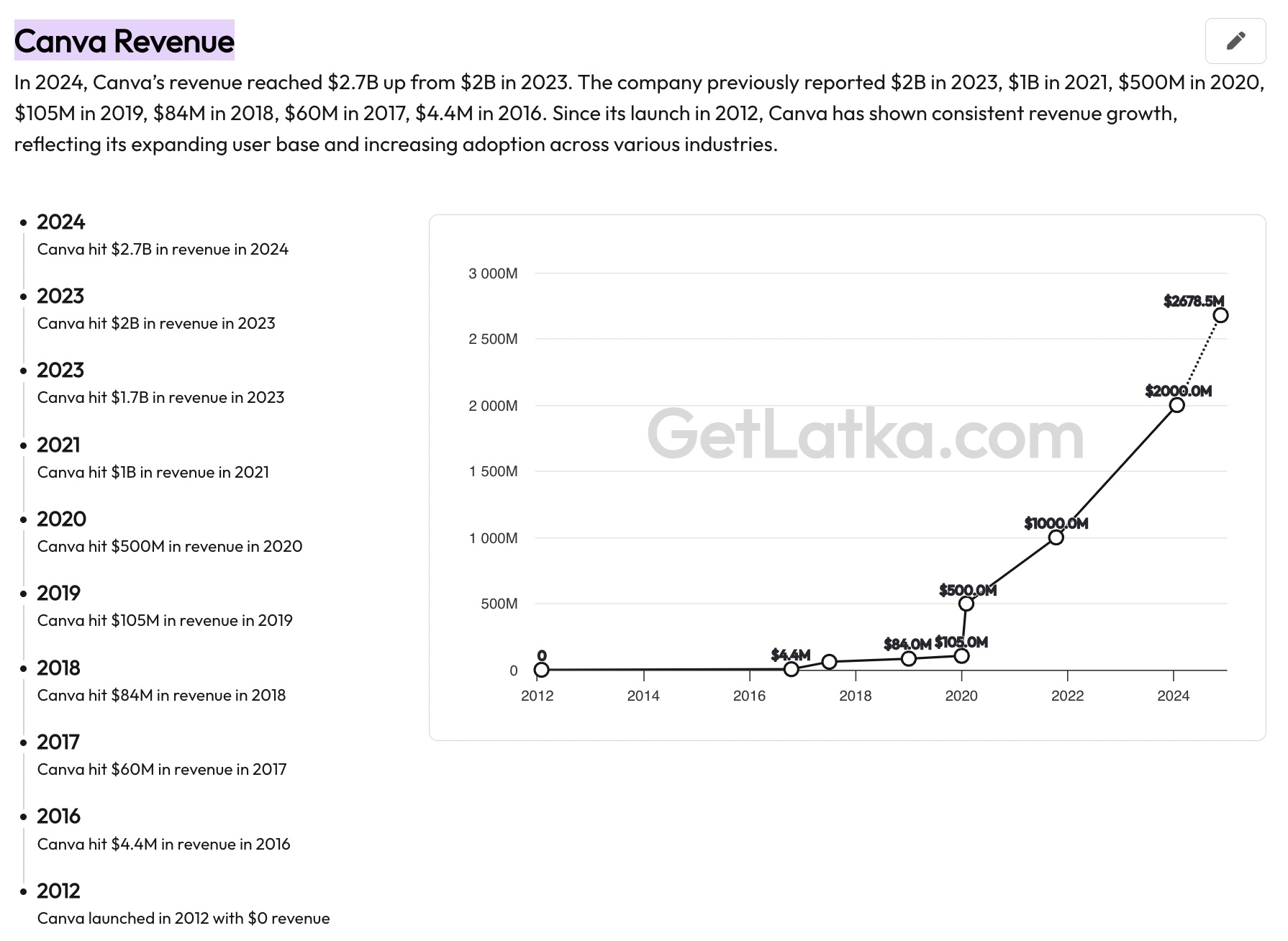
Canva’s revenue as of 2024 is $2.7B.
| Year | Revenue |
|---|---|
| 2012 | Launched |
| 2016 | $4.4M |
| 2020 | $500M |
| 2024 | $2.7B |
What is Canva’s Valuation?
Canva’s valuation as of 2024 is $40B.
Who is the CEO of Canva?
Melanie Perkins is the CEO and found Canva.
Who are Canva’s Competitors?
Canva’s competitors include Adobe Spark, Visme, and Figma.
For more stats on Canva, check out our database.
Step 1: Solving a Simple Problem That Everyone Faces

Over time, she noticed something while designing yearbooks.
These tools were overly complex. Creating beautiful, professional-looking designs was a struggle for anyone without expensive software or advanced design skills.
This experience highlighted a simple yet widespread problem—design was inaccessible to most people.
Determined to find a solution, she co-founded Fusion Books, an online platform that enabled students and schools to create their own yearbooks using a simple drag-and-drop interface.
This innovation eliminated the need for advanced design skills or expensive software. Fusion Books quickly gained traction, becoming Australia’s largest yearbook publisher and expanding into France and New Zealand.
“I thought that in the future it was all going to be online and collaborative and much, much simpler than these really hard tools.”
Melanie Perkins, CEO of Canva (Leaders)
This experience with Fusion Books highlighted a broader need for accessible design tools.
Melanie envisioned a platform that would empower anyone, regardless of technical expertise, to create stunning visuals effortlessly. This vision led to the creation of Canva, a user-friendly design tool that democratized graphic design for millions worldwide.
From the outset, Canva’s mission was clear: to empower the world to design.
What started as a small effort to make yearbook design easier evolved into a global platform used by millions.
Key Takeaway: By identifying a common struggle and creating a straightforward solution, you can unlock opportunities for massive growth and build a product that resonates with a broad audience.
Step 2: Realizing What Is Needed Before Launching
This period was characterized by countless rejections and a lot of persistence.
The idea of simplifying design resonated with users but getting investors on board was another story. Investors found it hard to believe in the scalability of a design platform targeting non-designers.

This break led to a network of supporters who believed in her vision and helped turn Canva into a reality. If they didn’t go out of their way to attend that conference and understand that networking was the way to go, they never would have started that connection with Bill.
It was through understanding the needs of potential users and making those first connections with investors that Melanie built a strong foundation for Canva’s later success.
“I had to be relentless. I knew the idea was strong, but it was about getting the right people to believe in it too.”
Melanie Perkins, (Source: Forbes Interview).
Key Takeaway: The journey to success often involves relentless persistence and the ability to connect with the right people who believe in your vision.
Step 3: Growing to 50 Million Users with a Unique Freemium Strategy
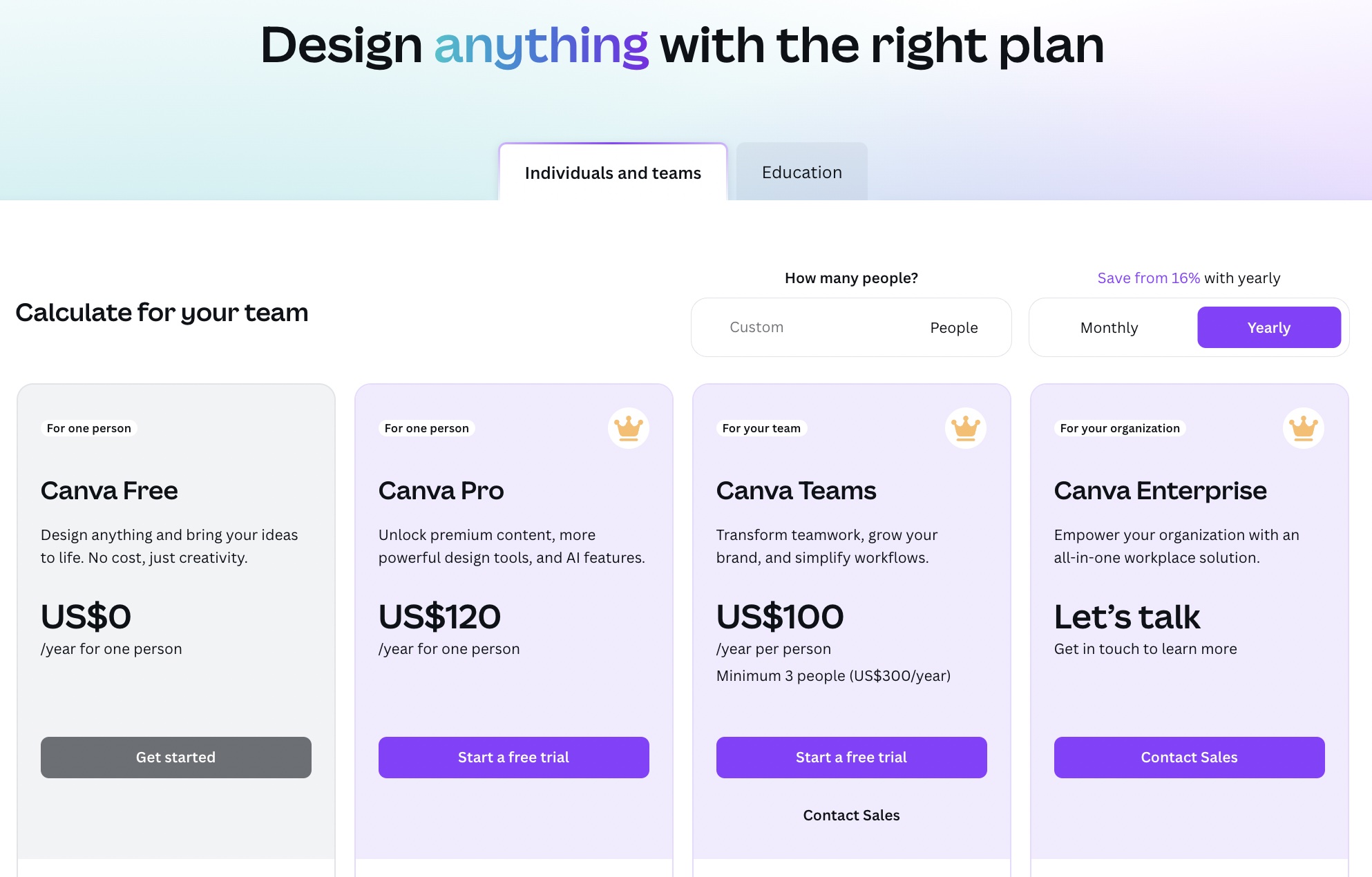
When I write these articles regarding large companies’ success, a freemium model is the most common step or move that results in the most astronomical amount of growth. Zendesk is one of these.
In 2013, when Canva officially launched, Melanie Perkins and her team adopted a freemium model that would become one of their most powerful growth strategies.
By offering a free version of Canva with core design functionalities, the company lowered the barriers to entry for millions of users.
The result?
Canva quickly gained widespread traction among individuals, small businesses, and educators.
The beauty of the freemium model was that it provided immediate value to users at no cost, while the premium features added layers of functionality that appealed to more advanced users.
“We wanted to make sure anyone could create beautiful designs for free, and then, if they loved it, they’d naturally upgrade to unlock more potential.”
Melanie Perkins, (2018 SaaStr Conference)
This approach allowed users to first experience the platform’s capabilities, creating a strong incentive to upgrade to paid plans.
Canva’s freemium strategy was instrumental in growing its user base from thousands to millions. By providing value upfront, Canva built trust with its users.
Over time, as people became more familiar with the platform and their design needs grew, many were eager to pay for the additional features that made their work even easier and more polished.
How Much The Subscription Model Helped
The seamless transition from free to paid helped Canva achieve a 50 million user milestone in just a few years, and by 2020, their annual recurring revenue (ARR) reached $100 million.
This model also helped Canva penetrate markets that were traditionally underserved by expensive, complex design software. Small businesses, nonprofits, and individuals who couldn’t justify the cost of traditional graphic design tools found Canva to be an empowering alternative.
By embracing a freemium approach, Canva effectively democratized design, giving everyone from hobbyists to professionals the ability to create stunning graphics.
Key Takeaway: A well-executed freemium model can dramatically scale user acquisition by providing value upfront and encouraging organic growth through a natural upgrade path.
Step 4: Scaling with Strategic Partnerships ($100M ARR in 2020)
Canva’s growth trajectory took a major leap forward when the company began forming strategic partnerships with well-established industry players.
These partnerships helped Canva extend its reach beyond individual users to larger enterprises, while also helping credibility through associations with established brands.
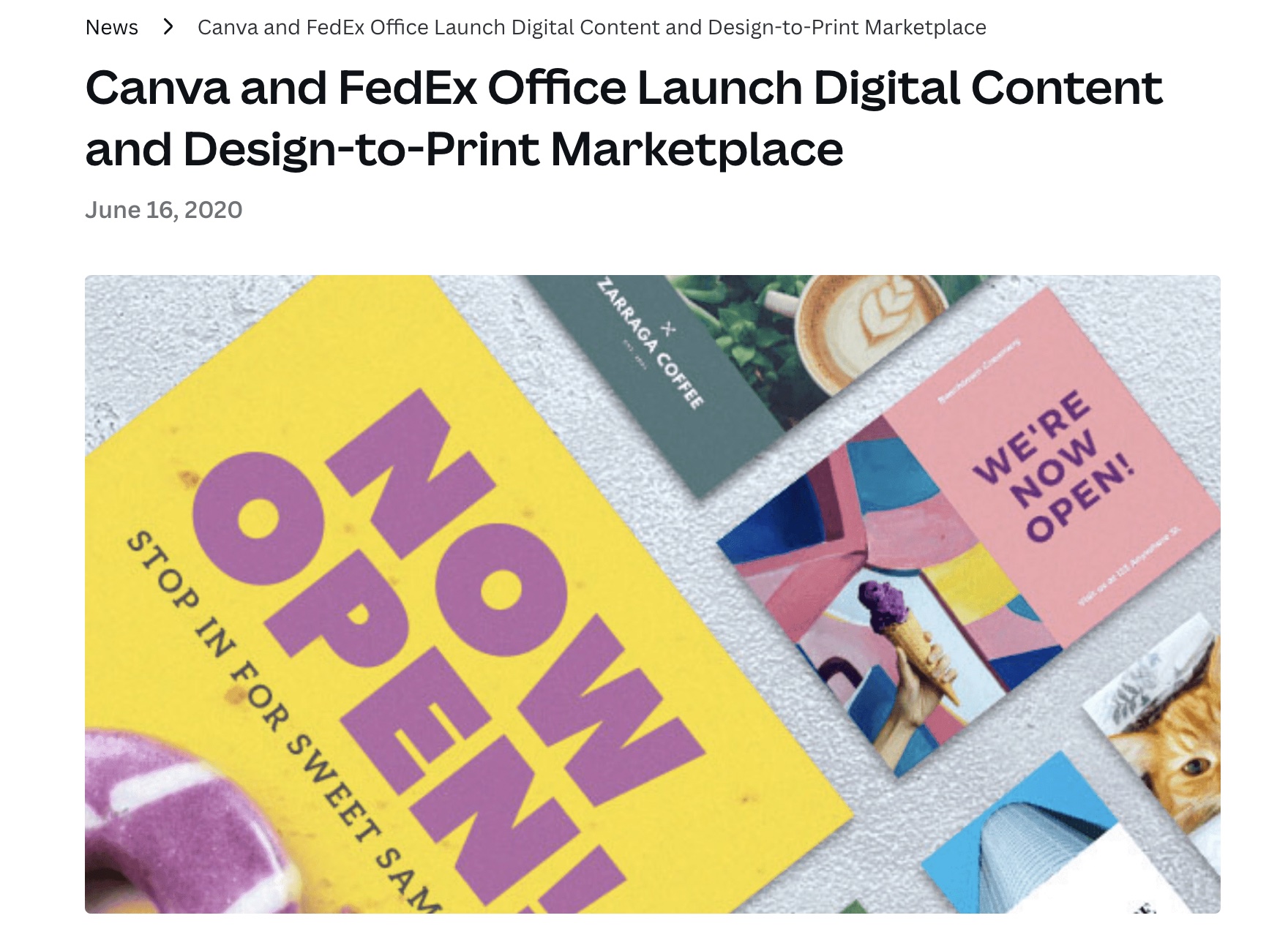
The collaboration with FedEx allowed Canva users to easily print their designs, turning Canva into a one-stop solution for both digital and physical marketing needs. Similarly, integrating with Dropbox provided seamless access to stored files, simplifying the design workflow.
“We knew that partnerships would be key to expanding Canva’s reach. By working with companies that already had strong customer bases, we were able to introduce Canva to new audiences and provide even more value.”
Melanie Perkins, (Source: Interview with Bloomberg)
Now…you’re asking yourself, what am I supposed to take away from this if I can’t partner with huge companies such as FedEx?
Well, strategic alliances can still be formed with complementary businesses in your industry.
The key is to identify partners whose products or services align well with your own, creating a win-win scenario where both parties can benefit from each other’s audiences. It doesn’t matter how big or small the partner is!
In Canva’s case, these partnerships played a significant role in reaching $100 million in Annual Recurring Revenue (ARR) by 2020. The integrations made Canva more accessible and valuable, ultimately contributing to its widespread adoption among professionals and enterprises alike.
Key Takeaway: Strategic partnerships can significantly expand your product’s reach and credibility. Look for opportunities to collaborate with complementary businesses to create value for both audiences.
Step 5: Leveraging User-Generated Content for Viral Growth
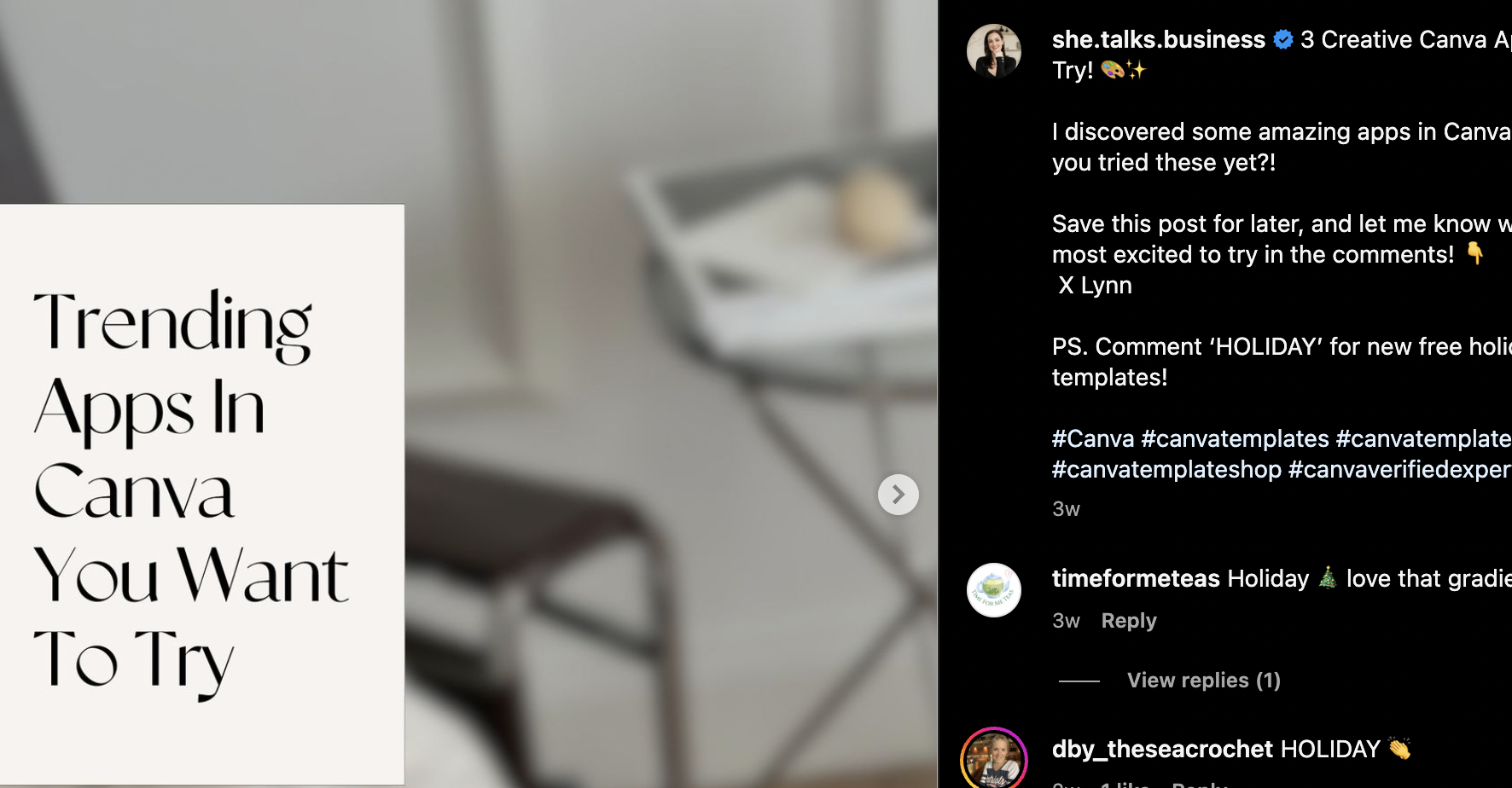
One of Canva’s most effective strategies to growing was tapping into the power of their own customers!
From the beginning, Canva encouraged its users to share their designs on social media, turning its customers into brand advocates and amplifying its reach organically.
Create a great product, allow customers to actively promote it to others, drive growth.
The simplicity of Canva’s tools made it easy for anyone to create insane designs. When people are proud of what they create, they love to share it.
Canva tapped into this natural behavior by encouraging users to post their creations on platforms like Instagram, Facebook, and Pinterest.
As more users shared their Canva-made designs, the brand gained visibility, and people who saw these shared posts became curious about the tool that made designing so effortless.
This user-generated content became an authentic and powerful form of marketing.
“We saw people sharing their designs everywhere, and that’s when we realized just how powerful our community was. They weren’t just users; they were our biggest advocates.”
Melanie Perkins, (Source: Interview with Business Insider)
This organic promotion helped Canva scale its user base without having to rely on expensive advertising campaigns. The platform’s ease of use meant that even people with little to no design experience could create professional-quality graphics.
Another key element that fueled Canva’s viral growth was its focus on creating templates and design elements that were highly shareable.
Canva’s marketing team also leveraged trending topics and seasonal events to release timely templates that users could easily customize and share, further boosting engagement and visibility.
The lesson here is the importance of turning your users into advocates. Canva understood that the best marketing doesn’t always come from paid ads or sales teams, it comes from happy customers who genuinely love the product.
Integrate Your Product With Social Media Platforms

The platform integrated with major social media channels, allowing users to publish their designs directly from Canva with just a few clicks. This seamless integration removed barriers to sharing and further encouraged users to showcase their work.
Canva also incentivized sharing through contests and user spotlights, recognizing and rewarding those who actively promoted the brand. This fostered a sense of community and made users feel valued, strengthening their connection to Canva.
The power of user-generated content isn’t just about visibility. It’s about building trust.
People are more likely to try a product when they see it being used and loved by others. Canva’s community-driven growth created a sense of credibility and trustworthiness that traditional advertising couldn’t match.
Key Takeaway: Encourage your users to become advocates by making your product shareable and rewarding those who promote it. User-generated content can be a powerful driver of organic growth, helping you build credibility and expand your reach without a massive marketing budget.
Step 6: Adding Features That Diversify Audience ($500M Revenue from Team Features)
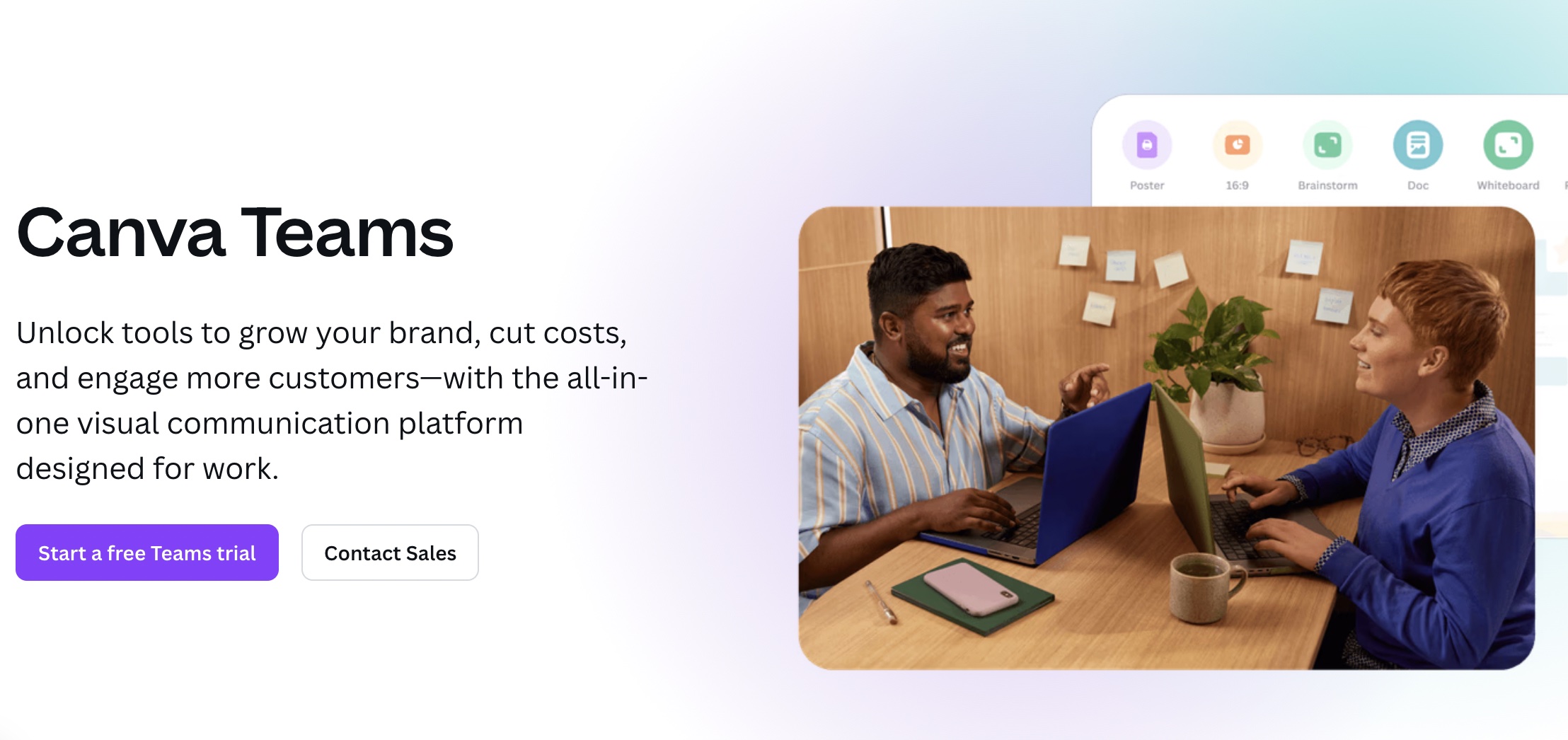
A big part of creating and maintaining a product AND keeping your audience engaged? Always finding ways to improve it.
The shift from serving only individual users to focusing on teams had a massive impact on the company’s growth, driving an estimated $500 million in revenue.
The goal was clear: to give an easy way to design, not only for individual users but for entire organizations.
Recognizing that multiple people contribute ideas to bring something to life, Canva built features that allowed teams to work together more effectively, from brainstorming to the final product.
With features like shared folders, real-time editing, and permission controls, Canva made it easy for teams to collaborate on designs without the hassle of constant email exchanges or multiple file versions.
This focus on collaborative design turned Canva into a platform that companies could use for marketing campaigns, branding, and internal communications.
“We wanted to make sure that Canva could be used across different departments, not just by designers. From HR to sales teams, everyone should be able to contribute to a project seamlessly.”
Melanie Perkins, (Forbes Interview, 2023)
By making design accessible to non-designers, Canva became a tool that entire organizations could use, not just those with graphic design expertise.
Canva Pro for Teams: Catering to Customers of All Sizes
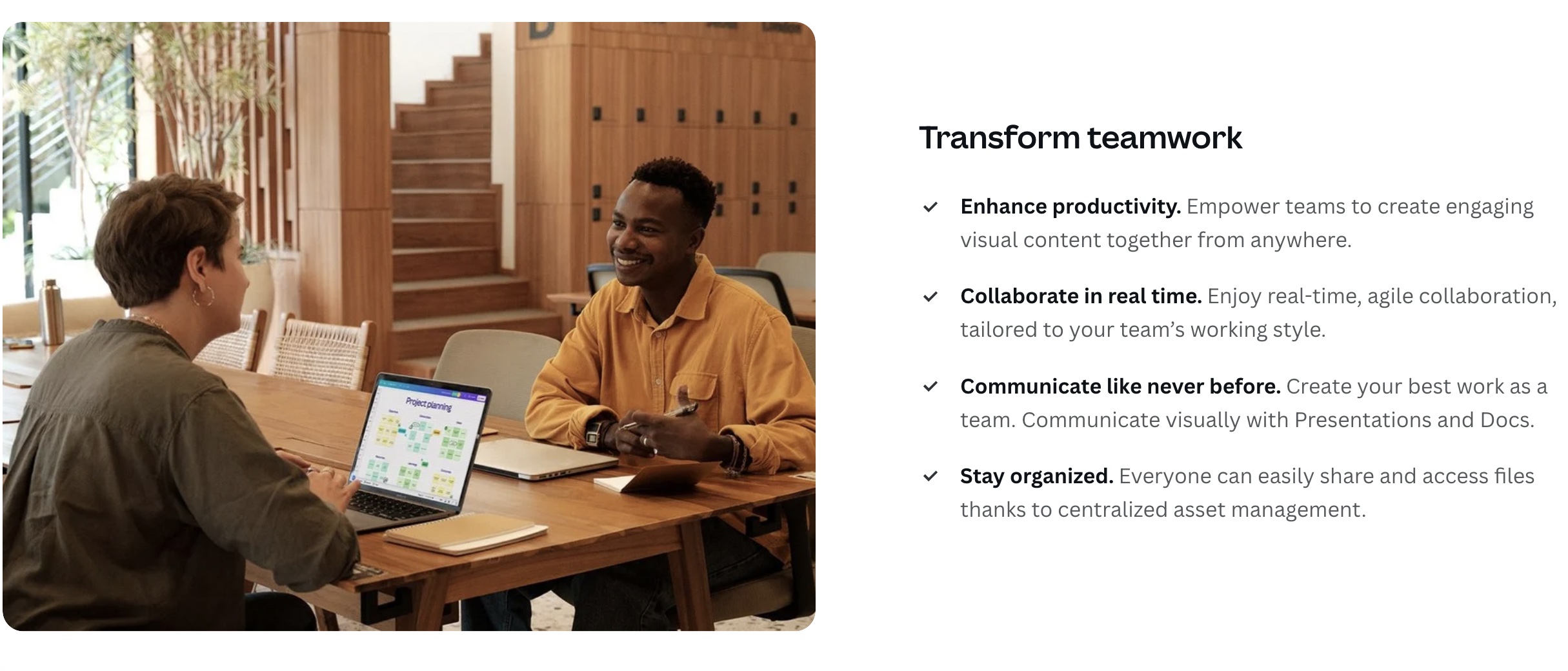
To appeal to larger teams and enterprises, Canva also introduced Canva Pro for Teams, which included additional features like brand kits, content planners, and enhanced collaboration tools.
The idea was to cater to organizations that needed to maintain brand consistency across various channels.
Startups and smaller companies also benefited from these features, as Canva Pro for Teams offered the same kind of collaborative power that larger enterprises were using—just without the hefty price tag that traditional design software often carries.
One notable aspect of Canva’s team features was their intuitive design, which required little to no training.
Traditional design tools often have a steep learning curve, especially for non-designers. Canva broke down that barrier, making it easy for anyone in a company to contribute to the creative process.
This accessibility was not only a huge draw for companies but also a selling point that set Canva apart from its competitors.
The collaborative features didn’t just resonate with companies internally but also played a crucial role in external communications. Teams could use Canva to co-create marketing collateral, share their designs directly with clients for feedback, and make real-time changes—all within the platform.
“Design should be something that brings people together, not something that creates more friction. Our goal has always been to simplify the design process, so teams can focus more on creativity and less on logistics.”
Melanie Perkins, (Business Insider, 2023)
Canva’s integration capabilities with other popular tools like Slack and Trello further enhanced the collaboration experience.
Teams could link their Canva projects with these tools, ensuring that designs were part of the broader workflow and not siloed in a separate application.
By creating an environment where collaboration was seamless, Canva made professional design accessible to everyone, regardless of the company’s size.
Key Takeaway: Focusing on team collaboration features allowed Canva to penetrate the enterprise market while also appealing to smaller businesses, driving significant revenue growth through enhanced usability and accessibility.
Step 7: Mobile Accessibility – Expanding to a Global Audience (50% Usage from Mobile)
What an easier way to grow accessibility by making your product available on a phone as well.
Today, over 50% of Canva’s usage comes from mobile devices, which shows how important this move was in expanding Canva’s user base, especially in emerging markets.
Meeting Users Where They Are
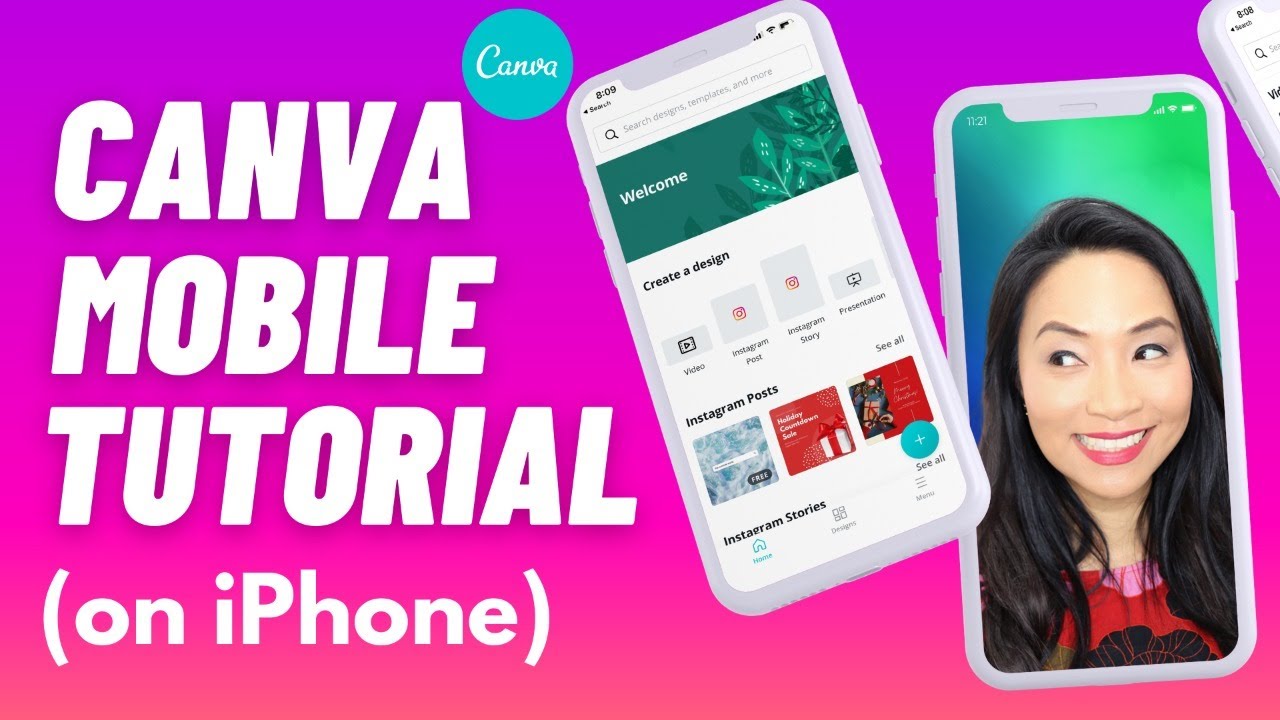
Melanie Perkins and her team envisioned Canva as a tool that wasn’t restricted by hardware. The focus was to make design as seamless on mobile devices as it was on desktop.
“We didn’t want people to be limited to creating on a desktop. People live their lives on their phones, and design should fit into that.”
Melanie Perkins, The Verge Interview in 2023
Expanding Global Reach
In regions where smartphones are the primary mode of internet access, Canva’s mobile-first strategy allowed it to reach users who may not have had access to traditional design tools that required powerful computers or stable internet connections.
By providing a fully-featured design app that worked seamlessly even on mobile networks, Canva attracted millions of users in markets like India, Brazil, and Southeast Asia.
The freemium model combined with mobile accessibility made Canva an indispensable tool for students, small business owners, and even aspiring designers in these regions who lacked the resources for traditional design software.
It was a perfect example of how thinking globally, but designing with local realities in mind, could lead to an explosion in adoption.
This move didn’t just increase Canva’s global footprint; it also fostered a more diverse and inclusive user base.
By allowing anyone with a smartphone to create high-quality graphics, Canva empowered people who previously found graphic design out of reach due to cost, accessibility, or lack of technical skills.
Real-Time Collaboration ANYWHERE at ANYTIME
Another key aspect of Canva’s mobile success was ensuring that it could support real-time collaboration, even from mobile devices.
Canva allowed users to invite team members, collaborate, and share designs just as they would on the desktop version. This capability was particularly popular among marketing teams and remote workers who often found themselves away from their workstations but still needed to contribute to ongoing projects.
It was this level of flexibility that further endeared Canva to its users, making it not just a tool, but an essential part of their daily workflow.
To make the mobile experience even more robust, Canva integrated its app with popular mobile-friendly tools like WhatsApp and Instagram.
This meant that users could easily share designs with clients or post them on social media directly from their mobile devices, which was a huge draw for content creators and social media managers.
These seamless integrations made Canva a one-stop shop for both creating and distributing content, all from the palm of your hand.
User Feedback Shaped Mobile Development
The development of Canva’s mobile app was heavily influenced by user feedback. From initial usability tests to constant updates, the Canva team consistently looked to its users to understand their mobile design needs.
Melanie Perkins often reiterated the importance of listening to user feedback and iterating based on their experiences.
“Our users guide us on where to go next. Their input is invaluable, and it’s why our mobile experience continues to get better,”
Perkins, CNBC interview 2023.
This iterative approach ensured that Canva’s mobile app wasn’t just a replica of the desktop version but was thoughtfully designed to provide the best experience on smaller screens. For example, Canva introduced a “Quick Create” feature specifically for mobile users, allowing them to generate social media posts in just a few taps.
This feature catered to the fast-paced needs of social media managers and small businesses who often had to create content in real-time.
Key Takeaway: Mobile accessibility has been pivotal for Canva’s expansion, enabling the company to reach a global audience and making design accessible anytime, anywhere. By focusing on mobile features and real-time collaboration, Canva successfully became a go-to design tool for users worldwide, especially in emerging markets.
Step 8: A Community-Centric Approach (100 Million Users by 2022)
Melanie Perkins and the Canva team knew that if they wanted to scale sustainably, they had to make their users feel valued and empowered.
This community-driven growth strategy helped Canva amass over 100 million users by 2022.
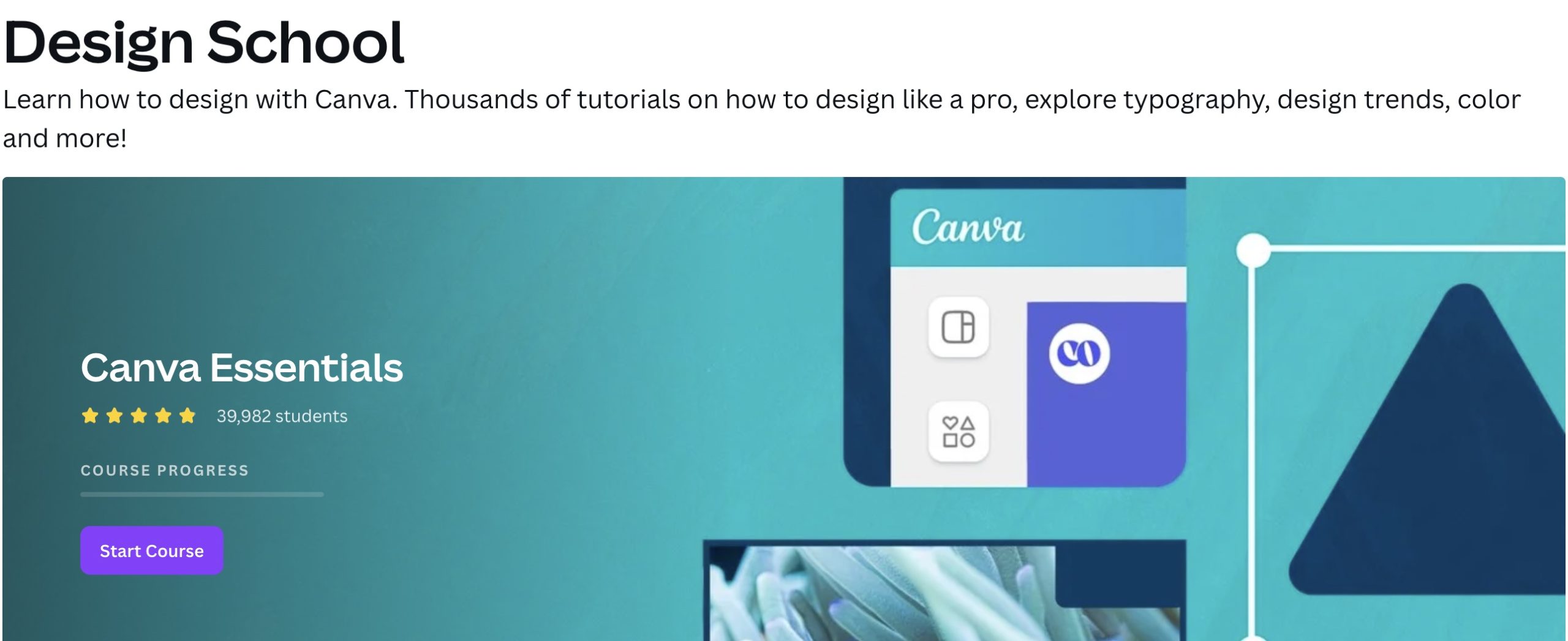
From the start, Canva embraced an educational and supportive approach. Their Design School initiative played a central role in this.
Through a series of online courses, tutorials, and resources, Canva provided its users with the tools to make the most out of the platform. This initiative wasn’t just about teaching people to use Canva; it was about fostering creativity and making design accessible to everyone.
“We really wanted people to not only use Canva but also to feel confident and inspired by what they could create.”
Melanie Perkins, Interview With Creative Minds.
This emphasis on education and empowerment led users to see Canva not just as a tool, but as a partner in their creative journey.
Another element of Canva’s community-centric strategy was its support for user-generated content.
Canva encouraged users to share their designs on social media and participate in design challenges. This user-generated content acted as organic marketing, spreading Canva’s brand without traditional advertising costs.
By turning users into advocates, Canva created a virtuous cycle of growth where the community itself became the primary driver of new user acquisition.
Canva’s Design School also fostered a strong sense of community among educators and professionals. By offering resources for teachers to integrate design into their classrooms, Canva positioned itself as an educational ally.
This strategy not only grew Canva’s user base but also nurtured a new generation of users who were comfortable with the platform from an early age.
“You can only grow as big as your dreams. Because if you can’t dream that far, you can’t really get that far.”
Melanie Perkins
This quote perfectly encapsulates Canva’s vision of empowering users to think bigger and achieve more with the help of their tools.
Nurturing Brand Ambassadors
Canva also invested in building relationships with power users and influencers who could help amplify the brand’s reach.
The focus on community also extended to Canva’s inclusivity initiatives.
Key Takeaway: Building a strong community around your product can turn users into lifelong advocates, driving sustainable growth and brand loyalty.
Step 9: Build Loyalty
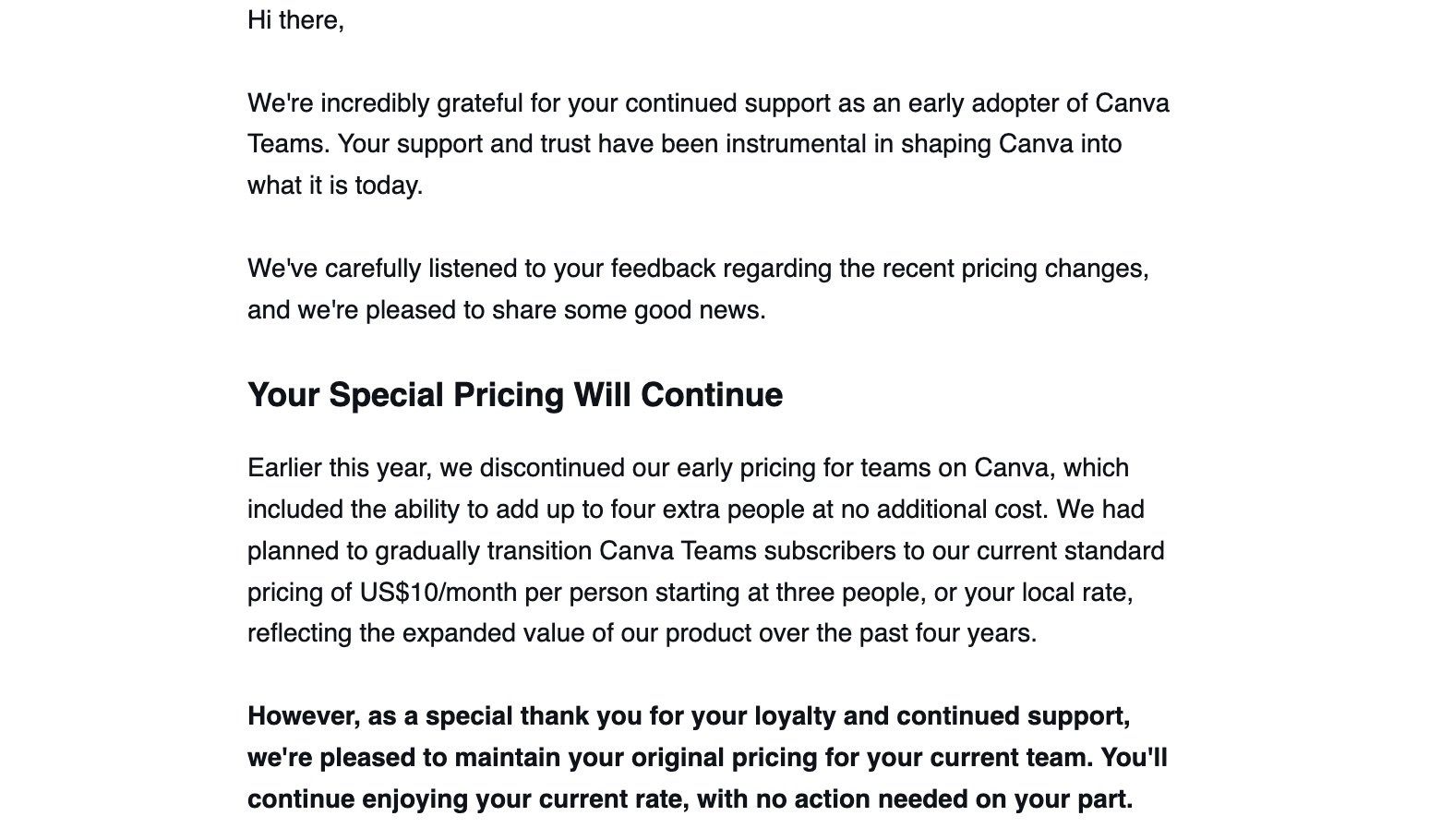
Personally, I have been a customer of Canva for over 5 years at this point and something that really stood out to me was when they changed their prices recently, pretty drastically too. Then I found out because I was already a customer, I got grandfathered in and get to pay the same price forever.
Canva’s growth was definitely accelerated by passionate users who truly believed in the product.
To build brand loyalty, Canva focused on making its platform accessible and empowering for users of all skill levels, backgrounds, and abilities.
One of the key strategies Canva employed was leveraging educational content to engage users. Canva’s Design School, launched to help users maximize the platform, played a crucial role in fostering brand loyalty.
“For us, it’s just always building a durable, valuable business and being able to have a positive impact on the world.”
Melanie Perkins, (Source: Interview with Nilay Patel, 2023)
By offering a wide array of tutorials, courses, and workshops, Canva educated users and empowered them to become better designers.
Canva also promoted loyalty through community-driven events like design contests and challenges.
These users weren’t just casual users; they became advocates, educators, and professionals deeply connected with the brand.
Key Takeaway: Building genuine relationships, empowering users through education, and making them feel heard transformed Canva from just another tool into a movement, resulting in brand loyalty that fueled their growth.
Step 10: Pushing the Boundaries – Canva’s Next Level Innovation
This wasn’t just about keeping up with trends—it was about setting them.
“We’ve never been content with just solving one problem.” “It’s about seeing how many more challenges we can tackle for our community, and finding ways to make creativity accessible to anyone, anywhere.”
Melanie Perkins
One of the key innovations Canva introduced was a set of features aimed at making design more collaborative.
Canva made sure that these features were easy to use, regardless of the user’s experience level—thereby bringing people together even when they were physically apart.
Another innovative stride was Canva’s commitment to integrating Artificial Intelligence (AI) into its suite of tools.
Canva’s Magic Resize
One feature that became particularly impactful was Canva’s Magic Resize.
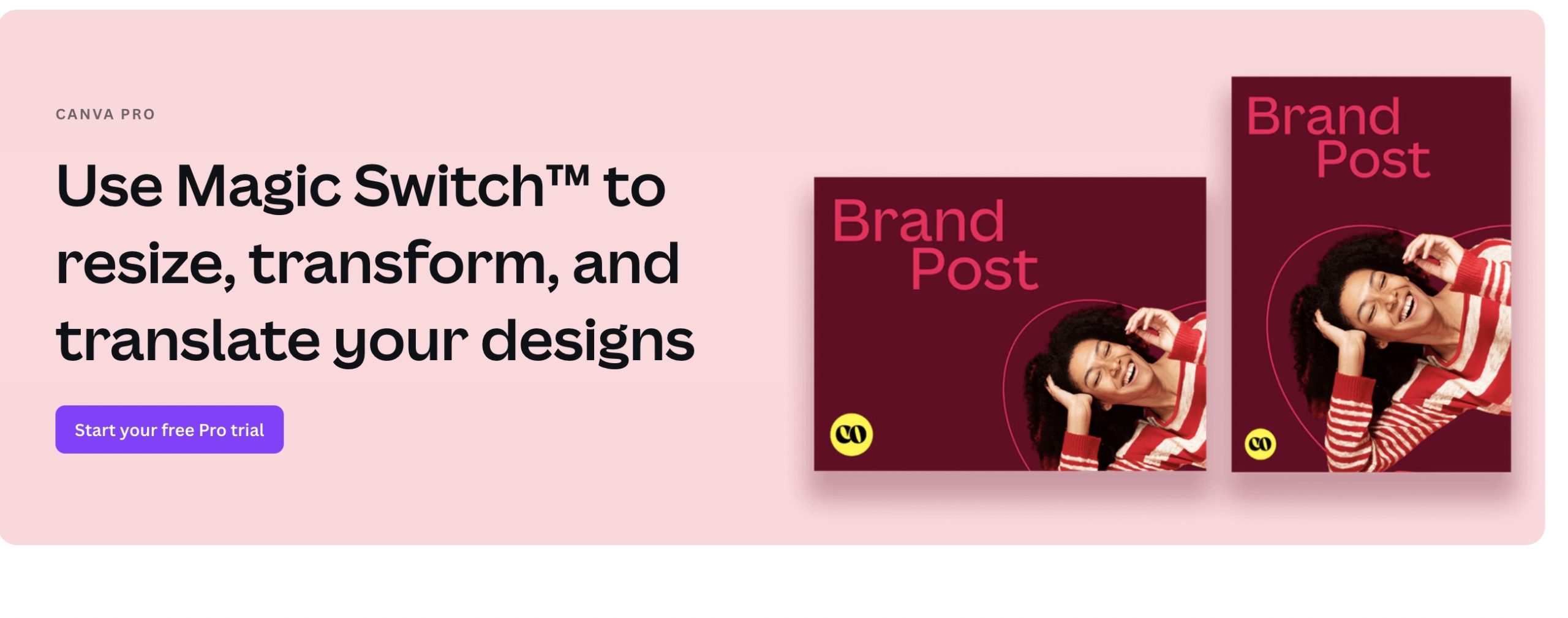
This tool enabled users to take a design and quickly adapt it to various dimensions suitable for different social platforms.
Users, especially small businesses, found this feature invaluable as it saved significant time and effort while maximizing their reach.
Canva also ventured into video editing, recognizing the growing importance of video content in digital marketing.
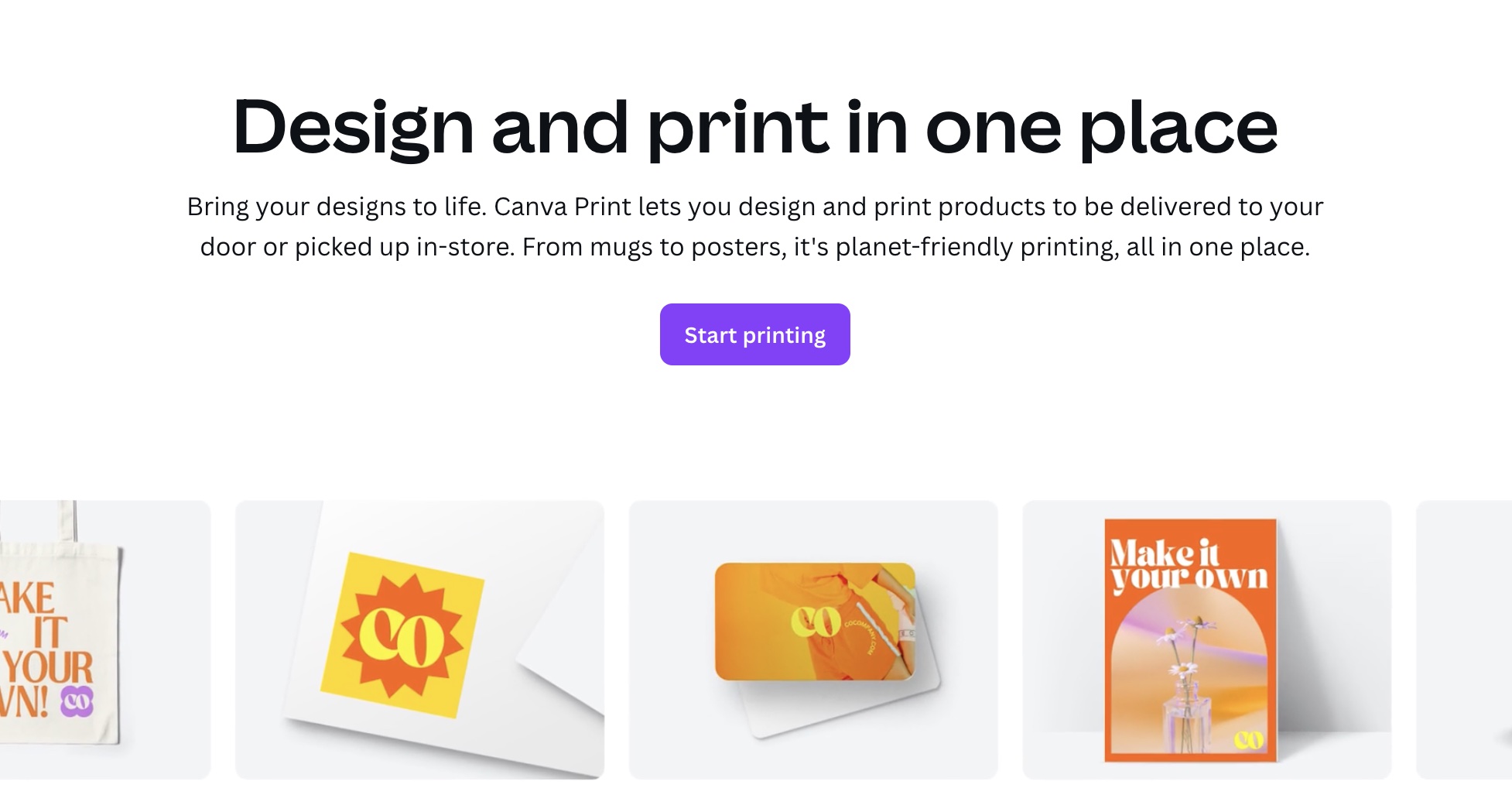
The Canva Print feature was another important innovation that bridged the gap between digital and physical.
A crucial element to Canva’s success in pushing boundaries has been its ability to listen to its users. Many of the new features, from collaborative tools to AI-powered suggestions, stemmed from understanding what users needed next.
Key Takeaway: Canva’s next-level innovations—from AI integrations to collaborative tools—have been instrumental in evolving it from a simple design tool to a full-fledged creative ecosystem.
Sources:
- https://www.youtube.com/watch?v=QIRLeqKxy8c&ab_channel=GoldmanSachs
- https://www.youtube.com/watch?v=kA1b3X-iW6M&ab_channel=NewYorkStockExchange
Recent Articles
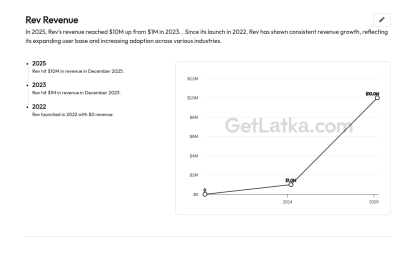
How Rev's CEO Adi Bathla Drove Revenue to $10M by Revolutionizing Auto Shop Workflows
Building a company from scratch and driving it to hit significant revenue milestones is no small feat. Adi Bathla, the…
May 8, 2026 • 4 min read
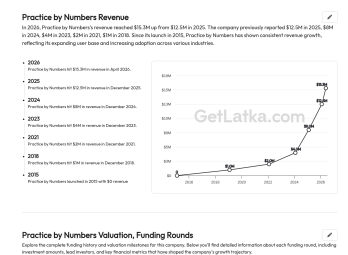
How Practice by Numbers Achieved $16.5M Revenue in 2026 with Innovative SaaS Solutions
2015: Launched Practice by Numbers to Fill a Market Gap Practice by Numbers (PBN), co-founded by Rohit Garg and Dr.…
May 1, 2026 • 4 min read
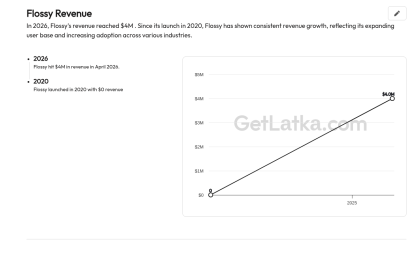
How Flossy Achieved $4M Revenue and Continues to Grow with AI Innovations
In a rapidly evolving world, where technology and healthcare intersect more intricately than ever, Flossy has emerged as a beacon…
May 1, 2026 • 4 min read