How Keap Grew Revenue by Redefining Strategy and Onboarding
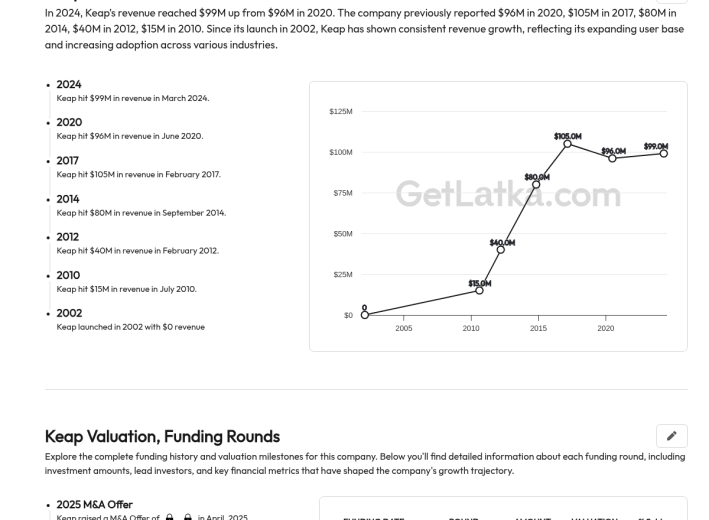

In the dynamic world of CRM and related software, achieving consistent revenue growth is no small feat. For Keap, a company that began its journey focused on sales and marketing software for million-dollar businesses, the path to significant revenue milestones involved strategic shifts and innovative onboarding processes. This blog post delves into how Keap navigated and overcame challenges to achieve growth, leveraging insights from an interview transcription with a key executive.
2011-2017: Shifting Focus and Reaching New Markets
Keap’s journey to growth began with a pivotal decision to shift its target market. Originally focused on sales and marketing solutions for million-dollar businesses, Keap identified potential in the downstream market. This shift was driven by recognizing a broader customer base in startups and solopreneurs. By 2017, Keap had transitioned its product to a simple CRM for startups, thereby increasing its competitor set by a staggering 8.5 times.
Free Onboarding: A Double-Edged Sword
As part of its strategy to penetrate the startup market, Keap transitioned from a paid onboarding model to a free one. This move was intended to lower entry barriers for new customers. However, it inadvertently led to challenges, as customers struggled with the lack of personalized support that was previously available. The initial growth in customer numbers was offset by a decline in retention rates, highlighting the need for a more effective onboarding strategy.
2018: Redefining Strategy to Restore Growth
By 2018, Keap recognized the necessity of restoring its human connection with customers. The company began redefining its strategy to focus on business automation and paid onboarding, aiming to enhance customer experience. This shift marked the beginning of Keap’s journey towards reintegrating human elements into its product-led growth (PLG) strategy, which the executive described as a ‘hybrid’ approach at the time.
Integrated PLG: A Strategic Pivot
Keap’s growth strategy involved a comprehensive understanding of customer sophistication and problem complexity. By targeting million-dollar businesses once again, Keap aimed to tailor its onboarding experience to match the needs of its more sophisticated clientele. This strategic pivot emphasized the importance of human assistance in onboarding, particularly for customers facing complex challenges.
2019: Experimenting with Customer Onboarding
In 2019, Keap embarked on a high-impact experiment to optimize customer onboarding. The hypothesis was simple: by identifying and helping customers achieve specific goals within the product, retention rates would improve. Over six months, Keap tested this approach with 705 customers, observing a significant uptick in month-four (M4) retention rates.
Goal-Oriented Onboarding: A Game Changer
Keap’s new onboarding strategy involved setting clear goals for customers and providing tailored support to achieve these objectives. This approach not only improved retention rates but also encouraged early exits for customers unlikely to find long-term value, thereby optimizing resource allocation.
2020 Onwards: Scaling Success with Integrated Strategies
With promising results from its onboarding experiment, Keap sought to integrate these insights across its organization. The company developed an assessment tool for new customers to identify their goals and align marketing, sales, and coaching efforts accordingly. This holistic approach ensured that every customer interaction reinforced the goal-oriented onboarding process.
Coaching and Product Enhancements
Keap also invested in enhancing its coaching services, offering guarantees to ensure customers reached their goals. This commitment to customer success was reflected in the development of ‘My Playbook,’ a customizable checklist that coaches tailored to individual customer needs. Such enhancements not only improved customer satisfaction but also bolstered net revenue retention (NRR) rates significantly.
2023: Achieving Revenue Milestones and Looking Ahead
By 2023, Keap’s integrated PLG approach had yielded impressive results. The company’s focus on goal-oriented onboarding and personalized support led to substantial improvements in NRR, with rates reaching as high as 106% for customers benefiting from the full spectrum of Keap’s initiatives. This success story underscores the power of strategic pivots and customer-centric approaches in driving revenue growth.
For more insights on Keap’s journey and other CRM and related software companies, visit the GetLatka industry category page or explore companies by country.
To learn more about Keap and its offerings, visit their official website. For a comprehensive overview of SaaS companies in different regions, check out the relevant location category page.
Recent Articles

How 1Mind Achieved Rapid Revenue Growth with AI-Driven Sales Solutions
The journey of 1Mind, under the leadership of CEO Amanda Kahlow, is a remarkable testament to the power of innovative…

How Rev Grew to $10M Revenue Using AI and Strategic Expansion
In the ever-evolving landscape of the automotive repair industry, Rev has positioned itself as a pivotal player, thanks to the…

How Test-Company Achieved $1M ARR and Expanded to 100 Employees
Test-company has emerged as a significant player in the ‘Other Agency’ industry, achieving impressive growth milestones such as reaching $1…