How Submagic Hit $8 Million Revenue in 3 Years: The Complete Bootstrap Playbook


A 28-year-old French founder just proved you don’t need VC money to build a $8M ARR SaaS company. Here’s exactly how David Zitoun did it—and how you can replicate his success.
When David Zitoun launched Submagic from France in May 2023, he had zero customers, zero revenue, and zero investment dollars. Fast-forward to June 2025, and his AI video editing tool generates $8 million in annual recurring revenue with just 13 employees—that’s $615,000 revenue per employee.
Most SaaS founders chase venture capital to scale. David chose a different path. He bootstrapped his way to an efficiency most funded startups can only dream of, building what might be the most profitable team in the AI space.
In a recent interview, David shared the exact playbook that took Submagic from zero to $8M ARR in just 36 months. Every tactic is replicable. Every strategy is actionable. And every number proves that bootstrap success isn’t just possible—it’s more profitable.
Here’s how you can build your own $8M bootstrap empire.
How to Hit $1 Million Revenue in 90 Days
David didn’t stumble into his first million. He engineered it with precision timing and strategic positioning that compressed typical startup timelines from years into months.
The timeline was surgical: First customer on May 1st, 2023. First million ARR on August 1st, 2023. Exactly 90 days.
The Timing Strategy
David launched Submagic during the perfect storm of short-form content explosion. ChatGPT had just gone viral, Alex Hormozi was dominating social media, and every business suddenly realized they needed to create viral shorts. The market was primed and desperate for solutions.
“There is a time to market, like time market fit that I really believe in business in general,” David explains. “We were at the right time with the right product with the arrival of ChatGPT at this time. Everybody wants to make short form content.”
The Viral Content Catalyst
Instead of traditional marketing, David leveraged user-generated viral content. Customers discovered Submagic, created videos showing the tool in action, and these videos exploded across social media organically.
“We had like a lot of viral short form content coming not from us, but from users saying like, hey, I discovered this new tool called Submagic. They can allow you to make three clicks captions super easily on the product,” David recalls.
These organic viral moments drove massive awareness without any ad spend. One video David made personally hit 100,000 views and generated $3,000 in monthly recurring revenue directly.
Your 90-Day Replication Framework:
- Identify timing windows: Look for technology shifts, cultural moments, or market gaps that create urgent demand
- Build for virality: Create products so remarkable that users naturally want to show them off
- Document everything: Track which viral moments drive actual revenue, not just vanity metrics
- Speed execution: David’s technical co-founder spent 8 years learning how to build products in “three clicks”—simplicity beats features
The key insight: Don’t launch when your product is perfect. Launch when the market timing is perfect.
How to Find 10,000 Affiliates Who Sell For You
Most affiliate programs fail because founders are too stingy. David’s “crazy generous” approach created an army of 10,000+ partners who now drive $1.6M of his $8M ARR.
The Generosity Principle
David pays 30% commission on lifetime value. Not first purchase. Not first year. Forever.
“We give 30% revenue on the lifetime value of the customers,” David explains. “So if you become an affiliate tomorrow and you just bring a customer to Submagic, every month that they will pay Submagic, you will get your commissions.”
Most founders think this is financial suicide. David proves it’s the opposite.
The Hidden Math
That $1.6M in affiliate-driven ARR costs David approximately $480K annually in commissions (30% of $1.6M). But here’s what traditional cost analysis misses:
Every affiliate creates brand awareness beyond trackable links. When someone makes a YouTube video about Submagic, maybe only a small percentage clicks the affiliate link. But thousands see the brand name repeatedly. This “free” brand exposure is immeasurable and untrackable.
“People see like, you’re going to give 30%? It’s huge and stuff like that. But they don’t see how much business affiliation is bringing to your business, like without tracking the link,” David notes.
The Launch Strategy
David launched his affiliate program just 30 days after getting his first customer. Zero budget demanded creativity over cash.
“At the beginning of Submagic, we had zero euros to invest into marketing. And I was used to do affiliate marketing in my first company, where I was myself an affiliate for other businesses. So affiliation is amazing when you don’t have a lot of revenue.”
Your Affiliate Replication System:
- Start immediately: Launch your program within 30 days of first revenue
- Be radically generous: 30% lifetime commissions, not 5-10% for one year
- Teach success: Show affiliates exactly how to create viral content about your product
- Track beyond links: Measure brand awareness and indirect attribution
- Focus on revenue makers: Find affiliates who actually drive conversions, not just traffic
The counterintuitive truth: The more you pay successful affiliates, the more profitable your business becomes.
How to Generate $615K Revenue Per Employee
While most SaaS companies hire aggressively to scale, David built the most efficient team in the industry with a radical hiring philosophy that turns conventional wisdom upside down.
The Anti-Credential Approach
70% of David’s team has no college degree. This isn’t accidental—it’s strategic.
“We have very atypical people in the team. Like everyone is atypical. We have the average age is 28. 70% of the team doesn’t have any degrees. We all are driven by the same stuff. That is like we want to deliver value and learn from our experience.”
The User-to-Employee Pipeline
David’s most radical hiring hack: 80% of his team were Submagic users first.
“The funny part is like, I would say 80% of the team, so eight people out of 13, are coming from Submagic. They are users of Submagic first. They’ve been using Submagic for content they wanted to create, and we just send emails to our database. We are hiring, and part of the team is coming from Submagic.”
This creates employees who already understand the product, believe in the mission, and know the customer pain points intimately.
The Remote Efficiency Model
David’s team meets in person once per year. That’s it. Everything else happens remotely, eliminating office overhead and geographical hiring limitations.
The annual meetups aren’t just team building—they’re strategic planning sessions. “So it was this year in Thailand two months ago. It was amazing. Last year we went to Tuscany in Italy.”
Your Team Efficiency Blueprint:
- Hire users first: Mine your customer base for potential employees who already love your product
- Ignore credentials: Focus on drive, learning ability, and cultural fit over degrees
- Embrace remote: Eliminate office costs and tap global talent pools
- Optimize for value: Every hire should directly impact revenue or customer experience
- Stay lean intentionally: Resist the urge to hire until each new role is absolutely essential
The efficiency result: $615K revenue per employee versus the industry average of $100-200K.
How to Hit #2 on Product Hunt 500+ Upvotes
David’s Product Hunt strategy wasn’t about gaming the system—it was about strategic market entry that opened the entire US market.
The Market Pivot Moment
Two months after launch, David and his co-founder realized they needed to change everything. “At this time we had zero customers in the US and my co-founder and I decided to say like, we should change the strategy. We are going full into the US. Forget about the French country. Let’s go full in.”
Product Hunt became their US market entry vehicle.
The Energy Investment
David warns that Product Hunt success requires massive energy commitment. “The energy you have to put to become number two, it’s like 24 hours reaching out everyone to say, please vote for my product, check my product.”
But for early-stage companies, this concentrated effort pays off. “When you just started and you don’t have a lot of choice, it’s something good to do.”
The Market Access Result
The #2 Product Hunt ranking gave Submagic instant credibility in the US market. “From this day, it was the best decision ever because our main market became the US from this day.”
Your Product Hunt Replication Strategy:
- Use it for market entry: Don’t launch on Product Hunt just for vanity—use it to break into new markets
- Commit fully: Plan for 24-48 hours of intensive outreach and community mobilization
- Time it strategically: Launch when you have a clear business goal, not just because you built something
- Leverage the credibility: Use your ranking to open doors with customers, press, and partners
- Focus on early stage: Product Hunt works best when you’re still scrappy and unknown
The key insight: Product Hunt isn’t about the launch day—it’s about the market access it creates afterward.
How to Launch Free Tools to Get 9 Million Clicks
David’s free tools strategy generated 9 million monthly visitors at peak, proving that massive organic traffic is still possible if you understand user intent and search behavior.
The Tool Strategy
Submagic launched free tools around video-related tasks: compressing videos, downloading YouTube content, and finding titles. These tools attacked high-volume, low-competition search terms.
“We launched a free tool strategy at some point, at Submagic. So we created free tools like how to compress your video, how to download video from YouTube and stuff like that. And those tools were performing so well, like in one month it explodes.”
The Traffic Explosion
The results were immediate and massive. “Had like 90, like at some point one million visitors a month. Like it was crazy. Like maybe even more. I don’t remember exactly, but you saw the peak. It was huge.”
The Learning Curve
However, David learned a crucial lesson about traffic quality versus quantity. “The conversion rate was really bad, to be honest. And we learned from it. The reality is that those things don’t convert and don’t attract really good customers.”
Some free tools were too far from Submagic’s core value proposition. “Downloading YouTube videos is too far from why people should use Submagic. And otherwise doing something like compressing your videos or finding titles is much more linked to why people should buy Submagic.”
The Google Limitation
The strategy hit obstacles when Google blocked some tools. “After months or two, had Google that blocks that because they don’t want people to download these videos.”
Your Free Tools SEO Blueprint:
- Align with core product: Choose tools that naturally lead users toward your paid solution
- Target search intent: Focus on high-volume keywords where users are actively seeking solutions
- Expect low conversion: Use free tools for brand awareness, not direct revenue
- Plan for scale: Build infrastructure that can handle massive traffic spikes
- Stay compliant: Avoid tools that conflict with platform policies
The strategic insight: Free tools work for brand building and top-of-funnel awareness, but require separate conversion strategies to monetize effectively.
How to Add 2,500 New Customers Every Month
Most SaaS founders view 15% monthly churn as catastrophic. David turned it into a competitive advantage through massive volume and strategic customer acquisition.
The Volume Strategy
Submagic processes 5-10,000 new signups daily. With that volume, even low conversion rates generate substantial revenue.
“I think we have like around like 8,000 or 10,000 new signups every day. Potentially, like, I don’t want to make mistakes, but I think around like between five to 10,000 signups a day.”
From this massive funnel, they convert approximately 2,500 to paid customers monthly.
The Churn Philosophy
David reframes churn as natural market behavior rather than business failure.
“The churn is high. And I think it’s not something crazy. It’s not something we should, of course, it’s not a metric that we like. I don’t know any SaaS companies that like having a high churn. But it’s part of the, people want to try product. They want to try AI tool. They want to discover. They want to see if short form is for them.”
The Market Size Advantage
High churn becomes sustainable when your addressable market is massive.
“The market is so huge. It’s just the beginning of people knowing about they can do short form for the business. They have so much value by making short form to grow their activities, to make their work known about the world.”
The Acquisition Economics
With minimal paid acquisition costs (only $20-50K monthly ad spend), Submagic can afford higher churn rates because customer acquisition is primarily organic.
Your High-Volume, High-Churn Strategy:
- Maximize top-of-funnel: Focus on massive signup generation over conversion optimization
- Embrace experimentation: Let users try your product easily, even if many don’t stick
- Optimize for market size: High churn works when your total addressable market is enormous
- Keep acquisition costs low: Use organic growth tactics to maintain profitable unit economics
- Focus on absolute numbers: 2,500 new customers monthly matters more than percentage conversion rates
The counterintuitive lesson: Sometimes building for massive volume with higher churn generates more absolute revenue than optimizing for perfect retention.
How to Create 10-Star Customer Experiences That Drive Word-of-Mouth
David’s obsessive customer focus isn’t just good business—it’s his primary marketing strategy. In a bootstrap environment, word-of-mouth becomes your most cost-effective growth channel.
The CEO Call Commitment
David personally takes 5-6 customer calls every single day. This isn’t scalable, and that’s precisely the point.
“I take approximately five to six calls with users every day since the beginning of Submagic. Everyone can book a call with the CEO of Submagic every time they want.”
This level of access is unheard of in most software companies, especially those generating $8M ARR.
The WhatsApp Strategy
For Submagic’s first 100 customers, David went beyond typical onboarding. He collected their phone numbers and created WhatsApp groups.
“What I would suggest to any founders is like the first hundred customer of Submagic, I took on Stripe the information, I reach out to them, I say, send me a text message, please. I will give you like a discount for the next month, but please send me a text message. I need to get your number. And those people, I put them into WhatsApp group.”
These customers became product co-creators, not just users.
The Airbnb Inspiration
David models his approach after Brian Chesky’s “10-star customer experience” philosophy from Airbnb.
“We really get inspired by Brian Chesky from Airbnb about this 10-star customer experience, how you can give an amazing experience to your users. And so we try to do super incredible things with our users.”
The Bootstrap Marketing Logic
For bootstrapped companies, exceptional customer experience becomes the most effective marketing channel.
“As a bootstrap company, like the best marketing you can have is word of mouth, it’s free. And so we really get inspired by Brian Chesky from Airbnb.”
Your 10-Star Customer Experience System:
- Be personally accessible: Make it easy for customers to reach decision-makers directly
- Go beyond digital: Use personal communication channels like WhatsApp or text
- Co-create with early customers: Turn your first 100 customers into product development partners
- Document everything: Every customer conversation should inform product decisions
- Scale selectively: Some high-touch experiences should remain unscalable for competitive advantage
The strategic principle: In a world of automated customer service, personal attention becomes a sustainable competitive moat.
The 3-Click Product Secret Submagic Swears By
David’s “3-click philosophy” isn’t just user experience design—it’s a fundamental business strategy that enables massive scale with minimal support overhead.
The Simplicity Obsession
David’s co-founder spent eight years building website builders before Submagic, learning that complexity kills adoption.
“One of the reasons why we did that is that we wanted to build like a three clicks products and wanted to do everything in three clicks to make the experience super easy. So this was most the focus of my co-founder that is a technical guy. He spent like eight years before building Submagic, building a website builder. And he learned about the importance of simplicity.”
The Complexity Reality
Video editing is inherently complex. David acknowledges this challenge head-on.
“It’s very, like I would say, trendy to say that, but the reality is like editing videos is complex. And I’ve been editing videos since I’m 12 years old, I’m 28 today. So I’ve tried all the tools, Sony Vegas, Premiere Pro, all the complex tool. And I know how to edit and it still remain complex for me.”
The Solution Architecture
Instead of simplifying video editing, Submagic abstracts away complexity through AI and intelligent defaults.
“So trying to get this three-click experience as much as possible on a short form content product was, or I would say the most important thing for us as a product. So we try to avoid all the distraction around the product and be really focused on what matters for the users.”
The Scale Impact
This simplicity focus enables Submagic to serve thousands of daily customers with minimal support overhead. Complex products require extensive customer success teams; simple products scale themselves.
Your 3-Click Product Strategy:
- Start with complexity: Understand the full scope of what users are trying to accomplish
- Abstract, don’t eliminate: Use AI and automation to hide complexity, not remove functionality
- Focus relentlessly: Choose 3 core actions users need to take and optimize everything around those
- Test with novices: If someone who’s never used your product can succeed in 3 clicks, you’ve won
- Resist feature creep: Every new feature should either reduce clicks or be eliminated
The scaling insight: Products that can be used successfully in 3 clicks require dramatically less customer support, enabling small teams to serve massive user bases.
The $8M Bootstrap Mindset: Why AI Changes Everything
David’s final insight reveals why bootstrap success is more achievable now than ever before: artificial intelligence has fundamentally changed the economics of building software companies.
The AI Leverage
“I think we talk about everything that I wanted to share with the team, with the audience that you have. I think I would just say something regarding bootstrapping a company today. It’s even more like true regarding AI. Like we are able to be like bootstrapped because AI is helping us a lot.”
The Team Size Revolution
AI doesn’t just improve products—it replaces entire departments.
“Like without AI, we should have been maybe 40 in the company or 50 people to do what we do. So I will say like use AI as much as possible. We try to push all the teams to use AI for everything they do, for marketing, for customer support, for products.”
The Tooling Reality
David’s team uses AI tools across every function: ChatGPT for strategy and communication, Cursor for development, Claude for analysis. This isn’t experimental—it’s operational.
“Me personally, I use a lot of ChatGPT. I use ChatGPT for everything. I talk a lot to ChatGPT myself, like with voice notes. I explain a lot of the context of what I do. So he helps me much better with the context.”
The Competitive Advantage
Companies that embrace AI-first operations can achieve the productivity of much larger teams while maintaining bootstrap economics.
Your AI-First Bootstrap Strategy:
- AI-first hiring: Hire people who actively use AI tools to multiply their productivity
- Tool integration: Implement AI across all functions, not just product development
- Context building: Train AI tools on your specific business context for better results
- Process automation: Use AI to handle repetitive tasks that previously required full-time employees
- Continuous learning: Stay current with AI capabilities as they evolve rapidly
The future insight: The next generation of $8M bootstrap companies will be built by 10-person teams using AI to accomplish what previously required 100+ employees.
Your $8 Million Bootstrap Action Plan
David’s journey from zero to $8M ARR proves that exceptional bootstrap success follows predictable patterns. Here’s your step-by-step replication framework:
Months 1-3: The 90-Day Million Foundation
- Identify perfect timing windows in your market
- Build for simplicity and virality from day one
- Launch affiliate program within 30 days of first revenue
- Focus on organic growth over paid acquisition
Months 4-12: The Scale Infrastructure
- Achieve Product Hunt top 3 ranking for market credibility
- Implement 10-star customer experience systems
- Build free tools for massive SEO traffic
- Hire your first employees from your user base
Year 2-3: The Efficiency Optimization
- Scale to 10,000+ affiliates with lifetime commissions
- Maintain lean team with AI-first operations
- Generate $500K+ revenue per employee
- Build sustainable competitive moats through simplicity
The Submagic playbook isn’t just about building a successful SaaS company—it’s about building a more profitable, sustainable, and personally fulfilling business.
David Zitoun proved that in 2025, it’s easier than ever to bootstrap.
The question you have to answer: Do you want to go Unicorn Hunting with very low probability, or do you consider $8m bootstrapping a nice life and a big win?
Ready to build your own bootstrap success story? Start with David’s affiliate strategy—it’s the fastest path from zero to sustainable revenue.
Recent Articles
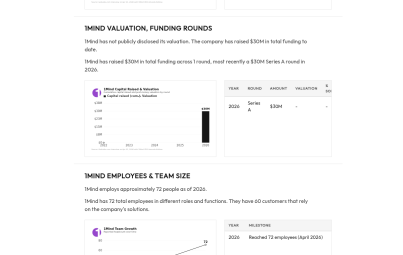
How 1Mind Achieved Rapid Revenue Growth with AI-Powered Sales Solutions
In the ever-evolving world of technology, few companies have managed to disrupt traditional sales and marketing processes as effectively as…
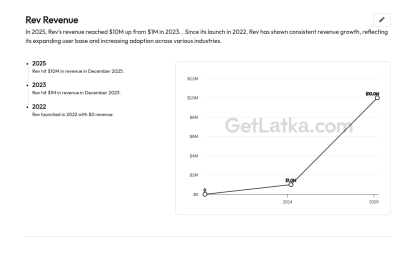
How Rev's CEO Adi Bathla Drove Revenue to $10M by Revolutionizing Auto Shop Workflows
Building a company from scratch and driving it to hit significant revenue milestones is no small feat. Adi Bathla, the…
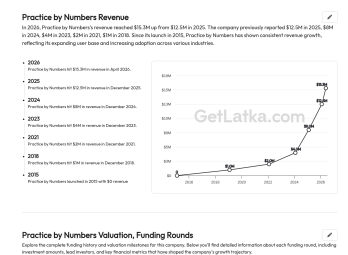
How Practice by Numbers Achieved $16.5M Revenue in 2026 with Innovative SaaS Solutions
2015: Launched Practice by Numbers to Fill a Market Gap Practice by Numbers (PBN), co-founded by Rohit Garg and Dr.…