How Superwall Hit $3.6M ARR With 12 People: The Complete Playbook for Building a Hybrid PLG-Enterprise SaaS


Jake Mor was 14 years old when he wrote his first line of Objective-C code. Today (June 2025), at 28, his company Superwall helps 3,000 mobile apps make more money from users. Paywalls created with Superwall are viewed 100m times every month, converting 5 million of those views into new paying customers on the order of $50m of new revenue per month.
… all with just 12 employees.
This isn’t another overnight success story. Jake built and sold his previous company, Fitness AI, for 4x EBITDA at $4 million ARR before starting Superwall. Now, with $7.5 million raised and $3.6 million in ARR, he’s cracked the code on something most SaaS founders struggle with: building a profitable hybrid model that scales both bottoms-up PLG and top-down enterprise sales.
Here’s exactly how Jake built Superwall into a $3.6M ARR machine—and how you can apply these same tactics to your own SaaS business.
How 2 Lines of Code Generated $3.6M ARR
Most SaaS founders overcomplicate their initial product. Jake took the opposite approach with Superwall. The entire value proposition starts with two lines of code that mobile app developers can implement to add subscription paywalls.
“Two lines of code, you got a paywall, start accepting payments,” Jake explains. This simplicity became Superwall’s competitive moat. While competitors required complex integrations and lengthy setup processes, Superwall delivered immediate value in minutes.
The genius isn’t just in the simplicity—it’s in the expansion strategy. Those two lines of code are the entry point to a sophisticated platform that can run hundreds of paywall experiments, implement AI-driven personalized pricing, and provide white-glove optimization services.
Your Action Plan: Identify the absolute minimum viable implementation of your product. Can you deliver core value in under 10 minutes? Jake’s two-line implementation became a powerful acquisition tool because it eliminated all friction for new customers to try the product.
The $200 to $1,500 Graduation Strategy That Scaled 3,000 Customers
Jake discovered something most SaaS founders miss: you don’t need to choose between PLG and enterprise sales. Superwall’s median customer pays $200-300 per month, but the average customer pays $1,000-1,500 per month. This massive spread reveals their hybrid strategy.
New customers start on the self-serve “startup plan” with usage-based pricing. As they scale and hit usage limits, they naturally graduate to negotiated enterprise deals. “Usually, huge customers, it doesn’t scale well with them. And so they want to deal,” Jake notes.
The key insight: let customer success drive the sales motion. Instead of cold outbound, Superwall’s expansion revenue comes from existing customers who’ve already proven the value. When apps like Cal.AI start running hundreds of experiments and converting 20,000+ downloads monthly, they need enterprise-level support and pricing.
Your Action Plan: Design your pricing to accommodate natural graduation. Start with a generous self-serve tier that lets customers prove value, then create clear upgrade triggers based on usage or success metrics. Let your customers’ growth drive your revenue expansion.
How 4,000 Custom Paywalls Created a $50M Revenue Engine
While most SaaS companies struggle to scale their services revenue, Jake turned custom implementation into a competitive advantage. Superwall has built over 4,000 custom paywalls for enterprise customers, creating a massive library of proven templates and strategies.
“We have this in-house team that basically come in for those first four weeks and they try all these things, they build all these things into the person’s app to run those experiments,” Jake explains. This isn’t just professional services—it’s product development disguised as customer success.
Every custom paywall teaches Superwall’s team what works and what doesn’t. They’ve become experts in mobile app conversion optimization by doing the work for thousands of customers. This knowledge compounds into better templates, smarter AI recommendations, and faster implementations for new customers.
The business impact is massive: Superwall’s customers collectively process $50 million in revenue monthly. At a conservative 3% conversion rate across 100+ million monthly paywall views, they’re facilitating roughly 3-5 million conversions per month.
Your Action Plan: Turn your professional services into a learning engine. Every custom implementation should feed back into your product roadmap and template library. Build your expertise by doing the work, then scale that expertise through automation and templates.
The 20-30% Revenue Lift Formula Using AI Demand Scoring
Jake’s latest innovation shows how data advantages compound over time. Superwall’s AI demand scoring analyzes hundreds of millions of monthly paywall views to predict which users are likely to subscribe and at what price point.
“We assign each unique user a demand score using proprietary signals to determine is this someone who subscribes to apps or not,” Jake explains. The system considers iPhone model, location, wifi vs cellular connection, time of day, and previous paywall interactions to create personalized pricing.
The results are staggering: companies with $5-10 million MRR are seeing 20-30% revenue lifts overnight. “It’s maximizing both revenue and subscribers at the same time for our customers,” Jake notes. This creates a win-win where price-sensitive users get discounts while higher-value users pay premium prices.
The competitive moat is the data volume. With 100+ million monthly paywall views, Superwall has training data that would take competitors years to accumulate. Each new customer makes the AI more accurate, creating a network effect that strengthens with scale.
Your Action Plan: Identify the data you’re uniquely positioned to collect that competitors can’t replicate. Build AI features that get smarter with scale, creating increasing returns as you grow your customer base.
How 12 People Manage 100M+ Monthly Interactions
Superwall’s team efficiency metrics are extraordinary: $300,000 ARR per employee with 100+ million customer interactions monthly. This isn’t achieved through cutting corners—it’s achieved through intelligent automation and focused hiring.
Jake requires every team member to have their own mobile app they’re trying to grow. “I actually hope that they’re making more money from their app and that they still want to work at Superwall because they know the equity is what’s worth more,” he says.
This dogfooding requirement serves multiple purposes: it ensures product-market fit, creates internal product expertise, and maintains a growth mindset across the entire team. When your customer success team is literally using your product to grow their own apps, they understand customer pain points viscerally.
The organizational structure is intentionally flat. Two people handle all custom paywall building for enterprise customers. There’s no massive sales team or complex organizational hierarchy—just focused experts who understand the product deeply.
Your Action Plan: Hire people who are your ideal customers. If your team members wouldn’t use your product for their own projects, they probably shouldn’t be building it for others. Keep teams small and expertise-focused rather than building large hierarchical organizations.
The Failed Experiment Database That Powers 30% Conversion Rates
Most SaaS companies celebrate their wins but forget to systematize their failures. Jake took the opposite approach: “We always say we’re not experts in success, but we’ve seen a lot of failed experiments. What we can do is tell you which experiments probably won’t work.”
Superwall’s competitive advantage isn’t knowing what works—it’s knowing what doesn’t work. After running thousands of experiments across 3,000 customers, they’ve built a database of failed tests that helps new customers avoid common mistakes.
This expertise becomes a sales tool for enterprise customers. When Superwall’s team takes over a customer’s paywall optimization for the first four weeks, they’re not just running experiments—they’re applying years of accumulated failure knowledge to dramatically increase success rates.
The result: customers like Cal.AI achieve 20-30% conversion rates from app download to paid subscriber, well above industry averages of 10% or less. “Zach’s is stellar, 20% install to trial start, 30% whatever it is, is stellar,” Jake confirms.
Your Action Plan: Document and systematize your failures as much as your successes. Build internal databases of what doesn’t work and turn this knowledge into competitive advantages when serving new customers.
The 4x EBITDA Exit Strategy for Mobile Apps
Before building Superwall, Jake proved he could execute by selling Fitness AI for 4x EBITDA at $4 million ARR. This exit provides crucial insights for mobile app founders planning their own liquidity events.
“I started fitness AI to make money, not to start a huge brand,” Jake admits. This clarity of purpose helped him build efficiently and exit at the right time. The key was recognizing when the business had reached its natural ceiling and being honest with investors about his long-term vision.
The exit multiple (4x EBITDA) reflects the premium that profitable, efficiently-run mobile apps can command. Unlike high-growth, cash-burning SaaS companies that trade on revenue multiples, profitable mobile apps are valued on earnings multiples—rewarding operational efficiency over pure growth.
Jake’s transparency with investors during the exit created goodwill that carried forward to Superwall. He returned unused capital and offered the same terms for his new venture, maintaining investor relationships that facilitated future funding rounds.
Your Action Plan: Build with exit multiples in mind. Mobile apps and SaaS tools are often valued differently—understand which metrics matter for your eventual exit and optimize accordingly.
The $7.5M Fundraising Strategy Without Press Announcements
Superwall raised $7.5 million across multiple rounds without making any public announcements. “It was on our to-do list to announce it and it just didn’t happen,” Jake explains with characteristic honesty.
This approach reveals a mature founder’s priorities. Instead of optimizing for press coverage and vanity metrics, Jake focused entirely on product development and customer success. The fundraising supported growth rather than driving it.
The funding structure shows sophisticated capital planning: $2 million seed round, $800,000 rollover from previous company investors, and an unannounced Series A. This approach gave Jake maximum flexibility while maintaining strong investor relationships from his previous exit.
Not announcing funding rounds can be strategically advantageous. It avoids creating artificial growth pressure, prevents competitor attention, and allows the team to focus on execution rather than external expectations.
Your Action Plan: Consider whether funding announcements serve your strategic goals or just your ego. Sometimes quiet execution beats public attention, especially in competitive markets where stealth can provide temporary advantages.
How White Glove Onboarding Creates $1,500 ACV Customers
Superwall’s enterprise motion starts with a counterintuitive offer: “We want you to give us the keys. We’re gonna show you how to drive.” For the first four weeks, Superwall’s team takes complete control of enterprise customers’ paywall optimization.
This white glove approach solves a fundamental problem in B2B SaaS: customers often don’t know how to extract maximum value from complex tools. Instead of providing documentation and hoping for the best, Superwall guarantees results by doing the work themselves.
“What they don’t know is we’re learning how to drive their car. And the next time we see a 911 Turbo, we’re gonna know how to really, really push it to its limits,” Jake explains. Each customer engagement makes Superwall’s team more valuable to future customers.
The economic impact is significant. Enterprise customers paying $1,500+ monthly represent the high-value segment that drives average customer value above median pricing. These customers stick around because they’ve seen proven results from professional optimization.
Your Action Plan: For complex products, consider offering to do the work for customers initially rather than just providing tools. This builds deep product expertise while demonstrating value that justifies premium pricing.
The Network Effect Strategy Driving 5M Monthly Conversions
Superwall’s growth engine creates compounding returns through network effects. Each new customer adds to the 100+ million monthly paywall views that train the AI demand scoring system. More data makes the AI more accurate, which delivers better results for all customers.
The scale of customer success is staggering: 5 million monthly conversions across all Superwall customers means the platform is facilitating roughly $25-50 million in monthly customer revenue (assuming $5-10 average transaction values for mobile apps).
This creates a powerful flywheel: better AI results attract more customers, more customers generate more training data, better data improves AI accuracy, improved accuracy attracts larger enterprise customers willing to pay premium prices.
The network effect also appears in the template library. Every custom paywall built for enterprise customers becomes a template available to self-serve customers. The enterprise service business subsidizes product development for the entire customer base.
Your Action Plan: Design your product so that each new customer makes the experience better for existing customers. Whether through network effects, shared data, or community contributions, find ways to create increasing returns to scale.
The Apple Payment Revolution Creating New Market Opportunities
Jake predicts a massive shift in mobile app monetization due to Apple’s forced opening of in-app purchases. For the first time, developers can choose between Apple’s 30% fee structure and alternatives like Stripe’s 3% processing fees.
“By our math, it’s worth around 15%, but I think that there are gonna be tons of new merchant of records that are introduced to the market if the ruling is here to stay. And that’s crazy, because it could mint a completely new market overnight that’s like a venture scale,” Jake explains.
This regulatory change creates massive opportunities for companies like Superwall. As developers migrate away from Apple’s payment system, they’ll need sophisticated tools to manage subscriptions, handle chargebacks, deal with taxes, and optimize conversion rates.
Superwall is already ahead of this trend with customers using their platform to build Stripe-powered paywalls that pass App Store review. This early positioning could drive significant market share gains as the ecosystem shifts.
Your Action Plan: Monitor regulatory changes that could create new market opportunities in your industry. Position your product to benefit from shifts that hurt incumbents or create new customer needs.
The AI-Driven Future of Mobile App Growth
Jake’s vision for Superwall’s future reveals broader trends in AI-powered SaaS tools. “AI is impacting us a ton. The number of developers has just quintupled over the last few months, so that means more customers for us.”
The prediction: AI tools will democratize app development, creating millions of new mobile apps and dramatically increasing competition. “I think we’re probably going to enter a golden age for apps,” Jake says, comparing it to Netflix’s transition from limited programming to unlimited shelf space.
This expansion creates both opportunities and challenges. More apps mean more potential Superwall customers, but also more competition for user attention and app store rankings. The winners will be apps that can optimize conversion rates and user experience faster than competitors.
Superwall’s AI demand scoring represents the beginning of this trend. As AI gets better at predicting user behavior and personalizing experiences, the gap between optimized and unoptimized apps will widen dramatically.
Your Action Plan: Prepare for AI-driven market expansion in your industry. More competitors usually means higher standards for product quality and user experience. Invest in AI-powered optimization tools before they become table stakes.
Key Takeaways: The Superwall Playbook for SaaS Success
Jake Mor’s journey from 14-year-old coder to $3.6M ARR founder reveals a blueprint that any SaaS entrepreneur can follow:
Start Simple, Scale Smart: Two lines of code became a $3.6M business because the initial value proposition was frictionless. Complexity can always be added later.
Build Hybrid Revenue Models: Don’t choose between PLG and enterprise sales. Let customer success drive natural graduation from self-serve to high-touch deals.
Turn Services into Product: Every custom implementation should feed back into your core product. Use professional services to build expertise that scales through automation.
Systematize Failures: Document what doesn’t work as carefully as what does. Failure knowledge becomes a competitive advantage when serving new customers.
Design for Network Effects: Each new customer should make your product better for existing customers through shared data, content, or features.
Hire Your Customers: Team members who use your product for their own projects will build better features and provide better support.
Focus on Execution Over Publicity: Sometimes quiet growth beats public attention, especially in competitive markets where stealth provides advantages.
Superwall’s success isn’t about revolutionary technology or massive funding rounds. It’s about consistently executing on fundamentals: delivering immediate value, creating natural expansion opportunities, and building expertise that compounds over time.
With 100+ million monthly paywall views and 5 million monthly conversions, Superwall has created a data moat that will be difficult for competitors to replicate. But the real lesson isn’t about building a better paywall tool—it’s about building a business model that gets stronger with scale.
As Jake puts it: “We believe that software is a service. So for our startup plan, it’s software as a service, but for our growth plan, software is the service.” This philosophy—that true value comes from outcomes, not just tools—is what separates $3.6M ARR businesses from the countless SaaS startups that never escape the pack.
The mobile app economy is entering a golden age driven by AI democratization and regulatory changes. Companies like Superwall that can help developers navigate this complexity while delivering measurable results will capture outsized value in the years ahead.
Recent Articles
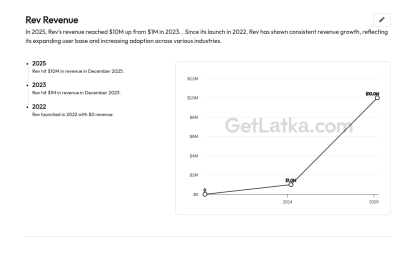
How Rev's CEO Adi Bathla Drove Revenue to $10M by Revolutionizing Auto Shop Workflows
Building a company from scratch and driving it to hit significant revenue milestones is no small feat. Adi Bathla, the…
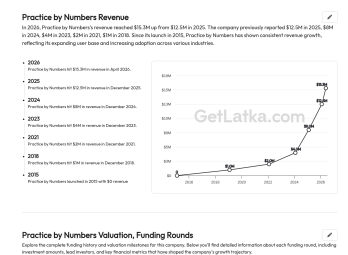
How Practice by Numbers Achieved $16.5M Revenue in 2026 with Innovative SaaS Solutions
2015: Launched Practice by Numbers to Fill a Market Gap Practice by Numbers (PBN), co-founded by Rohit Garg and Dr.…
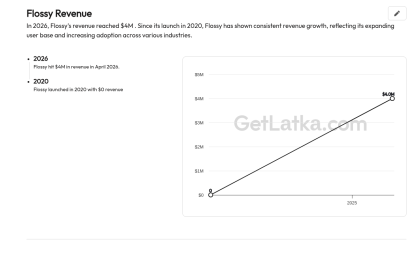
How Flossy Achieved $4M Revenue and Continues to Grow with AI Innovations
In a rapidly evolving world, where technology and healthcare intersect more intricately than ever, Flossy has emerged as a beacon…