How Amilia Hit $8M Revenue by Revolutionizing Activity-Based E-commerce

In the dynamic world of e-commerce, where traditional retail models continue to evolve, Amilia has carved a niche for itself by pioneering an activity-based e-commerce platform. The brainchild of founder and CEO François Yet, Amilia has grown significantly since its inception in 2010, reaching impressive revenue figures by 2020. This blog post delves into the tactical strategies and milestones that propelled Amilia to its current success.
2010: Launching Amilia with a Vision
François Yet launched Amilia in 2010 with a clear vision: to bring e-commerce capabilities to activity-based organizations. Inspired by the convenience of purchasing products through platforms like Amazon, Yet envisioned a similar model for organizations like YMCAs and community centers. Despite the challenges of developing a platform for such a fragmented market, Yet was driven by the belief that these organizations would inevitably require e-commerce solutions.
2015: Building a Robust Platform
In the first five years, Amilia focused on building a robust and generic platform capable of serving various verticals. The company’s strategy involved validating the product market fit within Montreal before expanding across Canada and into the U.S. This early groundwork laid the foundation for Amilia’s future expansion and scalability.
How Amilia Achieved $100K Revenue in its First Year
Amilia’s journey began with securing contracts from large sports centers in Montreal. These initial partnerships were crucial in establishing the company’s reputation and proving the platform’s capabilities. According to Yet, these early clients helped generate approximately $100,000 in revenue during Amilia’s first year.
2019: Crossing the $7M Revenue Mark
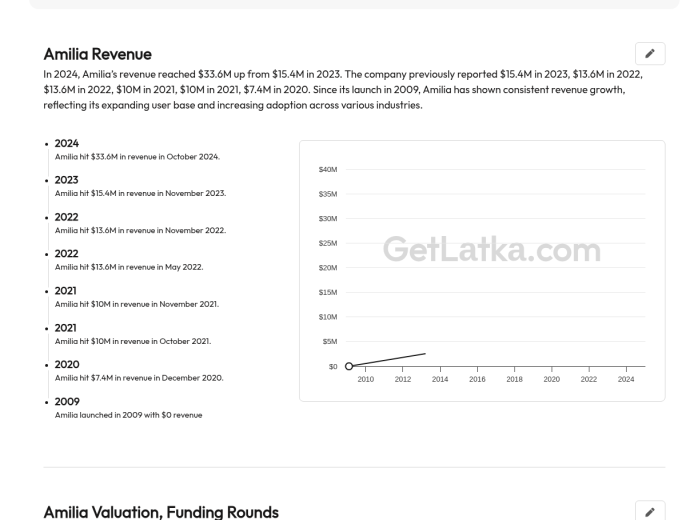
By 2019, Amilia had grown significantly, reporting $7 million in revenue. This growth was driven by a mix of transaction-based revenue, payment processing, and pure SaaS subscriptions. The platform processed around $250 million in gross merchandise value (GMV), with Amilia taking a 1% cut, contributing $2.5 million to its revenue that year.
How Amilia Scaled Using a Transaction-Based Model
Amilia’s business model is heavily reliant on transactions. Organizations pay a subscription fee of $99 per month, a 1% transaction fee, and an additional 3% for credit card processing. This model aligns with the seasonal nature of activity-based organizations, allowing Amilia to benefit from their peak registration periods. Approximately 30% of Amilia’s revenue comes from these transaction fees.
2020: Reaching $8M Revenue Despite Challenges
Despite the challenges posed by the COVID-19 pandemic, Amilia reported a revenue of $8 million in 2020. The platform processed $300 million in GMV, on a run rate of $350 million, generating $3.5 million from transaction fees alone. The pandemic highlighted the need for digital solutions, further validating Amilia’s business model.
How Amilia Leveraged SaaS and Payment Solutions
In addition to transaction fees, Amilia generates revenue through payment processing and SaaS subscriptions. The payment processing model, similar to Shopify Payments, contributes about one-third of Amilia’s revenue. The SaaS component, offering a flat subscription fee, adds stability and predictability to the company’s earnings.
2021: Preparing for Expansion with a $20M Funding Goal
Looking ahead, François Yet plans to raise $20 million in funding to accelerate Amilia’s growth. With proven product-market fit across 20 verticals, Yet aims to scale the business further by enhancing sales and marketing efforts. The goal is to increase customer acquisition and capitalize on the untapped potential within the U.S. market.
The Power of a Diverse Revenue Model
Amilia’s diverse revenue streams, combining transaction fees, payment processing, and SaaS subscriptions, have been instrumental in its growth. This multi-faceted approach not only provides financial stability but also positions Amilia as a comprehensive solution for activity-based organizations. The company continues to innovate, ensuring it meets the evolving needs of its clients.
Conclusion
Amilia’s journey from a startup to a burgeoning e-commerce platform for activity-based organizations is a testament to strategic vision and execution. By focusing on a niche market and leveraging a multi-revenue model, François Yet has positioned Amilia for continued growth and success. As the company prepares for its next phase of expansion, it stands as a leading example of innovation and entrepreneurship in the SaaS industry.
For more information about Amilia’s growth and financials, visit their GetLatka company profile, the GetLatka companies by country page, and the GetLatka industry category page. Learn more about Amilia’s offerings at their official website.
Recent Articles

How 1Mind Achieved Rapid Revenue Growth with AI-Driven Sales Solutions
The journey of 1Mind, under the leadership of CEO Amanda Kahlow, is a remarkable testament to the power of innovative…

How Rev Grew to $10M Revenue Using AI and Strategic Expansion
In the ever-evolving landscape of the automotive repair industry, Rev has positioned itself as a pivotal player, thanks to the…

How Test-Company Achieved $1M ARR and Expanded to 100 Employees
Test-company has emerged as a significant player in the ‘Other Agency’ industry, achieving impressive growth milestones such as reaching $1…