How Calendly Achieved Massive Revenue Growth: Insights from CEO Tope Awotona
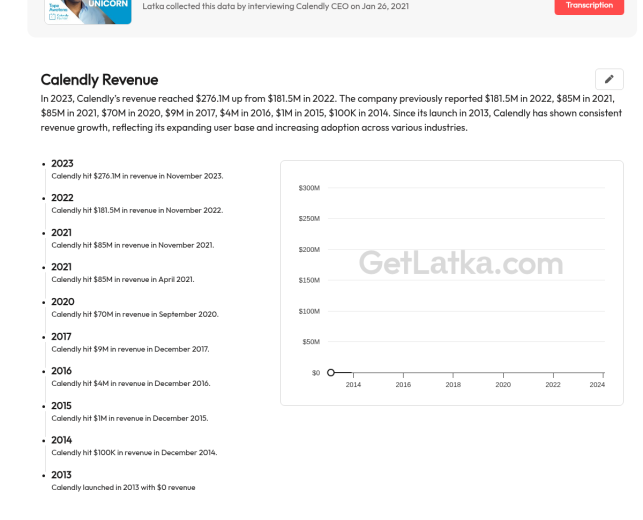

Calendly, a leading meeting scheduling software, has become an essential tool for millions of professionals worldwide. At the helm of this growth is Tope Awotona, the founder and CEO, whose vision and strategic decision-making have propelled Calendly to impressive revenue milestones. This blog post delves into the journey of Calendly’s growth, highlighting key strategies and metrics that contributed to its success, using insights from an interview with Awotona.
2013: The Birth of Calendly – Solving the Scheduling Problem
Awotona’s journey with Calendly began out of personal frustration with the tedious and time-consuming process of scheduling meetings. In his previous role as an enterprise software sales professional, he frequently encountered the inefficiencies of back-and-forth emails just to agree on a meeting time. This experience sparked the idea for a user-friendly scheduling tool that could eliminate these pain points.
Calendly was founded with the mission to streamline meeting scheduling and improve productivity. Awotona’s focus was on creating a product that was not only easy to use but also versatile enough to cater to professionals across various industries, unlike existing solutions that were niche-specific.
2014: Bootstrapping to Success – The Power of Passion and Perseverance
Awotona’s commitment to his vision was evident when he decided to bootstrap Calendly using his personal savings. He invested everything he had, including his retirement funds, into developing the minimum viable product (MVP). This risky move underscores the importance of passion and belief in one’s product, a crucial insight for aspiring entrepreneurs.
By 2014, with a working MVP, Awotona successfully raised a seed round to fuel further development and customer acquisition. His strategic choice to bootstrap initially allowed him to retain significant control over the company, a decision that would pay dividends as Calendly grew.
2015: Building the Product with Customer Feedback
Awotona’s approach to product development was heavily customer-centric. By actively seeking and incorporating user feedback, Calendly was able to refine its features and user experience, ensuring it met the evolving needs of its growing customer base. This iterative process not only helped improve the product but also fostered a loyal community of users who contributed to its viral growth.
During this period, Calendly expanded its functionalities to include integrations with popular CRM and ATS systems, further embedding its utility in the business processes of its users.
2016: Strategic Partnerships and Scaling Operations
As Calendly’s user base expanded, the company faced the challenge of scaling its operations effectively. Awotona’s solution was twofold: establishing strategic partnerships and investing in a robust team culture.
Calendly partnered with Railsware, a technical partner that played a pivotal role in its early development. This collaboration allowed Calendly to leverage Railsware’s expertise in product building, ensuring a high-quality, scalable solution. Additionally, Awotona emphasized the importance of maintaining a strong company culture despite rapid growth. He focused on hiring top talent and fostering an environment where employees felt like a cohesive team.
2017: Reaching 1 Million Users – Viral Growth and Customer Acquisition
Calendly’s growth trajectory saw a significant milestone in 2017, with the platform surpassing 1 million users. This was achieved through a combination of viral growth tactics and effective customer acquisition strategies.
Awotona leveraged the power of word-of-mouth and organic growth, fueled by Calendly’s ease of use and the value it provided to users. The company also invested in content marketing and SEO strategies, establishing itself as a thought leader in the scheduling domain. These efforts helped Calendly attract a diverse range of customers, from individual professionals to large enterprises like Zillow and Zendesk.
2018: Expanding Product Offerings and Enhancing Customer Experience
With a solid foundation and a growing user base, Calendly focused on expanding its product offerings. The company introduced advanced features such as team scheduling and meeting workflows, which streamlined the scheduling process for teams and improved overall productivity.
Awotona’s emphasis on customer experience remained a core tenet of Calendly’s strategy. The company continuously sought to enhance the user experience by incorporating feedback and staying attuned to the needs of its customers. This customer-first approach was instrumental in maintaining high user satisfaction and retention rates.
2019: Raising Venture Capital and Scaling Infrastructure
To sustain its rapid growth and further scale its operations, Calendly raised venture capital from prominent investors like OpenView and Atlanta Ventures. This infusion of capital provided the resources needed to invest in infrastructure, expand the team, and accelerate product development.
Awotona’s strategic decision to raise funds at this stage allowed Calendly to retain significant control and ownership. He was deliberate in choosing investors who not only provided capital but also offered valuable networks and expertise to help navigate the challenges of scaling a high-growth tech company.
2020: Navigating Challenges and Embracing Opportunities
The onset of the COVID-19 pandemic in 2020 presented both challenges and opportunities for Calendly. With remote work becoming the norm, the demand for efficient scheduling solutions skyrocketed. Calendly was well-positioned to capitalize on this trend, further solidifying its market leadership.
However, the rapid growth also brought challenges such as maintaining company culture and recruiting top talent in a competitive market. Awotona responded by doubling down on investments in people and culture, ensuring that Calendly remained an attractive place to work.
2021: Achieving Record Revenue Growth and Market Expansion
By 2021, Calendly had achieved record revenue growth, with the company’s annual recurring revenue (ARR) surpassing $70 million. This remarkable achievement was driven by a combination of strategic market expansion and continued product innovation.
Awotona’s leadership and vision were crucial in guiding Calendly through its growth journey. His ability to adapt to changing market dynamics and his commitment to delivering exceptional value to customers were key factors in Calendly’s success.
For more detailed insights into Calendly’s journey and financials, you can visit their GetLatka company profile or explore additional data on the GetLatka companies by country page and the GetLatka industry category page.
Conclusion: Lessons from Calendly’s Growth Story
Calendly’s journey from a simple scheduling tool to a leading SaaS platform is a testament to the power of passion, strategic decision-making, and customer-centric innovation. Awotona’s leadership and the company’s focus on delivering exceptional value have been instrumental in achieving its impressive revenue targets.
For entrepreneurs and business leaders looking to replicate Calendly’s success, key takeaways include the importance of passion, strategic partnerships, customer-centric product development, and the ability to adapt to changing market conditions. By staying true to these principles, companies can navigate the challenges of growth and achieve their revenue goals.
To learn more about Calendly’s product offerings and explore scheduling solutions for your business, visit their official website at calendly.com.
Recent Articles
How Sierra Achieved $200M in Revenue by Mastering Conversational Intelligence
In the dynamic world of SaaS, the journey of Sierra is nothing short of remarkable. The company, operating within the…
How 1Mind Achieved $6M Revenue in 18 Months Using AI Agents
Introduction: The Rise of 1Mind The rapidly evolving landscape of AI technology has witnessed the emergence of several transformative companies,…
How 1Mind Achieved Rapid Revenue Growth with AI-Powered Sales Solutions
In the ever-evolving world of technology, few companies have managed to disrupt traditional sales and marketing processes as effectively as…