How Coda Grew to Tens of Thousands of Active Users Pre-Revenue: An In-Depth Look at Their Strategy
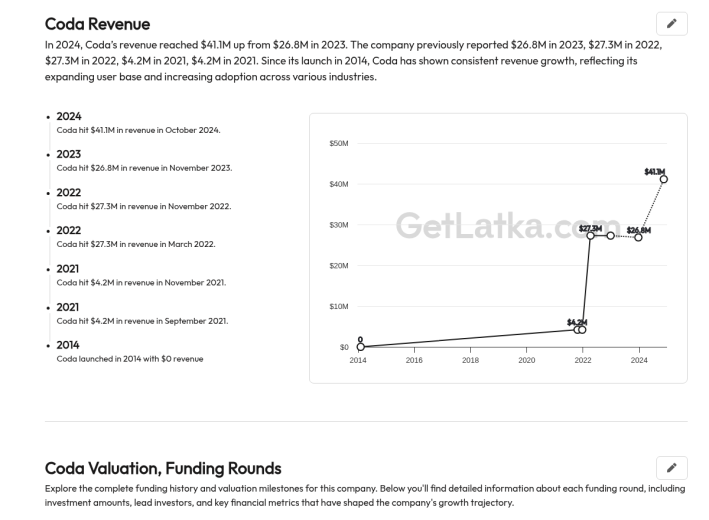

The journey of Coda, under the leadership of CEO Shashir Mehrotra, is a remarkable example of how a company can achieve significant growth even before generating revenue. This blog post will explore the strategic decisions and metrics that have driven Coda’s success, using insights from an interview with Shashir Mehrotra as well as other data sources.
2014: Launching a New Type of Document
Coda was founded in 2014 with a mission to revolutionize the way we interact with documents. The company’s product is an all-in-one document that combines the best features of documents, spreadsheets, presentations, and applications into a single platform. The idea is that anyone can create a document as powerful as an application.
The company operated in stealth mode for about three years, focusing on building a robust product with a small group of alpha users. This approach allowed Coda to refine its product based on real-world feedback before launching a broader beta version in late 2017.
2017: Beta Launch and User Acquisition
The beta launch in late 2017 marked a significant milestone for Coda. Within a short period, the company grew its user base to about 100 companies. By February 2018, Coda had launched its 1.0 version and expanded to thousands of companies worldwide. The company reported having tens of thousands of users and thousands of companies using their product.
One of the key tactics for user acquisition was leveraging communities and forums. Coda tapped into platforms like Product Hunt, Reddit, and various niche forums where potential users were already discussing similar tools. A notable achievement was their Product Hunt launch, which garnered about 5,000 upvotes and resulted in tens of thousands of sign-ups within the first week.
How Coda Uses Word of Mouth for Growth
Coda’s growth strategy heavily relied on word-of-mouth marketing. The company’s unique value proposition attracted two main types of users: those seeking new document tools and those looking for specific use cases such as project management or fitness tracking. By offering a product that could cater to a wide range of needs, Coda managed to spread quickly through user recommendations.
Additionally, Coda’s focus on building a product that integrates seamlessly with existing tools like Slack, Gmail, and Twilio contributed to its viral growth. This integration capability, known as Coda Packs, allowed users to pull data from various sources and automate tasks, making Coda an indispensable tool for many teams.
2018: Raising Capital to Fuel Growth
To support its ambitious growth plans, Coda raised approximately $60 million in funding across two rounds. The first round, amounting to $25 million, was raised over a weekend, highlighting the confidence investors had in the leadership team and the product’s potential. The second round, which raised an additional $35 million, was led by prominent investors such as Coastal Ventures and NEA.
Most of these funds were allocated to engineering, ensuring that Coda could continue to develop its product and support its growing user base. At the time of the interview, Coda had a team of about 50 employees spread across Mountain View, San Francisco, and Seattle.
2019: Preparing for Monetization
Despite having a large user base, Coda was still pre-revenue at the time of the interview. The company planned to introduce a freemium pricing model, charging only for document creators while allowing editors to use the platform for free. This model is designed to reduce friction in user adoption and encourage widespread use within organizations.
The decision to delay monetization was strategic. By focusing on user growth and product development, Coda aimed to create a robust and versatile platform that could command a premium price once the pricing model was implemented. The company’s plan to introduce workspaces, a heavily requested feature, was also part of the monetization strategy.
Key Metrics and Growth Indicators
Coda’s approach to growth was data-driven, focusing on key metrics such as daily active users, document creation rates, and user engagement. The company reported tens of thousands of daily active users, with about 80% of users being active on the platform at least three days a week.
Churn rates were also a critical metric for Coda. The company observed a high churn rate in the first two weeks of user onboarding, but this rate dropped significantly after users became active. By focusing on user engagement and retention, Coda aimed to create a loyal user base that would eventually convert into paying customers.
The Road Ahead: Challenges and Opportunities
As Coda prepares to launch its pricing model, the company faces several challenges and opportunities. One of the main risks is ensuring that the pricing model aligns with user expectations and does not hinder growth. However, the introduction of new features like Coda Mobile, Coda Automation, and Coda Packs presents significant opportunities for increasing user engagement and expanding the platform’s capabilities.
Looking ahead, Coda’s focus will be on scaling its user base, introducing new features, and refining its pricing model. By continuing to innovate and adapt to user needs, Coda aims to establish itself as a leader in the virtual workspace industry.
For more insights into Coda’s growth journey and other successful SaaS companies, check out their GetLatka company profile. To explore more companies in the United States, visit the GetLatka companies by country page. If you’re interested in the virtual workspace industry, visit the GetLatka industry category page. For a deeper look into collaboration and productivity software, check out the industry category page.
For more about Coda, visit their company website.
Recent Articles

How 1Mind Achieved Rapid Revenue Growth with AI-Driven Sales Solutions
The journey of 1Mind, under the leadership of CEO Amanda Kahlow, is a remarkable testament to the power of innovative…

How Rev Grew to $10M Revenue Using AI and Strategic Expansion
In the ever-evolving landscape of the automotive repair industry, Rev has positioned itself as a pivotal player, thanks to the…

How Test-Company Achieved $1M ARR and Expanded to 100 Employees
Test-company has emerged as a significant player in the ‘Other Agency’ industry, achieving impressive growth milestones such as reaching $1…