How HoneyBook Achieved Impressive Revenue Growth by Empowering Event Vendors
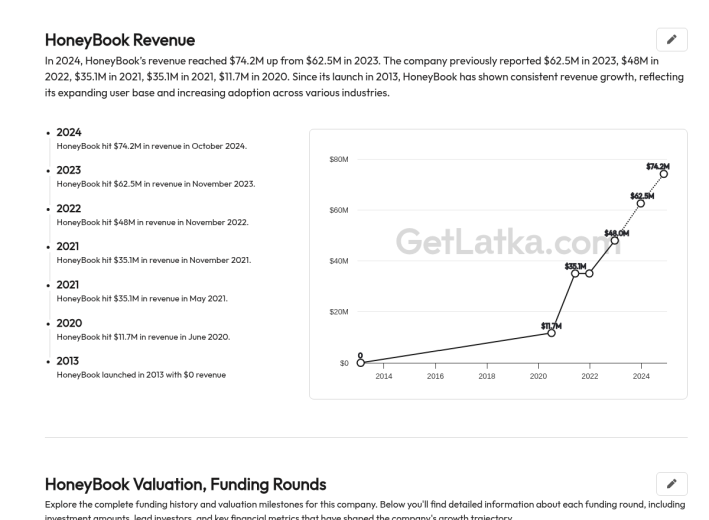

In the world of event planning, HoneyBook has emerged as a notable player by creating a platform that simplifies and revitalizes the vendor-client interaction. The journey to achieving significant revenue milestones is one marked by strategic decisions and a customer-centric approach. In an insightful interview with Oz Alon and Shadia Segal, co-founders of HoneyBook, we uncover the tactics and strategies that propelled HoneyBook to success.
2014: Launching HoneyBook and Identifying the Customer
HoneyBook was born from a simple observation: the event planning process, especially weddings, was cumbersome and outdated. The co-founders, through their own wedding planning experiences, realized that the power dynamics in the $300 billion U.S. events industry were unique. The vendors, not the buyers, were the ones calling the shots due to their frequent engagements in the industry.
This discovery led HoneyBook to focus its efforts on empowering vendors. By providing them with tools to manage proposals, contracts, and payments, HoneyBook positioned itself as an essential partner in their business operations.
2015: Raising Seed Capital and Building the Product
Shortly after its inception, HoneyBook set its sights on Silicon Valley. The decision to move from Israel to Palo Alto was driven by the need to immerse in a startup-centric environment and gain insights into the American market. This strategic move facilitated their first round of seed funding, amounting to over $1 million, which was pivotal in developing their platform.
The fundraising experience taught them about the importance of relationships with investors who shared their vision. Early investors like Bobby Lent and Boris Putanec were instrumental in guiding HoneyBook’s early development.
2016: Enhancing Vendor Services and Customer Experience
With a robust platform in place, HoneyBook concentrated on refining the user experience for vendors. By addressing key pain points such as client management and payment processing, HoneyBook steadily grew its user base. Their customer-centric philosophy ensured that vendors received top-notch service, mirroring the level of service vendors aimed to provide to their clients.
By enabling vendors to seamlessly handle client interactions and transactions, HoneyBook not only improved operational efficiency but also fostered a sense of trust and reliability among its users.
2017: Expanding Funding and Market Reach
As HoneyBook gained traction, it successfully closed a Series A funding round led by Michael Eisenberg from Aleph. This injection of capital allowed HoneyBook to scale its operations and enhance its technology suite. The focus was on capturing major U.S. cities and expanding their vendor network.
By 2017, HoneyBook had started to become a household name among event vendors, thanks in part to their strategic partnerships and relentless focus on customer satisfaction.
2018: Series B and Doubling Down on Transactions
In 2018, HoneyBook secured Series B funding with a strategic investor, Jeff Crowe from Norwest Venture Partners, who had experience with high-volume transaction companies like Lending Club. This partnership was crucial as HoneyBook began to delve deeper into the financial aspects of event planning, such as transaction volume and financing options for vendors.
Jeff Crowe’s involvement was not just financial; his insights into the transaction-heavy nature of Lending Club provided HoneyBook with a framework to navigate similar challenges in the events industry.
2019: Scaling Operations and Cultural Impact
HoneyBook’s rapid growth necessitated a move to a larger office as the team expanded from 28 to over 40 employees in a span of just 12 months. This growth was not just in numbers but also in the cultural footprint HoneyBook left on the industry. By emphasizing core values such as putting people first and going the extra mile, HoneyBook created an internal culture reflective of its customer service ethos.
The company’s obsession with customer satisfaction was evident in unique initiatives like offering babysitting services at events to accommodate vendor schedules, showcasing their commitment to solving real-world problems.
2020: Future Vision and Continued Growth
Looking ahead, HoneyBook aims to continue its expansion into new markets, with plans to launch in major cities across the U.S. Their goal is to engage more directly with end consumers, enhancing the overall event planning experience.
As HoneyBook scales, the focus remains on maintaining their high standards of service, ensuring that as they grow, the quality of customer interaction does not diminish.
In conclusion, HoneyBook’s journey from a small startup to a leader in the event management industry is a testament to their strategic focus on vendor empowerment and customer satisfaction. Their ability to adapt, learn, and innovate has set them on a path to continued success.
For more information on HoneyBook and their growth trajectory, visit their GetLatka company profile or explore their list of companies by country. Additionally, learn more about the CRM software industry on the GetLatka industry category page and check out HoneyBook’s website.
Recent Articles

How 1Mind Achieved Rapid Revenue Growth with AI-Driven Sales Solutions
The journey of 1Mind, under the leadership of CEO Amanda Kahlow, is a remarkable testament to the power of innovative…

How Rev Grew to $10M Revenue Using AI and Strategic Expansion
In the ever-evolving landscape of the automotive repair industry, Rev has positioned itself as a pivotal player, thanks to the…

How Test-Company Achieved $1M ARR and Expanded to 100 Employees
Test-company has emerged as a significant player in the ‘Other Agency’ industry, achieving impressive growth milestones such as reaching $1…