How Summitsync Achieved a $27M Revenue Run Rate Through Strategic Pivoting and Sales Tactics
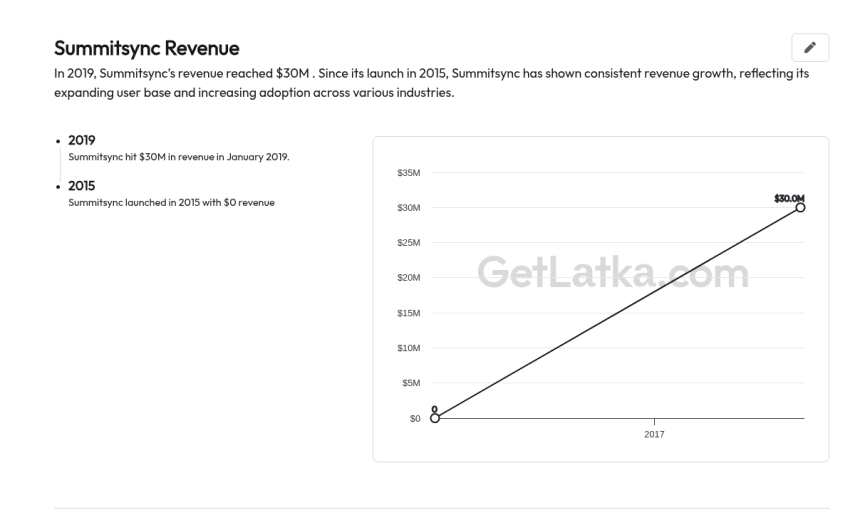

In the world of SaaS, growth stories can be both inspiring and educational. Today, we’re diving deep into the journey of Summitsync, an enterprise SaaS company specializing in sales enablement and marketing intelligence for conferences and trade shows. Led by CEO John Corgan, Summitsync has experienced a meteoric rise in the competitive SaaS landscape. Let’s explore how they achieved a revenue run rate of $27 million in 2018 and their plans to triple that figure in 2019.
2015: The Birth of Summitsync and Its Initial Challenges
Summitsync was founded in late 2015 by John Corgan after his successful exit from a corporate development role at Telemetry. The initial idea was a mobile consumer-based app, akin to a ‘Tinder for business conferences.’ However, despite accumulating users, the model lacked a clear path to revenue.
Early Lessons: Pivoting for Profit
By 2017, it became evident that the consumer model wasn’t sustainable. Corgan and his co-founder pivoted towards enterprise solutions, focusing on automating in-person meeting setups at conferences—a move that proved crucial for monetization.
2017: Building a Strong Foundation with Enterprise Clients
After pivoting, Summitsync began targeting enterprise clients, helping them optimize their conference investments. Their software provided actionable insights by mapping client CRMs to conference attendees, driving more revenue-generating meetings.
Pivotal Changes: From Consumer to Enterprise
- Shifted from a consumer app to an enterprise SaaS model.
- Focused on sales enablement and marketing intelligence at conferences.
- Developed a product that seamlessly integrated with existing CRM and marketing automation tools.
These foundational changes attracted significant interest from enterprise clients, setting the stage for rapid growth.
2018: Scaling with Strategic Sales and Pricing Models
2018 was a year of explosive growth for Summitsync. By the end of the year, the company was serving approximately 9,000 customers, with a robust strategy to add 650 to 750 new customers weekly. Their pricing model evolved to better suit enterprise needs, focusing on team size and the number of events rather than leads.
Pricing Evolution: Adapting to Market Demands
- Initial pricing experiments ranged from $1,500 per month to $25,000 annually.
- Settled on a model combining an annual licensing fee with consumption-based pricing.
- Average entry point stabilized at $10,000 annually, with potential for growth based on usage.
This strategic pricing allowed Summitsync to maximize customer lifetime value and drive expansion revenue.
2019: Ambitious Goals and Fundraising for Future Growth
As Summitsync entered 2019, their focus shifted to scaling operations and expanding their reach. With a goal to triple their $27 million revenue run rate, they planned to raise $20 million to bolster sales, marketing, and support infrastructure.
Fundraising Strategy: Fueling Expansion
- Planning to raise $20 million, targeting a 50% efficiency in converting investment to ARR.
- Funds aimed at expanding sales teams and enhancing product capabilities.
- Exploring new markets and strengthening existing customer relationships.
Summitsync’s approach highlights the importance of strategic investment in growth areas to sustain momentum.
Managing Churn and Driving Net Revenue Retention
Churn is a critical metric for any SaaS business. Summitsync managed a monthly revenue churn rate of 6% but offset this with significant expansion revenue. This resulted in a net revenue retention rate of over 100%, a testament to their ability to grow existing accounts.
Retention Strategies: Ensuring Customer Success
- Focused on increasing value for existing customers to drive expansion.
- Leveraged account management and product support to enhance customer satisfaction.
- Implemented a robust sales playbook to efficiently manage new and existing accounts.
By prioritizing customer success, Summitsync ensured that their growth was both sustainable and scalable.
Conclusion: Lessons from Summitsync’s Growth Story
The journey of Summitsync under John Corgan’s leadership offers valuable insights into scaling a SaaS business. From pivoting to the right business model, implementing strategic pricing, and managing churn effectively, Summitsync’s story is a masterclass in SaaS growth.
For more insights into Summitsync’s journey, visit their company profile on GetLatka. To explore other successful SaaS companies in the United States, check out the GetLatka companies by country page and the GetLatka industry category page.
For more about Summitsync, visit their official website.
Recent Articles

How 1Mind Achieved Rapid Revenue Growth with AI-Driven Sales Solutions
The journey of 1Mind, under the leadership of CEO Amanda Kahlow, is a remarkable testament to the power of innovative…

How Rev Grew to $10M Revenue Using AI and Strategic Expansion
In the ever-evolving landscape of the automotive repair industry, Rev has positioned itself as a pivotal player, thanks to the…

How Test-Company Achieved $1M ARR and Expanded to 100 Employees
Test-company has emerged as a significant player in the ‘Other Agency’ industry, achieving impressive growth milestones such as reaching $1…