10 Moves Behind Calm's $2B Valuation & $596M Revenue

January 10, 2025 • 22 min read
On This Page
Calm Revenue
Nathan Latka
Nathan Latka

What is Calm’s Valuation?

Calm’s valuation is $2B as of 2024.

What is Calm’s Revenue?

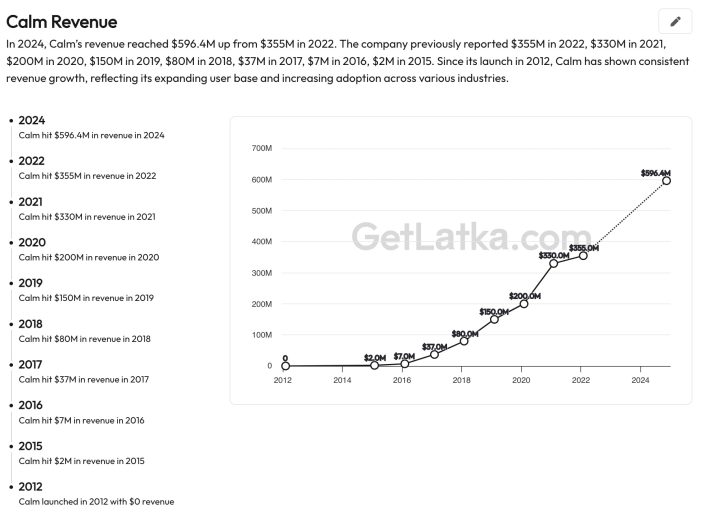
YearRevenue
2012Launched ($0 revenue)
2015$2M
2020$200M
2024$596.4M

Calm revenue reached $596.4M in 2024.

Who is the CEO of Calm?

The founders and CEO of Calm
Alex Tew (founder), David Ko (CEO), Alexander Will (President), Michael Acton Smith (founder)

The CEO of Calm is David Ko. Michael Acton Smith and Alex Tew are the founders of Calm. They launched Calm in 2012.

1. Turning Burnout Into Opportunity

Spending His Last £10 on an Internet Business Book

Michael and his friends in Soho (Where He Found The Book)
Michael (Top Left) and friends in Soho, Where He Found The Book

We’ll start this story with one of the founders, Michael Acton Smith.

When Michael graduated University, him and his friend, Tom Boardman got sensible jobs. He worked as a trader at an investment bank. He soon realized that “it didn’t speak to his soul.”

6 months later in the pub:

Michael and Tom: “Maybe we should leave and start our own business.”

Michael: “It became so all-consuming that was the moment when we like right let’s dive into the unknown leap out of the airplane and figure this out as we are plummet to earth.”

So, Michael and Tom walked into a bookstore across the street and found a book on doing business on the internet. 

The pair clubbed together $12.32 each to buy this book which was a lot of money for them living pretty much hand to mouth at the time.

Michael: This book was going to change everything from how we did commerce to how we connected with each other to how we were entertained. So that was kind of that became our bible to create firebox.com.

Michael’s Prior Endeavors That Led Up To Calm:

1. Firebox

Firebox.com in 2004
Firebox.com in 2004

Firebox is an online retailer and Michael’s first business.

Michael: “Our friend bought things from firebox in a fake name and if it weren’t for him our spirits wouldn’t have been up and maybe even wouldn’t have started other businesses.”

They only got one sale a month on firebox.com. 

Michael: “I think that the real tipping point for that business was when we made our own products.”

“That was a real kind of light bulb moment for me recognizing that to do anything in business you’ve really got to create something yourself. Make something that hasn’t existed before.”

And this realization is how the chess set was thought of.

2. Moshi Monsters

Moshi Monsters

Moshi Monsters was my childhood growing up. When I learned the founder of Calm was the same one who made Moshi Monsters, I texted everyone I knew.

Michael: “We thought we were going to be the next Disney. Almost everything we did seemed to just get bigger and bigger until it suddenly didn’t and the summer of 2012 was when things just suddenly stopped.”

Kids were turning to app store instead of internet games.

Michael’s story shows that to be a successful CEO, you must evolve with the market. His next move was launching Calm, an app that revolutionized meditation.

How Alex Tew Pieced It All Together
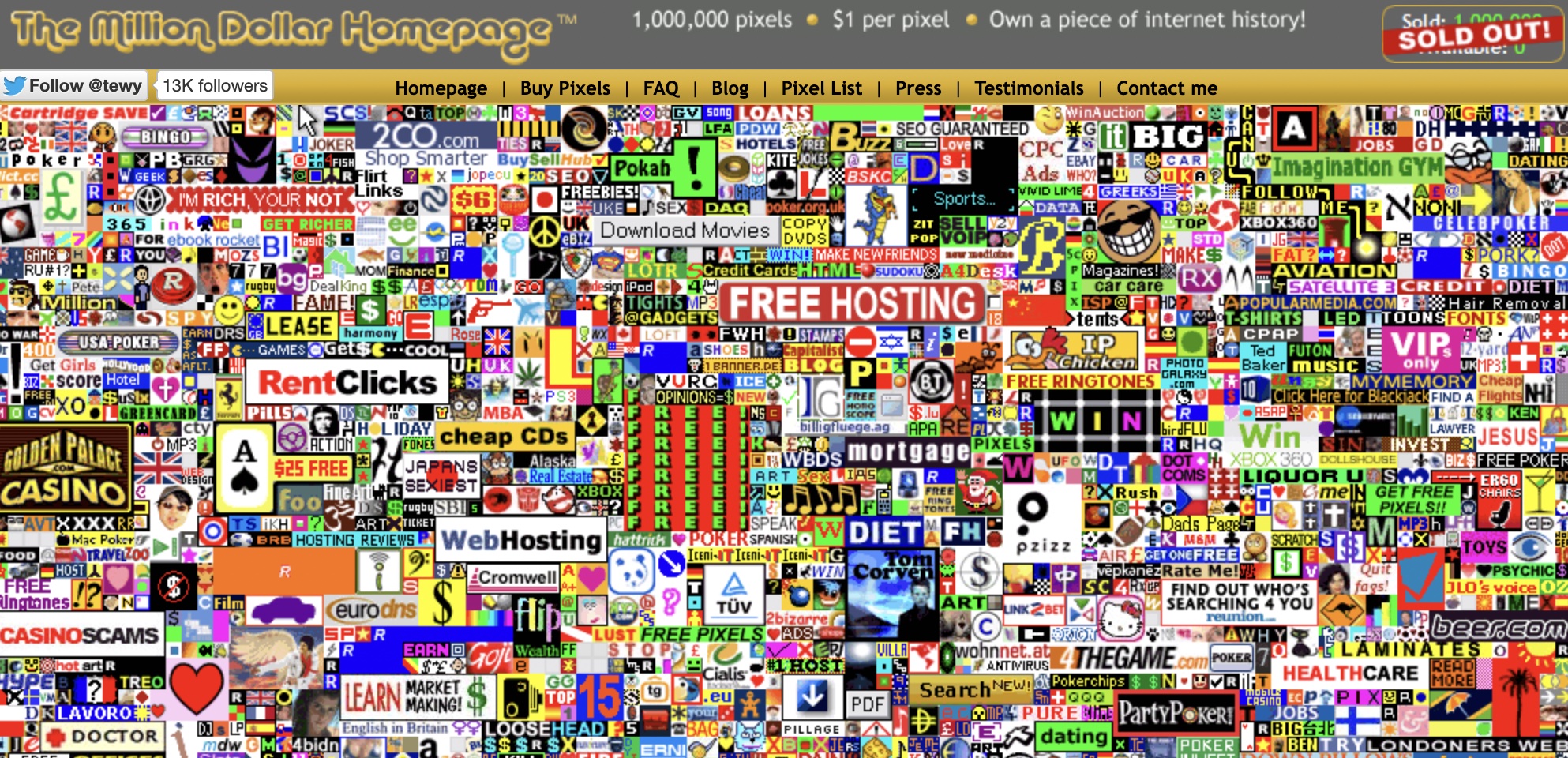
The million dollar homepage

Just as I was shocked to learn the founder of Calm created Moshi Monsters, I am equally impressed to learn the other founder created the Million Dollar Homepage.

This success gave Alex the foundation to pursue other internet ideas, including Calm. Calm began in 2011 with a simple website called donothingfor2minutes.com.

donothingfor2minutes.com

So while Alex had these projects going on, Michael, after the fail of Moshi Monsters, was “escaping” by not going into the office often, taking painkillers every day for headaches which would get his day started…

This was the start of calm. 

Alex met Michael on a boat party that he got invited to because of the Million Dollar Homepage.

Alex and Michael on a beach
Alex and Michael

Back to Michael’s side of the story, he was not addressing the downfall of his businesses or looking after his own mental health.

The only thing, he had no clue what meditation or mindfulness was about. However, Alex had been meditating. 

Alex: “Look dude, you need to to try meditation.”

Michael: “You need to try effing off (jokingly).”

Michael’s on Board

The breakthrough was when he took himself on a solo trip in the Austrian Apls where he started to meditate.

Michael: Taking a step back and getting perspective was hugely valuable. I realized that mindfulness is a way of rewiring the human brain.

What if we could make this simple and relatable and accessible to everyone? This could be one of the biggest opportunities and businesses in the world.

He left his trip, came back, and told Alex everything.

Alex: Right dude? You finally get it, let’s go.

2. Betting on the Calm.com Domain
Calm.com

In the early days of Calm, Michael Acton Smith and Alex Tew knew they needed something iconic to anchor their vision.

Michael: “We were playing video games in our house in Soho when Alex said, ‘The domain Calm.com is available.’ I thought, oh my god, what a great domain—what a business we could build there, helping the world become more calm.”

They were so excited until Alex revealed the asking price: £1 million.

They had 0 funding or revenue at the time.

Michael: “Right, eff off—we don’t have money to buy that!”

A year later, the domain owner was willing to negotiate. The new price, while still steep, was significantly reduced—£100,000 plus a small equity stake in the company.

It was a hefty investment for two founders barely scraping by. Michael recalls the tough decision:

Michael: “I was considering using that money to put a deposit down on a house, but buying Calm.com seemed like the more sensible thing to do, even though my parents thought it was the silliest idea.”

This decision became one of the most important early moves for Calm. The premium domain instantly positioned the company as a trusted, high-quality brand, signaling legitimacy in an industry still stigmatized at the time.

Jason Calacanis, an early angel investor, later reflected on the domain’s impact: “I invested in this thing because the domain name is amazing.”

The acquisition of Calm.com became the foundation for their marketing and branding strategies. Its simplicity and resonance made it memorable and easy to share, helping Calm gain traction organically.

Key Takeaway: Sometimes, betting on the right asset at the right time can set the stage for extraordinary growth. Calm.com wasn’t just a domain—it was the cornerstone of Calm’s brand identity and early success.

3. How Calm Went From $0 to $2M Revenue Amid Investor Doubts

When Michael Acton Smith and Alex Tew pitched their vision for a meditation app in 2012, they faced skepticism.

Investors doubted the idea could ever succeed. Michael recalls those meetings:

“I remember the number of meetings we had with investors where they said, ‘Well, this is so niche. You can get meditations for free on YouTube. No one is going to pay for this.’”

Despite these doubts, Michael and Alex believed deeply in their mission to make mental health tools accessible.

This conviction drove them to persist, even as they faced financial difficulties and a lack of external support.

Between 2012 and 2015, Calm operated with an incredibly lean team of just six or seven employees.

This small group was tasked with not only keeping the business afloat but also finding ways to innovate and grow in a challenging market.

One of their first major breakthroughs came through necessity. Calm was running out of cash, and traditional funding options weren’t materializing.

Turning Point

Around this time, Michael gave a talk about mindfulness and mental health, which caught the attention of Vinisha Joshi from Penguin Books.

She approached Michael with the idea of writing a book about Calm’s principles. Though publishing wasn’t part of their original plan, the book deal provided an advance that kept the company alive during a critical juncture.

Another turning point came when Calm adjusted its subscription pricing.

Originally priced at $10 per year, they decided to increase it to $40 per year—a risky move for a young company. The team feared alienating customers, but the results were surprising. The price increase did not lead to a significant drop-off in sign-ups.

Michael: “That was when we realized we were offering something valuable. People were getting real benefits from our service, and we started to see traction.”

By 2015, Calm revenue reached $2 million.

Dogs with calm shirt

This was a pivotal milestone that validated their belief in the business and demonstrated that there was indeed a market for their product.

With a growing base of paying customers, Calm was able to refine its offerings, including guided meditations, daily mindfulness exercises, and innovative features like Sleep Stories.

For Michael and Alex, the lesson was clear: staying true to their mission and being willing to experiment were critical to overcoming doubt and adversity.

Key Takeaway: Early struggles often define the foundation of success. For Calm, overcoming skepticism and leaning into bold strategies turned initial doubts into a growing business that would eventually dominate the mindfulness space.

4. Securing the Right Backers: How Jason Calacanis Helped Calm Scale

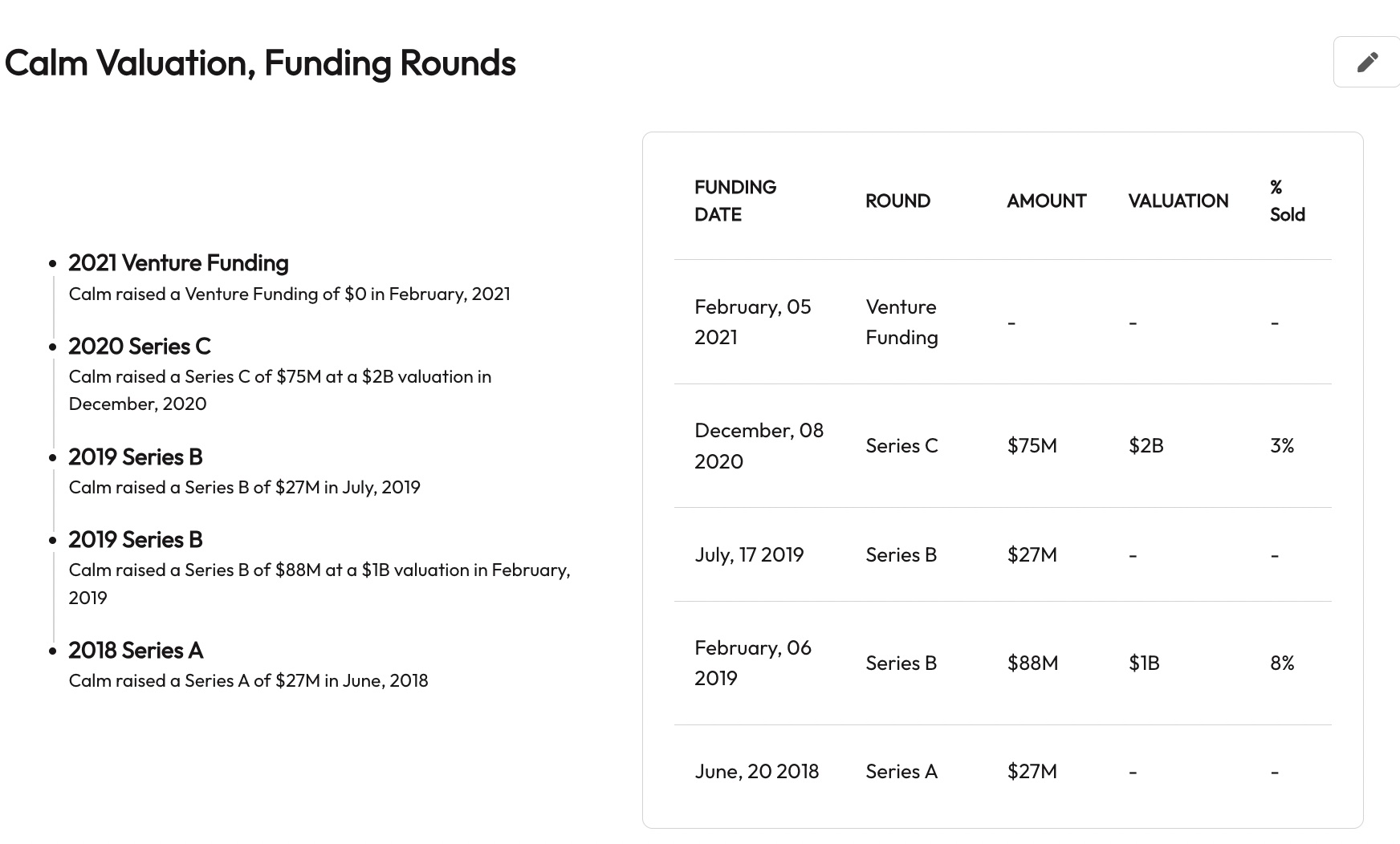
Calm Funding Rounds
Calm Funding Rounds

Even with Calm’s initial traction, securing significant financial backing remained a challenge. Investors were hesitant about the concept of monetizing meditation and mindfulness, a market many considered too niche.

However, the tide began to turn when renowned angel investor Jason Calacanis stepped in with a $378,000 investment in 2018, marking a pivotal moment for Calm’s growth.

Why Jason Calacanis Believed in Calm

Jason Calacanis
Jason Calacanis

Calacanis’s decision to invest wasn’t based solely on the business model—it was the brand’s vision and one key asset that sealed the deal: the domain name, Calm.com.

As Calacanis put it, “I invested in this thing because the domain name is amazing.”

The premium domain added immediate credibility to the brand and positioned Calm as a trusted leader in the mental health space.

This foresight resonated with Calacanis, who recognized the domain as a marketing gem that could accelerate Calm’s growth.

Calacanis’s investment helped Calm bridge the gap between its early struggles and the resources needed to scale.

By this time, Calm had already proven product-market fit, boasting 8 million downloads without spending a single dollar on marketing. His funding allowed Calm to amplify its reach, invest in user acquisition strategies, and expand its offerings.

Additionally, Calacanis brought more than just capital to the table. As an influential figure in the tech world, his backing validated Calm’s potential and opened doors to new opportunities.

The founders leveraged his network and expertise to refine their approach to growth, positioning Calm as a dominant player in the mindfulness space.

Jason’s investment not only provided the financial support needed to scale but also underscored the importance of aligning with backers who share a company’s mission.

Key Takeaway: Strategic backing can be a game-changer for startups. Jason Calacanis’s investment in Calm was more than a financial boost—it was a vote of confidence that propelled the company toward its $2 billion valuation.

5. Calm vs. Headspace

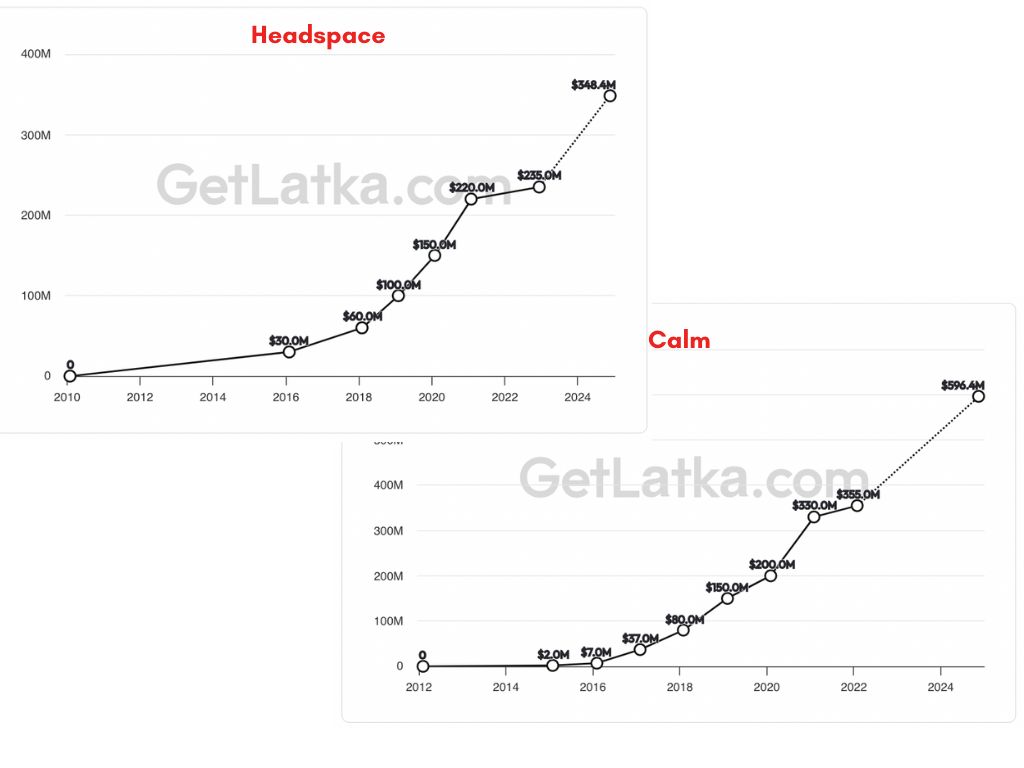
Headspace vs. Calm Revenue

When Calm launched in 2012, it entered a market already populated with competitors.

Headspace, founded in 2010 by Andy Puddicombe and Richard Pierson, was an early leader in guided meditation, quickly becoming a household name in the wellness space.

Other players like Insight Timer and Simple Habit also emerged around the same time. Despite being a late entrant, Calm succeeded in carving out a distinct position by addressing unmet user needs and expanding its offerings in innovative ways.

Headspace established itself with vibrant branding and easy-to-follow guided meditations, making mindfulness accessible to the masses.

Calm, however, saw an opportunity to go beyond traditional meditation and tackle broader issues like stress and sleep.

Michael: “We wanted to address universal challenges—like stress and sleep—by going beyond meditation. That’s where Sleep Stories came in, and they became a massive growth area.”

Sleep Stories proved to be a game-changer for Calm. While Headspace doubled down on mindfulness exercises, Calm recognized an untapped need: helping people sleep. The team observed late-night spikes in app usage, indicating that users were looking for help winding down.

Michael: “Sleep Stories appealed to everyone—7.8 billion people go to sleep every night. We modernized the concept of a bedtime story, and it took off.”

This feature quickly became one of Calm’s most popular offerings, attracting millions of new users and helping differentiate the app from its competitors.

Why Calm Outpaced Headspace

Headspace homepage
Headspace homepage

Despite its head start, Headspace struggled to keep pace with Calm’s innovation.

While Calm positioned itself as a comprehensive wellness brand, Headspace remained focused primarily on mindfulness.

Though it introduced new features like animations and partnered with Netflix for original content, its offerings lacked the diversification that propelled Calm’s growth.

Calm’s partnerships with celebrities like LeBron James, Matthew McConaughey, and Harry Styles further elevated its cultural relevance.

Calm partnership with Lebron James

These collaborations brought mainstream attention to the app, helping it connect with users on a deeper emotional level. Headspace, on the other hand, leaned into corporate partnerships but didn’t achieve the same level of public engagement.

Calm also excelled in monetization.

Both apps relied on subscription models, but Calm’s decision to increase its annual subscription fee from $10 to $40 demonstrated the value users placed on its content.  Figma is also known for growth after using a subscription model.

By focusing on universal needs like sleep and stress while building a lifestyle brand, Calm managed to outpace Headspace and other competitors. Its innovative features and ability to connect with users on a personal level made Calm the leader in the mindfulness market.

Key Takeaway: Launched two years after Headspace, Calm surpassed its rival by innovating across wellness categories. Features like Sleep Stories and celebrity collaborations helped Calm redefine what a meditation app could be and dominate the market.

6. Building Virality with a Purple Cow

Purple cow
Purple cow

Calm’s rise to success wasn’t just about innovative features—it was also driven by its ability to stand out and capture attention in creative ways.

Co-founder Alex Tew, known for his knack for viral ideas, played a crucial role in shaping Calm’s early growth strategy.

His belief in the “purple cow” theory—a concept popularized by Seth Godin that emphasizes creating something so remarkable it demands attention—became central to Calm’s marketing approach.

As we all know, Alex had already proven his talent for generating buzz with projects like The Million Dollar Homepage, a viral experiment that sold individual pixels of ad space to fund his education.

For Calm, he applied a similar approach, starting with an experiment called DoNothingFor2Minutes.com, a simple website that asked users to sit still and do nothing for two minutes while watching soothing waves.

If they succeeded, they were prompted to enter their email to learn about Calm. The project was a massive hit, attracting 100,000 email sign-ups within weeks.

The Power of Viral Experiments

DoNothingFor2Minutes.com exemplified Calm’s ability to create buzzworthy content that introduced people to the brand in a low-pressure, engaging way.

Alex: “Sometimes, building something more viral than your actual product can gain attention and drive users to your main offering.”

This viral mindset gave Calm an edge, especially in the crowded wellness space, where many apps relied on traditional marketing to grow.

The success of DoNothingFor2Minutes also revealed something important: people were searching for moments of peace and mindfulness. This insight validated the need for a platform like Calm and helped the founders refine their messaging to resonate with their target audience.

Creating the Calm Brand

Calm.com

Beyond viral experiments, Calm focused on establishing itself as a lifestyle brand. The company’s clean, minimalist design, soothing color palette, and iconic visuals all contributed to its strong identity.

Calm wasn’t just another app—it was positioned as a sanctuary for anyone looking to reduce stress and improve their mental well-being.

This branding, combined with Alex’s creative growth strategies, helped Calm gain organic traction in its early years. The app grew to 8 million downloads without spending any money on marketing—a feat that underscored the effectiveness of its unique approach.

By embracing creativity and the “purple cow” mindset, Calm found ways to differentiate itself and capture the world’s attention.

These viral experiments, paired with its focus on user experience, laid the groundwork for Calm to become the leader in mindfulness and mental health.

Key Takeaway: Calm’s success was built on bold, creative marketing strategies that captured attention. Viral experiments like DoNothingFor2Minutes.com introduced the brand to millions, proving the power of thinking outside the box.

7. Calm’s Revenue Gem That Sets Them Apart

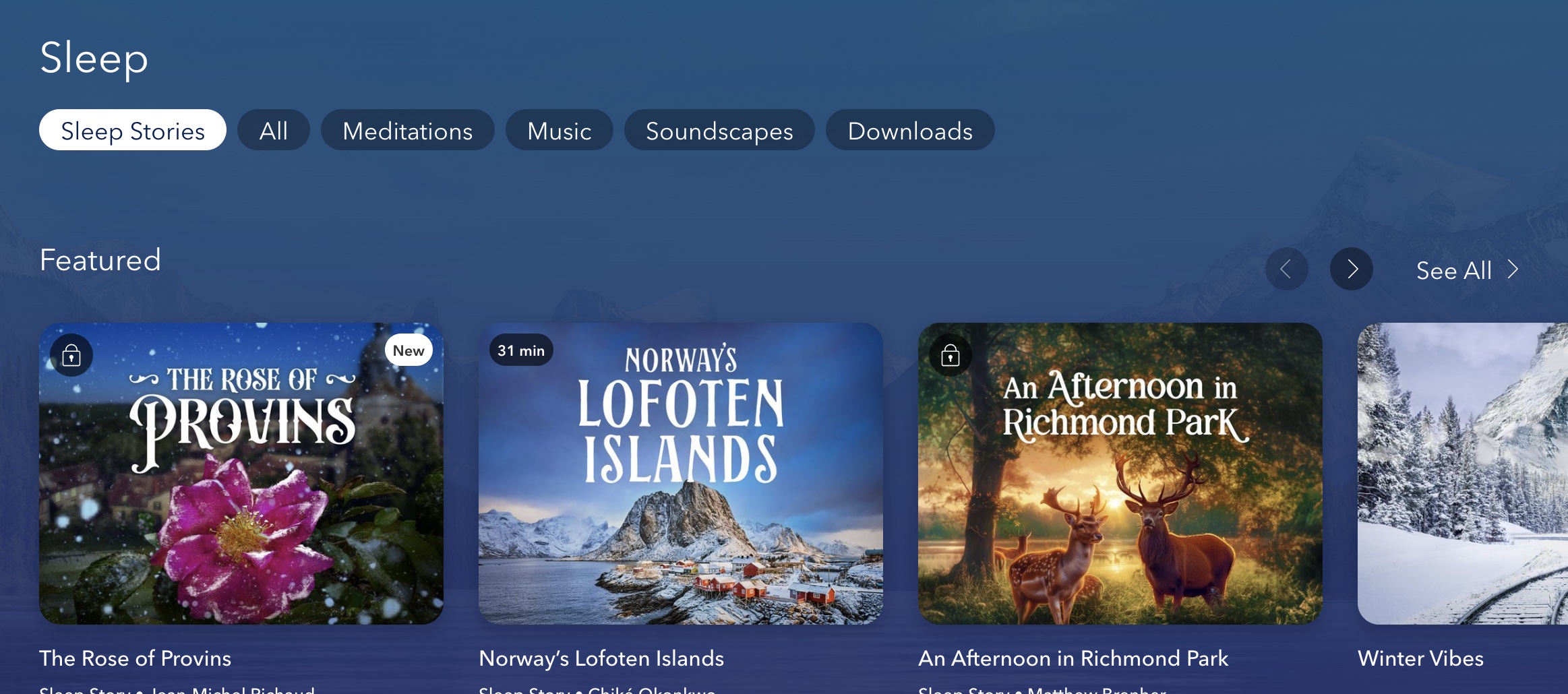
One of Calm’s most transformative innovations was the introduction of Sleep Stories—a feature that turned bedtime into a key growth driver for the company.

Initially, the idea for Sleep Stories came from a surprising observation in user data. The Calm team noticed a spike in app usage around 11 PM worldwide.

Michael: “We realized people were listening to Tamara’s voice to help them fall asleep, and we thought, ‘Wait a second, maybe there’s something here.’”

This insight led to the creation of Sleep Stories, which combined soothing voices, soundscapes, and music with a unique storytelling structure.

Unlike traditional three-act stories, Calm’s Sleep Stories were designed to start engaging and gradually become more soporific, easing listeners into a restful state.

Michael: “Instead of a traditional story arc, we created a story slope—something that gently transitions the listener into half-sleep and then full sleep.”

From Idea to Massive Growth

The reception to Sleep Stories was overwhelming. The feature became one of Calm’s most popular offerings, with hundreds of millions of stories listened to worldwide.

Sleep Stories also opened up a new market for Calm. While competitors like Headspace focused primarily on meditation, Calm addressed the universal need for better sleep.

This move proved to be a significant growth driver for Calm revenue.

Sleep Stories attracted new subscribers and became a cornerstone of the app’s marketing efforts. By solving a problem that nearly everyone experiences, Calm expanded its audience and deepened its impact.

Why Sleep Stories Worked

Sleep stories

Part of Sleep Stories’ success lies in their relatability and emotional connection. They tap into a universal experience—struggling to fall asleep—and provide a soothing solution. Calm also differentiated itself by combining mindfulness and storytelling, creating a unique product that competitors couldn’t replicate easily.

Additionally, the format of Sleep Stories appealed to a wide demographic, from adults seeking relaxation to parents looking for bedtime solutions for their children. The inclusivity of the feature made it a key part of Calm’s mission to address mental health for everyone.

Key Takeaway: Sleep Stories became a game-changer for Calm, transforming the app into a sleep solution for millions. By addressing a universal need and creating a unique product, Calm turned bedtime into a $596.4M revenue opportunity.

8. A Mental Health Week For Employees of Calm

Mental health week calm

The team meditates the first 10 minutes of each work day together.

In 2020, Calm introduced an initiative that set a new standard in corporate wellness: a full week off for the entire company, dedicated to mental health.

This move reinforced its position as a leader in the wellness industry.

Michael Acton Smith admitted he was initially hesitant about the idea:

“Previously, I’d have said, what a ridiculous idea. Who on earth gives the whole company a week off? We’re in such a competitive space; we can’t afford to do that.”

But after much discussion, the leadership team decided it was the right thing to do.

Why a Mental Health Week Worked

Mental health week benefits

The decision to implement a mental health week gave employees the chance to completely unplug without worrying about missing work or falling behind.

Calm ensured there were enough team members available to support users during this time, but for the vast majority of staff, it was a period to recharge and reset.

Michael: “It was one of the smartest decisions we’ve made in the history of the company. It gave the whole team a chance to step away, knowing nothing critical was happening, and when we came back, everything was fine.”

The initiative was a resounding success, with employees returning more focused, productive, and appreciative of the company’s commitment to their well-being. It also highlighted an important lesson: investing in the mental health of employees isn’t just good for people—it’s good for business.

Setting a Precedent for Corporate Wellness

Calm’s decision to prioritize employee mental health resonated beyond the company.

It sparked discussions in the corporate world about the importance of creating work environments that support well-being. As a leader in the wellness industry, Calm demonstrated that its commitment to mental health extended beyond its app and into its own workplace.

This move also strengthened Calm’s brand. By practicing what it preached, Calm reinforced its authenticity and gained further trust from its audience. It became an example of how companies could align their values with their actions, setting a new benchmark for wellness in the workplace.

Key Takeaway: Calm’s decision to implement a mental health week for employees showed the power of aligning internal practices with a company’s mission. By prioritizing its team’s well-being, Calm not only improved employee morale but also set an example for the entire corporate world.

9. The Role of Mindfulness in Leadership

Alex and Michael
Alex and Michael

Co-founder Michael Acton Smith credits much of his evolution as a leader to his personal meditation practice, which helped him navigate the highs and lows of entrepreneurship with greater clarity and balance.

“I’ve learned a lot about being a better leader by developing a meditation practice and being more mindful,” Michael explained. “Teams want to follow calm leaders who are stable—leaders who celebrate wins but don’t get sucked into the vortex of negativity when things go wrong.”

Mindfulness as a Leadership Foundation

Michael Acton Smith with group

Michael emphasized that mindfulness helped him avoid being consumed by the extremes of the entrepreneurial journey. This practice allowed him to maintain perspective during the company’s challenging early years and its rapid growth.

One of Michael’s key takeaways from mindfulness is the importance of leading by example. For him, this starts with personal habits that set the tone for his day.

“I don’t go to bed anymore doing emails, and I don’t wake up with my phone glued to my face.”

Instead, he uses the morning to ease into the day with purpose and focus, rather than being overwhelmed by external distractions.

Michael also highlighted four pillars of well-being that form the foundation for effective leadership:

  1. Nutrition: Fueling the body with healthy food.
  2. Exercise: Moving the body regularly to stay physically fit.
  3. Sleep: Prioritizing restful sleep to recharge.
  4. Mental Health: Practicing mindfulness or meditation to maintain balance.

These habits don’t just benefit leaders; they serve as an example to the entire team, creating a culture that values health and well-being.

Mindfulness Shapes Calm’s Culture

Michael’s mindful leadership has influenced Calm’s workplace culture. The company not only promotes mental health externally but also fosters an internal environment where employees feel supported and valued.

Initiatives like the mental health week reflect this commitment.

By leading with mindfulness, Michael and Alex have created a team that is not only high-performing but also deeply aligned with the company’s mission. This culture has been a critical factor in Calm’s ability to innovate and maintain its position as a leader in the wellness space.

Key Takeaway: Mindful leadership is about more than staying calm under pressure—it’s about setting an example, fostering a healthy culture, and aligning personal habits with professional values. Calm’s success is proof that mindfulness can drive not only personal growth but also transformative business outcomes.

10. Calm’s Legacy and Future

Dogs with calm shirt
I had to add this picture twice 😉

What began as a simple idea to make mindfulness accessible has evolved into a global brand that addresses universal challenges like stress, anxiety, and sleep.

The company’s innovative features, such as Sleep Stories, and its ability to differentiate from competitors like Headspace have set Calm apart.

Strategic decisions, like securing the Calm.com domain and attracting angel investor Jason Calacanis, provided the foundation for scalable growth. Calm’s approach to leadership and employee well-being further cemented its reputation as a brand that practices what it preaches.

Looking ahead, Calm’s potential seems limitless. Its expansion into corporate wellness programs and partnerships with global icons like LeBron James and Harry Styles hint at a future where the brand becomes synonymous with mental health and wellness worldwide.

As Michael Acton Smith explained: “There’s nothing more important than our minds. If we can master them, we can change the world.”

Key Takeaway: Calm’s success lies in its ability to innovate, adapt, and stay true to its mission. By addressing fundamental human needs and leading with authenticity, Calm has not only redefined mindfulness but also inspired millions to prioritize their mental health. Its legacy continues to grow, proving that investing in the mind can transform lives—and businesses.

Recent Articles
How Rev's CEO Adi Bathla Drove Revenue to $10M by Revolutionizing Auto Shop Workflows

Building a company from scratch and driving it to hit significant revenue milestones is no small feat. Adi Bathla, the

May 8, 2026 4 min read

How Practice by Numbers Achieved $16.5M Revenue in 2026 with Innovative SaaS Solutions

2015: Launched Practice by Numbers to Fill a Market Gap Practice by Numbers (PBN), co-founded by Rohit Garg and Dr.

May 1, 2026 4 min read

How Flossy Achieved $4M Revenue and Continues to Grow with AI Innovations

In a rapidly evolving world, where technology and healthcare intersect more intricately than ever, Flossy has emerged as a beacon

May 1, 2026 4 min read