How Bloomreach Achieved $50m-$100m Revenue with Strategic Enterprise Deals

Embarking on a journey of entrepreneurship often requires a blend of vision, risk-taking, and strategic execution. Raj De Datta, the co-founder and CEO of Bloomreach, exemplifies this journey. With his extensive background in both entrepreneurial and enterprise environments, Raj has successfully steered Bloomreach to significant revenue milestones. This blog post explores the strategies and tactics that helped Bloomreach achieve between $50 million and $100 million in revenue, emphasizing the critical role of enterprise deals and strategic expansion.
2009: Building the Foundation with a Vision for Digital Transformation
Bloomreach was conceptualized in 2009 with a mission to enhance digital experiences across the web. Raj, alongside his co-founder Ashu, who was instrumental in building the search engine at Google, aimed to create a universal platform that could revolutionize how enterprise brands manage their online interactions. By leveraging machine learning and AI, Bloomreach set out to offer a scalable solution for enhancing user experiences, akin to those provided by tech giants like Amazon and Netflix.
Initially, the team comprised a small group of engineers, many of whom came from prestigious backgrounds such as Google and Facebook. This initial phase involved rigorous R&D, focusing on building a machine learning system capable of delivering personalized and relevant digital experiences.
2010-2011: Securing Initial Funding and Proving the Concept
In the early stages, Bloomreach’s founders self-funded their operations, drawing on savings from their previous roles at Cisco and Google. Recognizing the potential of their innovative platform, AJ Altman from Bain Capital Ventures invested an initial $5 million. This funding was pivotal in recruiting top engineering talent and refining the platform’s capabilities.
By late 2011, Bloomreach publicly launched its platform, marking a significant milestone in its journey. The company’s early focus was on proving that their technology could enhance any website or app’s consumer experience, thereby driving revenue for their clients.
2012: Launch and Initial Customer Acquisition
Bloomreach entered the market officially, targeting large enterprises with its SaaS-based business model. The company’s platform was designed to support digital transformations for major brands, offering scalability and customization. They focused on acquiring enterprise clients who could benefit significantly from enhanced digital experiences.
By leveraging a subscription model, Bloomreach began generating steady revenue streams. Their average deal size was around $250,000 annually, with some clients exceeding $1 million. This focus on enterprise clients helped Bloomreach establish a robust revenue base early on.
2013-2015: Scaling with Enterprise Deals and Product Expansion
As Bloomreach grew, they strategically expanded their offerings and client base. The company capitalized on its ability to enhance digital experiences across multiple brand properties, languages, and geographic locations. This approach not only increased their average deal size but also drove significant revenue growth.
- Multi-Brand Strategy: Clients like Neiman Marcus and Williams-Sonoma, which own multiple brands, found value in Bloomreach’s platform to manage and enhance digital experiences across their entire brand portfolio.
- Global Reach: By supporting digital properties in various countries, Bloomreach expanded its market presence and increased its revenue potential.
- Upselling Additional Products: The introduction of new features and products allowed Bloomreach to upsell to existing clients, increasing their Average Revenue Per User (ARPU).
2016: Achieving Revenue Milestones with Strategic Partnerships
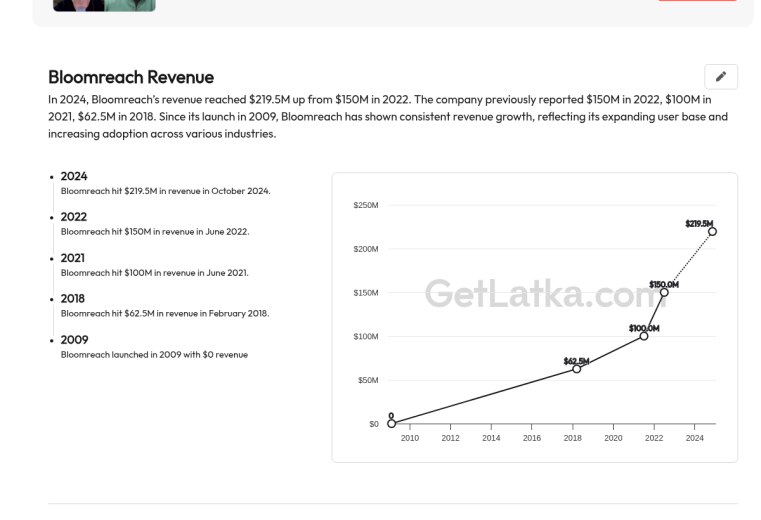
By 2016, Bloomreach’s revenue was between $50 million and $100 million. This growth was driven by a combination of strategic partnerships and strong customer retention. The company maintained a gross churn rate of 10-12%, with a net churn rate close to zero due to effective upselling strategies.
Bloomreach also established a large partner community, providing training and certification on their platform. This not only enhanced client satisfaction but also reduced churn by ensuring clients could maximize the platform’s benefits.
2017-2019: Continuing Growth and Preparing for Future Milestones
During this period, Bloomreach continued to grow at a healthy pace, targeting a 40-50% year-over-year growth rate. The company’s ability to balance growth with profitability was a key factor in its ongoing success. Bloomreach aimed to hit $100 million in revenue while maintaining a profitable operation.
Their strategic focus on enterprise clients, combined with a robust product offering and a strong partner ecosystem, positioned Bloomreach as a formidable player in the e-commerce personalization software industry.
2020 and Beyond: Looking Towards a Profitable Future
As Bloomreach continues to grow, the company remains committed to its mission of transforming digital experiences for enterprises worldwide. With a strong foothold in the market and a clear path to profitability, Bloomreach is well-positioned to achieve its future goals.
For more detailed insights into Bloomreach’s journey and other top-performing SaaS companies, explore more on their official website and the GetLatka United States companies page.
Recent Articles
How Sierra Achieved $200M in Revenue by Mastering Conversational Intelligence
In the dynamic world of SaaS, the journey of Sierra is nothing short of remarkable. The company, operating within the…
How 1Mind Achieved $6M Revenue in 18 Months Using AI Agents
Introduction: The Rise of 1Mind The rapidly evolving landscape of AI technology has witnessed the emergence of several transformative companies,…
How 1Mind Achieved Rapid Revenue Growth with AI-Powered Sales Solutions
In the ever-evolving world of technology, few companies have managed to disrupt traditional sales and marketing processes as effectively as…