How Printingforless Achieved $28M ARR Using Tactile Marketing Automation
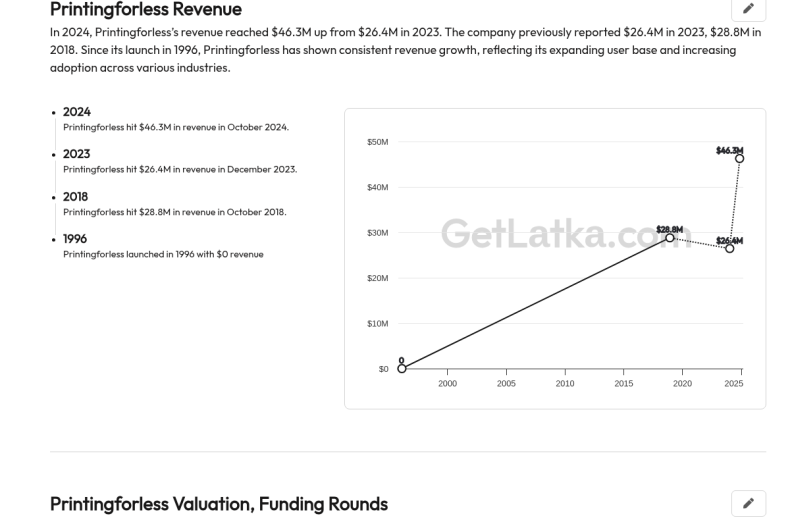

In the world of commercial printing and marketing, Printingforless (PFL) has carved out a niche by marrying traditional print services with innovative Tactile Marketing Automation. Founded by Andrew Field in 1996, PFL initially launched as the world’s first e-commerce commercial printer and has since evolved into a leader in integrating tangible marketing with digital data-driven strategies. The company’s success story is not just about leveraging technology, but also about understanding customer needs and market trends. This post details the strategic growth journey of Printingforless, highlighting key tactics and metrics that propelled the company to impressive revenue milestones.
1996: Launching the World’s First E-commerce Printer
Printingforless was founded by Andrew Field with a vision to revolutionize the commercial print industry. The company started as the first e-commerce commercial printer, allowing customers to configure and order print jobs online. This innovation was groundbreaking at the time, setting the stage for PFL’s future growth in the digital age.
2014: Transition to SaaS with Tactile Marketing Automation
By 2014, Andrew Field and his team recognized the potential of integrating tactile marketing with digital data. This led to the development of the Tactile Marketing Automation (TMA) platform, which allowed businesses to send personalized physical mail triggered by digital interactions. The platform integrated with leading CRM and marketing automation tools like Salesforce and Marketo, creating a seamless bridge between online and offline marketing efforts.
2015-2017: Triple, Triple, Double Growth Strategy
Following the launch of their SaaS model, Printingforless embarked on an ambitious growth trajectory known as the ‘Triple, Triple, Double, Double’ strategy. This involved:
- 2015: Revenue tripled as businesses started adopting the TMA platform for more effective marketing.
- 2016: Another tripling of revenue solidified their market position.
- 2017: Revenue doubled as PFL began seeing widespread adoption and significant ROI from clients.
2018: Hitting $2.4M MRR with 300 SaaS Customers
By 2018, the TMA platform had attracted around 300 customers, each contributing an average of $8,000 per month. This brought PFL’s monthly recurring revenue (MRR) from the SaaS platform to approximately $2.4 million. The company emphasized ROI measurement, ensuring clients understood the value of their investment, which supported customer retention and growth.
Key Tactic: ROI-Centric Sales Approach
PFL’s insistence on ROI measurement was pivotal. Clients like Invoka saw their demo booking rates soar from 1% to 22% by incorporating PFL’s tactile marketing strategies. Such success stories were instrumental in driving customer acquisition and retention.
2019: $25M Funding from Goldman Sachs
In 2019, PFL raised $25 million from Goldman Sachs, marking a significant milestone in their growth journey. This capital injection was used to enhance their product offerings and expand their market reach. The decision to raise funds after two decades of bootstrapping was strategic, aimed at accelerating growth while maintaining innovation at the core.
Strategic Insight: Balancing E-commerce and SaaS
Despite the SaaS platform being only a quarter of their total revenue, PFL maintained a balanced approach by blending e-commerce and SaaS valuations to attract investments. This strategy allowed them to leverage both traditional and new revenue streams effectively.
2020: Expanding Team and Operations
With over 330 employees spread across locations like Livingston, Montana, and Indianapolis, Indiana, PFL focused on expanding its operational footprint. The company’s structure included a conventional sales and marketing approach, complemented by a robust customer success strategy that emphasized cross-selling and up-selling to existing customers.
Operational Tactic: Customer Success with Quota
PFL’s customer success team played a critical role in revenue expansion. Unlike many companies, PFL’s CS team carried quotas, ensuring they were directly involved in driving growth through existing accounts. This approach was supported by a company-wide bonus system, fostering a unified effort towards achieving common goals.
2023: Sustaining Growth with Innovative Marketing
Today, PFL continues to thrive by staying ahead of marketing trends. As digital clutter increases, the demand for tactile marketing solutions grows, providing a unique value proposition that helps businesses cut through the noise. PFL’s ability to adapt and innovate remains central to their sustained growth and market leadership.
For more insights into Printingforless and their impressive journey, you can visit their GetLatka company profile, or explore other companies in similar industries through the GetLatka industry category page.
To learn more about their offerings, visit their official website. For a regional perspective, see the GetLatka companies by country page, which includes a variety of successful SaaS companies from the United States.
Recent Articles
How Rev's CEO Adi Bathla Drove Revenue to $10M by Revolutionizing Auto Shop Workflows
Building a company from scratch and driving it to hit significant revenue milestones is no small feat. Adi Bathla, the…
How Practice by Numbers Achieved $16.5M Revenue in 2026 with Innovative SaaS Solutions
2015: Launched Practice by Numbers to Fill a Market Gap Practice by Numbers (PBN), co-founded by Rohit Garg and Dr.…
How Flossy Achieved $4M Revenue and Continues to Grow with AI Innovations
In a rapidly evolving world, where technology and healthcare intersect more intricately than ever, Flossy has emerged as a beacon…