How Suresh Sambandam Grew Kissflow to $9 Million Revenue Using Digital Marketing
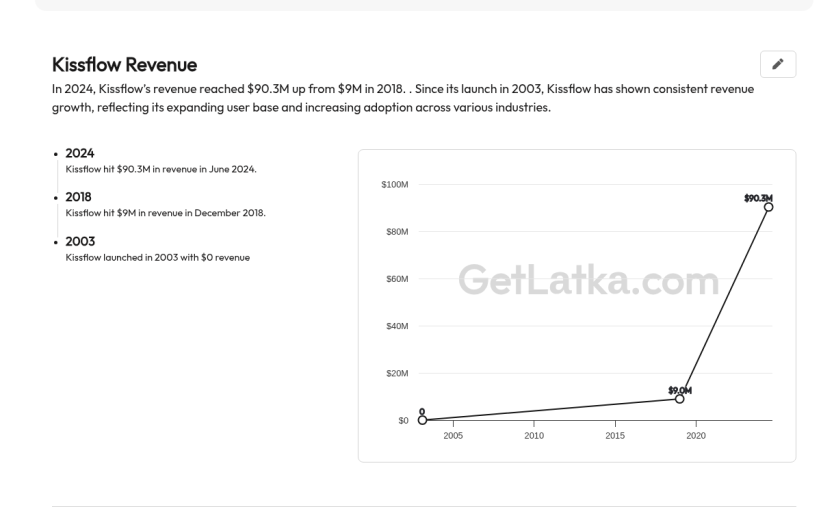

The journey of Kissflow from a startup to a revenue-generating machine is a testament to the power of strategic digital marketing and effective product positioning. Founded by Suresh Sambandam, Kissflow has become a leader in the SaaS-based enterprise-level work automation and collaboration platform industry. With over 10,000 customers across 160 countries, Kissflow’s success story is as much about innovative product development as it is about savvy marketing tactics. In this blog post, we delve into how Suresh achieved remarkable revenue growth by leveraging digital marketing and a robust product offering.
2012: Launching at Google I/O
Kissflow’s origin story begins at Google I/O in 2012, where the company was initially launched. This strategic launchpad provided Kissflow with the visibility required to establish itself in the competitive SaaS market. Initially in beta for a few months, Kissflow began commercial billing in 2013. This early exposure was crucial in building a strong foundation for future growth.
2015: Hitting 1,500 Paying Customers with Freemium Model
From its inception, Kissflow adopted a freemium model to attract a broad user base. By 2015, the company had successfully converted approximately 1,500 of its 10,000 users into paying customers. This model allowed Kissflow to demonstrate its value proposition effectively while providing a pathway for free users to convert into paid plans. The freemium strategy was instrumental in Kissflow’s early revenue growth, offering a taste of the platform’s capabilities to potential customers.
2017: $9 Million Revenue Using SEO and Paid Advertising
By 2017, Kissflow’s revenue had soared to $9 million, with the company doubling its revenue each year. A significant portion of this growth can be attributed to Kissflow’s robust SEO and digital marketing efforts. Suresh noted that Kissflow ranked for over 3,000 keywords in Google, occupying positions between 1 and 20. This strong SEO presence drove a substantial amount of inbound leads, supported by paid advertising efforts on platforms like Google AdWords, LinkedIn, and Facebook.
- SEO Mastery: Kissflow’s ability to rank for thousands of keywords ensured a steady stream of organic traffic, reducing reliance on paid channels.
- Effective Paid Campaigns: With a monthly spend of $150,000 to $200,000 on paid advertising, Kissflow maximized its reach and visibility across various platforms.
These digital marketing strategies were not only effective in customer acquisition but also in keeping the cost-per-acquisition manageable. With a customer acquisition cost (CAC) ranging from $600 to $1,000, Kissflow achieved a four to six-month payback period, demonstrating a strong return on investment.
2018: Bootstrapping to $10 Million with Negative Churn
Kissflow’s financial discipline played a critical role in its growth story. After raising just $1 million in initial funding seven years ago, Kissflow largely bootstrapped its operations. By 2018, the company was nearing a $10 million run rate, driven by a business model that emphasized profitability and sustainable growth.
One of Kissflow’s standout metrics was its negative churn rate, which Suresh reported to be between -2% to -3% monthly. This negative churn indicated that expansion revenue from existing customers outpaced revenue lost through churn, resulting in a net revenue retention rate of 125% annually. This metric underscores the value existing customers found in the platform, indicating successful customer retention and upsell strategies.
Key Growth Tactics: Digital Marketing and Product Optimization
Suresh’s approach to scaling Kissflow was heavily reliant on digital marketing excellence and a product that resonated with users. Here are some of the key tactics that contributed to Kissflow’s success:
- In-depth SEO Strategy: By focusing on ranking highly for a wide range of relevant keywords, Kissflow ensured a continuous influx of organic traffic, which was critical for lead generation.
- Comprehensive Paid Advertising: Strategic investments in platforms like Google AdWords and LinkedIn helped maintain visibility and attract high-quality leads.
- Freemium Model: By offering a free tier, Kissflow was able to introduce its platform to a broad audience, eventually converting a significant portion of these users into paying customers.
- Customer Retention: Achieving negative churn required an intense focus on customer satisfaction and product development, ensuring that existing customers continued to derive increasing value from the platform.
Conclusion
The growth of Kissflow under Suresh Sambandam’s leadership is a prime example of what can be achieved with a focused strategy that combines robust digital marketing with a compelling product offering. By leveraging SEO and paid marketing, Kissflow was able to attract and retain a vast customer base, achieving impressive revenue growth. With a strong emphasis on profitability and customer satisfaction, Kissflow continues to thrive in the competitive SaaS landscape, positioning itself for even greater success in the future.
For more information about Kissflow’s journey and revenue metrics, you can visit their GetLatka company profile or learn about other companies in the India region and the collaboration software industry. Visit Kissflow’s official website at kissflow.com to explore their offerings.
Recent Articles
How Sierra Achieved $200M in Revenue by Mastering Conversational Intelligence
In the dynamic world of SaaS, the journey of Sierra is nothing short of remarkable. The company, operating within the…
How 1Mind Achieved $6M Revenue in 18 Months Using AI Agents
Introduction: The Rise of 1Mind The rapidly evolving landscape of AI technology has witnessed the emergence of several transformative companies,…
How 1Mind Achieved Rapid Revenue Growth with AI-Powered Sales Solutions
In the ever-evolving world of technology, few companies have managed to disrupt traditional sales and marketing processes as effectively as…