Latka logo

How CoverMe CEO Taylor Phillips grew CoverMe to $739.9K revenue with a 11 person team in 2021.

CoverMe is an advanced SaaS application designed specifically for hospitals and long-term care providers. Leveraging AI technologies, proprietary rules, and risk engines, CoverMe offers real-time program eligibility decisions and seamless document creation. This powerful platform streamlines the process of determining program eligibility and generates ready-to-use documents, enhancing operational efficiency and reducing administrative burdens. With CoverMe, healthcare providers can make informed decisions quickly and effortlessly, improving patient care and optimizing resource allocation.

Last updated

CoverMe Revenue

In 2021, CoverMe's revenue reached $739.9K. Since its launch in 2018, CoverMe has shown consistent revenue growth.

CoverMe Revenue GrowthReported revenue / ARR by year$0$200K$400K$600K$800K2018201920202021$0$740KSource: GetLatka.com interview on Aug 4, 2021 with CoverMe CEO Taylor Phillips
YearMilestone
2021CoverMe Hit $739.9k revenue in April 2021
2018Launched with $0 revenue

CoverMe Valuation, Funding Rounds

CoverMe's most recent disclosed valuation is $2.2M.

CoverMe is a bootstrapped Health Care Software startup. Founded in 2018, CoverMe has grown to $739.9K in revenue without raising any venture capital or outside funding.

As a self-funded Health Care Software SaaS company, CoverMe has built its business with no outside investment.

CoverMe Capital Raised & ValuationCumulative capital raised and post-money valuation by roundCapital raised (cum.)Valuation$0$120182018 cumulative: $0 • 2018 Founded: $02018 Founded: $0 valuationSource: GetLatka.com interview on Aug 4, 2021 with CoverMe CEO Taylor Phillips
YearRoundAmountValuation% Sold

CoverMe Employees & Team Size

CoverMe employs approximately 11 people as of 2026, down from 13 in 2023.

CoverMe has 11 total employees in different roles and functions and 2 sales reps that carry a quota.

CoverMe Team GrowthReported headcount over time05101520252018201920202021202220232024001111Source: GetLatka.com interview on Aug 4, 2021 with CoverMe CEO Taylor Phillips
YearMilestone
2024Reached 11 employees (October 2024)
2023Reached 13 employees (July 2023)
2023Reached 22 employees (July 2023)
2023Reached 13 employees (January 2023)
2022Reached 18 employees (January 2022)
2021Reached 9 employees (April 2021)
2021Reached 16 employees (January 2021)

Founder / CEO

Taylor Phillips

Taylor Phillips is listed as Founder / CEO at CoverMe.

Q&A

QuestionAnswer
What's your age?-
Favorite online tool?-
Favorite book?-
Favorite CEO?-
Advice for 20 year old self-

Customers

We do not have customer count information for CoverMe yet.

Frequently Asked Questions about CoverMe

What is CoverMe's revenue?

CoverMe generates $739.9K in revenue.

Who founded CoverMe?

CoverMe was founded by Taylor Phillips.

Who is the CEO of CoverMe?

The CEO of CoverMe is Taylor Phillips.

How much funding does CoverMe have?

CoverMe raised $0.

How many employees does CoverMe have?

CoverMe has 11 employees.

Where is CoverMe headquarters?

CoverMe is headquartered in Birmingham, Alabama, United States.

Compare CoverMe to the industry

CoverMe operates across multiple industries. Browse revenue, funding, and growth data for CoverMe in each sector below.

Full Interview Transcript

Read transcript

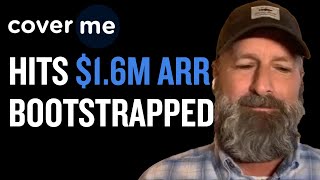
hey folks my guest today is greg phillips he's the founder and ceo of cover me a health tech sas company using ai to help people find paying sources for health care bills in a real-time marketplace he's bootstrapped and profitable the team has doubled along with revenue in each of the last four years greg guardian takes the top i'm ready to go let's do it all right what gave you the idea to do this did you have a health scare yourself and a bunch of medical bills or what happened i have i actually started as a health care administrator i ran uh parts of the health and human services commission in texas and one thing i realized was the government in particular is really really bad at eligibility and enrollment and all of these things that are out there and um and so once i got out and and sort of escaped i thought well i'm going to try to make i'm going to try to make a living in government and then as this group grew on and on and on i realized you know what you can't you can't scale this i can't do it and so and so uh as we started easing off into long-term care and easing off into the hospitals about that time i got sick i had cancer had all kinds of nonsense going on and fussing and fighting with the insurance companies about what they would pay and why they would pay something and why they wouldn't like this is absolutely insane i'm not a stupid person but i can't figure this out so we took some of the lessons we learned from enrollment we took some of the lessons we learned from eligibility uh over the last uh 30 or 40 years and really turned them into a an ai driven solution that helps people find ways to pay for their health care in real time what are some of those ways to pay for health care in real time well you've got a a plethora of government programs ranging from medicaid medicare you've got workers comp you've got all kinds of government-based programs but there are also these days you know tons and tons of hospital-based programs so the hospitals need to have ways to get people to pay for their health care that can't so they have financial assistance programs they have charity programs they have cash discount programs they have all sorts of other programs and then finally the commercial finance markets have really stepped up to the plate in a pretty big way here providing all sorts of low interest no interest loans to help people pay for their pay for their hospital bills and and it's starting to make a difference starting to make an impact the hospitals need it cause they need to keep their cash flow moving uh patients need it because people like me you know you know don't want to spend our life savings on on uh on our health care bills and once that's you know once you sort of blend all that together pop a little ai in on top of it and a whole lot of work and and voila you've got a real-time solution so when did you guys get your first dollar revenue what year um 2016 our first dollar in this business 2016. well and how much revenue that year do you remember yeah like a hundred and eighty thousand it was really really spooky spooky and scary we we had come out of uh doing um i tell people all the time that i crashed and burned this business a couple times one of the ways i did it was was saying i'm not going to do any more state-based business ever again i don't like working with state governments i'm just not going to do it rather than sort of easing into that pronouncement i just okay we're done that's it i'm cutting it off and then we started looking around like okay now so we we went into a very dev centric uh time frame really over the last five years where we've spent a lot of time really trying to own and understand the market but also growing because we decided to bootstrap and and push our own you know some of our own capital up front how much of your own money did you put in we put in about 800 000 total how'd that feel was it scary it was a little scary um you know at times more scary than others um but as we began to realize just how significant the market was and we we we sort of made a pivot from just being a very narrow niche to now we're we actually provide a marketplace for our patients where they can go or our hospitals where they can take their patients into the marketplace and not only find them finance solutions but we can find them drug discount programs we can find them community programs that help and serve them and really help make the uh the patient's health journey a little bit better greg who is we you mentioned co-founders do you have one is there a bunch of you guys oh there's two of us you split it 33-33-33 or what no i own a little bit more than a majority of my two co-founders on the rest okay and so where did you go i mean were you like super wealthy from a family or something where did you get 800 grand to put into the business yeah just over time i'm kind of an old entrepreneur and so over time we had tried to do some different things and i had built a couple of uh small sort of tech companies that were centered around automating different pieces and parts of healthcare and automating the back of the day automated the training process uh back before uh learning management systems were cool we did a uh a literacy training program that we pushed worldwide trained 250 000 people from from kenya to the ukraine to to the jungles in thailand uh using the using satellite discs and buying transponder time so wow okay so that makes sense and you use 800 and get the mvp you do 160 or 180 000 bucks your first year how much revenue do you do this year you think uh this year we will finish the year at about one six our arr our arr will be a little bit heavier than that because we're really diving off into a a i guess it's we sort of consider this game time and so we're amping up our sales and marketing efforts i have a new sales director we have a new marketing director um how many people total are on the team 22. and how many folks are engineers oh gosh uh uh 13. and how many sales people uh three plus uh half of me and half of my co one of my co-founders how many of the three or four have a quota uh two okay you do have a quota what's your quota target uh we have just this is newly established so you're hearing it here first so anybody that's complaining that you might publish this you feel free to do it uh what would you what we decided what we decided to do was look we think the market is significant here and we've tested into this enough with uh with our products to really understand that if somebody's really working this this this market either in the hospital side or on the nursing home side we have two separate sides um the the ability to sell a million dollars worth of worth of the uh worth of the product is easy and doable so we pay them a pretty good bait a decent base we pay him a hundred thousand as a base and then ten percent on their on their first year on the first year of the revenue and then there's some residuals that's great and just to understand your growth rate so if you're going to finish here at 1.6 in terms of ar like what was your monthly revenue just last month oh uh let's see i can tell you uh we just added three new customers so we added uh two point or excuse me 270 000 in revenue last month in ar in ar correct got it so you added to about 22 500 of mrr but what was total mrr last month uh one point or excuse me uh 131 131 i think 31 000 and where was it exactly one year ago in the middle of covet oh we we struggled a little bit last year we dipped all the way down when we were dragging around about a hundred a month and uh it was it was a tough time i was sick and had cancer and and you know everybody was struggling through things and selling into hospitals you just had cancer this was just last year yeah i still in fact next thursday i go in to see uh see if it see if it's all gone so i'll see how it goes well i hope it's i hope i hope you're well and it's all better and you're super healthy now well you're under your way one of the greatest things of all nathan that happened during all of this effort for me personally as it sort of chokes me up a little bit think about it as an entrepreneur you sort of have this this belief that you know i'm sort of important to my to my company and if i'm not here what's going to happen it's amazing the way some of the leaders in this company stepped up uh my co-founders in particular but also people really across the board from our automated testing teams to our uh chief architects really stepped up into our indus fill some roles that were kind of leadership roles in a way that i had left you know as a void i was working maybe half time or so but people really stepped up and i think the most valuable lesson that i personally learned during all of this was i do have a few ideas and the company was was in large part founded on a few of my ideas but the the future of cover me and the future of where where this company ends up is really in the hands of some of these young smart people that are that are developing...

This is an excerpt. The full unedited transcript is available through GetLatka exports.

Source Attribution

Source: all data was collected from GetLatka company research and founder interviews. Revenue, funding, team, and customer figures are presented as company-reported or GetLatka-estimated metrics where the profile data identifies them that way.

Company data last updated .

CoverMe Revenue 2021: $739.9K ARR, $2.2M Valuation