
How Cal AI Achieved $35 Million Revenue in Just One Year
In the fast-paced world of SaaS, few stories are as impressive as that of Cal AI, a company that has seen rapid… Read More…
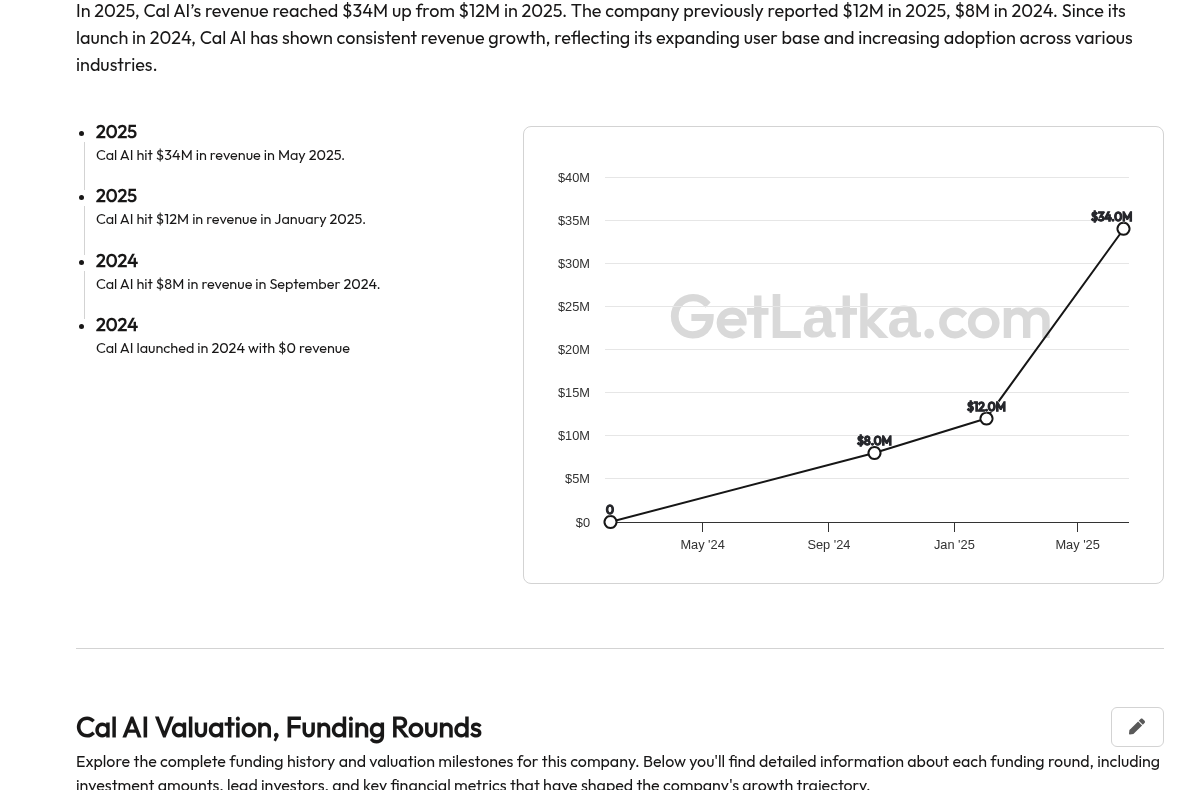
In the fast-paced world of SaaS, few stories are as impressive as that of Cal AI, a company that has seen rapid growth in a remarkably short period. Founded by Zack Yadagari and his team, Cal AI has managed to hit significant revenue milestones by leveraging innovative technology and smart marketing tactics. This blog post delves into the strategies that propelled Cal AI to achieve their revenue targets, specifically focusing on the year 2025 where they are on track to collect over $30 million in revenue. From understanding market needs to utilizing AI and influencer marketing, Cal AI’s journey is a testament to how speed and adaptability can lead to success.
2024: Launching with AI-Powered Calorie Tracking
Cal AI was officially launched in May 2024, but the journey started earlier. Zack Yadagari, along with his co-founders, wrote the first line of code in March 2020. The app was designed to simplify calorie tracking through AI, allowing users to track their calories by simply taking a picture of their food. This innovative approach, powered by APIs like ChatGPT, made Cal AI a standout in the health and wellness app market. The use of cutting-edge AI technology was crucial, as it allowed the team to create a product that was not feasible five years prior.
September 2024: Achieving $1 Million in Sales in Just Five Months
Within five months of launching, Cal AI achieved its first million in sales by September 2024. The company’s ability to scale rapidly with a small team of initially six people was a key factor. This growth is attributed to their focus on influencer marketing, a strategy that involved hundreds of influencers promoting the app daily. The decision to harness the power of influencer marketing turned out to be a game-changer, allowing Cal AI to reach a wide audience quickly and effectively.
January 2025: 20,000 to 30,000 Daily Downloads
By January 2025, Cal AI was experiencing between 20,000 to 30,000 new downloads every day. This surge in user acquisition was driven by a mix of smart marketing strategies and the app’s unique value proposition. The team focused heavily on app store optimization, using intuitive keyword selection rather than relying on external tools. This approach proved successful as it tapped directly into what potential users were searching for.
May 2025: Building a Strong Team and Optimizing Onboarding
By May 2025, Cal AI’s team had grown to 17 full-time employees, with plans to expand to 22. The company prioritized hiring specialized talent to further refine and enhance their product. One of the key areas of focus was the onboarding flow. Initially simple and utility-focused, the onboarding process was gradually optimized through A/B testing. By adding questions that did not impact the app’s functionality but increased user engagement, Cal AI improved its conversion rates significantly.
2025: Revenue and Conversion Tactics
- Superwall Integration: Cal AI integrated Superwall to manage their paywalls, which resulted in a higher conversion rate. This tool allowed the team to run numerous tests, optimizing the user’s transition from a free trial to a paid plan.
- Influencer Marketing: With 250 influencers on retainer, Cal AI invested heavily in this strategy, paying mid six figures monthly. This approach not only increased brand visibility but also drove significant user acquisition.
- Onboarding Flow Optimization: By moving sign-in processes to the end of the onboarding flow, Cal AI reduced friction and increased user retention.
Expected 2025: $30 Million Revenue Target
As of May 2025, Cal AI had already collected $9 million in revenue and was on track to exceed $30 million by year-end. This growth trajectory is underpinned by their annual run rate projections, which suggest the potential for even higher revenues as user acquisition and retention continue to improve.
Conclusion: The Future of Cal AI
Cal AI’s story is a compelling example of how a small, agile team can achieve remarkable growth through strategic marketing and innovative product development. Their focus on speed as a core value, along with the ability to adapt quickly to market demands, has set them on a path to success. For more insights into Cal AI and their remarkable journey, visit their GetLatka profile and their official website. To learn more about other successful companies in the United States, check out this list of companies by country. Additionally, explore the industry category page to see where Cal AI fits within the broader SaaS landscape.