

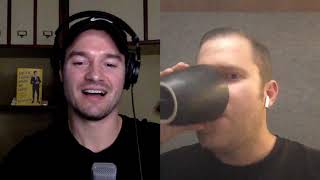
 Watch: TT 1641 Seehafer, YouTube
December 2018
TT 1641 Seehafer, YouTube
Read the transcript
hello everyone my guest today is jared seyhofer he is the ceo and co-founder of enzyme a software company that automates life science regulatory approval and compliance he's a 12-year veteran of the medical advice and biopharma industries having worked or consulted at organizations ranging from amgen abbott and medtronic to seed sage startups jared are you ready to take us to the top let's do it all right complex space here help us understand what you do and how you make money sure thing so if you are a company making life science technology this is going to be drug medical device diagnostic something like an mri a pill anything that is used in the practice of medicine besides a doctor uh or a nurse kind of rendering professional judgment uh there's a complex regulatory pathway you have to go through and it's different for every country in the united states that's the fda most people are familiar with that but every every geography has its own version of the fda on the market you have to go through a number of complex regulatory processes these are steps you have to do where you essentially present a case to the government as to why your product is quote safe and effective it both is safe to the user for its use and it's also going to do what you say it's going to do so you can't sell snake oil and that's it's a it's a complex process and if you're a large company uh you generally just hire an army people who are expert in doing this process it's a whole professional organization with its own um you know its own career path but if you're a smaller organization that can be very challenging because it's expensive and so if you're a little startup you've got this great new product great new idea you want to see it uh you're you're talking and spending hundreds of thousands of dollars in addition to the development cost of your product for your product to ever see the light of day and so what we're trying to do at enzyme is to use software to radically simplify the amount of human labor that goes into making all of this documentation that the government needs to say yes or no okay and pricing model is it pure place ass or exactly yeah so we we have a they're essentially uh an ongoing sas relationship with our customers sometimes with some add-on services depending what they need do they need a human voice in front of fda that kind of thing but it's generally a sas product yep okay and help me understand i mean generally speaking are we talking people paying you a grand a month or 10 grand a month or a million a month what scale are you playing at yeah so it's uh anywhere depending on company size from a five figure to a seven figure a year type of situation and we we try to bias it based on company size number of products they're doing uh etc so that we're offering something that is not only delivering kind of price relative to value but there's also something very achievable and represents a cost savings for wherever you are so if you know if you're a small company you'd be spending you know six figures in labor on this we're trying to get under that if you're a large company it's a huge expenditure give me just because we don't have enough time to learn every cohort give me the sweet spot i mean this is 50 000 bucks a year i mean is that a fair kind of sweet spot target for you if you were doing a garage startup that would be exactly it yep okay okay fair enough good and then put this on on a timeline for us when did you launch the company what year so we we uh we were in sort of quasi-stealth though i hate the term of 20 um in 2017 launched the company earlier this year in 2018 q1 okay 2018 launched the company and i mean so why get by the way why get into this space this is like many people would say boring and it's like the government and hipaa and not fun i mean why get into this so it's a personal pain for me because i spent my career actually being a biomedical engineer so my background is in very very complicated uh medical devices that treat neurological disorders did graduate work in doing deep brain stimulation for parkinson's disease i tell your listener base if you ever want to see a miracle uh in real life go youtube or google dbs that's uh d a b s d brain simulation for parkinson's and you'll watch something that you do not believe someone is literally doing tremors they cannot move someone flicks a switch and all of a sudden they walk as if they have no problem so i got into this space really wanting to use technology to transform people's lives uh and their health and what i found is being an engineer um that it would take forever to get your products on the market and it was very expensive and you saw a lot of failures that weren't necessarily related to whether the product was any good or not or did what you said and so i'm trying to scratch my own ish i'm trying to solve and solve problems and and uh create the kind of uh software that i wish i had had as someone building life-saving technology yep yep okay very good so kind of stealth last year you launched this year what have you scaled to today in terms of total customers using the platform so we've got 21 companies that are using the platform in production of various sizes everything from sort of you know product teams to large organizations enterprise organizations to like i said kind of a garage startup okay and 21 paying a 50 000 ac that puts you right at that nice million dollar run rate i mean have you guys passed that at this point uh yeah we're right around there that's great congratulations and a year ago nothing right a year ago we were doing essentially very uh uh you know small amount kind of early adopter yeah what are you talking like five grand a month yeah yeah well exactly you were talking um not even like 15 20 yeah 100 yeah 20 exactly yeah uh very good all right and how did you i mean walk me through how you landed the first customer so it was it was actually quite by uh random um chance uh it was in uh it just kind of started working on the product as a product as a side project for my consulting business and uh went to on a lark uh jason calacanis's launch um one of the launch events in san francisco here and i'm just uh walking around the uh the little stalls and uh just looking at interesting biological products and i really found one and uh it was one of these things where i was asking just asking questions and it turned out the ceo of the company he's like you seem to know a lot about this what do you do for opening night you know i mentioned we started the company it's like it just so happens we've had this problem we've been going through consultants you know we uh you know we we hate dealing with them they're way too expensive not a whole lot of value i love a software-based solution let's go demo the product and the pro my heart kind of stopped it was like this is all right at the launch event yeah exactly it's happening all basically sort of in the space 15 minutes um it had the demo the product was a total mess but it was it was doing enough that they found it valuable and we've been working with it ever since interesting talk to me about how you've capitalized the company so have you bootstrapped to raise capital we went through uh the y combinator accelerator uh you know did a small friends and family round uh kind of just when i was just getting started um then went through yc and then raised uh uh seed stage round of capital um you know through various vcs that are kind of in that at that cohort uh right after yc so all in today what a million two million something like that a couple million yeah a couple million okay very good um you've i assume you've done a price drone at this point right or is it all still debt convertible uh so the standard out here these days is just is the sort of safe type of model so we've been following that yeah okay so you haven't you have all the all the couple million has been all on the safe they haven't raised a price round yet right okay very good and help me understand kind of what you've scaled team to how many people yeah so we've got uh eight people on staff here we've uh various um kind of makes up developers and sort of regulatory experts all in san fran yeah no we do a mix of sf and remote i basically kind of found like a lot of uh we found a lot of entrepreneurs out here it's just that the cost of living situation has sort of made it advantageous to really trying to make a quasi-remote organization from the ground up yeah have you been able to dial in yet some of the other economics around you know driving customer growth related to like you know churn expansion revenue kak or is it really too early your cohort's too small well so for the nature of our business is such that uh we don't really see churn churn for us is is a customer getting bought or acquired and so what about what's approved what if your thing works and what if your thing works and it might think it's approved why do i still need you ah because it's it's actually that's a really good question um most people think of these things as binary and in you know or event driven so my product gets approved i don't need an fda person anymore what most people don't realize about life science regulations is pervasive throughout the life of the company so think of it a little bit like event driven but also something like financial regulation or or hipaa where there are all these rules around how you manage data and make decisions at a company that are every day for the life of your business a ton of business process regulation okay so um what what the what the approval process is is a summation of this sort of data set over the last you know six to 12 or 18 months the life of your product development but it keeps going on and in addition to the approvals you get audited every couple years um and you get audited whether you've had zero new products one new product and new products doesn't matter so the kind of thing for us is it's uh when we kind of take on customers it's sort of the um it's al almost for the life of the company you're making a big decision in terms of using us to solve this big core problem that you have as an entrepreneur got it got it you get approval and then there's touch points yep yeah the flip side of that is that churn for us is like not it's not a thing that we really have to worry about yeah well well in all fairness too i mean you haven't had a history yet where there would even really be a chance for a churn right so so none yet it sounds like at this point what about acquisition so to get a new 50 000 acv account do you know what you're willing to spend to get that not enough not enough data to really understand that i don't really understand that yet just because of what we're doing is fairly novel and so we've got a lot of growth just from word of mouth um uh the the cohort of entrepreneurs that's in this space because a very sort of particular demands tend to know each other and so there's often kind of a question how do you solve this problem it's a problem everyone has and so our name has sort of percolated throughout that community over the course of the last year does white have a better answer to that yeah in the future yeah sorry does does yc teach you guys to try and drive to cash flow positive before you go out and do a priced round does yc not really so what why i mean why is he saying if you've got that that's you know you know uh couldn't one of the things gonna make real an investor years perk up but no why i mean i think yc is you know what what what is going to be best for the overall business if you try to do things that are going to make you cash flow positive but then you're going to fall flat on your face that's not very helpful for anybody well of course i mean you put it very black and white there but there's an in between there's two there i mean there's in between ground where you can do both right you can you can be profitable and not fall flat on your face um i mean the reason i ask the reason i ask is you have eight people and you have a million dollar run rate i mean you could actually be profitable cash flow positive right now even though you raised three million bucks that means the reason i was what i was going to ask is like if you are burning money where where are you burning it it doesn't look its head count no i mean so where we are going to be burning money is going to be as we sort of drive from uh you know transitioning the company is something that's serving these small organizations to larger enterprises going to necessitate an enterprise sales force and so we're kind of about to go on a talent acquisition spree which is going to drive a burn and then necessitate are you casual positive today not quite but close really close very good all right jared let's wrap up here with the famous five number one what's your favorite business book oh what's my favorite i would say the essential drucker uh that was something that really informed me it's basically a collection of all peter drucker's uh you know most famous management essays number two is there a ceo you're following or studying right now uh so ceo i'm following or studying right now um right now i would just say i i because i'm just so inspired by him it's kind of a tried answer but alone yep number three what's your favorite online tool for building the company um we are big slack fans i i think slack's one of these things that gets a bad wrap but i think you tune it very well it's been essential to us and kind of keeping you know keeping a quasi-remote org how many hours of sleep are you getting every night listen i ask you because i don't want my audience following a ceo who's doing 100 million in revenue getting three hours of sleep who's divorced with four kids yeah i would say uh on a bad day it's six on a good day seven okay that's pretty fair that's good and situation married single kids got a girlfriend okay so not married yet no kids no kids i don't know how i have a lot of respect for entrepreneurs who can do seed stage with kids i have some friends that do it i don't know how and how old are you jared i'm 33 33 last question what do you wish your 20 year old self knew [Music] don't be uh i would say start earlier so there was this thing where i i've had this idea percolating in my mind for ever since i started in my career and i always was thinking why isn't anyone doing this why isn't anyone doing this why isn't anyone doing this and i got eventually just got fed up enough that i was i'm gonna go do it um i think i i would kick myself a little bit and say you could you would probably start three or four years before you did and and um have just you know that timeline would have been shifted up yep guys it started earlier yeah guys from jared again start earlier launched enzyme back let's see just about a year ago and stealth 2018 really came to market now about 21 customers paying caught 50 000 bucks in terms of acv each uh that's about you know about a million bucks in a run rate today up from just 1500 bucks a month a year ago so healthy growth there obviously small numbers but still healthy growth uh hoping to get close or they're flowing with breakeven right now they raise about three million bucks all in a safe hope to do a price drown here soon to grow their enterprise sales force currently eight people really tech heavy in san fran and other remote locations no churn yet too early to talk about cac and things like payback period but they are obviously looking to scale jared thank you again so much for taking oh by the way i should also put in the summary again helping medical device companies get to market and get their products to market faster and then also stay compliant jared thank you for taking us to the top yep
 Jasper AI
 CopyAI