
How Two Polish Friends Built ElevenLabs From $0 to $200M Revenue in 3 Years
Two Polish engineers watching poorly-dubbed American movies turned their childhood frustration into a $6.6 billion voice AI empire. Piotr Dąbkowski and Mati… Read More…
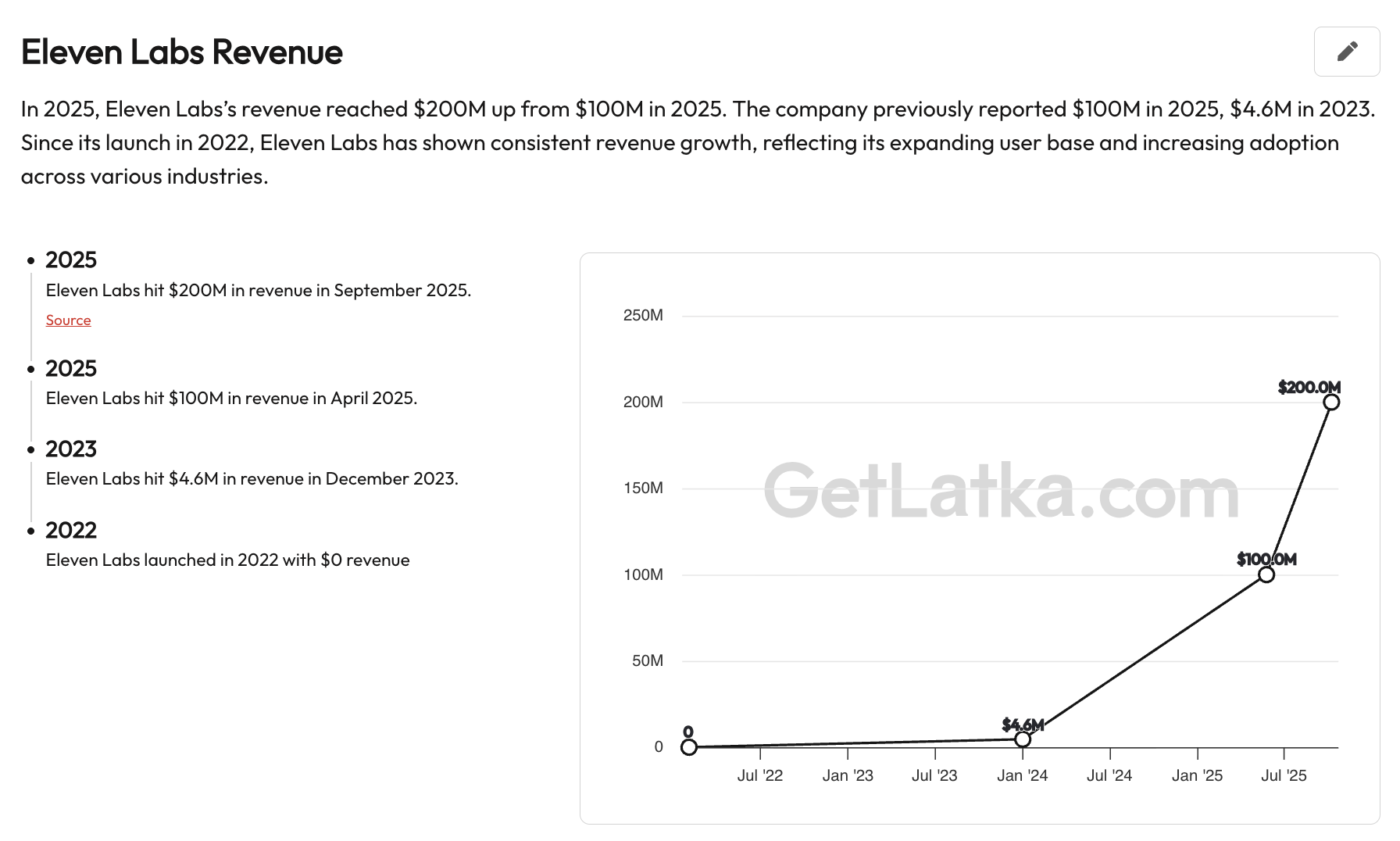
Two Polish engineers watching poorly-dubbed American movies turned their childhood frustration into a $6.6 billion voice AI empire. Piotr Dąbkowski and Mati Staniszewski founded ElevenLabs in 2022, and by August 2025, they hit $200 million in annual recurring revenue with just 330 employees.
Their story proves you don’t need Silicon Valley connections or decades of experience to build the fastest-growing AI company in history. From $25M at the start of the year to $90M in annual recurring revenue as of October 2024, ElevenLabs crushed every growth benchmark in the SaaS playbook.
According to data tracked on GetLatka, they achieved what most companies take 10 years to build in less than three.
While their competitors were choosing between consumer viral or enterprise sales, ElevenLabs built both engines simultaneously and made them reinforce each other. The result? A customer acquisition cost of just $50 with a 40x lifetime value ratio, while keeping 75% of every dollar as profit.
Here’s the exact playbook they used to go from zero to dominating 41% of Fortune 500 companies—and what other founders can steal from their unconventional growth strategy.
The Origin Story: From Polish Dubbing Frustration to AI Breakthrough
The Problem That Started Everything
Piotr Dąbkowski, an ex-Google machine learning engineer, and Mati Staniszewski, an ex-Palantir deployment strategist, shared more than just Polish heritage. Both were raised in Poland, and their inspiration for founding ElevenLabs reportedly came from watching inadequately dubbed American films during their childhoods.
This wasn’t just a minor annoyance—it was a fundamental breakdown in how content crossed language barriers. Traditional dubbing destroyed the emotional nuance of performances, turning dramatic moments into unintentionally comedic scenes. The founders saw an opportunity to preserve not just words, but the soul of human speech across languages.
Why They Spent 12 Months in Stealth Mode
The duo didn’t rush to market. From January 2022 to January 2023, they spent 12 months in stealth mode, perfecting their voice synthesis technology while most AI startups were rushing to launch ChatGPT wrappers.
This patience would prove crucial. While competitors focused on text and images, ElevenLabs applied transformers and diffusion models specifically to audio—a domain that had received far less research attention. They built proprietary methods to handle tasks like noise removal, speaker differentiation, transcription, and synchronization of translated speech with the original audio.
ElevenLabs Timeline: Every Major Milestone From $0 to $200M Revenue
January 2023: Beta Launch Creates Immediate Viral Sensation – $2M Pre-Seed
In January 2023 they revealed having secured a $2 million pre-seed round. The startup’s specialization in AI voice intelligence, a still-emerging field in Europe, played a significant role in attracting investors. The pre-seed funding was primarily led by Credo Ventures, and joined by Concept Ventures.
On the same month, ElevenLabs publicly released its beta platform. What happened next shocked even the founders. The platform went viral within weeks, with creators using it to generate everything from celebrity voice impressions to full audiobook narrations.
The viral “Harry Potter by Balenciaga” video exploded across social media, generating millions of views.

This single piece of content did more for ElevenLabs’ brand awareness than any marketing campaign could have achieved. It demonstrated the technology’s ability to create emotionally rich, contextually aware speech that sounded indistinguishable from human voices.
June 2023: Series A at $100M Valuation – The Silicon Valley Giants Take Notice
In June 2023, ElevenLabs raised a $19 million Series A funding round at a valuation of about $100 million. The funding round was co-led by the venture capital firm Andreessen Horowitz, former GitHub CEO Nat Friedman, and entrepreneur Daniel Gross.
The investor list read like a who’s who of tech royalty. It also saw participation from prominent individuals such as SV Angel, Mike Krieger (co-founder of Instagram), Brendan Iribe (co-founder of Oculus), Mustafa Suleyman (co-founder of Deepmind), and Tim O’Reilly (founder of O’Reilly Media). It was also announced that Andreessen Horowitz would be joining ElevenLabs’ board.
By this point, they had already shipped multiple game-changing features:
- AI Speech Classifier (June 2023): The first of its kind, accessible through an API and designed to determine if an uploaded audio sample originates from ElevenLabs’ proprietary AI technology
- 28 Language Support (August 2023): Using an in-house AI model, it automatically detects languages like Korean, Dutch, and Vietnamese, allowing for “emotionally rich” multilingual speech generation
- Projects Tool (September 2023): A tool for creating long-form spoken content such as audiobooks and dialogue segments with contextually-aware synthetic or custom voices
December 2023: $25M ARR Sets Stage for Explosive Growth
In addition to users, ElevenLabs has seen meaningful growth in ARR, from $25 million in 2023 to what would become $90 million by November 2024. This 260% year-over-year growth rate would become their signature, outpacing even the most optimistic projections.
The growth wasn’t just in revenue. Since January 2023, creators had shared over 5,000 voices in ElevenLabs’ Voice Library. This user-generated content became a moat that competitors couldn’t easily replicate.
January 2024: Unicorn Status at $1.1B Valuation – Fastest in AI History
On January 22, 2024, ElevenLabs raised an additional $80 million in Series B funding raising the total valuation of the company to $1.1 billion. The funding round was led by Andreessen Horowitz, Friedman, Gross, and Sequoia Capital.
Additionally, the company announced a series of new products, including their Voice Marketplace, AI Dubbing Studio, and mobile app. These weren’t just features—they were entire business lines that could have been standalone companies.
The AI Dubbing tool, released in October 2023, could translate speech into more than 20 languages. The feature is capable of preserving the speaker’s original voice, emotions, and intonation, solving the exact problem that inspired the company’s founding.
November 2024: Revenue Hits $90M ARR – The Hockey Stick Takes Shape
Two people in November estimated that its ARR was likely closer to $90 million. If the latter figure is accurate, a $4 billion valuation would have put its valuation multiple at 44 times ARR; in the end it seems the deal has been done at a slightly more moderate multiple of 37 times ARR.
The company was adding roughly $5.4 million in new revenue every single month. To put this in perspective, that’s more monthly revenue than most SaaS companies generate in their first two years combined.
Usage had led to a rapid rise in sales. In October, sources told us that ElevenLabs’ annualized recurring revenue (ARR; this is commonly calculated by multiplying the latest monthly revenue by 12) had grown from $25 million in 2023 to $80 million.
January 2025: Series C at $3.3B Valuation – Global Expansion Accelerates
30 January 2025, Global – ElevenLabs has raised $180 million in a Series C funding round to make speech the new standard for digital interaction. The round was co-led by a16z and ICONIQ Growth, with additional new investors NEA, World Innovation Lab (WiL), Valor, Endeavor Catalyst Fund and Lunate.
The company is further partnering with strategic investors, including Deutsche Telekom, LG Technology Ventures, HubSpot Ventures, NTT DOCOMO Ventures, and RingCentral Ventures. This latest funding values ElevenLabs at $3.3 billion, tripling its valuation from one year prior, and brings total funding to $281 million across four rounds since its founding in 2022.
“Voice is becoming a key part of how we interact with technology, and ElevenLabs is making it work at scale. We’re thrilled to continue to support their work in building the next generation of AI,” said David George, general partner and head of a16z’s Growth Fund.
August 2025: Breaking $200M ARR – On Track for $300M by Year End
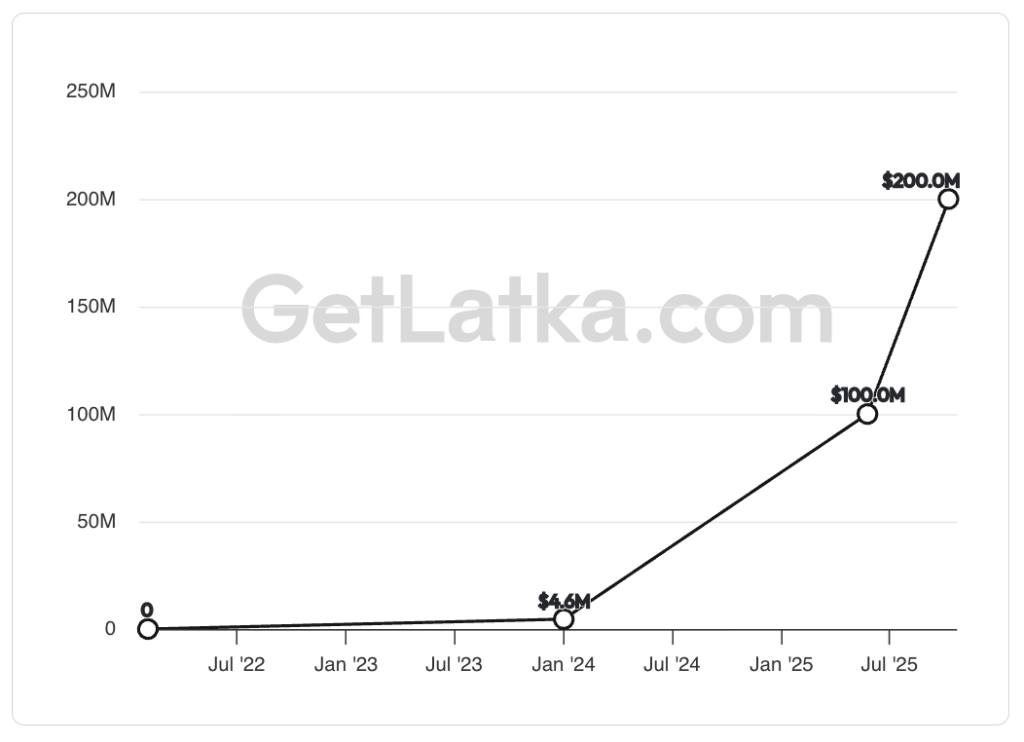
ElevenLabs hit $200M in annual recurring revenue (ARR) as of August 2025, up from $120M at the end of 2024.
Enterprise revenue has risen by more than 200% in the past year. The company’s conversational AI agents platform has enabled the creation of more than two million agents for use across websites, applications, and phone services, with applications spanning customer support, scheduling, education, and entertainment.
The Technology Revolution: How ElevenLabs Redefined Voice AI
The Core Innovation That Changed Everything
ElevenLabs is primarily known for its browser-based, AI-assisted text-to-speech software, Speech Synthesis, which can produce lifelike speech by synthesizing vocal emotion and intonation. The company states that its models are trained to interpret the context in the text, and adjust the intonation and pacing accordingly.
It uses advanced algorithms to analyze the contextual aspects of text, aiming to detect emotions like anger, sadness, happiness, or alarm. This contextual understanding is what separates ElevenLabs from traditional text-to-speech systems that sound robotic and emotionless.
The Product Suite That Captured 41% of Fortune 500 Companies
Like Runway did in AI video, ElevenLabs is moving from foundation model to application layer and building the Adobe Creative Cloud ($13B in yearly revenue) for AI-generated audio. Aggressively colonizing long-form audio editing (Descript), video dubbing (Premiere Pro), voiceovers (Adobe Audition), the AI voice marketplace (Envato), and content consumption.
Their comprehensive product lineup includes:
1. Text-to-Speech Core Platform
- Supports more than 70 languages with Eleven v3 (June 2025)
- Natural multi-speaker dialogue capabilities
- Audio tags like [excited], [whispers], and [sighs] for nuanced expression
- Professional voice cloning with higher quality audio output
2. AI Dubbing Studio
- Translates speech into more than 20 languages
- Preserves speaker’s original voice, emotions, and intonation
- Handles noise removal, speaker differentiation, and synchronization
- Used by major media companies for international content distribution
3. Voice Marketplace and Library
- Over 5,000 voices shared by creators
- $2 million+ paid out to voice creators
- Revenue sharing model using platform credits
- Iconic Voices collection featuring AI-generated representations of historically and culturally significant figures
4. Mobile and Desktop Applications
- ElevenLabs Reader App (June 2024) for iOS and Android
- GenFM feature transforms PDFs, ebooks, and articles into dynamic audio content
- Voice Isolator (July 2024) removes background noise from audio
- Projects tool for long-form content creation
5. Developer Platform and APIs
- Conversational AI platform (November 2024) for interactive voice agents
- AI Speech Classifier API for voice authentication
- Comprehensive SDK support for enterprise integration
- SIP trunking capabilities for telephony integration
The 5-Part ElevenLabs Growth Playbook Other Founders Can Copy
1. Build the Full Stack, Not Just the Model – The Adobe Strategy for AI
Most AI companies stop at building a good model. ElevenLabs built the entire ecosystem around it. They hired voice coaching teams, specialized data labeling processes and comprehensive developer tools around their core audio models.
This is why building a complete product experience matters more than features alone. Positioning itself as the “Adobe Creative Cloud” for AI audio, ElevenLabs competes across long-form audio editing, video dubbing, and AI voice marketplaces.
The breadth of their product development is staggering:
- January 2023: Beta platform launch
- June 2023: AI Speech Classifier (industry first)
- July 2023: Projects announcement
- August 2023: 28 language expansion
- September 2023: Projects release
- October 2023: AI Dubbing
- May 2024: Text-to-music model samples
- June 2024: Mobile apps
- July 2024: Voice Isolator
- November 2024: Conversational AI
- June 2025: Eleven v3 with 70+ languages
- August 2025: Eleven Music AI music generator
Each product reinforced the others, creating multiple revenue streams from the same customer base. A podcaster who starts with basic text-to-speech might upgrade to voice cloning, then add dubbing for international audiences, and eventually use the conversational AI for audience engagement.
2. Price for Virality First, Enterprise Second – The $22/Month Sweet Spot Strategy
The company employs a freemium model with premium tiers starting at $22 for creator accounts and custom enterprise pricing based on usage volume. This pricing strategy mirrors what we see in successful SaaS pricing models—start accessible, then expand upmarket.
The genius of the $22/month creator tier:
- Affordable for individuals: Cheap enough for a YouTube creator to expense
- Valuable enough to matter: Generates real revenue, not just vanity metrics
- Gateway to enterprise: Creates bottom-up demand in organizations
- Network effects: Every creator becomes a potential evangelist
The freemium model offers free access with 10,000 characters per month—enough to test the product but not enough for serious use. This forces users to make a decision quickly: upgrade or abandon. There’s no comfortable middle ground where users can freeload indefinitely.
3. Let Viral Moments Drive Enterprise Adoption – The Bottom-Up Enterprise Strategy
ElevenLabs generates revenue primarily through its AI voice platform, which is used by 41% of Fortune 500 companies. Key enterprise customers include:
Media and Publishing:
- TIME
- The New Yorker
- Harper Collins
- The Washington Post
- The Atlantic
- Storytel
Gaming and Entertainment:
- Inworld
- Paradox Interactive
- Magicave
- Don’t Nod
- AMGI Studios
Rather than focusing solely on enterprise sales, ElevenLabs consistently released new models to prosumers first. This strategy served dual purposes: discovering unexpected use cases they never would have imagined and creating bottom-up demand that made enterprise adoption easier.
Each viral moment revealed new market opportunities:
- Harry Potter Balenciaga video: Showed creative industries the potential
- Book authors copying manuscripts: Validated the audiobook market
- “No face” YouTube channels: Opened up content creator market
- Darth Vader in Fortnite: Demonstrated gaming integration possibilities
- Lex Fridman interviewing Prime Minister Modi: Proved real-time translation works
This approach to customer acquisition through owned media costs a fraction of traditional enterprise sales.
4. Hire Globally for Scarce Talent – Building a 330-Person Distributed Powerhouse
Audio AI expertise is scarce—perhaps only 50 to 100 truly exceptional researchers worldwide. ElevenLabs went fully remote from day one to access this limited talent pool wherever it existed, rather than constraining themselves to a single geography.
ElevenLabs’ workforce has grown in the past twelve months, increasing to more than 330 from around 70 employees. Currently the company has more than 200 employees, according to LinkedIn. Its product and research teams are primarily based in Europe, in the UK, alongside Poland and Hungary, while its US footprint is mostly made up of sales and partnerships teams.
The distributed team structure:
- Research & Development: Primarily Europe (UK, Poland, Hungary)
- Sales & Partnerships: Primarily United States
- Product & Engineering: Global distribution
- Voice Coaching: Specialized teams worldwide
This global approach allowed them to maintain an incredible revenue-per-employee ratio of over $600,000—three times the SaaS industry average.
5. Turn Creators into Evangelists with Revenue Sharing – The $2M+ Creator Economy
Since January 2023, creators have shared over 5,000 voices in ElevenLabs’ Voice Library and earned more than $2 million in rewards. This isn’t charity—it’s brilliant growth strategy.
The creator economy flywheel:
- Creators upload unique voices: Building a moat of content
- Other users pay to use these voices: Generating revenue
- Original creators earn rewards: Creating loyalty
- Success stories spread: Attracting more creators
- Network effects compound: Making the platform indispensable
Every creator who earns money from their voice becomes a permanent advocate for the platform. They share their success stories, bring in more creators, and defend ElevenLabs against competitors. It’s the same strategy that made building communities a top growth tactic for SaaS companies in 2024.
The Competitive Landscape: How ElevenLabs Stays Ahead
The OpenAI Threat and Why It Doesn’t Matter
“Our largest potential competition, less now, but we think it’s on the horizon, is OpenAI,” founder Mati Staniszewski told Sifted in July, citing research capabilities, huge resources and vastly more funding. “They will probably also start to build more and more models in audio.”
OpenAI rolled out voice responses on ChatGPT last year. But ElevenLabs has several defensive moats:
- Domain expertise: Years focused solely on audio
- Creator network: 5,000+ voices can’t be replicated overnight
- Enterprise relationships: Deep integrations with Fortune 500 companies
- Product breadth: Complete audio workflow, not just generation
Traditional Competitors and Market Positioning
ElevenLab’s acquisition of Omnivore positions the company to compete more aggressively in the TTS space against established players like SoundHound, Sprout Social, and Duolingo, who have all demonstrated product capabilities in the space. As of February 2025 these companies traded at an LTM revenue multiple between 4.7-40x.
The global media localization market, driven by increased demand from streaming platforms, gaming, and international media consumption, is projected to reach $3.5 billion by 2028. ElevenLabs’ product caters directly to this market with features like multilingual dubbing and TTS technologies.
The Numbers Behind the Magic: Understanding ElevenLabs’ Unit Economics
Revenue Growth That Defies Gravity
The revenue trajectory tells a story of perfect product-market fit:
- 2023: $25M ARR
- October 2024: $80M ARR
- November 2024: $90M ARR
- End of 2024: $120M ARR
- August 2025: $200M ARR
- Projected End of 2025: $300M+ ARR
This isn’t just growth—it’s acceleration. They’re adding $10M+ in new ARR every month, with enterprise revenue growing 200%+ year-over-year.
The Valuation Multiple Story
At their Series C, investors valued ElevenLabs at approximately 16.5x their ARR ($3.3B valuation / $200M ARR). For context:
- Typical SaaS: 5-10x ARR
- High-growth SaaS: 10-20x ARR
- AI leaders: 30-50x ARR
ElevenLabs’ multiple sits in the sweet spot—high enough to reflect their growth potential but reasonable enough to attract strategic investors.
Real-World Impact: How ElevenLabs Is Changing Industries
Media and Entertainment Revolution
Major media companies are using ElevenLabs to transform their international strategies:
- The Washington Post: Creating multilingual audio versions of articles
- TIME Magazine: Experimenting with “conversational journalism”
- Publishers: Turning entire book catalogs into audiobooks overnight
The Time Person of the Year 2024 featured an ElevenLabs-powered experiment with conversational journalism, showing how traditional media can embrace AI without losing authenticity.
Gaming Industry Transformation
The gaming industry partnership highlights include:
- Fortnite: Using actual voice clips from James Earl Jones for Darth Vader
- Paradox Interactive: Localizing complex strategy games
- Indie developers: Creating fully voiced games on limited budgets
Accessibility and Social Impact
ElevenLabs has also launched its Impact Program, offering its technology for free to organizations that can benefit from AI developments, partnering with 80 organizations across accessibility, education, and culture:
- Bridging Voice: Helping individuals with ALS maintain their voices
- The Scott Morgan Foundation: Voice preservation for medical patients
- 1,000+ individuals: With speech impairments have reclaimed their voices
- Cultural institutions: KADIST and Centre Pompidou bringing AI-generated plays to life
The Technical Moat: Why ElevenLabs’ Technology Is Hard to Replicate
The Contextual Understanding Breakthrough
ElevenLabs’ models are trained to interpret the context in the text, and adjust the intonation and pacing accordingly. This isn’t just about pronouncing words correctly—it’s about understanding the emotional weight of each sentence.
Key technical innovations:
- Emotion detection: Identifying anger, sadness, happiness, or alarm in text
- Contextual pacing: Speeding up or slowing down based on content
- Multi-speaker awareness: Handling conversations naturally
- Cross-lingual consistency: Maintaining voice characteristics across languages
The Data Advantage
With millions of hours of generated speech and feedback from users, ElevenLabs has built a data moat that grows stronger every day. Each piece of content generated improves their models, creating a virtuous cycle that competitors can’t match without similar scale.
Challenges and Controversies: Navigating the Dark Side of Voice AI
The Deepfake Dilemma
The company courted controversy in January last year when an AI-generated robot caller impersonating then-US president Joe Biden phoned some voters in New Hampshire and told them not to vote in the state’s primary election. Some audio detection experts said the deepfake was likely created using ElevenLabs’ technology.
This incident highlighted the dual nature of powerful technology. ElevenLabs responded by:
- Releasing AI Speech Classifier: First-of-its-kind detection tool
- Industry collaboration: Working with other AI developers on universal detection
- Ethical guidelines: Implementing strict usage policies
- Proactive monitoring: Detecting and preventing misuse
The Voice Actor Tension
The rise of AI-generated voices risks alienating the professional voice acting community. ElevenLabs’ current revenue-sharing model, which uses platform credits, may be viewed as inadequate by voice actors. These tensions echo the complaints in movements such as the 2023 SAG-AFTRA strikes against AI in entertainment.
Building sustainable relationships with voice talent will be critical to ensuring long-term success and avoiding industry pushback. The $2M+ paid to creators shows they’re trying to find a middle ground, but the tension remains.
The Future Roadmap: What’s Next for ElevenLabs
Eleven Music: The Next Frontier
In August 2025, ElevenLabs launched Eleven Music, an AI music generator that enables users to generate studio-grade music from natural language prompts. The platform was developed in collaboration with record labels, publishers, and artists, and is cleared for commercial use across various applications including film, television, podcasts, social media videos, advertisements, and gaming.
Eleven Music features:
- Genre and style control: Complete creative flexibility
- Multi-language vocals: English, Spanish, German, and Japanese
- Advanced editing: Modify individual sections or entire compositions
- Commercial clearance: Legal for all business use cases
The Conversational AI Revolution
The company’s conversational AI agents platform has enabled the creation of more than two million agents. This isn’t just about chatbots—it’s about reimagining how businesses interact with customers:
- Customer support: Natural phone conversations
- Sales automation: Qualifying leads with human-like interaction
- Education: Interactive tutoring and language learning
- Entertainment: Gaming NPCs and interactive storytelling
Global Language Elimination
With support for 70+ languages and growing, ElevenLabs is working toward a future where language barriers don’t exist. Imagine:
- Real-time translation: Phone calls in any language
- Content universality: Every piece of media available in every language
- Cultural preservation: Maintaining dying languages through AI voices
- Global collaboration: Teams working seamlessly across language barriers
Lessons for Founders: What You Can Steal From ElevenLabs’ Playbook
1. Find a Personal Problem Worth Solving
The best startups solve problems the founders deeply understand. For ElevenLabs, it was bad dubbing ruining movies. What frustrated experience from your past could become a billion-dollar company?
2. Go Deep, Not Wide
While everyone else was building general AI assistants, ElevenLabs focused exclusively on voice. This focus allowed them to build the best product in their category while others spread themselves thin.
3. Let Users Market for You
Every viral video created with ElevenLabs was free marketing. Design your product so that using it naturally creates shareable content. The best growth hack is a product people can’t help but show off.
4. Price for Adoption, Then Expansion
Starting at $22/month seems low for enterprise software. But it created an army of individual users who brought ElevenLabs into their companies. Sometimes the best enterprise strategy is to avoid looking like enterprise software.
5. Hire Globally From Day One
If you need specialized talent, go where they are. ElevenLabs proved you can build a world-class team without requiring everyone to relocate to San Francisco or New York.
6. Share the Wealth
The $2M+ paid to voice creators isn’t an expense—it’s an investment in loyalty. When your users make money from your platform, they become your most passionate advocates.
7. Ship Fast, Ship Often
From January 2023 to August 2025, ElevenLabs shipped major features almost monthly. This velocity kept them ahead of competitors and gave users constant reasons to stay engaged.
The Bottom Line: Why ElevenLabs’ Story Matters
ElevenLabs’ journey from $0 to $200M in revenue in three years shatters conventional wisdom about building AI companies. They proved that with the right focus, product velocity, and growth strategy, you can compete with tech giants and win.
The two Polish friends who started with bad movie dubbing are now racing toward becoming the Adobe of AI audio. They’re on track to exceed $300 million by the end of 2025, putting them on pace to hit unicorn revenue status faster than Slack, Zoom, or any other SaaS darling.
For founders watching from the sidelines, the message is clear: the biggest opportunities in AI aren’t in competing with OpenAI on general intelligence. They’re in picking a specific problem—like ElevenLabs did with voice—and solving it better than anyone else.
The next billion-dollar AI company won’t be built by copying ChatGPT. It’ll be built by founders who find their own “bad dubbing” moment and dedicate everything to fixing it.
Want more data on fast-growing SaaS companies like ElevenLabs? Check out the GetLatka SaaS Database for exclusive revenue metrics and growth insights from 58,000+ companies.