2024 Revenue
$627.3K(Est.)
Customers · 2023
20
Funding
$11M
Team
54
Founded
2020
Monite Revenue & Funding (2024)
Monite is an API-first financial automation infrastructure company founded in 2020 and headquartered with engineering operations centered in Georgia (Eastern Europe). The company enables B2B SaaS platforms and fintechs to embed accounts payable, invoicing, and payment automation directly into their products, charging partners per active SME customer per module per month plus a take rate on payments processed.
As of mid-2023, Monite had 20 platform customers and was generating approximately $20,000 per month in revenue, up from essentially zero a year earlier. The company has raised a total of more than $10 million across a $1 million pre-seed round in 2020 led by Tomahawk and a $10 million seed round closed in two tranches in 2021 and 2022, led by Point72 Ventures and Third Prime, plus a subsequent convertible note.
Ivan Maryasin, CEO and co-founder, leads a 50-person team of which 80 percent work in product and engineering. The company has invested a bit over $5 million in product development to date and maintains more than 12 months of runway as it targets a Series A raise.
Last updated
Monite Revenue
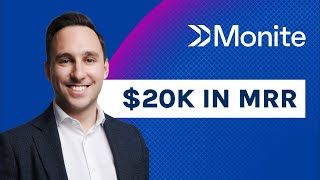
Monite was generating approximately $20,000 per month in revenue as of July 2023, up from essentially zero roughly one year earlier when the company was signing its first infrastructure customers at minimal or no charge to validate the product. Maryasin confirmed the figure to Latka, noting that most customers were still in integration or early go-live phases and that meaningful MRR acceleration had not yet materialized.
| Year | Milestone | Source |
|---|---|---|
| 2024 | Monite Hit $627.3k revenue in October 2024 | Estimated |
| 2023 | Monite Hit $240k revenue in July 2023 | |
| 2022 | Monite Hit $12k revenue in June 2022 | |
| 2020 | Launched with $0 revenue |
The company targets annual contract values above $30,000, with larger platform customers such as Capital on Tap carrying contracts that run into the hundreds of thousands of dollars per year. Minimum contract commitments are 12 months, and many larger deals are structured as 3 to 4 year contracts. Maryasin noted that no customer had yet paid $300,000 or more in a trailing twelve-month period as of the interview date, but that the model is designed so that excess usage above the contracted minimum drives revenue higher over time.
Because revenue was approximately zero a year prior and stood at roughly $20,000 per month at the time of the interview, a precise year-over-year growth rate cannot be calculated from a zero base. GetLatka estimates that if Monite sustains its current monthly run rate through mid-2024 with no acceleration, annualized revenue would reach approximately $240,000. If the company achieves the MRR acceleration Maryasin described as imminent, driven by customers moving past integration and into active usage, the range could be materially higher. This is a GetLatka estimate based on the stated $20,000 monthly figure and Maryasin's qualitative growth commentary; no forward revenue figure was confirmed by the CEO.
Monite Valuation, Funding Rounds
Monite has not publicly disclosed its valuation. The company has raised $11M in total funding to date.
Monite has raised $11M in total funding across 3 rounds, most recently a $5M Seed round in 2022.
| Year | Round | Amount | Valuation | % Sold | Source |
|---|---|---|---|---|---|
| 2022 | Seed 2 | $5M | - | - | |
| 2021 | Seed | $5M | - | - | |
| 2020 | Pre-Seed | $1M | - | - |
Founder / CEO
Ivan Maryasin
CEO
Ivan Maryasin is the CEO and co-founder of Monite. He was 30 years old at the time of the July 2023 interview. Maryasin and his technical co-founder Andre, whose last name was referenced as Efriem in the host introduction, both came from neobank backgrounds before founding Monite in 2020. Andre serves as the technical co-founder and is based in Georgia, where he leads the engineering team on the ground.
Maryasin described the company's origin as starting with a direct-to-SME financial management product before pivoting to API infrastructure in 2021 after observing that SME owners preferred to manage finances inside their existing systems of record such as neobanks, POS systems, and vertical software. He leads product strategy, customer acquisition, and business growth.
Net worth was not discussed in the interview. No ownership percentage held by Maryasin at the time of the interview was stated, so no net worth estimate can be responsibly derived. The leadership team Maryasin cited includes CPO Dan Osborne, formerly VP of Product at Marqeta where he joined when the company had approximately 30 people and stayed through its IPO, and Chief of Staff Sophie, formerly CEO of Atom Bank. Additional technical leaders mentioned include Alex Akimov, former head of API at Adyen, and Andre Efriem, one of the first technical leaders at Mambu.
Q&A
| Question | Answer |
|---|---|
| What's your age? | 33 |
| Favorite online tool? | - |
| Favorite book? | - |
| Favorite CEO? | - |
| Advice for 20 year old self | - |
Customers
Monite had 20 platform customers as of July 2023. Maryasin stated the company tripled its customer base in the six months prior to the interview and expressed confidence in matching or exceeding that growth rate in the following six months. The company targets B2B platforms that already serve at least a few thousand SME users.
The largest named customer as of the interview was Capital on Tap, a UK credit card provider for SMEs that had approximately 300 SME customers at the time of signing. Minimum contract commitments are 12 months, with larger deals structured at 3 to 4 years. The company targets annual contract values above $30,000, with Maryasin confirming that at least one active customer had a contract valued above $100,000 per year. No customer had yet generated $300,000 or more in payments to Monite in a trailing twelve-month period as of the interview.
Pricing is structured per active SME customer per module per month, not per API call, plus a take rate on payment volume. Maryasin described the minimum commitment as negligible relative to the cost of a single developer, positioning it as an easy entry point for smaller platforms while the larger contract values accrue as usage scales.
Monite serves 20 customers.
Monite Business Model
Monite charges partners per active SME customer per module per month, creating a usage-aligned SaaS model where revenue scales as the partner's own customer base grows and engages more deeply with the embedded financial tools. On top of the per-module fee, Monite earns a take rate on payments processed through its rails.
Maryasin explained the payment economics in detail: Monite offers partners a fixed blended take rate of 0.6 percent on payments, while the market standard rate charged to end users, using QuickBooks as the benchmark, is approximately 3 percent. Partners pass through the 3 percent rate to their SME clients and retain the spread above Monite's 0.6 percent fixed rate, meaning partners earn approximately 0.4 percent on each transaction. Monite's own net earnings on the payment leg vary based on actual transaction costs and card mix, and the company bears the associated risk. The take rate can be zero or even negative depending on the specific transaction.
The company has invested a bit over $5 million in product development to date, according to Maryasin, and maintains more than 12 months of runway as of July 2023. Exact burn rate and monthly cash outflow were not disclosed. Profitability was not discussed in the interview. Gross margin, churn, LTV, CAC, and net revenue retention were not discussed in the interview. Maryasin described the model as requiring high upfront investment but low marginal cost to scale once the infrastructure is built, with the expectation that the platform can expand internationally without proportional headcount growth.
Point-in-time figures shared on the GetLatka podcast, each linked to the exact moment it was said on camera.
Customers (2023)
20
“Ivan Maryasin: We have about 20 platform customers and basically growing. We basically 3x customer base in the last six months.”
WatchMonite Employees & Team Size
Monite had 50 full-time employees as of July 2023. Eighty percent of the team, or approximately 40 people, work in product and technology, consistent with the company's API-first positioning. Of those roughly 40 engineers and product staff, 25 are based in Georgia (Eastern Europe), where the technical co-founder Andre leads the team. The Georgia-based engineering hub draws talent relocated from Ukraine, Russia, Belarus, and other parts of the region, benefiting from lower labor costs and no high European or US tax burdens at the current stage of the company.
Monite employs approximately 54 people as of 2026, up from 50 in 2023. It serves 20 customers that rely on its solutions.
| Year | Milestone | Source |
|---|---|---|
| 2024 | Reached 54 employees (March 2024) | |
| 2023 | Reached 50 employees (July 2023) | |
| 2022 | Reached 26 employees (November 2022) | |
| 2021 | Reached 13 employees (November 2021) |
Frequently Asked Questions about Monite
What is Monite's revenue?
Monite generates an estimated $627.3K in annual revenue.
Who founded Monite?
Monite was founded by Ivan Maryasin.
Who is the CEO of Monite?
The CEO of Monite is Ivan Maryasin.
How much funding does Monite have?
Monite raised $11M across 3 rounds.
How many employees does Monite have?
Monite has 54 employees.
Where is Monite headquarters?
Monite is headquartered in Berlin, Germany.
Compare Monite to the industry
Monite operates across multiple industries. Browse revenue, funding, and growth data for Monite in each sector below.
Full Interview Transcripts
Why He Spent $5m on Fintech API MVP, 20 Customers Today and $20k in MRRJul 19, 2023
[00:00] Monite.com launched back in 2020, did a million dollar pre seed round point seventy two third prime came in after that through 2022 started landing their first customers really late twenty twenty two scaling today 20 customers on board to the platform with real net dollar retention opportunities in the future as they scale volume and usage. But doing 20,000 a month right now in revenue up from basically nothing a year ago, they've got over 50 folks on the [00:21] team, 40 engineers or product folks of which 25 are based in Georgia. So some labor arbitrage there, which we like, but looking to scale here nicely in a sustainable way over time. We'll see what they do next. Hey folks, my guest today is Ivan Maryasin. He's the CEO and co founder of monite, the API first FinTech company that helps SaaS products platforms capitalize on hassle free financial automation finance automation for their clients. At the company, he's [00:45] responsible for driving product strategy, customer acquisition and business growth. Under his leadership, the startup already went live with a number of high profile customers and raised more than 10,000,000 in funding from seasoned VC firms, third prime Point72 Ventures alongside angels from big players like Klarna, Mali, Nayeon Plaid and PayPal. Ivan, you ready to take us to the top? [01:03] >> Yeah, absolutely. Yeah. Thanks for having me today. [01:05] You bet. And just to be clear, you're also a co founder. Right? [01:08] >> Correct. Yeah. I have a technical co founder. Thanks, God. You can't build an API first company without a genius tech guy, which my co founder, Andre, is. [01:15] What year did you guys launch the company? [01:19] >> So we we launched three years ago, and it was like an like a good accident, all the good things in life happened accidentally. We both came from neobanks, had a grand idea how to change SME finance. And here we are three years later. [01:31] Alright, so 2020 launch, give me a story today of a company or a customer that's using monite. [01:37] >> Yeah. Absolutely. So I think, just just to give you a perspective, we typically serve b two b platforms that have, you know, a few thousand of SME users at list. Right? And, for example, the biggest customer we, signed so far is actually Capital Tap. I'm a credit card provider for SME in The UK, and they already have all these, like, 300 SME customers. And so what they're doing is they're saying, look. These guys are already using [02:00] >> our credit cards, but they could do more finance processes with us. So let's, for example, help them pay suppliers more efficiently. And this is how they basically become a build.com like provider for their clients, and all of this functionality for payables automation is provided by monite API while Capital One Tap has full control over their interface, how it looks, how it works, how it works for specific segments of users. So we sort of, like, give them [02:25] >> all the functionality, and they make sure it's a perfect fit for their user. And with that, they earn more per customer. They get more transaction volume. And, of course, this means that their user base is a lot more engaged and sort of more locked in than before. [02:40] Let let me repeat this back to you for my audience, Amy. So let's say someone's listening right now running a SaaS company that helps sales teams. And that means that salesperson is obviously probably sending an invoice at some point, sitting very close to the payment flows. If that B2B SaaS company listening to you want to launch more FinTech products, they might look to monite to help power those APIs and launch things like invoicing, bill pay, and [02:58] b two b payments inside the application. [03:01] >> That's that's exactly right. Like, so you theoretically, you could just, like, embed invoice issuance into your CRM system so that the salesperson can one click send the invoice, monitor its paid status, etcetera, etcetera. Or you could, like, take an SME Neo Bank and give its users a super app capability where they can manage invoices and payables and expenses all in one place. So if anything, we give people the capability, and they can play it in many [03:23] >> different ways. [03:24] And so with this product suite and product set, what is the average customer paying you today to use this API tool? [03:31] >> So I think, there are there are different sort of, types of products we sell in different bundles. I would say we typically sign deals now, ever ever everywhere above 30,000 per year, and we'll be growing this, very, very quickly as we grow in customer counts. And, obviously, the value of those deals are in a hundreds of thousands. But what we do is we basically give people an easy way to start, You have the way to start [03:55] >> to justifies integration costs on our side and locks them in for at least twelve months of usage, which is our minimal commitments. [04:02] Okay. When you look at your current customer base, would you say it's fair to say on average, those contracts are called 30 ks per year contracts for some number of API calls? [04:10] >> We so we don't price based on API calls. We price per active SME customer per module per month. So it's basically a scalable SaaS model. And then if people buy payments and some some financial services for months, we also have a take rate in that. So, essentially, the this is how we make money. And the idea is that, as they get more active usage, they pay us more. So it's strictly aligned in terms of incentive. Only [04:36] >> when they make more money, we make more money. [04:39] To me how the take rate works. If I'm a B2B SaaS company, use monite to power in app invoicing and invoices for a $100, it gets paid. How much is monite gonna take for that? [04:47] >> Yeah. I I think it depends on a specific arrangement. Right? But we use, for example, Stripe rails in the background for invoice payment links. And then there is basically the cost of acquiring money on the cards. So depending on specifics of, like, which card it is, etcetera, our take rates could be, like, zero. It could be negative. It could be a few, percentage points. The most important thing is that we give a fixed take rate to [05:09] >> our partners. For example, who would give them payment for whatever, like, point 6% blended rates, and they would say to their client, look. It cost you 3% each payment, which is the market standard that QuickBooks charges, and then they would always on earn point four. And so what we do is we fix their earnings, but our earnings really depend on how much transaction costs, and we run our own risk, in that regard. [05:33] Oh, what's going on there, YouTube? Good to see you guys. Now imagine this. You love watching these interviews with SaaS founders, but imagine if we took all of the valuation data out from over 2,807 interviews I've done manually. Saves you a lot of time. Well, we've done this. We've built it into the beautiful interface inside of Founderpath. Check this out. I'll show you how you can access this in a second, but you log in, you connect [05:56] your Stripe account, you see your valuation real time. You can see what it changed over the past eighty eight days and even set goals for valuation this year. Now the secret evaluation is there's many different ways to value a SaaS business. So the reason you're gonna see three or four different valuations inside of your Founderpath dashboard, this is all free by the way, is because depending on who's doing the buying of your SaaS company, you're gonna [06:20] get a different valuation. A VC is gonna pay a different valuation. Private equity firm is different. If you're gonna do a minority sale, that's different. And if you sell the whole business, that's a different valuation. You can see all those when I hover over here. Right? So the teal is what a VC would pay. Yellow is what private equity and red is if you sold the whole thing outright. Now what's cool about this is this is [06:42] not built off random data. Again, you guys hear these interviews on YouTube. All these datas are built from real time valuation data points founder share with us on the show. So traction, 1,200,000 seed round, 3.7 raise. They sold 22% of their business. Go in here and filter by the event. Maybe you only wanna see companies that have sold the whole business. Well, here are a bunch that have been acquired the valuation and the multiple. Maybe you're [07:08] going out right now and you're raising your seed round. We'll go in here and look at all this recent seed deals that went down, what they raised, what valuation they raised at and what percent that they sold. There's never been a larger dataset of SaaS valuations than what you can get now inside of Founderpath. And we're thrilled to bring it to you. Alright. We're gonna go back to the YouTube video here in a second, but if [07:30] you wanna check this tool out, if you wanna jump in and sign up, you can check it out for free to get your valuation at this link. This link, founderpath.com/products/valuations. Or if you go to founderpath.com and hover over products, click on get your valuation here, and go ahead and sign up to give it a whirl. Again, all that valuation data live right inside the platform. I hope to see you there. Alright. Let's jump back into the [07:56] interview. Okay. So I understand moving forward, you're targeting accounts at more than $30,000 ACVs in terms of commitments and contracts. But when you look at your history right over the past couple of years that your average customer today, are they paying more like a thousand bucks a month or $2 a month? Is that a fair statement? [08:10] >> Yeah. Absolutely. So we we usually don't sign anything that pays less than that. It just doesn't really make sense for us. We rather look at people like Capital On Tap that already have hundreds of thousands of clients, and those contracts always go into hundreds of thousands per year in terms of minimal commitments. Right? So that those are the perfect customers we're targeting, yet we make the m three easy for smaller platforms or starting, or guys who [08:33] >> are just starting up. We we just are aware that the cost of building this is in the millions. So what we ask them to pay as a minimal commitment is negligible even if you compare compare it to a price of a single developer per year. [08:45] Okay. So it is fair to say you have active customers today paying more than a $100,000 per year? [08:51] >> Correct. I mean, the usage is ramping up. Right? Like, they sign a contract, then they integrate in a few months, then they start So [08:57] they so they could pay you more than that in the future if they grow into their usage. [09:02] >> So so it's a little bit more like we sign a contract, let's say, grand a year. And this contract has a start date. For example, the start date could be 09/01/2023. So since that date, they will be paying 50,000 divided by 12 every single month, no matter if they use it or not, according to contract. We hope that they use it very actively, and they pay us not $50, but $250 because they have so much excessive [09:24] >> usage. And this is why our product is not purely technical. We'll also have a lot of support in product marketing on UX, UI, and on product activation because this is how we make money per active user. [09:36] Yeah. You're talking about a minimum threshold, right? The platform spend a monite every month is call it $50, 60 or whatever, $5 a month, $6 a month. What you're saying though is you hope that they breach that minimum and then actually start using more and then you're getting a take rate and other unit economic variable based comp, which would get the contract up to 100, 200 k, 300 [09:51] >> ks Exactly. A [09:54] >> That's the goal. But you don't have customers you don't [09:56] have that, but you don't have you don't have customers today, like in the past twelve months that have paid $300 per year. [10:01] >> Not yet. No. Yeah. We're we're still fresh in the market. So it takes time to roll [10:05] it out. That makes sense. That makes sense. Okay, cool. That context was helpful. Thanks for giving that. So you get going in 2020. Help me understand how you guys capitalize the business. You bootstrapped or raised capital? [10:15] >> Yeah. So we first bootstrapped and we actually started as a b to b company. So we first built a one stop shop for a small business owner to manage finances until we realized that people wants this one stop shop, but we've seen their system of records that could be POS, neobanks, you know, vertical software provider or whatever it may be. And that's how we transitioned into infrastructure direction in 2021. And then we raised proceeds first for [10:39] >> b two b direction, which was around 1,000,000. And then we raised a larger seed round in two portions, five and five, in '21 and '22. And so our total seed was $10,000,000 led by Point seventy two Ventures and Cert Prime. And the last portion of Seed came in in December 2022. [10:57] Why'd you split it up? [11:00] >> So I think it was just a natural kind of development of the business. Point seventy two came in when we just transitioned into infrastructure, and then ThirdPrime came in when the infrastructure business was already maturing, and we just wanted to, like, really give it a boost before series a. And we still have a very, kind of a very good mood for raising a larger series a despite all the market concerns and sort of, like, negative sentiment [11:22] >> and everything. We are one of very few providers in the new category. And therefore, we really want to make sure we're in a good path to maintain that position. [11:30] How many customers are you serving now today? [11:33] >> So we have about 20 platform customers and basically growing, I wouldn't say exponentially, but we have a very good growth rate. We basically 3x customer base in the last six months. And then I think we have all chances of even exceeding this in the next six months. [11:47] And when you structure a seed round that's spread out like that with a seed and a seed two, where the closes are almost a year apart, does third prime that came in in late twenty twenty two sit on the same paper as zero point seven two or is it different valuations? [11:58] >> Different valuations with a good premium. [12:00] Yeah. Yeah. That makes sense. Okay. And then so we don't [12:02] >> want to dilute too much. Right? We gotta keep it rolling. [12:05] Yeah. I mean, look, most folks in the seed round back when you closed, I mean, they're selling 20% of the company. Were you sort of in that same range? [12:12] >> Yeah. I I think we we we always rate like average rate was within the market boundaries, and we're very likely to have investors that optimize for long term. So it's it's sort of like an infrastructure. They really say, like, look, how much money do you need to build a category leader? Let's make sure you do this, and let's make sure your dilution is between market standards. And that's, that's where we are today. [12:31] And sorry, you did the pre in 2020 for, you said a million? [12:34] >> Correct. [12:35] Yeah. Okay. And who led that? [12:37] >> Tomahawk. [12:38] Oh, interesting. Okay. And most pre rounds in that range, again, you're selling 20% of the company. Did you do I mean, you were in that same range? [12:47] >> I think, yeah, we we were somewhere around 20%. If if my memory doesn't feel we're even below 20%. I wouldn't remember the exact figure right now, but, basically, we did, sort of three rounds, and three of them were in the market range. And then a bunch of, like we we now even did a convertible after the price rounds, but all of this is done without hurting the long term dilution. Right? We're all aware of what series [13:08] >> a conditions are, and we make sure that we're in a good position to raise from a tier one fund. [13:12] Yep. That makes a lot of sense. Well, talk to me about team today. How many folks are full time? [13:17] >> So we have 50 people full time, and 80% of the team is actually product and tech. We're API first company, so it requires a lot of engineers. We have people from all across European and even global fintech. So very senior leadership team. For example, our CPO, Dan Osborne, is ex VP product at Marketa, which he scaled from 30 people to IPO. Our chief of staff, Sophie, was CEO of Atombank, and we have a number of other [13:45] >> great technical experts. Like, for example, Alex Akimov, ex head of API at Edian, or Andre Efriem, one of the first technical leaders at Mambu. And so this is more or less how we think about the team. We run a fairly low development cost base because we base them in Eastern Europe, but we then have very [14:01] part of Eastern Europe? [14:03] >> Georgia. Georgia. 111% tech. Very, very, very favorable for [14:07] some of the in Georgia? [14:10] >> I I wanna say 2025. Uh-huh. But we also have some engineers outside of Georgia, so it's quite a bunch of people. [14:17] How did you establish the, like, the first person in Georgia? [14:21] >> My my cofounder actually actually sits with them in Georgia, and so, like, he's the right man on the ground to run the whole tech show. And that's where we have a lot of, also, good access to talent through the right recruiting agencies. So we usually relocate people to Georgia also from, you know, like, ex Ukrainians, ex Russians, ex Belarusians, like, from all across, very strong tech talent, and no crazy European or US taxes that would basically [14:48] >> mean that we can only run half of that size of the team at this stage. [14:51] Yeah, that makes sense. Now you mentioned earlier 20 customers and, you know, historic, I mean, you said in the future, you're targeting 30 ks ACVs, but historically they're more like a grand per month or 12 ks ACVs per year. That would put you about $20,000 per month in revenue. Is that generally correct? [15:04] >> Yeah. Yeah. That that's about right. So I think in infrastructure, the the thing that is the hardest for me coming from a typical SaaS business is that in infrastructure, revenues always lag behind because there is a longer sales cycle than people have to integrate, than minimal commitments kick in, and only then they start seeing sort of excess usage. And I think we're now exactly in a moment when we have most of the customers either integrating or [15:27] >> just starting to go live. So we're yet to see this MRR acceleration, like real MRR acceleration, but that's basically how infrastructure business works. So people come in, many of them sign three or four year contracts, they're in for the long haul, but it takes more time to see this revenue materialize. [15:43] And if you're at 20 k a month today, where were you about a year ago so we can calculate growth? [15:48] >> I think, like, about a year ago, we're around zero. So, like, we were just launching infrastructure. We just signed the first customers. We signed them almost for free to make sure that we can actually, like, you know, deliver the service we wanna deliver. And I think in intro also, like, they don't have a direct feedback loop from a customer from the end customer, and this is why it takes longer to launch the product and calibrate that [16:09] >> it actually works the right way. I would say now, a year fast forward a year, we feel very confident about the solution we have, And this can also be easily kind of found out in our API docs and an explanation guide and then everything else that we have published. [16:23] In your seed round, especially the second close in December 2022 with third prime, it sounds like you were still basically pre revenue. What did you point to in your slide decks to basically say, look. Still We're getting traction. Even though there's not revenue coming in, we're still getting traction, give us a higher valuation and give us a $5,000,000 extra capital. [16:39] >> Yeah. I think so. I think the the the whole round was basically around a very strong funnel of opportunities that we have. And some of them were closed, some are still processing. And there is also another component that in API business, like, when we were raising the first portion of Seed, the APIs were very fresh. They were, like, barely just going live, barely getting tested. When we're raising second portion of seed, we already had a number [17:02] >> of active deployments with some usage data, a lot of battleground testing of APIs, and with a very clear answer to, like, why people would buy this and not build in house. Why would a big player that has a lot of money partner with monite versus, like, hire another product team? And a lot of other things that I think are core to the thesis. And now fast forward just six months from that second portion of seed, we [17:26] >> see, like, crazy PMF acceleration, a lot more opportunities coming in. It's just generally this market is starting to emerge in a whole new level. [17:37] Yeah. That makes sense. I'm just curious how you you I mean, you're on a path with 50 full time employees. I understand some are in Georgia, but you're doing $20 a month in revenue means you're burning a lot of money per month. I mean, have to either grow in and go raise another big round to keep fueling that growth or eventually cut back make sure you can be sustainable for a long period of time without raising [17:57] additional equity round. Where's your head at today? [18:00] >> Yeah. I think it's it's our our game is rather aggressive and opportunity driven. I think it's very simple it's a very simple explanation here. Right? Like, if you look at the amount of funding any invoicing or accounts payable provider that does b two b raised in order to build a solution, you can clearly see that these numbers are at least in the tens of millions. This this solution I [18:21] can I can name five companies that are bootstrapped with more than 1,000,000,000 deployed on their platform and their API rails that are that are bootstrapped in this space? I just wanna point that out. It's not required to raise money in my opinion for infrastructure plays like this. [18:32] >> No. I I I fully I fully agree. I think, like, may maybe people found a way to do this. Right? For us, what we see is that there is no real MVP in this market. Like, if people come to us and say, hey. I wanna be a builder with Conk for my clients. I can't give them, like, a scrappy little solution that doesn't really work. I have to give them something a lot more ready, and it [18:50] >> actually takes a lot of efforts and time to build, which is one of the main reasons that people come to us and not build in house because it does take millions to build this. Now once you build this, you can capitalize on this very, very efficiently. And I think for us, there is a higher upfront investment, but good news is that we don't need to grow the team so much at series a. We don't need to [19:08] >> keep kind of investing exponentially large volumes in order to monetize. It's actually the opposite. We invest a lot upfront, and then this machine can run very smoothly with very little marginal investment on top and scale internationally across markets. [19:23] How much would you say you've invested so far? Like, you've actually money you've actually spent? [19:27] >> So I think I think we are pretty still pretty good in cash. Like, we we don't disclose exact numbers, but we are we're definitely above twelve months runway. [19:37] And Well, I'm not as much runway. I mean, you say you have to invest a lot upfront to build something like this. Right? That would be a good reason for customer to pay you instead. So I just I'm just curious how much do think you've $5,000,000 so far investing in the product? 2,000,000? What do think it is? [19:49] >> I think I think a bit over 5. Okay. A bit over 5 for sure. Yeah. Interesting. And I would say we're nowhere close to done in terms of scope that people want. Right? Like, when you talk about, like, you know, regional e invoicing compliance or other things related to payments, it's more about, like, do you wanna earn one x per user more, like, two x, or do you wanna earn 10 x? And we're moving in a [20:09] >> direction where we want to promise the platforms that they will make a lot more money per user. But in order to do this, we really need to build out the functionality and integrations. [20:17] Yep. Ivan, we're out of time. Let's wrap up here with the famous five. One word answers if you can. Number one, favorite book? [20:23] >> What to do is who you are. [20:24] Number two, is there a CEO you're following or studying? [20:29] >> I'm following Elon Musk. I'm I'm a big fan of some things. I'm not a big fan of others, but I like the example. Number three, what's your [20:35] favorite online tool for building monite? [20:38] >> Notion. [20:39] Number four, how many hours of sleep do get every night? [20:43] >> At least eight. Don't don't cut down on sleep. [20:46] And situation, married, single, kids? [20:49] >> I'm actually single now. So [20:52] Okay. Any kiddos or no? [20:53] >> I have monite as my baby. [20:54] Yep. Okay. So no kids. Alright. And how old are you, Ivan? [20:59] >> I'm 30. [21:00] Last question. Something you wish knew when you were 20. [21:05] >> The problems can solve themselves. Not all problems need solving. [21:09] Guys, there you have it. Monite.com launched back in 2020, did a million dollar pre seed round, point seventy two third prime came in after that through 2022, started landing their first customers really late twenty twenty two scaling today, 20 customers on board a bill platform with real net dollar retention opportunities in the future as they scale volume and usage. But doing 20,000 a month right now in revenue up from basically nothing a year ago, they've got [21:31] over 50 folks on the team, 40 engineers or product folks of which 25 are based in Georgia. So some labor arbitrage there, which we like, but looking to scale here nicely in a sustainable way over time. We'll see what they do next. Ivan, thanks for taking us to the top. [21:44] >> Cool. Thanks so much for having me. [21:47] One more thing before you go, We have a brand new show every Thursday at 1PM central. It's called Shark Tank for SaaS. We call it deal or bust. One founder comes on, three hungry buyers, they try and do a deal live, and the founder shares back end dashboards, their expenses, their revenue, ARPU, CAC, LTV, you name it, they share it and the buyers try and make a deal live. It is fun to watch every Thursday one [22:12] pm Central. Additionally, remember these recorded founder interviews go live. We release them here on YouTube every day at 2PM Central. To make sure you don't miss any of that, make sure you click the subscribe button below here on YouTube, the big red button, and then click the little bell notification to make sure you get notifications when we do go live. I wouldn't want you to miss breaking news in the SaaS world, whether it's an acquisition, a [22:35] big fundraise, a big sale, a big profitability statement or something else. I don't want you to miss it. Additionally, if you want to take this conversation deeper and further, we have by far the largest private Slack community for B2B SaaS founders. You want to get in there. We've probably talked about your tool if you're running a company or your firm if you're investing. You can go in there and quickly search and see what people are saying. [22:56] Sign up for that at nathanlatka.com/slack. In the meantime, I'm hanging out with you here on YouTube. I'll be in the comments for the next thirty minutes. Feel free to let me know what you thought about this episode and if you enjoyed it, click the thumbs up. We get a lot of haters that are mad at how aggressive I am on these shows, but I do it so that we can all learn. We have to counter those [23:16] people. We got to push them away. Click the thumbs up below to counter them and know that I appreciate your guys'support. All right. I'll be in the comments. See you.
Data and Sources
All figures on this page are taken directly from interviews or are estimates from public sources and proprietary models. Not financial advice. Read full disclaimer.
Claim this profilePeople Also Viewed
Veritus Agent
AI agents for the consumer lending industry
QuarterOne
Developer of a sales forecasting application intended to help small businesses who need real-time...
Actalink
Actalink is your All-in-One Platform to scale crypto and stablecoin payments — powered by embedded...
Me4U Inc.
Me4U enables authentic conversations with the authorized AI clone of your favorite celebrity...
Sourcetable
Sourcetable is an AI-powered spreadsheet and data analyst designed to streamline your workflow and...
Vox AI
Vox AI: Automates drive thru experiences using AI