

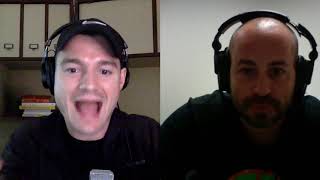
 Watch: TT 1736 Weiss, YouTube
January 2019
TT 1736 Weiss, YouTube
Read the transcript
hello everyone my guest today is scott weiss he is the founder and of referral gig and president of makina partners a technology recruiting from both companies are based in seattle washington scott you're ready to take it to the top i sure am all right so which one are you spending more time on the recruiting firm or referral gig well i'll tell you a little bit about my recruiting background which kind of informed the product that is referring so i'll talk a little bit about both let me so let me get your background let me get the company first and then we'll build into your background so tell us what referrer gig does and what's the business model how do you make money okay so prefer a gig is essentially a candidate referral engine for companies that want to continue to develop out their employee referral programs so most people in talent acquisition know that referrals are usually the best source of hire so our technology allows companies to kind of turbo charge those efforts and streamline the way that they uh source out their referrals from employees manage them and make that their number one source of hire okay so just to be clear this is like they'll they'll say hey guys there's a thousand dollar bonus if you if you refer a friend we hire them they steal this for six months you'll essentially help employees track their referred candidates and see if hires get made and see when they get payouts exactly so you know employee referral programs have existed as long as companies have hired people but up until about maybe 10 years ago eight years ago it was more just kind of conceptual you know we have a referral program here's what we'll pay you you'd have managers reminding their staff and as social networks have grown in popularity and employees have expanded their networks through linkedin most commonly um it's it became apparent that there was an opportunity to build out a dedicated application for that purpose and we are one of a handful of vendors in that kind of niche space right now yep so what's your pricing model i assume it's sas what are they what do people pay you on average yeah so on average per month it'll go anywhere from 200 a month for a real small business up to you know a thousand fifteen hundred dollars a month for a larger size company uh there's some integration work that has to go on behind the scenes uh we kind of live as a layer on top of the company's applicant tracking system so generally we'll price out an initial kind of scope of work around the integration and the setup and then we roll into a monthly licensing model okay but just be clear your your average you'd say is about 200 bucks a month when it's on just the pure sas side now i'd say it's a little bit higher than that we offer a lower price point for the smaller businesses that maybe don't even run an applicant tracking system maybe they've got no that makes sense i totally get the product i'm just trying to get your current average as well so it's maybe like 400 bucks 500 bucks yeah that's i would say that's a good number okay interesting and then put this on a timeline for us when did you launch the company well i started it i kind of spun it out of my recruiting company about five years ago kind of had the idea that i wanted to diversify and there seemed like an opportunity here to uh kind of productize this thing i had in my mind um so about five years ago what i did as a non-engineer non-technical person is kind of uh scoped out what i wanted out of the product um hired uh some folks through one of these online freelancer marketplaces to build me a you know minimum viable product i got that out uh found a customer who at that time was a quite large customer they kind of looked at what i had and said we can use this uh but are you willing to make some customizations and so i said sure you know if you're willing to pay me yes um so from there i kind of relied on freelancers to support that customer and it was a very challenging way to do a startup and uh got to a point where i said look i'm i'm just throwing money at freelancers i don't really have a way to build and how much scott how much did you put into the company yourself uh all said and done probably we got it started i was probably about thirty or forty thousand dollars in of my own money and have you bootstrapped since then or have you raised capital no capital raised so what i did was i made a decision that the only way that i could scale this was to uh you know find a co-founder and i got very lucky that someone i had known for a few years it's a very talented software engineer was himself looking for a project outside of his regular engineering gig and so about two and a half years ago him and i partnered up and uh he came on board 50 50. we completely rebuilt the product from the ground up and having him has made it you know something that we can actually start to grow are you two the only ones in the cap table uh doing myself with uh freelancers i just i wouldn't recommend it to anybody maybe to get started and scott got something are you and your co-founder are the only two on the cap table today yeah it's just the two of us okay right straight and how many customers have you scaled to today right now we're still very small um we're about five or six paying customers uh we've got a pipeline uh but i wanna make it very clear to your listeners that um we are doing this as a kind of a side thing um i've still got my recruiting firm that's my primary source of income and my co-founder has his regular gig uh doing engineering for uh a company so what incentive is there for you guys to see this thing succeed though you have safety nets why does this have to suck it doesn't have to succeed so it's not exactly so it's sort of this double-edged sword right where we enjoy working on it because there's no real pressure uh for the two of us it's something that allows us to collaborate together be creative uh generate some additional money and we're taking a very uh sort of organic kind of long long road approach to it as opposed to the scale quick scale fast uh scott this just be clear this is really slow i mean this is between 2013 to today you're now doing about 2 000 a month in five customers i mean i get the whole slow growth thing but that's like a different level yeah i mean it's it's it's i would call it a side hustle more than anything else right now and um this is a conversation him and i have had many many times which is you know do you have to go all in for it to succeed and i guess ultimately the answer to that is it depends on what your goals are yeah look it's human nature where if your agency is making you something comfortable let's say you're making personally 200 grand a year from your agency and he has a full-time job as a developer making 200 grand a year you just have if you're comfortable there you have zero incentive to see this thing work so sometimes when people know that about themselves they have to remove that incentive to see the startup work even if short-term it means less revenue but long term it's going to be more freedom yeah and i think what people tend to focus on is what they hear and read about in the media in terms of what a startup has to be and most people's idea of a startup is bootstrap it go out and raise money turbocharge the thing build it up look for an exit and certainly that's a desirable outcome but there are lots of other types of startups that exist where you know you could build a product and put two thousand three thousand dollars cash in your pocket and it's something that you just do for fun um now on the flip side of that technology is constantly changing so when you look at the companies that are in our space that have raised money um they're innovating at a much faster rate than us we do lose customers of them because in many cases we can't keep up with their uh development cycles so uh it's a reward ratio but in our case uh there's really no other option we're not ready to go out and try to convince uh angels or vcs to give us money we both don't want to walk away from what we have right now so it's allowing us to kind of see this thing through and see where you don't want to go and you don't want to go all in well it's not that we don't want to go all in there just hasn't been a business case to do it um we're still trying to understand what the market opportunity looks like uh where but you know scott because there are literally there are hundreds of millions of dollars going into the space right now i mean you know for a fact that timing is right and timing is half of a business but you're still choosing not to go all in and by the way all in i don't mean raising capital by the way yeah so all in for me would be like an all-in for my partner would be he gives up his job i stopped focusing on my you know recruiting business and uh and now we're just sitting in an office together trying to scramble to figure out how do we go get 10 20 30 50 customers uh with just the two of us and i don't think that's a in our mind i don't know if that's something that's as attractive i mean him and i are both at a later stage of our life you know we're not in our 20s um we both have families to support so our reality looks like scott come on dude you're like you're not like 70 years old i mean there are tons of huge success stories of people in their 40s and even early 50s launching companies you're absolutely right and and you know i guess for us the question is uh why don't we do that um i we haven't found i i think the honest answer is we're still trying to understand the product market opportunity um we know that there's interest in the space there's a few different angles that different vendors are hitting it from and we're trying to figure out where we fit in and it's it's a long road um but you know in the meantime it's it's profitable in the sense that the only expense we have is our time which is not that much given that we have a small customer base right now well yeah you're not you're not putting much into it i mean that that makes total sense um so so just be clear it's just you two right now kind of part time no engine no no one else just the two of us he does all the code i do all the sales and marketing i've got hubspot running both in seattle it's coming in both in seattle yep we you know we probably meet once or twice a week and sit down and talk about what's going on with our customers what's going on with the pipeline um and i agree with you 100 i mean if you're if your audience are mostly comprised of folks that are entrepreneurial in the sense that they want to build a startup they want to be successful um i firmly believe that focus is everything and you know if you're doing two things you're going to be 50 good at both not 100 good at one and i and i subscribe to that theory at the same time reality is reality and um you know you have to look at your unique situation and say what can i realistically do and right now that's what we're doing so everybody's situation is different yeah but modeling opportunity cost is virtually impossible it's very difficult for humans to do and so like what i see i've only known you for about what is this 10 minutes and 34 seconds right but most people like it's like this coffee mug i'm holding their glasses full of water your agency has your glass full you can't put anything else in there until you pour water out you can't add stuff see how you like the new water and then decide like it's not going to stay around so like the thing you have is you don't actually know how to it's hard to quantify the opportunity cost of what would happen if you went all in and you're too scared to take the leap basically because you're very comfortable right now you have a lot of success on your agency i i agree with you 100 um i don't know if it's necessary that we're scared it's just that there isn't i think you have to kind of read your intuition you have to read the signals you're getting from the market and there's no doubt in my mind as an entrepreneur if i saw that in this opportunity that there was dollars and there was opportunity for us to capture i would take that risk but scott you know there are you know there are because companies wouldn't be raising a billion dollar evaluations in this literally this exact space if it wasn't a massive opportunity it is a massive opportunity but you're you're just you're missing the software play because you have a great agency you're building yeah and i mean my agency is comfortable i wouldn't i wouldn't say we're blowing it up on that side either so there isn't there is incentive for me to try to figure out how can we strategically blow this thing up i'll be honest with you the prospect of building out a slide deck and chasing after money from investors is not very attractive to me why do you why is that your default why is that see i don't understand people just assuming that's the only way to build a business and it's not i mean i would say seven out of ten founders i interview we've done 3000 interviews do not do that they hustle they bootstrap they you by the way you have an asset that the most successful ceos have which is they start off as an agency operating in the world that they build within a software platform for you have that exact makeup but where people get stuck here the ones that separate the ryan holmes from hootsuite who goes on to build a you're probably going to sell hootsuite for 750 million bucks here soon he he shut down his agency when he's doing 5 million bucks in revenue to go and force himself to be uncomfortable and go all in on hootsuite but if people don't cut themselves off they're i mean i can list dozens where they have like a million dollar agency and like a 10 grand a month like side sass business i mean this is like a very typical pattern absolutely and i do have all the resources in place i've got an engineer who is extremely talented he's probably can carry the weight of five engineers given his experience so we don't have an issue there so much i think it does come down to a sales and marketing uh function and for me you're right i'm spending probably 95 of my time selling my agency business which is where i generate 95 percent of my income yeah should i start to shift that focus over uh to the referrer gig product i think that it would open up opportunity and then as the sales opportunities present themselves the engineering kind of follows that and then from there you just scale it up so i don't disagree with you um well i'm ready for you you know my my bias is always push people off the edge right i just want you to know like we've done 3 000 of these things so i like to think i have pretty dang good pattern recognition you have all the elements in the bowl you just have to start stirring like i just want you to know that you you have all the perfect elements the other flip side i was just gonna say the flip side to like what you're doing there is a height is a college grad that says um i don't really know how recruiting works but i see billions being raised here let me try and build a software platform see you have the right angle which is you're in the space you're doing the manual labor of recruiting via an agency right now and you know so you know all the problems to solve in the software yeah i think the way i would look at it is it's sort of like we've got the kitchen we've got all the ingredients set up right there for us to make the meal and we're kind of looking at it going do we want to make this meal or not you know and what's our incentive we're already being fed right so i i absolutely agree with you you got to take your food out you have to take your food away yeah and i think i think that's a risky proposition for a father of three with the stay-at-home you know spouse who i have to provide for so totally but how horrible would it be for your your kids to hear this in a decade and that you use them and your wife as an excuse not to take the risk well what if the what if the what if i'm not willing to take the risk because i'm not 100 convinced that there's an opportunity as big as maybe you think or or or potentially there may be i mean let's talk about that for a minute you know a founder has to have that almost fervent religious belief in what they're doing uh to be able to do these things you can't fake it right that has to come from the inside out and so what if you're a founder who thinks you have something but um and as you've mentioned yeah there's companies raising a lot of money but i've talked to a lot of companies that are potential buyers of these uh types of tools and there is a lot of uh you know there is a lot of kind of kicking the tires out there and so what if you're still not convinced yet that the market opportunity is as big as you would like it to be and you're the founder if if data was perfect and the world knew that this exact tool if you build it it was a billion dollar tool everyone would do it and and the competition would have wrote all profits right the mere function of what you just described will never exist because if it if perfect data existed and a perfect plan existed everyone would do it in road profits so you have to have you have to discover some problem in the agency that you don't think anyone else is hitting yet that you think is a better mousetrap than all these other sas recruiting platforms and go all in on it that's actually the and you don't know how big that market might be you just know you found a problem that no one else is solving and you solve it and then boom before you know it you got a great business yeah and i want to make sure that your uh listeners understand as they probably already do but i want to reiterate to them the value of early adopters right because in any space you're chasing after that's sort of new there's going to be a small percentage of prospective customers that get it early and are are the kinds of companies or buyers that are willing to adopt new technologies and new tools and they will become your best advocates they will become your sales force so um i really encourage and we've seen that here on our side so i would really encourage anybody that's getting started with anything to do the research and figure out which are the companies out there that are going to be willing to try this and avoid spending too much time with the ones that are probably not as likely because the majority of the pack will follow but there's very few that will initiate as early adopters and i think find a couple of those and you're good to go and it's funny because you know i scheduled this call with you and my understanding was that i was going to try to convey value to you but i feel like it's almost been reversed and you're sort of consulting with me here and it's almost worthy of a follow-up and see where we are in a year based on some of this information you're passing over to me we are happy to have you back on look i just enjoy these kinds of conversations sometimes i'm right sometimes i'm wrong sometimes it doesn't matter if i'm right or wrong it's a good conversation gets people thinking so yeah i mean look a lot of people listen to the show they'll be listening to this guys you know i don't know how the hell you'd actually communicate with me but you know we're both active on twitter and channels and itunes reviews you can give feedback to both to both scott and i we continue the dialogues got have you back on in a year um but yeah i mean i think look i think the other challenging that you have right now is you're spending time educating your agency clients that their needs can be solved with software because of your tight relationship you're selling them on your own software but after you did all the hard work of educating them on the market and then they realize once they start doing more research there's other tools that do the same thing but more after you own the relationship and then they churn for me which is like the worst because you're taking the burden of educating your your friends right and then they're switching from you so i just look we'll see what happens in a year i hope you guys build up the software it's a hot space but again you have to have a mousetrap you think you can solve that's better than anybody else yeah and i'll make one more point um you know i don't know how many of your listeners are aware of what the recruiting agency space looks like but we generate a lot of income on the agency side by essentially headhunting candidates for companies so companies looking to hire a senior software engineer uh these people are really hard to find we find them using linkedin or whatever networking we have set up we bring the candidate over to the company they pay us a fee a percentage of that you know what is it 30 right something like that it ranges between 20 and 30 so that's a lot of money right that's you know anywhere from 25 to 50 grand cash i mean there's no expense to it because uh there's no cost to goods other than time and maybe whatever i'm paying for linkedin recruiter and so essentially when i built referral gig it was to almost automate what it is i'm doing because essentially all i'm doing is providing access to candidates that these companies otherwise wouldn't have had and so the concept behind referral gig is to take what i'm doing from the agency side and put it in the hands of of these companies employees make them the recruiters train your employees to do what i'm doing pay them the referral bonus instead of me yes we totally get the product by the way everyone will understand the product crystal clear yeah and my point in just giving you that little summary is to uh to mention that that it's sort of an ironic thing because essentially what i'm trying to do is replace myself with the software but yet here i am not really willing to go all in with that and so i think it's a good cliffhanger for your listeners and i would encourage any of them to comment because i think this is an interesting conversation and i think it's something a lot of founders think about i read an article the other day about kind of the new startup and how more and more startup founders are avoiding taking on bc because there's all kinds of new financing options coming available so everybody's looking at the way you do a startup isn't necessarily what you've read about in techcrunch all these years there's lots of different ways to do it yeah yeah but but ignoring whether you bootstrap or fundraise ignore that for a second like the question you're at is like are you going to go all in or not and all in does not mean race capital just means are you going to put all your time into it so we'll leave that as the cliffhanger let's wrap up with the famous five number one what's your favorite business book favorite business book should i say the art of the deal by donald trump yeah that's fine with me number two is there a ceo is there a ceo you're following or studying uh you know you can't avoid jeff bezos so number three what's your favorite and everything what's your favorite online tool to build the company uh i'm a big fan of smartsheet uh seattle company for collaboration uh highly recommend you guys check it out if you don't already use it number four how many hours i sleep to get every night well depends on the night but uh if i can get six or seven i'm happy and what's your situation married single i know you have kids married three kids can't you tell by the bags under my eyes all right three kids in howard are you uh well i'm 42. okay 42. and what do you wish you last question what do you wish you knew when you were 20 that talent is grossly overrated and that uh perseverance hard work passion commitment belief in yourself far outweighs talent guys talent is overrated runs an agency a recruiting agency wanted to essentially replace himself built referrer gig to help you make your employees essentially your best recruiting engine they've bootstrapped the companies put about 30 40 grand of his own money and him and his partner own 50 each there are about five customers right now paying 400 bucks a month so two grand a month early on we'll see if they go all in or not over the next 12 months welcome back on scott thanks for taking us to the top thanks for your time take care guys