Valuation
$1.2B
2024 Revenue
$140M(Est.)
Customers
1.5K
Funding
$278M
Avg ACV
$93.3K
Team · 2025
602
Founded
2013
Copado Revenue, Valuation & Funding (2024)
Copado is the leader in AI-powered DevOps for Salesforce and business applications. Backed by Insight Partners, SoftBank, IBM, Capgemini and Salesforce Ventures, Copado delivers Org Intelligence to simplify complexity and bring clarity to enterprise delivery. Copado unifies planning, building, testing and releasing on Salesforce with built-in trust, automation and governance. More than 1,750 global brands, including Coca-Cola, Medtronic, T-Mobile and Volkswagen, use Copado to accelerate digital transformation, achieving 20x more frequent releases, 95% less downtime, 10x faster testing and 20% greater productivity.
Last updated
Copado Revenue
In 2024, Copado's revenue reached $140M. The company previously reported $100M in 2023. Since its launch in 2013, Copado has shown consistent revenue growth.
| Year | Milestone | Source |
|---|---|---|
| 2024 | Copado Hit $140m revenue in October 2024 | Estimated |
| 2023 | Copado Hit $100m revenue in October 2023 | |
| 2022 | Copado Hit $76m revenue in November 2022 | |
| 2021 | Copado Hit $52m revenue in November 2021 | |
| 2020 | Copado Hit $15m revenue in June 2020 | |
| 2019 | Copado Hit $4.3m revenue in June 2019 | |
| 2013 | Launched with $0 revenue |
Copado Valuation, Funding Rounds
Copado reached a $1.2B valuation in 2021, set during its Series C round.
Copado has raised $278M in total funding across 4 rounds, most recently a $147M Series C round in 2021.
| Year | Round | Amount | Valuation | % Sold | Source |
|---|---|---|---|---|---|
| 2021 | Series C | $147M | $1.2B | 12% | |
| 2021 | Series B | $96M | $400M | 24% | |
| 2020 | Series B | $26M | - | - | |
| 2018 | Series A | $9M | $35M | 26% |
Founder / CEO
Q&A
| Question | Answer |
|---|---|
| What's your age? | - |
| Favorite online tool? | - |
| Favorite book? | - |
| Favorite CEO? | - |
| Advice for 20 year old self | - |
Customers
Copado serves 1.5K customers.
Copado Employees & Team Size
Copado employs approximately 602 people as of 2026, up from 523 in 2024, including 103 sales reps that carry a quota. It serves 1.5K customers that rely on its solutions.
| Year | Milestone | Source |
|---|---|---|
| 2025 | Reached 602 employees (December 2025) | |
| 2025 | Reached 593 employees (November 2025) | |
| 2024 | Reached 523 employees (March 2024) | |
| 2023 | Reached 534 employees (November 2023) | |
| 2023 | Reached 534 employees (September 2023) | |
| 2023 | Reached 534 employees (September 2023) | |
| 2023 | Reached 534 employees (September 2023) | |
| 2023 | Reached 565 employees (July 2023) | |
| 2023 | Reached 545 employees (January 2023) | |
| 2022 | Reached 614 employees (November 2022) | |
| 2022 | Reached 614 employees (January 2022) | |
| 2021 | Reached 520 employees (November 2021) | |
| 2021 | Reached 520 employees (September 2021) | |
| 2021 | Reached 464 employees (August 2021) | |
| 2021 | Reached 340 employees (May 2021) | |
| 2021 | Reached 288 employees (February 2021) | |
| 2020 | Reached 100 employees (November 2020) | |
| 2020 | Reached 100 employees (June 2020) |
Frequently Asked Questions about Copado
What is Copado's revenue?
Copado generates an estimated $140M in annual revenue.
Who founded Copado?
Copado was founded by Ted Elliott.
Who is the CEO of Copado?
The CEO of Copado is Ted Elliott.
How much funding does Copado have?
Copado raised $278M across 4 rounds.
How many employees does Copado have?
Copado has 602 employees.
Where is Copado headquarters?
Copado is headquartered in Chicago, Illinois, United States.
Compare Copado to the industry
Copado operates across multiple industries. Browse revenue, funding, and growth data for Copado in each sector below.
Full Interview Transcripts
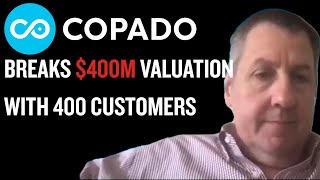
DevOps Tool Copado Breaks $400m Valuation, as New CEO Ushers in 100% YoY Growth with FoundersMay 4, 2021
[00:00] Hello, My guest today is Ted Elliott. If he sounds familiar, because he was on the show a while ago building a company called Job Science. He's since launched into a new DevOps tool that he is building called copado.com. Ted, you ready to take us to the top? [00:12] >> Yeah. Thanks so much. Glad to see you again. [00:14] What happened to Job Science? [00:16] >> I think, like, a couple weeks after I saw you or talked to you, I had one of our competitors call us up and make me an offer I couldn't refuse. And so we sold them the business, and I went on vacation. And I I tried to decide what I was gonna do next, and I thought I was gonna do Bitcoin mining, which in retrospect looks like that would have been the the smartest thing I could have [00:39] >> ever done. But at the time, it didn't seem seem like I was I I didn't think I was hip enough to be a minor. So, I had to find something else to do. [00:47] I love that. Well, it's funny because I wouldn't say I'm close with Art, but I've certainly been visited his office. I saw his band play. I was very close with Bullhorn and sort of how he went through giving up 60% of the company and then getting it in 1999. Anytime I interview an HR tech person, ping him and Colin Day at Isom and say, Hey, you guys should buy these guys. So, it was fun for me [01:07] to see the news that Job Science was acquired by Bullhorn shortly after our interview last time. [01:11] >> Yeah, and the six months that I had between Job Science and Capado were really, really helped me figure out what I wanted to do with my time. And I have to say it was the worst six months of my life because when you don't know what you're doing with your life, it can be really [01:28] >> a shock to the system. Turns out my wife had a heart attack. [01:32] Oh my God. [01:33] >> Because she said that I was stressing her out because I didn't know what I was doing with my life. And I don't know if you know this, but sometimes your spouses act as an amplifier to your own feelings. And so that's when I had sort of this wake up moment of, Hey, I better figure out what I'm doing with my time because there's real consequences. So anyway, that's why it was a rough six months, but I'm [01:56] >> glad it's behind me. [01:57] You did this effectively, though, in terms of capital perspective. I think when you came on, you told me you'd only raised $3,000,000. Right? [02:03] >> Yeah. No. So it was a great financial exit, and it's really interesting to me how my perspective about business has changed dramatically from when I was scrapping it with my own company to started off at Capado as a board member and advisor and investor, and then was asked to join the company by the founders and the investors. So it's a very different journey than last time in my perspective and my approach. [02:32] >> It's just a lot of learnings from that last experience. [02:36] Yeah, I wanna dive into a couple of, but I wanna close the book officially on job science. You probably can share the actual cash acquisition number, but can you at least maybe share the multiple on revenues? What multiple did you see? [02:48] >> Yeah. So that business was growing at 30%, and it was a multiple that was over three. It wasn't a great multiple. But because the ownership was 70%, myself, my dad, and my sister, it was a good exit. [03:05] Yeah. No, that's great. I mean, I think when you came on, you said you guys were doing like something like 18 15 or 18,000,000 or something like [03:10] >> I think when we sold it, we were doing more like 25. [03:13] Yeah. I mean, look, $75,000,000 exit where your guys and your family and close friends are owning 70%, that's a great business. So it took a lot. So now let's go to Capado. It's gotta take a lot. You've got cash now to to jump back into something full time versus like do your own thing. How the hell they incentivize you to get back into the game? [03:32] >> So two weeks so the deal I caught with Art was that within two weeks, I could leave and never look back. And so I stuck around at my desk and I would go for these cocktail luncheons at noon, and no one would call me and I'd sit at my desk. And one day one of my friends called me and said, There are these two guys from Spain in town. They're doing DevOps for Salesforce. Do you wanna [03:55] >> come have dinner with us? And I'm like, You know, I'm going to Australia for a month. I'm not even sure we're coming back. [04:04] >> I'll come to dinner. And we went to dinner and started talking to the guys and they're like, We make it so that deployments don't blow up on Salesforce. And I was like, Yeah, right. Tell me more, right? And by the end of dinner, I was like, Can I invest in this company? And they're like, No, you can't invest in our company unless you give us advice and we get to know you. So then the entire rest [04:26] >> of the week that they were in San Francisco, we were basically going to dinner, going to lunch, hanging out, learning about the product. And I ended up going to Australia and said, Here's my cell phone number. If you need anything, call me. I'm happy to be a resource for you. And they called me and they said, Salesforce is offering to buy us. What do you think we should do? And I'm like, well, is it a good [04:50] >> deal? And they're like, it's a great deal. But we think this was in 2018. And they said, but we think this is gonna be really big. And I'm like, I think it's gonna be really big too, and I think you guys are crazy. And they're like, Well, yeah, we're gonna They said, Instead of taking the money, we're gonna take a round of investment from Insight, Salesforce Ventures. They're like, If you wanna be in it, there are [05:14] >> a couple other guys. One was from DocuSign, one was from Velocity. So we all threw in and invested in the business. And at that point, had no plans on joining the company. I was just gonna be an active board member. [05:24] That was a 7 and a half million dollar round, something like that, right? [05:27] >> Yeah, yeah. And I was just gonna be an active board member and help them hire people in North America so they could go ahead and execute their North American plan. [05:38] >> And it sort of just evolved from there. And [05:44] >> about two board meetings later, two founders said, You know, we're really struggling to get a foothold in North America. We really need someone who can help us. And I said, Okay guys, I'll only do this if I'm in charge. All right, this is our business. I'm like, Yeah, well, I said, I need to be in charge. You guys can fire me anytime the two of you can agree. I go, If one of you agrees with Insight, [06:07] >> you can fire me. If you two agree, you can fire me. But if the three of you can't agree, then I'm in charge. [06:13] >> And I said, Great, come on board. And so we started off and my whole plan was to hire as many people as quickly as possible and spend that 7 and a half million dollars as quickly as possible to show that we could scale. And I think when I walked in the door, we had 4.25 in ARR. And we took it from 4.5 to 15,000,000 in the first year. We went from 30 people in Spain to about [06:41] >> a 100 people in The US and Spain. I got diagnosed with stage three rectal cancer, my third month on the job. Oh gosh. And was told that I was gonna die. And I was like, well, do I wanna keep doing this? Or do I wanna just focus on not being here? And I was like, no, I'm gonna go for it. Go big, right? [07:03] Have you beat it? [07:04] >> Yeah, beat it. I did 12 rounds of chemo and radiation and four surgeries. I just had a follow-up surgery last week that was not related to the cancer, but I had a hernia as a result of them poking a hole in my abdomen for a colostomy bag that I had to wear for four months. And I can tell you, have probably, well, I shouldn't go there. I've had a lot of cameras inside me and you just [07:30] >> don't wanna know how they got there. And so it really for me was a life changing experience in a lot of ways in that the bullhorn thing made it so I didn't really care about money. Yep. The cancer made it so that I really didn't care about anything that didn't give me purpose, that I didn't love. And I really came to this honest moment where I was like, I work because I love to work. I love [07:57] >> building things. I don't do it for the money. The money's great. Who cares about the money though? It's like, I'm doing this because I wanna make sure that people don't have to suffer through bad releases. That really bugged me. I hated that. And so that, and then I started saying, okay, what am I gonna be grateful for today? Like, what is it that makes me happy? And I'm like, biggest thing that I loved about Capado was [08:21] >> I was able to recruit like 15 people from job science who quit what they were doing, and were like, we wanna work with you again, right? I remember I was on the gurney at MD Anderson getting my first round of chemo, and I get this text message from this woman who worked for me, who works for Volhorn now, didn't know I had cancer. And she said, I just wanna tell you, we never got to say goodbye [08:39] >> when you went to job science, but you giving me a job at job science changed my life and my family's life. And that's when all of sudden became really clear to me that I am on a mission to sort of do something I think is meaningful. And so that has given me just a tremendous amount of pleasure and really grounded me. And, you know, COVID hit literally [09:02] >> a month after my last surgery when I was told I was clear. And it's amazing when you don't have a rectum, your life changes a little, just in case, hopefully you never have to experience it. I make a lot of poop jokes, but it took me a good six months. Thank God I could work from home because you need to have your own private office off your private office. Yeah. And you know, Fonz's office. So [09:30] >> it's just been a series of experiences I never thought I would have, but I've enjoyed every moment of it. And right now, Capado is at 40,000,000 in revenue after two years, We have three forty people in the company. We're gonna have 600 by the end of the year. We've raised $111,000,000 and we're crushing it. And I am having more fun than ever. I How many customers, Ted? Well, we do something really interesting. We only focus on [09:58] >> the top 5,000 buyers of Salesforce in the world. And right now, we've penetrated 400 of them. Okay? [10:03] I love this. So you've defined the pool you wanna fish in, and now it's clear how you can go monopolize that pool because it's so obvious. [10:11] >> Yeah, I just decided I don't like selling stuff to people. I like to explain, hey, this is what's cool about this. Are you on board? I'm [10:17] kinda What about the top 5,000, what was it again? [10:20] >> It's the top 5,000 buyers of commercial, of enterprise software in the [10:24] world. Okay, how do you get that How do you get that list of customers? [10:27] >> Well, I can't yeah. Let me just put it this way. There's a way to get it and we've figured it out. It's part of our secret sauce. We've actually leveraged a ton of ideas from recruitment software in our entire selling methodology. We found out that 80% of the world's DevOps community on Salesforce lives in India in one of three cities. They go to one of three schools. Chennai, Bangalore. Bangalore is the capital. We so my really [10:55] >> close friend and colleague, this guy Sanjay Gudwani, who is our COO, I said, you know Sanjay, I think someone needs to go to India and throw a training and see who shows up. And he calls me from Bangalore, he's like, it's like a dead concert, dude. There are people lined up for blocks trying to get into the training center. And I was like, okay, we're onto something. And that's the fun part of it. It's like, we've [11:17] >> got the money to go run any play we wanna run. We can place big bets. It's so different than when it's founder bootstrapped. And I could have never done this without art, basically freeing me from job science. And it wasn't that I love job science. I loved what I did, but I'd done it forever. And six months in the desert thinking about what I wanna do next, I was like, what did art do right? [11:41] I did I do? Because you guys have job science was, you launched in '99. So I mean, when you say [11:45] >> Yeah, and we pivoted forever. We pivoted like three times. And in fact, a lot of the guys I hired at Capado, I knew from Salesforce. The guy who sold me Salesforce when I was at job science is now running my sales team. [11:59] That's right. [11:59] >> Okay? The guy who I went and did the first pitch at Kelly Services with job science at Salesforce is now running my sales ops and sales insurance. So I've taken all these people that I've collected relationships with over the last nineteen years and I call them up and I'm like, hey, this is what we're doing. I'd love to get the band back together. You wanna get involved? I'm like, Here's kinda where my life is. And we [12:20] >> also did this other crazy thing that I would have never done at job science, which is we started off with a very clear mission, which was to make release days off sleep. What does that mean? Means from six pm to 6AM, no one should have to be at the office trying to deploy software, right? [12:35] So you're backing like continuous integration teams or what? [12:37] >> Yeah, yeah, well just know, like when you go to do a Salesforce appointment and it goes wrong, you were up there all night. Yeah. And people are coming in the next morning and they are ready to fire you, right? And we're like, we're gonna make that go away. That's our core mission. And then we said, okay, let's develop some values that will drive us. And so we're like, okay, we developed this thing called the COPPA value [12:57] >> system. It's customer success, over deliver, people are the code, which really means our ecosystem is the secret, and then always build trust. And so, having had cancer, and saying, I just wanna deal with bullshit in my life. Having had my wife had a heart attack, so she's like, gotta go find something to do. Having bullhorn by my company, so I had some money in my pocket. I'm just like, you know, I can't use the f word, [13:21] >> guess, on your podcast, but [13:22] You you can imagine can say whatever you want. [13:24] >> I was like, fuck it. Let's go big or go home. And so that's the fun part. Now, I don't know where it's all gonna end up, but [13:32] Ted, let me get them because I know you could keep telling stories. You're [13:34] >> a story. Sorry. I'm just You could great [13:36] You could tell great stories all day long. Let me let me capture a couple things from you though. So back in 2018, you guys do 7 and a half, $8,000,000. You are participating as an angel in that round. What was the valuation in that round? Do you remember? [13:48] >> Yeah. That that valuation was 35,000,000. Okay. [13:51] Got it. So you went in there and then I believe you guys recently raised 96,000,000. Is that right? Yeah. What was the valuation on that? [13:59] >> I can't tell you, but it's at least more than 10 times what the first one was. [14:03] Okay. Got it. So so I mean I mean, are you guys flirting with or close to a billion or that's gonna take another year or two? [14:10] >> No. We we have our I get calls, multiple calls a week of people who will offer us a unicorn valuation today. [14:19] Yeah. Well, I mean, if you raise 96 at 10 35,000,000, so 96 on my [14:23] >> I didn't say it. Yeah. So, I mean, the post was even more than that. [14:26] Okay. Got it. So post money way north of 10 x. I mean, so that's sort of standard, right? You're selling something between like [14:31] >> And that was in eighteen months. [14:33] Yeah. You're selling something between 1520% of the business. Yeah. What do you mean that was in eighteen months? [14:38] >> From the time I joined to the time we closed capital, it was really interesting because when the founders, when I joined the company, the founders said, why don't we set up your equity reward based on you getting us to a value that exceeds 300,000,000 or 3, it was exceeds €320,000,000 in eighteen months. And I was like, are you guys like high? And then it was so fun when we closed around because they're like, you actually did [15:00] >> it and you exceeded. And I said, well, hey, I think we're gonna double revenue. And what was funny is last year during COVID, sorry, there's someone who's, I'm in New Orleans and someone's blowing their weeds on the side, we [15:14] >> kept on talking to people and every time we got on the phone, we had like doubled the revenue again. [15:20] Mean What was that doubling? So if you're at 40 run rate today, where were you a year ago? 13,000,000? [15:25] >> So we were at 15, so a little less than, yeah. After this first quarter, we're growing at 100% plus on new revenue. What's really interesting about this business is the number of customers, and this is really the sign that you're making customers successful. We generated 50% of our new revenue in the fourth quarter of last year on customers who are coming back and buying more. Got it. Well, can [15:48] you quantify that? So what is expansion revenue, like percentage wise over the past twelve months? Like 100%, 80%, 50%? [15:55] >> So we're running a 140% plus net revenue retention. [15:59] What's the gross [15:59] >> to go? Yeah, well, I mean, we're holding onto about 90% of the labels and we're 95 of the revenue. And then we're upselling another 55% on that. On average, our customers come back on average within eight months and buy a second set of products from us that are about 40% of the first sale. [16:21] Yeah, that's world class. I probably shouldn't [16:22] >> be throwing those numbers out, but I mean, I don't care because no one no one who we're competing with can pull this off. [16:28] Yeah. No. It's it's these healthy numbers, Ted. 140% even in a public SaaS. That I mean, that's world class. Zoom is up on that that world. Know, ZoomInfo's in that world. So real quick, on your team, 304 340 total today, how many engineers? [16:42] 50. Okay. 50. That's good. Now, how many quota carrying sales reps? 51. Interesting. How do you set quota? Is it like a million dollar quota target or how do [16:50] >> I take your salary and I'm like, eight times base is your first year with the three month ramp. [16:56] I love that. It's so clear. Even founders can answer that that clearly. [17:01] >> Well, I'm just like, I don't have time to find. So I bought everyone chess clocks for Christmas. They report to me, and they're like, Why did you buy us these chess clocks? And it's like, Time is running, and if you make no decisions, you die. And I go, you know, I live this. I remember I'm at MD Anderson, they're like, Do wanna sign this thing to say that you're okay taking poison? I'm like, well, what's the [17:23] >> choice? Die? I'm like, just give it to me. Let's get going. Start pumping What me with a [17:29] if I join you today as a sales rep, what is my first year salary gonna be if I hit quota? [17:33] >> If you hit quota, you'll make like 300. [17:35] Got it. So I'm gonna be making I'm gonna be bringing in eight times that in terms of ARR. Yeah. Yeah. Interesting. Very interesting. [17:42] >> No. No. You're gonna be you're bringing in you'll bring in about four times that because it's eight times your base and it's a fifty fifty. [17:49] I see. I see. Interesting. Interesting. Love this model. Okay. Cool. Anything that I should have asked about that I didn't? [17:56] >> No. I just I think that what people don't realize is that we're we call our current business play the Smoky and the Bandit play. Now, I know for some of your audience, they might not know who Smoky and the Bandit is. [18:05] I was born in '89, I got no idea what So, you're talking [18:08] >> if you've ever seen Burt Reynolds in Smoky and the Bandit, it's a story about moving beer from Georgia, from Texarkana to Georgia. It's a 1970s cult classic. And in a lot of ways, we were drafting behind this big truck called Salesforce. And we don't think most of our competitors see us coming down the road, and we're gonna pop out of the bushes. So if you just listen to the song Eastbound and Down, I'm sure you can [18:31] >> find it on YouTube, and it will play a little video of what smoking the bandit is. I think you'll enjoy it. But that's kind of our attitude. It's like, the clock is running, we're always running out of time, we're living in the moment, we're working with people we love to work with. We've decided that we are gonna be a sales and marketing focused organization, but we never sell anything to anyone, we only show them how it [18:52] >> works. And we're having a lot of fun. And I think that's really the key to the whole damn thing, is the first company that I, actually job science wasn't my first company, it was my third company that I had been involved with starting. [19:06] >> It was fun, but we didn't do it for fun. We did it because we thought we could build something that was gonna be, you know, that we could sell to someone. This one is like, this is like my opus. This is the one I'm doing for me. I'm not doing it for the money, I'm not doing it for anything else, except for I wanna solve this problem. And I think that if I had realized that when [19:25] >> I was at job science, we may not have sold job science to Bullhorn, we might have bought Bullhorn. Because we would have been on this holistic mission of who gives a shit. And I think that is so important. It's so hard for founders to get to that place of why am I doing this? Am I grateful? And love yourself first and then go out and give. But that's of, that's this new place I've been at. And [19:50] >> I'll leave you with this, I never thought having cancer would be a gift, but I decided it was either a gift or a sentence. And I wanted it to be a gift, not a sentence. And that doesn't mean I don't have days when I'm hurting, I haven't had a drink in two and a half years, I can only eat chicken and fish, and I was a steak eating monster. And honestly, I love being here. So Nathan, [20:13] >> I know we're out of time, but I just wanted to have a follow-up with you because I was excited last time I talked to you. Hopefully, someone doesn't call and make us an offer to buy the company in the next two weeks, and you're like, what the f, Ted? I thought this was your opus, man. [20:27] Maybe that's what it is. You come on the show, you get multi billion dollar acquisition offers. It happens. Yeah. Yeah. [20:33] >> Anyway, I had fun talking to you last time when you reached out to me. I was like, hey, sure, let's get the band back [20:40] together. Well, Ted, the show doesn't work unless you come with these stories. So I wanna thank you for being so open and guys, we'll we'll take it on there. Ted Elliott, 1999 launched Job Science, grew to $25,000,000 run rate, kept 70 of the business. Him and his family ended up selling that for more than a three x multiple to our friends. Art popped us at private equity backed Bullhorn. He did that, call it, a year and [21:00] a half, two maybe sorry, two and half years ago ish. Ultimately, ended up getting involved with DevOps tool, Capado, making Salesforce deployments finally stress free. He joined the company. He was doing 4,200,000 in ARR back in '20 It's now doing over $40,000,000 in terms of run rate. They're serving over 400 customers. The team has 340 people, 50 engineers. Last round valuation, they raised $96,000,000 at north of a $350,000,000 valuation. He's growing. We're having fun watching. Ted, [21:27] thanks for taking us to the top. [21:28] >> Alright. See you later, man. [21:31] One more thing before you go. We have a brand new show every Thursday at 1PM central. It's called Shark Tank for SaaS. We call it deal or bust. One founder comes on, three hungry buyers, they try and do a deal live and the founder shares back end dashboards, their expenses, their revenue, ARPU, CAC, LTV, you name it, they share it. And the buyers try and make a deal live. It is fun to watch every Thursday, 1PM [21:55] central. Additionally, remember these recorded founder interviews go live. We release them here on YouTube every day at 2PM central. To make sure you don't miss any of that, make sure you click the subscribe button below here on YouTube, the big red button, and then click the little bell notification to make sure you get notifications when we do go live. I wouldn't want you to miss breaking news in the SaaS world, whether it's an acquisition, a big [22:16] fundraise, a big sale, a big profitability statement or something else. I don't want you to miss it. Additionally, if you wanna take this conversation deeper and further, we have by far the largest private Slack community for B2B SaaS founders. You wanna get in there. We've probably talked about your tool if you're running a company or your firm if you're investing. You can go in there and quickly search and see what people are saying. Sign up for [22:37] that at nathanlaca.com/slack. In the meantime, I'm hanging out with you here on YouTube. I'll be in the comments for the next thirty minutes. Feel free to let me know what you thought about this episode. And if you enjoyed it, click the thumbs up. We get a lot of haters that are mad at how aggressive I am on these shows, but I do it so that we can all learn. We have to counter those people. We gotta [22:56] push them away. Click the thumbs up below to counter them and know that I appreciate your guys'support. Alright. I'll be in the comments. See you.
Read More About Copado
Data and Sources
All figures on this page are taken directly from interviews or are estimates from public sources and proprietary models. Not financial advice. Read full disclaimer.
Claim this profilePeople Also Viewed

MindHYVE
MindHYVE.ai is a federated agentic intelligence platform company that deploys specialized AI...

Wavicle Data Solutions
Provider of cloud data and analytics solutions that accelerate value, reduce risk and empower...

Course Hero
Course Hero is an online learning platform for course-specific study resources. It provides...

Morning Consult
Morning Consult is a global decision intelligence company changing how modern leaders make smarter...

Axtria
Axtria is a global provider of award-winning cloud software and data analytics to the Life Sciences...

EOX Vantage
Global leader of operational efficiency, EOX Vantage offers premier business management solutions...


