Valuation
$1.1B
2021 Revenue
$110M
Customers
2K
Funding
$244.3M
Avg ACV
$55K
Team
979
Churn
10%
Founded
2011
How Salesloft CEO Sam Loveland grew to $110M revenue and 2K customers in 2021.
The #1 sales engagement platform
Last updated
Salesloft Revenue
In 2021, Salesloft's revenue reached $110M. The company previously reported $75M in 2020. Since its launch in 2011, Salesloft has shown consistent revenue growth.
| Year | Milestone | Quote |
|---|---|---|
| 2021 | Salesloft Hit $110m revenue in August 2021 | |
| 2020 | Salesloft Hit $75m revenue in December 2020 | |
| 2019 | Salesloft Hit $57m revenue in July 2019 | |
| 2011 | Launched with $0 revenue |
Salesloft Valuation, Funding Rounds
Salesloft reached a $1.1B valuation in 2020, set during its Series E round.
Salesloft has raised $244.3M in total funding across 7 rounds, most recently a $98.6M Series E round in 2020.
| Year | Round | Amount | Valuation | % Sold | Quote |
|---|---|---|---|---|---|
| 2020 | Series E | $98.6M | $1.1B | 9% | |
| 2019 | Series D | $70M | $530M | 13% | |
| 2018 | Series C | $50M | $150M | 33% | |
| 2017 | Series B | $14.5M | $60M | 24% | |
| 2015 | Series A | $10.2M | $40M | 25% | |
| 2014 | Seed Round | $800K | - | - | |
| 2013 | Seed Round | $250K | - | - |
Founder / CEO
Q&A
| Question | Answer |
|---|---|
| What's your age? | - |
| Favorite online tool? | - |
| Favorite book? | - |
| Favorite CEO? | - |
| Advice for 20 year old self | - |
Customers
Salesloft serves 2K customers.
Salesloft Employees & Team Size
Salesloft employs approximately 979 people as of 2026, up from 645 in 2021, including 219 sales reps that carry a quota. It serves 2K customers that rely on its solutions.
| Year | Milestone |
|---|---|
| 2023 | Reached 979 employees (July 2023) |
| 2021 | Reached 645 employees (August 2021) |
| 2020 | Reached 489 employees (December 2020) |
| 2020 | Reached 504 employees (June 2020) |
| 2019 | Reached 459 employees (December 2019) |
| 2019 | Reached 400 employees (July 2019) |
| 2018 | Reached 350 employees (December 2018) |
Frequently Asked Questions about Salesloft
What is Salesloft's revenue?
Salesloft generates $110M in revenue.
Who is the CEO of Salesloft?
The CEO of Salesloft is Sam Loveland.
How much funding does Salesloft have?
Salesloft raised $244.3M.
How many employees does Salesloft have?
Salesloft has 979 employees.
Where is Salesloft headquarters?
Salesloft is headquartered in Atlanta, Georgia, United States.
Compare Salesloft to the industry
Salesloft operates across multiple industries. Browse revenue, funding, and growth data for Salesloft in each sector below.
Full Interview Transcripts
Look Back at $100m Salesloft Before Vista DealJul 25, 2019
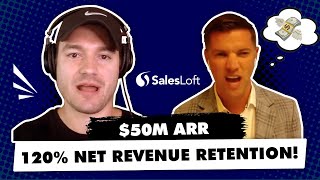
hello everyone my guest today is kyle porter he's the founder and ceo of salesloft the leading sales engagement platform delivering the best sales experience to customers the company is recognized as the number one sales engagement platform by g2 crowd in atlanta's number one best place to work kyle you ready to take it to the top i am nathan thanks for having me man glad to be here yeah how are there so many 100 million 200 500 million dollar companies in like the sales outreach kind of space you know i i can't speak for all of them i think there's a few that really have done a big a big deal in the marketplace you've got the data providers they're doing awesome you've got some of the content providers the seismics and show pads and then you get the sales engagement market of course outside of crm i think those are the ones that have made a big big splash in the market so talk me through how you're kind of where you see yourself in that stack where are you carving out where are you winning all the deals yeah of course so uh we we really invented this sales engagement marketplace and what that means is companies come to codify their go to market place they take their reps whether they're inside reps field reps customer success managers bdrs sdrs and every single one of those has something they want to achieve with customers and prospects they codify into one place and then execute on all those plays we hold those reps accountable to their activities measure their success analyze it and help them produce better results on going into the future so would you i mean in terms of like directly competitive we just had chris cabrera on i mean do you see yourself essentially as again the same basically a younger nimble version of zachary no i mean exactly handles compensation right we handle sales engagement so it's the activities that the reps are making to communicate with their customers and prospects to generate revenue we become the phone system we become the email system we link up with social systems help you control offline communications do all that in one platform and then what happens is reps are able to have more conversations get 100 coverage on their target accounts no leads fall through the cracks generate more opportunities general generate more revenue upsells renewals that sort of thing very cool okay so basically like an entire communications layer on top of the crm i want to get back in and we'll get into crm and kind of some interesting stuff you did it with benioff in salesforce and uh and folks like that back in the day but before we get that give me a general sense that's kind of a size here right so if someone wants to pay for your technology for a year give me kind of your sweet spot on average are we talking like you know 100 year accounts 100k a million dollar a year accounts where's the sweet spot for you so i'll give you the quick rundown we were four employees with zero arr and this product in 2014. we'll hit 100 million next year sitting around the 50 million mark growing 100 120 net expansion and we significantly differentiate from our competitors in a number of critical ways right in terms of our customers it is we are we are supplying to everyone from smb to fortune 500 enterprises which is something i learned from scott dorsey at exact target full gamut right so it's everything from a 15k customer to a million dollar customer okay and how many are you serving today thousands okay like okay like so call between two and ten thousand something like that yeah okay fair enough and so walk me through i mean there are different sales motions i'm sure you have for each of these different cohorts so i want to kind of go down a couple of those uh here you said launched in 2014 that was kind of zero revenue zero customers when did you guys write the first line of code though i started the company in 2011 we built other products up to that point the company as it is today our entire revenue stream that launched in 2014 so i had different products tested different product market fit had a data product that went from 0 to 7 million in about 18 months that i cancelled and completely changed the business on so we had a different history in the company but what you see in sales off today launched in 2004. i want to talk about some of that pivoting right because so for example job change alerts right you credit a lot of i mean that was one of your experiments right um some of these things like they have one helped you learn how to basically get to where you are today but also i think a lot of them were also potentially lead gen so tell me about one or two of those early experiments between 2011 and 2014 we had all kinds of things we had the job change alerts product which would link up with your crm see all the contacts that people cared about look on linkedin to see when they change jobs and alert you about it we had a news alert system we had this stream it was like twitter and you'd open it up and it'd be all the news articles on the companies that you cared about that you were selling to we had the data product which was the easiest way to build the most accurate and targeted list of prospects in the marketplace but really none of those aligned with the vision of what i wanted to do for the purpose of this company and they generated revenue they generated leads they learned they taught us a lot in terms of product management in terms of culture in terms of what customers need but at the end of the day we started looking at what the best sellers were doing and they were communicating with their customers in an authentic sincere but repeatable and scalable way so we decided to build an entire platform for that when you look at sales i was just going to say kyle yeah you led with that tell me finish up though real quick i was just going to say when you look at sales it is a harmonious blend of two things the customer demands this insightful real one-to-one human solutions oriented service from your sellers but then as a company you've got to have something that's predictable scalable something you can forecast off of and count on in the future right and bringing those two things together is very very difficult because what happens is people end up either shooting spam out of a cannon and being insincere in their sales communications or they go way too rifle shot and they can't repeat it and so we solved that with the sales engagement platform and that's what i learned through that journey take me back to 2014 because you are eating your own dog food here you had wayne anthony kevin in the early days shawn and chris doing demos how did you know where to put a stake in the ground in terms of where to set wayne and anthony's kind of monthly quota at the start which we'll talk about how they obviously beat that and you adjusted but how do you the reason i'm asking is there's a lot of entrepreneurs listening trying to make their first sales higher and they don't know where to put the stick in the ground in terms of like quota well you know for us it all boiled back to what was the purpose and why were we there i had been in sales my whole life going back to kid i sold beanie babies and baseball cards and olympic lapel pins during the 1996 atlanta olympics right and i had this passion for serving customers and seeing the look on their eyes when they bought something that they needed and what i learned in sales is there were a lot of sellers doing it the wrong way they were insincere they were sloppy they weren't delivering the customer the best experience and i learned that that passion for delivering for the customer was something that i just absolutely loved so i wanted to build a company that empowered sellers to deliver that incredible experience and do it in an authentic way where the buyer actually appreciated the sales communications so that became the purpose of the business from day one and as we did all these other things you know i kept looking at is this fulfilling our purpose and mission and that's why we made all those adjustments but on the sales side you know i wanted someone to i'm i'm quite evangelical with the way that i sell and i like to paint a big picture and i like to transform the customer so i brought anthony on board and he was super processor was he number one he was right was he the first the first seller that we brought on board i had met him at pardot i started the company inside the pardon offices with david cummings who we talked about earlier and so i saw anthony i saw him working and he just was a dog he was she's a sales guy there as well yeah he was and how much sales was like two quarters in a row and i brought him over how much sales were did you close yourself before you felt good about passing that script that system off to anthony yeah i don't remember the exact number i would say it's probably somewhere around 150 ka or r something like that okay you close the kind of founder closer okay yeah okay so then march new aor we're talking 2014 now anthony comes in the quotus 48 grand exact numbers no no you're good you're good he but i i i it's unfair because my research team does a great job but uh in march of 2014 right you sent monthly quota for anthony it's somewhere around 48 000 bucks in terms of ar he along with wayne we had hired other people too because we had you know that the data product was taking off and it was in the millions of are in 2014 right so we had an organization at that point in time and then we shifted them over to sell the new product now that was a story because what we had was we had this old product that was growing it was easy to use it was easy to buy it was easy to understand and sellers were making great money on it then i introduced this new product it's not built out yet it's evangelical it's a new category when did you launch that second product kyle end of 2014. okay so this was when you essentially went from 30 customers and 200k in ar up to 660 customers and 3.7 million bucks in aor that was a lot of that revenue growth was potentially from that second product introduction yeah because in 2015 we were 200k on the new product yeah yeah 2015. so it's all the old revenue when i tell revenue numbers now i don't even bring in the old product at all it's just all what we do today yeah things advance and changing and the reason i'm pulling this out is because i like collecting patterns right and so there are people listening that are at that stage we can now fast forward to where you're at today right which is there's a lot of people that listen that are in the 30 40 50 up to 180 million ar range so let's talk about you said 120 net retention right peel that onion back for me so on a gross churn revenue level what is that and what's expansion typically high 80s 90 something like that yeah and we're doing about 50 50 on net new logo bookings and current customer bookings today okay so growth right now is driven again 50 50 between net new brand new and expansion 45 expansion 55 okay that new logo yeah so if you're retaining what you do is we have we have a mid-market team run by a mid-market vp we've got an enterprise team run by an enterprise vp they both roll up to the cro full organization's under them solutions engineer sales ops is more centralized and you know sdr teams for both right and they just go to market and it's primarily inside sales although the enterprise team we've got a handful of field reps one of the differentiators for sales loft is we're in atlanta and what that means is is that i have a lower employee churn than any of the other companies in the category it's just the way things happen in atlanta how low what is low what is low what's the actual number how low is your just just barely in the double digits i don't have the the fact facts on me right now but i have to ask you when you say lowest in the industry i assume you know the number and you know how you compare it yeah uh well that's what we what we hear from our investors uh when we report it at the board meetings right so atlanta gives us all those opportunities but we also have the offices in new york london guadalajara and in san francisco and so that gives us an opportunity to get out in the field with our customers and we do that in the enterprise side um but it is you know it's a it's a growth market if you think about sales engagement it didn't exist two three years ago right so when you think of companies like slack and zoom incredible businesses but they're replacing old ways of doing the same thing right with sales engagement this never happened before right the crm didn't do these things people had phone systems they had email systems but they didn't have one communications platform right so g2 crowd really the only analyst in the category at this time i know forrest has done some reviews uh but g2 crowd has ranked us as number one in the category for the last three quarters in a row uh looks like we're there right now and if you run nps on all of those reviews because it's a one through ten ranking right it's like an 80 nps on that which is really strong of course you know these are healthy by the way i mean you're in a great spot i mean great hot market hot space right i mean you are in it they're either as an entrepreneur in terms of doing what you love and doing something big i mean you're right in the sweet spot product timing everything um let me take a quick microscope to mid market segment so the way you've built your mid-market sdr to aid is cs team i want to understand this a little bit so do you right now kind of do you know what the ratio is between kind of sdrs two aes to customer success reps in that segment or no no i don't know the ratios you know we've got a staff that's leading i knew when we were early on we actually had a heavier sdr to ae ratio than i think the market did in the early days what does that mean like you had more sdrs like three sdrs to two aes i see it was our original setup when i was leading the team back then right as we brought on sean murray to run sales i think it's more balanced to uh closer to uh i think it's it's a two to one two aes to one sdr in the enterprise okay and it's like three aes to two sdrs in the commercial market so i think that's probably roughly commercials mid-market yeah well we call commercial mid-market and smb okay fair enough those two things combined and they're they're baked in there's there's teams within there but one leader and then again going back to expansion real quick so you said 120 net revenue retention you said 90 gross retention annually which means you need about 30 percent again expansion right to get up to 120. where is that that expansion revenue that 30 percent is is that consistent across both midmark or your commercial and your enterprise or do you see enterprise being way higher yeah well i mean of course the smb markets have a higher gross churn than the enterprise market does right but what we're doing is uh there's two things that sales off does that differentiate one we are serving all customer revenue facing roles right so this isn't just sdrs and inside sales aes but it includes field reps and account managers and that sort of you know type of communicator right uh so when we will sign up a customer and it might be sdrs and inside sales then it will expand to the field team or demand gen team or the account management team so there's a lot of expansion in there and then the other one is is that when you look at sales law it's the only systems that that's the full suite of sales engagement so it's not just phone email the cadence engine the calendar but also includes coaching type tools like our conversation intelligence platform so a lot of times customers will come on board and before we acquired this conversation intelligence platform they didn't use that of course so there's a cross-sell opportunity to bring that in yep what are your most powerful kind of upsell levers currently a number of seats is it feature-based upselling or some utility-based metric driven upsell in the enterprise it's different departments or different organizations under the the main brand seats um in the smaller market it's yeah it seats in both but it's different departments in one and then it's different roles in the smaller companies so the smaller companies might start off with inside an sdr and ad in the field or add a demand gen team or something like that um whereas a lot of times in the enterprise it's like hey we have this complete division now we're moving over to this other one that you know we didn't have per view into when we went to the deal one way to grow obviously grow expansion i would consider a world class for expansion net revenue retention is about 140 percent and one way to go from kind of 30 expansion up north is to go acquire other companies and then obviously put a profile together and cross-sell right with your sales motion uh and any talks right now to acquire any companies no we're not we did acquire a company last year we bought a company called note ninja that played in the conversation intelligence space so competitors of that product would be like chorus and gong you might be aware of them so we rolled that into sales loft and that's part of the cross-sell but we've also included that in some packages depending upon the customer was that a i mean was that basically like you didn't have to put out any cash for that deal was like an equity kind of thing or it was a real acquisition with real money i mean the the founders can tell that story if they want to were they bootstrapped or they raised capital they were bootstrapped yeah they hadn't raised any capital and they're still here they're employees of sales law that's very good okay good fantastic that's good okay good so uh upsell understand that expansion that's great uh obviously you raised capital what's the total figure today 140 i believe yeah so how do you i mean look obviously it's a sexy number you get all the techcrunch headlines you're a smart content guy you know how to use it as leverage but obviously you wouldn't do it unless it really helped you drive the business but you also have to manage dilution right so some people are looking at and go oh my gosh they're doing 140 today their ar to funding ratio is like one to three right they've got 50 million ar 140 raised you know eric just went public with zoom and it was opposite right his revenue was double what his total funding was right so how do you get your revenues to catch up to your total funding raised well first of all you got to think that the biggest investment that we ever raised just happened we had cash in the bank when that happened so we still got tons of cash's bank yeah so there's a difference between ar to money raised you could look at ar to money burned and that's a totally different ratio right so we're still sitting on half of that money or more right half of the 100 yeah that's just in the bank right so that's the first thing but i think when you come to investors the biggest thing for me is are they going to take this business to the next level and i just absolutely love the investors that we've saddled up to and if you think about it zoom biggest shareholder of zoom from an investor is emergence capital right and jason green he's on those board in those board meetings jason's in my board meetings he's one of the biggest advisors to our organization but by the way zoom you know incredible company once in a lifetime opportunity but again zoom is a replicative business that market existed they came in with something absolutely better than this that's why that's why i love it right i mean everyone says you have to have a new idea and the fact is you can just out execute oh yeah it's absolutely great it's incredible incredible business and i think that one of the really cool things that eric did with zoom is the r d spend as a percentage of revenue because of the china connection wait tell me tell me more about that well i have to pay us i pay u.s engineers has chinese engineers i mean that's you know there's a difference there right and there's arbitrage i love my engineers and they're fantastic yeah you would see so there are so many different ways when you look at arbitrage on development teams obviously he was china but there are so many even canadian companies using using uh shred right and getting 60 rebates from the government no it's just we don't have this kind of leverage in the us anywhere there's no sick like a government in china and canada will essentially pay 60 of developer salaries if you're spending it on r d so it's subsidized right like we don't have that right yeah we have some r d tax credits but they don't i mean they're single digits yeah yeah yeah all right very good so 140 raised 70 in the bank you're being smart about growth how aggressive are you being to acquire new customers are you happy with the 12 month payback or you go up to 24 months what are you looking at um just like 13 14 months right now generally moving up like more aggressive or less aggressive what's the trend which way are you going it's hovered um you know we see it kind of go up a little bit and down a little bit as we get when we do our annual conference it goes up that month you know that quarter right and then it goes back down and then it goes back up at the end of the year so i think it's been pretty stagnant uh but you know we continue to invest in growth but we do in a healthy way you know we've always been focused on efficiency and you know we don't want obviously a heavy amount of dilution when we raise our rounds and so you know i think you know for us it's it's been that's always the balance you have to look at in the businesses and the other thing is because it is a new category of business these enterprise organizations they need some evangelical sale in a lot of these scenarios and there's other hurdles to get through in terms of procurement and legal and i.t so we're just making sure that we time the market as best as we can and of course you know that's that's always a you know a little bit of a crap shoot but we've learned to do it pretty well that's good no and look the biggest expenses obviously are head count marketing and sales obviously look to scale how aggressive are you being in terms of burn you're talking like 5 million burn a month or more or less less less okay way less do you think you'll scale up to that level with the new new raise or no no i mean all of our financial projections have us with the possibility of taking this round to be the last round now that doesn't mean we might not raise again depending upon the market last round before ipo yeah that last round before that you know we we're building the business to be ipo ready i'm not telling my employees that it's ipo or bus because i want to you know make sure that they know that we could still have a great business if we don't do that who knows what happens in the macroeconomic climate you've got crazy things happening with the president and so i don't want to you know put all our eggs in that basket but we also didn't build this company to sell it i built this company to transform the profession of sales forever and that's what i want to do so that 40 years back you know 40 years from today when you look at the timeline of sales you'll see a giant sales off stamp like right in the middle of it i love the vision what's the team size today how many folks a little over 400 okay little over 400 and then you said you had about 50 in terms of run rate today 50 million where were you about a year ago do you remember this time a year a year ago it's probably 26 at five twenty something like that twenty five okay so i mean i mean it's always interesting the company is your scale right you can you know the 2x 2x year over year gets harder and harder obviously the bigger you get right so it's it's like anywhere less than 100 year on year from today oh yeah not that much we going 50 to 100 yeah so you're trying to you're basically telling your team hey guys exactly yeah you're selling your team hey guys listen it's not ipo or bus but we're hoping you know mid next year-ish we're in a position to if we want to do it well i think you know companies are are getting a little further than the 100 million dollar mark when they file for ipo too so you know i don't think we would look at filing at that at that level when we were if we were there and wanted to do that i think it would probably be one 140 150 where you still interesting conversation interesting okay um a last question here about all that can change and i've got a cfo who knows more about that fair enough good asterisk there last question here um distribution channels are critical in any sas company the one thing i like to look at is how founders play arbitrage games on their distribution channel um sales hacker was a distribution channel for you guys in terms of similar web and alexa data in terms of traffic drive driven into you guys thinking about one of my competitors because uh hacker is owned by someone else i know if you let me finish the question so they were acquired by outreach and so my question to you is why did you let that distribution channel get away were you okay sitting out with that actually that wasn't really a distribution channel for us that was just a content marketplace i mean we paid like we we sponsored their conferences and went to their conferences but they weren't that much they weren't like higher roi than the other conferences that we run or anything like that i know that's my question if you're spending if you're bigger if you're spending that's my question if you were spending money there you were doing it because it was making you some amount of money and i'm just curious from an aggressive or defensive perspective why do you let a distribution that you were paying to be in get away to a competitor did you just not see it as it wasn't as valuable to you as it was to manny um yeah i think so and they already had a relationship i think manny um i think they were investors in each other's businesses so that that was kind of already baked in from early on but for us i mean there was other channels there were other channels that were equally as effective and i think sales hacker for us was more of a brand play you know hey we want to connect with our customers i would go to sales hacker and speak and the biggest benefit was i get off stage and meet with 15 of my customers get to shake their hand and say hi right but then we really started picking up and investing in our own conference and that was 1400 people last year so you know that that ended up eclipsing the other conferences that we would go to in terms of being able to bring our customers and prospects into a place and spend time with them good stuff let's wrap up with the famous five number one favorite business book uh the advantage by patrick lynchione organizational health is the biggest differentiator a company can achieve number two ceo you're following or studying uh it's hard not to follow benioff um i like the ceo of southwest i forgot his name but i i've read all of his articles you're not in acquisition talks right now with with benioff are you no nothing with linkedin either it's your third most used module no no linkedin or microsoft not in acquisitions talks with anyone we're not building this business to sell it all right number three uh what's your favorite online tool for building your company besides besides sales loft i mean the gmail suite you know i mean number four how many are sleeping every night uh i target six all right six to seven and how are you kyle 37 37 in situation married single kiddos married 11 years april uh son two clark daughter five brooklyn i thought you were gonna say married and eleven kids and i was going holy how this guy's a machine all right last question kyle what do you wish you're trying to do i've done it without my wife by the way all entrepreneurs listening to this thing having someone in the trenches with you she never once complained i went 14 months no salary invested all my money into the business never once you should get a job this thing's crashing always there by my side number one sidekick love her to death thanks april lucky lucky man kyle lucky man all right take us back 17 years what do you wish your 20 year old self knew [Music] um you know i think it's about purpose right uh i've got this written on my wall right here it says my purpose is to grow and equip others to do remarkable things and lead significant and fulfilled lives and that i started to realize that when i was 20. and uh and i grew up fast because i got in some trouble and had to change my life and after that it was wake up every day with that as my mission i wish that was my mission when i was 16 17. guys kyle porter sales off playing in the sales engagement space in a big way 140 million bucks raised to again grow the company now serving thousands call between two and ten thousand customers doing about a 50 million run rate up from 25 million bucks just a year ago burning less than 5 million bucks a month to drive that growth 120 net revenue retention as they look to scale paying tax anywhere between kind of 14 and 16 month payback periods again healthy growth healthy scale healthy economics kyle thanks for taking us to the top thanks nathan have a great day
Read More About Salesloft
Data and Sources
All figures on this page are taken directly from interviews or are estimates from public sources and proprietary models. Not financial advice. Read full disclaimer.
Claim this profilePeople Also Viewed

Ethos Life
Ethos makes getting life insurance instant and easy. Our approach blends technology and industry expertise, and the human touch to deliver an incredible life insurance experience. Ethos has raised over $400 million of capital from Sequoia, Accel, Google Ventures, Goldman Sachs, Softbank and more. We are one of the largest U.S. life insurance issuers. We continue to scale quickly and are looking for passionate Ethosaurs to protect the next million families.

HIF Global
HIF Global is the world's leading eFuels company, developing projects to convert hydrogen using low-cost renewable power into carbon neutral liquid eFuels that can be transported and utilized in existing infrastructure.

Zeitview
Inspection software for renewable energy & sustainable infrastructure

Nalu Medical
Nalu Medical, Inc. is a privately held medical device company focused on developing innovative and minimally invasive solutions for chronic neuropathic pain. Their novel neurostimulation devices include a battery-free, micro-implantable pulse generator.

Shift Technology
About Shift Technology Shift Technology is the trusted AI partner to the world’s leading insurers. The company’s innovative and explainable AI solutions help insurers reduce fraud and risk, streamline claims processes, and enhance customer experiences. By combining deep insurance expertise with cutting-edge technology, Shift delivers significant business impact and ROI.

MOO
At MOO, we love great design and believe it can work wonders for every business. That’s why we make it simple to create beautiful, expertly crafted print, promotional materials, and branded merchandise that’ll help you start conversations, open doors and strengthen relationships. “Our products are designed with great care and thought in terms of materials, manufacture and end use – so their impact on the planet is minimal. Making great design accessible, sustainable and beneficial must be our purpose for this century.” - Richard Moross, Founder and CEO MOO launched in 2006 and aims to disrupt the trillion dollar global print industry by combining the values of professional design with accessibility and reach of the web. With rapid annual growth, MOO has become one of the fastest growing print businesses in the world and has over 400 employees across the UK and US London, Boston, Lincoln RI, and Denver CO. We believe in supporting our people to be themselves and be successful – because that’s what makes MOO a great place to work. We’re always looking for bright minds and bushy attitudes, so from software developers to social media specialists, copywriters to customer service heroes, we know we’re only as good as the teams we’ve built. If this sounds like you or someone you know, check out our vacancies and get in touch. Be part of something brilliant.
