Funding
$0
Founded
2021
upekkha revenue, CEO prasannaThiyagarajan k(Rajan), team size, customer count, churn, and more in 2023.
help b2b saas startups grow faster
Last updated
upekkha Revenue
We do not have information about upekkha's revenue yet.
upekkha Valuation, Funding Rounds
upekkha is a bootstrapped Venture Capital company, self-funded since its founding in 2021, with no outside investment to date.
| Year | Round | Amount | Valuation | % Sold | Quote |
|---|
Founder / CEO
prasannaThiyagarajan k(Rajan)
Filled in before..
Q&A
| Question | Answer |
|---|---|
| What's your age? | - |
| Favorite online tool? | - |
| Favorite book? | - |
| Favorite CEO? | - |
| Advice for 20 year old self | - |
Customers
We do not have customer count information for upekkha yet.
upekkha Employees & Team Size
We do not have information about upekkha's team yet.
Frequently Asked Questions about upekkha
What is upekkha's revenue?
GetLatka has not confirmed a public revenue figure for upekkha.
Who founded upekkha?
upekkha was founded by prasannaThiyagarajan k(Rajan).
Who is the CEO of upekkha?
The CEO of upekkha is prasannaThiyagarajan k(Rajan).
How much funding does upekkha have?
upekkha raised $0.
How many employees does upekkha have?
upekkha has 0 employees.
Where is upekkha headquarters?
upekkha is headquartered in Bangalore, Karnataka, India.
Compare upekkha to the industry
upekkha operates across multiple industries. Browse revenue, funding, and growth data for upekkha in each sector below.
Full Interview Transcripts
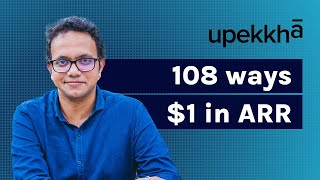
108 ways of getting to a million dollars in ARRMar 17, 2023
so what if I told you that 85 percent of the SAS startups that start out do not cross a million dollar in ARR this is statistics from Nathan's uh database that he puts together where he tracks the entire SAS Universe there are about 32 499 startups as of yesterday and out of them about 4766 startups are Beyond a million dollar in ARR that's roughly about 15 out of 100. now out of those four hundred and four thousand seven hundred and sixty six startups 2700 odd startups are above two above 10 million in ARR uh 2687 startups are about 10 million era which means one out of two that have crossed a million also crosses 10. now anybody in the SAS industry knows that you know if you cross about 10 million in ARR then you are almost Immortal it's very very hard to kill that particular startup unless of course you do something very stupid maybe you got caught in a rave party or like you know you invested in Silicon Valley Bank just before March 10. and I I know two founder friends who did that so other other than that you are pretty much immortal now some of you who are like you know very data Centric here like no you're just taking a snapshot of the stats here like you should look at the time series fair enough I looked at this data at crunch base crunchbase says that as of yesterday 24 700 startups are there in the world now Nathan tracks bootstrap startups as well that's why you see the numbers are different but out of that 3 000 startups are the ones that have crossed about a million dollar in Era five years ago I looked at the statistics because I was writing a blog post for comparing the number of startups between India Israel us UK and Australia and at that time there were 17 700 SAS startups out of which again about 2 700 odd startups were above a million dollar in ARR and I work very closely with Indian SAS startups and in 2018 the number was there were 783 SAS startups out of which 72 had crossed a million so you can slice and dice them differently you take snapshots in different years and you could even go back to 2011 when Jason lemkin was tracking the number ranges between 10 to 15 percent zero to one stage of the startup is is where the highest amount of mortality rate is and me and my co-founder prasanna we've been thinking about this for a while why is it that in the zero to one stage the highest amount of modality rate is there he was working at Microsoft made into it and we ran accelerators inside in our organization and outside and uh we were trying to improve the odds of the zero to one mortality rate we looked at lot of Frameworks we looked at lean Sheen startup or whatever was the fashion of the day like whatever is the fashion of today we were looking at Frameworks and we said you know could we use it and it would get very elated we would say oh this is something that looks like that you can solve the problem and then you know a few months later you'd realize that you know it was uh it was only being used by people who were selling Frameworks it doesn't really really help and out of all the Frameworks that we have looked at the one that I'm the most disappointed with is this whole idea of product Market fit it's not even a framework it's just a phrase some people like to call it a mental model and I think you know it is a fraud mental model I have not found a single entrepreneur who could look at the definition of product Market fit and say hey this is how I reach product Market fit it has not been actionable at all this mental model is only used by investors that's what I've seen in the last 10 years to decide whether they should further do follow-on funding or not it doesn't help in making progress in an actionable way for founders so I run a SAS accelerator called upeka and I work with about 108 startups as of our last cohort which is the 11th cohort and in our first cohort in in 2017 we had uh 10 startups that joined us eight out of the ten have crossed about a million dollar in ARR ninth took a small exit and then the tenth one is the one that did not cross the million dollar ARR Mark they're roughly about 40K of mrr now through these trials and iterations there is some method to this madness of going from zero to one where the odds are more than 15 that we've seen right and in that experience what we've come to frame this as is we call it as building a SAS flywheel now when you are building a SAS product you are of course gonna do engineering you're going to do building you're going to create your product you're going to do some marketing you're going to do some sales and you're going to set up your customer success all of this is going to happen but underneath that you're going to actually do fundamental choices fundamental blocks and that we call as the inner flywheel and this inner fly Village is nothing but a set of six choices that you make and the reason we call this is a flywheelers is all these choices are interrelated with each other you change one of the choices you have to come back and look at all the choices and you know re re-evaluate them and maybe change them if you change one of these choices now uh when Nathan uh reached out to prasanna he said hey look uh no you need to give a talk and then uh we were like yeah sure but then I told prasanna look we spent six months working with Founders on working on these six choices how is it that I'm gonna be able to do this in 20 minutes and he said no go figure and then Nathan connected us to Mandy and Mandy was like look if you don't finish this in 20 minutes you're gonna yank the speaker out of the stage well fair enough but then I love when a conference is so tightly well produced so good job Mandy and Nathan on making sure that the conference is running really really tightly but then what I'm gonna do is I'm not gonna cover 108 slides I'm only going to talk about four of these six choices and very limited aspects of those four or the six choices all right so let me start with the first one and this is my favorite one how many of you in the audience are Developer raise hands okay I expected a little bit more I mean about uh 15 to 20 percent I hated to break it to you guys that you know I was a developer myself right most of us think that you know pushing code is is equal to product I'm sorry pushing code is is not equal to product and a product is a problem that you're solving for a group of people often the group is called a fancy name is given to it called as the ideal customer Persona just you know you group them in certain way and then you refer to that using a shorthand name often that shorthand name is is called as a category but of course you know if you are designing a chair or you're building a product like a chair you're not gonna say hey what problem does a chair solve you're gonna be like yeah this is chair I want ergonomic chair or I want a chair with a wheel right but imagine the day when chair was getting designed for the first time ever at that particular point in time we did not have the common mental model of the word called chair right we were perhaps having this conversation about okay you know we're trying to make sure that you know we're able to elevate someone a certain feet above the ground right and when you're building your software when you're building your SAS company today you're perhaps at the same point in time and chair was getting built for the first time so therefore it pays for you to think about this in terms of the problem that you're solving and in terms of the uh like a group of people that you're focusing on and you want to make sure that you're solving a high value problem and you want to make sure that you are deliberately thinking about the group of people to whom you want to Target this and and you want to make sure that you know if you're building SAS you're at least thinking about solving a problem which is at least worth three thousand dollars this is the cost of problem is at least three thousand dollars or more let me illustrate this with an example imoka was part of the first cohort at Topeka and they were a skill assessment platform company um you know if you're if you're doing hiring then you know imoka is relevant to you uh what what they do is they make the entire pre-screening of the hiring process automated they send out tests to candidates they they get evaluated and the dashboard of that is presented to the hiring manager they're being Founders they were targeting other Founders and they were selling thousand dollar ACV in a year and they had flat revenue for quite some time they were good at sales they would complete the sale but then three months later the starter founder that had signed up will churn out they changed their approach a little bit instead of focusing on Founders they went to large companies which have at least about 10 000 people in their organization at least 200 people in their HR organization and then they said they took the same piece of code and then gave it to them now these folks who are in in large organization they spend their entire day in sending all these surveys so sending all these skill assessment tests now if for a Founder what happens is he may do hiring once twice maybe Thrice a week he's not gonna do this use case on a daily basis but when it is adjusted to another HR manager or a HR person you know they have to live in a tool like this so when they found a tool like this you know the few minutes that they were able to say for each of the time they sent and when that got it added up in the entire day that was like transformational for them the Code did not change it's just the Persona changed and where they were struggling to sell for thousand dollars a year here it became very very easy for them to sell it at six thousand dollars a year and that brings me to my next point which is choose your geography very carefully here I have to tell you my experience of working with uh into it I was the head of product for QuickBooks outside of the US market which is India Malaysia and Singapore and uh like you know we spent a lot of time in these markets and one thing we realized it is very very hard to sell software and I was talking to Greg about this during lunch very very hard to sell software in a market like India and initially I thought you know it is maybe because software is an experienced product it is an intangible product you don't get to touch and feel it and I thought like you know in a low trust environment low trust Society if people can't touch and feel it then maybe it's very hard to sell a product like this but then then like you know something else happened and I saw that you know people were able to sell religion were able to sell devotion devotional songs all these are intangible they were selling so intangible was not the reason you know software was not selling then it took me a couple of years to figure out that you know it is rooted in culture countries like India Malaysia and Singapore they find time to be really really abundant developed markets they find time to be really really scarce right so if you are selling a product like QuickBooks or pretty much every SAS company which is just a variation of save time if you are selling save time to a country where they already have this in abundance they are not going to buy it so there are some geographies which are time rich but money poor and if you sell save time there it's not going to work but some geographies which are money rich and time poor then save time value proposition and messaging is going to work so the Indian Founders Had A variation of this and this is something that we help and work out and uh like you know make it practical for a lot of the Indian Founders that they have come to a maxim now saying that you know if you're selling from India it is easy to earn a dollar than to earn a rupee now if you are from a country which is outside of U.S ask yourself this question that in the cultural context of that place what do they relate with in terms of time is it an abundance or is it scarce then you go and pitch a save time messaging there oh yeah you know I can actually illustrate this with you know the example of imoka again right I'm okay if you see you know the place where it is highlighted you know first they were able to get out of their flatness after they changed their ICP and the problem value and then they decided to shift from India to the US now it takes some courage to do something like this because the traditional advice that people will get is like solve problems for people around you so they had to go against the grain and they had seen a dip in their revenue and they had to actually weather that and then move forward but then that set the foundation for the next level of the S growth let me talk about the fourth choice the fourth choice is about positioning I want to be very very deliberate about positioning this is something again you know developers struggle with uh this is one of those things which once you see it then you cannot see it because when you change the way you look at the things then the things that you look at they change positioning is a criminally underrated position what happens is we as humans we make sense of the World by having boxes and containers in our head like when you're looking at me you're asking this question are you a developer are you a product manager are you an investor are you a founder and you're going to ask this question saying is this a CRM and it comes to products or is it a customer experience management cxn so oftentimes I see that you know Founders come back and say hey sales is not working sales is not closing sales is often a symptom it's not the root cause the root cause would be that you know you've not done the positioning right you've not allowed the customer to have the conversation raised in the right box in their head and so when whenever having a positioning conversation I say like you know think about x axis and y axis I plot a graph like this like you know when thinking about positioning remember this phrase Association and differentiation first Association then differentiation Association is this what is that x axis what is that category name if you don't have a category name find a good analogy what is that analogy that people already understand around which you can hang the explanation about your product and then what is it that you will do to differentiate not only do you want to make sure that you are in the right container in customer's head but you want to make sure that your product is the one that gets placed in the container so you have to think about differentiation so associate and differentiate now you could say like you know existing blog so you could say you know existing blog with a certain height don't do that say chair on the x-axis or say CRM and then on the differentiation you could say hey this is a CRM that is integrated with social and it is 10 times better than any other CRM so for those customers who are looking for that you are the winner you want to place your x axis and y axis in such a way the Chia product comes out on the right hand top as the winner there oh let me illustrate this again with another example right so neurotax is a company of ours and they were initially focusing on making sure a QR code gets placed on all branded item let's say an LG product that is getting sold on Amazon but what happens is the LG doesn't have the end user's data so they help you put a QR code which the end user when he receives it he registers through it and then he gets warranty support now using that they get the data back for a while for an entire year what they did was you know they just focused on the code aspect of it now they did this positioning exercise then they realized the x-axis that they should be talking about is post sales experience and they realize that their differentiation is one click one click post sales experience this led them to even change the name from neurotax to direct allowing Brands like LG to have direct connection with their end users right and earlier they were struggling with two thousand dollar ACV conversation and this repositioning helped them close deals at thirty thousand dollar RAC um bonus fifth choice on pricing I'm gonna go really quick on this this is even though I said four but you know the fifth one is is that Founders are afraid of raising prices right and uh this is a big one let me quickly talk about another startup called social pilot um I've worked with two companies uh like social pilot one which got to 300K 500 customers but had to sell off because the founder was afraid of increasing the price spent four years building that business but social pilot crossed six million ARR last year and the key thing that I would attribute is that they were not afraid to raise pricing it was not easy it was difficult with them I co-founded threatened to throw them out of the cohort if they don't increase the pricing they went ahead and did that and then they saw that the revenue did not dip there was a little bit of a churn and then then they become encouraged by that so then they continue to increase the pricing and that led them to double the growth every year so to summarize use a SAS flywheel as the mental model for you to actually charge your path out of the zero to one and within that the three most important and the powerful levers are solve a high value problem make sure that you are positioning in an existing category and be very deliberate about the pricing sorry deliberate about the positioning and make sure that you increase pricing thank you guys foreign
The YC of India Writes 47 Checks at $100k each for 5%, $2.5m ValuationJan 27, 2023
Persona they're back they backed over 110 or helped over 110 SAS companies they've written checks into 47 they put a hundred thousand dollar check in in exchange for five percent of the business that company they can then go raise another Equity round and then they don't have to pay back any capital or if they want to say you know what I don't need more money that founder will then is required to start paying back at one year between three and five three and seven percent of their monthly revenues paying back a 3X cap on the 100K investment from Persona to buy back four percent of the equity a pekka will still keep one for that long road hey folks my guest today is personas with a group called a pekka based out of Bangalore they're helping B2B SAS service grow faster and he's a very humble guy from that intro uh they're really behind some of the most the fastest growing startups in India and India really right now is a hotbed as some of the smartest Founders whether that's saravana the old netcore crew the freshworks crew you name it there in India something special is happening so we're very privileged at Persona on the show today Persona are you ready to take us to the top absolutely all right why why am I seeing SAS Founders coming out of India that they just seem to be all of them are like 10 million bucks in Revenue bootstrapped it's like what's going on in India yeah I think it's something in the water here right uh the the analogy that I give everybody is that you know in 1992 there were 200 IT services companies doing 100 million dollars of exports and in 2002 there were 8 000 ID services companies doing 12 billion dollars of ID Services exports so it's the same thing that's happening right now with SAS uh the things that we're good at in India are we have a lot of developers there are probably a million or more developers just in Bangalore so if I throw a stone outside I'm more likely to hit a software developer than a crow right and we know English so we can make software for folks who are speaking English right and I think the last word in SAS is service and so if anybody wants to implement a SAS product if they're mid-market or an Enterprise customer they need Integrations they need migrations they need training they need data transformation all of that stuff and most of that stuff you can't just do it off the shelf right there has to be somebody who looks at your data how that data has to look in the system and figure out how to get it there right so when you put all these things together you know it I think and the water it all starts working it's amazing I remember one of our first conversations uh I figured it was with you or the the crew there at a pekka but it was November 2021 and you guys said Nathan you know we're really targeting 60 startups at 100K checks each in 2022. we've now finished 2022. how'd you guys do how many startups did you help uh so we worked with about 40 startups and I think we did a total of uh 47 or 48 checks wow okay 100K and is it always 100k yeah okay so walk me through that model folks might be listening going wait what's the investment model here do you like YC is it like ndbc what's it like right so the 100K is in DVC and so explain some folks don't know what that is right so explain what things right yeah yeah so uh what we want is for Founders to be in control of their Destiny so we want to make sure that we're able to work with Founders not only Founders who are expecting to get a hyperscale kind of an outcome but we also want to be working with Founders who want to be founded forever or who want to take a strategic exit right so what that means is we don't want to lock them into chasing funding every 18 months we want to make sure that hey if you're building a business if you can get to 5 million and your cash flow positive and you're making let's say 2 million net then you can do it it's amazing at a good multiple yeah it's a great business right yeah yeah so I literally have one of our first cohort startups I won't tell you who uh but they're at six million in ARR and they have two and a half million in cash in the bank every year that's right incredible and they don't want to raise money they don't want to get into the rat race and they're growing 50 year on year well so how do you guys most VC firms will say listen they're parting 100K checks we need one or two to like return the fund and become a billion dollar company so when you say the fund the money you invested 47 checks at 100K a pop so 5 million deployed in 2022 is a BDC what do you mean by that what's your return profile yeah so what we're F so uh out of the first 10 startups that we worked with uh Nathan we now have six startups of a million dollars in ARR out of that six there are three that have crossed a five million dollar error right so think about this from a fund perspective right we are investing in something like a two and a half million kind of evaluation if they get to a 5 million and even in today's time let's say they're at a 5x kind of a multiple they're at a 25 million valuation right so we have a 10x in a valuation jump in about 30 percent of our companies so that takes care of a lot of the return but but then culturally these are founders that don't want to exit right they love cash flow they're not searching for growth at all costs so how do you actually turn those paper gains into real yield or do you not need to do that because it's a BDC right so two ways right uh one is so so we are not like uh uh we are not holding that Equity forever if that's the question right we do have to return and the two ways that we return is one if they are never raising any Capital then they can buy back just like in the ndvc model right number two uh we are finding that there are funds now who are coming in and saying hey we'll just pick up secondaries from these Founders or from us right and they're not looking at a primary infusion or a small primary infusion and they would love to pick up equity in a SAS company that's actually profitable and growing oh what's going on there YouTube good to see you guys now imagine this you love watching these interviews with SAS Founders but imagine if we took all of the valuation data out from over 2807 interviews I've done manually saves you a lot of time well we've done this we've built the into the beautiful interface inside of founder path check this out I'll show you how you can access this in a second but you log in you connect your stripe account you see your valuation real time you can see what it changed over the past 88 days and even set goals for evaluation this year now the secret valuation is there's many different ways to value a SAS business so the reason you're going to see three or four different evaluations inside of your founder path dashboard this is all free by the way is because depending on who's doing the buying of your SAS company you're going to get a different valuation a VC is going to pay a different valuation private Equity Firm is different if you're going to do a minority sale that's different and if you sell the whole business that's a different valuation you can see all those when I hover over here here right so the teal is what a VC would pay yellow is what private equity and red is if you sold the whole thing outright now what's cool about this is this is not built off random data again you guys hear these interviews on YouTube all these datas are built from real-time valuation data points Founders share with us on the show so traction 1.2 million seed round 3.7 raise they sold 22 percent of their business go in here and filter by the event maybe you only want to see companies that have sold the whole business well here are a bunch that have been acquired the valuation and the multiple maybe you're going out right now and you're raising your seed round well go in here and look at all this recent seed deals that went down what they raised what valuation they raised at and what percent that they sold there's never been a larger data set of SAS valuation than what you can get now inside of founder path and we're thrilled to bring it to you all right we're gonna go back to the YouTube video here in a second but if you want to check this tool out if you want to jump in and sign up you can check it out for free to get your valuation at this link this link founderpath.com forward slash products forward slash evaluations or if you go to founderpath.com and hover over products click on get your valuation here and go ahead and sign up to give it a whirl again all that valuation data live right inside the platform I hope to see you there all right let's jump back into the interview I mean are you seeing Sequoia in India excel in India are they are they approaching you and saying hey we'd love to buy out that five percent you own and that five million dollar SAS company no no not yet right because they are more in the traditional model of hey show me a billion dollar time show me is how you can get to a billion dollar IPO and stuff like that but there are so many search firms and so many peas and mini P's in the US who are now like if it's a SAS company they're like throwing an email at it and all of our Founders across certain level they have like an email a week in their inbox saying hey can we talk to you yeah yeah now you mentioned there's two ways to return buying a secondary so you just described you said but the first was Founders can buy back the equity now do they have the option to buy it back or are they forced to buy it back at a certain time level right so the ndvc we are using the Straight ndvc term sheet the exact same thing right uh so in that the founders if they do not raise any further Capital they start buying back with the percentage of their revenue every month or every quarter after if they if they don't raise equity and what a period if when like when does that buyback have to start what you know one year two years more or three years one year yeah one year plus right but it's on a month on month basis it's not all at once so so if you wrote a check into Nathan sascompanyinc.com uh today for 100k and I grow to a million dollar run rate in a year um I am forced once I hit a year I am forced at a year to start paying and buying back abeka equity 3x okay so if you put in a 100K check for you said five percent is pretty typical yeah can I buy back am I forced to buy back your entire five percent portion or do you hold four percent okay so it's the same route into BC the reason I'm asking those there's a reason ndvc shut down yeah yeah of course um so I'm trying to see if you've made edits on the model that you think will be more sustainable for both investors and the founders because one of the big negatives was that Founders don't want to pay back 300 000 on a hundred thousand dollar investment starting and they're forced to do it starting at one year uh have you built anything into your contracts to give Founders more more flexibility more control yeah yeah we are looking at doing that right so we do want to give Founders more optionality in terms of choosing to do that buy back right so if we can delay the payments we can uh prorate the payments do stuff like that is there ever award where you wouldn't Force the founders to pay it back because I mean this is effectively in my opinion really expensive debt right it's a hundred thousand bucks up front and then you're gonna make 300 000 on it over a three year period that's pretty darn expensive when you do an effective interest rate sure but when they're coming to us they're not coming to us at the level that you are getting them in which is at a 20 kmr or the 50 kmr they're coming to us at practically no Revenue right yeah so when they're coming to us at no Revenue then Equity is the only risk Capital that they can get because they can't get debt cap debt Capital that you provide because they don't have any Revenue yet yeah right so then what what choice is there right because we are also taking a risk because as you well know for somebody to go from a 10K Mr to a 30 km it's a different risk profile for somebody to go from a 30 kmr to a 80kmr as a different risk profile for somebody to go from a 1kmr to a 30 kmr that is a very very difficult risk profile right yeah so we're on the early end of that risk profile I think you are a little later on and a little bit ahead of us on the risk profile so we'd love for our startups to then come to you and say hey you look we now have Revenue we now have customers the revenue is good quality we have good margins can we take more money from you right because that's the problem right we're we're boring we're boring non-dilutive debt right you will always have one percent equity no matter what but I get your point you're coming in much earlier than we are there's more risk for you so I understand that and we also uh do a lot of hand holding in terms of getting them their first customers we're working with them to change their positioning change their website uh change how they talk to customers we literally we only have an incredible Community too I mean you look at who's on stage at SAS boomi you look at your website and the partners you're bringing in you have really an incredible Network you've built around these Founders um which is what helps them get to a million three million five million in AR um what is the percent of monthly revenues that they have to start paying back after year one right so that's between five to seven percent between five and seven percent per month until a 3X cap is paid back yes okay what if that takes a Founder 20 years like does it does it all do at some point or could it take them 20 years no yeah it's okay I see okay so there's no recourse in Lords of a company goes bankrupt or they can't pay you there's no way you just keep your five percent yeah well there's not nothing you just keep your equity yeah yeah I mean there's no recourse is what I meant yeah yeah yeah I just it's find it fascinating because that's reverse whatever everyone else says it double triple down your winners but your winners you're forcing them to pay you back so it's jamming down your equity and that's where your big returns are going to come from you're okay with that though I think you're remodeling this as a single turn game versus we model it as a multi-turn game so what happens is that in our winners right they're typically raising more Capital so it gets converted into equity does that make sense you know somebody who's somebody who's winning in your portfolio has the cash flows per month to pay you back and they can pay 300K 3x cap to buy back four but what they do essentially is raise more Capital right because the folks who are really growing Way Beyond expectation right they actually want to raise some capital and when they raise Capital we stay on as equity so you delete the you delete the you delete the part of your initial contract that says they have to start paying you back it one year if they go raise a bunch of equity that's right it's it's the same ndvc has the same model actually well again but ndpc is dead today's Capital there's a reason there there's a reason to restarting well in a very in in a pretty different format right and if you if you interview some of the LPS in that fund and you interview some of the founders there just was not alignment there I just want to make sure I understand you correctly though if somebody raises money from you today and they go to a million dollar a year run right in a year they go raise a bunch of equity they are forced to keep them these days but is that your choice or their choice because are they forced to keep your five percent company yes oh I see I see I see I see I see interesting very interesting okay and these are all B2B staff so think of the top two percent yeah they're only B2B SAS right so think of the top two percent of companies they're going to get a hit a million and then raise two million or three million or whatever it is right and so those folks will we will stay as Equity um yeah you're either staying as Equity if they decide to raise or if they don't raise they're forced to start paying you back after one year uh three to five three to seven percent of their monthly revenues um that's interesting so I mean so so I mean I I thought you guys were really representing that founder that wants to bootstrap and not raise right not give up equity and go to 5 million in revenue and profit two million a year and build a great business that sounds to me though like that that's that kind of founder would not be a good fit for you because they'd be forced to either raise money to get rid of the payback or they'd be forced to start paying you back at one year I mean if you're taking money I'm assuming Nathan that when you give money out to people you want to return to the terms are the terms right we take no equity our whole model is we want to support Founders that understand that giving up Equity can be a very a big detriment to the business for a variety of ways right and if you talk to any of our Founders and if even a single one of our Founders tells you that giving Equity to bigger and having opika as a partner in their long-term Journey was not a good thing then you know we change our terms but that's not the case the kind of support that we're providing to our Founders they can't get anywhere in India and maybe not even anywhere in the US right because we are taking Founders who have sold only in India who've never even gone outside of India we are helping them build a business that's Global and get Revenue that's Global so many of them it's literally we are a partner who's helping them do things that they cannot do before we're not dumb money right we're literally hand holding them to change their website the language on their website to sound more Global for example right so those are the kind of things which I believe right and you know you you can uh correct me if you think otherwise we're literally changing the DNA of the business right so we have folks who have India Revenue but have struggled to get Global revenue and we are helping them make that first dollar of global Revenue is that worth Equity or is that not worth Equity right I think that's the question that Founders need to ask themselves right so I have folks who have built Services business they've tried to build product businesses and they've struggled to build product businesses because when you're trying to build a product business it you need to make different decisions than when you're building a Services business and so somebody has to literally sit with them and tell them look this is how you're making decisions and this decision was okay in a Services business but this decision is not okay in a product business and you need to rethink how you do that you may have made the wrong hire because the person you hired as a developer in a Services business that was okay but the same person is functioning in a product business in a way that will is detrimental to the long-term uh health of that product business right so that's the granularity at which we work with Founders and to transform their business right so when I'm helping them you sound much more like a better studio uh I mean when I bring on folks that are building Venture Studios like turtle which popped out with Phil libbin I mean you sound way more like a studio than you do a VC fund right so we spend literally uh you know dozens to almost 100 hours per founder uh from our from me and my team right to help them cross that uh kind of an initial uh and when was it just put this on a timeline for us because folks might be new they might be learning about you for the first time here on the show when did you guys write your first check what year uh just one and a half years ago so 2021 is when we wrote our first check okay 2021. before that we were only an accelerator we were only helping folks with actually building the business so only once we proved out that we could help folks to build a business without any Capital we said some of the startups need some Capital at the early stage because otherwise everybody is working on fumes because they're going getting some Revenue coming back spending it going getting some Revenue coming back spending it then we decided to add a layer of capital after we proved that yes we can take startups that are uh at near zero help them get to scale right so as an example right one of the startups that came to us they were at literally a thousand five hundred dollar Mr two thousand dollar mrr uh today they're at uh sixty thousand dollar MRN right and if you talk to them their website their copy their emails their marketing strategies their positioning uh what features are in the product what they're selling the values all of that was stuff that they worked with us it makes sense I understand so the first check was in 2021 um you already told us numbers from 2022 what do you what are you guys targeting in 2023 uh this year we're hoping great about 66. okay 60 checks interesting uh all still India focused uh so almost all our startups are selling globally they may be headquartered in Delaware or they may be headquartered in India but most of them are actually delivered at quarters with substitute in India okay great and um and remind us again sorry your guy's a source of capital obviously you and I both have to raise money to then give out to Founders right where are you raising money from uh so most of our investors are actually SAS founders yeah yeah yeah we have one large anchor LP called West Bridge okay very cool and are you um are you did you raise a new fund last year are you still operating at a fund one from back in 2021 uh this is a rolling fund ah okay this is an angel is rolling fund so that's the model that we're still on and how do you how do those investors how do you pay them out is it a fixed like payment every three months or do they wait until like it's like DPI yeah they wait for exits okay so they don't get any like when founders have to start paying you back at one year you don't distribute any of that money back but we don't need to oh I see so you can reinvest into new checks the 60 you want to do this year that's right I see I see any exit so far uh we've had four exhibs so far most of them have been strategic acquires uh not too large okay okay but you're you've got a couple you're excited about that you think can more than return the fun huh I think so because uh one of them uh just doubled last year uh with very little Capital praise actually three of them like I said right three of them crossed five million dollars yep in ARR out of that two of them have not raised a single dollar we are the only only outside Equity holder portfolio companies today so we have a total of 110 companies but I would only look at the first 20 companies because that's the ones that have been around for three years right because the others are like last year and year yeah you've written checks into 110 companies since you started SAS companies no no that's the accelerator okay how many have you written 100K check into uh boat 47 47 okay interesting interesting well we're rooting for you Persona if people want to learn more about this where can they find you and I'm very active on LinkedIn and Twitter guys that's u p e k k h a DOT IO and Persona what are the next two events you're going to if people want to meet you in person uh we'll be doing our own events so we'll be putting that on Twitter I'll also be at sasbumi in March SAS pumi in March and what city is that in uh that's in Chennai Chennai guys there you have it Persona they're back they've backed over 110 or helped over 110 SAS companies they've written checks into 47 they put a hundred thousand dollar check in in exchange for five percent of the business that company that can then go raise another Equity round and then they don't have to pay back any capital or if they want to say you know what I don't need more money that founder will then is required to start paying back at one year between three and five three and seven percent of their monthly revenues paying back a 3X cap on the 100K investment from Persona to buy back four percent of the equity a pekka will still keep one for that long road with the founder Persona thanks for taking us to the top thanks Nathan one more thing before you go we have a brand new show every Thursday at 1pm Central it's called Shark Tank for SAS we call it deal or bust one founder comes on three hungry buyers they try and do a deal live and the founder shares back-end dashboards their expenses their revenue our poo CAC LTV you name it they share it and the buyers try and make a deal live it is fun to watch every Thursday 1 p.m Central additionally remember these recorded founder interviews go live we release them here on YouTube every day at 2 p.m Central to make sure you don't miss any of that make sure you click the Subscribe button below here on YouTube the big red button and then click the little bell notification to make sure you get notifications when we do go live I wouldn't want you to miss breaking news in the SAS World whether it's an acquisition a big fundraise a big sale a big profitability statement or something else I don't want you to miss it additionally if you want to take this conversation deeper and further we have by far the largest private slack Community for B2B SAS Founders you want to get in there we've probably talked about your tool if you're running a company or your firm if you're investing you can go in there and quickly search and see what people are saying sign up for that at nathanlacka.com forward slash slack in the meantime I'm hanging out with you here on YouTube I'll be in the comments for the next 30 minutes feel free to let me know what you thought about this episode and if you enjoyed it click the thumbs up we get a lot of haters that are mad at how aggressive I am on these shows but I do it so that we can all learn we have to counter those people we got to push them away click the thumbs up below to counter them and know that I appreciate your guys's support all right I'll be in the comments see ya
Data and Sources
All figures on this page are taken directly from interviews or are estimates from public sources and proprietary models. Not financial advice. Read full disclaimer.
Claim this profile

