
Each Tuesday, we reverse-engineer a real SaaS company's revenue, profit, CAC, funnels, and its top growth tactic.
Sign up to access all features
Sign up with GoogleSign up with LinkedInAlready have an account? Log in
GetLatka is trusted by 200k+ founders, researchers, and marketers.
No contracts, cancel at any time
Founder Interview
Company Metrics at Interview Time
Total Revenue
$200M
Paying Customers
1.1M
PDF Filler Revenue
$106M
Avg Contract Value
$180/year
Total Funding
$150M
Historical Snapshot
These numbers were reported by Vadim Yasinovsky during his interview recorded in July 2026 and are a historical snapshot, not current figures. See AirSlate’s current numbers.
| Metric | Value | Source |
|---|---|---|
| Total Revenue (2026) | $200M | Founder interview, July 2026 |
| PDF Filler Revenue | $106M | Founder interview, July 2026 |
| signNow Revenue | $35M | Founder interview, July 2026 |
| DocHub Revenue | $22M | Founder interview, July 2026 |
| US Legal Revenue | $6M | Founder interview, July 2026 |
| AltaFlow Revenue | $5M | Founder interview, July 2026 |
| PDF Filler Paying Customers | 860,000 | Founder interview, July 2026 |
| Total Paying Customers | 1.1M | Founder interview, July 2026 |
| Avg Contract Value | $180/year | Founder interview, July 2026 |
AirSlate reported $200M in total revenue in 2026, up from $100M at the time of its last funding round in 2022. PDF Filler is the largest contributor at $106M, followed by signNow at $35M, DocHub at $22M, US Legal at $6M, and AltaFlow at $5M. The company bootstrapped to approximately $18M in revenue before raising any outside capital.
AirSlate has 1.1 million paying customers across all products as of 2026. PDF Filler alone accounts for 860,000 of those paying customers. The average contract value across the portfolio is $180 per year, reflecting a high-volume, low-ARPU SMB model.
The company employs approximately 650 full-time people. Each product has roughly 120 dedicated employees, with the remainder in G and A, marketing, and shared services. Products operate with their own general managers, development teams, and roadmaps.
AirSlate has raised approximately $150M in total capital including loans, with the last priced round being $51M in June 2022 at a $1.25B valuation. The founder described the company as close to 20 percent EBITDA margin profitability. PDF Filler has historically served as the cash machine funding investment into other products.
AirSlate built a content machine with 4.8 billion keywords under management and 35 million pages, primarily through PDF Filler and US Legal. US Legal alone has approximately 85,000 hand-built legal forms that drive traffic and feed PDF Filler conversions. The founder acknowledged this approach is evolving as AI changes search behavior.
Rather than consolidating acquisitions under one brand, AirSlate lets each product keep its own brand, GM, development team, and roadmap. This allowed DocHub, signNow, and AltaFlow to serve distinct audiences and growth stages without cannibalizing each other.
PDF Filler generated enough cash to fund the acquisition and rebuilding of signNow, the purchase of DocHub, and the development of new products like AltaFlow and BizDraft. This internal capital recycling reduced dependence on outside funding.
Partner co-marketing was cited as a key growth tactic alongside organic SEO, particularly in the earlier years of the business when the company had zero sales reps and relied entirely on inbound and partnership channels.
AirSlate launched BizDraft, an AI-powered legal agreement tool built by three people in 45 days, targeting SMBs who need simple, understandable agreements. The company is investing in an AI Labs team that develops common AI solutions distributed across products, with no mandate to adopt any single internal technology.
“AI best when it's invisible. AI best when it's actually produces real value.”
“PDF filler was doing about 106, and Cyan now is around thirty-five.”
“We have close to eight hundred and sixty thousand paying customers.”
“Altogether we have about million mil one point one million, but PDF Filler has eight eight hundred and sixty sixty thousand paid customers.”
“We have under management, as far as I remember, 4.8 billion keywords. And we had thirty-five million pages.”
“Try to get money. As late as you possibly can. Cash is the king. Make money. Don't pay yourself a lot of money. Don't spend money.”
“Choose your customer very carefully. Because if you make a wrong choice, you're going to be on the wrong journey to the wrong destination, and you'll never make it.”
“PDF Filler was a cash machine and we just take the cash and invested in other product. ongoing so and still continues today by the way.”
“I do not believe for a second that my customers are going to build their own software. That's absolute baloney.”
“If you think that SMB is an easy customer, think again, they're much tougher than any corporate guy out there because they demand as much as anybody else, but they're not willing to pay the full price.”
This interview captures AirSlate at a specific moment in July 2026, when the company reported $200M in total revenue and 1.1 million paying customers across six products. Vadim Yasinovsky had recently returned to the CEO role in July 2025 and was focused on AI-first product development and expanding the SMB automation market. For current revenue, customer counts, and product updates, visit the live AirSlate company profile on getLatka.
View AirSlate’s current profile and metrics| Team Size | 650 | Founder interview, July 2026 |
| Employees Per Product | 120 | Founder interview, July 2026 |
| Total Funding Raised | $150M | Founder interview, July 2026 |
| Last Funding Round | $51M | Founder interview, July 2026 |
| Last Valuation (2022) | $1.25B | Founder interview, July 2026 |
| Revenue at Last Valuation (2022) | $100M | Founder interview, July 2026 |
| Revenue When First Outside Capital Raised (2015) | $18M | Founder interview, July 2026 |
| Bootstrap Revenue Peak | $18M | Founder interview, July 2026 |
| Revenue at First Latka Interview (2016) | $10M | Founder interview, July 2026 |
| signNow Revenue at Acquisition | $3M | Founder interview, July 2026 |
| DocHub Revenue at Acquisition | $6M | Founder interview, July 2026 |
| Year Founded | 2008 | Founder interview, July 2026 |
| SEO Keywords Under Management | 4.8B | Founder interview, July 2026 |
| SEO Pages | 35M | Founder interview, July 2026 |
| US Legal Forms | 85,000 | Founder interview, July 2026 |
| Product Count | 6 | Founder interview, July 2026 |
| Gross Churn (2017) | 5% | Founder interview, July 2026 |
| ARPU (2017) | $10 | Founder interview, July 2026 |
| Pricing Per Seat (2017) | $15 | Founder interview, July 2026 |
| Sales Reps (2017) | 0 | Founder interview, July 2026 |
Nathan Latka
0:00Hey folks, my guest today is Vadim. And at his request, I'm not gonna try and pronounce his last name, but he started his first company in 1982. And after several startups co-founded PDF Filler, which grew into Air Slate. He's a longtime software industry veteran and returned to the Air Slate CEO role in July of twenty twenty five, now leading the company's next generation of AI products. Vadim, you ready to take us the top?
Vadim Yasinovsky, Founder
0:24Yeah, well, you know, next generation is actually a very good beginning because while we're trying to adapt to AI with the existing products, those products are commodity and our philosophy is hey, they're gonna have a run rate. We're gonna have a really nice life with those products, but sooner or later we're gonna have to step into AI times. And my approach always been By the way, I've been doing on and off AI for like forty years. I'm not exactly a new guy around the block. So ⁓ our approach is AI best when it's invisible. AI best when it's actually produces real value. ⁓ so we're not putting labels here and there saying AI this and AI that. We're just trying to do best job for our customers using AI.
Nathan Latka
1:12Yeah. Well, tell us more. I'm I'm sharing your I'm sharing your website right now. I mean, your story's interesting. I don't want to talk about your history because there's so much to talk about on a go forward basis, but like you've acquired many of my my friends' companies, right? Chris at Doc Hub, you guys did that deal. Obviously, you were the first, I think, anchor, but you've let all the brands that you acquired still keep their original sort of name and structure. How does that impact your AI strategy going forward?
Vadim Yasinovsky, Founder
1:37Well, ⁓ it's actually really interesting because the products are the different stage of their development and their product life. So Doc Hub is almost a new kit on the block. Very specific to Google ⁓ universe. PDF Filler has been there forever. you know, I started about eighteen years ago. And Cyan now is like middle of the road. So it's really interesting because PDF Filler is primarily prosumer and we're getting a lot of traffic and the conversion is very good. Doccup really needs some work in marketing. And Cyan Now is a brand sort of recognition game. The interesting part is that while they're different, we're using same technology for the customer acquisition. Something we call marketing engine. I'm sure you know Bordeaux talked to you about the stuff at length. But fundamentally the idea was that we have small amount of common services. That includes marketing, you know, things like DevOps, payments and things like that. But the rest of them are siloed, they have their own GMs, they all have their own development team, they have their own roadmaps, and they sort of go in their independent way. And so far, so good. I don't think AI will actually change anything in that sense. We do have something called AI Labs, which develops common AI solutions which we shift into the products, but there's no mandate to adapt to any technology developed in house. total freedom. And ⁓ the key is having the right leadership. So I hope we have the right leadership. We'll we'll we'll we'll see. Does that answer your question? I don't know. Yeah.
Nathan Latka
3:17So just to be so just to be yeah, so just to be clear, sign now PDFR and Doc Hub. Yes, on the top of funnel, their skins are different, but the underlying tech you've unified and there's a there's a GM on that tech. Is that right?
Vadim Yasinovsky, Founder
3:30No, no, no, no, no. Sorry, maybe we have misspoken. Cyan, PDFL, and Doc Hub are three entirely different products. Different tech. There are some common components which they share, but very few. we sort of made it intentional because we honestly believed, especially in our days, tech is not the mover. It's the brand, it's the you know, it's the top of the funnel. That's that's the things which differentiate.
3:32Okay. Okay. Mm-hmm.
Nathan Latka
3:56In reality, we're not going to even try to adapt it to the same tech because economy of scale doesn't work anymore with AI. Does that make sense?
Vadim Yasinovsky, Founder
4:04Yeah. Yeah, a hundred percent. So I mean, break this down for me a little bit. I mean, I know Chris, he came and keynoted. I think he told me he had bootstrapped to like six million of revenue with one or two million of profits before he sold to you guys. he told me I don't have permission to share that number, so I won't share that number. But that happened. And then, you know, you d you've all bought bought all these companies. How many people are full time today across the whole company? And what's the split between each of these products?
4:17That's right. There's about yeah. There's about six hundred and fifty people on the company right now. So products have about one hundred and twenty per each. The rest of it is GNA, marketing and common services. Chris sold us a company which was six, I believe, six million dollars in revenue. By the way, big disclaimer, I'm really dyslexic, my numbers can vary. but outside of that, Docap now is doing twenty, twenty two million, something like that.
4:50Ha ha ha
4:56PDF filler was doing about 106, and Cyan now is around thirty-five. Cyan now we bought.
Nathan Latka
5:03When you sold PDF to the business, what was the revenue? Do you remember?
Vadim Yasinovsky, Founder
5:07No, no, no. But I never sold the PDF filler to the business. It was the business it was the product which started the business.
Nathan Latka
5:13okay. That was the hub and all these other things are spokes you added on.
Vadim Yasinovsky, Founder
5:16Doc ⁓ Yes, that's right. PDF filler, the original version of PDF of filler was written with you know with those ten fingers. ⁓ whatever, eighteen years ago. So and ⁓ ever since obviously the original quote, face god has gone. So ⁓ yeah no, it was a found a foundation.
Nathan Latka
5:25Mm-hmm. Vadim, I I Vadim, I think people would be shocked if they landed on this page and they knew that this page right here does a hundred and six million dollars of revenue.
Vadim Yasinovsky, Founder
5:42Hey, you know, we have ⁓ close to eight hundred and sixty thousand paying customers. ⁓ it turns out to be, you know, when when I build the original thing, actually there's a great story behind it. I have a great friend whose name is Semyon Dukic. And at one point I was about to retire, and Semyon, who is now running, I don't know if you know, one way ventures, sort of he was the guy, I mean, if you ever watch movie twenty-one, that was a movie about him. You know, the card county whole nine yards. He's one of my worldest friends. And he saw me. I was at the time like fifty. I was about to retire. And he knows I would never retire. So he basically walked in and said, You have to build this thing because I need it. And next thing we know, people love the product. And we were like charging like 30 bucks a year or something. And I mean it's a really long story. One day I will write the memoirs, but let me just end it that so yes, right now it's one hundred million dollar product. And we're hoping that it will grow to maybe two hundred million within about two to three years. ⁓ I think we have every reason to believe that, so we'll see. But doing well, thank you.
Nathan Latka
6:52What's the what's the rest of the breakdown? So Doc Hub is twenty two million, PDF filler is one six, sign now is thirty five million. What about the other three?
7:01So Alta Flow is sort of a very sort of it's offshoot for us. We've been at that thing for quite a while now. It's not a big product, it's about five million revenue, something like that. Has a very small team. It's outside of our DNA, fundamentally, in a sense that you know everything is prosumer for us. But Alta Flow is a corporate product and we're trying different strategies. At this point We believe we finally found the right way to go. My hope is going to double every year, but we'll see. You know, my this this is this is a six year journey. Could have been much more successful. Hey, you win some, you lose some. ⁓ US legal is about I think six million, something like that. It contributes a lot of traffic and a lot of value to PDF filler. And it's actually there's like about eighty five thousand forms.
Vadim Yasinovsky, Founder
7:37Okay. Mm-hmm.
Nathan Latka
7:58which are hand built by lawyers and it's a humongous asset because it allows us to ⁓ use this data to build new products. This is sort of a unique proposition. We actually have one more product which you do not have on the list because we haven't really publicly announced it. The URL is bizdraft.com, B I Z draft dot com. ⁓ and it's our first AI product. We build it specifically for our users. It creates ⁓ agreements, legal agreements. ⁓ the the interface is unique because we actually combine editing and AI and we've seen some really interesting stuff about detraction so far. I'm very pleased. This was produced literally by three people in about forty five days. And so far we're getting a great feedback. So we'll see what's going to happen in the future. No revenue.
Nathan Latka
8:54Revenue still?
8:55No revenue.
8:55Yep.
8:56And w it's not gonna most likely we're not going to actually monetize that. It's much easier for us to use this as a traffic generation engine versus, you know, trying to get money out of the poor people who who who need agreement every once in a while. And the focus is small business, yes.
Vadim Yasinovsky, Founder
9:12So, Fadim, I I want to ask you like a deeper question here, right? So let's just look at US legal for a second. A lot of people will look at this site and they would say, Well, and actually it looks much better now. But when I look at when I looked at this like six years ago, as we could we have a long relationship together, it didn't even look this good. But when I was reverse engineering your guys' your funnel and I put US legal back like air slate gets like no traffic, right? And I'm like, how do they have over a hundred million of revenue? Well, then I went and I looked at the form site and I said,
9:20Yeah. Yeah.
Nathan Latka
9:40Like this site structure is actually very d interesting because they have these thousands of templated forms which pull in a lot of traffic. And I'm not even sure that ⁓ refs is capturing it all, but I'm leading to a question. And my question is this Harvey and all these legal AI tools, they have to have a large training set to sort of win. You guys should have won that space because you had a very large training set. Why weren't you guys Harvey?
Vadim Yasinovsky, Founder
10:04well, I mean, you have to remember our customer, and there are thirty one million of them in the US, ISMBs. It's the guy who, you know, who fixes your plumbing, who bakes your bread, who sells you books in a small bookstore. Harvey is way out there. This is like a legal game. ⁓ they go from different from different point of view altogether. We try to serve our customers. We're very focused on that group. And these guys don't need this monstrosity and huge building sets. We have enough information to build a solution which is I wouldn't say good enough. I I would say great enough for them. Okay? They don't need complicated agreements which are gonna withstand scrutiny of multiple courts and multiple states and multiple regulations. They need something they need to understand. The number one request for this draft, we want to understand the agreement we're about to sign. What are my liabilities? What are my obligations? Make it square. Leave me alone. I want to answer 10 questions and get the shit done. Okay, and this focus on the customer is extremely important. ⁓ there's a bit of a difference between the company you saw, you know, whatever, six years ago. It's really been six years. ⁓ my god, we're getting old fast.
Nathan Latka
11:07Yeah. Yeah. Well, we I was up there in Boston with your team. We had a really good brainstorm. That was more recently, but man, you and I, I mean, you know what's wild? I'll show you this. PDF filler. I don't know if remember this. ⁓ this was the this is wild. Look at this screen share here. This is I I I actually underestimate it. Videem, this was 10 years ago when Boria came on the show, your co founder. This was when you broke 10 million of revenue.
Vadim Yasinovsky, Founder
11:45my god. ⁓ God, God. That was that was a wonderful time. You know, we function outside of VC world. I mean, don't get me wrong, I have a lot of friends who are VCs, but as a species, it's a different breed altogether, right? I mean, so we were so what happened was for the first seven years I was running a company, I was a CEO, he was a president. And at one point Boya comes in and says, I really want to grow this thing. I really want to grow this thing. And I said, you know what? If you wanna grow and you wanna take money, then you become a CEO because I'm not dealing with VCs. And that's what so happened. ⁓ yes, but we got we got bootstrapped to about I think eighteen million. A lot of hard work. No, one a one eight. One eight. One eight, one eight. And then we got the first
12:31Eight zero. One eight. What's the remind me, how much capital total have you guys raised today?
12:41I think about one hundred and fifty if you count, you know, all the loans and stuff like that. But I mean we got money from G C Capital, ⁓ Morgan Stanley, G Square and some minor minor minor yeah. Yeah, UI Path Ventures, yeah, but it was a minor investment. Not that big of a deal.
12:55UI UI path ventures. That that last price round though was June twenty twenty two, fifty one, fifty two million raised at a one point two million, one point two five billion valuation, right? Yeah. Yeah. I have good memory. But how do you ⁓ are you I mean, what are you seeing in the market today? Do you think if someone offered you I mean, are you in the money today? You think you're valued north of one point three billion today?
13:08⁓ w that's right. That's right. Your numbers are better than mine. No, I don't think so. I mean, let's be honest, market really went down. ⁓ you know, I I would place a value of the company right now. I mean, optimistically, maybe eight hundred. And you have to understand it was one hundred million dollar revenue when we got the last evaluation. Now it's two hundred million revenue. So in reality it's a very substantial. I think ⁓ is panicking. I think my VC friends really don't understand what's going to happen. I think I have a very clear vision of where we're going and how it's gonna play out. I do not believe for a second that my customers are going to build their own software. That's absolute baloney. ⁓ and only people who never build products can actually think that that's what's going to happen. Yeah, there's a build versus buy on much more developed markets on the corporate side, but we are not gonna get affected. So we're just going to get the value up. Yes.
14:13Can you can you can you real quick? Sorry, can you fill in those gaps really quick? So the min metrics I have from direct interviews with you and Borea was twenty sixteen, ten million of ARR, twenty twenty two a hundred million, and twenty twenty six two hundred million. But fill in the gap between twenty sixteen and twenty twenty two. Like when did you break fifty million?
14:22Right. Right. We broke fifty million. ⁓ God. I mean you're really challenging myself. I mean me right now with my dynamic ability. So twenty ten, maybe twenty fifteen, I would say we got the money from GCE. That was the first investment of capital. We bought Cyan Now, we rebuilt Cyan Now, and we we got to about fifty million. Something like that.
14:56Okay, so s so twenty sixteen was fifty million.
15:00I believe so, yes. But then again, just count my yeah.
15:01Okay, okay. When did you break when was did you break ten million before the money from G C in twenty fifteen?
15:07yes, absolutely. We raised money when we were close to eighteen and a half million. That's that's that's the that's the point. We got all the way up to eighteen million ⁓ on total bootstrap before raising money.
15:20So what so so you hit eighteen million of revenue in what, twenty fourteen?
15:26Yes, something like that. Maybe twenty thirteen. Twenty thirteen, yes. Yeah, yeah, yeah. So yeah. The heavy lifting was done without any investment. Yes.
15:28Okay. Okay. That makes a lot of sense. That makes a lot of sense. So how much yeah. Mm-hmm. Sorry to keep cutting you off. I'm just so curious. So twenty thirteen was eighteen million bootstrapped. And when you bought sign now, that basically doubled the business? Were they doing about the same revenue as you?
15:39That's all right, that's fine. Yeah. No, it didn't double the business. Far from it. We bought it, it was doing about three million dollars a year. ⁓ now it's about thirty five. So it didn't really I mean we had to rebuild the entire product and we had to, you know, weaponize the marketing stuff. So it took a while. No, PDF filler continued to doing great and that's where we got most of the money. I mean, the way company was built, PDF Filler was a cash machine and we just take the cash and invested in other product. ongoing so and still continues today by the way. So that part didn't change.
16:17Yeah, yeah. Do you so looking back now, like Bor I was gonna ask you, it's a cash cow, why raise money at all? But it's because Borio wanted to really grow or he pushed you on to grow faster.
Nathan Latka
16:24Boy wanted to have a multi billion dollar company. ⁓ and hey listen, you know, I've been doing this thing for a very long time and I think he deserves his chance. So I just let him pretty much run the show and I step aside. You know, there's only one captain on the ship, and there's only one direction you can take, and focus is important. So that was his focus. He wants real scale. Hey, you know, the th we are in a good place today thanks to this thinking, so no complaints.
16:39Yeah. You shared with me that he he drove your your daughter to school yesterday morning, so you're still close. When you guys sit down and have a coffee and look back at the golden years, printing money, no board, no VCs, do you ever go like what would you
Vadim Yasinovsky, Founder
17:03God, please you make me feel so nostalgic.
17:09Would you change anything though? I mean, teach the founders listening right now. Would you change anything?
17:14Try to get money. As late as you possibly can. Cash is the king. Make money. Don't pay yourself a lot of money. Don't spend money. I mean, ⁓ and ⁓ from day one, think about exit. ⁓ that that is something which I learned. I don't like to exit, to be honest. It's like a baby, right? I mean, you've raised this thing, you want to become a real company, you want to build real value, you want to build cool products, but you have to think about exit all the time. And Guys, if you can avoid it, don't raise money. I know that it's sort of a you know a very modern tendency. Let's just because we need to scale. It's it's funny. I was teaching this seminar on software 101, how to build software company, and I asked one question to the audience. I said, What is the essential part of having a company? And you know, people say great business plan, funding, great talent. They're going on and on and on and on. This little girl in the front row, who must have been 16, said, customer, said finally, somebody figure it out. You know, that's what it's all about. It's about customer. And this is actually a really important advice, I think. Choose your customer very carefully. Because if you make a wrong choice, you're going to be on the wrong journey to the wrong destination, and you'll never make it. So that's that's my wisdom.
Nathan Latka
18:42You are one of the leading Yeah, you are one of the leading examples, I would say, still operating today that is private, so not public. That is high volume, low ARPU. You know, I think you said eight hundred thousand paying customers today.
Vadim Yasinovsky, Founder
18:58no actually altogether we have about million mil one point one million, but PDF Filler has eight eight hundred and sixty sixty thousand paid customers.
19:06So 1.1 million paying customers into $200 million AR. Yep. Into a $200 in into a $200 million ARR base means each customer is paying you on average $180 per year. I mean, that is the definition of SMB. Yeah. So if someone else is running that same playbook, you know, and we dig in, I mean, this is where all your this is where all your top of funnel is coming from. What did you guys do at PDF filler to build such a massive organic content machine?
19:09All together, all the products. Yeah. Your math is this. Right, exactly. All right. So ⁓ we have under management, as far as I remember, 4.8 billion keywords. And ⁓ we had thirty-five million pages. This stuff has changed significantly, so it worked really well for us for quite a while. ⁓ but what's happening right now is very different. AI is getting smarter, search engines are getting smarter. our ability to create perception is getting is is weakening, let's put it this way. AI ⁓ requires a very well structured information. We throw a lot of stuff out there and it's not exactly clean. It's pretty messy. So now we're going into a process of reducing what we had before and making it more productive. But the numbers are staggering. You're right. I mean that's yes.
20:27Yeah. One of They're huge. I mean, when we when I came up there to Boston and you, me and Borea, some other folks you guys got together, we had a brainstorm. I mean, I'm at I I remember one of the topics of conversation was how to think about contextual relevance. So instead of programmatic SEO like this kind of keyword here, it was how to build contextual relevance around keyword clusters. Is that still your thinking today? And and how are you testing this?
20:49Right. Absolutely, yes. Yes. you know, we're talking about clusterization, we're talking about semantic core, we're talking about discovering new keywords and so on so forth. Now you do have to understand that f you take this huge you know, four point eight billion, very few of them are actually productive. So figuring out which clusters are more productive and trying to cover as much as we possibly can. That's definitely part of the journey. But I gotta tell you, Nathan, this stuff is about to change. And it's gonna change not overnight, but it's gonna change pretty drastically. our ability to influence and bring people over is going to be probably significantly diminished. If before I would call it 80%, now it's gonna be 30%. And it doesn't matter how many landing pages we have, it's the quality versus quantity now. That's the name of the game. it's real sources like Wikipedia, Reddit, things like that which will make a huge difference. I'm not telling you anything you don't know already. I'm just saying that this massive push towards enormous amount of keywords I think has come to the end or will come to the end within the next, I don't know, nine months to twelve months. This stuff is happening. Google is getting a lot smarter.
22:06Hmm. So let me let me make this really real for a second. Let's use a real example. Okay. Let's say I am a ⁓ pool contractor in Austin, Texas, and I need, you know, I and I and I pay PDF filler because I found a long time ago some template doc about how to get a proposal out quickly to a pool owner in Austin, Texas. Moving forward now, if I'm that same a new contractor, pool contractor in Austin, Texas, and I go to Chat GPT and I say free two page template for me to get my first.
Nathan Latka
22:13Mm-hmm. Right. Right.
22:36you know, proposal out in Austin, Texas. Can you actively influence? Have you found a way to actively influence the results ChatGPT is showing? There's always all these gurus right now saying they figured it out, but I don't know that it's actually figure out a bowl.
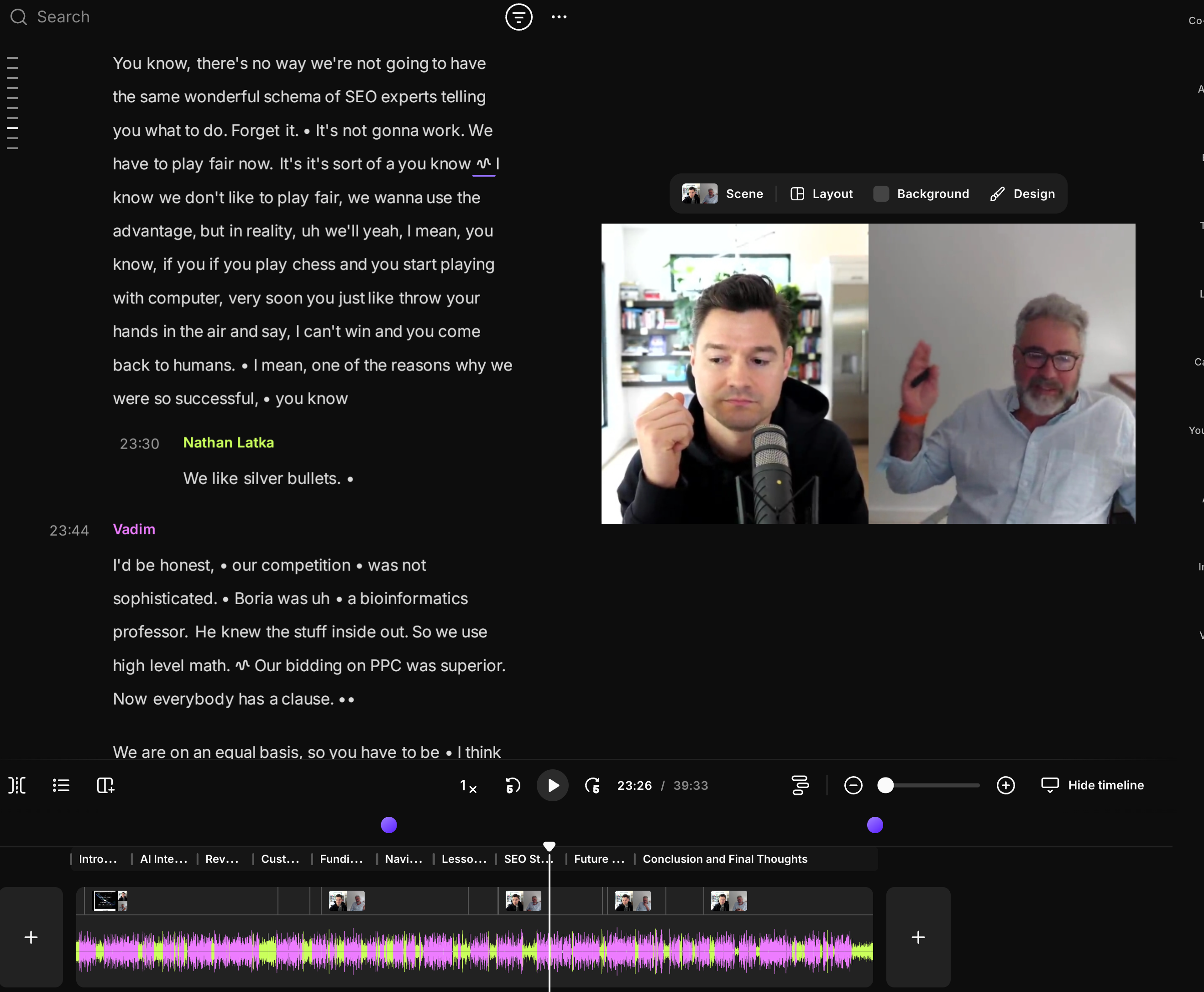
22:48No, no, no, no, no, it's bullshit. I'm sorry, I've tried this stuff. ⁓ again, think about it. Chat GPT today has a Q of about one hundred and ten. Once it has IQ of four hundred, whether you and I have eighty or one forty, it doesn't make any difference. It's getting much smarter. And it's very unpredictable. So the answer is adaptability. You know, there's no way we're not going to have the same wonderful schema of SEO experts telling you what to do. Forget it. It's not gonna work. We have to play fair now. It's it's sort of a you know I know we don't like to play fair, we wanna use the advantage, but in reality, ⁓ we'll yeah, I mean, you know, if you if you play chess and you start playing with computer, very soon you just like throw your hands in the air and say, I can't win and you come back to humans. I mean, one of the reasons why we were so successful, you know
Vadim Yasinovsky, Founder
23:30We like silver bullets.
23:44I'd be honest, our competition was not sophisticated. Boria was ⁓ a bioinformatics professor. He knew the stuff inside out. So we use high level math. Our bidding on PPC was superior. Now everybody has a clause. We are on an equal basis, so you have to be I think it's gonna be a lot more about the product and about reputation ⁓ in the future. And I f and if you start thinking about, hey, you know, today for me, my agent makes most of the buying decisions. Seriously. Actually it's worse than that. My president names is Claude. You'll need to unlock your iPhone first. that's my iPhone talking.
24:16Yeah. That's your agent jumping in.
24:35But I mean like I can tell you a really funny story. So I was talking to my CFO Richard at nine o'clock at night and we were going about how we need to hire a president. And you know, at nine o'clock I said, you know what, that's okay. Let me go play with Claude. Let's see what I can come up with. Like three o'clock in the morning, I'm like, I'm done. This thing is pretty good. It can actually run a company. Not the entire thing, but some s significant parts. So I'm saying to Claude, Hey, will you be my president? And the Claude responds, hey, you know, you actually need somebody alive because people are not willing to listen to AI. Great, I'm going to bed. I get up next morning after three hours of sleep. I go to my schedule and there's an interview for the president position. And the name of the person is Claude. And I flipped out because I thought that my Claude made an interview. But it turns out I wasn't so lucky. I was actually interviewing somebody whose name was Claude Alexander. who joined us as a president literally two weeks ago. So now everybody has a cloud, but I have two. And this is the guy who spent most of his career at Adobe ⁓ building Adobe Acrobat, the creative cloud and signature solution. And I think he's gonna get us to the next level.
25:37That's so funny. I love that. It's actually I'm just seeing this right now. Actually, this is pretty funny. You you actually just announced this six days ago. ⁓ his name his name really his name his name really is Claude. and this is what you said about him and this is him.
25:59That's right, that's right, that's right. That's right. That's right. That's the guy, yes. Very likable guy.
Nathan Latka
26:09So what's the growth what is the growth plan moving forward? How do you go from two hundred million to four hundred million of revenue?
Vadim Yasinovsky, Founder
26:15⁓ we're gonna double double ⁓ double back on our existing products. We believe there's you know twenty to thirty percent growth in there. ⁓ but majority of the plan is probably gonna go to new A products. And by the way, the example you brought up is really interesting, the guy at the pool. ⁓ think about this guy not worrying about how to find the document, what to stay with compliance, you know, how to make sure that the pool is gonna be clean to the point of the inspection. permits and things like that. That's a huge area where these poor people spend six to eight hours a week. Instead of getting a couple of slices of pizza and a nice cold beer and watching a football, they're sitting there with their fingers on a keyboard trying to figure out how to fill up the damn document and there's a bureaucrat somewhere who needs to approve it. So this is we believe it's a humongous market. ⁓ and we think that If not today's AI, tomorrow's AI, and that's a iri really sort of important point. You're not building for what's available today, you're building what's gonna be available three to six months from now. We'll be able to tackle those problems and we'll be able to provide enough of a value to a lot of people and ⁓ remain horizontal while verticalizing the product for a lot of vertical sort of sub markets and stuff. That's the
27:37Well, that's what I'm gonna push you on. I I'm seeing a lot of horizontal players just getting crushed. I mean, you really I my argument is you really have to go vertical to keep your net dollar retention high, but you wanna stay horizontal.
27:48Now you're talking, so how the hell do you do that? And the answer is your product has to morph itself. It has to speak the language of your customer. So if it's a small medical office, you know, it needs to understand this stuff. If it's ⁓ I don't know, pool guy, it's a different language. It makes all the difference in the world. And I think that AI actually allows you to morph your software to address a particular user segment. And the great thing is that we don't have to rush. We can wait for the feedback loop to kick in. We are not a startup in that sense. All the startups are gonna be starved to death before they actually get the real feedback. We can take our time, so still going very fast. absolutely, yes. We have a pretty good Ibata, we're doing well.
Nathan Latka
28:31Are you guys profitable today? More than twenty percent.
28:38I'm comf ⁓ close. Can I just say close enough? ⁓ let me put it this way. Again, grey beard, I know that cash is decaying. There's uncertainty in these times. It's coming big time. Guys preserve cash. Do yourself a favor. There's nothing else like that in the world. So you know, you should have a reasonably good round rate.
28:43Ha ha ha. AOO AO Doc CEO Stephane Dons came on my show, a French gentleman. He reminded me of your space a ton. ⁓ but he, you know, he's doing very similar stuff to you. But his A C V they're targeting enterprise and it's fascinating what they've done. I do you know these guys? Have you diligenced them?
Vadim Yasinovsky, Founder
29:19I I I've never diligenced them, I know about this guys and this is the space we never want to be. You know, it's just because I hate corporate sales, the sales cycle, the feedback cycle, ⁓ there are a lot of benefits to this space, but it's so slow, it's so incredibly you cannot iterate, you cannot innovate, everything takes forever. I'm sorry, not my game. I mean I've played that one, I just don't like it.
29:26Why, why, tell me why.
29:48And you have to understand that every company you know like yeah, it's like, you know, I mean I wish them all the luck in the world. I really do. Yeah. yeah, if you and if you think that SMB is an easy customer, think again, they're much tougher than any corporate guy out there because they demand as much as anybody else, but they're not willing to pay the full price. So you do get one hundred and eighty bucks per customer and they want the compliance and they want the intelligence and they want the content.
29:49No, I it's fine. It's I get it. I get it. You don't wanna have to talk to anybody. You want all PLG. Yeah, no, I get it. I get it. So
30:18All nine yards. So before you go into consumer guys, think twice. But you know, retention is the game again.
30:27So if the opportunity came if the if the opportunity came to acquire these guys for like three hundred million all cash, would you do it?
30:35Don't have 300 million dollar cash. I don't know. I mean, you know, I no, I don't think so because we have to stay focused on what we're good at. I'm a really strong believer in focus. I mean, I'm sure it's a great deal, I'm sure they're great guys and stuff like that, but we have a DNA. Hey, it's hard to go against your DNA. Just look at yourself. I mean, you know, are you going to run like a corporate sales right now?
30:38Let's assume you did.
Nathan Latka
31:03Will Nathan Lud could drop everything and for like five hundred million try to do something he hates or which is against his nature? Not really, right? I mean, you know, the bottom line you gotta enjoy what you do. So okay, just ⁓ yeah.
Vadim Yasinovsky, Founder
31:16Yeah. If you are there are there legacy like we look at what Bending Spoons has done, right? You guys know a thing or two about buying companies. Yeah. So if you were gonna run their playbook and you were thinking about acquisition targets today, who would you think about going and acquiring?
31:23Belling Spoon's phenomenal. Yes, yes, we do. ⁓ that's a really interesting question. To begin with, I do not believe that playbooks work anymore. It's all new, which is a huge advantage for me because I'm dyslexic. Seriously, I mean, you know, playbooks is not my forte. But the point is that whom will buy? Product market fit. I don't care about technology, I can rebuild it overnight. The and domain expertise. That's what you know, show me success on product market fit and domain expertise and we can talk. And yeah, it has to be more than I don't know, five million or even ten million because it needs to make a significant contribution to the revenue of the company. You know, so one million products are not interesting. And we're getting I don't know, I mean I don't pr you probably see the same emails, we're getting the software every single day. You know, it's just ⁓ So yeah, that's
32:32So you just to be clear, for my audience listening, if they're thinking about doing a small acquisition of three to four million bucks, you would say, Be very careful. The MA playbooks don't really work anymore, everything's new.
Nathan Latka
32:43And ⁓ think about three to four million once you're done with all the legal and conversion and you know, the biggest problem always is the culture, obviously. ⁓ that's why most of the acquisitions fail. But after you're done, it's like it's probably gonna cost you more, but this guy's gonna get a lot less. They can get million a half and stuff like that. And after taxes, it's not that exciting. So if they're selling you this thing, it probably doesn't have the potential.
Vadim Yasinovsky, Founder
33:12Mm-hmm. Mm-hmm. Yeah.
33:13I mean look under the skirt, look very carefully under the skirt. I mean there's that's where the all the skeletons are buried, okay? I mean I you know sold companies before, bought companies before. ⁓ there's always if the deal is too good to be true, it probably is. So you know that.
33:21Yeah. You said you hate managing let's end on this. You said you hate managing like a board. I I think you really like being your own boss. But I mean, you have a real board today. I mean, there's a lot of money in the business. Ha like, how do you manage that?
33:43Yes. ⁓ low expectations. ⁓ under promise over deliver, consistency. You know, when I took over, which was almost a year now, in the beginning they were very, very frantic and nervous. And I just made it my business of talking to them all the time and telling them why I'm doing it, what I'm doing it. And eventually they start trusting me. And now, you know, they bug me on on the board meetings and it's like it's been great. So and they do everything I need them to do, interview the new president and tell them what they think and stuff like that. And to be honest, the great thing is, so this is a bit of a disclosure. Two and a half years ago I took a sabbatical. I went out to some of my f see my friends in Princeton, ⁓ friends in Brandeis, Stanford to talk about AI. I came back, wrote a memo, six and a half pages memo, with what's going to happen with technology, with marketing. With users, with agents, and all this kind of stuff. Nathan, I'm gonna beat my own drum. Every single thing is right on the Mali, but there is one caveat. I said it's gonna take a year and a half. It took nine months. However, the great benefit is I sent this ⁓ memo to every single person on the board and the management in the company, and I got totally ignored. So now I have this great Trump card. Hey guys. You didn't listen to me before. So now what? You're going to have to listen. All right. And that's and I'm going to use it all the way. So that's
Nathan Latka
35:20We we wanna read that. Is it public? Can you send me a copy?
35:25Of that memo.
Vadim Yasinovsky, Founder
35:26Yeah, or it does it have personal information on the company in it.
35:29It does it does have personal information, but let me see if I can sort of back line it and I'll I'll send it to. Absolutely.
Nathan Latka
35:33I would love I would I would love that. And I hear your fundraising. I'm sure you have a hard stop. I just want to point out one other thing though, because even though you have a board, you're still, I would consider you guys very capital efficient. If you're at two hundred million bucks of ARR, you've raised under two hundred million of equity to date, right?
Vadim Yasinovsky, Founder
35:49Yes, yes.
35:50Very cap very capital efficient. There's people listening right now that have, you know, raised twenty bucks for every dollar of ARR. That's not you.
35:57That's not us. And at the end, you have to win big. And remember, VCs are in this game for different reasons, right? They want to win big. They can't afford. I mean, if one company out of five wins big, they're cool. And the rest of them they don't care about. For you, I don't know about you, but my most of my personal wealth is in in in air slate. ⁓ things like that. So While I respect my board, I like those guys very much, I do have to understand that their objective and my objective are slightly different and I have to adjust for that all the time. And that's okay. They know I know, I know, they know. We're cool, everything's good, it's fine. You know, sort of
Nathan Latka
36:42Vadim, on that note, if people want to follow your story after meeting you here on this interview, where can they find you online?
Vadim Yasinovsky, Founder
36:51I'm working, man. I you can't find me online. I'm not anywhere. I'm I'm building new AI products. So I mean you can you can you can send me an email if you want with emothairslate.com. But that's no Twitter, no Twitter, no LinkedIn, no personal site. I mean, well there's an old personal site called clearweb dot com and that's like an old story. ⁓ but that's it. That you know. I don't check Facebook, I'm sorry. I'm like off degree.
37:01Wait, so is it is this an e is this an e You don't do a lot of interviews. Why'd you agree to do this one?
37:25I told you because you know when you came over you told me that story. I got I mean this guy knows something I don't and this is this is great shit, it really is. ⁓ you know, it's like I don't know if you you if you interview a lot of people for the job, I try to make them laugh because if I don't like the way they laugh, I mean, you know, the the it will never work out, right? So I mean I saw you laugh, I could make you laugh. I think we have same sort of foundation basis. This is not an interview to promote the company or anything else. I mean, we can talk about, you know, we can shoot breeze about whatever whatever the hell you want, doesn't matter. So that's why I'm here. I mean, I don't do interviews. That you're right. I mean, this is like exception. So and you've done a great job, man. A lot of respect. So
38:14Well, I've got a ton of respect for what you guys have built. So I appreciate you making time for us. Guys, again, hell of a story here. Vadim and Boya got going at PDF filler all the way back in early two thousands, two thousand and eight. They broke a call of eighteen million of revenue in twenty thirteen. In twenty fifteen, they really took their first major outside money from GC and bought sign now with three million of revenue. By twenty sixteen, get this over fifty million dollars of revenue. Twenty twenty two broke a hundred million at a one billion valuation. Now today in twenty twenty six, Vadim was honest. He said, look, valuation has compressed just like the rest of the industry, but they've broken 200 million bucks of revenue with under 200 million dollars raised, very capital efficient. And they're one of the rare cases that is running the playbook of the low ARPU high volume. He knows his customer. It's the pool contractor in Austin, Texas. 1.2 million customers today with an average ACD of 181 bucks per year. And he says, quote, the playbooks don't work anymore. They're reinventing the business with a team of 650 people.
39:21Thank you, sir. Really appreciate it. Good luck. Take it easy, man.
39:24All right, guys. Cut. Good