
CEO Interview
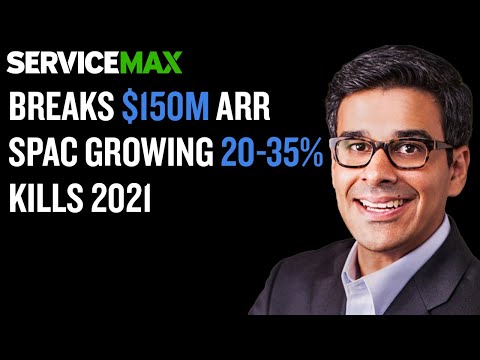
How ServiceMax Reached $150M ARR and 400 Enterprise Customers with 115% to 121% Net Dollar Retention (Interview with CEO Neil Barua)
- Interview Date
- June 14, 2022
- Interviewee
- Neil BaruaCEO
Company Metrics at Interview Time
ARR (2021)
$150M
Customers (2022)
400
Net Dollar Retention (2022)
115% to 121%
Team Size (2022)
580
Gross Revenue Retention (2022)
Mid-to-high 90s
Historical Snapshot
These numbers were reported by Neil Barua during his interview with Nathan Latka in June 2022 and are a historical snapshot, not current figures. See ServiceMax’s current numbers.
Key Takeaways
- 01ServiceMax reported $150M ARR as of November 2021, and Neil Barua said ARR was "way above $100,000,000" at the time of the June 2022 interview
- 02Net dollar retention runs in the 115% to 121% range, driven by upsell into existing enterprise accounts
- 03Gross revenue retention is in the mid-to-high 90s, reflecting strong customer stickiness
- 04The company serves 400 enterprise customers including Philips Healthcare and Carrier
- 05580 total employees, with 250 of them engineers
- 06Organic growth target is 30% or more per year, with historical range of 20% to 35%
- 07Only 300,000 to 400,000 of an estimated 7.8 million field technicians worldwide currently use ServiceMax, indicating large expansion runway
- 08ServiceMax has been Gartner Magic Quadrant leader six times in field service management
- 09The company reached operating profit and free cash flow positive status as a standalone company
- 10Silver Lake owns a large majority stake, with GE and Salesforce Ventures as minority investors
Company Metrics at Time of Interview
| Metric | Value | Source |
|---|---|---|
| ARR (2021) | $150M | CEO interview, June 2022 |
| Customers (2022) | 400 | CEO interview, June 2022 |
| Net Dollar Retention (2022) | 115% to 121% | CEO interview, June 2022 |
| Gross Revenue Retention (2022) | Mid-to-high 90s | CEO interview, June 2022 |
| Team Size (2022) | 580 | CEO interview, June 2022 |
| Engineers (2022) | 250 | CEO interview, June 2022 |
| Technicians on Platform (2022) | 300,000 to 400,000 | CEO interview, June 2022 |
| Total Addressable Technicians (Market Estimate) (2022) | 7,800,000 | CEO interview, June 2022 |
| Year Founded | 2007 | CEO interview, June 2022 |
Growth Breakdown
Revenue
ServiceMax publicly disclosed approaching $150M ARR as of November 2021, with Neil Barua saying ARR was "way above $100,000,000" at the time of the June 2022 interview. The company reached operating profit and free cash flow positive status during its roughly three and a half years as a standalone company under Silver Lake ownership.
Customers
ServiceMax serves approximately 400 enterprise customers, including large logos such as Philips Healthcare and Carrier. The customer count has remained around 400 while the company has actively managed the quality of its customer base, replacing lower-value accounts with higher-value enterprise logos over the past three and a half years.
Team
The company employs 580 people in total, with 250 of them engineers. Neil Barua noted the team has done a remarkable job scaling the business since he joined roughly three and a half years before the interview.
Profitability and Funding
ServiceMax reached free cash flow positive and operating profit during its tenure as a Silver Lake-backed standalone company. Silver Lake is the majority owner, with GE and Salesforce Ventures as minority investors. The company evaluated but ultimately chose not to pursue a SPAC listing at the end of 2021.
Growth Strategy
Upsell and Wallet Share Expansion
The primary growth driver has been expanding revenue within the existing 400-customer base. Neil Barua credited the team for growing wallet share at accounts like Philips Healthcare and Carrier, which often still relied on manual processes when ServiceMax first engaged them.
New Logo Acquisition Targeting Quality
ServiceMax has been selective about adding new customers, focusing on enterprise logos with long-term growth potential rather than maximizing raw customer count. The team replaced lower-quality accounts with higher-value enterprise relationships over the past three and a half years.
Product Innovation for Remote and Self-Service Use Cases
The company launched a product called Engage, born out of pandemic-era constraints, which allows end customers such as clinic staff to self-service or remotely fix assets without a technician on site. This opens a new licensing tier sold through existing customers like Philips Healthcare.
Organic Growth Discipline Over Acquisitions
Neil Barua emphasized a preference for organic growth over a constant drumbeat of acquisitions, noting that integrating mission-critical software is harder than doing a deal. The company acquired Liquid Frameworks in the oil, gas, and renewable energy space as its largest M and A transaction, but has kept M and A selective.
Public-Company Readiness as an Operational Foundation
The SPAC evaluation process, though not completed, led ServiceMax to build public-company infrastructure including a general counsel and chief accounting officer. Neil Barua credited this discipline with strengthening the company's operational foundation and raising its profile with over 100 institutional investors.
Best Quotes
“We were getting very close to going public at the tail end of last year in December. And fortunately, we've got great investors. We're, I said, by Silver Lake, who owns about 80% or a large percentage of the company, as well as GE and then Salesforce Ventures. And we created a process to go public. Thank God we didn't go public because of what we're watching in the marketplace.”
“I think the last disclosure we made was we were approaching $150,000,000 plus of ARR.”
“Our Q1 run rate, we're a private company, but I target it as 30% plus on organic organic growth that we've been getting out of the business. So we've been doing a 20% to 35% is kind of the vicinity where at scale it starts to make sense, plus then view around profitability and free cash flow, which we've been really focusing on as well, in addition to the growth, Nathan.”
“Our net retention is in the 115% to 121% range, right? So it's a very nice and what we've done as a team extremely well is we went to the Philips Healthcares of the world, Carrier, who predominantly fascinating, by the way, Nathan, is those customers, many times, even those huge logos, still are doing manual processes for the thing that I talked about as the workflow.”
“There's at least 7,800,000 technicians. Call it 8,000,000 technicians around the world. To give context of why that, your question around that 400 customers, how much they could continue to grow, only 300 to 400,000 or thereabouts are technicians that are using ServiceMax.”
“We created and released a product called Engage, where that same functionality, Nathan, it was born out of the pandemic where technicians couldn't safely go to the end site. We are now given the clinic the same utilization and the same UI to do a self help and self fix the asset versus a technician going out there or route using our collaboration tool to the experts that are remote at Philips to actually do a remote fixing of the actual asset.”
“I raised my hand and said, Put me in, coach. I see you guys were able to strike this deal with ServiceMax. You need a new executive team. I want in the game. I like running teams, Nathan. I don't like being in anything other than the environment that I'm in.”
“The headline of buying a company doesn't do any difference. It's actually creating value for the customer. And as you know, it's easy to do a deal.”
“If just think about a single moment of valuation metrics, you kind of think in a way that's very short term, and we have the luxury of thinking longer than that. So I believe that that focus is going to reward the shareholders extremely well, and I think will create a great company that will be a very one that we'll all be proud of.”
What Happened Next
This interview captured ServiceMax at a moment when the company had just passed $150M ARR, was evaluating public market options, and was focused on organic growth and profitability under Silver Lake ownership. The figures and plans described here reflect what Neil Barua reported in June 2022 and are a point-in-time snapshot. Visit the ServiceMax company profile on GetLatka for current metrics and any developments since this recording.
View ServiceMax’s current profile and metricsFull Transcript
Chapters
- 0:00Introduction: Neil Barua and his background
- 0:29Global Crossing and early career
- 1:42ServiceMax revenue disclosure and ARR milestone
- 3:52Organic growth targets and profitability focus
- 6:51What ServiceMax does: field service management explained
- 9:49GE acquisition, Silver Lake buyout, and ownership structure
- 12:34Team size, engineers, and joining ServiceMax
- 13:53Customer count, retention, and net dollar retention
- 15:39New product: Engage and remote self-service
- 17:55Market size: 7.8 million technicians and expansion runway
- 19:12Rule of 40 and path to profitability
- 21:15M and A strategy and Liquid Frameworks acquisition
- 22:56SPAC evaluation and public-company readiness
- 25:03IPO timing and long-term company vision
- 26:04Famous five rapid-fire questions
Introduction: Neil Barua and his background
Nathan Latka
00:00Hey, folks. My guest today is Neil Barua. He's the chief executive officer at ServiceMax and a member of the board of directors. He's got an extensive background in the tech industry and a proven track record of growing businesses. Previously, he was a CEO of IPC Systems and during his tenure, sold the company and led a SaaS and data transformation of the company. More recently, he served as an operating partner at Silver Lake, the global leader in
00:18technology investing. Earlier in his career, he was part of John Legere's leadership team that helped transform global crossing through consistent growth. Neil, you ready to take us to the top?
Neil Barua
00:27Let's do it, Nathan.
Global Crossing and early career
Nathan Latka
00:29Year before my time, what was Global Crossing? I was born in '89. What was Global Crossing?
Neil Barua
00:33Oh, you're you're a young one. I'm actually turning 45, so now I've become the old guy in the room. But Global Crossing was a very infamous telecom company that actually the world is benefited by now. They laid undersea cables by which internet was able to go across continents. And it was one of the hottest startups, by the way. I think the fastest to get to $15,000,000,000 of market cap at the time, startup that was formed by
01:00a founder called Gary Winnick. And I actually came to Global Crossing the day the company was declared bankrupt. So that was my first day, was the.com boom happened and the bust happened and Global Crossing had its financial issues. And the CEO that I became part of, John Legere, who ultimately also was CEO of T Mobile, who did a great job over the last number of years. Him, as well as the leadership team, which I was
01:28part of, we restructured the company and ultimately sold it to Level 3 about eight years later. So it's part of the It was a little ahead of its time, but we got it back on its firm footing and it's doing great things for the world right now.
ServiceMax revenue disclosure and ARR milestone
Nathan Latka
01:42Well, congrats on that. I wanted to obviously now shift back to ServiceMax. I wanna congratulate you. My research is a little confusing. There was a PR piece put out 09/10/2021 that says it was announcing your second quarter fiscal year twenty twenty two results. But I don't know how you have a press release before 2020 hit, but you broke a $100,000,000 run rate effectively in that release. So I wanna congratulate you, but where am I wrong? Why
02:03is my timing messed up?
Neil Barua
02:04You know, in the enterprise scale SaaS world that we're in, like Salesforce, when they put out their earnings release, the fiscal year is actually a year ahead because our fiscal end is January, end of January. And so it's a little kludgy, but we didn't get the math wrong. It was within calendar year 'twenty one, 'twenty two. So we are very happy about the progress of the company for sure and way above $100,000,000 right now as I
02:30look at the ARR as well as we currently are at the company at ServiceMax.
Nathan Latka
02:35What when was the last thing you guys disclosed publicly in terms of revenue run rate?
Neil Barua
02:39You know, we were we were getting very close to going public at the tail end of last year in December. And fortunately, we've got great investors. We're, I said, by Silver Lake, who owns about 80% or a large percentage of the company, as well as GE and then Salesforce Ventures. And we created a process to go public. Thank God we didn't go public because of what we're watching in the marketplace. And as a private company, we're
03:04able to still stay focused on customers and our employees versus all the mayhem that's going on with public companies. But I think the last disclosure we made was we were approaching $150,000,000 plus of ARR.
Nathan Latka
03:16Really When was that?
Neil Barua
03:17As well as getting operating profit and free cash flow positive as well. It's a big point of differentiation that we've done over the last three and a half years as a standalone company coming out of GE.
Nathan Latka
03:30No. That is that is impressive. When did you announce that you passed a $150,000,000 run rate? Do you know?
Neil Barua
03:34I think November of last year.
Nathan Latka
03:37November. Okay. Disclosure. Yeah. Now it's obviously hard to grow. You know, companies, most companies I've on are doing $10, $20, $30,000,000 in ARR. They're venture backed. They they need to growing a 100%, 10% year over year. It's hard to grow a $150,000,000 to 300 year over year. What's a company like you target in terms of year over year growth rate?
Organic growth targets and profitability focus
Neil Barua
03:52Know, our Q1 run rate, we're a private company, but I target it as 30% plus on organic
04:00organic growth that we've been getting out of the business. So we've been doing a 20% to 35% is kind of the vicinity where at scale it starts to make sense, plus then view around profitability and free cash flow, which we've been really focusing on as well, in addition to the growth, Nathan.
Nathan Latka
04:18Oh, what's going on there, YouTube? Good to see you guys. Now imagine this. You love watching these interviews with SaaS founders, but imagine if we took all of the valuation data out from over 2,807 interviews I've done manually. Saves you a lot of time. Well, we've done this. We've built it into the beautiful interface inside of Founderpath. Check this out. I'll show you how you can access this in a second, but you log in, you connect
04:41your Stripe account, you see your valuation real time. You can see what it changed over the past eighty eight days and even set goals for valuation this year. Now the secret evaluation is there's many different ways to value a SaaS business. So the reason you're gonna see three or four different valuations inside of your Founderpath dashboard, this is all free by the way, is because depending on who's doing the buying of your SaaS company, you're gonna
05:05get a different valuation. A VC is gonna pay a different valuation, Private equity firm is different. If you're gonna do a minority sale, that's different. And if you sell the whole business, that's a different valuation. You can see all those when I hover over here. Right? So the teal is what a VC would pay. Yellow is what private equity And red is if you sold the whole thing outright. Now what's cool about this is this is
05:27not built off random data. Again, you guys hear these interviews on YouTube. All these datas are built from real time valuation data points founder share with us on the show. So traction 1,200,000 seed round 3.7 raise. They sold 22% of their business. Go in here and filter by the event. Maybe you only wanna see companies that have sold the whole business. Well, here are a bunch that have been acquired the valuation and the multiple. Maybe you're
05:53going out right now and you're raising your seed round. We'll go in here and look at all this recent seed deals that went down, what they raised, what valuation they raised at, and what percent that they sold. There's never been a larger dataset of SaaS valuations than what you can get now inside of Founderpath. And we're thrilled to bring it to you. All right, we're gonna go back to the YouTube video here in a second, but
06:15if you wanna check this tool out, if you wanna jump in and sign up, you can check it out for free to get your valuation at this link, this link, founderpath.com/products/valuations. Or if you go to founderpath.com and hover over products, click on get your valuation here, and go ahead and sign up to give it a whirl. Again, all that valuation data live right inside the platform. I hope to see you there. Alright. Let's jump back into
06:41the interview. And that makes sense considering your pedigree coming out of Silver Lake, which we'll get to more in a second. But first, let's like jam out on product here for a minute. Is ServiceMax doing? Who are you selling to and what are they getting?
What ServiceMax does: field service management explained
Neil Barua
06:51This is the best part of the conversation, my opinion. So company was formed fifteen years ago by much smarter people than me. Founders, Nathan and Hari, built the company actually, and was one of the hottest startups, which ultimately got sold to GE, I think in 2016, Nathan, for close to $1,000,000,000. So did a phenomenal job with answering your question, which is what we still do. 100% focused within the field service management marketplace, where in essence, a
07:20product. So I'll give you a real example. I think this will kind of resonate with all your viewers and yourself. Philips Healthcare, which basically does most of the medical equipment. When you and I or our parents go to the hospital, a lot of the equipment is actually built by Philips Healthcare, right? So Philips Healthcare is a great customer of ours. They procured our SaaS offering by which they have their technicians that fix those products and those
07:44medical equipment in those clinics or hospitals. Our software allows the technician to actually get scheduled, route the right technician to the actual appropriate hospital that needs fixing, get to the equipment. And within the equipment, Nathan, we within ServiceMax allow the technician to see what part to fix, what's actually covered by warranty, when do you actually close out the job by which the customer gets notified, When do you actually then come back and maybe do additional maintenance
08:13plans beyond the standard maintenance plan? So it gives Philips Healthcare an ability, which is very important to have that service revenue resilience and customer satisfaction to that clinic or hospital, by which if one of us or your parents or family members goes to the hospital, that equipment actually works, right? And that's what our product does on a SaaS platform, as you know, and a very compelling piece that we're the leaders in the marketplace, six times Magic
08:40Quadrant leader, for this specific niche, which is an awesome niche to be in, particularly what's going on in the world.
Nathan Latka
08:45Who's who's in second and third place?
Neil Barua
08:48I you know, I don't even care about second and third place. I'm focused on
Nathan Latka
08:51Such a good such a politician.
Neil Barua
08:52That's No free marketing for your competitors.
08:55They're rear view mirror, Nathan. You can find them in some random podcast, not yours. We're so it's it's actually awesome. You got me on my soapbox. Like, Carrier, right? A big company that does all the HVAC for commercial units, plus also cargo ship cooling. So unbeknownst to many people, the cargo ship cooling industry is huge, right, on transporting goods around the world. Our software, Nathan, allows for the uptime of those ships by which, with all the
09:26supply chain constraints, you then know that the cooler's actually working. A huge complex piece of equipment used by ServiceMax, by the technicians to figure out what ships actually can actually transport the foods that we all need, particularly in this very trying time that the world is in. So, really great stuff and an honor to be the CEO of the company, given the importance of the software and what it does for our customers.
GE acquisition, Silver Lake buyout, and ownership structure
Nathan Latka
09:49Help help my founders learn here. 2016 GE buys the company, obviously bullish on it, $915,000,000, 1,000,000,000, whatever you wanna call the number. But then it's just two years later, right? They're now selling a majority stake back to Silver Lake. So did GE just decide, know what, this is a sort of a distraction. We wanna sort of get rid of it. It's still valuable. I mean, why buy it and then sell it two years later?
Neil Barua
10:09Yeah, they continue to be an investor in our company, right? A minority investor. But GE, as you probably followed, went through a lot of stuff. They continue to go through a lot of stuff, right? Three, four CEOs went through that gamut during that time frame, and they were divesting a significant portion of their company to generate and gather cash, right, and focus back into their niche of what actually created GE, was 100, 150 years ago. So ServiceMax
10:33was a very tip of the spear for them to be a digital software company. And as we've seen, they've reverted back to their industrial roots. Having a software company of our scale, of our expertise, made sense to be at another company. And that's why they engage with our current owners to figure out how can they get cash on their balance sheet and also let us do the things that we are currently doing. Quite frankly, we're a
10:59big provider of many GE business units, their ultimate utilization of our software for their field techs as well, Nathan. So a real win win at the time and a great deal struck by our investors, quite frankly.
Nathan Latka
11:12Yeah. So how did GE keeps 10%, I think. Silver Lake, is Lake the sole buyer the other 90% or are there other financial backers here?
Neil Barua
11:18Salesforce Ventures came into the business as well, I think two and a half years ago.
Nathan Latka
11:25Interesting. Okay, now explain how you, you know, we talk about founder-product fit, right? How do you end up inside of ServiceMax? Now, it sounds like you were at Silver Lake first.
Neil Barua
11:34Yeah, so I've spent a small amount of time at Silver Lake as an operating partner. I ran, IPC actually was owned by Silver Lake initially, and I became the CEO of that company when Silver Lake was the majority owner of that company. We then transformed that business, was able to transact and sell the business to another buyer. And I then came back to, you know, the homestead in Silver Lake and ultimately got involved in a number
12:02of deals. And I raised my hand and said, Put me in, coach. I see you guys were able to strike this deal with ServiceMax. You need a new executive team. I want in the game. I like running teams, Nathan. I don't like being in anything other than the environment that I'm in. And I said, look, if the opportunity exists, put me in and let me run the company, because it's something very unique that I hadn't seen
12:23previously in my career. So I really wanted in to make a difference in the company. And for the last three and a half years, this team's done a remarkable job so far, you know, running ServiceMax. So pretty proud of the progress.
Team size, engineers, and joining ServiceMax
Nathan Latka
12:34How many folks are on the team now today?
Neil Barua
12:36Got like five eighty people.
Nathan Latka
12:38Okay. How many engineers?
Neil Barua
12:40Engineers are two fifty of that.
Nathan Latka
12:42Okay. Interesting. Now, you're not a pushover on your talent and you have a lot under your belt. So, you're asking for equity coming into this deal. How's a guy like you, you know, trying to negotiate a position in a thing like ServiceMax? How much equity do you come in and ask for?
Neil Barua
12:54Yeah. I'm not gonna tell you the equity piece. It's actually something I've forgotten, quite frankly. It's, I like the, I'm 40, as I said, I'm gonna turn 45 in a month or so. And I'm at the position in my life where I've been lucky to have been in very significant positions before ServiceMax. I kind of started a little early. And I'm now really focusing on how could I scale this team? How could I ensure that our
13:18team is actually getting all the things that I got for the last twenty years? And the mission of what we do, Nathan, for our customers, it's really the thing that gets me up at night. So this isn't a go make money and figure out how to transact. This is, for me, and this is why I said put me in coach, this is a company that's gonna make a difference for a long time. I don't wanna leave
13:38for a long time. This is a company I wanna, quite frankly, if I can retire at. And, you know, there's so much runway for the business that we're doing. So, that's how I looked at it, Nathan, versus the dollars and cents behind it.
Nathan Latka
13:49Fair enough. You're a nice guy. How many customers now today?
Customer count, retention, and net dollar retention
Neil Barua
13:53We've got over close to 400 now, enterprise All enterprise B2B and, you know, large enterprise, to give you context.
Nathan Latka
14:01In the press release when Silver Lake came in, it also said 400 customers. That was several years ago. So, you've either, you've sort of maybe churned lower ARPU and added higher sort of AC folks, or you've expanded in the accounts to grow revenue. Sort of which one was it?
Neil Barua
14:14Yeah, we've done a great job around our retention rates are in the mid to high nineties, right? We do a phenomenal-
Nathan Latka
14:23Gross or net?
Neil Barua
14:25Gross. Okay. We actually put a press release up for our net retention. Our net retention is in the 115% to 121% range, right? So it's a very nice and what we've done as a team extremely well is we went to the Philips Healthcares of the world, Carrier, who predominantly fascinating, by the way, Nathan, is those customers, many times, even those huge logos, still are doing manual processes for the thing that I talked about
14:50as the workflow. So we've done a phenomenal job growing the wallet share of the existing customer base. And quite frankly, some of the customer count, right, as you've seen other companies, we look at the quality of the customer count. And of those 400, initially three and a half years ago, we've created a lot of new logo impetus too to make up for the kind of customers that we quite frankly didn't really address in the manner that
15:14we think we could grow into. So within that, underneath it is great retention, great upsell into the existing base. But we've done a really nice job on new logos as well to get the right customer set to grow into over the next three, five, ten years.
Nathan Latka
15:27So moving forward, let's say you, let's just for the sake of a demonstration here, you add no new customers, but you wanna keep growing. And so you need to build product to upsell and add more value to your current base. What products would you go build? What are you thinking about?
New product: Engage and remote self-service
Neil Barua
15:39So one that we just released that we're, you know, is not seen the material revenue upside yet, but we will, and we're seeing the current bookings occur. We created so that example I gave to you around the technician going to Philips Healthcare's hospital where they install the equipment, right? We provide the software by which the technician sees on their mobile app and knows what to fix, when to fix, and how to fix it, right? We've now
16:04created and released a product called Engage, where that same functionality, Nathan, it was born out of the pandemic where technicians couldn't safely go to the end site. We are now given the clinic the same utilization and the same UI to do a self help and self fix the asset versus a technician going out there or route using our collaboration tool to the experts that are remote at Philips to actually do a remote fixing of the actual
16:31asset. So one of the things we're doing, and again, Philips is actually deploying this now to their end customer. So Philips is the customer record. They'll procure licenses to give to those clinic or hospital staff that could do some of the self help. We see that as a big impetus for the company and an area that, again, like you said, we're creating larger wallet share of real need for our customers by developing very innovative solutions, which
16:56the r and d team's done a great job doing.
Nathan Latka
16:58The Philips technician, though, just to be clear, you're not a marketplace. That technician isn't employed by you and you're matching in them with Philips when they need it, right? No.
Neil Barua
17:05It's the Philips badge employee.
Nathan Latka
17:08Okay. So, yeah, that they're they're a full part employee at Philips.
Neil Barua
17:11Yep. So the way our model, the reason why you get such resiliency, if you create a great UI, create the right workflow, those technicians, the licenses are procured by Philips Healthcare, the head of service, head of IT as CFO, right? Not the technician, and we're not a marketplace. For the most part, complex assets, Nathan, for what it's worth since you opened that question, we love this space. To serve a complex asset, you need a skilled technician
17:37to do that, right? And most of the time, 80% of the time, that's a badge employee. 20% of the time, by the way, they will train third parties and certify them. They'll just procure the same sort of licenses from ServiceMax as they would, they'll manage their workforce. We'll give them the licenses to do that.
Market size: 7.8 million technicians and expansion runway
Nathan Latka
17:55Mhmm. Interesting. How many individual technicians across your, or service providers are managed right now, seats sort of across your 400 customers?
Neil Barua
18:04Yeah, there's at least 7,800,000 technicians.
Nathan Latka
18:07Wow.
Neil Barua
18:08Call it 8,000,000 technicians around the world. To give context of why that, your question around that 400 customers, how much they could continue to grow, only 300 to 400,000 or thereabouts are technicians that are using ServiceMax. The predominance of so you might say, well, who's using the 8,000,000? It's actually not our competitors, Right? It's a very we have smaller competitors. Most of it is still manual processes. You put these
18:38guys and gals out in the field, and they're using their spreadsheets or their clipboards to figure out how to solve an issue.
Nathan Latka
18:43So 7,800,000 is the market. You haven't it. You've about 300
Neil Barua
18:47Absolutely.
Nathan Latka
18:48Thousand right Yep.
18:49Oh, I see. I see. Okay. Got it. I was gonna say 7,800,000 across 400 customers is almost 19,000 technicians No. Per
Neil Barua
18:55No. No. That's a big step. That's why the runway's so long here is those technicians aren't actually using a competitor tool. They're using pen and paper Excel.
Nathan Latka
19:04Yeah. That's still big though. You've got 300,000 seats across 400 customers, that's still an average of seven fifty service providers per logo you're managing today.
Neil Barua
19:11Yeah. It's great.
Rule of 40 and path to profitability
Nathan Latka
19:12That that's I mean, it sounds healthy to me. Interesting. I love how you talk about economics and profitability and free cash flow. Rule of 40 is obviously a popular metric in publicly traded SaaS. I imagine you thought about this back end of last year. Where are you guys at right now? Or last, you disclosed it. Where are you in terms of rule of 40?
Neil Barua
19:26Yeah. We balance the since we're a private company and we're growing at the pace that I'm talking about, we've been fortunate enough as we've been scaling into free cash flow positive, that pinpointing for a Wall Street analyst to get at the end of Q2 a rule of 40, a rule of 50, rule of 60, is not the theme that we push on, right? Ultimately, it's the progress of the business. We have very much in our line
19:50of sight, how do we get to forty, fifty, 60? And if you look at those types of growth rates, it's just a small inflection of free cash flow margin that we gotta create to get to it. But right now
Nathan Latka
20:00So could hit that this year? You think you hit 40 this year?
Neil Barua
20:03I'm not gonna commit to any number at this current time. But what I will say is that a private company, as we look at the long term and the runway, there is a real path for us to feel really good about feeling like, and achieving numbers that are in the rule of 40 plus. Yeah, yeah. That's definitely in our line of sight.
Nathan Latka
20:21Yeah. Yeah. I mean, you already gave away one part of the equation, is 35% growth. The question now is, can you do that be close to profitability, which would sort of rule of 20, rule of 35. And then if can generate free cash flow, obviously, you break rule of 40 pretty quickly. So interesting to watch you guys.
Neil Barua
20:34Yeah, Nathan, the good thing is, like, as every boardroom's doing is, how do you balance up a company that's growing this space, at this pace, with still free cash flow positive? Do you do you create more investment opportunity, or do you do some in a piece Wall Street at this current time? We're we're thinking through the the dynamic as everyone is right now, quite frankly. Space is getting awesome. Yeah. We're sanity to
Nathan Latka
20:57Historically speaking, ServiceMax has not been a highly acquisitive company. Liquid Frameworks and Zinc, really only the two ones I know about. Backed by private equity firm, you'd think you guys being the hub, there'd be many more spokes you're bringing under your umbrella, especially right now when you could argue software companies are cheap or cheaper to go acquire. Any M and A on your roadmap? You
M and A strategy and Liquid Frameworks acquisition
Neil Barua
21:15know, we bought Liquid Frameworks, our biggest M and A deal since the company was formed. It's in the oil and gas, renewable energy space, industrial services. And my theory, the reason why you're not gonna see the constant drumbeat of just buying companies, them, integrating them, particularly when it's a mission critical application like this, Nathan, the headline of buying a company doesn't do any difference. It's actually creating value for the customer. And as you know, it's easy
21:44to do a deal.
21:46Within a deal structure, it's much harder to make sure the customer is really happy with now the combined entity, and we're focusing on that. I will say we're watching the market very closely. We have a M and A filter and a target list that we take very seriously. And if things continue to get rational the way that we are starting to see in the private markets, this is going be a great opportunity for the strong to
22:09get stronger. But right now, we're focused on organic growth and making sure we run the business efficiently. It's a big part of what I think we're proud of over the last three and a half years of doing, Nathan.
Nathan Latka
22:19That was $148,000,000 deal price back in November. Obviously, you wanna keep talented folks around. Typically, there's cash plus earn out plus stock. Are you able to share what portion of that was cash versus, you know, stock or earn out?
Neil Barua
22:30No, I'm not.
Nathan Latka
22:31You guys haven't talked about that publicly?
Neil Barua
22:33I don't think so.
Nathan Latka
22:35Okay. Fair enough. Let me see here. Did you do
22:40A lot of the press around what you guys are doing end of last year, mean, you guys were talking about like SPACs and stuff, which I would argue is just like from a discipline perspective. I mean, now you look at SPACs and you go, well, are these things like a big gimmick? What's going on here? I mean, why even waste your energy and time even thinking about that at the end of last year?
SPAC evaluation and public-company readiness
Neil Barua
22:56You know, I think it was a great, there's two things that actually was the value of doing it. Number one is we're public company ready, right? And creating all the infrastructure, brought in general counsel, brought a chief accounting officer. And having the hygiene and discipline to be thinking like a public company is actually of real value. In addition to obviously having the private equity backed mentality, public companies go through different types of scrutiny. And that whole
23:24foundation laying is, I think, long term a really good thing they die. Who knows when the public markets open up again? What we will have is the ability to actually execute on whenever that opens up in the next year, two years, three years, four years. But that hygiene and foundation laying was really important. And I think accelerated some of the strength of the foundation to do things like M and A over the next number of years
23:48to actually continue to think about the trade off of organic growth versus profitability. And I think that discipline was awesome. So I look back at it. We chose not to go down and execute on the SPAC at the end, by the way, to be clear. But all the work that we did was huge. 100 plus investors that never knew about ServiceMax, being able to talk to them like we are with you, Nathan, and going into the
24:09guts is always a good thing. And now we're seeing the value of that of people, investors that wanted to invest in the company as a public entity, now looking at it saying, Hey, there's an M and A target that seems really interesting to ServiceMax. I learned about it. Why don't you go talk to these guys? So I think the more people learn about ServiceMax, yourself, your viewers included, really fall in love with the actual business. And
24:32then the economic model is very alluring. And so more people know about it, the better. And I think that's the value. Looking back at it, of course, what's happened in the SPAC market, you'd be like, man, but we didn't know that. 2020 in But we gained a lot from the process, Nathan, for sure.
Nathan Latka
24:47Yeah, that makes a lot of sense. I mean, last question here before we wrap up. I mean, I would argue, man, I don't know how you feel about this, but if you guys were listening to List today, I don't know that'd be super strong listing because look, you're seeing massive valuation range on net dollar retention. I mean, I understand one twenty is fine, but like best in class public, you're talking one thirty five, one forty, one
IPO timing and long-term company vision
Nathan Latka
25:03fifty. And so like, you know, and they're sometimes even growing, and they're growing at faster rates than 25 to 30%, you know, year over year, right? So like, how do you think about sort of that balance? And do you, I mean, do you think you would do well today? Would you trade at more than 1,400,000,000 valuation if you IPO today in your opinion?
Neil Barua
25:20Yeah, you know, right now, with what's going on in the world, the best thing I'm telling my team, myself, when we wake up, keep running this business. The progress that we've made over three and a half years, we continue that path, we're serving our customers really well. The options exist for the company, whether it's public, whether we continue on the journey privately, whether we team up with another partner, just keep focusing on these customers. And we're
25:43doing a bang up job. And if just think about a single moment of valuation metrics, you kind of think in a way that's very short term, and we have the luxury of thinking longer than that. So I believe that that focus is going to reward the shareholders extremely well, and I think will create a great company that will be a very one that we'll all be proud of.
Famous five rapid-fire questions
Nathan Latka
26:04Neil, let's wrap up here with the famous five. Number one, favorite book.
Neil Barua
26:08Favorite book? You know, I've got a lot of biographies that I like.
Nathan Latka
26:13Don't really like What's the last one you read?
Neil Barua
26:15The last one I read was the Jeffrey Immelt book, actually, which was interesting. And yeah, I don't really have a favorite book. I'm a big reader of non fiction. So all magazines, if you want any magazine description, I probably have subscripted in all of them. That's the print version, by the way, Nathan. So I'm the only one remaining. Like, it's the print version.
Nathan Latka
26:41That's awesome. We'll have to send you I don't have any copies laying around here right now, but we've got a version that is only SaaS. Here we go. Only SaaS focused. We'll have to ship you a copy. Right?
Neil Barua
26:50What are doing?
Nathan Latka
26:51Number two, CEO you're following or studying.
Neil Barua
26:53CEO I'm following. You know, I got to meet Brad Smith that ran Intuit a couple weeks ago, and I was just blown away. So I've been doing a lot of following of Brad Smith and what he did at Intuit and had the opportunity to spend a number of hours with him. So look him up. Great, great CEO and someone that, you know, is paving the path for people like us.
Nathan Latka
27:15Number three, favorite online tool you use to build ServiceMax?
Neil Barua
27:19Favorite online tool. You know, we've got my commercial. We've got an awesome tool called Zinc, the collaboration tool that our engineers use, our salespeople use. Get Zinc and allows you to run a more efficient company, particularly in this world that we live in where it's a hybrid approach.
Nathan Latka
27:35Number four, hours of sleep each night. What's the average?
Neil Barua
27:38Six, five and Last a last night, four. Last night, The kid the kids got up. I got a nine and seven year old and a puppy.
Nathan Latka
27:46So Oh, wow.
Neil Barua
27:47A CEO job that with everything going on. So it's, it's fun.
27:52Married Sleep the is week.
Nathan Latka
27:53Married, two kids. And, Neil, how old are you?
Neil Barua
27:57I am gonna turn 45 in July.
Nathan Latka
27:59Take us home. Something something you wish you knew back when you were 20.
Neil Barua
28:04It's a long, long road. And the quick wins are good at the moment. And but it's the journey that matters. It's truly in the relation of VMA.
Nathan Latka
28:15Guys, ServiceMax launched back in 2007. GE bought for about $1,000,000,000 in 2016, then spun it out in 2018. That's when Neil came into the picture, now focused on driving consistent, responsible growth here. They're not burning crazy amounts of capital, you know, north of $150,000,000 run rate today, serving 400 customers, focused on providing them more value. He serves and right now believes there's about 7,800,000 technicians in the world. This is the technician Philips might recruit to go
28:40fix a piece of equipment at their physical location. Right now, only 300,000 on ServiceMax. A lot of expansion opportunities there. Right now, net dollar retention, 120, 125. So again, room to expand there as well. Building a disciplined company here with about five eighty employees, two fifty engineers. We'll see what Neil does next. Neil, thanks for taking us to the top.
Neil Barua
28:58Thanks, Nathan. Appreciate the time.
Nathan Latka
29:01One more thing before you go. We have a brand new show every Thursday at 1PM Central. It's called Shark Tank for SaaS. We call it deal or bust. One founder comes on, three hungry buyers, they try and do a deal live and the founder shares back end dashboards, their expenses, their revenue, ARPU, CAC, LTV, you name it, they share it and the buyers try and make a deal live. It is fun to watch every Thursday 1PM
29:26Central. Additionally, remember these recorded founder interviews go live. We release them here on YouTube every day at 2PM Central. To make sure you don't miss any of that, make sure you click the subscribe button below here on YouTube, the big red button and then click the little bell notification to make sure you get notifications when we do go live. I wouldn't want you to miss breaking news in the SaaS world, whether it's an acquisition, a big
29:49fundraise, a big sale, a big profitability statement or else. I don't want you to miss it. Additionally, if you want to take this conversation deeper and further, we have by far the largest private Slack community for B2B SaaS founders. You want to get in there. We've probably talked about your tool if you're running a company or your firm if you're investing. You can go in there and quickly search and see what people are saying. Sign up
30:10for that at nathanlatka.com/slack. In the meantime, I'm hanging out with you here on YouTube. I'll be in the comments for the next thirty minutes. Feel free to let me know what you thought about this episode. And if you enjoyed it, click the thumbs up. We get a lot of haters that are mad at how aggressive I am on these shows, but I do it so that we can all learn. We have to counter those people. We
30:30got to push them away. Click the thumbs up below to counter them and know that I appreciate your guys'support. Alright, I'll be in the comments. See you.