
Executive Interview
How The Mentor Method Is Approaching $1M ARR Serving Enterprise DEI Clients (Interview with Executive Joseph Kopser)
- Interview Date
- December 15, 2021
- Interviewee
- Joseph KopserEmployee Number Two (Executive)
Company Metrics at Interview Time
Team Size (2021)
11
Price Per Seat (2021)
$20
Historical Snapshot
These numbers were reported by Joseph Kopser during the interview recorded in December 2021 and are a historical snapshot, not current figures. See The Mentor Method’s current numbers.
Key Takeaways
- 01The Mentor Method was founded in 2015 by Janice Omadeke
- 02Joseph Kopser joined as employee number two after serving as an advisor
- 03The company had 11 full-time team members as of December 2021
- 04Active customers included Amazon, Lincoln Financial, and the Department of Education
- 05Pricing is approximately $20 per seat per company
- 06A seed raise of $4M to $7M was being socialized at the time of the interview
- 07The company previously worked with Deloitte and Twitter under an earlier platform format
- 08Most engineering work was still offshore with plans to bring it in-house with the new raise
Company Metrics at Time of Interview
| Metric | Value | Source |
|---|---|---|
| Year Founded | 2015 | Executive interview, Dec 2021 |
| Team Size (2021) | 11 | Executive interview, Dec 2021 |
| Price Per Seat (2021) | $20 | Executive interview, Dec 2021 |
| Average Contract Value (2021) | $10,000 to $15,000 per month | Executive interview, Dec 2021 |
| Customers Rolling Out (Dec 2021) | 3 to 4 | Executive interview, Dec 2021 |
Growth Breakdown
Revenue
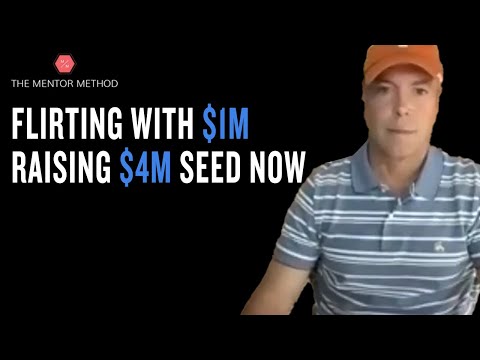
At the time of the interview in December 2021, The Mentor Method was approaching but had not yet crossed $1M ARR. Joseph Kopser confirmed there was considerable ARR from signed contracts with named enterprise clients, and the company aimed to double that figure going into 2022.
Customers
The customers Joseph Kopser names as of December 2021 are Amazon, Lincoln Financial, and a Department of Education contract held as a sub to a larger prime. Asked how many are onboarded and using the product, he puts it at "three or four right now that are in the pipeline as we're rolling them out", and expected that pipeline to roughly double in the first half of 2022. Earlier customers included Deloitte and Twitter under a prior platform format.
Team
The Mentor Method had 11 full-time team members at interview time. Most engineering work remained offshore, with plans to bring that capability in-house using capital from the current seed raise.
Funding
The company had previously closed a $1M pre-seed round in June 2020. At the time of the interview, a seed raise targeting $4M to $7M was being socialized with investors. Founder Janice Omadeke was noted as only the 93rd Black woman in America to have raised more than $1M in venture capital.
Growth Strategy
Enterprise Focus on DEI Tailwinds
The Mentor Method positioned itself at the intersection of three converging trends: corporate DEI pledges following the George Floyd incident, the Great Resignation driving demand for talent retention tools, and a lack of software solutions for structured mentorship programs. This gave the company a clear enterprise sales narrative.
Named Customer Logos as Social Proof
Signing recognizable names like Amazon, Lincoln Financial, and the Department of Education gave the company credibility to open doors with Fortune 5000 targets. Earlier logos like Deloitte and Twitter helped establish the platform's track record even as the product evolved.
SaaS Pricing with Upsell Layers
The base pricing model of approximately $20 per seat was designed to scale with customer size, targeting companies with 200 or more employees. On top of the base, the company offered customized features and white-labeling as additional revenue layers.
CEO-Led Sales Transitioning to a Scalable Motion
Janice Omadeke served as the primary salesperson in the early stages, which the team acknowledged as a bottleneck. The seed raise was intended in part to build out a sales team that could operate independently of the founder.
Capital Deployment to Accelerate Growth
Rather than relying solely on customer revenue to fund growth, the company chose to raise external capital to build out the team and product faster. Joseph Kopser framed this as pointing the rocket toward the moon rather than growing incrementally off existing contract revenue.
Best Quotes
“Janice Omadeke really gets all the credit for the Mentor Method as the Founder and CEO of it. So, where I come into this is helping companies grow.”
“We've signed on names that people recognize like Lincoln Financial and Amazon. Before that, her original customers with their original format were companies like Deloitte. Twitter had a run with the program and the format at the time.”
“Oh, no, no, no, no. It's a considerable ARR right now with the contracts and the names that I mentioned earlier. We just hope to be able to take that and double it and keep double it.”
“Well, right now we're just socializing the idea. It's probably gonna be about a 4 to $7,000,000 raise. Janice herself is only the ninety third black woman in America to ever raise more than a million dollars of venture capital.”
What Happened Next
This interview captured The Mentor Method at a pivotal moment in December 2021, when the company was approaching $1M ARR and actively raising a seed round. The figures and customer details shared here reflect what Joseph Kopser reported at that point in time and should not be taken as current. Visit The Mentor Method's live company profile on GetLatka for the most up-to-date metrics and funding information.
View The Mentor Method’s current profile and metricsFull Transcript
Chapters
- 0:00Introduction and Joseph Kopser's Background
- 1:32RideScout Origins and the Mercedes Acquisition
- 2:27Maximizing the Exit and Investor Dynamics
- 6:32Transition to The Mentor Method
- 7:12Current Customers and Market Opportunity
- 8:46Pricing Model and SaaS Structure
- 10:47Why Raise Capital When You Have Revenue
- 13:11Team Size and Engineering Setup
- 13:30Customers Rolling Out and the 2022 Pipeline
- 13:57ARR Status and the Seed Raise
- 14:48Raise Size and Janice Omadeke's Milestone
- 15:03Famous Five: Books, CEOs, and Tools
- 17:17Closing Thoughts and Wrap-Up
Introduction and Joseph Kopser's Background
Nathan Latka
00:00Hey, folks. My guest today is Joseph Kopser. He serves as an executive in residence at the McCombs School of Business. Prior to his company, RideScout prior to that, his company, RideScout, was acquired by Mercedes. He served in the army for twenty years after graduating from West Point and Harvard and was recognized as a White House Champion of Change in clean energy and won the US DOT Data Innovation Award. He's co author of Catalyst. He's an adviser to
00:20Clean Texas and is now building the mentormethod.com. Joseph, are you ready to take us to top?
Joseph Kopser
00:26Yeah, Nathan. Thanks for having me on.
Nathan Latka
00:28Heck of a background, man. Thanks. First off, thanks for your service. And tell me more, what came first? Did you start at McCombs first and then develop the mentor method? Or did you develop the mentor method and then they wanted to bring you in at McCombs?
Joseph Kopser
00:39Well, no. So, Janice Omadeke really gets all the credit for the Mentor Method as the Founder and CEO of it. So, where I come into this is helping companies grow. So, McCombs really was a stopover after I actually had ran for Congress here in Texas. I'm a builder, a problem solver, so when I see big ideas with cool people that I think I can help and add value, that's where I jump on board. So, I've created
01:01an endowment at McCombs about six, seven years ago when I sold my company to Mercedes, and so, been at McCombs here and there. Actually, now the bio can be updated. I'm at the President's Office, helping him with all things military veterans and their families at the University of Texas.
Nathan Latka
01:17You can't help with football, can you?
Joseph Kopser
01:19No, not right now. We have a new coach for that. Let's see what we can do there.
Nathan Latka
01:23Let's let's hope and pray. I'm in Austin, so let's let's hope and pray. Alright. Tell me more about the the the first company. What what was RideScout and when did you sell that to Mercedes?
RideScout Origins and the Mercedes Acquisition
Joseph Kopser
01:32Yeah. So RideScout was a in its simplest form, a two sided marketplace, an aggregation play. It was created because I was tired of being stuck in traffic. And my background, I'm an aerospace engineer, and so I know there's lots of different ways to solve problems. And what I wanted to do is try to create the perfect set of combinations and permutations of the different modes of transportation to get me to and from work every day. And
01:57out of it, I started nights and weekends while I was still in the army studying mobility and transportation, simultaneously learning how to build a business, then found the smart people around me, raised the money that I needed, and before we knew it, Uber and Lyft got huge, all the car companies freaked out for good reason in this new mobility space we're in, and they went on a buying spree. And so, Mercedes bought my company, BMW bought
02:20some others, Ford got into that play. And it's just the classic builder buy scenario that young entrepreneurs face themselves with all the time.
Maximizing the Exit and Investor Dynamics
Nathan Latka
02:27How'd you use that to your advantage to maximize the exit price?
Joseph Kopser
02:30Well, you know, the idea behind RideScout was really timeless. Everybody wants to spend less time in traffic and more time with family and friends. And then if you can introduce a really elegant way to show them all their options, what I was able to do better, faster than some of my peers perhaps, was get those strategic relationships with the big cities, big companies, big other players and partners in this space, trying to do all modes of
02:56transportation, while simultaneously running a really positive message. I mean, we were all about reducing carbon footprints. We're all about making life and quality of life better for people. And that combination of technology, team, and then of course, the messaging that went along with it, just appealed to Mercedes a lot more than a lot of their choices. And they had a lot of choices.
Nathan Latka
03:17Yeah, I bet they did. Now, were you the founder of RideScout? If so,
Joseph Kopser
03:19did Oh, you launch No. So, we launched it in well, founders can appreciate, started, its genesis was in 2010. It wasn't really incorporated as an LLC until twenty eleven, 'twelve timeframe, and we didn't really go full speed till I left the Army in 2013, And then we sold it about a year and a half later in September, 09/02/2014. But not, you know, not that I remember those dates as specific, but you might imagine why.
Nathan Latka
03:49Yeah, of course. Now you mentioned you guys raised a bit there. How much did you raise?
Joseph Kopser
03:52So, by the time we got into the acquisition talks, we'd raised about $2,100,000 I jokingly refer to that in today's dollars, about 5 or $6,000,000 because cost of talent was a lot less ten years ago than it is now. And, you know, I feel for founders that are having to raise what they are today. That's why I love actually working with founders in multiple startups like The Mentor Method.
Nathan Latka
04:16Well, and we'll pivot to Mentor Method in a second, but I imagine those investors that put in that capital, I mean, how did you get them over the hump of them saying, Joseph, build, let's go beat Uber and Lyft. Let's not sell too early. Go build a billion dollar company.
Joseph Kopser
04:29Every founder will be faced hopefully with that dilemma, which is we've got traction, we've got a whole lot of users, we can see growth. You know, at one point, I think we had several 100,000 downloads, and we knew we had a nice trajectory. But we also knew Uber was out there, and Lyft was out there, and ironically, at the time, they were just single mode ride for hire. If you go into their apps now, you can
04:52see they do so many different modes of transportation, which is where our vision was. But I didn't have the financial capital to go underwater like they have had to do for many years without really turning a profit. So, for us at the time in 2014, first startup out the gate, an opportunity to create wealth for a lot of the original team members and investors, we made that decision, you know, as a group and as a family.
05:16And then, we've got seven years to look back on it and I don't think anybody regrets selling when we did.
Nathan Latka
05:23Now, Craig Cummings associated with the company?
Joseph Kopser
05:26Oh, absolutely. Craig Cummings is my co founder.
Nathan Latka
05:28Okay. Yeah. So this is why I was I was doing research. I was very confused because he's listed as the founder and I'm going, where the hell is Joseph's name? Did you come in a little bit later or something?
Joseph Kopser
05:36No. No. No. We we yep. Depending on how it was written or who wrote it, you know, founder, co founder of RideScout. So, he heard the idea that I was talking about. I was still living in Washington DC at the time. Yep. And he described and said, Look, with that idea you're describing could be something that a lot of people would wanna use, not just your own commute. And And I said, Yeah, but I don't really
05:56know how to build a business. He said, You stick to the idea of fixing this problem and learning how to solve it, and he, Craig, will help me build the business around me. And that's exactly what he did, which is again, what I'm trying to do now to a whole next generation of entrepreneurs.
Nathan Latka
06:11And then a subsidiary, the company that acquired you guys called Reach Now, which Mercedes was very much involved in. Is that accurate?
Joseph Kopser
06:17Yeah, you know, a few years later than let's see. So, Car2Go North America technically was the buying agent, then that's a subset of moovel. Moovel then merged with BMW, creating Reach Now. It's a whole mess to figure out.
Transition to The Mentor Method
Nathan Latka
06:32right, let's talk about Mentor Method. So is Mentor Method, again, what's your relationship there? You're not the founder. What are you?
Joseph Kopser
06:37No, no, no. So I'm employee number two, however you wanna look at it.
06:42Omadeke gets all the credit for the idea and creating the initial momentum behind it. And then I came along as an advisor, but I was already fascinated by mentorship and leader development. It's my DNA in terms of helping to build the teams. And then as she went through sales meetings and then investor calls, she'd asked me to be on a few more, little here, little there. And after she had raised some money, she turned around and
07:04said, okay, no more being an advisor, come join the team. And I just couldn't say no.
Nathan Latka
07:09Interesting. Okay, so who's paying for the app today?
Current Customers and Market Opportunity
Joseph Kopser
07:12Well, so right now customers that we have, you know, so here's what we've done. We've made a transition from being a one person show that Janice was before. Now we've signed on names that people recognize like Lincoln Financial and Amazon. Before that, her original customers with their original format were companies like Deloitte. Twitter had a run with the program and the format at the time. It's evolved quite a bit since then, as any learning and growing
07:38CEO wants to do. We currently have a really cool contract with the Department of Education as a sub to a larger prime, trying to figure out how to inspire that next generation of students into business. And then of course, the future is looking bright too, because we're caught with three things going on simultaneously. You have the George Floyd incident and the reaction to people in America saying this just doesn't sit right. You have companies making pledges
08:03about DEI and trying to do more, but they don't have a tool to do it, and we provide that tool to provide that mentorship. And then thirdly, we're in the middle of a great resignation. So, we have people just hemorrhaging talent inside of their large organizations, Fortune 5,000 companies, and they're looking for a way to invest in their people. So, I'm just as excited about being in The Mentor Method now with this opportunity during the great
08:28resignation, as I was to be in RideScout ten years ago, at this time and place when suddenly we have all kinds of mobility, new startups popping up on the scene. And so, think that The Mentor Method shows even greater promise than RideScout did with me and Craig back in the day.
Pricing Model and SaaS Structure
Nathan Latka
08:46And all my SaaS founders listening into this, they always like to understand pricing and how someone is scaling, especially
08:51a tool like this.
08:51So I imagine you're selling to what, like universities on a per seat basis? And if so, what's the average customer paying you per month or per year to use the technology?
Joseph Kopser
08:58Yeah, so the way we do it right now is we're looking at doing this as a SaaS play more for larger companies. So So think 200 employees or more. And then the pricing, as any SaaS play will wanna do smartly, is try to be able to gauge it based on size of the customer. But you always have a fixed cost, always have a fixed cost, and then of course, you have the debt and the legacy that
09:20you have of all the money that you bought into it. So, you have to be very careful. So, if you're looking at something to the nature of like $20 per seat, per company, per load.
Nathan Latka
09:29Is that what you're charging right now?
Joseph Kopser
09:31Well, it's evolving as it's going over time, but that's a easy way to start just figuring your brain as you think about who our clients are without going into the proprietary nature of what deals we've served with them. But that's a generally easy way to think of it. And then of course you have on top of that, all the other
Nathan Latka
09:47Yeah, but Joseph, sorry, don't mean to keep cutting you off, but you don't I wanna I don't want you to name customers or what an individual customer pays. I'm just trying to get a sense. Is the university paying you $10,000 a year to service a thousand campus residents? Right? Or something like that. What what does that sort of sound like?
Joseph Kopser
10:01Oh, yeah. But but even much larger than that. Yeah. The
Nathan Latka
10:03deals So you have people paying you way more than $10,000 a month for the Yeah. Okay. $10 a month or $10 a year?
Joseph Kopser
10:10Well, it depends on the deal, but you're correct in distinguishing. Some are yearly subscription, others are monthly subscription. And then the easiest way to think of it is on average somewhere around 10 or $15,000 a year — excuse me, a month — for some of the current. And then some of the older clients are on a different pricing model because we had a different platform then. But to your point, it's a great SaaS play because once you figure out
10:37the basic offering, then you can add on top of that other services, other customized features, other white labeling that allows you to go even beyond the current SaaS play.
Why Raise Capital When You Have Revenue
Nathan Latka
10:47Yep. And so if you have a bunch of customers that are paying like $10,000 a month, right? I mean, that's like $120,000 contracts a year. I mean, why go out and raise a million dollar seed round just, you know, three, four months ago? Why not fund
Joseph Kopser
10:57the So absolutely, it's a great discussion point, which is you have to, and every SaaS Founder has to figure out, can I hire enough talent off of the income that I'm generating now to give me a runway long enough to inspire confidence that we know we can do this? Or do I bring the money in now? Do I give up some of the equity and ownership in order to be able to really build it and point
11:23this rocket towards the moon? And Janice, I believe, made the right decision to be able to bring in the capital now to build out the team because the earliest versions of this, she basically built with a small offshore team. And what we want to do now is to be able to put the rocket fuel in and send it to the moon.
Nathan Latka
11:41No, I get that, but there's two, the biggest, you know this from your first company, the most dilutive events for any SaaS founder is your co founder and your pre seed round. And you're usually both the co founder's usually 50%, and then that pre seed round is usually 25%, and then it goes down from there. So like it's a big deal to take a million dollars in June. And I guess I'm you see where I'm getting
11:57confused. If you have customers paying you a $100,000 a year already, you can fund it from customer growth. Are those like POCs? You haven't closed those contracts yet?
Joseph Kopser
12:06Oh yeah, no, no. Those were closed deals and prior customers. What we're talking about doing is putting even more capital into it because, and this goes to another point that you debate in SaaS plays, which is, if I do take on capital now early on, can I build a team that can make enough of an offering and make this elegant enough that then I can go way beyond the current base? Because the kicker right now, the
12:32competition that we have in the marketplace, is it still requires a bit of sales, more than any company would want. Because we have to overcome the legacy of inertia. Inertia being, oh, well, my program's good enough now. I don't need to do anything else. And so, breaking through that in the HR world and human resources is a tough play.
Nathan Latka
12:52Which is just that, but it's very rare you see apps like this get up to the point where they can command premium valuation so that the founders can preserve equity because churn is usually an issue on these attribution and, you know, mentorship apps like this is very, very difficult. It's hard to code that into the UI. So, well, listen, we're out of time here, but quick rapid fire stuff here. How many folks are on the team
Team Size and Engineering Setup
Nathan Latka
13:11today full time?
Joseph Kopser
13:12About 11.
Nathan Latka
13:13Okay. 11. How many engineers?
Joseph Kopser
13:15Well, right now, most of it is still offshore, but we're bringing that in with this current round.
Nathan Latka
13:20Oh, I see. I see. Okay. Cool. That makes sense. And then is this your you mentioned you're doing a bunch of stuff right now, but is this where you're spending the majority of your time on?
Joseph Kopser
13:28Oh, yeah. Oh, yeah. Okay, cool.
Customers Rolling Out and the 2022 Pipeline
Nathan Latka
13:30And then how many customers are you serving today? You know, they're onboarded, they're using you, they're happy?
Joseph Kopser
13:34Yeah, so three or four right now that are in the pipeline as we're rolling them out. And then like with any good play, we've got the pipeline that allows it to hopefully double by first half of twenty twenty two, and then nice little quadruple after that. Because again, as your listeners know, and you know from experience, it's about establishing that professional reputation in the marketplace, and more than just a one off of the CEO being the
ARR Status and the Seed Raise
Joseph Kopser
13:57best salesperson, which she is, but we've got to go beyond that point where it's the CEO is the salesperson.
Nathan Latka
14:03Yeah, I know you mentioned three or four in the pipeline. Listen, we love celebrating pre revenue companies. Everyone starts there. It sounds like you guys are pre revenue today, but you've got good plans for 2022.
Joseph Kopser
14:10Oh, no, no, no, no. It's a considerable ARR right now with the contracts and the names that I mentioned earlier. We just hope to be able to take that and double it and keep double it. It's a $100,000,000,000 company if we play this right. I'm banking on Janice and the team doing great things.
Nathan Latka
14:24Are you guys north of a million dollar run rate today?
Joseph Kopser
14:27Almost.
Nathan Latka
14:28Okay. You're flirting with it. Close. Got you got fifteen you got fifteen days left in the year, Joseph.
Joseph Kopser
14:34Yeah. No. We will be on track for a million before too long, which is all a part of this pre-seed raise that we're on — or series seed raise that we're on the roadshow for now. So if you have folks that are listening into this
Nathan Latka
14:46Oh, how much are you raising?
Raise Size and Janice Omadeke's Milestone
Joseph Kopser
14:48Well, right now we're just socializing the idea. It's probably gonna be about a 4 to $7,000,000 raise. Janice herself is only the ninety third black woman in America to ever raise more than a million dollars of venture capital. So, it's pretty exciting time.
Famous Five: Books, CEOs, and Tools
Nathan Latka
15:03That's very cool. All right, very cool. So, 4,000,000 there. I'll make sure I make a note of that one. See, that's great. All right, let's wrap up here with the famous five. Number one, favorite business book.
Joseph Kopser
15:13Favorite business book? You can't nail me down to one, but if I got to pick one, How to Win Friends and Influence People by Dale Carnegie. It's the absolute classic. It's a little bit dated, but if you read a modern version, it's a must do.
Nathan Latka
15:24Number two, is
15:25there a CEO you're following or studying?
Joseph Kopser
15:28Oh man, who am I not following or studying? Right now, you know, obviously Janice is who I'm spending most time with, but in terms of who I'm trying to learn from the most, who? Well, I just got to get an easy answer throughout there right now, is Elon Musk because the guy is causing so much turmoil, both good and bad, which is what disrupting entrepreneurs do. So he's probably who I'm following the most right now.
Nathan Latka
15:53Number three, what's your favorite online tool for building The Mentor Method?
Joseph Kopser
15:56Favorite online tool? Oh, I mean,
16:00I happen to love Trello just because of the ability to be able to coordinate across so many different groups. The team is really starting to expand their use of Notion. So I'd put Trello and Notion kind of one, right there.
Nathan Latka
16:12Okay. And number four, how many hours of sleep do you get every night?
Joseph Kopser
16:15Oh, I you gotta sleep. I get seven to eight hours a night if you don't have the energy to tackle these problems and you wanna go around pound your chest that you only need four hours a night. Go ahead and do that. But I don't know. And I've seen very few people in history that they can sustain that over time.
Nathan Latka
16:30And what's your situation, Joseph? Married, single, kiddos?
Joseph Kopser
16:33Oh, I'm happily married. I got three daughters, 27, 24, 21. And Crazy guy. Spending a lot of time with him.
Nathan Latka
16:40How old are you?
Joseph Kopser
16:41I'm 50.
Nathan Latka
16:4250. Last question. Something you wish you knew when you were 20.
Joseph Kopser
16:46Do not think that the people that are out there accomplishing all these things that you read about in history or current events are somehow superheroes. They are literally as equipped and capable as you are. It's a matter of how much you're willing to study and apply yourself and work at it. Luck certainly plays a factor, but luck always favors the prepared. But I have met now what I call a lot of famous people, and they turned
17:12out to be just as normal as I had with all of my insecurities and all of my problems growing up.
Closing Thoughts and Wrap-Up
Nathan Latka
17:17Guys, there have it. The Mentor Method launched in 2015. Employee number two, Joseph joined after a storied history selling and growing his own company. They raised a million dollar pre seed round earlier this year, targeting a $4,000,000 seed round. Now today, we will see what happens. Joseph, thank you for taking us to the top.
Joseph Kopser
17:31Thanks for having me on your show.
Nathan Latka
17:35One more thing before you go. We have a brand new show every Thursday at 1PM Central. It's called Shark Tank for SaaS. We call it deal or bust. One founder comes on, three hungry buyers, they try and do a deal live and the founder shares back end dashboards, their expenses, their revenue, ARPU, CAC, LTV, you name it, they share it. And the buyers try and make a deal live. It is fun to watch every Thursday one
18:00p. M. Central. Additionally, remember these recorded founder interviews go live. We release them here on YouTube every day at two p. M. Central. To make sure you don't miss any of that, make sure you click the subscribe button below here on YouTube, the big red button and then click the little bell notification to make sure you get notifications when we do go live. I wouldn't want you to miss breaking news in the SaaS world, whether it's
18:21an acquisition, a big fundraise, a big sale, a big profitability statement or something else. I don't want you to miss it. Additionally, if you wanna take this conversation deeper and further, we have by far the largest private Slack community for B2B SaaS founders. You want to get in there. We've probably talked about your tool if you're running a company or your firm if you're investing. You can go in there and quickly search and see what people
18:43are saying. Sign up for that at nathanlatka.com slack. In the meantime, I'm hanging out with you here on YouTube. I'll be in the comments for the next thirty minutes. Feel free to let me know what you thought about this episode and if you enjoyed it, click the thumbs up. We get a lot of haters that are mad at how aggressive I am on these shows, but I do it so that we can all learn. We have
19:02to counter those people. We got to push them away. Click the thumbs up below to counter them and know that I appreciate your guys'support. Alright, I'll be in the comments. See you.