How Scribd Reached $54 Million in ARR: Trip Adler's Growth Strategy
By late 2017, Scribd had 500,000 subscribers paying $9 a month — roughly $54 million in ARR — and was profitable. What Trip Adler told Latka about the SEO flywheel and publisher deals behind it, and where the record disagrees with our own database.
On this page
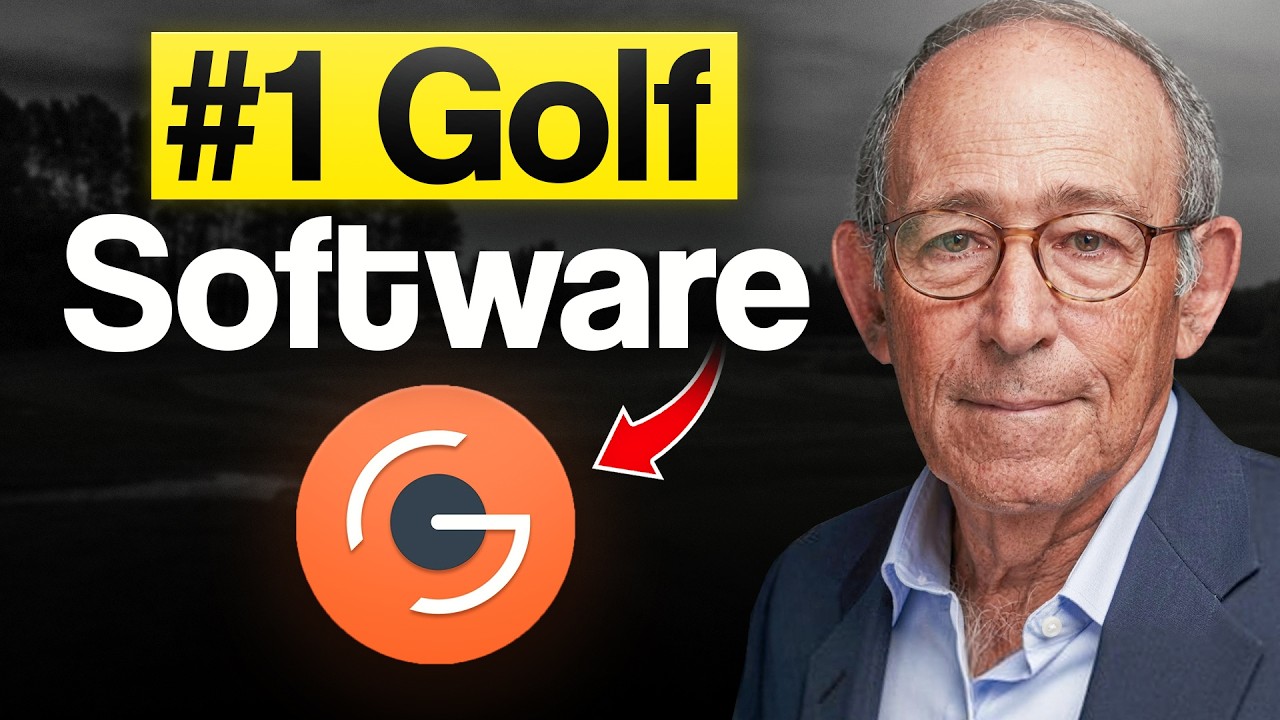
In late 2017, Scribd co-founder and CEO Trip Adler went on the Latka podcast and stood behind two numbers: 500,000 paying subscribers, each paying $9 a month for unlimited books, audiobooks, magazines, newspapers and documents. The multiplication — $4.5 million a month, “well over fifty-four million in ARR” — was host Nathan Latka’s, done on air. Adler didn’t dispute it; what he added was that the 500,000 figure had been announced about six months earlier, that Scribd had “grown past that quite a bit,” that revenue was growing at maybe 50 percent a year, and that the company was profitable and living off its own profits. So $54 million is the floor Scribd had already cleared by late 2017 — ten years after launch, with about 120 employees and roughly $50 million raised.
A note on the record before the story. GetLatka’s own database stamps this interview January 7, 2011, and that date even appears on the live Scribd company profile. It cannot be right: the Latka show didn’t exist in 2011, and on the tape Adler says Scribd has been solving its chicken-and-egg problem “for the last ten years” since its 2007 launch, and that the 500,000-subscriber number was announced “like six months ago.” Scribd made that announcement in May 2017 (Nieman Lab, Forbes), the host mentions a holiday party three to four weeks away, and the profile itself logs 120 employees in November 2017 — the tape’s exact headcount. Everything points to November 2017. One more correction: the founder spells his name Trip Adler, one p — the “Tripp” in this page’s address is a typo we’ve kept only so the URL doesn’t break.
The $54 million in ARR math, checked
The arithmetic closes. 500,000 subscribers × $9 a month is $4.5 million in MRR, or $54 million annualized. Scribd’s own May 2017 announcement, covered by Nieman Lab and Forbes, put the subscriber count at “over 500,000” at $8.99 a month, with the company projecting more than $50 million in revenue for the year — the same picture from the other side. Adler declined to confirm a fresher number on air (“I don’t want to comment on numbers too much — we’re blowing past 500,000”), saying the next milestone worth celebrating was one million subscribers. The company celebrated, he said, at every hundred thousand.
About $50 million raised, then profitable
Adler walked through the funding history from memory: $12,000 from Y Combinator in 2007 (“we were broke as hell” — he was living with his parents after finishing Harvard), $40,000 in angel money, then $3.5 million from Redpoint, $10 million from CRV, $10 million from Silicon Valley Bank, and $25 million from Khosla Ventures. He guessed that summed to about $50 million; it actually sums to $48.5 million, and he admitted on the tape his math might be off. Either way, by late 2017 Scribd was profitable and “not really intending to raise any more money for the time being.”
Worth flagging: the live GetLatka profile today shows $59.4 million across three rounds (2011, 2014, 2019), which matches neither Adler’s round-by-round account through 2017 nor the $58 million Spectrum Equity round Scribd announced in November 2019 — which alone exceeds it. Treat Adler’s on-tape list as his own account of the first decade, and the 2019 round as separately confirmed by TechCrunch and Scribd’s press release.
The SEO flywheel: zero to 100 million readers in four years
Scribd’s original product was a free publishing tool: upload a document, and Scribd would find it an audience, mostly through long-tail Google searches. A fraction of that search traffic uploaded documents of its own, and the loop compounded. Adler said it took roughly four years — 2007 to 2011 — to go “from roughly zero to 100 million” monthly users, against a library that grew to 70 million user-uploaded documents.
Two honest caveats from the tape itself. First, the audience numbers on it disagree: Latka’s intro says “over 80 million monthly readers,” while Adler minutes later says Scribd reaches “about 100 million non-paying users a month” — the version of this article we replaced quoted both without noticing. Adler’s is the operative figure. Second, Adler was candid that the free audience had plateaued: SEO took it to 100 million and more or less stopped. What kept growing was the paid layer marketed to that audience — which is why Scribd’s customer-acquisition cost was close to zero. “We don’t actually pay for users,” he said. “You pay for a little bit, but just a small amount.”
Three business models before subscriptions stuck
The audience came first; the business model took three tries. Advertising didn’t work — “not really an interesting model unless you’re huge like Google or Facebook.” Letting publishers sell content one title at a time didn’t scale either. The third try was a simple freemium tier with premium features, and it quickly became the dominant revenue line — the signal, Adler said, to go all in on subscriptions.
Getting publishers to say yes
“At the time the idea of a book subscription service was pretty crazy… we talked to all the publishers about including their books, and they pretty much all said no. We were able to get some small ones on, and then the bigger ones, and over time it started to lead to a tipping point.”
That tipping point got Scribd to a million books in the catalog. The commercial mechanics, as Adler described them in late 2017: Scribd pays publishers per read, with a threshold — a user getting through roughly 20 percent of a book triggers the payment — so that from the publisher’s side each qualified read “more or less looks like a sale.” Content and headcount were the company’s only two real costs: engineers and designers in San Francisco’s financial district, a small publisher-relations team in New York, and a support office being built out in Phoenix. Adler named his models openly — Reed Hastings at Netflix and Daniel Ek at Spotify: “We’re trying to do something similar for reading.”
What happened after the tape
| Date | Milestone | Source |
|---|---|---|
| May 2017 | 500,000+ subscribers at $8.99/mo announced; >$50M revenue projected for the year | Nieman Lab, Forbes |
| Nov 2017 | This interview: $54M+ ARR implied, profitable, ~50% annual growth, 120 employees | Latka tape |
| Jan 2019 | 1 million paying subscribers — the milestone Adler was aiming at on the tape | TechCrunch |
| Nov 2019 | $58M strategic investment led by Spectrum Equity | TechCrunch, PR Newswire |
| Aug–Sep 2020 | Acquired SlideShare from LinkedIn | LinkedIn/Scribd announcement |
| Late 2023 | Consumer reading product rebranded Everand; Scribd name kept for the document platform, alongside SlideShare | Good e-Reader |
| Apr 2024 | Adler stepped down as CEO after 17 years; CFO Tony Grimmick named successor | Publishing Perspectives |
GetLatka’s profile carries revenue estimates of $133.3M for 2023 and $166.8M for 2024 — estimates, not company-reported figures, so we list them here rather than in the milestone table.
Adler hit the million-subscriber mark he named on the tape about 14 months later. His parting advice on the show, asked what he’d tell his 20-year-old self: “Always trust your gut. I looked at mistakes I made — it’s usually from not trusting my gut.”
This piece draws on:
- Latka interview with Trip Adler, “How Scribd Passed $54m in ARR Building Netflix for Books” (recorded ~November 2017; the database’s January 2011 stamp is wrong, per the dating note above)
- Scribd on GetLatka — live profile figures and milestone log
- Nieman Lab, May 2017 — 500,000 subscribers at $8.99/mo
- Forbes, May 30, 2017 — 500,000-subscriber claim
- TechCrunch, January 28, 2019 — 1 million paying subscribers
- TechCrunch, November 25, 2019 and PR Newswire — $58M Spectrum Equity round
- Good e-Reader — Everand rebrand
- Publishing Perspectives, April 2024 — CEO transition