How Stack Overflow Hit $100M+ Revenue with Strategic SaaS Pivot
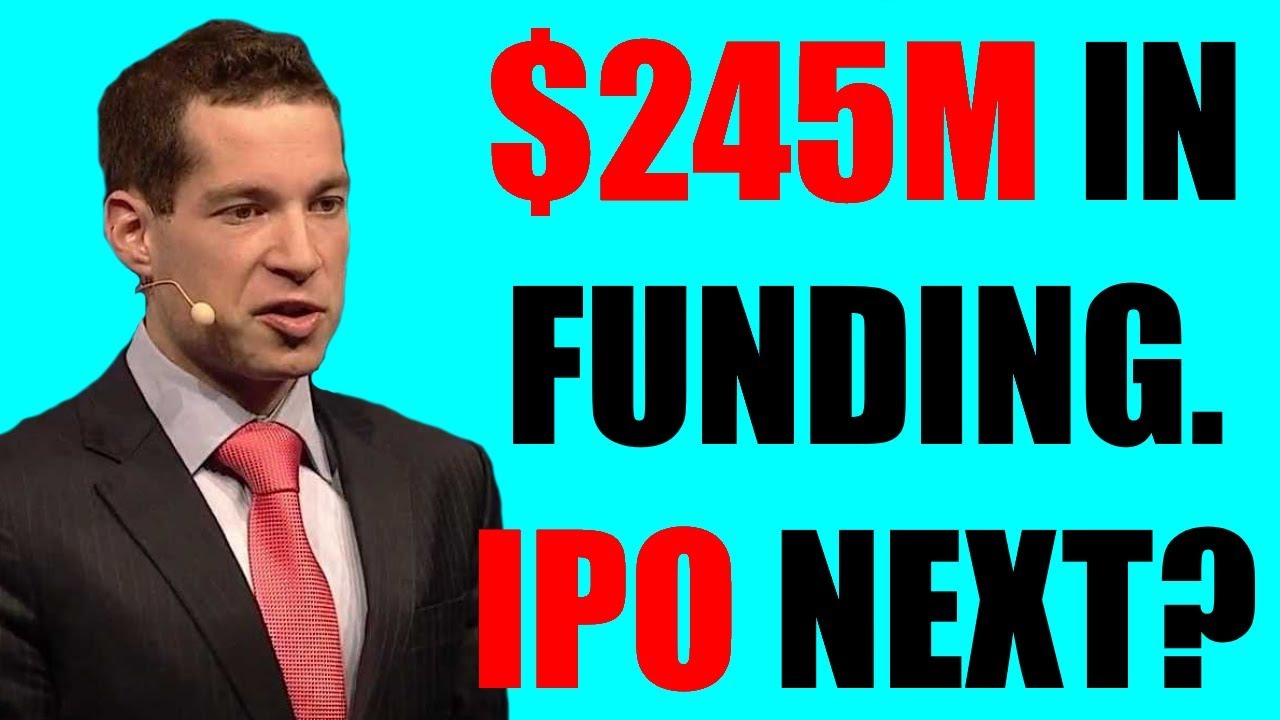
On stage in March 2024, CEO Prashanth Chandrasekar confirmed Stack Overflow revenue is above $125M, with ~60% now coming from its Teams SaaS product and 15,000 customers — a business that was almost entirely ads and job listings until 2019.
On this page
In March 2024, on stage at Nathan Latka's SaaSOpen event, interviewer Andrew Warner tried to pin Stack Overflow CEO Prashanth Chandrasekar to a revenue number. Over $100 million? Yes. Over $150 million? "Can't say that." Over $125 million? "Wow, that's backing me into a corner. It's certainly over 100 million… maybe, maybe. Yes, yes." GetLatka's Stack Overflow profile carries $125M as the 2024 revenue figure on the strength of that exchange.
The number itself is less interesting than its composition. When Chandrasekar joined in 2019, essentially none of Stack Overflow's revenue was recurring — it was an ads and job-listings business. On tape in March 2024 he said about 60% of revenue now comes from the SaaS product, Stack Overflow for Teams, and close to 70% of total revenue is recurring once the newer AI licensing deals are counted in.
Stack Overflow revenue: what the record actually supports
A quick correction, because an earlier version of this article got the timeline badly wrong. It claimed Stack Overflow passed $100M in 2020, reached 15,000 customers in 2021, and struck a Google Gemini partnership in 2022. None of that survives contact with the tape. Gemini did not exist in 2022 — Google launched it in December 2023, and the Stack Overflow–Google Cloud partnership under the OverflowAPI program was announced on February 29, 2024, covered at the time by The Verge and TechCrunch among others. The $100M+ revenue and 15,000-customer figures are what Chandrasekar reported in March 2024, not years earlier.
The dated revenue ladder GetLatka can actually stand behind is short:
| Date | Revenue | Source |
|---|---|---|
| December 2022 | $89M | thisisunpacked.substack.com, carried on the GetLatka profile |
| March 2024 | $125M+ | Chandrasekar on stage at SaaSOpen, pressed by Andrew Warner |
Stack Overflow has never published a year-by-year revenue ladder. Any post that gives you one for 2018–2021 is making it up.
Eleven years of ads, then a pandemic forced the question
For its first eleven years, Stack Overflow — founded in 2008 by Joel Spolsky and Jeff Atwood — made money almost entirely from advertising across its Q&A network and from talent job listings. Chandrasekar was blunt on stage about why that ceiling was low: developers are the single worst audience to advertise to. "Nobody loves ads, period. But especially for a technical audience, it's actually extremely annoying to have ads floating around." Warner's addendum: they all run ad blockers anyway.
The model was also cyclical. Chandrasekar joined in 2019 with a mandate to turn the company into a SaaS business, and the pandemic made the case for him within months. "We had talent job listings — people stopped hiring," he said. Ad budgets are the first thing cut in a downturn. His response: "Maybe don't let this crisis pass. Let's actually double down on what I came here to do, which is to convert and transform the company into a SaaS company."
Microsoft was customer number one
The SaaS product wasn't conceived in a strategy offsite. In late 2018, before Chandrasekar arrived, large companies — Microsoft first among them — came to Stack Overflow asking for a private version of the platform they could run internally, so engineers could ask and answer questions about proprietary code without accidentally posting it publicly. The first version of Stack Overflow for Teams was, in Chandrasekar's words, "literally a copy of the public Stack Overflow," made private and tested inside those big companies.
From that enterprise beachhead the product moved downmarket to 15,000 customers as of the March 2024 interview. On the customer slide Warner put up — which Chandrasekar noted was based on 2022 data — the named logos were Siemens, Bloomberg, and Microsoft. Enterprise pricing runs about $18–19 per seat per month.
The sales machine: watch who registers, then call their CTO
The growth motion Chandrasekar described is the most actionable part of the tape. Stack Overflow's public community — roughly 100 million people using a corpus of about 60 million questions and answers — is effectively its free tier. The sales team mines it two ways:
- Inbound: when someone registers with a corporate email address, the system checks the company and its size. Big enough, and an SDR reaches out to open a conversation.
- Outbound: SDRs target companies with more than 5,000 users already active on the public platform, and pitch with usage data. "We typically went into companies and said, you've got 2,000 users using Stack Overflow — and by the way, here are all the tags they're using. They're looking up content on Python, on PHP. Here's why you should think about an enterprise license."
"And by the way, it's not spying, it's paying."
— Prashanth Chandrasekar, on pitching companies with their own employees' public usage data
For founders who don't do this yet, his advice was to start with one or two SDRs — or do it yourself first if you're early stage, because the calls tell you whether the problem you solve is a must-have and what it's worth. Expect three to four months of ramp before a rep's pipeline flywheel is running. On compensation: pay for performance, a livable base, then heavy accelerators — 1.5x to 2x for reps who overachieve — and reps coached to diversify pipeline across "pebbles, rocks and boulders" so a quarter never starts from zero.
Deal cycles by segment, per Chandrasekar: nine to twelve months for the largest strategic accounts like Microsoft, roughly six months for standard enterprise, one to three months for SMB. On top of the direct motion, Stack Overflow co-sells with Microsoft through the Azure partner program, with joint account calls "done mutually."
Does the math close?
House audit. Warner's slide showed a $250,000 enterprise deal, based on 2022 data. GetLatka's profile lists average ACV at $8.3K — which is simply $125M divided by 15,000 customers. But the tape says the SaaS product is only about 60% of revenue, so the blended Teams ACV is closer to $5K ($75M across 15,000 customers), with ads and API licensing making up the rest of the $125M. The gap between a $5K average and $250K enterprise contracts is the shape of the business: a long tail of small teams paying per seat, and a short head of boulder accounts — the Microsofts, Bloombergs, and Siemenses — that take a year to close. Treat the profile's $8.3K figure as a whole-company ratio, not a SaaS price point.
The AI threat, answered with a licensing business
Warner raised the obvious criticism directly: developers now ask AI assistants the questions they used to ask Stack Overflow. Chandrasekar's answer came with data from a survey of the company's own user base — about 100,000 respondents, of whom 70% wanted to use AI tools for software development but only 40% trusted what the models produced, because of hallucinations.
His conclusion was to sell trust back to the model makers. After years of AI companies "scraping the web off of our web… without our knowledge and consent," Stack Overflow launched the OverflowAPI program: a paid, attributed channel for its content. Google signed first — the February 2024 deal — so Stack Overflow content used in Gemini's AI tools surfaces with links back to the site and credit to the individual contributors whose answers were used, with reputation accruing to them. Asked on stage about OpenAI, Chandrasekar said "can't comment on it yet" but confirmed it was absolutely a possibility, and teased that "many announcements" were coming shortly, including beyond Google. (OpenAI was announced as an OverflowAPI partner that May, after this taping, per Stack Overflow's own press release.)
That gives Stack Overflow three revenue streams: Teams subscriptions at ~60% of revenue, a still-healthy ads business across the network and podcast, and API licensing — the last two of which push recurring revenue toward the ~70% Chandrasekar cited. For a company that spent eleven years selling banner ads to an audience running ad blockers, that is the actual pivot: from monetizing developer attention to monetizing developer knowledge, twice — once by seat, once by API call.
Sources
- Prashanth Chandrasekar interviewed by Andrew Warner at SaaSOpen, recorded March 28, 2024: youtu.be/w4_wujH1Hbw
- Live GetLatka company profile (revenue, customer count, ACV, 2022 milestone): getlatka.com/companies/stack-overflow
- 2022 revenue figure ($89M): thisisunpacked.substack.com, as carried on the GetLatka profile
- Stack Overflow–Google Cloud OverflowAPI partnership announcement, February 29, 2024, as covered by The Verge and TechCrunch