Latka logo

How 6Sense CEO Robert Goldenberg grew 6Sense to $200M revenue with a 1562 person team in 2024.

6sense is a B2B predictive intelligence platform that helps sales and marketing teams identify potential customers who are in the market for their products or services. The platform uses artificial intelligence and machine learning algorithms to analyze customer data and buying signals across multiple channels, including web activity, email engagement, and social media interactions. 6sense provides sales and marketing teams with insights into buyer intent and enables them to personalize their outreach and engagement strategies based on the buyer's stage in the purchasing cycle. The platform also offers features such as account-based marketing, lead scoring, and campaign optimization. 6sense aims to help companies increase their revenue and accelerate their sales cycles by identifying and engaging with the right prospects at the right time. The company was founded in 2013 and is headquartered in San Francisco, California.

Last updated

6Sense Revenue

In 2024, 6Sense's revenue reached $200M. The company previously reported $110M in 2022. Since its launch in 2013, 6Sense has shown consistent revenue growth.

6Sense Revenue GrowthReported revenue / ARR by year$0$50M$100M$150M$200M$250M2013201520172019202120232024$0$22M$110M$200MSource: GetLatka.com interview on Feb 14, 2024 with 6Sense CEO Robert Goldenberg
YearMilestoneQuote
20246Sense Hit $200m revenue in February 2024
20226Sense Hit $110m revenue in January 2022
20216Sense Hit $60m revenue in November 2021
20216Sense Hit $60m revenue in March 2021
20196Sense Hit $21.6m revenue in August 2019
2013Launched with $0 revenue

6Sense Valuation, Funding Rounds

6Sense reached a $5.2B valuation in 2023, set during its Debt Financing round.

6Sense has raised $524M in total funding across 7 rounds, most recently a $100M Debt Financing round in 2023.

6Sense Capital Raised & ValuationCumulative capital raised and post-money valuation by roundCapital raised (cum.)Valuation$0$1B$3B$4B$5B$6B2013201520172019202120232013 cumulative: $0 • 2013 Founded: $02014 cumulative: $12M • 2013 Founded: $0 • 2014 Series A: $12M2015 cumulative: $32M • 2013 Founded: $0 • 2014 Series A: $12M • 2015 Series B: $20M2019 cumulative: $59M • 2013 Founded: $0 • 2014 Series A: $12M • 2015 Series B: $20M • 2019 Venture Round: $27M2020 cumulative: $99M • 2013 Founded: $0 • 2014 Series A: $12M • 2015 Series B: $20M • 2019 Venture Round: $27M • 2020 Series C: $40M2021 cumulative: $224M • 2013 Founded: $0 • 2014 Series A: $12M • 2015 Series B: $20M • 2019 Venture Round: $27M • 2020 Series C: $40M • 2021 Series D: $125M @ $2B valuation2022 cumulative: $424M • 2013 Founded: $0 • 2014 Series A: $12M • 2015 Series B: $20M • 2019 Venture Round: $27M • 2020 Series C: $40M • 2021 Series D: $125M @ $2B valuation • 2022 Series E: $200M @ $5B valuation2023 cumulative: $524M • 2013 Founded: $0 • 2014 Series A: $12M • 2015 Series B: $20M • 2019 Venture Round: $27M • 2020 Series C: $40M • 2021 Series D: $125M @ $2B valuation • 2022 Series E: $200M @ $5B valuation • 2023 Debt Financing: $100M @ $5B valuation$524M2013 Founded: $0 valuation2021 Series D: $2B valuation2022 Series E: $5B valuation2023 Debt Financing: $5B valuation$5BSource: GetLatka.com interview on Feb 14, 2024 with 6Sense CEO Robert Goldenberg
YearRoundAmountValuation% SoldQuote
2023Debt Financing$100M$5.2B2%
2022Series E$200M$5.2B4%
2021Series D$125M$2.1B6%
2020Series C$40M--
2019Venture Round$27M--
2015Series B$20M--
2014Series A$12M--

Interview notes

Company Stats

  • Founded: 2014
  • Current Team Size: 150 employees
  • Engineers: 43 engineers
  • Quota-Carrying Sales Representatives: 18 reps
  • Total Customers: Approximately 150

Growth

  • Annual Recurring Revenue (ARR): Between $20 million and $50 million
  • Expected Revenue Growth: Aiming to comfortably break $50 million in the next year
  • Bookings Revenue Increase: Tripled year-over-year since CEO Jason Zac joined
  • Average Customer Payment: Approximately $150,000 per year (around $12,000 per month)

Funding

  • Total Capital Raised: $60 million
  • Latest Funding Round Amount: $27 million
  • Debt Taken: $100 million from SVB in 2023 (post-crash)

Team Breakdown

  • Number of Employees: 150
  • Engineers: 43
  • Sales Team: 18 quota-carrying sales representatives

Personal Details

  • Founder Background: Jason Zac was previously the CEO of Platora, acquired by Workday in 2016.
  • Age: 49 years old
  • Family: Married with three kids

Churn & Retention

  • Net Dollar Retention Rate: 120%
  • Gross Revenue Churn Rate: Approximately 6% (implying about 26% expansion in cohorts)

Financial Metrics

  • Magic Number: Between 1 to 1.1 (spending $1-$1.10 to acquire $1 of new ARR)
  • Target Burn Rate: Comfortable with a million dollars per month in burn
  • Sales Target per Rep: $1 million in ARR per rep (annually)

Founder / CEO

Robert Goldenberg

Robert Goldenberg is listed as Founder / CEO at 6Sense.

Q&A

QuestionAnswer
What's your age?-
Favorite online tool?-
Favorite book?-
Favorite CEO?-
Advice for 20 year old self-

Customers

We do not have customer count information for 6Sense yet.

6Sense Employees & Team Size

6Sense employs approximately 1.6K people as of 2026, up from 1.6K in 2024, including 166 sales reps that carry a quota.

6Sense Team GrowthReported headcount over time04008001,2001,6002,0002013201520172019202120232025001,5621,562Source: GetLatka.com interview on Feb 14, 2024 with 6Sense CEO Robert Goldenberg
YearMilestone
2025Reached 1.6K employees (November 2025)
2024Reached 1.6K employees (September 2024)
2024Reached 1.1K employees (September 2024)
2024Reached 1.4K employees (March 2024)
2023Reached 1K employees (November 2023)
2022Reached 830 employees (November 2022)
2022Reached 830 employees (January 2022)
2021Reached 450 employees (November 2021)
2021Reached 450 employees (March 2021)
2020Reached 297 employees (December 2020)
2020Reached 297 employees (November 2020)
2020Reached 205 employees (January 2020)
2019Reached 150 employees (August 2019)
2019Reached 146 employees (April 2019)
2018Reached 93 employees (December 2018)

Frequently Asked Questions about 6Sense

What is 6Sense's revenue?

6Sense generates $200M in revenue.

Who founded 6Sense?

6Sense was founded by Viral Bajaria.

Who is the CEO of 6Sense?

The CEO of 6Sense is Robert Goldenberg.

How much funding does 6Sense have?

6Sense raised $524M.

How many employees does 6Sense have?

6Sense has 1.6K employees.

Where is 6Sense headquarters?

6Sense is headquartered in San Francisco, California, United States.

Full Interview Transcripts

He Makes $100m/year with AI (You won't believe what his customers pay)Feb 14, 2024

all right imagine if you could take A110 and get a dollar of new annual revenue could you get yourself rich off of that well the question is how long do you keep those customers well that's exactly what Jason Zac is doing with his company six cents which he launched back in 2013 it's one of the leading Revenue intelligent platforms here in 2024 but he did some strange things he just took 100 million bucks of debt from svb in 2023 that was after the big crash so let's see if that risk pays off but here are three numbers you need to know about six cents number one one their sales reps have a quote of a million dollar but again the company has very few paying customers relatively speaking but they all pay a lot a lot of money right so we're talking under a thousand customers but all paying six figures those customers stick with the platform this is number two they have 120% net dollar retention and lastly again they have very healthy unit economics with a11 to get a new dollar of Revenue meaning they get paid back in about 13 or 14 months you can build a real business on that the question is is all the artificial intelligence words they put up on their website real or fake technology obviously AI is a buzz word today so the question is can Jason Zac and six cense truly lead the way in Revenue intelligence with their AI on their Quest To Break 200 million bucks of Revenue watch the full interview here to get a sense of how Jason's thinking hey folks if we haven't met yet my name is Nathan Latka I launched and sold my first software company back in 2015 and went on to write a book about it which you guys made a Wall Street Journal bestseller purchasing over 30,000 copies thank you so much for that after the book I launched this show and went went on to create founder path.com I raised a large fund to do non-dilutive deals with B2B software Founders so far we've invested in over 400 software Founders totaling $150 million here in 2024 we're doing three to four New Deals per week so if you're looking for Capital and don't want to give up Equity go sign up at founder path.com for free to get your offer all right let's jump into the interview hello everyone my guest today is Jason Zac he's the CEO of a company called sixense which is transforming marketing and sales through artificial intelligence all right Jason you ready to take us to the top yeah let's do it all right so before this you were were you founder at platora or just CEO later on I I was hired in as CEO okay with an equity round or something you an ER somewhere correct yeah okay and that was acquired by workday in 2016 right that's right and then you also were uh cro at responses correct okay marketing company yeah yeah good good hopefully you got a little bit hopefully you're on the cap table there in a meaningful way right a small small exit y yep and then we lived inside uh Oracle marketing Cloud for a couple years yeah so well give me some context on you personally here first I mean did you get you know you money in those kinds of deals or was it really you were still hungry you really want to go out and build sixense and do your own thing again um uh well I wouldn't call it that money I mean everything's a good Capital event and the world keeps going forward but I have a ton of entrepreneur hunger and um actually saw the combination of responses email marketing company oracal marketing cloud and then the Big Data aspect of platfor um this is the combination of really those last three experiences yeah so explain maybe tell the story of a customer giv you a permission to tell their story how they're using you today uh so so most people would use our what I call a Next Generation sales and marketing platform to um actually take the old lead world and contact world and flip it on its head so today B2B organizations are going to market via account um and and want to uh leverage data in order to be more surgical with that sales and marketing tactic so I mean there what are there seven and a half billion people in the world we send today 270 billion emails daily uh to a population of of that seven and a half and three and a half billion uh use email uh and so the the waste and clutter is way too much um our platform today allows you to de anonymize B2B buyers as they're looking and doing their research they no longer contact sales rep of old marketing department they're looking to understand their purchase uh and we help de anonymize that and through that Insight we then have grafted uh five and a half million companies that allows us to engage more purposely with a tactic I.E an email a display ad a bdr sales ReachOut based on that Insight just to be clear when you said we send 270 billion emails per day that is not that is not six cents that is as a world that is the world absolutely say you're G people com after you just going this is the guy that's responsible for my inbox 7,000 no we're I mean through our data we're as I said we're trying to be more um you know strike attacked like a sniper so we're trying to reduce the email sends the global email sends and make it more appropriate so it's it's a in this world of Engagement economy with the people at the accounts uh it needs to be you more spoton and purposeful to their so are you are people basically uploading their current best customer customer list to you and you're generating a lookalike audience and then going after them with Precision or are you giving like pii not Pi but identifying information to like IP addresses browsing your customer website so they actually know who the browser is uh it's a it's a little bit of both um so we would take a company's first-party data their CRM system outb the contacts uh known users or known clients and Prospects uh and their marketing Automation and then marry that with behavioral web um data and that's part of our Ai and ml that basically looks through that we've we've mapped 5 and a half million companies uh worldwide which is probably 80 to 85% of what the bdb org needs um and and that allows for that identity this company erra we've built uh which is the Persona attached to the company worldwide completely gdpr compliant pii um uh proof and uh soon to be with California laws that's great okay so give me a general sense I'm sure you have a massive kind of deviation between kind of kind of account sizes but just because we don't have time to do all of them what's the average customer paying per month would you say for your technology around 150k okay per month uh sorry per year per year okay so call maybe $12,000 a month something like that yeah and that's probably the the midm market and then the large Enterprises spend more yeah yeah we're just talking an average across all your customers 10 10 12 Grand a month yep yeah and then what I'm sure you have some that go well under the millions correct yeah what put this on a timeline for me when did you launch uh the company's about 5 years old I came in two years ago and in the last three years we've tripled our bookings uh Revenue bookings year-over-year um and the the company's gone from about 45 employees to 150 okay so 150 employees today okay but so 2014 was launch date sorry you said you came in three years ago two years ago two years ago so we'll call that 2017 three years after launch correct found all the founders still there uh all the founders are still there with the exception of one there are four four co-founders come on Jason give me this give me the story give me that give me the half smile story here you know I don't actually really know the story because I wasn't there come on you know it was just a departure by one of four because there's probably too many cooks in the kitchen but they're they're all um the majority are still there and involved and all investors still yeah so so you you come in two years ago 2017 founded in 2014 did you come in with the Rays where did you come in with a VC round I did I came yes I did you so okay so I'm uming you came in then with was it with the Salesforce Venture round or Bane Capital so it was it was well was a combination um in total we the last raise was 27 million and so there's a little bit of a refresh at the time I came to give operating Runway but that's the aggregate the last round Salesforce was early um battery Bane benrock yeah but industry industry Ventures came in in in April 2019 so you came in way before that right that's correct yeah that's what I'm asking so which round did you come in with the Bane round in 2015 I came in after that Bane round after that Bane round okay got it were you were you were you chosen by Bane or what facilitated the CEO transition I think it was a combination with the founder uh the founders which were the CTO and CEO uh and the um the board that thought the company got into a certain juncture where they wanted uh to maximize and leverage with additional operating experience and so um that was the decision you know post round yeah okay interesting now since then uh total capital in the company is what 60 million 6 Z correct correct all Equity or have you leveraged debt all Equity do you have an opinion on debt considering your background in B2B SAS have you ever used it yeah definitely so what's your opinion on it I mean healthy for an entrepreneur preserve Equity or can be dangerous from a cash flow purpose cash flow perspective I mean as long as it's not overleveraged I think it's perfectly healthy and that's that's a decision point do you want to you know do you want to minimize delution and how far um in that are you willing to go uh but you know we I've used it as a small percentage of overall RS yeah if I asked you what you feel this is an unfair question but I'm going to ask you anyway a CEO looking to use debt what do you feel like is too much debt as a ratio to their current Revenue like half of their AR you know in debt is fine 3x their AR is fine um what is too much uh double I suppose you think that's fair okay interesting cool all right I know you're going off limited data points there but that's fine all right 150 folks on the team today how many are Engineers uh 43 4 have you done anything to kind pardon me have you done anything there to to kind of reduce your R&D expense taking advantage of shred in Canada or other programs around the world uh well we have an indie operations and that's part of it but um we pretty much are work anywhere company and we try to hire where the talent is as opposed to an epicenter we're headquartered in San Francisco we now have offices in Austin and New York and Boston um nothing International yet although we have international customers very cool and then obviously to to land these customers at these acbs you can definitely afford obviously field sales even inside sales Etc um how many quota carrying folks do you have we have 18 18 now did that program exist before you came or did you instrument the field kind of the sales motion uh we had about four reps at the time I came and we just we grew the field organization as part of a calculated play how do you again you I imagine you did this at other companies as well you were the at the last one I mean how do you for people that are scaling their sales team uh what is kind of the biggest mistake you see them doing and what do you recommend people kind of put their kind of the sales compensation OT relative to the bookings Target or the quota do you like to see a 5x there a 10x what do you think is optimal I think the biggest mistake uh young companies make is scaling before there's a product Market fit so hiring the field organization and hoping to work magic in performance against quota when you haven't really found um a fit with the product the a market wants and so you've got to you got to be careful there uh additionally and so we we sort of let the Rope out slowly if you will and once it started to work and we saw attainment um we had roughly 90% attainment um against quotas for the Reps uh we knew that something was working and so every next rep that we hired we were pretty confident we' be productive uh and uh as far as and we we have um I forget your question on the ratio but we have roughly a million dollar quota per rep okay uh and and it works yep and now obviously this is you got to grow responsibly and efficiently and so you're not you don't get upside down relative to sales and marketing spend yeah and just to be clear that is a $100 million of new AR bookings per year per rep uh pardon me that's $1 million in in AR booking per rep my question is over what period is that a monthly Target or it's an annual oh it's annually okay interesting and and obviously this is a little sensitive because it's salary question but do you like just that that 1 million is like 5x the full OT kind of comp for that salesperson that will uh roughly right roughly is is that a pattern you look at when instrumenting a sales team based off your CR role in the past and this one today or no that's not an imp portion ratio to look at oh yeah sure you I mean you yeah you want to make sure that your your spend on sales and marketing is appropriate to delivered quota um so it's a ratio and if if if a rep was bringing in 500k instead of a million I don't think we'd pay them as much yeah good good answer all right so customers um obviously you weren't there on day one but when you came in explain to me kind of the first one or two customers that kind of you you helped bring into the company where were they from what growth channels were you using that's a good question uh so we were probably 30 customers at the time we're now roughly 150 plus or minus a few um first customer I don't know if I can even put it into the name of who that was uh you know I think that think the world is part of relationships and network um but candidly I I you know I find if it's my relationship I don't have an effective engine and so I wanted to build and enable a sales organization so I didn't have to participate in that Prospect if you will certainly I'm in touch with our customers and what we do um but yeah I don't know if I could name that's okay how how aggressive as a CEO and as a team are you willing to be to get that $150,000 ACV customer are you cool with the 12-month payback or have you pushed that up to 24 months so you can be more aggressive uh we're I mean we're now at a magic number of one to 1.1 um explain what that means we don't get to talk about that a lot uh so that would be it be a measure of your sales efficiency so if you were to take your for instance your um three to two quarters go by you take your current quarter like say Q2 of AR you subtract it from your last quarter's ARR multiply it times four so you have an annual rate and then divide it by your um last quarter's sales and marketing expense and so if you're at a a ratio of one or above your roughly uh running a fairly efficient today unit economic sales metric and then you say do I want to pour more gas in the fire uh and expand and by the way uh magic number by itself isn't really important if you're if you're not also looking at gross margins and other things that matter relative to operating efficiency and use of capital so Jason to simplify that math is this statement true you're spending between a dollar and a dollar1 to get one new dollar of ARR uh correct yeah cool so on $150,000 account you'll spend between 15 and call you know 60 70,000 bucks to get that account yeah I mean right correct that's right yeah yeah yeah now where is most that spend going towards I obviously sales commissions is obvious is there any kind of unknown or kind of weird new channels you're testing and spending a lot on that are working um you know we we as a we as an outbound organization we're constantly trying to get more inbound and drive inbound through more efficient marketing um to to drive that that's that's the marketing is a is a as a line item we we spend more on we have an inbound channel of bdrs um well actually it's inbound and and outbound and then it's probably the balance between those functions we have now also partner networks that we're leveraging additional revenue from and take me into obviously stickiness and any SAS company is critical right so when you look at over the last 12 months gross revenue churn uh what is that are you under 5% we're at we're at 94% and roughly and that's retention not churn hopefully oh correct sorry and uh you would not have a business you would not slightly above 120% net retention got it so that would mean if you're churning 6% that means you're you have about 26% expansion on the cohorts to get 120% net that's right that would so so that's actually in my opin based off all that we've done thousands of these interviews right I would say like world class at your ACV range is more like 130 140% what do you need to do to get your you know expansion up higher above 26% year-over-year uh you know I think it's a combination of things but it's it's world-class product so we continue to evolve the product to the S of customer needs um for the efficiency and and uh the more use the more workflow that we're able to enable in the daily seller and marketer and have that cross collaboration the stickier the product gets which then in turn drives net retention we're releasing new product uh every really every month and so that additional feature that completes the product road map allows for the retention when you look at your different pricing axes obviously number of seats is one feature based is another and then some data or utility based upsell is one some people call it use bases what is your usage metric is it number of Records attained or what is it uh well we have all those three that you mentioned so we have database size we have number of users on the platform we have um our Ai and ml models built so you can have different product categories that you're focused on which also be incremental Revenue when you say database size literally measured by number of Records or is it literally a storage number number of Records number of okay interesting so that is that pricing exes is based off number of Records yeah interesting okay very good and then I assume obviously you're burning to drive growth right you know are you comfortable with a million dollars a month in Burn I am comfortable how far will you push that up obviously relative to the last raise you did do you tend to raise for 18 months Runway 24 36 months where where do you put it uh tend to do it for 18 months um and you know we're we're constantly trying to bring um burn down and I'm comfortable sort of in measure of growth against uh efficiency yeah so last round was 27 million if you're covering 18 months of of burn I mean you code basically for saying you're cool with a one to one and a half million kind of burn per month as you try and scale yeah I I uh you know a million is my would be my objective or lower yeah that's your that's your I can sleep I can sleep good at night number very cool all right good and then we can do the math right you mentioned 150 customers you mentioned earlier about $150,000 ACV it puts you about 1.8 million per month in Mr R is that about right uh I'm not going to confirm that but okay well I we I'm only taking numbers you already gave me so you said 150 customers and $150,000 arpo if one of those numbers is not accurate we should fix it yeah so where are you're trying to get at our annual AR sure we're we're in the range between 20 and uh and 50 when do you think you break 50 can you hit it next year comfortably or it's a stretch goal uh yeah we can hit it comfortably okay interesting very cool let's wrap up here with the famous five Jason number one what's your favorite Business book uh favorite Business book um probably would be uh you know from Andre and hor what's the hard thing about hard things number two is there a CEO you're following or studying um all all the big SAS CEOs no come on don't be lazy pick one well I actually um you know with Benny off and Salesforce as an investor we Model A lot of practices around their early growth success yeah let's say you get you're on the minimum side of the range you just gave me 20 million in ARR if benof comes and offers you 10x that right 200 million do you sell no yeah it's boring for you you already had a 1.6 billion exit you got to get up to three four five to really get your blood going right there's just more value in the company I told you we could comfortably hit in the next year and so yeah that metric yeah no that's good all right number three what's your favorite online tool for building your company besides your own online tool for building company um well the one that gets most often used is slack I don't know if it's my favorite tool I'm not sure if it's social or productivity but we enjoy it too many too many memes in your slack feed huh yeah exactly all right number four you know honestly it does help us stay stay connected yeah number four how many hours of sleep to get every night uh six and situation married single kiddos uh married with three kids oh my gosh you have your hands full how old are you he I'm 49 49 last question what do you wish your 20-year-old self knew that you're that the that every relationship you have is important uh and build that Network guys there you have it six cents serving 150 customers a much better way to do kind of account-based marketing using machine learning artificial intelligence and a lot of data sources those customers pay on average $150,000 per year the company today doing between 20 and 50 million bucks in ARR hoping to break 5050 million easily next year they've raised about $6 million Jason's comfortable with a million dollar a month in Burn as he looks to scale 150 folks on the team 43 Engineers 18 quota caring sales up 6% gross annual revenue churn with 26% expansion means 120% net revenue retention he's totally cool with about a 1.1 magic number meaning he spends a dollar or up to a dollar T to get a new dollar of ARR Jason thanks for taking us to the top yeah I appreciate it Nathan thanks for your time

6Sense interviewFeb 12, 2015

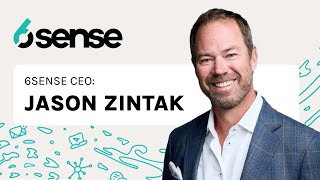
hello everyone my guest today is jason zintak he's the ceo of a company called sixth sense which is transforming marketing and sales through artificial intelligence all right jason you ready to take us to the top yeah let's do it all right so before this you were found were you founder at platform or just ceo later on i was hired in a ceo okay with an equity round or something you an eir somewhere correct yeah okay and that was acquired by workday in 2016 right that's right and then you also were uh cro at responses correct okay yeah yeah good good hopefully you got a little bit hopefully you're on the cap table there in a meaningful way right a small small exit yep yep and then we lived inside uh oracle marketing cloud for a couple years yeah so well give me some context on you personally here first i mean did you give you know you money and those kinds of deals or was it really you were still hungry you really want to go out and build six cents and do your own thing again um uh well i wouldn't call it that money i mean everything's a good capital event and the world keeps going forward but i have a ton of entrepreneur hunger and um actually saw the combination of uh responses the email marketing company oracle marketing cloud and then the big data aspect of platfora this is the combination of really those last three experiences yeah so explain maybe tell the story of a customers give me a permission to tell their story how they're using you today uh so so most people use our what i call a next generation sales and marketing platform to um actually take the old lead world and contact world and flip it on its head so today b2b organizations are going to market via account um and and want to leverage data in order to be more surgical with that sales and marketing tactic so i mean there are what are seven and a half billion people in the world we send today 270 billion emails daily uh to a population of of that seven and a half and three and a half billion uh use email uh and so the the waste and clutter is way too much um our platform today allows you to de-anonymize b2b buyers as they're looking and doing their research they no longer contact sales rep of old marketing department they're looking to understand their purchase uh and we helped de-anonymize that and through that insight we then have graphed uh five and a half million companies that allows us to engage more purposely with a tactic i.e an email a display ad a bdr sales reach out based on that insight just to be clear when you said we send 270 billion emails per day that is not that is not six cents that is as they can as a world that is the world i was gonna say you're gonna have people coming after you just going this is the guy that's responsible for my inbox seven thousand no we're i mean through our data we're as i said we're trying to be more um you know strike attack like a sniper so we're trying to reduce the email sends the global email sends and make it more appropriate so it's it's a in this world of engagement economy with the people at the accounts uh it needs to be more spot-on so are you are people basically uploading their current best customer list to you and you're generating a look-alike audience and then going after them with precision or are you giving like pii info not pi but identifying information to like i p addresses browsing your customers website so they actually know who the browser is uh it's a it's a little bit of both um so we would take a company's first party data their crm system outback the contacts known users our known clients and prospects uh in their marketing automation and then marry that with behavioral web um data and that's part of our ai and ml that basically looks through that we've mapped five and a half million companies uh worldwide which is uh probably eighty to eighty-five percent of what the b2br need um and and that allows for that identity this company graph we've built uh which is the persona attached to the company worldwide completely gdpr compliant pii um uh proof and uh soon to be with california laws that's great okay so give me a general sense i'm sure you have a massive kind of deviation between kind of kind of account sizes but just because we don't have time to do all of them what's the average customer paying per month would you say for your technology around 150k okay per month uh sorry per year per year okay so call maybe 12 000 a month something like that yeah that's probably the the mid market and then the large enterprises spend more yeah yeah we're just talking on average across all your customers 10 10 12 grand a month yep yeah and then what i'm sure you have some that go well into the millions correct yeah what put this on a timeline for me when you launch uh the company's about five years old that came in two years ago and in the last three years we've tripled our bookings uh revenue bookings year over year and the company's gone from about 45 employees to 150. okay so 150 employees today okay but so 2014 is launch date sorry you said you came in three years ago two years ago two years ago so we'll call that 2017 three years after launch correct found all the founders still there uh all the founders are still there with the exception of one there are four four co-founders come on jason give me this give me the story give me that give me the half smile story here you know i don't actually really know the story because i wasn't there come on you know it was just a departure by one of four because there's probably too many cooks in the kitchen but they're they're all um the majority are still there and involved and all investors still yeah so so you you come in two years ago 2017 founded in 2014. did you come in with the raise were you did you come in with a vc round i did i came yes i did you so okay so i'm assuming you came in with the was was it with the salesforce venture round or bain capital so it was it was well as a combination um in total the last phrase was 27 million and so there's a little bit of a refresh of time it came to give operating runway but that's the aggregate the last round salesforce was early battery bane benrok but industry industry ventures came in in april 2019 so you came in way before that right that's correct yeah that's what i'm asking so which round did you come in with the bain round in 2015 i came in uh after that bang round after that bain round okay got it were you were you were you chosen by bain or what facilitated the ceo transition i think it was a combination with the founder uh the founders which were the cto and ceo uh and the um the board that thought the company got into a certain juncture where they wanted uh to maximize and leverage with additional operating experience and so um that was the decision you know post round yeah okay interesting now since then uh total capital in the company is what 60 million six zero correct correct all equity or have you leveraged debt uh all equity do you have an opinion on debt considering your background in b2b sas have you ever used it yeah definitely so what's your opinion on it i mean healthy for an entrepreneur preserve equity or can be dangerous from a cash flow purpose for cash flow right i mean as long as it's not over leveraged i think it's perfectly healthy and that's that's a decision point do you want to you know do you want to minimize dilution and how far um in debt are you willing to go uh but you know we i've used it as a small percentage of overall rates yeah if i asked you what you feel this is an unfair question but i'm going to ask you anyway a ceo looking to use debt what do you feel like is too much debt as a ratio to their current revenue like half of their arr you know in debt is fine 3x their ar is fine um what is too much uh double i suppose i think that's fair okay interesting cool all right i know you're going off limited data points there but that's fine all right 150 folks on the team today how many are engineers uh 43 40 have you done anything to cut me have you done anything there to to kind of reduce your r d expense taking advantage of shred in canada or other programs around the world uh well we have india operations and that's part of it but um we pretty much are a work anywhere company and we try to hire where the town is as opposed to an epicenter we're headquartered in san francisco we have offices in austin and new york and boston um nothing international yet although we have international customers very cool and then obviously to land these customers at these acvs you can definitely afford obviously field sales even inside sales etc um how many quota carrying folks do you have we have 18 18. now did that program exist before you came or did you instrument the field the kind of the sales motion uh we had about four reps at the time i came and we just we grew the field organization as part of a calculated play how do you again you i imagine you do this at other companies as well you're the cro at the last one i mean how do you p for people that are scaling their sales team what is kind of the biggest mistake you see them doing and what do you recommend people kind of put their kind of the sales compensation ot relative to the bookings target or the quota do you like to see a 5x there a 10x what do you think is optimal i think the biggest mistake young companies make is scaling before there's a product market fit so hiring the field organization and hoping to work magic in performance against quota when you haven't really found um a fit with the product that the market wants and so you've got it you've got to be careful there additionally and so we we sort of let the robot slowly if you will and once it started to work and we saw attainment we had roughly 90 attainment um against quotas for the reps we knew that something was working and so every next rep that we hired we were pretty confident would be productive and as far as and we we have um i forget your question the ratio but we have roughly a million dollar quota for rep okay and and it works yep and now obviously this is gonna grow responsibly and efficiently and so you're not you don't get upside down relative to sales and marketing spend yeah and just to be clear that is a hundred million dollars in new ar bookings per year per rep uh pardon me that's that's that's exactly one million dollars in error booking per rep my question is over what period is that a monthly target or uh votes annually okay interesting and and obviously this is a little sensitive because it's salary question but do generally like just that that 1 million is like 5x the full ot kind of comp for that sales person roughly right roughly is is that a pattern you look at when instrumenting a sales team based off your cr role in the past and this one today or no that's not an important ratio to look at oh yeah sure you i mean you you yeah you want to make sure that your your spend on sales and marketing is appropriate to delivered quota um so that's the ratio and if if a rep was bringing in 500k instead of a million i don't think we'd pay him as much yeah good answer all right so customers um obviously you weren't there on day one but when you came in explain to me kind of the first one or two customers that kind of you you helped bring into the company where are they from what growth channels are you using that's a good question uh so we were probably 30 customers at the time we're now roughly 150 a plus or minus a few um first customer i don't know if i can even put it into the name of who that was uh you know i think that i think the world is part of relationships and network um but candidly i you know i find if it's my relationship i don't have an effective engine and so i wanted to build and enable a sales organization so i didn't have to participate in that prospect if you will certainly i'm in touch with our customers and what we do um but yeah i don't know if i could that's okay how aggressive as a ceo and as a team are you willing to be to get that 150 thousand dollar acb customer are you cool with the 12 month payback or have you pushed it up to 24 months so you can be more aggressive uh we're i mean we're now up at a magic number of one to one point one um explain what that means we don't get to talk about that a lot uh so that would be um it'd be a measure your sales efficiency so if you were to take your for instance your um three to two quarters go by you take your current quarter like i said q2 of ar you subtract it from your last quarter's arr multiply it times four so you have an annual rate and then divide it by your um last quarter's sales and marketing expense and so if you're at a ratio of one or above you're roughly running a fairly efficient today unit economic sales metric and then you say do i want to pour more gas in the fire and expand and by the way magic number by itself isn't really important if you're if you're not also looking at gross margins and other things that matter relative to operating efficiency and use of capital so jason to simplify that math is this statement true you're spending between a dollar and a dollar ten to get one new dollar of are correct yeah cool so on a 150 000 account you'll spend between 150 and call 100 you know 60 70 000 bucks to get that account yeah i mean right that's correct that's right yeah yeah now where is most that spend going towards i obviously sales commissions is obvious is there any kind of unknown or kind of weird new channels you're testing and spending a lot on that are working um you know we we as a we as an outbound organization we're constantly trying to get more inbound and drive inbound through more efficient marketing um to drive that that's that's the marketing is as a line item we spend more on um we have an inbound channel uh of bdrs well actually it's inbound nx and outbound uh and that's probably the balance between those functions we have now also partner networks that we're leveraging uh additional revenue from and taking into obviously stickiness in any sas company is critical right so when you look at over the last 12 months gross revenue churn uh what is that are you under five percent we're we're at 94 and roughly that's retention not churn hopefully oh correct sorry no you would not have a business you would have slightly above 120 net retention got it so that would mean if you're churning six percent that means you're you have about 26 expansion on the cohorts to get 120 net that's right that would so so that's actually in my opinion based off all that we've done thousands of these interviews right i would say net like world class at your acv range is more like 130 140 what do you need to do to get your you know expansion up higher above 26 year-over-year uh you know i think it's a combination of things but it's it's world-class products so we continue to evolve the product to the customer needs um for the efficiency and and uh the more use the more workflow that we're able to enable in the daily seller and marketer and have that cross-collaboration the stickier the product gets which then in turn drives net retention we're releasing new products uh every really every month and so that additional feature that completes the product roadmap allows for the retention when you look at your different pricing axes obviously number of seats is one feature based up saying is another then some data or utility-based upsell is one some people call use spaces what is your usage metric is it number of records attained or what is it uh well we have all those three that you mentioned so we have database size we have number of users on the platform we have um our ai and ml models built so you can have different product categories that you're focused on which also be incremental revenue when you say database size literally measured by number of records or is it literally a storage number number of records number of okay interesting so that is that pricing axis is based off number of records interesting okay very good and then i assume obviously you're burning to drive growth right you know are you comfortable with a million dollars a month and burn i am comfortable how far will you push that up obviously relative to the last raise you did do you tend to raise for 18 months to run right 24 36 months where you put it uh i tend to do it for 18 months um and you know we're constantly trying to bring um burn down and i'm comfortable sort of in measure growth against uh efficiency yeah so last round was 27 million if you're covering 18 months of burn i mean you code basically for saying you're cool with a one to one and a half million kind of burn per month as you try and scale yeah i i i you know a million is my would be my objective or lower yeah that's your that's your i can sleep okay i can sleep good at night number one very cool all right good and then we can do the math right you mentioned 150 customers you mentioned earlier about 150 000 ac it puts you about 1.8 million per month in mrr is that about right uh i'm not going to confirm that but okay well i we i'm only taking numbers you already gave me so you said 150 customers and 150 000 rpoo if one of those numbers is not accurate we should fix it yeah so we're are you trying to get at our annual arr sure we're we're in the range between 20 and uh and 50. when do you think you break 50 can you hit it next year comfortably or it's a stretch goal uh yeah we can do it comfortably okay interesting very cool let's wrap up here with the famous five jason number one what's your favorite business book [Music] oh favorite business book um probably would be uh you know from andreessen horowitz the hard thing about hard things number two is there a ceo you're following or studying um all the big sass ceos no come on don't be lazy pick one well i actually um you know with benioff and salesforce as an investor we model a lot of practices around their early growth success yeah let's say you get you're on the minimum side of the range you just gave me 20 million in ar if benioff comes in offers you 10x that i mean right 200 million do you sell no yeah it's boring for you you already had a 1.6 billion actually you got to get up to 345 to really get your blood going right there's just more value in the company i told you it could comfortably hit in the next year and so yeah yeah that's good all right number three what's your favorite online tool for building your company beside your own online tool for building the company um well the one that gets most often used is slack i don't know if it's my favorite tool i'm not sure if it's social or productivity but we enjoy it too many too many memes in your slack feed huh yeah exactly all right number four you know honestly it does help us stay stay connected yeah number four how many hours of sleep to get every night uh six and situation married single kiddos uh married with three kids oh my gosh you have your hands full how old are you hey i'm 49. 49 last question what do you wish your 20 year old self knew that you're that the every relationship you have is important uh and build that network guys there you have it six cents serving 150 customers a much better way to do kind of account based marketing using machine learning artificial intelligence and a lot of data sources those customers put on average 150 000 per year the company today doing between 20 and 50 million bucks in ar hoping to break 50 million easily next year they've raised about 60 million dollars jason's comfortable with a million dollars a month and burn as he looks to scale 150 folks on the team 43 engineers 18 quota carrying sales rep six percent gross annual revenue churn with 26 expansion means 120 net revenue retention he's totally cool with about a 1.1 magic number meaning he spends a dollar or up to a dollar 10 to get a new dollar of a rr jason thanks for taking us to the top yeah i appreciate it nathan thanks for your time

Data and Sources

All figures on this page are taken directly from interviews or are estimates from public sources and proprietary models. Not financial advice. Read full disclaimer.

Claim this profile

People Also Viewed

Harvest logo

Harvest

Harvest, Inc. provides a web-based time tracking and invoicing platform for businesses and freelancers.The company's platform allows users to track time spent on tasks and projects, generate professional invoices, and analyze business performance through various reports and analytics. Harvest's mission is to help businesses and freelancers save time, get paid faster, and make better decisions by providing them with an easy-to-use and powerful time tracking and invoicing solution.

Callbox Inc. logo

Callbox Inc.

Callbox is a worldwide recognized leader in B2B Lead Generation powered by AI and human expertise, having been one of the top lead generation experts for the past many years. With a team of over 700 marketing professionals and a massive in-house B2B database, we help businesses of all sizes and industries achieve their growth and revenue goals. Our proprietary AI-powered lead generation platform called "SMART Engage" helps us to identify and qualify leads, personalize content, and track results. This allows us to deliver high-quality leads that are more likely to convert into customers.To get in touch with decision-makers at various stages of the conversion cycle, we use a combination of inbound and outbound channels such as the website, chat, events, email, voice, social media, and SMS. We have a proven track record of success, having completed over 10,000 campaigns in various B2B verticals and geographical areas. We are committed to helping our clients achieve their business objectives, and we believe that AI-powered lead generation is the best way to do that. Contact us today to learn more how Callbox uses AI and human expertise to generate high-quality leads.

Marposs logo

Marposs

Marposs, leading global supplier of precision metrology equipment for shop-floor inspection, measurement and process control solutions, provides: - gauging and compensation systems for grinders and other machine tools; - manual gauges, sensors, probes and other gauge components; - automatic measurement and inspection systems; - industrial computers, hw and sw for data collection, process analysis, SPC and process control; - equipment for leak detection, non-destructive testing, functional checks

NURX logo

NURX

Medicine or testing kit, prescribed online and delivered to your door.

Verblio logo

Verblio

Verblio is a platform that connects businesses with freelance writers, offering a wide range of content creation services. Clients can submit writing requests and choose from a pool of skilled writers to produce high-quality blog posts, articles, and other written content. The platform aims to streamline the content creation process and help businesses enhance their online presence.

Trulioo logo

Trulioo

Trulioo is the world’s identity platform, trusted by global enterprises for verification, fraud prevention and growth.

6Sense Revenue 2024: $200M ARR, $5.2B Valuation