
Founder Interview
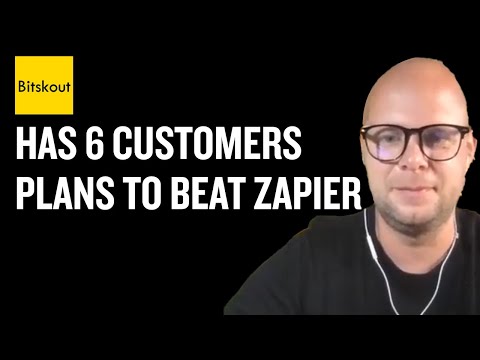
How Bitskout Reached 6 Enterprise Customers with Zapier-Rivaling AI Automation (Interview with Ilia Zelenkin)
- Interview Date
- July 28, 2021
- Interviewee
- Ilia ZelenkinFounder
Company Metrics at Interview Time
Customers (2021)
6 enterprise customers
Avg Contract Value (2021)
$1,000 per year
Team Size (2021)
3 people
Founder Equity (2021)
70%+
Historical Snapshot
These numbers were reported by Ilia Zelenkin during the interview recorded in July 2021 and are a historical snapshot, not current figures. See Bitskout’s current numbers.
Key Takeaways
- 01Bitskout had 6 enterprise customers at the time of the interview in July 2021
- 02Average contract value was approximately $1,000 per year per customer
- 03The team consisted of 3 people, with Ilia as the only full-time member
- 04The company was fully bootstrapped with no outside funding raised
- 05Ilia owned roughly 70% of the company, with two CTOs holding the remainder
- 06The company launched in January 2021 and was built on top of Monday and Asana
- 07Growth strategy centered on organic SEO and inbound landing pages replicating Zapier's approach
- 08Ilia set a hard deadline of February 2, 2022 to either raise $200K to $500K or reach $5,000 MRR
- 09Three of the six customers came through inbound leads, three were closed directly by Ilia
- 10Ilia estimated he had approximately six months of personal financial runway remaining
Company Metrics at Time of Interview
| Metric | Value | Source |
|---|---|---|
| Customers (2021) | 6 enterprise customers | Founder interview, Jul 2021 |
| Avg Contract Value (2021) | $1,000 per year | Founder interview, Jul 2021 |
| Team Size (2021) | 3 people | Founder interview, Jul 2021 |
| Founder Equity (2021) | 70%+ | Founder interview, Jul 2021 |
| Personal Runway (2021) | 6 months | Founder interview, Jul 2021 |
Growth Breakdown
Customers
Bitskout had 6 enterprise customers at the time of the interview. Three were closed directly by Ilia and three came through inbound leads, signaling early organic traction.
Team
The team consisted of 3 people: Ilia as the sole full-time founder, plus two co-founders who also served as CTOs. The company was fully bootstrapped with no outside capital raised.
Funding and Runway
Ilia was funding operations from personal savings accumulated when he left his previous corporate role. He estimated approximately six months of personal runway remaining and was considering a seed raise of $200K to $500K.
Revenue
Revenue: Bitskout was at its earliest revenue stage, selling a pay-per-use model packaged into monthly plans at an average contract value of approximately $1,000 per year. For February 2, 2022 Ilia had set himself an either/or milestone: reach at least $5,000 MRR, or raise a seed round of $200K to $500K.
Growth Strategy
Organic SEO and Inbound Landing Pages
Ilia described replicating Zapier's strategy of creating many targeted landing pages for specific use cases, such as comparing two documents or summarizing a meeting. Clicking a button on these pages would add the relevant AI model directly to the user's account.
Inbound-First Sales Motion
After closing three customers through direct outreach, Ilia concluded that outbound was not viable at the $500 to $2,000 ACV range. The team shifted focus to rebuilding the website and product onboarding to drive inbound conversions.
Platform Integration with Monday and Asana
Bitskout was built on top of existing project management tools like Monday and Asana, embedding AI capabilities directly into workflows users already relied on. This reduced friction for adoption once the right customer profile was identified.
Capital-Efficient Growth Before Hiring
Ilia was deliberate about not raising large amounts of capital before fully understanding the sales motion. He prioritized SEO and inbound strategies that required minimal upfront spend, planning to hire salespeople only after validating the go-to-market approach.
Best Quotes
“We beat them with intelligence. Zapier only moves stuff around, but we can understand what is inside and make a better decision.”
“Right now we are approximately at ACV 1,000 per year.”
“We closed three customers ourselves and then well, I closed them and then three customers came as an inbound leads. So we understood with using ACV of between 500 to 2,000 ks, we need inbound customers. That's the outbound not going work.”
“We are actually replicating Zapier strategy by creating lots of landing pages, like, for instance, if you want to compare two documents between each other, click on that button, the AI model is in your account.”
“We either have to raise a seed round of approximately 200 to 500, or we need to reach at least 5,000 MRR.”
“I don't want to raise a lot of money, hire lots of salespeople before I really understand how this thing works.”
“You don't have to rush.”
What Happened Next
This page captures Bitskout as it stood in July 2021, when the company had 6 enterprise customers, a team of 3, and a hard deadline of February 2, 2022 to either reach $5,000 MRR or close a seed round. Ilia was candid about having roughly six months of personal runway, and said that if neither milestone was met he would regroup, take a consultancy job for a couple of months, and then come back to it. For current information on Bitskout, visit the live company profile on GetLatka.
View Bitskout’s current profile and metricsFull Transcript
Chapters
- 0:00Introduction: Ilia Zelenkin and Bitskout
- 0:38How Bitskout Competes with Zapier
- 0:55Customer Use Cases and AI Capabilities
- 1:26Pricing Model: Pay Per Use and Monthly Plans
- 2:39Workflow Runs and Project Limits Explained
- 3:40Six Enterprise Customers
- 3:57Launch Timeline and Team Structure
- 5:13Scaling Past Six Customers: The Inbound Shift
- 6:26Personal Savings and the Case for Raising
- 7:53Six Months of Personal Runway
- 8:48February Deadline and Success Metrics
- 9:45Famous Five: Books, Tools, and Habits
- 10:43Closing Thoughts and Wrap-Up
Introduction: Ilia Zelenkin and Bitskout
Nathan Latka
00:00Hey, folks. My guest today is Ilia Zelenkin. He is building something called Bitskout. He calls it Zapier with brains. He was born in Minsk, immigrated to Barcelona, pursuing a career in global multinational. Last seven years, he led the innovations unit and built super successful things, got multiple innovation awards, then finally left to build his own thing, which we love.
00:18A month before COVID, this is
00:20when this all happened. He's a husband, the father loves basketball and video games, a fan of Steve Blank, Ben Horowitz, Peter Thiel would work for Elon Musk just for food and the bed. Ilia, you ready to take us to the top?
Ilia Zelenkin
00:32Yes. Thanks a lot, Nathan. Yes. Food I'm
Nathan Latka
00:34food, a bed, and a flamethrower. Right?
Ilia Zelenkin
00:37Yeah. Yeah. Yeah.
How Bitskout Competes with Zapier
Nathan Latka
00:38Alright. What is Bitskout? I mean, how can Zapier improve? It's a huge company, 4,000,000,000 valuation. How do you beat them?
Ilia Zelenkin
00:46Well, that's very simple. We beat them with intelligence. Zapier only moves stuff around, but we can understand what is inside and make a better decision.
Customer Use Cases and AI Capabilities
Nathan Latka
00:55What does that mean? Can you tell me a customer who's using you and how they're using you?
Ilia Zelenkin
00:59Yeah. So simply only humans and artificial intelligence can understand what's in the content. So they can look at the picture and see like that's five chairs or three cars or that's a scratch or that's a break. Zapier cannot do that because just understands that this is a picture. And what we do is we allow our users to integrate ready made intelligence into their projects where they need a little bit more understanding of what's going on to
01:24make better decisions and be more productive.
Pricing Model: Pay Per Use and Monthly Plans
Nathan Latka
01:26I see. Interesting. When do you what are average customers paying you per month to use the platform?
Ilia Zelenkin
01:32So we we have we are pay per use. We have pay per use models, so customers pay for a kind of transaction, but we package this into monthly plans, which is easier to predict what the costs will be. Right now we are approximately at ACV 1,000 per year.
Nathan Latka
01:48Okay, got it. So about $90 per month is the average customer. And what's the utility metric, the usage metric you're pricing against?
Ilia Zelenkin
01:56So we In
01:59general, we are pricing against value. In this case, we are saving time. On average, we save from five minutes to weeks of time because of the automations. And we only price against that metric.
Nathan Latka
02:13But you can't price against time saved because you don't know how much time you're going to save them. So you're pricing at the number of automations?
02:20Yeah. So it's a it's a tough balance. So what we do is you have monthly plans where a number of executable number of transactions is included, you have number of gigabytes. And what happens is the moment you overuse this capacity, you move forward with just charge extra and let's see.
Workflow Runs and Project Limits Explained
Ilia Zelenkin
02:39Ilia, let me take a shot at pitching this to my audience because I think you have a smart pricing plan, but I still think they understand it. Right? So basically, if you set up a system on Bitskout, you know, send my lead from HubSpot to a Google Sheet, that's one workflow run. If you get 500 workflow runs, you're going to get advanced. 3,000 workflow runs, you're going get advanced again. So you're really pricing against number of
Nathan Latka
03:01workflow runs and number of projects. Correct?
03:04Yes. Yes. Well, number of projects is just a natural limit. It's not physical. It's not a technical limit in the system. We want if you have more than five projects, like, it's better to talk with us. Maybe we can structure it better.
Ilia Zelenkin
03:17I see. And it's now when you say up to 15 scouts, that's 15 seats. Right?
03:22Yes. But in in because there is a additional feature included in our platform that we are still developing, which is called rewards. And because our platform is used in work environment, in project work environment, you can assign awards for people when they do tasks.
Nathan Latka
03:37Oh, very cool. Very cool.
03:39What is called as cloud, you know.
Six Enterprise Customers
Ilia Zelenkin
03:40Ilia, how many customers today?
03:43Right now, we have six enterprise customers.
Nathan Latka
03:46Six customers. So can I take six times $90 a month? You're doing about $450 a month in revenue?
03:52Like that. Yes.
Ilia Zelenkin
03:53Oh, sorry. $540 a month.
03:56Yeah. Yeah. Yeah. Yeah.
Launch Timeline and Team Structure
Nathan Latka
03:57Okay. And and so is this fairly new then? Did you just launch?
Ilia Zelenkin
04:01Yes. Well, we actually launched in January, but it took some time to take it forward because the challenge that we have is we are on top of some tool. We are not a separate tool. Are on top of Monday and Asana. So when you do customer discovery, you need to make sure the first condition is met. The customer uses Monday or Asana or some other project management tool. So there are no such lists exist. So you
Nathan Latka
04:24cannot go to Zen Outreach, for example, and get this list because this is a protected thing. That is the first barrier you need to overcome. But once you overcome this barrier, the users are naturally embedded in system into their projects.
Ilia Zelenkin
04:37Understood. So just to be clear, you launched this year in January. And is it just you or do you have a team?
Nathan Latka
04:45No. There are three of us, but I am the only one full time.
Ilia Zelenkin
04:49Okay. And how much equity do you own? Do you own a 100%?
04:52No. I own 70 something.
Nathan Latka
04:5670 something. And who owns the rest?
04:59It's my CTO and my second CTO.
05:03Two CTO. That's a good that's a good group. Two CTOs.
05:06Yes.
05:08Okay. Cool. Now have you bootstrapped this or not?
05:10Yes. We totally bootstrapped. We love that.
Scaling Past Six Customers: The Inbound Shift
Ilia Zelenkin
05:13We love that. So what's the plan? How do you go from six customers to 600?
05:18Well, that that that is what we're doing right now. Right now, our thinking is that we closed half we closed three customers ourselves and then well, I closed them and then three customers came as an inbound leads. So we understood with using ACV of between 500 to 2,000 ks, we need inbound customers. That's the outbound not going work. And we are rebuilding our strategy and our site and features of the product, so we onboard more from
05:48inbound from our website. And we are actually replicating Zapier strategy by creating lots of landing pages, like, for instance, if you want to compare two documents between each other, click on that button, the AI model is in your account. If you want to, for example, create make a summary of a meeting, click on that button, the model comes to your account. That's what Zapier did, which is actually very clever. So you cut through all the, you
06:12know, marketing. You just say that if that's what you want, let's click a button.
Nathan Latka
06:16So Ilia, obviously, $500 a month for you personally and your co founders is not enough to support yourself. So how are you guys, like, paying, like, personal expenses while you grow your startup?
Personal Savings and the Case for Raising
Ilia Zelenkin
06:26So, first of all, we have personal savings because when I exited my this large multinational, so I took compensation due to the fact that I had there was a client tied to solutions I built. And so we're using our own money. But we're looking forward to fundraise in nearest time, maybe a seed or a seed round, because we understand how the sales work. We have a strategy how to make it work really fast. And this is
06:59where I think we win the external capital.
07:02How much do you want to raise?
07:04We're thinking between 200 to 500 k.
07:08Why is that?
Nathan Latka
07:10Well, I'm really cautious in spending really fast because it's a very it's a product that involves AI, so you need to be very clear in your value proposition. For instance, for us, took three to five minutes to explain you what is AI and etcetera. So I don't want to raise a lot of money, hire lots of salespeople before I really understand how this thing works. And the most important thing on my table right now is SEO
Ilia Zelenkin
07:39strategies and inbound strategy, and that doesn't require lots of capital at the beginning.
Nathan Latka
07:45How much personal, like your personal life runway do you have? In other words, how long do you have to build this startup where you can survive on your savings for a while?
Six Months of Personal Runway
Ilia Zelenkin
07:53I think I have six months left.
07:58And how do you think about that?
Nathan Latka
08:02I don't know. I wake up at night and cry, you know.
08:07No. I mean, how low have you where are you based right now?
08:11I am in Barcelona.
08:12How low have you been able to drive your personal expenses so you can extend your runway and focus on the startup?
Ilia Zelenkin
08:18I don't think that well, I can we can extend easily for a couple of more months by just moving to a different city in Spain, or smaller city. But I don't think that that's a very good strategy, because this is like a limit that I have. And everything, every plan that I have is built from that limit. So this there is a date. And that's date. That's the deadline.
Nathan Latka
08:42What's the deadline?
08:44Second of the second of February.
February Deadline and Success Metrics
Nathan Latka
08:48And what goal do you want to hit by the February 2?
Ilia Zelenkin
08:52We either have to raise a seed round of approximately 200 to 500, or we need to reach at least 5,000 MRR.
Nathan Latka
09:02And what if you don't do either of those? You quit?
Ilia Zelenkin
09:05I think I will hide, I believe. So I will regroup myself, go take consultancy job because I have lots of experience in telco, internal communications, and there are lots of consultancy projects. Regroup myself for a couple of months and then come back to that.
Nathan Latka
09:20I think it's great that you know that date with very clear metrics of what you want by that date. You know, it's very easy to start something. What no one ever talks about is how to stop something. So you get a lot of very smart people stuck inside projects are never going to be bigger than $10 a month when they could be spending that time going after a much bigger challenge. So I'm eager to see what
09:38you do between now and February.
Ilia Zelenkin
09:40Yeah, me too. My whole family does.
Famous Five: Books, Tools, and Habits
Nathan Latka
09:45All right, let's wrap up with the famous five. Number one, what's your favorite book?
Ilia Zelenkin
09:50My favorite book is business book is Competing Against Luck by Clayton Christensen. Non business book is Ben Horowitz, The Hard Thing About Hard Things.
Nathan Latka
10:01Number two, is there a CEO you're following or studying?
Ilia Zelenkin
10:05Yes. Ali Ghodsi from Databricks.
Nathan Latka
10:08Number three, what's your favorite online tool for building your business? Notion. And number four, how and Monday. How many hours of sleep do get every night?
10:18I gave I get straight eight hours sleep without question. Nothing can stop that.
Ilia Zelenkin
10:23And what's your situation? Married, single kids?
Nathan Latka
10:26I am married. I have a kid, four years old.
Ilia Zelenkin
10:29Oh, very cool. And Ilia, how old are you?
Nathan Latka
10:31I'm 38.
Ilia Zelenkin
10:3338. Last question. What's something you wish you knew when you were 20?
Nathan Latka
10:41You don't have to rush.
Closing Thoughts and Wrap-Up
Nathan Latka
10:43Guys, Bitskout, it's Zapier on steroids launched this year, already have six enterprise accounts paying on average a $100 per month, call in the SMB mid market, but he's doing about $500 a month in revenue aiming by February to get up to either $5k a month in revenue or go raise a 200,000 to $500,000 seed round. We'll see what happens. He's been scrappy right now. He's got six months of personal life runway left. He's got, you know,
11:05him and two co founders. He owns 70% bootstrapped so far. We will see what happens. Ilia, thanks for taking us to the top.
11:11Thanks, Nathan.
11:14One more thing before you go. We have a brand new show every Thursday at 1PM Central. It's called Shark Tank for SaaS. We call it deal or bust. One founder comes on, three hungry buyers, they try and do a deal live and the founder shares back end dashboards, their expenses, their revenue, ARPU, CAC, LTV, you name it, they share it and the buyers try and make a deal live. It is fun to watch every Thursday one
11:39p. M. Central. Additionally, remember these recorded Founder interviews go live. We release them here on YouTube every day at two p. M. Central. To make sure you don't miss any of that, make sure you click the subscribe button below here on YouTube, the big red button and then click the little bell notification to make sure you get notifications when we do go live. I wouldn't want you to miss breaking news in the SaaS world, whether it's
12:00an acquisition, a big fundraise, a big sale, a big profitability statement or something else. I don't want you to miss it. Additionally, if you wanna take this conversation deeper and further, we have by far the largest private Slack community for B2B SaaS founders. You want to get in there. We've probably talked about your tool if you're running a company or your firm if you're investing. You can go in there and quickly search and see what people
12:22are saying. Sign up for that @nathanlatka.comslack. In the meantime, I'm hanging out with you here on YouTube. I'll be in the comments for the next thirty minutes. Feel free to let me know what you thought about this episode and if you enjoyed it, click the thumbs up. We get a lot of haters that are mad at how aggressive I am on these shows, but I do it so that we can all learn. We have to counter
12:42those people. We got to push them away. Click the thumbs up below to counter them and know that I appreciate your guys'support. Alright, I'll be in the comments. See you.