Valuation
$4.8M
2024 Revenue
$84.8M(Est.)
Customers · 2023
27K
Funding
$248.4M
Team
777
Founded
2012
Cloudbeds Revenue, Valuation & Funding (2024)
Cloudbeds is a San Diego-based hospitality technology company that provides an all-in-one property management platform for independent hoteliers across 157 markets worldwide. The company serves more than 27,000 paying customers representing over 2.5 million beds, and has grown at a 75% compound annual growth rate over the three years preceding the November 2023 interview.
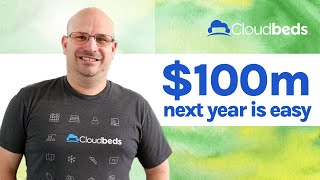
Founded by Adam Harris, who serves as co-founder and CEO, Cloudbeds has raised $250 million in venture capital and expanded its workforce from 40 employees in 2018 to 757 people across 41 countries as of 2023. Revenue has grown from $10 million in 2018 to north of $50 million in 2023, with Harris describing a $100 million run rate as an easy target for 2024.
Beyond its core software business, Cloudbeds has moved aggressively into financial technology, launching payment processing in its first market 18 months before the interview and expanding to 30 markets within the three weeks prior. The company also operates Amplify, a generative AI-powered direct booking product that targets the $87 billion in annual intermediary fees paid by the lodging industry, with a goal of driving $1 billion in gross merchandise volume through that channel in 2024.
Last updated
Cloudbeds Revenue
Cloudbeds reported revenue north of $50 million as of the November 2023 interview, up from $10 million in annual recurring revenue in 2018. Harris confirmed the $50 million threshold directly when the host offered it as a range, and separately described a $100 million run rate as an easy goal for 2024.
| Year | Milestone | Source |
|---|---|---|
| 2024 | Cloudbeds Hit $84.8m revenue in October 2024 | Estimated |
| 2023 | Cloudbeds Hit $50m revenue in November 2023 | Watch[1]Estimated |
| 2022 | Cloudbeds Hit $40m revenue in November 2022 | |
| 2021 | Cloudbeds Hit $30m revenue in November 2021 | |
| 2018 | Cloudbeds Hit $10m revenue in January 2018 | Watch[2] |
| 2012 | Launched with $0 revenue |
The company has posted a 75% compound annual growth rate over the three years preceding the interview. Harris stated that Cloudbeds' growth rate exceeds all publicly traded SaaS analogs on a comparable basis. The fintech segment, which was not yet a material revenue contributor at the time of the 2021 interview, was growing at multiple hundreds of percent year over year as of late 2023, though it represented less than 20% of overall revenue at the time of the interview.
As a GetLatka estimate, applying the stated 75% CAGR to the confirmed floor of $50 million implies a ceiling of approximately $87.5 million for the following year. Harris's own stated target of $100 million implies a slightly higher growth rate. A deceleration-adjusted floor, assuming growth moderates to roughly 50%, would imply approximately $75 million. GetLatka estimates 2024 revenue in the range of $75 million to $100 million, with the upper end representing management's own stated expectation and the lower end reflecting potential deceleration.
Cloudbeds Valuation, Funding Rounds
Cloudbeds reached a $4.8M valuation in 2012, set during its Seed round.
Cloudbeds has raised $248.4M in total funding across 6 rounds, most recently a $150M Series D round in 2021.
| Year | Round | Amount | Valuation | % Sold | Source |
|---|---|---|---|---|---|
| 2021 | Series D | $150M | - | - | |
| 2020 | Series C | $82M | - | - | |
| 2017 | Series B | $9M | - | - | |
| 2016 | Series A | $3.1M | - | - | |
| 2015 | Venture Round | $3.5M | - | - | |
| 2012 | Seed Round | $800K | $4.8M | 17% |
Founder / CEO
Adam Harris
CEO
Adam Harris is the co-founder and CEO of Cloudbeds. As of the November 2023 interview, Harris was 42 years old, married with two children under four. He cited Jeff Weiner as a leader he continues to study and described Atomic Habits as his favorite book. His preferred tool for running the business at the time of the interview was ChatGPT and OpenAI.
Harris has been interviewed by the host on three occasions: first in 2018, when Cloudbeds had $10 million in ARR and 40 employees; again in 2021, when the company had reached approximately 22,000 customers and an average revenue per user of $93 per month; and most recently in November 2023. His prior companies and background before Cloudbeds were not discussed in the interview.
Net worth was not discussed in the interview. No ownership percentage was stated, so no estimate can be derived.
Q&A
| Question | Answer |
|---|---|
| What's your age? | 46 |
| Favorite online tool? | - |
| Favorite book? | - |
| Favorite CEO? | - |
| Advice for 20 year old self | - |
Customers
Cloudbeds served more than 27,000 paying customers as of November 2023, up from approximately 22,000 at the time of the 2021 interview and 9,000 at the time of the 2018 interview. Harris noted that the customer base has also shifted toward larger properties over time.
The company reported an average revenue per user of $93 per month per customer as of 2021. Harris confirmed in the 2023 interview that ARPU had grown significantly since then, describing the increase as more than doubled, driven by platform expansion and the addition of fintech and upsell capabilities. The platform also includes a marketplace of 400 partner integrations. Specific 2023 ARPU was not disclosed.
Pricing details, including specific plan tiers or per-seat pricing, were not discussed in the interview.
Cloudbeds serves 27K customers.
Cloudbeds Business Model
Cloudbeds generates revenue through two primary streams: a SaaS platform subscription for hotel property management software, and a growing fintech segment that includes payment processing and a direct booking product called Amplify. Harris described the company as equally a fintech company and a SaaS company.
The fintech segment was launched in its first market 18 months before the November 2023 interview and had expanded to 30 markets by the time of the interview, with rapid expansion occurring in the six months prior. Harris cited Toast and Shopify as comparable public companies where fintech accounts for 50% of total revenue, and described a similar long-term trajectory for Cloudbeds. As of the interview, fintech represented less than 20% of Cloudbeds revenue but was growing at multiple hundreds of percent year over year.
Cloudbeds processes over $10 billion in gross merchandise volume annually across reservations in its key markets. Harris declined to specify a blended take rate, noting that payment economics vary by jurisdiction due to local licensing requirements. The company underwrites payments directly in the United States, Canada, Europe, Australia, and New Zealand, and partners with local entities in markets such as Costa Rica where third-party processing is restricted. The Amplify direct booking product charges a commission rate under 5%, compared to the 20% charged by Expedia and Booking.com, and Harris stated the product delivers a return on ad spend in the teens. The company's goal is to drive $1 billion in gross merchandise volume through Amplify in 2024. The addressable market Harris cited for intermediary fee displacement is $87 billion per year in fees paid by the company's serviceable addressable market, representing 15 to 20% of total SAM gross merchandise volume. The global lodging travel industry was cited at $1.5 trillion. Gross margin, burn rate, runway, churn, LTV, CAC, and payback period were not discussed in the interview. Lookalike advertising using generative AI was cited as a key growth tactic for the Amplify product.
Point-in-time figures shared on the GetLatka podcast, each linked to the exact moment it was said on camera.
Customers (2023)
27000
“Adam Harris: North of 27,000. Really good growth curve. We've changed our customer. Our customers got a lot bigger, which we're really excited about.”
WatchCloudbeds Employees & Team Size
Cloudbeds employed 757 people across 41 countries as of November 2023. Approximately one third of the workforce, or roughly 250 people, work in product and engineering. The company had 40 employees in 2018, representing roughly 19-fold headcount growth over the five-year period.
Cloudbeds employs approximately 777 people as of 2026, up from 757 in 2023, including 161 sales reps that carry a quota. It serves 27K customers that rely on its solutions.
| Year | Milestone | Source |
|---|---|---|
| 2024 | Reached 777 employees (March 2024) | |
| 2023 | Reached 757 employees (November 2023) | |
| 2022 | Reached 736 employees (November 2022) | |
| 2022 | Reached 736 employees (January 2022) | |
| 2021 | Reached 555 employees (November 2021) | |
| 2021 | Reached 540 employees (November 2021) | |
| 2021 | Reached 499 employees (August 2021) | |
| 2020 | Reached 384 employees (December 2020) | |
| 2020 | Reached 384 employees (November 2020) | |
| 2020 | Reached 376 employees (June 2020) | |
| 2019 | Reached 350 employees (December 2019) | |
| 2018 | Reached 210 employees (December 2018) |
Frequently Asked Questions about Cloudbeds
What is Cloudbeds's revenue?
Cloudbeds generates an estimated $84.8M in annual revenue.
Who is the CEO of Cloudbeds?
The CEO of Cloudbeds is Adam Harris.
How much funding does Cloudbeds have?
Cloudbeds raised $248.4M across 6 rounds.
How many employees does Cloudbeds have?
Cloudbeds has 777 employees.
Where is Cloudbeds headquarters?
Cloudbeds is headquartered in San Diego, California, United States.
Compare Cloudbeds to the industry
Cloudbeds operates across multiple industries. Browse revenue, funding, and growth data for Cloudbeds in each sector below.
Full Interview Transcripts
$100m in revenue selling software to 27,000 AirBNB hosts?Nov 13, 2023
[00:00] Guys, Cloudbeds launched many years ago, broke 10,000,000 of revenue back in 2018. Today, over 2,500,000 beds across 27,000 paying customers use them, not just to manage the bed and the check ins, but now getting into FinTech. He's got 75% CAGR over the last three years, north of $50,000,000 of revenue. He says, easily a $100,000,000 next year. We'll see what happens. Hey folks, my guest today is Adam Harris. He's the co founder and CEO of Cloudbeds, a [00:24] global leader in technology that unifies hospitality with one platform. They raised $250,000,000 of venture capital and earned numerous awards, including America's Best Startup Employers Inc. Best Workplaces and Entrepreneur of the Year. [00:38] >> Adam, you ready to [00:39] take us to the top? [00:40] >> I love it. Thanks for having me. It's good to [00:42] be back. I know we had a we had a nice conversation back in 2021. What is a what's what's the big update sense and none of us obviously predicted the market would do what it's doing interest rates up 7%. How's this impacting cloud beds? [00:57] >> You know, fortunately enough, travel has been pretty much revenge travel ever since lockdown. So we've seen tremendous amount of surge for individuals wanting to take that once in a lifetime trip. Unfortunately, I think the economy is catching up a little bit, and 2024 will be a really telling time, especially during the winter period for all those in the Northern Hemisphere. But, look, it it has been one of those one of those couple years for the records [01:25] >> in many different cape capabilities. But the thing that I think I'm more most most excited about is the digitalization curve is starting to catch up in favor, and the industry is starting to catch up to what the consumer is looking for. And and and that's a good thing for our industry. And more importantly, that's really good for the the consumer like us traveling around. [01:45] Well, look, for folks that that didn't catch and I forget the history, we actually talked in 2018 and 2021. And now today, but for folks that missed those first two episodes, feel like, I feel like our 2018 conversation was I can't really say this, but back when you were a baby at only quote only $10,000,000 of ARR. But for folks that misses episodes, who is Cloudbed selling to today? What do guys do? [02:08] >> Yes, absolutely. So the best way to think about it is hoteliers around the world run their entire businesses on software. And that tech stack predominantly has been 18 different systems that are entered to join. Back in the day, was serialized cables on premise. Now it's all in the cloud, but it's still disjointed and too many different systems connecting to one another. Cloudbed slides a box the table and say, hey. Everything in that runs your business more [02:34] >> effectively. And so we take the the day to day operational side of running a hotel, in a much more modern, capability. We do in a 157 markets across two and a half million beds in this world now. We're the category leader for independent hoteliers. And, man, that's been a long time ago when we were 10,000,000 in ARR, and we've definitely grown since. We're 757 people in 41 countries around the world now. It's been quite the journey. [03:05] Seven fifty seven. How many people I imagine my heroes and go, [03:08] is this like how much engineering is work [03:10] is really needed here? But seven fifty seven people, how many are engineers? [03:14] >> Almost a third of them are. Product and engineering. Yeah. So we spend a lot of time and energy on r and d. Nathan, just to bring us back to 2018, we were only 40 people then. [03:27] Oh, what's going on there, YouTube? Good to see you guys. Now imagine this, you love watching these interviews with SaaS founders. But imagine if we took all of the valuation data out from over 2,807 interviews I've done manually Saves you a lot of time. Well, we've done this. We've built it into the beautiful interface inside of Founder Path. Check this out. I'll show you how you can access this in a second. But you log in, you [03:50] connect your Stripe account, you see your valuation real time, you can see what it changed over the past eighty eight days and even set goals for valuation this year. Now the secret evaluation is there's many different ways to value a SaaS business. So the reason you're gonna see three or four different valuations inside of your Founder Path dashboard, this is all free by the way, is because depending on who's doing the buying of your SaaS company, [04:14] you're gonna get a different valuation. A VC is gonna pay a different valuation. Private equity firm is different. If you're gonna do a minority sale, that's different. And if you sell the whole business, that's a different valuation. You can see all those when I hover over here. Right? So the teal is what a VC would pay. Yellow is what private equity and red is if you sold the whole thing outright. Now what's cool about this is [04:36] this is not built off random data. Again, you guys hear these interviews on YouTube. All these datas are built from real time valuation data points founders share with us on the show. So traction, 1,200,000 seed round, 3.7 raise. They sold 22% of their business. Go in here and filter by the event. Maybe you only wanna see companies that have sold the whole business. Well, here are a bunch that have been acquired, the valuation and the multiple. [05:02] Maybe you're going out right now and you're raising your seed round. We'll go in here and look at all this recent seed deals that went down, what they raised, what valuation they raised at and what percent that they sold. There's never been a larger dataset of SaaS valuations than what you can get now inside of Founder Path. And we're thrilled to bring it to you. All right, We're gonna go back to the YouTube video here in [05:24] a second, but if you wanna check this tool out, if you wanna jump in and sign up, you can check it out for free to get your valuation at this link. This link, founderpath.com/products/valuations. Or if you go to founderpath.com and hover over products, click on get your valuation here and go ahead and sign up to give it a whirl. Again, all that valuation data live right inside the platform. I hope to see you there. Alright. Let's [05:50] jump [05:50] back into the interview. That's no, that's it's incredible. It's incredible. The growth curve there. So July, February engineers. Now, I guess when you say 2,500,000 beds, what's the, like, I'm not quite sure the right way to ask this question, but if you talk about like a building, right? And there's 20 beds in one building. My question I'm trying to ask is how many buildings do you serve today? Right? What's the right way to ask that question? [06:15] >> Yeah, you know, it's different because sometimes you'll have a one unit, Right? I might have a short term rental that I'm I'm powering, and that short term rental might be in a building of many short term rentals. But the way I look at it is, you know, we have roughly 20,000 building entities around the world that are powered off our software, give or take every single day. Some of that seasonal, but yeah, it's quite the story [06:42] >> for sure. [06:43] So what is that up from? So if you're doing 2,500,000 beds today, where were you call it a year ago? [06:49] >> Oh man, that's a great question. I don't know that off the top of my head. [06:55] Or what would you, maybe [06:56] you don't use that, maybe it's not number of bed, but what would you say growth rate has been at Cloudbeds the past twelve months? [07:01] >> We've grown over 75% CAGR in the last three years. So really, really top quartile growth rates and that's continued to sort of maintain. Knowing what the publicly traded SaaS analogs are, we're better and faster than all of them. And we're doing that at scale. So no slowing down from our our our business, but we also have a, a dark night in that story. We are a fintech company just as much as we're a SaaS company. We've [07:26] >> seen tremendous amount of acceleration in the ability for us to bring in financial products into our capabilities. So imagine every reservation that runs through a hotel, we can also do all the the the capturing of that revenue through credit cards and wallet type, transactions, and we handle all that. [07:45] So What year was fintech introduced officially? [07:48] >> Fintech was introduced [07:51] >> in our first market eighteen months ago, now in 30 markets within the last three weeks. So big rapid expansion this past six months. [08:02] And what's the opportunity that you see there? If you process 5,000,000,000 of GMV, you're keeping 1% or what's the revenue upside or potential? [08:09] >> It's really hard to look at the take rate because every jurisdiction is governed by different rules, but it's a big Nevertheless, it's one of those things where if you look at Toast as a publicly traded company or Shopify as another, you know, 50% of their revenue is coming from fintech solutions. I look at it as probably something similar. Right now, it's less than 20% of our overall revenue, but it's fast growing. It's multiple 100% year over [08:34] >> year growth rates in that sector. The thing that I like about it is it's incredibly sticky. Right? Every hotel in the world needs to capture revenue on behalf of their, guest. And if we can do that in a much more efficient way, pre arrival, during stay, create microtransaction opportunities, it actually drives more revenue for our hotel. Increase a lot of opportunity for them. And so we're we're just pleased that we're part of that storyline. And the [09:01] >> more and more we do, the more and more we're gonna get back to the hotel over time. But, yeah, we are we we do over $10,000,000,000 in GMV just in reservations within the the key markets that we serve. Obviously, it's a much bigger number as you think about all the markets we serve, but, you know, that's a big opportunity for us to take a little little sliver of of value. [09:22] Now when you say you sit on 10,000,000,000 of GMV, does that mean you're so close to it, you can count it up and add it or that's the GMV that you're also taking some economics on? In other words, that they've installed your flow, your fintech products. [09:34] >> No. So we see it, we touch We see those reservations flowing through us. It might be in a jurisdiction that introducing a payment processing capability is limited to a local entity. So I'll give you an example. In Costa Rica, for example, you need to be a licensed business to take processing. You can't be a third party. So there's there's ramifications of different jurisdictions around the world. And so we partner in some markets and then we underwrite [10:01] >> in others in in The US, Canada, Europe, Australia, New Zealand. We actually underwrite it and now we've expanded that underwriting ability into other markets as well. I'm very excited about that. [10:11] Yeah. No, it's extremely interesting. I mean, so 10,000,000,000 of GMV across 2,500,000 beds. I mean, each bed average annualized GMV is something like $4,000, something like that. Is that right? [10:23] >> Yeah. It's a great it's a great way of thinking about it. It doesn't necessarily always equate to something that simple because not every hotel takes a lot of credit cards. Sometimes it's cash. So there's actually different sort of money flow. Part of the world is only wallet specific. Asia would be one of those examples. Some of them are doing it on installment like Latin America. That's super popular. Now we see Klarna and Affirm becoming popular in [10:49] >> The US. So even though it's really, really big, it never sort of works out to be, let's just do the 1% number and feel really good about. I would love to be part of that 1% magic number, but I don't think that's gonna be the case. But, nevertheless, there is money there, but, really, there's money to serve our customer with. We can bring value back. And in the reality the or the reality of this is there's [11:14] >> too many intermediaries with their hands out. You know, our property opportunity so the the TAM that we service today, or I guess a SAM that we service today, spends about $87,000,000,000 a year in intermediary fees. $87,000,000,000 a year is our what our SAMs hand over to someone else for providing value in this industry. I wanna find out percent of that [11:37] is total g of that is that a total Sam GMV? [11:41] >> Oh, I mean, it is it is probably 15 to 20% of the total Sam Okay. GMV. Right? So Got it. [11:48] So 80. [11:49] >> Yeah. So it's it's a big so the the the travel industry is a trillion and $0.5 for lodging. It's massive. Right? But if booking.com is doing a 100,000,000,000 of that, Airbnb, Expedia doing roughly a 100,000,000,000, you have this whole wholesaler travel agent intermediary. I mean, you can just keep adding adding it up. Now Google's in that foray. So what we're trying to do is really fight back to bring more direct connection with our customer and that [12:17] >> guest at the end of the day, shave some of that 15 to 20% commissionable rate and put that back in the properties. [12:24] So I think, I mean, there's a lot of ways to make money on FinTech when you say close to payment flows. The one example you just gave was travel folks or Expedia, which, you know, obviously if Expedia helps you find hotel, they're going to take something from the hotel in exchange for giving the hotel that lead. Just to be clear, you're helping a short term rental in Austin, Texas potentially find a lead to rent their house [12:42] for next Thursday and Friday. Is that what you're saying? [12:45] >> Yeah. Less short term rental, more hotel, but let's say a hotel has an open bed. We're trying to find that guest directly and bring them to the property owner. [12:53] How do you do that? Because like if I go to cloudbeds.com, I just see software, what's your equivalent of expedia.com? [12:59] >> We don't have the equivalent. So what we do is we feed it into various sources. So for example, 62 of all origination of travel these days is happening through social media influence. So using ads, very targeted ads that are automated using generative AI, we can place an advertisement in front of a search population that's looking for a property that could be event specific, that could be, I'm just looking for a property in Costa Rica. It's called [13:25] >> our Amplify solution. So we're not at we're not a brand. We're not a place that you go. We are just originating the way to reach the guest and then sending them right back to our our booking engine experiences or landing pages we create on behalf of the property to help them transact. And we take a very tiny tiny sliver of that in comparison to what Google or excuse me, what Expedia or booking.com would charge at 20%. [13:50] What what's tie? I'm sure you don't want give an exact number. What's the range like under 5%? [13:55] >> Under 5%, yeah. So we're [13:57] >> not trying to nickel and dime. We believe that there's value there. The best part about it is the ROAS on all of that dollar spent with us is in the teens in terms of multiple return on on on their money spent. So, like, giving a 13 x return on every dollar they spend with us is beautiful. We wanna do more of that. I would love to find a money manager who I give could them a dollar [14:19] >> and they could give me $13 back consistently. But so we figured that out. We have various ways that we're doing that in an automated manner. We're going to expand that. So that's our new product that's out. [14:30] What dollar volume of hotel bookings will you drive through that funnel? You just articulated the ad to the landing page. I mean, that be a million this year, 500,000,000, a billion? [14:39] >> Our hope is to do a billion next year through that. Okay. But we're doing millions of dollars a day now. So it's, it's really Okay. [14:47] So billion next year, if you want that to grow 200% year over year, that means you think this year maybe you'll do $152,100,000,000 in bookings to your clients through this engine platform. [14:56] >> That would be the hope. Probably won't be that total because we're testing some things out, and we're also giving away the software for free in certain certain scenarios. But nevertheless, you know, just in our direct booking capability, [15:09] we have [15:10] >> we were the launch partner with Google, which was really exciting. We're doing some really cool things with Google in that area. And and we're starting to see the proof in the pudding. Now it's expanding it further. I mean, we have one of the largest populations of hotels in the world in all markets. And so the data that we're sitting on is really getting us sophisticated to try to find those little sweet spots. It won't work for [15:32] >> all properties, but it definitely works for most. And so that's what we're trying to dial in. [15:36] Yeah. No. There's, when you sit close to payment flows, there's so many ways you can help the end customer. So you've, this is one thing you're testing. I mean, but I think, I think to something that, I mean, you read squares, right? 10 Ks and 10 Qs and you read about how much they're doing on their lending platform. You're uniquely positioned to protect future cash flows on any short term rental Why not launch a lending company [15:55] and make a, you know, 10 points of spread? It's a great question. [16:00] >> And it's something that we definitely have on the roadmap to explore. It's one of those things where that is one example of maybe 10 to 20 different sort of layers that you can continue. The fact that we're looking at both sides of the ledger and we're fully understanding what the business operational needs are, it gets really excited really quickly. We should probably talk about the lending. I know you know a few things about lending. Well, think [16:26] >> that the reason and the thing [16:27] that I struggle with the most at Founder Path is actually sequencing. When you sit on so much data, the hard problem is not, I didn't just give you some brand new idea you never thought of, you know about that idea, but the hard part and who wins marketplaces, it's actually what do you decide to launch first, second, third. It sounds like you launched this direct booking capability first. There's a reason you did that. Like, I'm curious [16:45] how you think about sequencing. What's number two, what's number three and why the order? [16:49] >> Yeah, so when payments first so that we could capture the actual transaction on the micro level, then went, can we drive more to those same channels? Now it is That's direct booking? That's direct booking. Can we now further that and bring more micro transactions during the stay to enrich the opportunity to build more revenue capacity for the [17:12] What does that mean? Like, buy this I buy the Snickers bar in the lobby? [17:16] >> Yeah. Exactly. And to get you to go buy the Snickers bar in the lobby or to upsell you during your originating of during your pre arrival flow or to say, hey, how are we doing? Oh, by the way, Nathan, what are some entrance in interests that you have around the area? So think about think about the side of a business. Right? You have the business side of a hotel, and then you have the art. The art [17:39] >> is the experience that you feel when you're staying at a hotel. The business side is just the check-in, the collection, the payments, doing the accounting, and all that fiscalization. So what we believe is there's two sides that we have to do incredibly well. Now what I wanna do is bring you to the product of a market, And a product of the market is all the things that sit around the property. Mhmm. And that is very, very [18:02] >> micro transaction heavy. There are many events where you're like, damn it. I wish I could just get a Snickers bar right now. Yeah. Well, hey. If I can just text the application, which I power, and go, hey, front desk. I'd love a Snickers bar. Can you run into Room 10108? They'll be like, hey, Nathan. No problem. Let me run you Snickers. Do you want a Pepsi also? And you're like, yeah. Yeah. No. That sounds good. Plus, [18:24] >> you know, why don't you send up two bottles of water? They just create transactions, whereas most times, the guest is actually leaving property to go get those things. Yep. And so they're losing it on the seven Eleven down the street is taking that transaction value. So we're trying to bring that, full circle in, but I agree with you. Fintech loans, payroll capability, like, I have employees logging in and logging out of our application. We're time tracking [18:48] >> them every single day, extending that into the ability to just, hey. Do you want us to do their payroll? Now I'm not trying to be a payroll company. However, I sit on a lot of data to enable that payroll capacity. Now doing that in 41 different markets around the world is incredibly challenging. So this always begins to be, let's look at the tip of the spear, where's markets that we can make sense of it, slowly roll [19:12] >> things out. But right now we're just trying to rule out universal products that benefit the largest population of hotels. [19:18] Yep, 2018 you told me 9,000 customers, twenty twenty one I think you got up to 22,000 is what you told me. How would you define it? How many customers would you say you serve today? [19:27] >> Yeah, North 27000. So really good growth curve. We've changed our customer. Our customers got a lot bigger, which we're really excited about. [19:35] So you had a $93 ARPU in 2021. Would you say that's more than doubled? $93 per month per customer on average. Significantly. And that's doubled because all the, I mean, I'm looking now at your dropdown, have, you offer way more products than you used to. [19:51] >> That's right. We we are we are a full platform. The platform is incredibly extendable. We have upsell capability these days, then we also have a marketplace of 400 different partners that can be introduced into the equation. So this is a, this is a best in class platform these days. It's, it's quite fun to see [20:08] what year, what year do you think you think you'll break a $100,000,000 run rate? Can it be next year? [20:13] >> Very much so. [20:14] Is that feel that feels like a comfortable goal or a stretch goal for next year? [20:18] >> Easy. [20:19] Interesting. And where are you guys at today? [20:21] >> Oh, I can't say that right now for a couple reasons, but we're we're very close to that magic number that you just talked about. [20:27] Can can you say your north? You told me this via email, but I don't wanna say it because you didn't give me permission. Can you say what you're north of today? [20:33] >> Why don't you give me some ranges and I'll nod. [20:36] Are you north of 50,000,000 today? [20:38] >> Very much so. [20:38] There we go. [20:39] Okay. So we'll see what happens as we move into next year. Adam, let's wrap up here with The Famous Five. Number one favorite book. [20:46] >> Atomic Habits. [20:47] Number two, is there a CEO you're following or studying? [20:52] >> Oh, right now, yikes. Jeff Weiner still, but he's not a CEO anymore. [20:57] That's okay. Still a good leader. Number three, favorite online tool for going cloud beds. [21:02] >> Favorite online tool for building cloud beds? It's something you use a lot just to run the business. You know, I'm really having a blast with ChatGPT and OpenAI. [21:11] Yep. Number four, how many hours of sleep do get every night? [21:15] >> Seven. [21:16] And situation married, single kids? [21:18] >> Married, two kids under four. So brutal, Busy brutal period of guy. I'm a teenager clown vet. [21:25] How old are you? [21:27] >> I'm 42. [21:28] Last question, something you wish knew when you were 20. [21:31] >> Oh my god. There's two sides of the coin. Yeah. So either do or you don't either way, you're right. And so it's better to be doing. [21:40] I love that guys cloud beds launched many years ago, broke 10,000,000 of revenue back in 2018. Today, over two. 5,000,000 beds across 27,000 paying customers use them, not just to manage the bed and the check ins, but now getting into FinTech, he's got 75% CAGR over the last three years, north of $50,000,000 of revenue. He says quote easily a $100,000,000 next year. We'll see what happens. Adam, thank you for taking us to the top. [22:02] One more thing before you go. We have a brand new show every Thursday at 1PM Central. It's called Shark Tank for SaaS. We call it deal or bust. One founder comes on three hungry buyers. They try and do a deal live and the founder shares back end dashboards, their expenses, their revenue, ARPU CAC, LTV, you name it, they share it and the buyers try and make a deal live. It is fun to watch every Thursday 1PM [22:28] Central. Additionally, remember these recorded founder interviews go live. We release them here on YouTube every day at 2PM Central. To make sure you don't miss any of that, make sure you click the subscribe button below here on YouTube, the big red button and then click the little bell notification to make sure you get notifications when we do go live. I wouldn't want you to miss breaking news in the SaaS world, whether it's an acquisition, a big [22:50] fundraise, a big sale, a big profitability statement or else. I don't want you to miss it. Additionally, if you want to take this conversation deeper and further, we have by far the largest private Slack community for B2B SaaS founders. You want to get in there. We've probably talked about your tool if you're running a company or your firm if you're investing. You can go in there and quickly search and see what people are saying. Sign up [23:12] for that at nathanlacca.com/slack. In the meantime, I'm hanging out with you here on YouTube. I'll be in the comments for the next thirty minutes. Feel free to let me know what you thought about this episode. And if you enjoyed it, click the thumbs up. We get a lot of haters that are mad at how aggressive I am on these shows, but I do it so that we can all learn. We have to counter those people. We [23:31] got to push them away. Click the thumbs up below to counter them and know that I appreciate your guys'support. Alright, I'll be in the comments. See you.
CloudBeds Passes $10m in ARR, Launches AirBnB PartnershipAug 15, 2018
hello everyone my guest today is Adam Harris he's the co-founder and CEO of cloudbeds together with his co-founder Richard Castle they've led cloudbeds from a small group to a small store up to an award-winning company that powers tens of thousands of hospitality properties in over 135 countries Adam started his career as an investment banker until as though of entrepreneurship and trouble pulled him in from Wall Street the most remote corners of the planet his many years of experience in consulting don't and sold multiple companies and has traveled to more than 51 countries all over the course of his career Adam are you ready to take us to the top let's do it all right man so I was joking with you before the call I said you know I came across cloud beds cuz I invest in a bunch of hostels and they all said we use cloud beds so tell us what you do and how do you make money is it if your place ask company your place ask company yeah so we build b2b software for the hotel industry so everything from hotels motels the boat Elle's adventure travel hostels as well as property management companies use our software around the world and ultimately what we do is everything that you experience as a consumer so when you walk into a property you check in that software behind the front desk is are so back office front office as well as some of the e-commerce components our goal is to help cast the widest net possible so that our properties who are powered off our system can ultimately find guests like you around the world and so we work with partners like Airbnb and booking.com Expedia all those really popular consumer point of sales and that all feeds directly into our system and give me a general sense you know no I don't wanna go down every cohort you know the motel versus the Botelho versus the hostel but on average what's the customer pay you per month would you say oh man it's a little it's a little unique because we do it on a geographic basis so the way we ultimately price is property type Geographics and then the number of units so we've we have properties paying us you know thousands of dollars a month and we have properties paying is 25 so it's a really big range to be honest with you interesting can you maybe just squat and not the price when we describe the average of the average might be you know a 12-bed unit you know that kind of thing yeah in north america it's probably around 200 and some change per month on and on an average basis and then europe might be right around that as in parts of Asia might be much less this is interesting okay I wanna put this on a timeline and understand how a guy who's on Wall Street gets into this business so when did you when did you launch the company what year so we we officially launched the company in October of 2012 we actually didn't become commercial till 2014 we actually had a little bit of a pivot in 2013 that we can talk about but for the most part we actually launched cloudbeds the software that is today in 2014 okay so yeah tell me about that what did you launch as and how much money to do waste before realizing you got a pivot yeah so we wasted a little over a million bucks in our first sort of seed capital and and to be honest with that a wasted is probably a really strong word we learned from our mistakes how about that Adam that's a spin if I ever heard one no you know when we first started we wanted to build opentable for travel right we saw all these small independent properties all over around the world who were using forms to submit for a reservation request like hey I want to come travel on these days and let me see whether or not availability that exchange wasn't real time there wasn't a place where I could just take a widget select my date see if availability was there and confirm and purchase just like opentable did for us for restaurant reservations and that was the original catalyst when we went to Brazil which is actually where we launched there was the FIFA World Cup coming into the country which meant all this inbound consumer traffic that Brazil had never experienced six million people were going to visit in Brazil for the first time when their average annual is less than two million so lots and lots of demand not enough supply that was readily available and so we thought why not make all that supply all those small properties all over that country be booked able immediately and in real time and so what we realized is it was almost impossible to take those those rooms that were available and put them online without intermediary software or a lot of phone calls and so the model had to be more be to see originally and then we realize that without the b2b platform that we could leverage we pivoted into a soft SAS company and so we originally were going to be B to C and then we realized that wasn't possible in Brazil became a b2b you know company in the rest is history that's interesting were you living in Brazil or you visited there and just set out we want to launch here um we had a third founder early in the day who's no longer with us um rich my co-founder he he married a Brazilian and so he was actually living in Sao Paulo and spent some time in in in country so actually he lived there for three years so he was sort of running our Brazilian or Latin American office and I obviously visited quite often but Brazil there was justice connections that we had to the country we had some you know really good tourist connections and ultimately that catalyst with the World Cup made a lot of sense early on a lot of the you know the Central American or South American companies I interview in the SAS space this is the biggest challenge honestly is just like dealing with the late DOS right like there's not there's just not an easy way to do it so like how did you if I mean that's crazy to me that you you know the stripe is not just like you know connect a stripe API call in an interface you have to deal with someone's physical tickets how did you deal with that in your early days so we actually opened a company in Brazil so we have a legitimate Brazilian entity that we formed founded and continued to operate as a cost center and that took what normally would you go to you know Delaware Inc and you can create a Delaware company in 24 hours it took like six weeks just do paperwork and then once six weeks occurred it was another six weeks and then another six weeks so when I when I said we rigidly launched in 2012 we probably didn't do anything productive in country for at least six months and that's sort of the average and remind me again sorry initial capital company was how much so the initial capital was 800,000 and then it grew slightly to about 1.2 million okay and total raised to date is what 21 million 21 okay so when did you raise a second round did you wait till you add some new traction on the new product or what yeah so we we pivoted we actually almost you know went bankrupt twice so we had less than three months of runway and we raised it at the end of 2014 when we actually could show our new product and we started get some traction had a couple hundred customers at that time we actually surfaced an acquisition or first act that made a lot of sense to the business which was it is called my allocator it's a channel manager and it was a two-person team had a you know a couple hundred customers at the time but we unlock a tremendous amount of value with that purchase and so between our new product in this acquisition we brought it together raised two and a half million dollars from a really polished team of professional angels who also had hospitality experience and what was fun about that was one of the leads actually spent about twenty five million dollars doing what we did for over a course of five years we did the exact same thing in six months and showed him that we could do it in six months so build the same text back that twenty five million dollars that a big you know billion dollar organization can do and he was like this is impressive what here's some here's some cash to go do this on the real it's great so a couple hundred customer in twenty fourteen gave you enough leverage to kind of do the next round of funding show some impressive growth to be folks that try to do in the past what yet today in terms of total customers north of twenty two thousand properties use cloud beds and 135 countries so we we are moving about you know five billion dollars and growth you know merchandising value so room sells on behalf of our properties annually or monthly annually yeah that's a significant number and is there are all this 22,000 paying or you have a free plan no so we a lot of times we have a customers who are are have multiple properties and so you know we have over nine thousand paying entities and then they can have one or more properties underneath them interesting and you just will increase obviously the fees if they're you're paying based off number of properties they have over you absolutely okay now can I take those nine thousand logos times now this was the North American number you said was two hundred bucks on average average revenue per customer by multiplied two hundred times nine grand it puts yet about called one point eight million bucks a month in revenues I generally accurate nope it's so that's that's where the the wide variety is will be north of you know we're gonna finish this year extremely strong with you know north of eighty percent growth year over year will be an eighth bigger range so slightly less that's good that's good so so eight figure range so you you this year is the year you break the 10 million mark or you've already broken the 10 million mark on a run rate basis we will we were just about to break that mark you that that that's one you all go to Brazil to your original location the first sign up on the platform you buy the whole place out and you celebrate right we celebrated yesterday we were ranked number 75 on the Inc 500 list so we were very very fast growth and that was a huge milestone for the company but yeah that's great well congratulations an 80 percent year-over-year growth if you're doing call it 800 grand per month right now that means you know a year ago you were doing maybe about 500 grand in August of 2017 per month a little bit less than that be a toast those are those are close it's great now how much you mentioned earlier there's a transaction part of your business five billion in transactions while I'm going through your platform how much of your revenue on top of the sass revenue is from that transaction volume zero okay you don't take a cut no yeah I know where Commission for you were one of the unique products out there that is commissioned free at this time and what we believe that we are that we are the solution set to serve in power we don't need to be you know benefiting from the hard work that these property owners have to do that's interesting I have to I have to tell you I could have sworn when I looked at the last round of investor updates from my hostel there was like a five or six percent cut somebody was taking and they said we're trying to put less bookings through them because they take so much but what you're saying it wasn't me wasn't you guys it was enough all right somebody else all right very good talk to you about churn I imagine you probably have some nice a nice little of stickiness once you're actually out there on our property but what does term look like today and how do you manage it yeah so turn we cut it three different ways right you sort of have this trial customer that's sort of flirting with the product isn't quite committed for a long-term solution this doesn't happen very often we keep our customers at least from a long-term value perspective over five years that's what we project and that gives us a tremendous amount of economics to sort of work with over time what what we like about turn is you sort of the trial customer use a long term cohorts on a net and a gross basis we're best-in-class for SMB software solution so depending on the month it ranges but on a net basis we're sub fifteen and that's growing in the right direction we've lent even an S right sub 15% that's that's local attorney yeah annualized yeah into what we're what we're focused on right now is over the next 20 months is to try to get that either into a positive basis with upsells which we don't currently do or on a gross basis to you know be sub 10% and the problem with SMBs is SMB shut down so on average 35 percent of all SMBs will shut down in a given year and so there's a portion of marking of our turn that we just can't control tak what's the question on board a new property about eight hundred and seven dollars and and where's that most I'm gonna go sales and marketing oh just your team yeah okay interesting what's your team today how many people so last time it's a lot a little bit before this point last year we were about sixty people and we're at a hundred ninety seven people today one day said oh wow when was last round of funding fourteen months ago okay so you used a lot of edge drive that growth mmm yes 800 $7.00 kak at least in North America if you've got people paying 200 bucks a month you're getting paid back in about four months is that a bit sound accurate yeah so if you took an average across our entire Gio's it's more like ten months but it's it's a good figure that's still enough we pay back either way we're best-in-class in our unit economically the extremely scalable model we have cost centers that help us compete localized and rich and I are all about a factory over here it's good 197 are they all based in San Diego or where's everyone no so 35 different countries we speak 17 different languages as a team everyone wants us remote that you have no office will fully remote I mean I'm actually in a physical office but yeah we have four four offices Kiev Dublin Sao Paulo and San Diego and then we have people in 35 other countries where we love remote we are huge advocates of it and that's how we're how we're in building not only our staff of building a pretty incredible culture over here if I am an investor big private equity firm let's let's say Sam Zell right one of the most famous property investors ever and I'm going the economy right now is frothy I'm gonna hoard cash wait till a downturn and then buy like crazy I'm looking at a company like cloudbeds going wow if I acquire cloudbeds I can essentially see which pieces of property are doing the best because you have all the revenue data and next downturn I can really buy quick why hasn't a guy like Sam Zell or kind of a big p/e from coming and bought this for a ridiculous multiple oh I am we I can't say we haven't had those looks and we definitely been offered some ridiculous multiples today you know there's other products like err DNA which does a sort of Airbnb revenue models be a awesome person to bring on your company because all bootstrap crushing it and they've basically mapped the entire ecosystem of Airbnb in the demand from into a financial product and so I think from from our perspective the what's interesting is the traditional investment on a hotel basis it's shifting most of the investments are going into sort of experience driven travel so you talked about your investment in hostels hostels are seeing more money poured into them than ever before yeah you have these sort of surf sand and snow type accommodations where it's bringing bands in like Salinas which is a huge hospital chain in Latin America they're trying to reinvigorate the experience and change the name the footprint of what a hostel is hostels tend to be grungy and college students well there's some ones in Europe that are absolutely spectacular star properties the metrics aren't crediting all my hostel investments when you look at the hours revenue per square foot it's three or four times what a Marriott and these other ones are getting and these are not like grungy I mean these are like these are like really really I stay at some of them when I travel it's like 30 bucks a bed it's a it's a different type of it's a different type of experience today versus at what it was in the past yeah that's gonna keep evolving so there is the private equity side but then I you know I'm looking at your Twitter feed August day if you have a big announcement about integration with air B&B if I'm air B&B I'm going this is like makes 100 million percent sense to acquire you guys why haven't you still do an Expedia or an air B&B and how do you think about acquisition in general we're having a lot of fun right so it's it's a there's a given to take right so when you give up and you are now part of a bigger story it changes your life hopefully for forever in a good way but it also can be in a bad way and so it's not just the financial game from an acquisition that's also fit my team has to go somewhere and they have to be comfortable with where they go and so we we've obvious had conversations with a lot of the strategic buyers and I think what's fun about that is there's never the perfect time to do it but then there's also always the opportunity to do it in the future what we're focused on right now is just keep building our financial profile as an organization and then also create environments where our team is successful in that balance has produced amazing results and if someone offers us a ridiculous multiple sure I might be the first person to sign that document but at this time we're just focused on keep building we're having a lot of fun over here are you raising any capital right now yeah we're always raising you know we're always looking at what's out there we're always talking to big groups you know for us we're a really healthy cash position we don't need to raise it would be to raise for a benefit of some you know acquisition that we wanted to do or a strategic purchase of software whatever that might be we haven't really determined what that looks like right now so we're playing playing the game where we don't need to raise and so we're gonna keep you know in a really good pole position and based off how much you've raised now recently did I assume you're not cashflow positive today correct we're not no we're focused on you know investing in areas that we see growth in and we've deliberately not be not become cashflow positive but we have a roadmap to get there right if you if you take net burn today and divide that into cash in the bank today I mean do you generally have more than a 12-month runway ahead of you oh absolutely yeah okay that's nice good last question RV parks - RV parks use you guys we have a few actually and we're starting to expand into that a lot of campgrounds are coming to us a lot of these glamping you know environments that are now the new you know new rage so we have two of them you know - the biggest ones that are powered off us collective retreats is an incredible brand that's doing some really fun things there that is powered off cloud beds and absolutely loves the outdoor adventure type travel that's one of my favorite spaces I'm a huge fisherman for me so anything I can do that's related to like fishing camps or hunting lodges or things like that I'm all for and and I'd like that we would actually joke as a management team that we want to hire just one salesperson just focused on places that we can go play on our off time yeah that makes a lot of sense last question you guys out for retargeting products so that if I know that Adam eris went fishing in wyoming at a glam site that I should you know upsell him on the same thing and the middle of Europe you know in the next summer you know it's interesting we don't we do not bring data together across properties we're really focused on individualizing it that's that's not only a privacy issue there's a lot of data changes in laws that have been brought to our attention I'm sure you've got bombarded with all those gdpr announcements that took place that's a really interesting product and it's something that we've definitely thought about knowing your customer is huge in in any industry and especially on a travel and inexperienced basis properties that do have multiple properties across multiple gos you can obviously share their data you know Adam we're out of time let's wrap up quickly with the famous five number one what's your favorite business book favorite business book neuromarketing number two is there a CEO you're following or studying right now love the educational series that Jeff Winer from LinkedIn has in Linda number three what's your favorite online tool for building your business a new sales product called groov app it's incredible number four how many hours of sleep to get every night ranges but I try to do at least six that's good in which the situation married single kids married to dog two dogs all right and how old are you 36 36 last question what do you wish your 20 year old self knew I wish I had taken a job worked abroad and lived abroad guys there you have it you know take a job lived abroad done more stuff abroad it sounds like he's kind of by curiously doing that now fully remote team which I love building cloud beds launched it back in caught 2012 kind of had an early failure then pivoted a hence scaled nicely over 9,000 property owners use him to manage check-ins and even processing payments that's across 22,000 properties they're about to pass or just passed about 10 million bucks in terms of annual run right economics healthy less than 15% annual logo turn on a net basis spending 800 bucks to acquire our customer across their entire base geographically about a 10 month payback period again super healthy 21 million bucks raised team of 197 people totally remote Adam thank you so much for taking us to the top loves having a conversation thanks Nathan have a great day bud
Read More About Cloudbeds
Data and Sources
All figures on this page are taken directly from interviews or are estimates from public sources and proprietary models. Not financial advice. Read full disclaimer.
Claim this profilePeople Also Viewed
Twenix
Twenix is an e-learning SaaS that helps teams in business with their English knowledge acquisition.
Endomag
Endomag is a medical technology company devoted to improving breast cancer care through its...
Securepoint Security Solutions
SaaS, Unified Security, UTM, Mobile Security, Network Security, Cyber Security, Antivirus...
Orange Health Labs
India's Fastest Diagnostics Service
Heirloom Carbon
Heirloom is restoring balance to our atmosphere by removing 1 billion tons of carbon dioxide. It is...
Optiva Inc.
Optiva Inc. is a leading provider of mission-critical, cloud-native revenue management software for...