
Founder Interview
How Locale.ai Reached About $480K in Annualized Revenue With 10 Customers in Its First Year of Sales (Interview with Co-Founder Aditi Sinha)
- Interview Date
- December 15, 2021
- Interviewee
- Aditi SinhaCo-Founder
Company Metrics at Interview Time
Annual Revenue Run Rate (2021)
$480K
Customers (2021)
10
Average Revenue Per Customer (2021)
$5,000 per month
Seed Round Raised (2021)
$1,300,000
Team Size (2021)
20
Historical Snapshot
These figures come from Aditi Sinha's interview recorded in December 2021 and are a historical snapshot, not current numbers. The $480K is an annualized run rate: at the time she confirmed the company was doing about $40,000 a month across 10 customers. See Locale.ai’s current numbers.
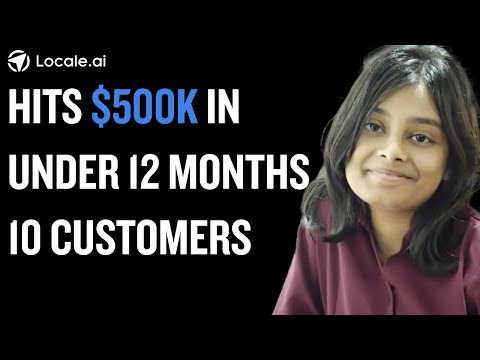
Key Takeaways
- 01Locale.ai launched its product in August 2020 and closed its first 10 customers within roughly one year of starting sales
- 02Average customer pays approximately $5,000 per month, with pricing based on data ingestion volume
- 03Seed round of $1,300,000 was led by Chiratae Ventures with participation from Better Capital
- 04Company was founded in March 2019 by Aditi Sinha and co-founder Rishab
- 05Team of 20: 11 engineers and 9 on the business side, with an office being set up in Bangalore and a hybrid model open to remote hires
- 06Growth came from a combination of outbound cold outreach on LinkedIn and email plus inbound leads from its own content
- 07Customers span multiple geographies including Europe, with one customer operating across 90 cities worldwide
- 08Co-founders split equity 50/50 at founding
- 09Locale.ai targets delivery, mobility, logistics and on-demand companies with moving assets
Company Metrics at Time of Interview
| Metric | Value | Source |
|---|---|---|
| Annual Revenue Run Rate (2021) | $480K | Founder interview, Dec 2021 |
| Customers (2021) | 10 | Founder interview, Dec 2021 |
| Average Revenue Per Customer (2021) | $5,000 per month | Founder interview, Dec 2021 |
| Seed Round (2021) | $1,300,000 | Founder interview, Dec 2021 |
| Team Size (2021) | 20 | Founder interview, Dec 2021 |
| Year Founded | 2019 | Founder interview, Dec 2021 |
| Product Launch | August 2020 | Founder interview, Dec 2021 |
Growth Breakdown
Revenue
Locale.ai reached approximately $480K in annualized revenue by December 2021, about a year after it began selling in earnest. The product had launched in August 2020, and the company went from effectively no revenue to roughly $5,000 per customer per month across 10 customers.
Customers
The company serves 10 customers spanning multiple geographies, ranging from small operators working in one or two cities to a large enterprise operating across 90 cities worldwide. Felix, an electric bike sharing company in Europe, is one named customer.
Team
Locale.ai has grown to 20 people, with 11 engineers and 9 people on the business side. The team is headquartered in Bangalore and operates on a hybrid model, with remote hires also considered.
Funding
The company raised a $1,300,000 seed round in 2021 led by Chiratae Ventures, with participation from Better Capital. An earlier pre-seed round was raised when the company was five to six months old; Sinha declined to disclose the amount, saying it had never been announced publicly. The majority of capital is being deployed into engineering hiring and sales expansion.
Growth Strategy
Outbound Cold Outreach
The primary customer acquisition channel has been outbound sales, with the team reaching out to prospects directly via LinkedIn and email. Aditi credited this as the main driver behind landing the first 10 customers.
Content-Driven Inbound
Locale.ai also generates a portion of customers through inbound content marketing. Aditi noted that inbound leads come with a shorter sales cycle because prospects already have an identified need when they reach out.
Usage-Based Pricing Tied to Customer Growth
The pricing model is based on data ingestion volume, with a base platform fee and additional packs for more data points. This structure allows Locale.ai to grow revenue alongside its customers as their operations scale.
Targeting High-Density Verticals
The company focuses on hyper-local delivery, mobility, ride sharing and on-demand logistics, verticals where location intelligence is a core operational need. Sinha said the biggest customer cohort sits in the hyper-local market, because the problem statements in mobility and on-demand delivery are close to identical.
Investor Network for US Expansion
Locale.ai has US-based angel investors, including a former Uber executive. Aditi planned to leverage these relationships during a US trip to build customer and investor pipelines ahead of a Series A raise.
Best Quotes
“So, our overall target market is any company that has moving assets, it's what we call. So, that moving asset could be a vehicle, delivery people, salespeople, trucks. So, the companies that we are going after are delivery, mobility, logistics and so on.”
“So, our pricing is actually based on the amount of data that we ingest from them. So, we have a base platform cost and every additional data point that they send is divided into different packs. So, it ensures that, you know, as the company is growing, we also grow along with them.”
“It's about $5,000 per month. I would say I would quote that as an average number. And of course, it depends on like how large the company is, what are the number of teams that we're working with and what are the use cases.”
“So, we have about 10 customers. These customers are divided into, I would say, very different sizes. So, we have customers who work in one or two cities and we have a customer that works in, let's say, 90 cities all over the world.”
“So, it's a lot of things. But overall, so most of our customers, we try to reach out to them. So, it's a purely outbound effort. We try to reach out to them on LinkedIn, email and so on. But we also get some percentage of customers that are purely inbound that we get through our content.”
“We raised a seed round this year from one of the top tier institutional VCs here in India. They are called Chiratae Ventures. And in addition to that, we had people who participated from our last round including Better Capital from India.”
“So, size of the seed round was $1,300,000”
“Most of it is in the engineering segment. As you know, it's so, so, so hard to find good engineers. So, I'm going to put a shameless plug here saying that we are hiring.”
What Happened Next
This interview captured Locale.ai at an early stage in December 2021, approximately one year into active sales, with 10 customers and roughly $480K in annualized revenue. At the time, Aditi was planning a US trip to begin Series A conversations and targeting a revenue milestone of $750K to $1M ARR before raising. Visit the Locale.ai company profile on GetLatka for current metrics and any updates since this recording.
View Locale.ai’s current profile and metricsFull Transcript
Chapters
- 0:00Introduction and Company Overview
- 0:26Target Market and Customer Use Cases
- 1:14Pricing Model and Data Ingestion Packs
- 1:45Average Revenue Per Customer
- 2:43Company Founding and Product Launch Timeline
- 2:57Customer Count and Geographic Spread
- 3:29Where the Business Stood a Year Earlier
- 4:01Fundraising History and Seed Round Details
- 5:14Co-Founder Equity Split and Seed Round Dilution
- 5:55Series A Plans and Revenue Goals
- 7:24Customer Acquisition Strategy
- 8:02Team Size and Engineering Hiring
- 8:18Most Unique Customer Use Case
- 9:34Capital Allocation and Growth Plans
- 10:06Office Setup and Remote Work Policy
- 10:30Famous Five Rapid Fire Questions
Introduction and Company Overview
Nathan Latka
00:00Hey folks, my guest today is Aditi Sinha. She is building locale dot ai, the control tower for operations team. She's one of the co founders. The company was started in 2019 when she and her co founder, Rishab, spotted a problem while working on data projects in their previous company. Locale is now 20 people strong and has clients in multiple geos. She has a graduate from BITS Pilani in India with a master's degree in economics and finance.
00:22Aditi, are you ready to take us to the top?
Aditi Sinha
00:24Yes, definitely. Great to be here.
Target Market and Customer Use Cases
Nathan Latka
00:26You bet. Okay. So, who's paying for locale dot ai and how are they using you?
Aditi Sinha
00:31Definitely. So, our overall target market is any company that has moving assets, it's what we call. So, that moving asset could be a vehicle, delivery people, salespeople, trucks. So, the companies that we are going after are delivery, mobility, logistics and so on. So, right now, we have global customers from across all geographies. For example, one of the companies that we work with in Europe is called Felix and they are an electric bike sharing system and they
01:01use the product to understand things like where are users booking their apps and whether the users booking their bikes. And if they are booking the bikes in those areas, do they have bikes available or not? Right?
Nathan Latka
01:12Interesting.
Aditi Sinha
01:12So, these kind of problems.
Pricing Model and Data Ingestion Packs
Nathan Latka
01:14And how is a company like Felix paying you? Is it per API call or a flat SaaS fee or how do you model it?
Aditi Sinha
01:20Sure. So, our pricing is actually based on the amount of data that we ingest from them. So, we have a base platform cost and every additional data point that they send is divided into different packs. So, it ensures that, you know, as the company is growing, we also grow along with them.
Nathan Latka
01:37Data measured by what? Like, again, of API hits or like measured by what?
Aditi Sinha
01:42Yeah, number of API hits could be a good proxy. You can say that.
Average Revenue Per Customer
Nathan Latka
01:45Okay. Okay. And then, so what's the average customer? I'm sure you have a range, but what's the average customer paying you per month or per year to use the tech?
Aditi Sinha
01:52Sure. It's about $5,000 per month. I would say I would quote that as an average number. And of course, it depends on like how large the company is, what are the number of teams that we're working with and what are the use cases.
Nathan Latka
02:06Yep, very interesting. Some of your work solutions you put on your website are things like hyper local delivery, ride sharing apps, app based workforce logistics and supply chain companies. Which one of these four industries is your biggest cohort, your biggest customer base?
Aditi Sinha
02:23Sure. So, biggest customers right now belong to the overall hyper local market, right? Which would include not only mobility companies but also like your on demand delivery, right? So, you tap something on the button and it comes to you. The problem statements in both those companies are quite similar, right? Which is what I was explaining to you earlier as well.
Company Founding and Product Launch Timeline
Nathan Latka
02:43Interesting. Okay, give me the backstory. When did you launch?
Aditi Sinha
02:47So, we started the company in March 2019. We launched the product last year in August. So, it's going to be about three years since we started the company.
Customer Count and Geographic Spread
Nathan Latka
02:57That's amazing. And how many customers today?
Aditi Sinha
03:00So, we have about 10 customers. These customers are divided into, I would say, very different sizes. So, we have customers who work in one or two cities and we have a customer that works in, let's say, 90 cities all over the world.
Nathan Latka
03:14And then Aditi, can I take 10 customers times 5,000 a month on average? You're doing about 50,000 a month in revenue right now?
Aditi Sinha
03:22Approximately, yes. A little less, but approximately, yes.
Nathan Latka
03:26So, maybe more like 40,000, something like that?
Aditi Sinha
03:28Something like that, yeah.
Where the Business Stood a Year Earlier
Nathan Latka
03:29And if that's where you are today, where were you exactly a year ago so we can calculate growth rate?
Aditi Sinha
03:34Actually, at this time of the year, we had just launched the product. So, this time of the year was when we started doing sales. So, all the sales effort over the last year or to come to this point has accumulated in this last one year.
Nathan Latka
03:50So, maybe like a thousand bucks a month or something very small a year ago.
Aditi Sinha
03:54Yes.
Nathan Latka
03:55Very cool. Alright, we love that. Now, have you bootstrapped this and kept your equity or did you decide to raise?
Fundraising History and Seed Round Details
Aditi Sinha
04:01No, we have actually raised. We raised a seed round this year from one of the top tier institutional VCs here in India. They are called Chiratae Ventures. And in addition to that, we had people who participated from our last round including Better Capital from India and
Nathan Latka
04:20And what was the size of the seed round?
Aditi Sinha
04:22Sure. So, size of the seed round was $1,300,000
Nathan Latka
04:26And how big was the pre seed round?
Aditi Sinha
04:28The pre seed round was quite small. We have not actually disclosed the amount publicly anywhere as of now. But yeah, at that moment, we were just about five to six months old. So, it was quite small for us to just, you know, build the product.
Nathan Latka
04:43Yeah, you're talking like 40 or $50,000 in the pre seed round, something small.
Aditi Sinha
04:48A little bit more than that. Yeah. But as I said, we have not announced that publicly yet.
Nathan Latka
04:53Why would you not announce that publicly, but you would announce the 1,300,000 seed round? Why would it matter?
Aditi Sinha
05:01Because at that moment, it was just a call that we took because the round was a little small and we're still figuring out a lot of our stuff including, you know, what is it that we do, what is our positioning, a lot of those type of things.
Co-Founder Equity Split and Seed Round Dilution
Nathan Latka
05:14And how have you and your co founder thought about this? When you guys launched the business, did you just say, you know what, Aditi, we're equal partners, we'll just split it fifty fifty or did you do something different?
Aditi Sinha
05:24No, we did not do anything different.
Nathan Latka
05:26You just said fiftyfifty, let's move on.
Aditi Sinha
05:29Right.
05:30Yes.
Nathan Latka
05:30That's funny. Okay, but then there's two of you, Two co founders?
Aditi Sinha
05:34Yes.
Nathan Latka
05:34Okay. So when you went out obviously to do the seed round, you're raising 1,300,000. Most people today, they're doing a seed round are selling 10 to 20% of the business. Were you guys sort of in that same range?
Aditi Sinha
05:44Yes.
Nathan Latka
05:45Okay. Interesting. So call it like a 10 to 15,000,000 valuation, something like that. Okay. Interesting. And are you raising more capital now or are you still using your seed around money?
Series A Plans and Revenue Goals
Aditi Sinha
05:55So the idea is for us to raise a series a in the next six months or so is what we have planned out. So we have some revenue goals in mind that we want to hit. And you know as we sort of start preaching there, start building those relationships, start those conversations. Yeah and by the way, also going to travel to The US very soon.
06:19Yeah, so the idea would be to sort of start those conversations with some investors. We have some angel investors already from US. So, the chief global officer, ex CPO at Uber is one of our investors. So, a lot of these people I really want to meet face to face because we've just been meeting with them on video.
Nathan Latka
06:37That's amazing. Which city are you coming to in The US?
Aditi Sinha
06:40So, I have some family in SF, so I'm going to start from there. And yeah, then I need to plan my entire trip. Also, depending on, you know, where do we land a lot of these calls with our customers.
Nathan Latka
06:51Yeah, Neyar, $40,000 a month today in revenue. What's your revenue? What do you think you need to hit before you can go raise a good Series A?
Aditi Sinha
06:57Sure. So, a lot of like offers you started getting now, to be very honest. But we wanted to actually, you know, sort of hold off a little longer and try to get to like seven fifty ks approaching to a mill sort of a thing. So that, you know, when we go, come from a position of, you know, strength.
Nathan Latka
07:18Yep. No, that makes a lot of sense. And Aditi, how did you get these first 10 customers?
Customer Acquisition Strategy
Aditi Sinha
07:24So, it's a lot of things. But overall, so most of our customers, we try to reach out to them. So, it's a purely outbound effort. We try to reach out to them on LinkedIn, email and so on. But we also get some percentage of customers that are purely inbound that we get through our content. So, essentially, we want to double down on that as we go forward and sort of build a repeatable engine to get more
07:50and more inbound customers, right? Because when people are reaching out to you inbound, they already have a need, are looking for a product and it's much easier to sell to them with a smaller sales cycle.
Nathan Latka
07:59Yep, that's fair. Talk to me about your team today. How many folks?
Team Size and Engineering Hiring
Aditi Sinha
08:02So, are 20 people.
Nathan Latka
08:0420 people. How many engineers?
Aditi Sinha
08:07About 10? 11 engineers and I am so sorry about that.
Nathan Latka
08:12That's okay.
Aditi Sinha
08:1311 engineers and nine people in the business team.
Most Unique Customer Use Case
Nathan Latka
08:18Very interesting. And talk to me a little bit more about what you're building next. Like, actually, what's the most unique use case somebody is using you for right now?
Aditi Sinha
08:27Sure. So, we people use our product to understand anything that they want about their areas or any like behavior of their drivers, users, anything on their operations. Right? So, example, think of yourself to be InstaMart or InstaCart, sorry, or Postmates and understand okay what are the areas where you are not getting demand, are getting demand where you are doing delays, cancellations, all of that. So it's a lot of those kind of someone is at the door,
08:55Nathan. There's no one in the house. I'm so sorry.
08:57Can I please
08:58Go go grab it?
Nathan Latka
08:59I'm gonna yeah. Go grab it. I'm gonna describe I'm gonna describe a use case while you do that. So, one of the very interesting use cases on the website that Aditi has is are effectively ride sharing companies that use the platform. And the ride sharing companies can track where users drop off or where they leave their scooter, right? So where they drop the scooter. And that will inform Bird or Lime or whatever
09:21the scooter company is that, Hey, users are dropping off here. We should open up a hub there and deploy more scooters. They can track, you know, things like completion rates on the ride, conversion ratios, things like that. So that's a really good use case.
Aditi Sinha
09:32Yep, exactly.
Capital Allocation and Growth Plans
Nathan Latka
09:34All right, Aditi. Very cool. Okay, good stuff. Talk to me about where you're investing the capital right now that you raised. Is it in engineering, sales, somewhere else?
Aditi Sinha
09:43Most of it is in the engineering segment. As you know, it's so, so, so hard to find good engineers. So, I'm going to put a shameless plug here saying that we are hiring. But having said that, yeah, most of it is in engineering, some of it is on the business side as well. And sort of, you know, hire more sales folks and sort of get people penetrate more in our existing geographies.
Office Setup and Remote Work Policy
Nathan Latka
10:06Are you fully remote? Can people apply to work for you wherever they are in the world?
Aditi Sinha
10:10So, we are actually setting up our office in Bangalore, but we are not just restricted to that. So, we are following sort of a hybrid model. If people are remote, they can definitely apply to us. We will figure out some vocations or times and places where we could meet with them as well.
Famous Five Rapid Fire Questions
Nathan Latka
10:30Very cool. Alright, let's wrap up with The Famous Five, Aditi. Number one, favorite book?
Aditi Sinha
10:36Creativity Inc. By Ed Catmull. He's the CEO of Pixar.
Nathan Latka
10:40Number two, is there a CEO you're following or studying?
Aditi Sinha
10:44Brian Chesky from Airbnb.
Nathan Latka
10:46Number three, what's your favorite online tool for building your business?
Aditi Sinha
10:51I love Notion. But there are so many tools we cannot live without, including GitHub that we use extensively at locale.
Nathan Latka
10:58Number four. How many hours of sleep do you get every night?
Aditi Sinha
11:01How many hours of sleep?
11:05I try to not compromise on my sleep, so I try to get seven to eight hours of sleep every day.
Nathan Latka
11:11That's good. And what's your situation? Married, single, kids?
Aditi Sinha
11:15Single, of course.
Nathan Latka
11:16Okay, not married, no kids.
11:17How old?
11:18Do you mind me asking how old you are?
Aditi Sinha
11:20I'm 26.
Nathan Latka
11:2126.
11:22Last question. Something you wish you knew when you were 20.
Aditi Sinha
11:25When I was 20 years old.
Nathan Latka
11:27Yeah.
Aditi Sinha
11:30Enjoy life as much as possible. Enjoy college. Figure out what you really, really want to do and just go with the flow. So not what I would like to change.
Nathan Latka
11:38Locale.ai, they help delivery companies, ride sharing companies understand what's happening in a hyper local fashion with their API. They had a thousand bucks a month in revenue a year ago, now $40,000 a month in revenue as they look to keep scaling. Just closed a $1,300,000 seed round this year. I'd call it like a 7 to $15,000,000 valuation. Looking to raise a series a as they get closer to a million dollar run rate with their team of
11:5820. 11 engineers based in Bangalore are growing quickly.
12:00Aditi, thank you for taking us to the top.
Aditi Sinha
12:03Thank you so much, Nathan. And I'm so sorry there were so many background noises that you were making.
Nathan Latka
12:08No problem. You did great. Thanks for coming on.
Aditi Sinha
12:11Thank you so much again.
Nathan Latka
12:14One more thing before you go. We have a brand new show every Thursday at 1PM Central. It's called Shark Tank for SaaS. We call it deal or bust. One founder comes on three hungry buyers. They try and do a deal live and the founder shares back end dashboards, their expenses, their revenue, ARPU CAC, LTV, you name it, they share it and the buyers try and make a deal live. It is fun to watch every Thursday 1PM
12:39Central. Additionally, remember these recorded founder interviews go live. We release them here on YouTube every day at 2PM Central. Make sure you don't miss any of that, make sure you click the subscribe button below here on YouTube, the big red button and then click the little bell notification to make sure you get notifications when we do go live. I wouldn't want you to miss breaking news in the world, whether it's an acquisition, a big fundraise, a
13:02big sale, a big profitability statement or something else. I don't want you to miss it. Additionally, if you want to take this conversation deeper and further, we have by far the largest private Slack community for B2B SaaS founders. You want to get in there. We've probably talked about your tool if you're running a company or your firm if you're investing. You can go in there and quickly search and see what people are saying. Sign up for
13:23that at nathanlatka.com/slack. In the meantime, I'm hanging out with you here on YouTube. I'll be in the comments for the next thirty minutes. Feel free to let me know what you thought about this episode and if you enjoyed it, click the thumbs up. We get a lot of haters that are mad at how aggressive I am on these shows, but I do it so that we can all learn. We have to counter those people. We got
13:42to push them away. Click the thumbs up below to counter them and know that I appreciate your guys'support. Alright, I'll be in the comments. See you.