Valuation
$15M
2024 Revenue
$3.8M(Est.)
Customers · 2021
90
Funding
$6M
Team
26
Founded
2014
MedStack Revenue, Valuation & Funding (2024)
MedStack is a Toronto-based compliance infrastructure platform founded in 2015 by Simon Woodside and Balaji Gopalan. The company provides a secure, HIPAA-compliant hosting environment for digital health application developers, enabling those developers to meet the security and privacy requirements demanded by hospitals, insurance companies, and other healthcare institutions.
As of late 2021, MedStack was approaching $2 million in annual recurring revenue, up from roughly $360,000 in 2018, and had grown its customer base to approximately 90 companies. The company closed a $3.1 million seed round in 2021, led by Blue Ventures and TELUS, bringing total disclosed funding to $5.5 million at a reported $15 million valuation.
Gopalan serves as CEO and Woodside as CTO. The two co-founded the company together in 2015 and have maintained meaningful equity positions through two seed rounds. With a 15-person team, nine of whom are engineers, MedStack is investing its latest capital in scaling engineering capacity and expanding multi-cloud support beyond its current Azure infrastructure.
Last updated
MedStack Revenue
MedStack was approaching $2 million in annual recurring revenue at the time of the November 2021 interview. Simon Woodside, the company's CTO and co-founder, confirmed the company was "just shy of $2,000,000 ARR" and expected to reach that threshold by year-end 2021, implying a monthly revenue run rate of roughly $167,000.
| Year | Milestone | Source |
|---|---|---|
| 2024 | MedStack Hit $3.8m revenue in October 2024 | Estimated |
| 2023 | MedStack Hit $3.2m revenue in November 2023 | Estimated |
| 2022 | MedStack Hit $2.6m revenue in November 2022 | |
| 2021 | MedStack Hit $1.9m revenue in November 2021 | |
| 2020 | MedStack Hit $672k revenue in April 2020 | |
| 2019 | MedStack Hit $528.9k revenue in December 2019 | |
| 2018 | MedStack Hit $378k revenue in July 2018 | |
| 2014 | Launched with $0 revenue |
The company's revenue trajectory shows consistent growth across multiple data points. In the middle of 2018, during a prior interview, CEO Balaji Gopalan reported approximately $30,000 per month in revenue, equivalent to roughly $360,000 annualized. By 2020, the customer count had reached 70 and annualized revenue was approximately $600,000. The host noted that 18 months before the November 2021 interview, monthly revenue stood at $50,000, and that by the interview date it had surpassed $150,000 per month. Woodside did not dispute those figures but offered the ARR figure as the more precise current measure.
From the 2018 baseline of roughly $360,000 annualized to the late-2021 run rate of just under $2 million, MedStack grew revenue approximately five times over roughly three and a half years. Applying the trailing growth rate as a ceiling and assuming some deceleration, a GetLatka estimate for 2022 ARR would fall in a range of approximately $2.4 million to $2.8 million. That estimate is modeled from the stated near-$2 million ARR base and the company's own stated intent to grow quickly with fresh capital; it is not a figure Woodside confirmed.
MedStack Valuation, Funding Rounds
MedStack reached a $15M valuation in 2021.
MedStack has raised $6M in total funding across 3 rounds, with its most recent round in 2021.
| Year | Round | Amount | Valuation | % Sold | Source |
|---|---|---|---|---|---|
| 2021 | Funding round | $3.1M | $15M | 21% | |
| 2019 | Seed | $2.4M | - | - | |
| 2017 | Angel Round | $450K | - | - |
Founder / CEO
Balaji Gopalan
CEO
MedStack was co-founded in 2015 by Balaji Gopalan and Simon Woodside. Gopalan serves as CEO and has been the primary spokesperson in prior GetLatka interviews, including at least two appearances before the November 2021 episode. Woodside serves as CTO and was the guest in this interview.
Woodside holds a computer science degree from the University of Waterloo and previously worked at Apple as part of the core operating system group in an engineering program manager role. He described himself as primarily technical and noted that Gopalan handles fundraising and investor relations as the operating CEO.
Woodside was 44 years old at the time of the November 2021 interview. Net worth was not discussed for either founder. A rough GetLatka estimate based on the stated $15 million valuation and an approximate combined founding equity stake after two rounds of roughly 20 percent dilution each would suggest meaningful but unconfirmed paper value; however, exact ownership percentages were not disclosed and any such estimate would carry significant uncertainty. No net worth figure should be treated as confirmed.
Q&A
| Question | Answer |
|---|---|
| What's your age? | 47 |
| Favorite online tool? | - |
| Favorite book? | - |
| Favorite CEO? | - |
| Advice for 20 year old self | - |
Customers
MedStack had approximately 90 customers as of the November 2021 interview, up from 70 roughly a year and a half earlier. Named customers include Keriton, which operates a system managing bottles of mother's milk in neonatal intensive care units, and Inkblot, a digital psychotherapy and telemedicine platform that was acquired by Canadian insurer Green Shield around the time of the interview.
Average revenue per customer was approximately $1,500 to $2,000 per month, with Woodside citing $1,500 as the average and noting a wide range across the customer base. That figure represented nearly double the ARPU reported in an April 2020 interview. Woodside attributed the increase to a shift toward a SaaS-style tiered pricing model with a smaller variable component tied to infrastructure pass-through costs, as well as organic growth among existing customers who have scaled their own businesses on the platform.
MedStack does not appear to offer a free tier based on the interview. Pricing is structured around base tiers with variable costs passed through at cost for virtual machines and database instances.
MedStack serves 90 customers.
MedStack Business Model
MedStack generates revenue by charging digital health application developers a monthly platform fee for access to its compliant hosting infrastructure. The model combines a base SaaS tier with a variable component that passes through the cost of underlying cloud resources, primarily Azure virtual machines and database instances, at cost. As of November 2021, MedStack was running 750 virtual machines and database instances on Azure.
Net dollar retention was reported at approximately 110 percent as of 2021, meaning existing customers expand their spending on the platform over time at a rate that more than offsets any churn. Woodside indicated the figure was in the range of 1.1 to 1.2 times, settling on approximately 110 percent when pressed. Profitability was not explicitly confirmed. Woodside said the company could theoretically have reached revenue neutrality without the 2021 raise but chose to invest in growth instead. Gross margin, burn rate, runway, CAC, LTV, and churn rate were not discussed in the interview.
The platform's value proposition centers on compliance automation. MedStack enforces security defaults that customers cannot override, including firewalls on by default, encrypted communications, and mandatory backups, and provides guidance to customers completing vendor security questionnaires from hospital and insurance buyers. One such questionnaire in progress at the time of the interview contained 330 questions.
Point-in-time figures shared on the GetLatka podcast, each linked to the exact moment it was said on camera.
Customers (2021)
90
“Nathan Latka: How many total customers are you working with today? Simon Woodside: I think it's around 90.”
WatchAverage revenue per user (2021)
$1,500
“Simon Woodside: The average is gonna fall like 1,500 to 2,000 US dollars a month.”
WatchNet dollar retention (2021)
110%
“Nathan Latka: What does net dollar retention look like year over year? Is it above 100? Simon Woodside: Yeah. It is. NRR is over 100. It's very good. No. I don't think we're quite there. I think it's like 1.1 or 1.2, something like that.”
WatchMedStack Employees & Team Size
MedStack had 15 full-time employees as of November 2021, up from a smaller base prior to the 2021 seed round. Nine of those 15 are on the engineering team, including Woodside himself. The company planned to add a few more engineers before year-end 2021.
Woodside described the entire capital raise as going into people, with the engineering team having roughly doubled or more than doubled following the close of the 2021 round. The team is organized around high reliability engineering, application support engineering, and core engineering functions.
MedStack employs approximately 26 people as of 2026, including 4 sales reps that carry a quota. It serves 90 customers that rely on its solutions.
| Year | Milestone | Source |
|---|---|---|
| 2024 | Reached 26 employees (October 2024) | |
| 2023 | Reached 26 employees (November 2023) | |
| 2022 | Reached 21 employees (November 2022) | |
| 2021 | Reached 15 employees (November 2021) | |
| 2020 | Reached 7 employees (November 2020) | |
| 2020 | Reached 7 employees (April 2020) | |
| 2018 | Reached 7 employees (July 2018) |
Frequently Asked Questions about MedStack
What is MedStack's revenue?
MedStack generates an estimated $3.8M in annual revenue.
Who founded MedStack?
MedStack was founded by Balaji Gopalan.
Who is the CEO of MedStack?
The CEO of MedStack is Balaji Gopalan.
How much funding does MedStack have?
MedStack raised $6M across 3 rounds.
How many employees does MedStack have?
MedStack has 26 employees.
Where is MedStack headquarters?
MedStack is headquartered in Toronto, Ontario, Canada.
Compare MedStack to the industry
MedStack operates across multiple industries. Browse revenue, funding, and growth data for MedStack in each sector below.
Full Interview Transcripts
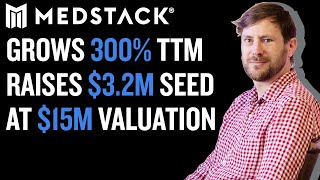
MedStack Grows 300% TTM, Raises $3.2m Seed at $15m ValuationNov 9, 2021
[00:00] Hey, folks. My guest today is Simon Woodside. He's the cofounder of medstack, which is helping secure platform for digital health. He's got a CS degree at the University of Waterloo and as part of the Apple core operating system group, engineering program manager. Before that, Simon, you ready to take you to the top? [00:14] >> I am. Thank you, Nathan. All right. [00:16] Tell us what medstack is. Are these hospitals that are paying you for HIPAA compliant solutions or where are you playing? [00:22] >> We definitely are dealing with hospitals and insurance companies, but they are at one removed from us. So our direct customers are digital health app makers, and then they, in turn, are selling to hospitals and insurance companies. [00:33] So give me an example of a customer. Can you name one or two? [00:36] >> Sure. I'll give you a couple. So one is a really cool company called Keriton, and they're in neonatal intensive care units, and they are operating a system that manages bottles of mother's milk, which is critical of these. Have to always go to the right person at the right time without too much delay. So that's a pretty mission critical system with a lot of availability requirements. And another really awesome customer is called Inkblot. They are doing digital [01:06] >> health or sorry, They're doing digital health [01:11] >> therapy. So it's like remote telemedicine, one on one with real people, psychological therapy, psychotherapy, and they're pretty big. They were just bought by an insurance company, Green Shield. So yeah. [01:25] And Simon, what are these companies paying on average per month to use the technology? [01:30] >> Yeah. So the average is, there's definitely quite the range from small to large, but kind of like typically between, our average is gonna fall like 1,500 to 2,000 US dollars a month. [01:42] Okay. So that's up significantly since our last interview in April 2020, almost double the ARPU you told me back then. Are you moving upstream on purpose? [01:52] >> Yeah. I mean, it's we're not no. So so we're not trying to exclude small companies. I would say we've had a lot of companies grow on the platform. We've had new companies join that are bigger. We have changed our pricing model. So we've moved to more of a SaaS pricing model where we have a base set of tiers, and then the variable component is much, much, much smaller. It's basically like, because we're hosting like we're a [02:19] >> hosting platform, we just pass through the price of a virtual machine or a database instance. So, yeah, we've just adjusted our pricing, we've had a bunch of customers grow a lot too. [02:31] Understood. So how many total customers are you working with today? [02:34] >> I think it's around 90. [02:36] 90. Okay. Yeah. [02:37] >> You told me 70 about a year and a half ago. [02:38] So you've added about, call it, ten, twenty more, which is great. And then can I mean, can I multiply those together? 90 times $2,000 a month. You guys are what? $180,000 [02:46] >> a month right now in revenue? That's about right. Yeah. We're just we're just shy of 2,000,000 ARR, so it's, like, probably a little bit less than that. But we'll we'll be hitting 2,000,000 ARR by the end of the year. [02:57] I love stories like this. I don't know if you remember. You know, our first interview was back in the middle of twenty eighteen. Do you remember that? [03:02] >> Well, so yeah. So you interviewed my my CEO, business partner, cofounder Balaji Yes. I think twice now. Right? [03:09] Yes. Oh, okay. That was him, not Got it. [03:11] >> It was him. Yeah. So I'm the CTO. [03:14] Very cool. [03:14] >> So, you know, I did I did get some of the numbers and make sure I had them right. But I'm more I'm more expert in other parts of the business. [03:21] Well, just love I should have begged you to write a check back in 2018 because, Balaji, you shared back then you guys were doing about $30,000 a month in revenue. You're now five times as big here four years later. So this is a this is an exciting story. Now, Simon, have you been able to do this funded by customer growth after your 2,400,000 seed round in 2019, or did you raise more? [03:41] >> We've raised more. Yes. So we actually just completed a raise of 3,100,000. And [03:49] >> so that was led by Blue Ventures and Telus, one of our previous investors as well. But, yeah, I mean, we're making good money as well. So, I mean, theoretically, we might have been able to go revenue positive, but, you know, we wanna grow. Like, we see a huge, huge, huge opportunity, like, you know, you say a billion dollar opportunity. Like, it's bigger than that. You know? And so we wanna continue to grow quickly, and that that [04:13] >> meant you know? And we have some great and and, you know, some of investors are great partners as well, so they open doors for us. [04:18] And you and you and Balaji are the two cofounders. Right? You just split fifty fifty at the start? [04:22] >> So so I mean, obviously Yeah. Me and Balaji co founded the company, yeah, back in 2015. [04:26] 2015. Okay. Yeah. So so, yeah, so so obviously just managing equity, right? I mean, you don't wanna take money unless you really have a good use for it to drive that growth because you two are both managing dilution. I mean, most people in their seed round are selling about 20% of the business. Is that sort of where you guys came at? [04:39] >> I don't have the exact numbers. We've done well, though. Like, know, we're we're pretty much on target in terms of what you'd expect. [04:45] Okay. So got it. You were right in that 20%. 20% range. Yeah. [04:48] >> Yeah. Yeah. We're in that ballpark. [04:50] Yeah. Yeah. Yeah. So, [04:54] >> pre money. Yeah. [04:55] So again, why I mean, that's a lot of dilution. Right? If you believe it's gonna be big, that's a lot of dilution. You absolutely needed that 3,100,000 or how'd you go through that rationale? [05:03] >> Well, like I said, we didn't absolutely need it. We could have gone revenue neutral, but we wouldn't we wouldn't be growing anywhere near the way we can with the capital. So that's definitely a factor. But the other factor is just that, you know, like, one of our new investors is is a a cybersecurity investor. Mhmm. The the other lead investor for this round is TELUS, which is known as as a as a big Canadian well, the [05:30] >> biggest, I think, Canadian telecommunications operator, but they are also a huge health division. So they have a huge digital health or EMR EHR operation. So both of those really help us out. We have good board members who are really helping us out, connecting us with partners, that kind of thing. Gives us a lot of credibility as well. We're in a trust business. What we're doing is enabling our customers to be trusted by their customers. All those [05:57] >> hospitals, clinics, insurance companies need to be able to trust them to curate or to handle their protected health information with due diligence, with security, with privacy. And so for us, trust is paramount. And so having these kinds of backers is a big value for us. [06:14] Understood. What's the team look like today? How many folks full time? [06:18] >> Oh, we're 15 now. [06:19] 15. [06:20] >> We've grown rapidly since we raised. [06:22] And are you so so where do you intend to invest most of that money? Or is it just a signal you want to send to the market and say, look, you can trust us. We've raised all this money. We're not gonna shut down tomorrow. [06:31] >> It's all going into people. [06:32] But what kind of people? [06:33] >> It's staff. So we've just doubled or more than doubled. We're just doubling our engineering team. [06:41] How many are total engineers today? [06:44] >> So we're at nine on our engineering team today, including me, and we're still gonna add a couple more by the end of the year. Mhmm. And so, like, we're we're scaling up that operations and engineering teams, high reliability engineering, application support engineering, core engineering, all that stuff. We want to scale. We need the platform to be scalable. It already was a highly scalable platform, but our goal is always to, again, trust, right? So we want to [07:11] >> stay ahead of the market. So the way we approach security is most people are like, Do you have a security team? Our whole company is a security team. People say, What's your scalability? We have built the whole product. It's like over engineered effectively. And we need to continue to do that to always be ahead of the game so we don't have problems. I kind of harp on a broken record or something here, but it's super important [07:38] >> for [07:39] 15 folks, nine engineers hiring. When you guys look at retention of these kinds of customers you're working with, what does net dollar retention look like year over year? Is it above 100? [07:48] >> Yeah. Yeah. It is. NRR is over 100. It's very good. [07:52] So would consider very good compared to others, like, in the 140% range. Are you that high? [07:57] >> Oh, yeah? No. I don't think we're quite there. Think it's I don't I don't I think it's it's like 1.1 or 1.2, something like that. [08:05] Okay. So, like, a 120%. That that's I would say that's that's that's, like above average. But some of, I mean, it's crazy. When you look at a lot of valuations happening today, some of the valuations where you're seeing forty and fifty X multiples are ones where net dollar retention is like 150%. Even if revenue growth overall is slower, but your NDR is really high, that's by far where the premium valuations are happening today. I'm actually surprised [08:25] that you guys did you guys run a competition the seed round? I'm actually surprised that you did this at 15,000,000. I've seen with your same comps raising at like 30 and 40 pre. It sounds like you optimized for strategics here though. [08:37] >> Strategics. And the other things I wanna say, Nathan, is that it's like the the business we're in is not currently like a sexy VC area. You know? It's like platforms were kind of super sexy, like maybe ten, five, ten years ago. Right now, it's not as much. [08:56] Mean, what sexy went from is $50,000 a month in revenue to $150,000 in revenue in the last 18 Who cares? I mean, the more niche you are, the better. The more vertical you are, the better, the bigger moat you can build. I don't I don't agree with the statement that you're in a not sexy space. [09:10] >> We are. I mean, I think we are. I love it. I wouldn't be anywhere else. And then the other thing is we're a Canadian company, so we don't get the Silicon Valley. If we were a Silicon Valley company, yeah, we would have it would be a different story. But you know what? We like [09:23] Well, mean, no no one's in Silicon Valley right now. Everyone's behind their Zoom screens. Anyway, did you I mean, I guess what I'm asking, did you run a process, or was this the one term sheet you looked at that you you went with? [09:35] >> Yeah. No. I think we had multiple I I'm not sure, to be honest. I I I know that we had we had some [09:41] You have Balaji handle all that? [09:43] >> He's the CEO. Right? I'm the CTO. Don't I don't do I'm not the frontline fundraiser. [09:48] Yeah. Fair enough. Yeah. [09:50] >> I think we got we feel we got a good deal. [09:52] Talk to me more about the engineering stuff. So so what's next what's next on the engineering side of things? What's the next product look like? Product release? [09:59] >> A big push for us is multi cloud support. So we want to have the ability to support AWS and Azure. We're pretty focused on Azure right now. AWS is a big deal for our customers, and so that's the big push, probably one of our biggest ones, but always it's scalability. So right now, for example, with Azure, we're hitting quota limits because we're running a lot of resources. It's seven fifty different VMs and databases, which may not [10:39] >> seem that much for some people running enterprise stuff, but we were certainly hitting quota limits, so we had to rearchitect around some technical stuff around subscriptions they have. The [10:50] >> other aspect of it that's really important is what do our customers really value? In the end, like I mentioned, trust. So how does that come through? What it comes through is our customers go to sell to an insurance company or hospital, and they go into an assessment process. So the hospital says, Okay, here's a questionnaire. Our security team, our compliance team provides questionnaire to the customer. So let's say to Inkblot or to Keriton or any of [11:21] >> our other customers. And it could be 150 questions. Just actually am working on one right now. It's three thirty questions. So it's not small. [11:31] >> We provide a lot of guidance to our customers on those questionnaires. So we can pretty much tell them how so we provide guarantees. And this is what really differentiates us from an Amazon or an Azure is for medstack, firewalls are on by default, and our customers can't turn them off. We encrypt all incoming communications. By default, you can't turn it off. We back up everything that our customers have and you can't turn it off. [11:56] There you guys have it. I feel like if you're looking at using medstack, you wanna hear from Simon talking about all this tech stuff that I do not understand. So, Simon, this makes a lot of sense. I'm glad to get the second half of of the story here with you coming on, but we're out of time for now. Let's wrap up with the famous five. Number one, what's your favorite business book? [12:14] >> High Output Management by Andy Grove. Everybody should read that. It's classic. [12:17] Number two, is there a CEO you're following or studying? [12:21] >> Tobi Lutke with Shopify. He's amazing. [12:25] Number three, what's your favorite online tool for building the business? [12:29] >> I mean, I'm just checking out Almanac right now. It's we're just trying it out, but it's pretty cool. [12:38] >> Almanac. [12:39] Number four, how many hours of sleep do get every night? [12:41] >> Around nine hours of sleep. [12:43] Okay. And what's your situation, Simon? Married, single, kids? [12:46] >> I'm single. [12:47] Okay. No kiddos. How old are you? [12:50] >> 44. [12:51] 44. Last question. [12:52] >> Something you wish you knew when you were 20. [12:55] >> I wish I knew when I was 20. I don't know. I'm not sure if I'd go back in time and change anything. [13:01] And another thing you would change, just something you wish you knew? [13:07] >> I wish I knew how to get good coffee back then. You couldn't get it around here. [13:11] This is really for someone else who's listening today who might be 20 years old. What's something they could learn from you? Right? Something you wish you knew. [13:16] >> Sure. Okay. That's that's that's that's a reasonable question. I think I hadn't kind of opened my mind at that point. I was very tech oriented. I hadn't opened my mind to the possibility, the interest of designing and developing businesses. [13:31] >> As a really interesting mental exercise, something you can really get into and work on using your brain. It's not just like smooshing. It's a lot of really hard work and interesting design development activities. [13:43] Guys, digital health applications use medstack.co for privacy and security compliance. Growth rate's impressive here. Eighteen months ago, doing $50,000 a month in revenue. Now doing over a $150,000 a month in revenue. Almost about to break $2,000,000 run rate as they look to scale $3,100,000 seed round. Recently sold 15 to 20% of the business as Simon scales up here. They've got a nine nine folks on the engineering team hiring fast. Total team fifteen has developed other products [14:07] for these digital health applications. Simon, thank you for taking us to the top. [14:11] >> You're welcome. Thank you, Nathan. [14:15] One more thing before you go. We have a brand new show every Thursday at 1PM Central. It's called Shark Tank for SaaS. We call it deal or bust. One founder comes on, three hungry buyers, they try and do a deal live and the founder shares back end dashboards, their expenses, their revenue, ARPU CAC, LTV, you name it, they share it and the buyers try and make a deal live. It is fun to watch every Thursday 1PM [14:40] Central. Additionally, remember these recorded Founder interviews go live. We release them here on YouTube every day at 2PM Central. To make sure you don't miss any of that, make sure you click the subscribe button below here on YouTube, the big red button, and then click the little bell notification to make sure you get notifications when we do go live. I wouldn't want you to miss breaking news in the SaaS world, whether it's an acquisition, a big [15:02] fundraise, a big sale, a big profitability statement or something else. I don't want you to miss it. Additionally, if you want to take this conversation deeper and further, we have by far the largest private Slack community for B2B SaaS founders. You want to get in there. We've probably talked about your tool if you're running a company or your firm if you're investing. You can go in there and quickly search and see what people are saying. Sign [15:24] up for that at nathanlatka.com/slack. In the meantime, I'm hanging out with you here on YouTube. I'll be in the comments for the next thirty minutes. Feel free to let me know what you thought about this episode and if you enjoyed it, click the thumbs up. We get a lot of haters that are mad at how aggressive I am on these shows, but I do it so that we can all learn. We have to counter those people. [15:43] We got to push them away. Click the thumbs up below to counter them and know that I appreciate your guys'support. Alright, I'll be in the comments. See you.
MedStack CEO Balaji Gopalan: HealthTech Company Expects To Hit $1m ARR As Critical Tech During COVIDJul 18, 2018
Intro you're gonna love this interview just got done editing it i'm glad i got it live for you i'll be in the comments for the next 30 minutes hanging out answering any questions you have in fact leave a comment below about data points or what you think is going to happen to the company and i will respond to every comment additionally if you're just loving the content click the thumbs up and i will go and check out your profile as well and give your videos some love as well in the meantime enjoy the interview About MedStack hello everyone my guest today is balaji gopalan he is the ceo and founder of a company called medstack focused on uh he is an educator and thought leader in the platform and software product strategy and is passionately driven by the role of technology in addressing societal problems medstack supports many digital health companies in protecting patient and as protecting the patient and has been awarded accolades in the canadian advanced technology alliance and tech crunch all right bellagio you ready to take us to the top i am indeed all right so give us a real example here because health you know health tech stuff people sometimes don't understand how is somebody using you and who is using you yeah that's right so our customers are companies building digital health solutions which is any kind of product that deals with health data in the cloud and health data could actually be something biological such as a condition or prescription or even just something that identifies the patient their address their appointments etc if you're a company dealing with any of that data working with someone in the healthcare system a hospital an insurance company public health organization clinic network etc they will require you to meet certain standards that they are beholden to from a legal perspective for protecting that patient's data those companies companies doing things like telemedicine at home monitoring health care scheduling even things like diet and fitness trackers and then more complicated things like monitoring medical devices they use us as a infrastructure with pre-built commitments and guarantees for to their customers of how they're handling the data in the cloud and what policies they are following we help them with all those guarantees we answer all the questions for them and then we provide them an infrastructure that's pre-defined with security and privacy protocols built in so that when they use this as a back end all those guarantees are actually met because of the virus Moving digital there's a lot of health care flows right now moving digital your business should be exploding right now it is indeed yes yeah uh i mean i'm i i need to be careful how i characterize it but i think the thing that i'd like to say is in this uh crazy situation we're in this pandemic a lot of people suffering we're fortunate that we have innovators who are building solutions we can take advantage of uh to solve some very very specific things pertinent to the pandemic the first is as the healthcare capacity gets strained with so many people going to the emergency department the importance of telemedicine and video consults with doctors not just for coping 19 testing but for any medical condition have suddenly become far more important especially if you consider maybe the patient or the physician themselves are in quarantine how do you continue with that engagement secondly things like using ai for genomics analysis and dna analysis to determine a vaccine and find a cure that has suddenly become more important companies that that do home monitoring for chronic conditions so that the patient doesn't have to go to their specialist if they have a heart condition or diabetes as much or as often because they have systems at home that monitor the condition that's become more important and then finally things like um remote testing devices for the virus itself which may be using a cloud-based technology in the back end and the data from the patient to determine if they actually have it there's a lot of companies working on building things like that and all of this requires data in the cloud and all requires trust because as soon as this mass adoption of this digital health technologies is coupled with a breach the public trust and the trust of the healthcare enterprises will be dropped and that will grind everything to a halt but is it isn't that less of a question of if and more of a question of when i mean if russia can get into like government accounts and emails right now and let's say all of us are now at home and we have you know let me come up with some device the device that you know the hospital will put on your finger to test like your oxygen levels in your blood let's say we all have one of those at our home and we transmit that weekly via digital you know channels to our healthcare providers let's say that gets hacked are you saying your technology basically is what sits in between there and tries to keep that safe yeah yeah so i mean anybody who's in it who's the security technologist will tell you that unhackable is a myth right so everything can be if you work long and hard enough at it what our technology does is provide the right kinds of assurances that says we are tracking who had access to the data when they accessed it how they accessed it from a back-end administrative perspective we're managing the the the giving of the rights and the removing of the rights of access to the data the data backups the infrastructure data security and the monitoring for such things as security incidents so we don't assume that that security incidents will never happen we provide a system in place to make sure that we know that they're happening and to reduce the likelihood so you don't necessarily have a bunch of cybersecurity experts that you pay on your payroll trying to prevent hacks what you're trying to say is you're going to document everything so if a hack does happen it's clearly documented well it's more than just documentation we have a system that monitors the infrastructure so that it knows automatically and provides us an alert if there is an untoward event interesting okay very good so last time Customers it came on was back in july of 2018 you said you were serving about 45 customers at that point how many customers are you serving today uh close to 70. okay it's been yeah yeah probably 70 by now uh obviously the last couple of months have been or last month last few weeks have been pretty interesting for us from a dynamics perspective um and we've had a lot of not only new customers come on board but a lot of growth with our existing customers and i think the big things that have happened since we last spoke uh there's been a number of pretty important changes the first one obviously we raised some financing at the end of that year um and that was used to completely from the ground up rebuild our product so how much raised to date uh total raise to date is uh 1.8 million Raised okay so you raised about 1.3 million after our interview yeah well sorry one pay 1.8 was the raise and then we'd raised half a million before that oh god yeah so 2.3 total um since the life of the company and uh and we used that we used the raise to rebuild a new product called med stack control which delivers all the same privacy and security commitments we delivered to those original set of customers but now introduces a lot more power for them because the problem was before they would need to work with us if they wanted to make any iterative changes to the technology architecture to support their app a bigger server a different server a different kind of framework running on the server all the security stuff we were handling but their ability to iterate was limited because it was a concierge service through us med stack control is a completely self-service machine driven system so they have a console they can log in they can add and delete administrative users and change and grow and shrink the infrastructure as they need so we launched that at the third quarter of 2019 it's the only thing we're selling now uh it's completely changed our kind of sales cycle and then we've also introduced a new business model that's more in tune with our value proposition this is actually a very recent development um but uh but it's worked very very well for us so now we're saying you know what you're paying for is med stacks assurances all of the policies all of the support for the questionnaires we're actually have a little bit of a national language processing element that helps us answer those questions as well and that's our sas fee on top of that we simply pass through the underlying cloud infrastructure cost that you actually use with a very small markup on top for the security technology that we had on top and that's our newest model customers are still you know average rpo still about 700 bucks a month it's grown a little bit because of the new business model but that's very very recent so we're probably close to a little bit over eight now maybe 850. okay 800-ish i mean so can i take 800 Monthly recurring revenue ish per month on average times those 70 employees i mean you're doing like 50-60 grand a month right now in revenue yes we are okay and that's up from like 20-30 grand a month about 18 months ago yeah so healthy growth now to drive that growth did you burn through that full 1.8 million or do you still have some of that cash in the bank we are doing a seat extension right now a lot of that was put towards the building of med stack control uh and some uh some marketing experience we did we've done a recent shift to a more inbound focus strategy which is actually working well for us uh and uh we've done a lot of sort of cleanup of our operational costs and infrastructure efficiency how much of these how much is the extension for uh the extension is a half a million Currentvcs okay and so i mean what is that like right now you're in the middle of a recession you're going back to your current vcs and potentially a new one saying hey can we get a half a million extension i mean how do you get that done in today's environment yeah it's it's not i i won't lie and say it's it's easy it is certainly challenging but what i think people are looking for is you know where do if you're an investor where do you go right now um with with so many companies that are cash unfortunately they hold cash but people are looking also for what's going to be the next thing and so we have had actually a good amount of interest from people saying well what is this digital health thing that everybody seems to be gravitating towards and what are you guys actually doing with it uh and you know fortunately we're in a situation where you know we're still running pretty lean actually very very lean um what does that mean like are you profitable today no we're not no okay so what does lean mean like less than 100 a month burn uh yeah yeah there are boats okay we grew the team we we shrunk it a little bit uh we found some efficiencies and optimizations of where we wanted to actually focus our resources so now we're a team of seven uh we were a little bit before um and uh and we're looking to bring on a couple more in the next uh in the next you know a couple of months uh probably stay up at that level for the major part of the year uh the other big thing that we did wait those two things are opposite are you staying at seven or you're hiring more we're hiring a couple more in the next few months and then we'll stay that that way for the rest of us i see how many engineers do they have seven how many engineers of the seven uh bet half okay so caught three four and then any quota carrying sales reps uh one one okay fair enough Extension yep interesting okay so so a couple questions on the extension right why do an extension it's gonna obviously be pretty dilutive i imagine um yeah it depends where you know we where we we've come up with terms that we feel are favorable to the current environment taking into account the growth that we have we're not being terribly aggressive uh it's not a massive raise you know we're we're looking at a half a million dollars basically the reason we're doing the extension is there's things we want to achieve to put us in a better position for a series a and that was a decision even before the current crisis actually hit uh you know we want to cross the 100 company mark we want to cross the millionaire our mark we want to have a few companies of a larger size which i think tells a bit better better story and we're getting some of those in now uh so um the the you know finances from the raise were used to build med stock control the other thing that they were used to to do was to achieve some very very complicated and important industry certifications which we now have and have done in a way that actually our customers can inherit large parts of them for their own certification activities which is pretty significant would you ever look at raising this capital not on an equity basis but raising debt we looked at it because we are a company that services very small companies on a sas month-to-month basis we don't have very large ar which is sometimes required for a debt uh type of transaction so that's uh we're exploring all the options right now but that's sort of been the surprise that we've actually sorry you're saying because you're less than a million dollars in ar the debt providers won't don't want to do a deal with you no it's more it's more of the fact that what they're looking for is to collateralize on longer term contracts that are much bigger whereas our contracts are less than a thousand dollars and they're months to month right so which is which is pretty typical of a developer platform type company yeah i mean i i know many debt providers that don't care about how big the contract is what they care about is customer concentration risk so they they don't mind if if you have a thousand customers paying a dollar or one customer paying a thousand what they care about is that not one customer makes up more than 30 of your monthly revenue which you don't have we don't have that yeah so we have had a number of conversations with some debt providers and some of those are ongoing as well yeah interesting all right let's The Famous Five wrap up here with the famous five number one favorite business book favorite business book right now hard thing about hard things number two is there a ceo you're following or studying uh the ceo of following i'm studying uh probably semester i gave you last time uh the ceo of shopify and i think some of the things he's doing in the current environment are pretty admirable number toby uh number three what's your favorite online tool for building the company uh online tool for building the company still slack number four how many hours i sleep to eat every night not enough five six okay and situation married single kids saying uh married two kids who are over there kind of doing homeschooling right now and how old are you i am 47 47 last question what do you wish your 20 year old self knew uh what i wish my 20 year old self knew was uh how important it would be to constantly be questioning the assumptions that you have yep guys good stuff again the company medstack playing in the med and health tech space trying to make sure that information sent from patients back to the healthcare providers is safe and secure and the document and the data access is well documented they've grown their company from 300 grand in ar up to 600 700 grand in ar today hoping across that million dollar mark here in the next year or so they've raised 2.3 million to do it looking for a five hundred thousand dollar extension right now as they continue to scale out onto their product maybe bring on two or three more people seven on the team right now three engineers one sales person burning about a hundred thousand dollars per month balaji thanks for taking us to the top thank you very much nathan appreciate it you guys know i fight like heck to get these data points for you from these ceos that rarely do these kinds of shows if you want more shows like this make sure you subscribe right now we're trying to get 10 000 youtube subscribers by the end of september here 2019 and it would mean the world to me if you clicked now to subscribe additionally i've got two more great interviews for you if you want more data points from the world's leading sas ceos click and watch one of them right now
Data and Sources
All figures on this page are taken directly from interviews or are estimates from public sources and proprietary models. Not financial advice. Read full disclaimer.
Claim this profilePeople Also Viewed
Podplay
Podplay is a vertical SaaS platform that provides club management software and hardware to racket...
RawData
B2B SaaS powered by AI that makes crop predictions (best harvesting time, plant diseases...)...
Beonprice
Developer of a hotel revenue management software designed to maximize hotel revenue. The company's...
VendorPanel
Developer of a procurement platform for government and enterprise in Australia and overseas. The...
Rainbird Technologies
Developer of a cloud-based artificial intelligence platform intended to automate decision making...
Delfos
Provider of an intelligent maintenance platform intended to optimize the production of renewable...