
Founder Interview
How Mindee Grew 15% a Month to 70 Customers with 250% Net Revenue Retention (Interview with Co-Founder and CEO Jonathan Grandperrin)
- Interview Date
- November 5, 2021
- Interviewee
- Jonathan GrandperrinCo-Founder and CEO
Company Metrics at Interview Time
Monthly Organic Growth (2021)
15%
Customers (2021)
70
Net Revenue Retention, First-Year Cohort (2021)
250%
Series A Raised (2021)
14,000,000
Logo Churn (2021)
0%
Historical Snapshot
These numbers were reported by Jonathan Grandperrin during his interview with Nathan Latka recorded in November 2021 and are a historical snapshot, not current figures. See Mindee’s current numbers.
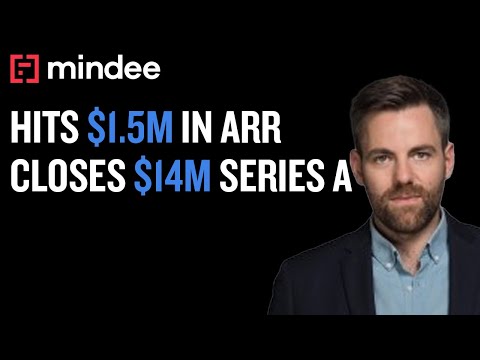
Key Takeaways
- 01Mindee was founded in 2018 and began building its product in earnest in 2019
- 02The company closed a 14 million Series A in 2021 after a 3 million seed round in May 2019, with no currency stated for either round on the tape
- 03Mindee served about 70 customers as of November 2021, concentrated in financial services
- 04Mindee was growing 15% month over month on organic growth alone
- 05Jonathan declined twice to disclose revenue, saying only that it was less than the roughly 150,000 a month Nathan calculated from ARPU times customer count
- 06Net revenue retention was 250% including usage contraction, measured on first-year cohorts, with zero logo churn reported
- 07Pricing is usage-based at 10 cents per page on the first pricing grid, with the marginal price falling as usage rises
- 08The team totaled 27 people, with 20 of them engineers
- 09Mindee went through Y Combinator Winter 2021 and flipped to a US company in May 2021
- 10Growth was driven primarily by inbound, referral, and word-of-mouth with no YC-batch customers
- 11The company hired a Director of Developer Relations to build content and developer community
- 12Early consulting work - 'a few 100k', currency unstated - bootstrapped the company before the seed round, and was stopped in Q4 2018
Company Metrics at Time of Interview
| Metric | Value | Source |
|---|---|---|
| Monthly Organic Growth (2021) | 15% | Founder interview, Nov 2021 |
| Customers (2021) | 70 | Founder interview, Nov 2021 |
| Net Revenue Retention, First-Year Cohort incl. Contraction (2021) | 250% | Founder interview, Nov 2021 |
| Gross Logo Churn (2021) | 0% | Founder interview, Nov 2021 |
| Team Size (2021) | 27 | Founder interview, Nov 2021 |
| Engineers (2021) | 20 | Founder interview, Nov 2021 |
| Series A Raised (2021) | 14,000,000 | Founder interview, Nov 2021 |
| Seed Round Raised (2019) | 3,000,000 | Founder interview, Nov 2021 |
| Base Price per Page (2021) | 10 cents | Founder interview, Nov 2021 |
| Year Founded | 2018 | Founder interview, Nov 2021 |
Growth Breakdown
Revenue
Mindee declined to disclose revenue. Jonathan turned the question down twice, saying only that the company was in the range typical of a Series A business and that it was less than the roughly 150,000 a month Nathan derived by multiplying ARPU by customer count. What he did quantify was growth: 15% month over month on organic growth alone. Pricing is usage-based and digressive - 10 cents per page on the first pricing grid, about 800 for 10,000 API calls a month, and roughly 6 cents per document at a volume of 25,000, none of it with a currency stated on the tape. Customers land small and expand their usage over time, which is what Jonathan credited for the 250% net revenue retention.
Customers
Mindee served about 70 customers at the time of the interview, with a concentration in financial services including fintechs and neobanks, and none of them from its own Y Combinator batch. The company reported zero logo churn, and growth was mostly inbound, referral and word-of-mouth, with paid search only recently tested.
Team
The team stood at 27 people in November 2021, with 20 of them engineers, reflecting the company's developer-first DNA. Mindee had recently hired a Director of Developer Relations to build content and expand community reach.
Funding
Mindee raised a seed round of about 3 million in May 2019 to build the product and begin selling, then closed a 14 million Series A in 2021 to fund US expansion, grow the sales and operations teams, and accelerate R and D. No currency was spoken for either round on the tape. The company went through Y Combinator Winter 2021 and flipped its legal entity to the US in May 2021.
Growth Strategy
Inbound and Word-of-Mouth
Jonathan credited inbound traffic and word-of-mouth as the primary growth drivers at the time of the interview. Referrals and organic discovery by developers searching for document processing solutions were the dominant acquisition channels.
Developer-Focused Content
Mindee hired a Director of Developer Relations to build content targeting developers looking for document automation solutions. The goal was to be present when developers searched for tools to handle receipts, bank details, certificates, and other document types.
Live Test and Product-Led Discovery
Mindee built a live test feature on its platform that allowed developers to try the API directly, without a high-touch sales process. The description of it as a high-utility tool that converts traffic was Nathan's, not Jonathan's; asked what else he was building to attract users, Jonathan answered that the lever was content rather than more tooling.
Land and Expand Pricing
The usage-based pricing model at 10 cents per page on the first grid, with the marginal price falling as volume rises, was designed to let customers start at low cost and expand as their usage grew. This structure produced the 250% net revenue retention Jonathan reported, a first-year-cohort figure that he said already includes usage contraction.
Y Combinator and US Expansion
Mindee used its Y Combinator Winter 2021 batch to establish credibility and flip to a US company, positioning itself to grow its sales and operations teams in the US market with the 14 million Series A capital.
Best Quotes
“We help software companies build document processing automation features in their software. So our users are mainly software developers in general and also product people like product managers or CPO or VP products. And we give them the technological layer so that they can build very easily document processing features for their users.”
“One page is 10¢ on the first pricing grid. And then the more you consume, the more you use the API, the less the marginal price will get.”
“The net retention rate of 250% I was talking about is including the contraction also of the usage.”
“I'm not willing to to to communicate about the the revenue, like, part. We decided not to talk about this.”
“We have tried paid search. And as we we have kind of very long sales cycle, not long sales cycle because it's kind of low touch. But between the moment people are testing out the product and the moment they deploy for production, it can be like three, six months.”
“I think it's it's really about contents. Like, we have you know, with the platform, you have very strong capabilities, and we can work on any type of document related use case. So I think it's about content and showing people that they can pass birth certificates, certificate of incorporation, bank checks, bank details, but like a lot tons of different documents.”
What Happened Next
This interview captured Mindee in November 2021, shortly after the company closed its Series A, flipped to a US entity in May and came through Y Combinator's Winter 2021 batch. Jonathan Grandperrin declined twice to discuss revenue, so the figures here are the ones he did give: about 70 customers concentrated in financial services, no logo churn, 250% net revenue retention, 15% organic growth a month, and a team of 27 with 20 engineers. Mindee has continued to develop its document processing API platform since this recording. Visit the Mindee company profile on GetLatka for the most current available data.
View Mindee’s current profile and metricsFull Transcript
Chapters
- 0:00Introduction and Background
- 0:29How Mindee Started and What It Does
- 1:02Product Overview and Target Customers
- 1:58Pricing Model: Usage-Based API at 10 Cents per Page
- 3:08Churn, Retention, and Net Revenue Retention
- 6:45Co-Founders and Equity Split
- 8:23First Customer and Early Revenue
- 9:57Funding: Seed Round and Series A
- 11:09Why Mindee Won't Disclose Revenue
- 14:06Team Size and Engineering Focus
- 15:19Customer Acquisition and Organic Growth
Introduction and Background
Nathan Latka
00:00Hey, folks. My guest today is Jonathan Grandperrin. He's the co founder and CEO at mindee, an entrepreneur with a keen eye for technology disruption and addressing real world enterprise challenges. He has a decade of tech experience on his shoulders, having held the CTO title for thank you and ECTOR prior to joining mindee. Jonathan, are you ready to take us to the top?
Jonathan Grandperrin
00:16>> Yeah.
Nathan Latka
00:17Alright. So just to be clear, you said joining mindee. Are you a co
00:20founder or you came in later?
Jonathan Grandperrin
00:21>> Co founder.
Nathan Latka
00:22Co founder. Okay. And what year was that? When did you guys get going?
Jonathan Grandperrin
00:25>> Sorry?
Nathan Latka
00:27When what year was that? When did you guys get going?
How Mindee Started and What It Does
Jonathan Grandperrin
00:29>> Oh, we started working on mindee, like, in early in twenty eighteen with two of my co founders, and everything really started in 2019.
Nathan Latka
00:38Yeah. What do you mean by restarted?
Jonathan Grandperrin
00:41>> Actually, at the beginning for the first year, we have been kind of trying to discover how the market works and what were the needs in terms of document processing in companies. And when we figured out there was a specific need on this area, we started working on the product in 2019.
Nathan Latka
00:57I see. Okay. So tell us yeah. Tell us what the product does and and who you're selling to. Who are the customers?
Product Overview and Target Customers
Jonathan Grandperrin
01:02>> Yeah. So basically, we help software companies build document processing automation features in their software. So our users are mainly software developers in general and also product people like product managers or CPO or VP products. And we give them the technological layer so that they can build very easily document processing features for their users.
Nathan Latka
01:26Got it. And what are they paying on average per month to use your technology?
Jonathan Grandperrin
01:30>> That's very depending because we have large enterprise as well as very young companies, but it's between a few €100 to to 10 to 12 k monthly.
Nathan Latka
01:39Okay. But what that's a huge range. What would you say sort of your sweet spot is? Like, $500 a month or more like 5,000 a month?
Jonathan Grandperrin
01:45>> Oh, between 1 to 3. I don't have the exact yeah.
Nathan Latka
01:49The reason I'm asking that, now I can be specific. If someone's paying you 3,000, you know, US dollars per month, what are they getting for that? Is it based off number of API calls or something else?
Pricing Model: Usage-Based API at 10 Cents per Page
Jonathan Grandperrin
01:58>> Yeah. Based on the API calls as almost all the API companies. But, yeah, one page is 10¢ on the first pricing grid. And then the more you consume, the more you use the API, the less the marginal price will get.
02:12>> So
Nathan Latka
02:13at What do mean by one page is 10¢? Is that if I upload a document that's 10 pages long and I need that signed?
Jonathan Grandperrin
02:18>> Yeah. One page of a document, like if you have a PDF of 10 pages, it's going to be 10 pages price. So 10 times 10¢, $1.
Nathan Latka
02:27I see. I see. But you obviously care more about moving everyone to the API model. That probably is more effective.
Jonathan Grandperrin
02:32>> Yeah. But the value, the unit of value of our product is the page, actually. So it's kind of really related to the number of API calls in the end because on average, a document is like one to two pages more maximum.
Nathan Latka
02:48I just think about driving usage. It's it's it's a tricky thing to tie your upsell metric based off the thing you need found, like people to do to get value, which is the page. Because for example, if DocuSign charge per page, every time I did it, I'd feel a little bit negative because I'm going, do I really need to spend 10¢ to get this signed right now? And slowly, I'd look for alternatives and eventually I would
Churn, Retention, and Net Revenue Retention
Nathan Latka
03:08probably churn. How do you guys balance that?
Jonathan Grandperrin
03:11>> For now, we we are not churn at all. So I don't think this is a problem for us today. In general, like
Nathan Latka
03:18Well, what do mean no churn at all? How do you how do you measure that?
Jonathan Grandperrin
03:21>> We have no we have no logo churn and very strong retention rates. So people are more using more and more the API over time than just dropping because of that. I don't think the pricing is a problem for us in the adoption actually just because of this digressive pricing grid. You know, if you make 10 ks calls monthly, it's going to cost you $800 If you have a volume of 25 k, it's going to be less
03:49>> than that, like 6¢ per document. So we want to help our client grow and build the best user experience.
Nathan Latka
03:58Yeah. I mean, you're talking about you're talking about retention, right? I mean, you have churn and there's expansion and there's net dollar retention. And usually API businesses like this, you look at Snowflake, you look at Twilio, look at SendGrid, they have really high net dollar retention of way above 100. Where are you guys at?
Jonathan Grandperrin
04:12>> It's between 200 to 250% after So one it's that's great. That's the now something very good for our business.
Nathan Latka
04:22So yeah. So the average a year a year one customer doubles their what they pay you in year two. More than doubles. No. Okay. But when you look at your full base, so you look at the last twelve months across your whole base, gross churn plus expansion, net dollar retention is what?
Jonathan Grandperrin
04:37>> Yeah. We don't have churn at all in terms of usage.
Nathan Latka
04:41So this is Jonathan, to be clear, when you say you have no the reason I push you on this, I find it very unless you only have, like, one customer, but I find it very hard to believe that there are zero customers that use you who last month signed 10 pages, and this month no one went down lower than 10 pages? In other words, your churn will be measured by a little downgrade in usage month to
05:01month. You're saying no one ever uses less this month than the last month.
Jonathan Grandperrin
05:07>> Okay. It happens, of course. Like, during the summer, for example, we have obviously lower usage, but people are how to say that? The extension is so much higher than
05:23>> the slow of their usage.
Nathan Latka
05:26The contraction. It's contraction and expansion. Yep. Yeah. That's what I'm trying to measure. Right? So contract like, you you might have 10% contraction, but expansion is so big. Expansion could be 90%. So your net dollar retention is still 180%. That's what I'm trying to understand.
Jonathan Grandperrin
05:43>> Yeah. The net retention rate of 250% I was talking about is including the contraction also of the usage. Do I maybe I don't understand your question well.
Nathan Latka
05:52Yeah, because you're giving me that net dollar retention of 250% based off first year contracts, which is easy. Someone go from a dollar to $4 and that's 400% expansion. The better way in how publicly traded companies track net retention is you look at your full base, your full installed revenue base a year ago compared to today. That's what I'm trying to get to, not just your first year customers.
Jonathan Grandperrin
06:13>> I think it's the same. Like, we compute our costs monthly. So quarterly, sorry. So all the customers we had like one year ago and we signed during the last year quarter.
Nathan Latka
06:24Yeah. It's okay. We can skip over. It's not important. I think the I think you give us a good lesson, which is you're pricing off number of API calls. Usage is going up. Some people use it a little less, but the expansion is so big it doesn't matter. So you have really healthy economics.
Jonathan Grandperrin
06:35>> That's the key point. Yeah.
Nathan Latka
06:36Yeah. Alright. Let's get let's move on from that. Let's get more of your backstory here. So you guys started writing the code in 2018. How many co founders are there?
Co-Founders and Equity Split
Jonathan Grandperrin
06:45>> Three co founders and one late founder.
Nathan Latka
06:47Three co founders and one what?
Jonathan Grandperrin
06:49>> Late co founder as well. Like, he joined us in, early in 2019.
Nathan Latka
06:54I see. Did you guys just split 25% each? No. How did you have that conversation? Every founder has to go through that. It's a tricky situation.
Jonathan Grandperrin
07:02>> It was actually very natural because I don't know. I don't even remember when we had this conversation. It was kind of natural to make the split. Like we came with a plan very easily and there was no discussion at all on this. So I'm not going to give you the figures on how this is distributed in terms of capital between the funders. But at the very, very beginning, we started with Mohammed, my chief of science, and
07:30>> the split was done between the two of us. And then Olivier joined us the first month and he's the co founder as well, of course. And, yeah, yeah, everything is supernatural, yeah, between us.
Nathan Latka
07:41Mhmm. But what I'm trying to dig at here is every cofounder team has to have this conversation. Right? So somebody owns more. Is it because they brought more capital, more experience, more like, take me into that conversation a little bit. Okay. No. I think we Just focus on you and Mohamed. Just the two of you at the start.
Jonathan Grandperrin
07:57>> Thinking differently. Like, it was not my first experience as a co founder of a startup. So maybe it was important in the discussion at this moment, at this point in time. And just because of the role as well, maybe it's important as well, like the the CEO owns a bit more than the the other account from those, for example.
Nathan Latka
08:18I see. Got it. Okay. So you know maybe a little bit more than everyone else because of these things?
Jonathan Grandperrin
08:22>> Yep.
First Customer and Early Revenue
Nathan Latka
08:23Okay. So you guys
08:24get gone in 2018. Tell me about your first customer.
Jonathan Grandperrin
08:26>> Do you
Nathan Latka
08:26remember who it was and how you found them?
Jonathan Grandperrin
08:27>> Oh, sure. An HRAS company HRAS, sorry, in France, one of the leader. They have approximately 1,000,000 users, I think, or maybe more. They're called Lucca, L U C C A. And they add an expense management solution, an expense management mobile application, and they wanted to improve the user experience when passing receipts. And we are using a company called ABBYY. I don't know the the English pronunciation for that, A B B Y Y. And and
08:59>> they were not okay with their performances in terms of response time and accuracy as well. So we built our first prototype with this client and the benchmark, the solution we are proposing to them against the ABBYY solution. And it was our first client, like deployed in beta version maybe in March or May 2019. We have been yeah. They are great and fantastic customers and happy customers, I think.
Nathan Latka
09:24Mhmm. So zero revenue your first year in 2018. The first year revenue was 2019.
Jonathan Grandperrin
09:29>> No. We have been doing revenue because we we were selling, like, algorithm perception missions to make revenue. I wanted to bootstrap the company and not to raise too early. And that's what
Nathan Latka
09:42So you're doing consulting basically to get to get cash early?
Jonathan Grandperrin
09:45>> Yeah. And we decided to stop completely the consulting in Q4 twenty eighteen.
Nathan Latka
09:51How much consulting revenue were you able to do to help bootstrap I the
Jonathan Grandperrin
09:55>> don't remember. Like, a few 100 k maybe.
Funding: Seed Round and Series A
Nathan Latka
09:57Okay. That's impressive. Yeah. That's impressive. Okay. So are you tell me more about funding now today. Are you bootstrapped from that or have you raised?
Jonathan Grandperrin
10:04>> No. We raised 14,000,000 series a in in q two, q three this year. And we raised also a seed round in May 28 2019, sorry, of about $3,000,000. Mhmm.
Nathan Latka
10:21And talk take me back to that $3,000,000 raise. Why did you need to raise that capital?
Jonathan Grandperrin
10:25>> The seed round, you mean? The seed. Yeah. To build a product, like, have a very strong expectation in terms of product and building an API that can scale like everywhere in the in terms of r and d as well. We raised to hire people and and start selling and start start figuring out trying to figure out how to how to sell this to the rest of the world and to reach the product market fit.
Nathan Latka
10:51Okay. So your first customer, obviously, you get consulting revenue $400,000 to $500,000 in 2018 to fund the business. 2019, you land your first customer, this expense management tool that you won in the sort of the bake off. How many customers are you now serving today?
Jonathan Grandperrin
11:03>> Today, I don't have the exact number, but it's about 70, I think.
Why Mindee Won't Disclose Revenue
Nathan Latka
11:09Seven zero? Yeah. Yep. Okay. And you told us earlier sort of the average ARPU might be like $2,000 to $3,000 per month. So that would put you right now, MRR wise, about 150,000 a month. Is that about right?
Jonathan Grandperrin
11:20>> No. I think it's no. We don't we don't talk about the the actual revenues. So depending on the phase of the clients, we are are in the kind of the standards of a a series a company in terms of revenue, and it's less than that, I think. I don't know exactly.
Nathan Latka
11:39When can you break a 150,000 a month in revenue? Will that be next year?
Jonathan Grandperrin
11:43>> No. It's going to be very soon.
Nathan Latka
11:45But Do you think there's sixty there's forty five days left in this or there's fifty days left in this year. Do think you can break it by the
Jonathan Grandperrin
11:50>> end of We have a nice growth, man. Like, we are growing 15% monthly only with organic growth. So, yeah, that's not a We have a very strong fundamental in general and yeah.
Nathan Latka
12:04Well, so if you're on track to maybe think, you know, break 150 a month, you know, pretty soon and you're growing, you said, 15% month over month, that means about a year ago. Like, how much MRR were you doing about a year ago?
Jonathan Grandperrin
12:16>> I don't remember. And that no. I'm not willing to to to communicate about the the revenue, like, part. We decided not to talk about this.
Nathan Latka
12:25So Well, Jonathan, just to be just to be clear, I'm multiplying numbers you So already gave you said earlier, 2,000 to 3,000 per month was an average customer and that you have 70 customers. We can just multiply numbers you've already given us to get revenue. So that's that's why I'm pushing here.
Jonathan Grandperrin
12:38>> Yes. But you you don't have the growth of the customer, and most of our customers start with a very low revenue because they they just don't want to try to to go the solution and they are integrating it and then they expand over time. Like, it's a land and expand strategy we have, like, overall.
Nathan Latka
12:55No. I understand. I completely understand that. But my question to you earlier was what's the average customer paying per month today? And you said 2 to $3,000. That's why I multiplied. Small
Jonathan Grandperrin
13:04>> two. Yeah. Okay. That's a
Nathan Latka
13:07what you're saying is the average is under that because the first year customers are paying much less before they expand. Yep. Makes perfect sense. Makes perfect sense. So you you do the 3,000,000 seed back in 2019. Why I mean, every time you do this raise, you're diluting the company. Right? So why go take 14,000,000 series a? Why do you need that capital?
Jonathan Grandperrin
13:27>> The the main reason is expanding in in The US. We have flipped the company to US company in May. We were in the Y Combinator batch of winter twenty twenty one, and we are going to we are growing the sales team and the operation the operating team in general. So, yeah, it's time for us to expand and to go faster. And we are also specific needs in terms of R and D and technical teams as well.
13:54>> So just hiring more people and expanding the teams. And it's a huge market in the end, so we need people to staff on any type of like part of the company, finance, sales, etcetera.
Team Size and Engineering Focus
Nathan Latka
14:06How many people are on the team today?
Jonathan Grandperrin
14:10>> 27. 27.
Nathan Latka
14:11How many engineers?
Jonathan Grandperrin
14:13>> 20.
Nathan Latka
14:14Yeah. Oh, wow. So very heavy engineering.
Jonathan Grandperrin
14:16>> Yeah. We are developer too. Like, it's in our DNA. Everyone is kind of very passionate about developer and software development and data science.
Nathan Latka
14:24Yep. That makes a lot of sense to me. And then how are you at so these 70 customers, how many of them you know, lot of people say they go YC. It's great because a lot of YC customers will sign up as your first customer. So of these 70, how many are YC companies?
Jonathan Grandperrin
14:36>> Zero.
Nathan Latka
14:38Why aren't any YC companies using you if you went through a batch together with them?
Jonathan Grandperrin
14:42>> Yeah. Because I don't know. We are not really prospecting in this in this batch. That's a good question. Like, we we haven't been prospecting in the in the YC batch. We have more
14:55>> yeah. I don't know what to tell you. It's
15:00>> maybe the one that that many companies doing what we are the best in, like fintechs and neobanks and HRIS. I don't know.
Nathan Latka
15:08Mhmm. Got it. Makes sense. So 70 now do you have any concentration in the of those 70? Is it, you know, government, tech or anyone else, or is it all over the place?
Jonathan Grandperrin
15:17>> Financial services in general, like
Customer Acquisition and Organic Growth
Nathan Latka
15:19I see. Yeah. I see. Interesting. Okay. Very cool. Talk to me more about your organic growth. How are you getting the organic growth?
Jonathan Grandperrin
15:26>> Mostly inbound today with many different channels, but we how to say that? Referrable works well. We have built some kind of local presence in Europe and mainly in France as well.
15:46>> Yeah, I don't know exactly. It's not we have many different channels like paid, outbound and inbound referral, word-of-mouth in general works well as well. And we are building a content also to to get more visibility into the Internet. And we want to be there when peep when developers are looking for the solution. So it's something that we have created very recently. We hired the director of developer relations, for example, which is responsible for building this content
16:15>> and spreading the word out for about mindee in general. But, yeah, today it's inbound and word. Mass is the the best
Nathan Latka
16:24Are you able to are you able to quantify those costs so you know how to invest this 14,000,000? Do you know what, like, fully weighted CAC is to get a $2,000 a month customer?
Jonathan Grandperrin
16:32>> Not yet. We're too early for that, I guess.
Nathan Latka
16:34Mhmm. How do you start experimenting around that and try and get visibility there?
Jonathan Grandperrin
16:38>> Can you rephrase?
Nathan Latka
16:40How do you how do you try and sort of mature there and try and figure out what that CAC is?
Jonathan Grandperrin
16:46>> We have tried paid search. And as we we have kind of very long sales cycle, not long sales cycle because it's kind of low touch. But between the moment people are testing out the product and the moment they deploy for production, it can be like three, six months. And we need at least one year of visibility to try to compute those cost of acquisition, for example. And we tried something on the paid search acquisition channel that
17:12>> we started in Q2 Q3, sorry, this year. So we don't have enough data to be able to measure that. I'm not able to tell you any cost of acquisition today.
Nathan Latka
17:23Mhmm. I mean, I would argue that a lot of your cost of acquisition is tied up in the development team building things like this live test feature you guys have built. It's a great tool, high utility value. You send traffic here, people convert. Right? Yep. Do you have any other tools like this you're looking at building right now just to attract in more users?
Jonathan Grandperrin
17:41>> No. I think it's it's really about contents. Like, we have you know, with the platform, you have very strong capabilities, and we can work on any type of document related use case. So I think it's about content and showing people that they can pass birth certificates, certificate of incorporation, bank checks, bank details, but like a lot tons of different documents. And, yeah, building those contents to have a visibility, more visibility when someone is looking for this
18:10>> type of solution is the key for us, and that's what we are working on.
Nathan Latka
18:13Yeah. Well, very cool. Hey. I wanna congratulate you. It sounds like this year was the year you guys broke that million dollar run rate as you look to keep scaling. And on that note, I hope you guys grow a ton next year as well. But let's wrap up, Jonathan, with the famous five. Number one, what's your favorite business book?
Jonathan Grandperrin
18:28>> The Hard Thing About Hard Things, I guess. Yeah.
Nathan Latka
18:30Number two, is there a CEO you're following or studying?
Jonathan Grandperrin
18:34>> Jeff Lawson.
18:35>> Yep.
Nathan Latka
18:36You're not in any acquisition talks with those guys, are you?
Jonathan Grandperrin
18:39>> No.
Nathan Latka
18:40Alright. Number three, what's your favorite online tool for building mindee?
Jonathan Grandperrin
18:44>> I don't have the answer for that. I think Salesforce has been something really important for us.
Nathan Latka
18:49Number four, how many hours of sleep do get every night?
Jonathan Grandperrin
18:52>> Between, yeah, seven to eight.
Nathan Latka
18:54Seven. And what's your situation, Jonathan? Married, single, kids?
Jonathan Grandperrin
18:57>> Married. No kids. Beautiful cats. That's important.
19:00>> Cats.
Nathan Latka
19:01And how old are you?
Jonathan Grandperrin
19:02>> 32. 32. Last question.
Nathan Latka
19:03What's something you wish you knew when you were 20?
Jonathan Grandperrin
19:08>> Well,
19:11>> no. I've never asked this question. I don't know. That I was going to build a great company, and I should be more self confident at this moment in time, maybe.
Nathan Latka
19:20Guys, there you have it. Mindee.com. Called an API for understanding receipt data, other forms of data, document signing, charged 10¢ per page signed, or you move up and start paying per API call as you start to scale. They've got over 70 customers on the platform. They've scaled past a million dollar run rate, growing 15% month over month, just close to 14,000,000 series A this year as they look to scale with their team at 27. Heavy engineering,
19:4120 engineers. Jonathan, thanks for taking us to the top.
Jonathan Grandperrin
19:44>> Thank you.
Nathan Latka
19:46One more thing before you go. We have a brand new show every Thursday at 1PM Central. It's called Shark Tank for SaaS. We call it deal or bust. One founder comes on, three hungry buyers, they try and do a deal live and the founder shares back end dashboards, their expenses, their revenue, ARPU, CAC, LTV, you name it, they share it and the buyers try and make a deal live. It is fun to watch every Thursday one
20:11p. M. Central. Additionally, remember these recorded Founder interviews go live. We release them here on YouTube every day at two p. M. Central. To make sure you don't miss any of that, make sure you click the subscribe button below here on YouTube, the big red button and then click the little bell notification to make sure you get notifications when we do go live. I wouldn't want you to miss breaking news in the SaaS world, whether it's
20:32an acquisition, a big fundraise, a big sale, a big profitability statement or else. I don't want you to miss it. Additionally, if you want to take this conversation deeper and further, we have by far the largest private Slack community for B2B SaaS founders. You want to get in there. We've probably talked about your tool if you're running a company or your firm if you're investing. You can go in there and quickly search and see what people
20:54are saying. Sign up for that at nathanlatka.com/slack. In the meantime, I'm hanging out with you here on YouTube. I'll be in the comments for the next thirty minutes. Feel free to let me know what you thought about this episode. And if you enjoyed it, click the thumbs up. We get a lot of haters that are mad at how aggressive I am on these shows, but I do it so that we can all learn. We have to
21:13counter those people. We got to push them away. Click the thumbs up below to counter them and know that I appreciate your guys'support. Alright, I'll be in the comments. See you.