
Conference Talk
How Ninety.io Reached $10.4M ARR and 5,200 Customers While Bootstrapped to $4M Before Raising $20M (Talk by Founder and CEO Mark Abbott)
- Talk Date
- March 12, 2022
- Speaker
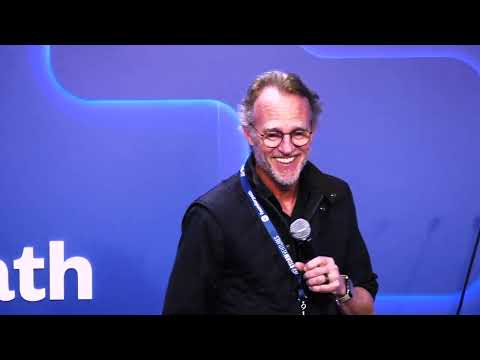
- Mark AbbottFounder, CEO and Coach
Company Metrics at Interview Time
ARR (March 2022)
$10.4M
Customers (March 2022)
5,200
Net Dollar Retention (2022)
135%
CAC Payback (2022)
3 months
Team Size (2022)
50
Historical Snapshot
These numbers were reported by Mark Abbott during the talk recorded in March 2022 and are a historical snapshot, not current figures. See Ninety.io’s current numbers.
Key Takeaways
- 01Ninety.io reached $10.4M ARR as of March 2022, up from $4M ARR at the time of its $20M raise from Insight Partners in 2021
- 02The company had 5,200 companies running on its software at the time of the interview
- 03Pricing is $14 per seat per month, raised from $12 the prior month (February 2022)
- 04Net dollar retention was 135% and gross user churn was less than 7% annualized
- 05CAC payback period averaged approximately 3 months
- 06If three or more users join during a trial and the company has 10 or more employees, conversion rate reaches nearly 98%
- 07Mark Abbott self-funded the business for the first three to four years and held approximately 80% equity before Insight Partners invested
- 08The company was at 50 employees at interview time with plans to grow to 100 that year
- 09Jeff Horing, managing partner of Insight Partners, said Ninety.io had the best KPIs he had ever seen in SMB
- 10The company pays a license fee equivalent to almost $100,000 per month to use trademark terms in its software
Company Metrics at Time of Interview
| Metric | Value | Source |
|---|---|---|
| ARR (March 2022) | $10.4M | Conference talk, March 2022 |
| ARR at Time of Raise (2021) | $4M | Conference talk, March 2022 |
| Funding Raised (2021) | $20M | Conference talk, March 2022 |
| Customers (March 2022) | 5,200 | Conference talk, March 2022 |
| Pricing per Seat (March 2022) | $14 per month | Conference talk, March 2022 |
| Net Dollar Retention (2022) | 135% | Conference talk, March 2022 |
| Gross User Churn (2022) | Less than 7% annualized | Conference talk, March 2022 |
| CAC Payback (2022) | 3 months | Conference talk, March 2022 |
| Team Size (2022) | 50 | Conference talk, March 2022 |
| Affiliate License Expense (2022) | Almost $100,000 per month | Conference talk, March 2022 |
| Trial Conversion Rate (3+ users, 10+ employee companies) (2022) | Nearly 98% | Conference talk, March 2022 |
| Net Promoter Score (2022) | 50 to 70 | Conference talk, March 2022 |
| Trustpilot Rating (2022) | 4.7 | Conference talk, March 2022 |
| Founder Equity Pre-Raise (2021) | 80% | Conference talk, March 2022 |
| Year Founded | 2017 | Conference talk, March 2022 |
Growth Breakdown
Revenue
Ninety.io reached $10.4M ARR by March 2022, growing from $4M ARR at the time of its Insight Partners raise in 2021. The company had been growing at 5 to 8% month over month in revenue for several years, and put its first price increase in place in February 2022, moving from $12 to $14 per seat per month.
Customers
The company had 5,200 companies running on its software at the time of the interview. The addressable coach-run company market alone included over 12,500 companies, and the non-coached segment represented roughly nine times that number, giving Ninety.io a large runway for continued customer growth.
Team
Ninety.io had 50 employees at the time of the interview, having scaled largely through fractional executives across marketing, data, engineering, finance, and talent. Following the $20M raise, the company was actively hiring full-time staff with a target of reaching 100 employees by end of 2022.
Profitability and Funding
Mark Abbott self-funded the business for its first three to four years, deliberately avoiding outside capital until reaching $10M ARR. Insight Partners invested $20M in 2021, with the round structured entirely as equity on the balance sheet. Insight cited Ninety.io's consistency in paying user growth, MRR growth, and churn as the primary reasons for their investment.
Growth Strategy
Coach Community as a Referral Channel
Ninety.io built its early growth by serving the large community of business operating system coaches, who recommended the software to their clients because it made those clients easier to manage and helped them master the tools faster. Coaches referred customers without receiving a referral fee, contributing to the company's very short CAC payback period of approximately three months.
Trial Activation and Conversion Optimization
The company focused on getting at least three users active during a trial period. For companies with 10 or more employees that reached three or more active trial users, conversion rates approached 98%. Live chat support staffed by real people, available around the clock, was a core part of the activation process.
Webinars and Ongoing Education
Ninety.io ran webinars and other educational programs to help customers master the tools after signing up. Deep product usage, particularly of the feedback tool, was directly correlated with dramatically lower churn, with fully engaged customers showing annualized churn well below the company average.
Expanding Beyond the Coached Segment
While early growth came primarily through the coach community, Ninety.io increasingly acquired customers directly from companies that could not afford a coach, which typically costs $25,000 to $30,000 per year. At $14 per seat per month, the software offered a lower-cost path to the same operating disciplines, opening a much larger addressable market.
Fractional Executive Model for Capital Efficiency
Before the Insight raise, Mark Abbott built the company using fractional executives across every major function, including marketing, data, engineering, finance, and talent. This allowed the company to access senior talent at a fraction of the cost, sometimes compensated partly in equity, enabling Ninety.io to scale to $4M ARR and then $10.4M ARR while remaining bootstrapped.
Best Quotes
“So ARR as of today is about 10,400,000”
“So we raised money last summer, and at that point in time, our ARR was around $4,000,000”
“So we raised $20,000,000”
“We've been growing at five to 8% month over month revenue. To be direct with you on the data you saw earlier, we put our first price increase in last month, February. So we never increased prices. So we're $12 up until last month. So that's part the reason our numbers are growing.”
“CAC payback period, we got coaches. We don't even pay them a referral fee. You can get the sense for that payback period. And then we have our marketing. But on average, our payback period is about three months.”
“So I mentioned earlier the conversion rates. By the end of the trial if we can get three plus people, if there are 10 plus people in the company at least, almost 98%.”
“Jeff Horing, who's the managing partner of Insight, said we had the best KPIs he's ever seen in SMB.”
“I self funded it for the first three, four years. I didn't want I could do that. I didn't want to give up any equity.”
“We're actually at 50 and we're going to 100 this year. And we're getting everybody full time.”
What Happened Next
This talk captured Ninety.io at a pivotal moment in March 2022, shortly after closing a $20M round from Insight Partners and crossing $10.4M ARR with 5,200 customers. The figures here reflect what Mark Abbott reported on stage at that point in time and are not current. Visit the Ninety.io company profile on GetLatka for the latest reported metrics and funding history.
View Ninety.io’s current profile and metricsFull Transcript
Chapters
- 0:43Mark Abbott Opens: Five Types of Business Operating Systems
- 2:50Current ARR and Revenue Growth Graph
- 3:02Bootstrapped to $4M ARR Before Raising
- 3:13The $20M Raise from Insight Partners
- 3:19Three Playbooks: Community, Activation, and Top Metrics
- 4:26Coach Community and the 5,200 Customers Running on Ninety
- 8:36Trial Activation and 98% Conversion Rate
- 12:27MRR Growth Rate and First Price Increase
- 12:55CAC Payback of Three Months
- 14:12User Churn Under 7% and 135% Net Dollar Retention
- 15:52Why Mark Self-Funded for Four Years and Held 80% Equity
- 18:02Growing from 50 to 100 Employees and Moving to Full-Time Hires
- 19:33Insight Partners: Best KPIs in SMB
- 19:54What Insight Missed and the First Board Meeting
Nathan Latka
00:00Founders, what's going on? You guys know I love in person events and they are back. The recording you're about to hear is from our most recent event where we had hundreds of founders come together, share intimate details, templates, KPIs, OKRs about their business, and it was something special, something special. We'd love to meet you in person. If you want to see the next live events we have coming up via our schedule. The link will be down
00:23below in the description. If you're listening on iTunes, check this out on YouTube, you'll see the links in the description. Or you can just Google Founderpath or Latka next event. We'd love to see you in person. In the meantime though, enjoy this recording. It's a good
Mark Abbott Opens: Five Types of Business Operating Systems
Mark Abbott
00:43system. The question is what kind of operating system do you have? There are about five operating system types that are out there if you think about it. First of all when you start a company you've got this thing called an accidental operating system, right? So you've got papers and Excel and PowerPoints and you're just trying to get your act together. And you're working like dogs just trying to make things happen, right? And so a bunch of
01:04people are doing a bunch of different things and you're probably not even using the same tools to figure it all out. And then all of a sudden you're like wait a second, we can't have people's names in one document here and another document, another document here. Let's bring it all together. And that's called an intentional operating system. And then you're like you know what, people have built businesses before. Someone's probably figured this out. Why are we
01:25sitting here creating all these tools when I'm sure someone's already done this, there's books on how to do this, there's tools out there. Has someone figured this out? And if you go out and you look, there are a bunch of books out there. There's E-Myth, right? There's Traction. There's The Great Game of Business. There's The Advantage by Patrick Lencioni. Trying to think of some other names that are out there. Rockefeller Habits. Rockefeller Habits, Scaling Up.
01:47There are a bunch of books that are out there, right? And they kind of lay out how people have been doing this for decades and decades. So that's called a designed operating system, alright? And then after that you come to a holistic operating system, because some of the systems don't have everything in it. So as an example, EOS, which I'm very close to, really doesn't have anything about figuring out how to build value, right. Because the
02:08reality is in industry, right, we're not focused, at least lots of us aren't, focused on EBITDA. We're focused on growing revenues, right. And so the value of the business is based upon the revenues, not the EBITDA. So get your arms around how you create value. And then the last type of operating system is actually what we're doing. We're creating an integrated operating system which takes all this information, all these tools, all these disciplines and puts it
02:32all together. So it's almost easy to build a great company.
Nathan Latka
02:35Mark, before you go forward, go back when I'm going to sell you for a second. Go back two slides, just to the revenue growth graph so people, they're more likely to pay attention, at least I am, the revenue success of the business, right? So you get going in 2017, small revenue. Where are you at today?
Current ARR and Revenue Growth Graph
Mark Abbott
02:50So ARR as of today is about 10,400,000
Nathan Latka
02:55So this graph is actually a little bit old, 10.4. And how much did you grow to before you raised, so fully bootstrapped?
Bootstrapped to $4M ARR Before Raising
Mark Abbott
03:02So we raised money last summer, and at that point in time, our ARR was around $4,000,000
Nathan Latka
03:12And then how much did you decide to raise?
The $20M Raise from Insight Partners
Mark Abbott
03:13So we raised $20,000,000 Okay, that's the lead.
Nathan Latka
03:17Now let's keep going. We'll come back to that in a bit.
Three Playbooks: Community, Activation, and Top Metrics
Mark Abbott
03:19Alright. So what I'm going to do here is share with you, these three playbooks, right? So number one we're going to talk about community, how we leverage community to get going. How we activate people when they get into our system and then the top metrics that Insight Partners looked at and fell in love with. And I'm going to share with you that they didn't actually understand our business as well as they loved our numbers, which is
03:42kind of a funny story. So how we use community. So we don't sell, we serve. This is an important thing. I wanna talk about this a bunch of different times because there's so much I'd love to share with you all, right? But one of them is I believe we're moving into a new age of work, alright? And I believe that every single one of you to succeed in this new age of work you have to have
04:02high trust relationships with all of your stakeholders. Alright? So think about that. You have to have high trust relationships with all of your stakeholders and obviously your employees and your customers and your vendors are all stakeholders and ultimately society is a stakeholder because we're moving into this age where everybody pretty much knows what's going on. You can't hide anymore. Alright. And so, so we don't sell, we serve. There are a bunch of books in the market
Coach Community and the 5,200 Customers Running on Ninety
Mark Abbott
04:26about operating systems and so people are aware of operating systems. The market is aware of what it is we're selling big picture wise. And there are coaches. There are thousands of coaches and they're all sales people for us. Right? And in particular we've been close to the EOS community, The book Traction which I'll show in a second. And there are millions of copies of Traction out there which is super cool. And there are, like I said,
04:50there are thousands of coaches and there literally were up until recently about a thousand coaches just selling EOS. And so we're very close to those folks.
Nathan Latka
04:59And Mark, when you say selling EOS, what does that mean? Is EOS a website? Is it a template? Is it a playbook?
Mark Abbott
05:04Yeah, so EOS is a book and it describes the six key components of a business and it teaches you how to master those six key components. So getting everybody on the same page in terms of vision, getting right people, right seats, getting really good with data, getting really good at problem solving, getting really good at building out your processes. Remember the one of the slides just a bit earlier, right? Getting everybody on the same page with
05:25regard to who does what. I call it agreement based leadership and then ultimately getting title of the book in the EOS Traction. We call it getting smart shit done, right? But just getting traction. So it explains how to get strong at all six of those key components. Cool? So here is the slide that shows you the number of coaches and as you can see just in the EOS community, it went flat, grew, went flat, but then
05:48you can see the number of coach companies and these are companies that all the coaches have coached. There's over 12,500 companies out there. And if you saw the slide earlier, we've got 5,200 running on our software right now. Now the reality is is for every coach company that's out there's about nine times as many companies that can't afford a coach because coaches cost like 25 to $30,000 a year. And our software makes it almost easy to
06:14master the tools without hiring a coach. And we're only $14 a seat per month. Alright, so talked about the book. Here you Go
Nathan Latka
06:23back to the book for a second. So go back to that slide. So do you guys, do you own this?
Mark Abbott
06:27We do not own it.
Nathan Latka
06:29Does that work?
Mark Abbott
06:30Yeah, so we just pay a license fee to EOS to use the terms. So we pay 10% of our revenues to EOS to be able to use their trademark terms in our software. We got about seven trademark terms. So we're paying almost $100,000 a month for seven trademark terms right now.
06:44Cool?
Nathan Latka
06:46Should we talk more about those?
Mark Abbott
06:49Well, so people, I mean, it sounds like I'm gauging reaction. People say, well, that feels high. Does it feel high or is it worth it? It's worth it. It's one of the best investments we've ever made.
Nathan Latka
06:59Oh, you're a customer?
Mark Abbott
07:00Yeah. Okay. Well, I guess that answers that question.
07:03Alright. So as you can see, what's interesting is at first all the clients were coming to us through coaches, but now we've got a bunch of companies out there running on us, they're aware of us, they're telling people about us, right. I'll give you a couple punch lines here ahead of time. Net promoter scores goes up and down because sometimes in software everything's not working perfectly, but we're typically between fifty and seventy on Net Promoter Score,
07:29which in the SMB space is pretty damn good, right? I'm gonna give you the really big punch line. If you use our system and you cascade it all the way down so everybody in your company is using our tools including the feedback tool,
07:42our churn rate annualized is less than 1%. That's in SMB guys, less than 1%. You know how many companies go out of business as a percentage in the SMB space every single year? Right, so what does that mean? It means it's sticky but it also means we're helping a lot. Right, I've got emails from entrepreneurs saying please don't super jack up your price of your software because we're so dependent upon you right now. Does this make
08:10some sense? Because we're in everything, right? Their meetings, their goals, their processes, their feedback. We're involved in everything the company does to do work on the business. We're not work in the business tools like we're not a marketing tool, we're work on the business tools. So all of our tools touch every single person in the company. So the good news is we're getting a lot more growth from the non coach side of the world. Alright, so
Trial Activation and 98% Conversion Rate
Mark Abbott
08:36how do we activate? So this is really cool. So I'm gonna talk about we three users. If we can get three users in during a trial period, we're almost at like 90% conversion rate. We have world class chat. Remember I said we're moving in the new age of work. I call it the age of understanding, high trust relationships. We're there within five minutes always with real people answering your questions, doing everything we can and we're going
09:0024/7 as soon as we possibly can. Because if you're an entrepreneur and you're working on building your business and it's one a.m. in the morning, my son's in my head right now. One a.m. in the morning, dad is redundant. Alright, but if it's 01:00 in the morning, right, we got to be there for you. So world class chat and then ultimately we get them to expand the use of the tools. So that's how
09:22we do it. So I mentioned earlier the conversion rates. By the end of the trial if we can get three plus people, if there are 10 plus people in the company at least, almost 98%.
09:34Five, remember I've talked about chat? So Intercom, right? We're there for you. We understand what's going on. We've got real people and we make sure that we get your issue solved as fast as possible. And one of the things that's really super important in my company is you care. We care about that's our number one value proposition is we care. It's not innovation, it's making damn sure we're taking care of you and you know we're taking
09:57care of you. So if you go to Trustpilot as an example, we're like 4.7 and our people just like man this is one of the best customer service experiences I've ever experienced in SaaS, right? And then support staff knows product well, it's really key. So I mentioned the 1% less churn, right? So getting people to use the tool. We do webinars. We do anything we can to help people master the tools.
Nathan Latka
10:22Wait. Go back real quick. This is the first time you showed a screenshot of your actual product interface. This gives you guys an idea of sort of what he's, you know what Ninety is selling, there on the right. Right, Mark do want to talk anything a little bit about that maybe?
Mark Abbott
10:33You know, it's funny, I'm gonna be really just you know this is what we do here right, we talk real honestly. So, we got a new tool we're working on right now and I reached out to MetaLab and they came back and said you know can we help you with your user interface. I'm like you know we just went through a whole process to update it. And they're like yeah but you know we think it
10:53could even be better. And I'm like, fuck. So we tried to make it super easy, super intuitive, super navigatable. We hear this from 95% of our clients. Every now and then there's someone out there who's like really critical and we love that. We want to get better and better and better. But yeah, the UI is really super simple. People can get up and running on it and we start doing demos like, oh, I get it. It's
11:18just all right there. Boom, you click on it and it's obvious. It's a meeting tool, it's an accountability chart, all obvious stuff.
Nathan Latka
11:25Is that cool?
Mark Abbott
11:26Yeah, so you're up now to like 4,000,000 in revenue, and the next slide you're gonna talk about when Insight reached out, like what did they think about?
Nathan Latka
11:31So take us through that journey.
Mark Abbott
11:32Yep, cool.
11:33Alright, so going up, went the wrong direction. So there are somewhere just in The United States alone, and it depends on whose data you look at, so if the ZoomInfo guys were here right, but it's at least our target market is companies with 10 to 250 employees and somewhere between one and three million small mid sized businesses fall in that category in The United States. It depends on whose number you're looking at. And my
12:02research suggested on average it's 40 people, right? And I think that The U.S. represents approximately a third of the sort of the world that's gonna be interested in our product. And so you take that number times three. So let's just go in the middle and let's say 2,000,000 times 40 is 80,000,000 times three, 240 million people times 14. You guys can get the size of the market from that math probably, right? So it's a
MRR Growth Rate and First Price Increase
Mark Abbott
12:27big market. We've been growing at five to 8% month over month revenue. To be direct with you on the data you saw earlier, we put our first price increase in last month, February. So we never increased prices. So we're $12 up until last month. So that's part the reason our numbers are growing. We have grown as much as they have in the last couple of weeks. But we've been doing five to 8% month over month revenue
CAC Payback of Three Months
Mark Abbott
12:55growth for several years now. CAC payback period, we got coaches. We don't even pay them a referral fee. You can get the sense for that payback period. And then we have our marketing. But on average, our payback period is about three months. The way
Nathan Latka
13:10to tap that coaching team, it sounds like there was a licensing fee you pay, right? Does that come with the licensing fee?
Mark Abbott
13:14I don't have that included in the CAC.
Nathan Latka
13:17Interesting. Good point. What makes the coaches sell you?
Mark Abbott
13:20Because we make their clients' lives so much easier.
Nathan Latka
13:22So got it. So they can make more on their services if they get their clients on Ninety software?
Mark Abbott
13:27Yeah. And I don't know this. It's a really good one, I'm just looking one of my colleagues. But it used to be that you'd have your clients, 80% of your clients would graduate. It takes about two years to teach someone how to master EOS. So about eighty percent would graduate. I'm pretty confident, if you think about our math, that we turn that graduation rate up to ninety percent, ninety five percent. But more importantly it's just the
13:51whole experience is that much easier, right? You walk out of a session, everything's there, you just go back and you just have your weekly meetings. It's really easy to master EOS in our opinion using our software. And I remember old clients before we got the software out there go, God, I can't believe we used to do it this way, right? Because you'd have all these sheets up, tear sheets and stuff up, you have to go back.
User Churn Under 7% and 135% Net Dollar Retention
Mark Abbott
14:12I don't even remember what I wrote there, I can't read my writing, it was kind of a pain in the ass. So lesson, and then user churn is less than 7% and our net revenue, net dollar retention's 135%. So in SaaS, SMB, right, I can tell you that I'm going to show go here actually I'll go later. But I'll give you a piece of insight, no pun intended on those ratios in a second. So we've already
14:41done that one. This was it's funny, Insight Partners. So they just reached out to us. We were not raising money. We had no interest in raising money. I'll get to this in a second. But they just reached out to us and said we'd like to get to know more about you guys. K1 reached out to us, Battery reached out to us, bunch of people started reaching out to us last year. And I said look, we have
15:03no intentions of raising anything until we're at least a 10,000,000 ARR. Because that's when I think in my old world, that's when you started to be able to have conversations with almost anybody you wanted to. So that's where we were. Just back to the coaches, there's 100,000 plus coaches out there, so it's a huge market. Already talked about the numbers here, net revenue retention, MRR growth, all that good stuff. CAC payback, we already talked about that.
15:28User churn, talked about that less than 7% annualized and that includes we have a lot of small companies. You can get into our software for $14 right? So there's a lot of small companies in there. There's a lot of one or two offs. But generally speaking that's obviously less than close to it's been averaging less than half a percent per month for years.
Why Mark Self-Funded for Four Years and Held 80% Equity
Mark Abbott
15:52So why did we raise the money? I self funded it for the first three, four years. I didn't want I could do that. I didn't want to give up any equity.
Nathan Latka
16:03Did you own 100% before that basically?
Mark Abbott
16:05I had sold some to my colleagues and some customers and things like that. But yeah, so I was at 80% up until Insight came in. Only had one full time employee up until I want to say '19. And then all the rest of us including me, I was an EOS coach for years, right. So I got in there. I had the idea back in 2005 sitting on a bunch of boards and I'm gonna use an expression
16:34that someone shares and it's crude so apologize. But I would go to these board meetings and I'd invested in a 100 companies. I built a business that made our shareholders over 1,000,000,000. I'm like guys this isn't that complicated. And I thought it was me, right? But every time we'd go to a meeting I'd say you gotta do these things, these things, and these things. These are the right disciplines. They'd say yeah, yeah, yeah, yeah. They'd smile
16:56fuck me is the expression, right? And I got tired of it. I'm like there's got to be a better way. I'm gonna write a book. I'm gonna create software. It's gonna be easy and obvious. And that was 2005, right? So it's a long road, right? But I was the, so I was this coach because EOS had this book. It was pretty popular. There were 35 coaches. They were growing. I'm like I'll join the community if they're
17:16not gonna do the software. They said software's too tough. We're not gonna do it. And that's the story. So I had a still to this day have a fractional head of marketing. Coach support, we're full time now. Pretty full time actually. We're not totally full time. Data is fractional, engineering's fractional, finance is fractional, talent, all fractional people. Now what I got was really, really good people, right, that I could afford. So it was half cash, sometimes
17:42all equity. I've got people that honestly cost 200, 300, 400, $500,000 and more a year to support the journey up until now. And so now we're doing hiring full time people. We're actually at 50 and we're going to 100 this year. And we're getting everybody full time.
Growing from 50 to 100 Employees and Moving to Full-Time Hires
Nathan Latka
18:02And so wait why is that? So to me what I heard was super resourceful, found the talent you needed to get, contract model, very similar to John Darbyshire and how he's doing smart suite. But now you want to move and basically increase your FTEs from 50 to 100. Why not say it's like super rational, conservative, milk before you can and use contractors? Well,
Mark Abbott
18:24because we think that we can grow first of all, contractors aren't cheap. And so what happens is we know that we're going from needing two days to three days to four days, right. And so right now I've got two senior guys in marketing and together they're costing me over $500,000. Does that make sense? So and data we've got there's part of what we want to do is make data superpower for all of our clients and so
18:50we need a full time head of data like ASAP. There's so much opportunity for us on the data world and so and then talent right with growing and then so you just start to all of a sudden and then as the team gets more and more full time, they want their colleagues who are supporting them to become more and more full time because we're all running as fast as we can run. Does that make some sense?
19:17Pursued by a long list of VCs, I mentioned that earlier, didn't raise, we talked about that. Insight gave us forward credit given the consistency of our growth in paying companies, paying users, MRR and churn. I've already mentioned these things.
Insight Partners: Best KPIs in SMB
Mark Abbott
19:33This is we're proud of this. Can't lie. Jeff Horing, who's the managing partner of Insight, said we had the best KPIs he's ever seen in SMB.
19:45That's a cool thing. That's a cool thing. Thanks.
What Insight Missed and the First Board Meeting
Mark Abbott
19:54What they didn't see was they fell in love with our numbers, but they never really wanted to understand our vision and where we wanted to go until after they got in there. And now they see it, and now they believe in it, and now they're really, you know, they're stepping up and they're giving us a lot of support. But it was kind of funny because it's like good news bad news right? It was like oh man
20:14we love your numbers these are amazing let's just do it and it's like wait a second where are you guys going? Where do you want to be in ten years? It's like okay alright let's do it.
20:25And that's that's all I got for you.
Nathan Latka
20:29So just be clear before before we wrap and before we clap and all that, Jess. So you you you raised are you comfortable sharing? Was it all equity or is there a part secondary?
Mark Abbott
20:38It was all equity.
Nathan Latka
20:39Okay, all on the balance sheet.
Mark Abbott
20:41It's all on the balance sheet.
Nathan Latka
20:42Got it. And how was the first board meeting?
Mark Abbott
20:45Great question.
Nathan Latka
20:46I got to give it to How was the last board meeting is probably the better question, but how
Mark Abbott
20:50was the first We've only had one. So we rate all of our meetings, it's what we teach, So we rate our meetings on a scale of one to 10 and so Chris and I and then we've got another VC friend of ours who's also a coach plus a friend of mine who runs the best Myers Briggs teaching company in the world's on our board and then we brought Insight, one person from Insight. And everybody gave the
21:15meeting a nine or 9.5 except for Insight and they gave it an eight. And they gave it an eight because we didn't give them all the numbers, the detailed numbers that they wanted to see. And I'll tell you why, it's because I thought the board meeting was the appropriate venue for them to hear our long term vision because they never asked for it. And I wanna make damn sure going forward they understand why we're doing all
21:38the things that we're doing. And so they gave us an eight.
Nathan Latka
21:41Guys, Mark Abbott with Ninety. Give him a round of applause. Thank you. That was great.