
Founder Interview
How Oleve Hit $6M ARR with 6 People Building Viral Mobile Apps (Interview with Co-Founder Sidhant Bendre)
- Interview Date
- May 8, 2025
- Interviewee
- Sid BendreCo-Founder
Company Metrics at Interview Time
ARR (2025)
$6M
Monthly Revenue (April 2025)
$500,000+
Team Size (2025)
6 people
Total Downloads (May 2025)
4 million
Historical Snapshot
These numbers were reported by Sidhant Bendre during his interview with Nathan Latka recorded in July 2025 and reflect a historical snapshot of Oleve at that point in time, not current figures. See Oleve’s current numbers.
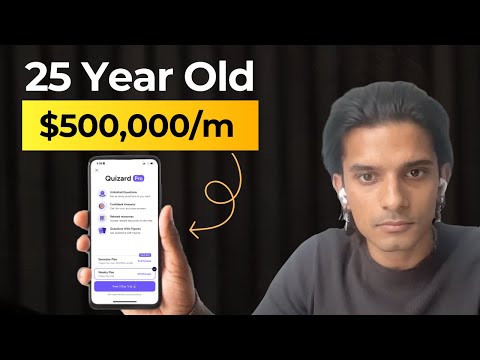
Key Takeaways
- 01Oleve reached $6M ARR with only 6 people as of May 2025
- 02Monthly revenue exceeded $500,000 in April 2025
- 03Quizzard launched in January 2023 and their first TikTok video drove 10,000 new users instantly
- 04Total downloads across all apps reached approximately 4 million by May 2025
- 05Oleve runs 6 to 7 simultaneous A/B experiments on one app and 3 to 5 on another
- 06Net income margin ranges from 10 to 30% monthly, translating to roughly $70,000 to $150,000 in profit
- 07The Unstuck app reached 1 million users in under 9 weeks after launch
- 08Oleve uses Superwall for paywall experimentation and pricing tests
- 09The team structures itself into three arms: growth and marketing, product engineering, and a platform org building agentic systems
Company Metrics at Time of Interview
| Metric | Value | Source |
|---|---|---|
| ARR (2025) | $6M | Founder interview, July 2025 |
| Monthly Revenue (April 2025) | $500,000+ | Founder interview, July 2025 |
| Team Size (2025) | 6 people | Founder interview, July 2025 |
| Total Downloads (May 2025) | 4 million | Founder interview, July 2025 |
| Net Income Margin (2025) | 10 to 30% | Founder interview, July 2025 |
| New Users from First TikTok Video (2023) | 10,000 | Founder interview, July 2025 |
| Quizzard App Store Ratings (May 2025) | 51,000 | Founder interview, July 2025 |
| Quizzard App Store Rank (Education) (May 2025) | #31 | Founder interview, July 2025 |
| Quizzard Monthly Download Velocity (2025) | 100,000 per 30 days | Founder interview, July 2025 |
| Unstuck Time to 1 Million Users | Under 9 weeks | Founder interview, July 2025 |
| Concurrent A/B Tests (Quizzard) (2025) | 6 to 7 | Founder interview, July 2025 |
| Concurrent A/B Tests (Unstuck) (2025) | 3 to 5 | Founder interview, July 2025 |
| Weekly Subscription Price (2025) | $9.99 per week | Founder interview, July 2025 |
| Annual Subscription Price (2025) | $70 per year | Founder interview, July 2025 |
| Year Founded | 2023 | Founder interview, July 2025 |
| Number of Products (2025) | 2 | Founder interview, July 2025 |
Growth Breakdown
Revenue
Oleve reported $6M ARR as of May 2025, with monthly revenue exceeding $500,000 in April 2025. All revenue is subscription-based, generated across their mobile apps Quizzard and Unstuck.
Customers and Downloads
The apps had accumulated approximately 4 million total downloads by May 2025. Quizzard alone was pulling roughly 100,000 downloads per 30 days at the time of the interview. The Unstuck app reached 1 million users in under 9 weeks after launch, driven by playbooks refined on Quizzard.
Team
The company started with 3 co-founders and expanded to 6 people by May 2025. The team is structured into three arms: growth and marketing, product engineering, and a platform org focused on building agentic systems and shared infrastructure.
Profitability
Oleve was profitable within 9 months of launch, reaching that milestone by October 2023. As of the interview, net income margins ranged from 10 to 30% monthly, translating to roughly $70,000 to $150,000 in profit per month, with variation by season.
Growth Strategy
Authentic TikTok Content
The team's primary growth channel is TikTok video content designed to look organic rather than promotional. Co-founder Ben films in lecture rooms using a handheld phone to create authentic-feeling content that resonates with students. In the fall of 2023, Oleve dominated TikTok search results for terms like Harvard, Boston, Columbia, and NYU with this approach.
Instant Magic Moment Onboarding
Oleve strips onboarding to its minimum, dropping users directly into the core product experience with no dashboard, no account creation, and no phone number sign-in required. The goal is to reach the magic moment as fast as possible before presenting a paywall.
Aggressive Paywall Experimentation
The team runs 6 to 7 simultaneous experiments on Quizzard and 3 to 5 on Unstuck using the Superwall platform. They test paywall timing, free trial length (3-day versus 7-day), and pricing structures, including a weekly subscription at $9.99 and an annual option at $70 per year.
Playbook Replication Across Products
Every growth tactic, experiment infrastructure, and coding pattern is codified into a blueprint that ships with every new app from day one. This allowed the team to take the Quizzard playbook and apply it directly to Unstuck, reaching 1 million users in under 9 weeks.
Agentic Systems for Market Research and Creator Sourcing
Sid leads a platform org that builds AI agents to study the App Store, identify arbitrage opportunities in underserved categories, and source creators. The goal is to automate the research and marketing functions so the team can enter new markets rapidly without scaling headcount.
Best Quotes
“Revenue today is 6,000,000 ARR. Team size, we recently expanded, so now it's six people.”
“We have some it's all, like, subscription based. So it's across our mobile app, it's all subscription.”
“Ben literally will walk into a lecture room and just, like, pull out his phone and just start doing this sort of stuff. And the idea is, like, it needs to feel like it's not an ad because, otherwise, like, people will not, like, yeah, people will not respond to it or people will know it's an ad, especially students. So it needs to be super authentic.”
“unstuck, when we launched that, we were able to get to about, a million users in under nine weeks just because we took all the playbooks that we, like, fine tuned to Quizzard and, like, doubled it on for Unstuck.”
“There's probably, like like, six to seven on one and maybe, like, three or four or five on another. I think, like, for us, literally, like I'm so glad you touched on that because, like, that's, like, a huge part of, like, the space entirely. Like, every time we build a new product, like, we build in our experimentation, like, infrastructure, I guess, the first piece that that goes into the the software.”
“our plan is to always go public with an app that we've worked on, but we never bring it to we'd never, like, highlight it and went into Nathan's phase because if other people jump in that same market right away or, like, deploy the same tactics, it's just gonna affect our tech.”
What Happened Next
This interview captures Oleve at a specific moment in July 2025, when the company had reached $6M ARR with a six-person team and was preparing to launch a new app outside of edtech. Sid noted that a stealth product was weeks away from launch at the time of recording. For current revenue, team size, and product updates, visit Oleve's live company profile on GetLatka.
View Oleve’s current profile and metricsFull Transcript
Chapters
- 0:00Intro and Company Overview
- 1:22Revenue and Team Size Today
- 1:55Backstory: Joining Oleve and the Palantir Decision
- 3:24What Quizzard Does
- 4:56The First Viral TikTok Video
- 6:31Ben's Role and Growth Philosophy
- 8:03Quizzard Download Velocity and Profitability
- 10:00App Store Listing and Onboarding Walkthrough
- 12:00Pricing Evolution and the Nikita Bier Advice
- 15:02Paywall Strategy and Superwall Experiments
- 18:13Running 6 to 7 Simultaneous A/B Tests
- 18:52Three-Arm Company Structure and Platform Org
- 20:33AI Agents for App Store Arbitrage
- 22:45Oleve as a Holding Company Beyond Edtech
- 24:01Milking Alpha and Staying Competitive
Intro and Company Overview
Nathan Latka
00:00Sid Bendre and his team at oleve just hit $6,000,000 in revenue with only six people. You're about to see exactly how a 25 year old Stanford student built a mobile app empire generating $500,000 per month. Their first TikTok video exploded to 2,300,000 views overnight, turning into 10,000 users instantly. Now they're pulling 20 to 30% profit margins while most startups burn cash. They've cracked the code on viral mobile loops, generated 4,000,000 total downloads, and built agentic systems
00:27that find market arbitrage automatically. You're about to learn the exact paywall strategies, viral content formulas, and team structures they use to milk alpha in any market. Plus, you'll discover how they're building AI agents to replace entire marketing functions and why Sid believes any founder can build a million dollar app in twelve months using their playbook. Hey, folks. My guest today is Sid Bendre. His team is building something really remarkable. You can almost think of like a
00:51holding company, but it didn't start out that way. They launched a tool called Quizzard actually back in January 2023, and Sid was thinking about joining Palantir doing the big thing before another group of hackers said, Sid, you gotta come join us. So he joined as the third cofounder. They've they've just skyrocketed the charts on Apple. It's really a mobile viral loop play here related to the academic space. Gonna jump into how they've built a $6,000,000 revenue
01:12company with a very small team and all the growth loops, the struggles, the tactics, everything they learned and are learning right now. Sid, you ready to take us to the top?
Sid Bendre
01:20Ready ready to run. Jump right in.
Revenue and Team Size Today
Nathan Latka
01:22Cool, man. Hey. Let's not bury the lead. This is sort of what hooks everybody, then we'll get into all the fun stuff, the technical stuff. What is revenue today, and what's team size?
Sid Bendre
01:30Yeah. Revenue today is 6,000,000 ARR. Team size, we recently expanded, so now it's six people.
Nathan Latka
01:36Amazing. Okay. So so just to be clear, you did about half a you know, not about. You did over $500,000 of revenue in April here of 2025.
Sid Bendre
01:43Yep.
Nathan Latka
01:45Okay. That's amazing. And is all that recurring, or are there a bunch of onetime purchases sort of slugged into that?
Sid Bendre
01:50We have some it's all, like, subscription based. So it's across our mobile app, it's all subscription.
Backstory: Joining Oleve and the Palantir Decision
Nathan Latka
01:55Wild. Okay. Let's jump into the backstory here because you originally weren't gonna do this. I mean, Palantir was pretty heavily recruiting you, and your team had already sort of launched a v one, I believe, in January 2023. Tell us the backstory. When did you join?
Sid Bendre
02:07I joined in kind of but after launch, the first product had gone out. It had gone with a TikTok video. It got a million views overnight. It turned to 10,000 users, and there was a almost an instant need to, like, continue scaling from there. One of my closest friends actually, the first person I met on campus, Mike, who's, like, my cofounder and c and the CEO.
Nathan Latka
02:28Michael here.
Sid Bendre
02:28The first guy. Yep. Michael. He was the first person I met on campus. He had seen me do a lot of work on like scaling AI stuff. Specifically, I'd worked at a hedge fund for about a year doing a lot of AI research. But also had done some random stints at like, I guess, like I'd won a Stanford TreeHack Express, using like LMS control drones. And so he was like, we need you to help us, like,
02:49scale our AI stuff. And I'm not gonna lie. It was like earlier than I thought it'd be in terms of starting a company. I definitely was on this, like, I'm gonna go to Palantir to figure out like what I build next kind of route. But when you get the opportunity to build with your friends, I think it's, like, an easier yes than ever.
Nathan Latka
03:06What was that v one team? We see they recruited you here. So was it Michael? Is it Ashraf, Ben, and you?
Sid Bendre
03:12Yeah. It was me, Ashraf, Ben, and Michael.
Nathan Latka
03:16Okay. Yeah. Super cool. So let let's jump into this really quick. Tell us what the application does. This was the first one, Quizzard. What's it do?
What Quizzard Does
Sid Bendre
03:24Yep. If you're familiar with Photomath, it's kind of a similar user experience where a student can take a picture of something they're stuck on, like a concept or a question that they're working through or a practice question they're working through and instantly get thrown into an AI tutoring session where they go back and forth with the AI. They're given step by step guidance and explanation. They're even given, like, pointers to resources on the web, so that
03:46they can like further further their learning. And the idea that was super like innovative here from back in the day was that, we basically like, almost like made like this photo math, like 20 fourseven tutoring experience, and took it to every subject possible, every sort of topic possible.
Nathan Latka
04:02Mhmm.
Sid Bendre
04:02And, yeah, at at high level, this is pretty much what Quizzard is done for.
Nathan Latka
04:08When they when the team launched it back in 2023, and you just have to keep me honest here in terms of how involved you were because I know you joined a little bit later, but you were friends with these guys. That initial like, look. I'm not a TikToker. I'm aging myself. You're right. I'm 35. And you're what how old are you?
Sid Bendre
04:21I'm 25.
Nathan Latka
04:22You're 25. Okay. Because you had ten years on me. Right? But I'm gonna try and act like I know what I'm talking about when it comes to TikTok. Which of these viral I mean, is this the one that went like, was it this $1,600,000 one? Which one went viral?
Sid Bendre
04:33The could you open the account?
Nathan Latka
04:36What see. I don't know how to do that. Do I
Sid Bendre
04:38just click the thing like this? Yes. And could you go to oldest at the top?
Nathan Latka
04:42Yeah. Just click oldest?
Sid Bendre
04:45Yeah. You see on the right side. Yep. That first video.
Nathan Latka
04:50This was the one. It just it just took oh, I mean, did you do anything, or was it just total blind luck?
The First Viral TikTok Video
Sid Bendre
04:56There was a bit of, like, for context, like, my co founders had spent a lot of time in like the consumer space. Like, I'd say like so Ashraf had previously run a like, you know, like sort of like meme page that was pretty large across like, North Africa and like France. Mike had done a lot of consumer stuff in the past and, like, Ben had also done a lot of work in marketing. He'd actually run a,
05:17like, Discord community around trading for for a while that was putting in a lot of revenue. I think to some extent, it was like we were, like, one of the first in the market. If you can imagine, like, ChatGPT was launched the end of November. This was launched in January, like, a few months after. Not many people had heard about AI. So a lot of this stuff was very, like, novel. So I'd say we got it
05:35in at an early time, but there was definitely a lot of thought in terms of, like, how can we simply catch the you know, use how how we can create a very, like, clear hook in terms of this video. And and that's how we went with this, like, point of view, like, ChatGPT and Photomath had a baby, which clearly, like, exemplifies, like, exactly what this tool is kinda helping with. And we go right into a
05:52product demo, so people understand.
Nathan Latka
05:55And you've quadrupled down. I mean, that was an accident. You had now many videos over a million views. This one included. It's your most popular one, and this, like, immediately makes it, like, pop. A lot of people watching this, they're gonna go, oh my gosh. My marketing team, like, this doesn't even look professional. It looks like some college kid took it randomly. Like, that's kind of the whole point. Right? It doesn't look polished.
Sid Bendre
06:12Yep. Exactly. Like, Ben literally will walk into a lecture room and just, like, pull out his phone and just start doing this sort of stuff. And the idea is, like, it needs to feel like it's not an ad because, otherwise, like, people will not, like, yeah, people will not respond to it or people will know it's an ad, especially students. So it needs to be super authentic.
Ben's Role and Growth Philosophy
Nathan Latka
06:31Let's talk about Ben for a second. And, I guess, give us the high level overview. So how many total downloads does the app have now today? 05/08/2025.
Sid Bendre
06:39I need to double track this. It's about 4,000,000 downloads, I believe.
Nathan Latka
06:46It's while. I wanted to chat about, like, the team you've built because it's small and nimble. So, like, who who is Ben? Like, I've got his Twitter up here. You know, he you know, I mean, he just looks like a very simple picture, like, not a quant guy or anything like that, but it seems like he's, like, very good at growth loops. How'd you guys find him? What's his back? What's his, like, biggest strength?
Sid Bendre
07:03Yeah. Ben is really good at the the, I'd say, like, the degen TikTok, like, being one with the degen TikTok and knowing what will go viral. He is he and Mike Mike and him were friends since middle school, so they've known each other for, I think, over twelve years now. And before this, Ben was running a discord community, where people would sort of like, you know, pay to join for memberships around like trading and stuff like
07:27that. And yeah, I I guess that's like, he's just had a lot of, like, time with marketing in that sense. And, him and Mike are running our growth and marketing function. A lot of the you know, what we've done over the last few years is sort of, like, reverse engineered everything that goes well, you know, run experiments, you know, broken down videos into all the different components, and sort of, like, rinse and repeated the playbook. That's
07:50why, unstuck, when we launched that, we were able to get to about,
07:55a million users in under nine weeks just because we took all the playbooks that we, like, fine tuned to Quizzard and, like, doubled it on for Unstuck.
Quizzard Download Velocity and Profitability
Nathan Latka
08:03I wanna jump into Unstuck here because it's it's it's a web app, which is different than your mobile viral loops. But but let me just pause for a second here. This is the data that I've got off Quizzard. This is off Sensor Tower, you know, App Annie. So, I mean, does this look about right? A 100,000 downloads per thirty days is your velocity right now at about $400,000 of revenue here?
Sid Bendre
08:19Yeah. It's roughly correct. We also have, like, our unstuck, which is off of Stripe, I e, the web app piece.
Nathan Latka
08:24Mhmm. Mhmm. Interesting. Okay. Cool. So that's where a lot of the growth is coming from, and you sort of summed up nicely on Ben's profile is down here a little bit where you guys ended up in that first sort of nine months. But this is March 17, so just call it thirty, days ago, forty, sixty days ago. Profitable in nine months. I mean, can you share what what I mean, how much are you guys taking to
08:44the bottom line right now on on 500 k a month in revenue?
Sid Bendre
08:50don't know if I'm able to share those numbers specifically right now.
Nathan Latka
08:54Can you get can you do a percent, like, between 10-30% net income?
Sid Bendre
08:58Oh, I would say let me let me pull it up and give you, like, a percent.
Nathan Latka
09:04Okay. Great. Like, a range. We love the transparency. That's what that's what may that'll make people go, damn. Gotta listen to this guy. He knows what he's talking about.
Sid Bendre
09:13Yep.
Nathan Latka
09:17While he's doing that, guys, we're gonna jump into over the rest of the episode.
Sid Bendre
09:19A lot
Nathan Latka
09:20of the viral hooks that they put together in their onboarding flow, they didn't start off with perfect pricing. They edit their pricing model many, many times before getting to and there's the founding team, is kinda fun when they're graduating. Before getting to the point that they're just, you know, printing money today per month to the tune of, you know, the EBITDA margin that Sid's about to share sort of a range of.
09:40There's Sid Chill, and I believe this is maybe the office or their place in Williamsburg, New York. And, you can see here 10/14/2023 is when they broke sort of the first million of ARR and also a million users at the same time, ironically.
App Store Listing and Onboarding Walkthrough
Sid Bendre
10:00Sid, did you learn the pitch? Like, point 30%.
Nathan Latka
10:04That's pretty darn good. Okay. Cool. So 10% would be 50 k. So you're saying you guys are taking some some, like, you know, call it 70 to $150 a month to the bottom line. And and
Sid Bendre
10:12and It'll vary based on the season.
Nathan Latka
10:15Yeah. That's awesome. Well well, congrats. So so talk to us about, you know, obviously, generating all that revenue is not easy. Right? You have to test, test, test like crazy. I'm gonna share a screen. I recorded your guys'mobile onboarding experience before this call so that you could talk me through it. So I'm opening up just just sort of walk us through this. Here's what it looks like on the App Store. So 51,000 ratings are, like,
10:36pretty freaking good. Right? Number 31 in education. I just recorded this thirty minutes ago. Right? So walk us through this. What test did you run on this first experience to just get as many people as possible to click that get button?
Sid Bendre
10:48In terms of, like are talking about, like, graphics? App Store listing.
Nathan Latka
10:51Yeah. The graphics, the copy, the metadata, all that. Yeah.
Sid Bendre
10:55Yep. Yep. I I'd say that'd be, like, I'm not the direct owner of, like, our App Store experiments that we run. A lot of what we do is, like, we'll we'll refresh different designs. We'll try different, like we'll we'll know what keywords you wanna keep the same in terms of, like, the title and stuff like that. But we do run a lot of experiments in terms of, like, the app store, listing. We've done things in
11:16the past where, like, like spellings of Quizzard that people might have messed up before. Like, you know, we've, you know, tried to, like, double down those as well. But Mhmm. Yeah. Pretty much a lot of it is just, continuous experimentation, iteration, running different variations to see what people prioritize, especially, like, when there's specific features that we see people use the most. So, you know, like or even, like, question subjects, for example.
Nathan Latka
11:41Mhmm. Mhmm. And here you guys are just this morning under free apps. By the way, how do get categories under free apps when you guys are actually pay like, is it because you have a free version so you get under the free apps even though you guys charge?
Sid Bendre
11:52Yep. Yep. I guess it's just free to use, and then you can pay you have an app an app subscription for paid usage after if you wanna upgrade.
Pricing Evolution and the Nikita Bier Advice
Nathan Latka
12:00I see. Okay. Let's get into that. So I'm gonna click hit. I'm gonna I'm gonna go ahead and install this, right, so you can actually take us through the onboarding because this looks so simple, but I know anything, like, that works this well took a lot of freaking testing. So what was yours'original pricing model as we watch sort of the onboarding experience here? Because it wasn't it wasn't recurring subscriptions. It was coins or credits. Right?
Sid Bendre
12:18On Quizzard, it was coins for a very short period of time. I actually like, the first, like, iteration of, like, the business model for Quizzard was everybody and all usage was free. And, like, there's actually an interesting way in which we were able to support that, because and I'll get to on the site. But, basically, everything was free on Quizzard. But, you know, we put everyone's questions in their queue. And during peak times, you could skip
12:40the queue if you paid, for, like, you use it, you know, use a token to skip the queue. And so during peak time is when you monetize then. But we realized that that wasn't necessarily, like, the best unlock for us. Mike actually, like, texted Nikita, I think, on Twitter. And Nikita was like, switch to weekly subscriptions and charge more or something like that.
Nathan Latka
13:02Who's Nikita? Nikita Bier?
Sid Bendre
13:05Yeah. Yeah.
Nathan Latka
13:07And you did.
Sid Bendre
13:07And you did.
Nathan Latka
13:08So the so we're about to experience that. Right? So I clicked install. Let's just sort of watch what happens. Alright? So I'm gonna click oh, get in here, get in the experience. How much how much testing went into this part? Right? Or is this just it's still the same thing that it was twelve months ago?
Sid Bendre
13:21It's still the same thing it was twelve months ago. I think we did a lot of testing, like, right beyond, like, right before, like, back to school 2023. And I've kinda, like, stalled a little on on that there at the moment.
Nathan Latka
13:35Do you actually cost based off the answers that I pick here, do you customize my first, you know, session experience based off these inputs or no?
Sid Bendre
13:42We do this more on unstuck. I think with Quizzard, we do this more so to, like, gather data on, like, how we are, like, performing in terms of, like, our growth and, like, where is, like, a lot of the, like, attribution going to make sure that we're aligning with our most, like, lucrative demographics.
Nathan Latka
13:58Yeah. And here's what I love, guys. Watch this. Right from the onboarding, you're gonna get taken right into the freaking experience. I mean, there's no dashboard. There's no dilly dallying around. It said it is like you are in there. Right? How how much do you do was that intentional?
Sid Bendre
14:11That was all intentional. In fact, like, we when, like, it when it launched, there was no, like, there was no, onboarding at some point. It was really just, like, you start, and then you have the screen. You can write you're ready to go. We had no accounts, nothing, no phone number sign in, and and whatnot. You're just sort of this, like, rate is, like, you hit the magic moment faster. It's basically the goal.
Nathan Latka
14:31And right when you're teasing me, I'm about to take my the first picture, get my first answer. It's like, boom. Paywall. Right? So how is this paywall performing?
Sid Bendre
14:40It's performed pretty well. I guess, like, we have, like, a we have a mix of different, like, paywall events. Like, it's not always, like, the first, like, right of the first interaction. So I guess for you, it did. In terms of metrics, we tend to stay pretty private about, like, specific metrics. But we do run a lot of paywall experiments. In fact, like, that's literally, like, what half the time one of my cofounders runs on is
Paywall Strategy and Superwall Experiments
Sid Bendre
15:02just like running a shit ton of experiments. Because we've seen a lot of, like, value from this in terms of, like Mhmm. Its ability to, like, drive revenue change significantly.
Nathan Latka
15:11Do you know or are you open to sharing the number or maybe just what you think industry like, really good in the industry is in terms of if you're down getting a 100,000 downloads, how many convert to something paid in the first session? Is it two percent's good, thirty percent's good? What would you say is really good?
Sid Bendre
15:27Oh, that's a good question. I think that, like,
15:32how many convert to paid in the first session as in, like, right away, like, straight off the bat?
Nathan Latka
15:36Like, I click 96¢ a week or I click $9.99 a week immediately.
Sid Bendre
15:41I think, I can say that a lot of our, like,
15:46surprising enough, and a lot of our, like, initial conversions do come from, like, this initial, like, paywall screen, like, right off the bat. Mhmm. I guess, like, people's willingness to pay is, like, increase over time because people are more used to spending on, like, consumer software.
Nathan Latka
15:59Mhmm. You probably don't know this exact number off top of your head because your crisis numbers are so big at this point, but how many new customers are you guys getting every month?
Sid Bendre
16:06Yeah. That that I do not know off the top of my head, unfortunately.
Nathan Latka
16:10That's okay. That's that's okay. Do you do you do you know a range? I mean, are we talking, like, of the 100,000 downloads, 10,000 are paying immediately?
Sid Bendre
16:19I do not know a range, unfortunately. Yeah. Sorry about that.
Nathan Latka
16:24Alright. Let's keep going forward here. Let's keep going forward here. Right? So so I don't take this offer, and I go back into the experience here in a second. And you guys do something really clever, which I just want the audience to see. Right? So I click free three day trial, and it's asked me to double click, and I don't double click. Because I'm like, no. No. I wanna use it first. Right? I wanna experience it.
16:43And notice it's $9.99 per week. And what's interesting is when I exit out of this, I go back into the experience, and then you guys hit me with this. So a couple questions on this. I'm guessing this converts really freaking well. And I also am curious, is there some software tool you guys are using to test these kind of in app offers like this?
Sid Bendre
17:00Yeah. I think, like, initially, we were doing a lot of stuff ourselves manually. I believe now we've, recently started, like, using things like Superwall to sort of, like, support a lot of this, like, like, Paywall experiments.
Nathan Latka
17:13What is that? Superwall.com?
Sid Bendre
17:15Superwall. I I believe it's superwall.com. They're basically like a paywall experimentation platform. Yep. Superwall.com.
Nathan Latka
17:23Yeah. Superwall. Yep. Yep. Okay. Cool. So that's that. Can you comment any on this? Did you had did you know did you guys'team on Slack share a screenshot and say, we launched this thing, it worked really well. Do you have any idea on if this is working well?
Sid Bendre
17:35It was working well. This was launched a while ago, I e, like, a few months ago, so kind of not remembering the exact numbers of this, to be honest.
Nathan Latka
17:44Yeah. It's wild, though, if I do wanna take advantage of the free seven day offer. So if I don't want the three day offer, I go seven days. Now if I convert, it's gonna take me directly from the free seven days right into $70 per year instead of the $9.99 per week. So, guys, just really interesting testing here. Again, I I I think, you know, Sid, it's really interesting. I'm kind of on the lookout for founding
18:01teams that have built a process to run the most tests at the same time because I think that's who's gonna win in this space. Whoever runs the most tests the fastest wins. How many tests are you guys running right now across all your products?
Running 6 to 7 Simultaneous A/B Tests
Sid Bendre
18:13There's probably, like like, six to seven on one and maybe, like, three or four or five on another. I think, like, for us, literally, like I'm so glad you touched on that because, like, that's, like, a huge part of, like, the space entirely. Like, every time we build a new product, like, we build in our experimentation, like, infrastructure, I guess, the first piece that that goes into the the software. In fact, like so the way we
18:34operate now is we have a lot of, like we have, like the way we structure the company in in in the way that we think would scale is we have, like, three different arms right now. We have our our growth and marketing arm. We have our, like, product engineering arm, and then we have a platform arm. Growth and marketing is kind of, like, clearing the name and and what it does. The product engineers effectively hire engineers
Three-Arm Company Structure and Platform Org
Sid Bendre
18:52who are effectively, like, CEOs of product, the I e, they're living in the metrics and their day to day is to live and own and, like, breathe their apps and, like, make them successful. And so this is run by my cofounder, Ashraf. And then the third, like, org that I recently started is called the platformorg. Now the interesting thing about this org is a little more detached from a day to day of, like, of a single
19:13product. It does include the, you know, traditional pieces of, like, you know, general platformization of any tech company where you consolidate service and stuff like that. But I usually pitch that the, like, platform team is kind of a role of empathy. But the goal is we look at every system running through the company. We abstract them into, like, processes, and we figure out ways that we can build tooling to augment, scale, or completely nullify those steps
19:33of those prob processes. So for example, like, at the smallest level, it's like building, like, you know, tooling to, like building all our universal infrastructure. So for example, every time we launch an app, we have a blueprint that, like, has baked into it all the coding tricks and tips that we've, you know, built over the last few years. So from day one, the product engineer can sort of, like, have that built into you know, ready to
19:52go. So all the way we do experiments, the ways we run, you know, notifications, all the ways we do all these sort of, like, little tips and tricks are already baked in from day one with the same tooling. So that, like, you know, a partner can move from product a to product b and still know how to, like, navigate and, like, grow in that, like, domain. Yeah. The other part of platform that's, like, really exciting for
20:09me is the ability to sort of, like, now staff, like, different units with, like, agents effectively. So it's, like, I'm basically right now, like, the last few like, last month, I've been, like, interning on the, like, growth and marketing team because my entire goal is to observe every process and turn that into some, like a set of, like, tools and, like, flows that we can build either through general automations, but are also, like, build basically, staffing
20:30them with their own agents to scale their processes.
AI Agents for App Store Arbitrage
Nathan Latka
20:33Wait. Sid, you you have to show me something. Can you like, what app do you use to build these agents? Can you give me a tease of that? Give me give me a tease of, like, an agent you're building because you observed a process like a historian on your growth team, you're going, ah, I can make an agent that's repeatable on that. That costs us nothing to run over time after the initial investment.
Sid Bendre
20:49Yeah. I think, like, we don't I don't really have, like, a a drag and drop sort of thing to, like that we use to build it. It's it's mostly, like, I just like, I write code around it, but, like, I'd say one of the, like, domains in which we found a lot of, like, like, need for has been, like, sourcing. Like, we've all sort of other companies kinda build around this space too. We're basically, like, building
21:11agents to help us, like, source better, like like, creators, but also, like, building agents to help us, like, research the markets to figure out where there's arbitrage, like, app opportunities to jump into.
Nathan Latka
21:21Like, what specifically? Like like a key like, a keyword where there's a lot of search happening but not a lot of results?
Sid Bendre
21:27In in terms of, like or or what do you mean?
Nathan Latka
21:31Sourcing what? When when you say sore yeah. When you say sourcing, like, opportunities or arbitrage, what do you mean by give me a real example. So
Sid Bendre
21:37there's so for example, it's like, we, like, have you know, we have tools internally that help us that are effective, like, studying the App Store where we figure out, okay, for, you know, each category, like, what like, how well are different apps doing and how are, you know, those performing in in terms of, like, the playbooks that we know how to deploy in terms of growth and marketing. So what that means by that is, like, if,
21:58for example, we were to launch, like, Quizzard again. Right? We'd, like, see that, hey. Like, Quizzard like, the education space is actually, like for some reason, we noticed that the education space actually tends to have, like, a relatively, like,
22:12pricier subscription rate for a lot of things, mostly because, like, people tend to churn. Mhmm. We'd also see, like, that there are now a lot of companies in the space that are deploying the same playbooks. And so what we might conclude is it might be harder to jump into this space because our main, like, I guess, like, advantages are already sort of being deployed. And so I guess a lot of what we do is, like, build
22:32tools and turn it to do a lot of, research to figure out what the right next product is. And so we have, like, one product that's in stealth right now that we're launching in the next few weeks. But that was all based on a lot of this, like, research that was done.
Oleve as a Holding Company Beyond Edtech
Nathan Latka
22:45So, Sid, is is anything off limits, or will you is it anything on the app store? In other words, you oleve the holding company. You might not just build education apps, but if you sense an opportunity when you go in here and you find some arbitrage opportunity in business apps, you'd go build that thing because building code's so easy now and then use your IP. You're you're you're basically saying your IP are these systems you've built,
23:04these these loops, these things that you know work over and over in this part of the real estate, the App Store, if it was real estate.
Sid Bendre
23:10Yeah. Exactly. I think, like, Unstuck was probably our last, like, consumer ed tech product.
Nathan Latka
23:16Mhmm.
Sid Bendre
23:16Our next our next currently in-stealth app is actually, like, our first app that's not ed tech at all.
Nathan Latka
23:22Mhmm. Mhmm. So is it b to b? Is software?
Sid Bendre
23:26Oh, no. It's all consumer consumer apps,
23:28but it's it's just not edtech.
Nathan Latka
23:30Yeah. Yep. Yep.
Sid Bendre
23:31Really interesting. Okay.
Nathan Latka
23:33What should I be asking about that I haven't asked about?
Sid Bendre
23:38I'd say,
23:46I guess, like
23:50Yeah. Like, what's giving you a
Nathan Latka
23:51ton of energy right now where you're like, man, Nathan has not given me an opportunity to talk about that yet?
Sid Bendre
23:56I think, like
Nathan Latka
23:56about your last week.
Milking Alpha and Staying Competitive
Sid Bendre
24:01I think the it's it's like the
24:05I I wish we were more public as a company. That's, like, my biggest, like, blocker here, like, in this moment.
Nathan Latka
24:10Why not? You guys are a lot of your growth is because you're building in public. I mean, you're recruiting people. The reason you get such high responses on your LinkedIn post is because people know you're at $6,000,000 of revenue with a five person team. Why not lean into that?
Sid Bendre
24:21I think for us, like, we've seen we, like when we launch into a new space or we launch a lot of our strategies, like, a lot of it is, like I guess, for lack of a better word, you're pretty much in a competitive market. You know, there's a bunch of other folks also that build, like, apps as well or that they launch a bunch of domains that we are gonna be entering that, you know, people are
24:40building entire teams around that single app. Our concern and we've seen this before is, like, when we launched, for example, marketing strategies that do really, really well. So for example, like in the fall of twenty twenty three, we ran this like man on the street campaign where if you search like Harvard, Boston, Columbia, NYU on TikTok, we were the first three videos if not the first five. And so, know, like the moment that took off and
25:04did really, really well, then we started seeing people, like, kinda try and milk that alpha after and it sort of, like, fizzled out and lost its alpha. So I think, like, in some sense, I'd liken ourselves to, a trading company where there's a lot of alpha and needs to be milked ASAP. There's an arbitrage on we jump into. And the moment that signal is known, it sort of, like, loses value. So I'd say that, like, we
25:23are public with every app that we are public about. I I guess what I mean by that is, like,
25:29our plan is to always go public with an app that we've worked on, but we never bring it to we'd never, like, highlight it and went into Nathan's phase because if other people jump in that same market right away or, like, deploy the same tactics, it's just gonna affect our tech. So it's not really to our benefit, to be honest, to, like, start or, like, to be public in the earlier part of it. But, like, once
25:50it's hit critical mass and be like, hey. This app, this thing a few million ARR is also, an oleve, company.
Nathan Latka
25:57Yeah. Yeah. No. That that that makes complete sense to me. It makes complete sense. I'm what I'm hunting for as I interview all these founders you know, I've interviewed over 3,000 founders over the past ten years is I'm trying to just figure out where the alpha in the future is gonna be. I think everyone is already aligned, at least people like you that are on the forefront that that that the engineers winning just because it's a
26:16good product is sort of anyone can do that now. Now it's about marketers and creativity is gonna win. And to your point, whoever codifies the creativity and also milks I'm a use your own words. I'm a probably title this podcast this. You gotta quote milk that alpha. Right? Like, whoever can milk it the longest, like, that's a great position. But but, really, it's the genes you build to keep delivering and finding new alpha over and over
26:40and over faster and faster and faster.
Sid Bendre
26:42Exactly. I think, like, to some extent, we're operating like a game studio where a lot of it is the operating playbook and the tools you use to scale that operating playbook because, like, that will be your defining edge if you're able to continue like, it's a hit space hit space game. So us continually being able to do that is kind of what, I guess, drives us. Because for us, we're really interested in winning in any market.
27:01It's like, isn't that crazy? Like, you can throw me in any market and I know that I'm gonna build a mil you know, million dollar app. Like, that's kind of what we, like, really enjoy and what we want to build these systems around because then we have this insane operating playbook. But a lot of this is codified, as you said, into systems that'll help us scale. So effectively, what I'm really excited about is what this platform
27:20team is building towards, which is like, I'm building systems to help us run all our operations as like, as, like, I guess, like, the scale that software can take us. Because eventually, oleve should be a place of taste makers where we have, like, a lot of operations run by agents. Like, that that would be, like, an ideal future where I have two buttons, which is the find app to build button where I'm deploying all my tooling
27:43to help us identify the opportunities, and I have a go viral button in which, like, launches a bunch of, like, agentic workflows and tools to sort of scale our operations and, like, make an app go viral.
Nathan Latka
27:52Do you ever take oleve and switch it from actually building the end consumer app to actually selling the pickaxes to the gold miners?
Sid Bendre
28:00That's a good question. That's actually something that we've been thinking about internally and that we, like we wanna build our tool. Like, a lot the tools that we build, build to, like, ideally be used across vertical. So it is definitely and and it's, like, it's interesting that you pick on this. It's definitely one of the paths that we've considered.
Nathan Latka
28:17Interesting. Yeah. Well, dude, I I'm I'm it's a thank you for carving out time for me. This is so fun for me. Thank you for allowing me to just be curious and ask you anything. I can't wait to see what you guys build. If people wanna learn more about you, sit or follow you online, where's the best place they can do that?
Sid Bendre
28:31I think Twitter or LinkedIn is probably the best way to do that.
Nathan Latka
28:35Guys, there you have it. Oleve launched their first app Quizzard back in January 2023 to a viral TikTok video with 2,300,000 views. They've repeated that playbook over and over and over to the tune of over almost 4,000,000 downloads doing $500,000 a month in revenue right now profiting bottom line between 10-20%. They're reinvesting all that money and that talent back into a platform play where they're building agentic systems, marketing, creativity to basically reuse these same playbooks no
29:00matter what space they go into. So the only question is, what space can they go and leverage this arbitrage on next? Stay tuned. They're launching something new here shortly. Sid, thanks for taking us to the top.
Sid Bendre
29:10Thank you so much, Nathan.