
Founder Interview
How Prism.fm Reached 240 Customers and $9M Series A While Surviving the Live Music Shutdown (Interview with CEO Matt Ford)
- Interview Date
- July 6, 2022
- Interviewee
- Matt FordCEO
Company Metrics at Interview Time
Customers (2022)
240
Avg Contract Value (2022)
$7K per year
Biggest Customer ACV (2022)
$250K per year
Team Size (2022)
20 full time
Series A Raised (2021)
$9M
Historical Snapshot
These numbers were reported by Matt Ford during his interview with Nathan Latka in July 2022 and are a historical snapshot, not current figures. See Prism.fm’s current numbers.
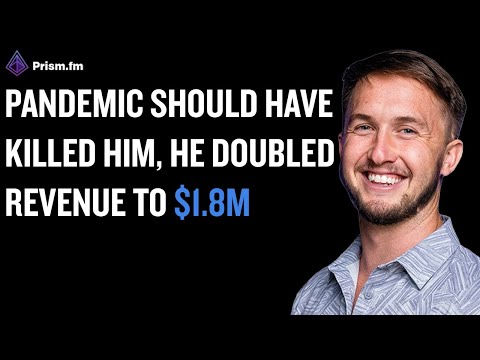
Key Takeaways
- 01Prism.fm was founded in 2017 and serves venues, promoters, and talent agents in the live music industry.
- 02The company had approximately 240 customers as of July 2022, primarily venues and promoters.
- 03Average contract value was approximately $7K per year as of 2022.
- 04The biggest customer was paying over $250,000 per year, up from early pricing of $600 to $1,000 per year.
- 05Venues and promoters account for more than 90% of revenue; the talent agency side was about six months into beta with around 20 customers.
- 06Prism.fm raised a $9M Series A in August 2021, which included a converted $2.9M bridge note from 2019 plus approximately $6M in new capital.
- 07The 2019 bridge note carried a 3.5% annual interest rate.
- 08The company had a team of 20 full-time employees and management believed it could cut to profitability if needed.
- 09Prism.fm tracks billions of dollars in annual payment volume flowing through its platform.
- 10Matt Ford was 33 years old at the time of the interview and based in Austin, Texas.
Company Metrics at Time of Interview
| Metric | Value | Source |
|---|---|---|
| Customers (venues and promoters) (2022) | 240 | Founder interview, Jul 2022 |
| Avg Contract Value (2022) | $7K per year | Founder interview, Jul 2022 |
| Biggest Customer ACV (2022) | $250K per year | Founder interview, Jul 2022 |
| Legacy Customer Low ACV (2022) | $3,000 per year | Founder interview, Jul 2022 |
| Agency Beta Customers (2022) | 20 | Founder interview, Jul 2022 |
| Team Size (2022) | 20 full time | Founder interview, Jul 2022 |
| Series A Total Round (2021) | $9M | Founder interview, Jul 2022 |
| Bridge Note (converted) (2019) | $2.9M | Founder interview, Jul 2022 |
| New Capital in Series A (2021) | $6M | Founder interview, Jul 2022 |
| Bridge Note Interest Rate (2019) | 3.5% per year | Founder interview, Jul 2022 |
| Revenue Tracked Through Platform (annual) (2022) | Billions of dollars | Founder interview, Jul 2022 |
| Revenue Share from Venues and Promoters (2022) | 90%+ | Founder interview, Jul 2022 |
| Year Founded | 2017 | Founder interview, Jul 2022 |
Growth Breakdown
Revenue
Matt Ford confirmed that Prism.fm's average contract value was approximately $7K per year across roughly 240 customers as of July 2022, with the company's largest customer paying over $250,000 per year. Early customers had paid as little as $600 to $1,000 per year, making the jump to enterprise pricing a defining milestone for the business.
Customers
Prism.fm had approximately 240 paying customers on the venue and promoter side as of July 2022. The talent agency product line was about six months into beta with around 20 customers, representing a new and still-small segment of the business.
Team
The company employed 20 full-time people as of July 2022, which Ford described as a relatively lean team. He noted that the company could cut costs and reach profitability from that position if it chose to, without requiring aggressive layoffs.
Funding
Prism.fm closed a $9M Series A in August 2021, which included approximately $6M in new capital and the conversion of a $2.9M bridge note originally raised in 2019 at a 3.5% annual interest rate. Ford indicated the company was not yet profitable but was in a healthy financial position with money in the bank.
Growth Strategy
Surviving and Expanding Through COVID
Rather than pivoting, Prism.fm used the pandemic period to deepen its product and expand into a new customer segment. Ford described the strategy as using the downtime extremely wisely, emerging with more revenue and a stronger foundation than before the pandemic.
Adding Talent Agents as a New Business Line
During the pandemic, Prism.fm brought talent agents onto the platform as a second customer segment alongside venues and promoters. This move toward covering all sides of the live music marketplace was described as central to the company's vision of becoming the ubiquitous software solution for the industry.
Moving Upmarket on Pricing
Prism.fm systematically raised prices on its venue and promoter customers over time, negotiating fee increases tied to new features and expanded software usage. The company guided its largest customer from a low starting price up to over $250,000 per year by expanding the scope of what Prism.fm managed for them.
Referral Program
At the time of the interview, Prism.fm had just subscribed to Referral Rock, a CRM tool for managing referral programs. Ford described it as a new initiative he was excited about as a growth channel.
Exploring Transaction-Based Revenue
Ford outlined a longer-term strategy of moving from pure SaaS fees toward facilitating payments directly, given that billions of dollars in annual payment volume already flow through the platform. He framed this as a horizon project that could add a significant new revenue line once the core platform mission was more complete.
Best Quotes
“We ended up emerging with twice as much revenue as we had. We closed the Series A.”
“Our average comes in around 8 k a month. But we have enterprise clients that are paying $250,000 a year. And we have some legacy customers that are still paying $3,000 a year.”
What Happened Next
This interview captured Prism.fm at a moment of recovery and expansion in July 2022, with 240 customers and a freshly closed Series A behind it. The figures here reflect what Matt Ford reported at that point in time and do not represent the company's current state. Prism.fm has continued to grow since this recording, and updated metrics including customer count, revenue, and team size are available on the live company profile at GetLatka.
View Prism.fm’s current profile and metricsFull Transcript
Chapters
- 0:00Introduction and COVID Survival Story
- 1:21Keeping the Core Product and Adding Talent Agents
- 2:42Pricing Model and Enterprise Customers
- 6:14Moving Upmarket: The $250K Customer Story
- 7:55Revenue Breakdown by Customer Segment
- 8:20Customer Count: 240 Venues and Promoters
- 9:04Funding History: Bridge Note and Series A
- 10:57Team Size and Path to Profitability
Introduction and COVID Survival Story
Nathan Latka
00:00Hey, folks. My guest today is Matt Ford. He's an entrepreneur, engineer, creator, artist, spiritual being out of Austin, Texas, now building prism.fm. He helps make planning live music events easier. Matt, you ready to take us to the top?
Matt Ford
00:12Absolutely. Thank you.
Nathan Latka
00:13I was worried about you during COVID. There was no live music events happening. How'd you survive?
Matt Ford
00:19It there we actually we found the silver lining through the pandemic for sure. It's amazing to say that now in hindsight. There was definitely a moment in the heart of it where it was hard to see the other side of it. But our basic hypothesis the whole time was this was gonna be a brief moment in time. There was gonna be a live music on industry on the other side of the pandemic. And if we use
00:44this time extremely wisely, we can come out on the other side extremely strong. And I'm happy to say that that's what happened. We ended up emerging with twice as much revenue as we had. We closed the Series A.
Nathan Latka
00:56So you're you're over one you're over 1,200,000 then now in ARR?
Matt Ford
01:01Yes. Yeah.
Nathan Latka
01:02Yeah. Yeah. Oh, right around there?
Matt Ford
01:04We we were back then. We're much higher now. I guess yeah. When when I the pandemic, I I was actually counting was counting, like, March 2022 is basically when I wrote the pandemic off as being closed, and we've had some good growth since then as well.
Keeping the Core Product and Adding Talent Agents
Nathan Latka
01:21Yeah. That's incredible. Now did you pivot the company or you still are doing software for live managing live events?
Matt Ford
01:26We did not pivot the company. So most of our customers we we use it to our advantage for sure, I'll I'll I'll I'll share that. But our our core business, we we kept the same software as a service for the people putting on live music events. The the big thing that we added during the pandemic was we brought on the other side of the live music marketplace. So there is venues, promoters, and talent agents. And we
01:52added talent agents as a as a new business line during the pandemic. We're about six months into a beta. We have around 20 customers, and
02:05and the customers are loving it. We've identified a a small list of things that we need to do to really sweep that side of the market. And and we're closing in our our vision of being the ubiquitous solution for all sides of the live music marketplace. So things things are frankly really, really great. So yeah. So just to be clear,
Nathan Latka
02:24your talent agencies, the event venues, and then the talent, the bands themselves, you're working with all three?
Matt Ford
02:29So so the talent agencies and the bands are one group. The talent agency represents the band, and then there's the venue and the promoter. So those are the three that we're working with. And the venue
Nathan Latka
02:39make money on all three lines there?
Matt Ford
02:41Yes. Yeah.
Pricing Model and Enterprise Customers
Nathan Latka
02:42The same model on all of them? It's like a percent or something, or is one paying a SaaS fee? One's a percent?
Matt Ford
02:47We have a basic SaaS fee. We wanna move into some more transaction based things. But for the time being, we've, yeah, we're out of basic SaaS fee. We actually we just we did our pricing on the venue and the promoter side of the company. It's the most mature side of our product. So we're getting to a place where I'm I'm really pleased and happy with, our our pricing model.
Nathan Latka
03:08What are they paying per month these days?
Matt Ford
03:12It's all over the board. Our average comes in around 8 k a month. But we have enterprise clients that are paying $250,000 a year. And we have some legacy customers that are still paying $3,000 a year. I mean, one of the cool things that happened is when we launched Prism, we were getting beat up for a thousand dollars a year. Promoters were saying, hey. Thousand bucks a year. Let's get that down to $800 a year, $600
03:38a year. It was only on pure faith that I kept running the business in that moment. But now we have a customer paying us over $250,000 a year, and they're not alone. That's a paradigm shift at the company. So, I mean, it we it's not like we've won the war, but, you know, that's very, very encouraging to start to have people pay us real money for our service.
Nathan Latka
03:59Oh, what's going on there, YouTube? Good to see you guys. Now imagine this. You love watching these interviews with SaaS founders, but imagine if we took all of the valuation data out from over 2,807 interviews I've done manually. Saves you a lot of time. Well, we've done this. We've built it into the beautiful interface inside of Founderpath. Check this out. I'll show you how you can access this in a second, but you log in, you connect
04:22your Stripe account, you see your valuation real time. You can see what it changed over the past eighty eight days and even set goals for valuation this year. Now the secret evaluation is there's many different ways to value a SaaS business. So the reason you're gonna see three or four different valuations inside of your Founderpath dashboard, this is all free by the way, is because depending on who's doing the buying of your SaaS company, you're gonna
04:47get a different valuation. A VC is gonna pay a different valuation, private equity firm is different. If you're gonna do a minority sale, that's different. And if you sell the whole business, that's a different valuation. You can see all those when I hover over here.
Matt Ford
05:00Right? So
Nathan Latka
05:00the teal is what a VC would pay. Yellow is what private equity and red is if you sold the whole thing outright. Now what's cool about this is this is not built off random data. Again, you guys hear these interviews on YouTube. All these datas are built from real time valuation data points founders share with us on the show. So traction, 1,200,000 seed round, 3.7 raise. They sold 22% of their business. Go in here and filter
05:24by the event. Maybe you only wanna see companies that have sold the whole business. Well, here are a bunch that have been acquired the valuation and the multiple. Maybe you're going out right now and you're raising your seed round. We'll go in here and look at all this recent seed deals that went down, what they raised, what valuation they raised at and what percent that they sold. There's never been a larger dataset of SaaS valuations than
05:50what you can get now inside of Founderpath. And we're thrilled to bring it to you. Alright. We're gonna go back to the YouTube video here in a second, but if you wanna check this tool out, if you wanna jump in and sign up, you can check it out for free to get your valuation at this link. This link, founderpath.com/products/valuations. Or if you go to founderpath.com and hover over products, click on get your valuation here, and go
Moving Upmarket: The $250K Customer Story
Nathan Latka
06:14ahead and sign up to give it a whirl. Again, all that valuation data live right inside the platform. I hope to see you there. Alright. Let's jump back into the interview. Very few founders make that gap. Right? Going I mean, we know it needs to happen at some point, but very few do it, much less when they're going through COVID with what you were doing. Like, how did you have the confidence to with a straight face
06:33say, no. It's 250 k per year. That's the price, and I'm not discounting it. Pay it or go somewhere else.
Matt Ford
06:39Yeah. It
06:42that's
06:45yeah. There's a lot packed into that question. With with that particular client, we they they launched a $100,000,000 initiative. They raised a $100,000,000 to,
06:58to buy music venues and to create a tremendous organization. And very early on, they got in touch with us. They understood the value of software. They've tried to build out their own systems, and they know how much it costs it cost them. So I think those were all very important factors. We didn't have to convince them of of our value. And the price has gone up multiple times on them, and it's been rooted in software needs.
07:25So we're to be clear, they're not we're not they're not paying us as a consultant. They're paying us fees, SaaS fees, and we've been able to get them up over time based off of, the features that we're pumping out. So, you know, if for you know, we get to a certain place where Prism's running a big chunk of their operation and they're saying, hey. There's this other bucket of our business. We're spending a lot of money
07:46on it. It would be really valuable for us if you could streamline it, and we and then we negotiate on the fees. So through that process, we've guided them up to $250,000 a year.
Revenue Breakdown by Customer Segment
Nathan Latka
07:55And And and, Matt, break down this for me that the revenue buckets of these three different folks you're selling to. What percent of revenue comes from which group?
Matt Ford
08:03By far so venues and promoters, it's a little bit hard to distinguish because they're a lot of promoters are also venue owners. So it's really just two buckets. It's promoters and venues and agents. So just and the vast majority is our our promoters and venues.
Nathan Latka
08:18Like, more than 90% of your revenue?
Matt Ford
08:19Yeah. Yeah.
Customer Count: 240 Venues and Promoters
Nathan Latka
08:20Oh, wow. Okay. And how many folks are paying over there? How many customers?
Matt Ford
08:23The agency market's six months old. So that's probably mostly why.
Nathan Latka
08:28I see. I see. How many individual venues and promoters, like, customers do you have?
Matt Ford
08:33Somewhere around 240.
Nathan Latka
08:35Wow. Okay. 240. Interesting. That's great.
Matt Ford
08:37And you said on average, they're paying, like, $2 a month?
08:41No. On average, it's 7 k a year ish.
Nathan Latka
08:44Yeah. 7 okay. $7k a year, $600 a month, something like that.
Matt Ford
08:48Yeah. Can can can I multiply that? I mean, can I take $600 a month times 240? That puts you at $150k a month in revenue.
08:56Yeah. That's that's the way the math works. I'll for political reasons, I won't confirm or deny that, but that that sounds, yeah, about right. Yeah.
Funding History: Bridge Note and Series A
Nathan Latka
09:04Why'd you decide your your funding history today, you raised a million in 2017, I believe. You raised 2,200,000 in 2019. Are those both accurate, and did you raise more?
Matt Ford
09:13The so 2019 was a bridge note that converted in 2022 on a on, like, a $9,000,000 round. Yeah.
Nathan Latka
09:23The 2,200,000 converted in in from 2019 converted in 2022?
Matt Ford
09:27Yes. It did. Yeah. I see. Well, sorry. August 2021. Yep.
Nathan Latka
09:32Okay. Got it. So you you did round in 2021 where you raised how much?
Matt Ford
09:36Yeah. You the in total, the round was 9,000,000.
Nathan Latka
09:40Including the 2,000,000 that converted in or no?
Matt Ford
09:42Yes. Yes.
Nathan Latka
09:43Oh, okay. So you raised 7,000,000 of new capital, 2,000,000 converted from 2019, and that's what you raised?
Matt Ford
09:49Yep. Yep. Yeah. It was actually closer to 6 and that two it was the the the the 2019 round was 2,900,000, and then there was interest on the note. So, yeah.
Nathan Latka
10:00I see. I see. What interest? Pretty standard, six to 8%?
Matt Ford
10:04We were 3.5% per year.
Nathan Latka
10:06Oh, that's some that's really good. That's great.
Matt Ford
10:09Good negotiator.
10:10It was good, and it ended up working out in our favor because we had to hold on to the cash a little bit longer than expected of the pandemic. But
Nathan Latka
10:16Yep. Yep. No. That makes a ton of sense. And, I mean, can I ask, are you comfortable sharing? Most folks in their series a are selling, you know, what, 10 to 15% of the business. Were you sort of in that range?
Matt Ford
10:25Yeah. Yeah.
Nathan Latka
10:26Okay. Alright. So you're, 60,000,000 post money valuation, something like that.
Matt Ford
10:31We were less than that.
Nathan Latka
10:33Okay. Yeah. Okay. This is really impressive because I I remember, like, when we back when we played Catan that one time, if you remember, I just remember going, man, I love this guy's energy. He's got a great product. I hope he figures out how to make money during the pandemic. So I'm glad you're you figured it out.
Matt Ford
10:47Well, thank you for your hopes. And, yeah, we did. And like I was saying, I I have to remind myself that we slayed that dragon because it's so easy to just keep my head down.
Nathan Latka
10:55It's so impressive.
Matt Ford
10:56Yeah. Thank you.
Team Size and Path to Profitability
Nathan Latka
10:57Super impressive. How many folks today are on the team full time?
Matt Ford
11:01We and this is one of things that I'm most excited about is we we've got a relatively lean team. I think it's 20 full time. Yeah. And we are in a place where we could mean, we could cut and be profitable right now. But with the money that we have in the bank, we have a really good shot at just at just not raising again and going to profitability if that's what we choose. So Yep. From
11:26a healthy place, not from a place of, like, having to do really aggressive cuts or anything like that. So we we really reinvented ourselves during the pandemic. We grew revenue a lot, but we also, set ourselves up to be a much, you know, better, more profitable company in the future as well. And it just it really has worked out in our favor. Yeah.
Nathan Latka
11:44One of the ways to capture more value for any SaaS company is to sit really close to the payment stream of your customers, help them get more payments, then take a percent fee there. Right? So you haven't moved into the percent fee model yet, but it sounds like you're thinking about it. If you do move into that, what will it look like?
Matt Ford
11:57Yeah. Thank you for asking. We we do yeah. Wow. Exactly. You you just called out our playbook right there for sure. We help them track their payments. We help them account for their payments. We help them invoice their payments. We're not actually facilitating it yet. So that would be a really tremendous line of revenue for us if we get into it. There's, I kind of always mess up this word, but I think the right word is
12:21it's low elasticity in the market, meaning they're extremely price sensitive. So,
12:30sometimes a band might get paid a $100,000 upfront if they're a big enough band or $500,000 And we streamlined the problem of, like, keeping track of a huge mess around payments, but not a big enough problem to get, like, a ongoing 5% fee or something like that. Our clients would just go around us, if you will. So we're trying to figure out if it boils down a few basis points, if it's just baked into their software
12:53subscription. And it's really just this thing that like locks, you know, locks in our ubiquity because we're also handling the payments and we get it back into fees. So it's an ongoing exploration, but, you know, frankly, it's a bit of a horizon project for us. We're fully focused on what I would say, like, completing the initial mission, and it'll never be complete. But our our eyes are set on being the ubiquitous software solution for the live
13:18music industry. And I think in the next six months, we're gonna see that happen.
Nathan Latka
13:23Matt, how much revenue do you send right now? If you track all the revenue going through your system today, how much what is it annually right now?
Matt Ford
13:28If we track if we all like, all in all the payments across
Nathan Latka
13:32Yeah. Yeah. Everything you sit on top of, all the payments you process.
Matt Ford
13:35In the billions. Yeah. Don't wanna give you too, specific of a number.
Nathan Latka
13:39You said millions or b? Billions?
Matt Ford
13:41B. Yeah. Billion.
Nathan Latka
13:42Yeah. Yeah. So so if you can figure that number out. Right? You know, 1% of a billion, obviously, that starts to get very interesting very quick.
Matt Ford
13:49Absolutely. Yeah. Yeah. Interesting.
Nathan Latka
13:52Okay. Very cool. Heck of a story here. Let's wrap up with the famous five. Number one, last book you read.
Matt Ford
13:58I'm reading Leonardo da Vinci's biography by Walter Isaacson, and it's absolutely incredible and very inspiring and very interesting.
Nathan Latka
14:07Number two, is there a CEO you're following or studying?
Matt Ford
14:11Thought I'd give you the same answers. Not the book, but the CEO one. Ugh. I'm still
Nathan Latka
14:19Yeah. Okay. Let me ask a different get tell me an artist that you're really impressed by because they really think like a business CEO. They're all they're not just talented artists. They're also a really good business person.
Matt Ford
14:29That's a good that's a good one. This is this is the one that pops to mind. I saw Grimes on a podcast recently, and I think she's super smart and interesting and a cool person. And, she kind of blew my mind.
Nathan Latka
14:40Yeah. It's happy answer, but yeah.
Matt Ford
14:42That works. Grimes. Even the last treatment podcast is really good.
Nathan Latka
14:46Number three, what's your favorite online tool for building Prism?
Matt Ford
14:49We just subscribed to Referral Rock. I'll give them a shout out. It's I wouldn't say it's my favorite yet because we're just getting it going, but it's a CRM for our referral program. And I think it's really smart. It's a great price point. It's a good tool. Yeah. I'm I'm excited that it's gonna be a valuable thing for us.
Nathan Latka
15:09Alright. Fair enough.
Matt Ford
15:10Referral Rock.
Nathan Latka
15:11Number four, how many hours of sleep do you get every night?
Matt Ford
15:13And I get a referral price for Referral Rock. So if anyone signs up There you go. From me. How many hours of sleep?
Nathan Latka
15:22Hours of sleep. Yeah.
Matt Ford
15:24I go for seven to eight. Sleep is extremely important to me. I'm a big believer of, of of doing the things, sleep, meditation, exercise so that when I'm not so that I'm when I'm working, I can get that time back because my energy is just really that good. So I believe that health pays dividends, and that's the model I follow.
Nathan Latka
15:42I love that about you. Number four, situation, married, single, kiddos?
Matt Ford
15:47One kid, single. Yeah. But I'm, you know, interested. So He's
Nathan Latka
15:54still playing the drums or what?
Matt Ford
15:56My kid? Yeah. I feel I feel like you showed me a picture of him doing a drum set.
16:01He is, he is really into drawing right now. He has submitted a bunch of ideas to Legos and Mattel for new toy ideas on really cultivating a passion of his. Both, like, engineering and drawing is what he's into right now. Yeah.
Nathan Latka
16:16Oh, I love that. Okay, Matt. And how old are you?
Matt Ford
16:1833.
16:1933.
Nathan Latka
16:20Last question. Something you wish knew when you were 20.
Matt Ford
16:24Thank you. Oh, gosh. That's a great question. I wish would've come prepared for about
Nathan Latka
16:28Thirteen years ago.
Matt Ford
16:31Prioritize emotional health, like your life and success depends on it because it probably does.
Nathan Latka
16:39Guys, that's a good one. Prism.fm launched in 2017. Talk about emotional health. This guy made it through the pandemic when he was selling software to live event venues. There was no live music happening. How did he survive? Not only did he survive, he more than like tripled his revenue, right? Got over $155,000 a month in revenue. That's up from 2018 when I had him on. Was doing 15,000 a month in revenue. Now working with over two
17:00forty customers. His customers are mainly, again, these event venues and promoters. 90% of his revenue is there right now. His biggest customers pay over $250,000 per year. He's thinking about, can I get in the transaction business model as well? We sit on billions of dollars of transaction volume that these artists are getting paid and the venues are paying them and promoters are making, and he's actively thinking about that. So we'll see what happens. Prism.fm. Matt,
17:20thanks for taking us to the top.
Matt Ford
17:21Thank you so much. Appreciate it.
Nathan Latka
17:24One more thing before you go. We have a brand new show every Thursday at 1PM central. It's called Shark Tank for SaaS. We call it deal or bust. One founder comes on three hungry buyers. They try and do a deal live and the founder shares back end dashboards, their expenses, their revenue, ARPU, CAC, LTV, you name it, they share it and the buyers try and make a deal live. It is fun to watch every Thursday 1PM
17:50Central. Additionally, remember these recorded Founder interviews go live. We release them here on YouTube every day at 2PM Central. To make sure you don't miss any of that, make sure you click the subscribe button below here on YouTube, the big red button and then click the little bell notification to make sure you get notifications when we do go live. I wouldn't want you to miss breaking news in the SaaS world, whether it's an acquisition, a big
18:12fundraise, a big sale, a big profitability statement or else. I don't want you to miss it. Additionally, if you want to take this conversation deeper and further, we have by far the largest private Slack community for B2B SaaS founders. You want to get in there. We've probably talked about your tool if you're running a company or your firm if you're investing. You can go in there and quickly search and see what people are saying. Sign up
18:34for that at nathanlatka.com/slack. In the meantime, I'm hanging out with you here on YouTube. I'll be in the comments for the next thirty minutes. Feel free to let me know what you thought about this episode and if you enjoyed it, click the thumbs up. We get a lot of haters that are mad at how aggressive I am on these shows, I do it so that we can all learn. We have to counter those people. We got
18:53to push them away. Click the thumbs up below to counter them and know that I appreciate your guys' support. Alright, I'll be in the comments. See you.