
Founder Interview
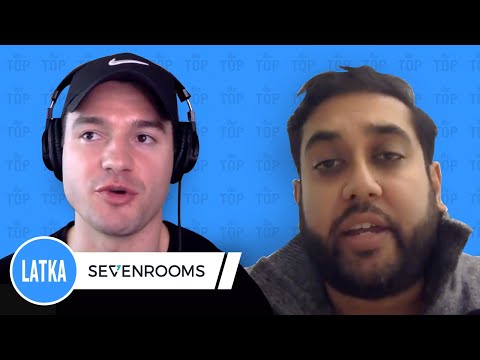
How SevenRooms Grew 300% and Raised $20M Building a Restaurant Guest Data Platform (Interview with CTO and Co-Founder Kinesh Patel)
- Interview Date
- October 19, 2018
- Interviewee
- Kinesh PatelCTO and Co-Founder
Company Metrics at Interview Time
Revenue Growth (YoY) (2018)
300%
Gross MRR Retention (2018)
99% per month
Total Funding Raised
$20M
Team Size (2018)
90
Avg Price per Location (2018)
$500 per month
Historical Snapshot
These numbers were reported by Kinesh Patel during the interview recorded in October 2018 and are a historical snapshot, not current figures. See Sevenrooms’s current numbers.
Key Takeaways
- 01SevenRooms was founded in 2011 as a reservation, seating, and guest management platform focused on guest data.
- 02The company grew close to 300% over the prior year as of the October 2018 interview.
- 03SevenRooms charged an average of $500 per month per location, with unlimited users and unlimited usage.
- 04The company had thousands of customers across 250 cities globally at the time of the interview.
- 05Total capital raised to date was a little over $20M, with Comcast Ventures funding about a quarter of that in late 2017.
- 06The team was approximately 90 people, the vast majority based in Manhattan, New York City.
- 07Gross revenue retention on the MRR side was 99% monthly.
- 08SevenRooms intentionally had no consumer-facing reservation platform, focusing entirely on the operator side.
- 09The company was targeting a profitability scenario within the next twelve months from the interview date.
- 10Early customer acquisition involved shadowing host stands at restaurants during full dinner and lunch shifts to build relationships.
Company Metrics at Time of Interview
| Metric | Value | Source |
|---|---|---|
| Year Founded | 2011 | Founder interview, Oct 2018 |
| Total Funding Raised | $20M | Founder interview, Oct 2018 |
| Team Size (2018) | 90 | Founder interview, Oct 2018 |
| Cities Operating In (2018) | 250 | Founder interview, Oct 2018 |
| Avg Price per Location (2018) | $500 per month | Founder interview, Oct 2018 |
| Revenue Growth (YoY) (2018) | 300% | Founder interview, Oct 2018 |
| Gross MRR Retention (2018) | 99% per month | Founder interview, Oct 2018 |
| CAC Payback Period (2018) | less than 12 months | Founder interview, Oct 2018 |
Growth Breakdown
Revenue
SevenRooms grew close to 300% over the year prior to the October 2018 interview. The company charged an average of $500 per month per location across thousands of locations; no revenue figure was disclosed. Kinesh expressed confidence that the company would surpass double-digit million ARR within the following year.
Customers and Locations
SevenRooms served thousands of customers across 250 cities globally at the time of the interview. The customer base ranged from independent neighborhood restaurants to large multinational hotel chains, with multi-unit groups being the primary sweet spot. Exact location counts were not disclosed, but Kinesh confirmed the number was in the thousands.
Team
The team stood at approximately 90 people at the time of the interview, with the vast majority based in Manhattan, New York City. The team spanned engineering, sales, and customer success, with a small number of sales staff distributed across other parts of the United States.
Funding and Profitability
SevenRooms had raised a little over $20M in total by October 2018, with Comcast Ventures providing about a quarter of that in the first institutional raise in late 2017. Kinesh said there were no plans to raise additional capital at the time: revenue was "growing at such a great clip" that the company wanted to reach profitability first. Asked whether it could get there within the next twelve months, he answered, "Hopefully, we'll see."
Growth Strategy
Relationship Building Through Shadowing Host Stands
In the early days, the SevenRooms team built their first customer base by physically going to restaurants and spending entire lunch and dinner shifts standing behind host stands, observing how staff managed reservations. This hands-on approach helped them build trust and relationships inside what Kinesh described as an industry where everyone knows everyone.
Organic International Expansion Through Existing Accounts
SevenRooms reached 250 cities globally without deploying a sales team in each location. Growth into new cities came organically through existing multi-location accounts expanding their use of the platform across properties, including internationally.
Targeting Multi-Unit Hospitality Groups
Rather than focusing on single-location restaurants, SevenRooms prioritized multi-unit hospitality groups where the value of shared guest data across all properties was strongest. Kinesh noted that deals were typically trialed at a couple of locations before contracts were signed for all locations.
New Product Lines to Drive Expansion Revenue
At the time of the interview, SevenRooms was preparing to release new products, particularly in restaurant marketing, to drive net revenue retention above 100%. Kinesh expected new products to be a major contributor to the 300% growth rate being maintained in the following year.
Hypothesis-Driven Product Development
The engineering and product teams used wireframes and customer conversations to test ideas before building them. Kinesh described showing mockups to existing customers and gathering feedback to validate demand before committing engineering resources, keeping the team focused on value-driven features.
Best Quotes
“So SevenRooms is a reservation seating and guest management platform with a real focus on guest experience and guest data. So one thing that we found when we started the company back in 2011, my co founders and I, was that we saw a lot of reservation systems out there that didn't put a focus on guest data. And we thought that was super odd because these customers are in the business of providing hospitality, and it starts with people.”
“We would actually go to those restaurants and spend entire shifts, dinner and lunch shifts behind them ... And through that experience, we built relationships and started connecting people.”
“So we've actually got a really great churn rate. We have a 99% gross retention on the MRR side.”
“But I think we can maintain 300%, particularly because we have new products coming up. So from an MRR basis, I think we can maintain that growth rate quite healthily.”
“we're in 250 cities already and not because we have sales team in 250 cities, we have organic expansion through existing accounts. And so because of that, we think the market's just wide open at this point.”
“We are looking at a profitability scenario in the next twelve months, but we're also wanting to fund growth. So when I think about the amount that we wanna raise versus where the revenue is at, I could say it's healthy.”
“To know less, actually. Being naive is a great asset sometimes.”
What Happened Next
This page captures SevenRooms as Kinesh Patel described it in October 2018, when the company had raised just over $20M, was growing close to 300% year over year, and was targeting profitability within twelve months. The figures here are a point-in-time snapshot from that conversation and do not reflect the company's subsequent trajectory. Visit the SevenRooms company profile on GetLatka for the most current data on file.
View Sevenrooms’s current profile and metricsFull Transcript
Chapters
- 0:00Introduction and Background
- 0:23What SevenRooms Does and How It Makes Money
- 1:07Pricing Model and Per-Location Structure
- 1:59Company Timeline and Founding Story
- 3:41Customers, Locations, and Multi-Unit Groups
- 4:58Funding History and Comcast Ventures
- 5:53Team Size and Office Location
- 6:32Early Customer Acquisition and Shadowing Host Stands
- 7:44Churn, Retention, and CAC Payback
- 10:27Product Roadmap and Prioritization
- 11:57Growth Rate and Revenue Targets
- 13:48Profitability Plans and Future Fundraising
- 15:04Famous Five Rapid Fire Questions
Introduction and Background
Nathan Latka
00:00Hello, everyone. My guest today is Kinesh Patel. He's the CTO and co founder of SevenRooms where he leads the engineering team in development of the software. Before founding the company, he was team leads of scientific computing at ExxonMobil. He also received his BS in electrical computer engineering from the University of Texas at Austin and an MBA in finance and strategy from the New York University Stern School of Business. Kinesh, ready to take us to the top?
Kinesh Patel
00:22Yeah, for sure.
What SevenRooms Does and How It Makes Money
Nathan Latka
00:23All right. What is SevenRooms and how do guys make money?
Kinesh Patel
00:26Sure. So SevenRooms is a reservation seating and guest management platform with a real focus on guest experience and guest data. So one thing that we found when we started the company back in 2011, my co founders and I, was that we saw a lot of reservation systems out there that didn't put a focus on guest data. And we thought that was super odd because these customers are in the business of providing hospitality, and it starts with
00:49people. And so we thought guest data was the missing component, and we wanted to make sure that whatever we built, we made that a focus point. So what we build is what they call in the industry is a front of house system. We help the technology the technology manages to help the entire guest experience. So discovery and booking, in dining room experience, and then the post dining follow-up.
Pricing Model and Per-Location Structure
Nathan Latka
01:07Okay. And is it a SaaS model? These folks pay per month?
Kinesh Patel
01:09It's a SaaS business. Yes.
Nathan Latka
01:11Okay. What do people pay on average for this thing?
Kinesh Patel
01:13On average, we charge about $500 a month per location.
Nathan Latka
01:17That's great. And and what are they getting for that? Is it a number of seats, number of wait staff, number of volume? How do you price? Like, what utility based pricing do you use?
Kinesh Patel
01:24Well, we essentially price based on location. So we have a lot of hospitality groups that work with us that have multiple locations. That pricing is really on a per location basis. It's unlimited users. It's unlimited usage. One thing that sort of makes us unique is that a lot of the reservation platforms out there have both a consumer offering and the operator focused tools. We very much intentionally do not have a consumer offering, so we've been entirely
01:46focused on the operator.
Nathan Latka
01:47So just to be clear, if someone's using you and it's a restaurant that maybe has 20 people come through every night with two waiters and a different restaurant use you at a different location with 200 waiters and 2,000 people every night. It's the same price point.
Kinesh Patel
01:58Yeah. That's correct. Yep.
Company Timeline and Founding Story
Nathan Latka
01:59Okay. Interesting. Alright. Got it. And then put this on a timeline for me. When did you guys launch?
Kinesh Patel
02:03We started the company in 2011. We had done sort of nights and weekends prior for a few years, but failing at different things, then finally succeeding on this concept.
Nathan Latka
02:12How do you go from Exxon to this? I mean, how did this start boiling in the back of your head?
Kinesh Patel
02:16It's a really good question. I started out my career very much on the science side of things. So I spent a lot of time in Exxon's research labs focused on physics simulation, high performance computing. But a lot of what I did did not do anything with the internet. And so I've always had sort of this burning idea in the back of my mind that I wanted to start something, I wanted to build something, but I was
02:34missing on this thing called the internet. And so when the opportunity came along with my two co founders and Joel in particular, who's our CEO, I've been friends with him since I was 12 years old. So we've been friends for a really long time. So I was sort of his first call when we were first discussing the idea and couldn't pass up the opportunity.
Nathan Latka
02:50Interesting. How did you you taught yourself to code via Exxon?
Kinesh Patel
02:54Yeah, exactly. So I was a professional software developer there, I led software teams over there. And one of the things that we focused on there a lot was data and processing data, understanding data. People talk a lot about today machine learning and data science and those types of things. The oil and gas industry has been doing that for years and years and years before it was popular with the modern cloud platforms and modern tech businesses. But
03:14taking that concept and providing it to hospitality. So this was the appeal for me. Hospitality historically has not been a data driven business. It's been restaurant owners who provide hospitality, cooking food and providing hospitality. And they haven't thought about their business in a very deep way from a data centric viewpoint. And so the opportunity here was, can we build technology that doesn't really replace the human touch, but just enhances it, while all the while providing the
03:38operators the opportunity to have a data driven business for the first time.
Customers, Locations, and Multi-Unit Groups
Nathan Latka
03:41So launched in 2011, how many customers have you scaled to today?
Kinesh Patel
03:44We have thousands of customers today across the globe, across 250 cities.
Nathan Latka
03:48Okay. And how many locations?
Kinesh Patel
03:51We don't disclose the exact number, but it's in the thousands.
Nathan Latka
03:53Okay. Got it. What I'm trying to get to is when someone signs up with you on average, are they managing one location or are there it's actually enterprise sale, you're they're managing a 100 locations?
Kinesh Patel
04:01There's there's sort of it's sort of across the board. So we have independent operators that are sort of the neighborhood mom and pop shop. We also have large multinational hotel chains.
Nathan Latka
04:10Yeah. Yeah. I I totally get that. Right. You're gonna have customer cohorts all over the place. I'm just trying get a sense. So your sweet spot is what? Is it the long tail mom and pop or the enterprise Marriott deal?
Kinesh Patel
04:19It's definitely multi unit groups. But I think the sweet spot is sort of a red herring because we're just as useful for a group that has 10 locations versus one that has 300. But definitely multi unit groups is our sweet
Nathan Latka
04:30Yeah. And just to be clear though, I mean, someone that has 300 locations versus someone who has 10, they have basically the same needs, but there are things you can go deeper on if you really chose to only focus on one of those exclusively.
Kinesh Patel
04:42Sure, that's right. And I do think the more locations, the better. So we definitely, we trend in that direction. But one thing we always talk about is punching above your weight class. We want to give restaurant operators the ability to have the capabilities of a much larger organization through the data and the tools. That's something they haven't had before.
Funding History and Comcast Ventures
Nathan Latka
04:58Yeah. Have you guys decided to bootstrap the company or raise?
Kinesh Patel
05:02No, we've raised capital. So the first, we're of untraditional in many ways. The first five years of our company, we had raised from private investors and angels and kind of built the product and built the company initially that way. And then we took our first institutional raise in the end of twenty seventeen from Comcast Ventures.
Nathan Latka
05:18Okay. So total into the company today is what?
Kinesh Patel
05:21A little bit over $20,000,000
Nathan Latka
05:22A little over 20. And how much was from Comcast?
Kinesh Patel
05:25So Comcast funded about a quarter of that.
Nathan Latka
05:28And why Comcast? Was it strategic or what?
Kinesh Patel
05:31It's a little bit of both. So one thing that's interesting that people don't realize about Comcast is that they actually do own a lot of hospitality outlets and they're connected to them through NBC Universal theme parks and other things. So we thought that was an interesting strategic thing. But more importantly, the partner that we're working with, Dinesh Morjani, he's someone who understands local. He built CitySearch back in the day. We thought he was a really great
05:51partner to work with and he will our business.
Team Size and Office Location
Nathan Latka
05:53And shape the team for me today. What are guys at team size wise and where's everyone based?
Kinesh Patel
05:58So we're about 90 people today. The vast majority of us are based in Manhattan here in New York City in Chelsea. And that includes pretty much every department from engineering and sales to customer success and onwards. We do have a few folks sort of scattered in different parts of The US from a sales perspective, but most are in New York.
Nathan Latka
06:13Let's talk more about the sales. Right? So what is your and you're on the engineering side, is probably wrong conversation now with you. But your sales machine right now, is it kind of an ABM approach, inside sales, or what's it looking like?
Kinesh Patel
06:25It's primarily inside sales. So we have all of our sales reps here in New York. We do have a few folks doing outside sales but it's primarily inside sales.
Early Customer Acquisition and Shadowing Host Stands
Nathan Latka
06:32Okay. So your first a 100 customers. Walk me through how you guys hustled to sign those folks up.
Kinesh Patel
06:37Through a lot of manual effort.
Nathan Latka
06:39Yeah. Yeah. But tell me the pain. I mean what was manual? What'd you do?
Kinesh Patel
06:42Yeah. So the first set of customers that we got in the early days, we really spent a lot of time building relationships in the industry. So one thing about food and beverage and hospitality in general is it's sort of an incestuous industry. Everyone kind of knows everyone and there's a little bit of a herd mentality as well. And so breaking into that sort of club of people that know each other, that was really difficult at the
07:01beginning.
Nathan Latka
07:01How did you do it though, like specifically?
Kinesh Patel
07:03Yeah. So we did everything from shadow host stands to work at nightclubs in The
Nathan Latka
07:07U. Wait. What is that? Shadow host stands?
Kinesh Patel
07:10So when you walk up to a restaurant and they're checking you in for your reservation, the people that worked at the reservation is the hosts. We would actually go to those restaurants and spend entire shifts, dinner and lunch shifts behind them, them, Hey, can we just see how you guys do this? And let's see what happens in the restaurant. And through that experience, we built relationships and started connecting people. And that's we got our first set
07:30of customers.
Nathan Latka
07:31Interesting. Okay. They're available because they have to process guests coming in. So you're like, heck, why not in between them checking people in, we'll just go stand behind them, build a relationship, watch how they use the software and learn.
Kinesh Patel
07:40Exactly. That's exactly what it is. It's a lot of sort of hustle, sweat and tears.
Churn, Retention, and CAC Payback
Nathan Latka
07:44Really, really interesting. Okay. And then look, once you get the flywheel going, churn becomes really critical. What's your churn look like today and how do keep it low?
Kinesh Patel
07:51Yep. So we've actually got a really great churn rate. We have a 99% gross retention on the MRR side. So really, really good from especially for business and hospitality.
Nathan Latka
07:59Annually or monthly?
Kinesh Patel
08:01That's monthly. Yeah.
Nathan Latka
08:02Okay. Got it. So said differently about 12% annual churn in terms of revenue?
Kinesh Patel
08:08Right, on a gross basis. And I think, you know, we're starting to open up new products this year. So we do expect that to be greater than 100% that we look at on that basis.
Nathan Latka
08:15That same cohort that you signed up about a year ago, if 12% of that revenue churns, I imagine there's also expansion on that cohort as well. Is the expansion more than what churned?
Kinesh Patel
08:24Absolutely. Yeah, absolutely. And it's gonna increase this year, especially we're gonna release new products. So we really expect that to drive up quite a bit.
Nathan Latka
08:31But by about how, like, is it about equal? So you're about a 100% net revenue retention?
Kinesh Patel
08:35I think it'll be more than a 100%.
Nathan Latka
08:37Okay, but historically, what was it at last twelve months?
Kinesh Patel
08:40Historically, so from a gross basis, it was 99%.
Nathan Latka
08:43Yeah, I know. I'm asking for net. Net revenue retention about a 100%?
Kinesh Patel
08:47So yeah, it's about a 100%, but it depends how we consider it because we think about it in terms of locations and not in terms of customer expansion. So we have customers, for example, that have like 20 locations, but it's usually an all or nothing thing. You're not going to get two of those restaurants and not get the other 20.
Nathan Latka
09:00Okay. Why is that the case? I would imagine if I was going to try something new like this, I'd try it on expand to the North America. And if it goes well, then I'd expand to North And South America and then the world. Someone Why sign up all thousand locations in the first shot?
Kinesh Patel
09:14So we do do trials. We do do trials and we do do pilots. But we typically, depending on if it's paid or not paid, of course, that will determine the number. But what we do find is that the benefit of the system is having data that's shared across all the properties. So if I've got locations that are whether The United States or whether they're abroad or whether in Europe or just another city, the benefit really is
09:34understanding that, for example, Nathan's profile, when he visits one location, he goes to another location, that's all part of the same system. So when you roll out to really realize the benefit, you really wanna sell on all your locations. So we see a lot of our deals are typically trialed out a couple locations at the beginning, then but when we actually sign the contracts, it's usually for all locations.
Nathan Latka
09:51Okay. Interesting. So you don't have the ability to really drive meaningful expansion by adding locations. You're gonna have to release new products and use that to drive expansion? Interesting. When you look at fully weighted CACs, you have a sales team. You're I imagine you're not going on shadowing anymore. But when you look at fully weighted CAC to get a new $500 a month location, what are you spending to get them?
Kinesh Patel
10:10We don't reveal a number exactly, but what I can tell you is that we do have a less than twelve month payback period. So it's pretty healthy.
Nathan Latka
10:16Okay. So less than $500 there. And and where are you spending that money typically?
Kinesh Patel
10:22Mostly in sales. It's sales and marketing. Headcount? Exactly. It's usually headcount.
Product Roadmap and Prioritization
Nathan Latka
10:27Interesting. Okay. Good. And then so so how do you we talk about new product lines. You have infinite possibilities with data and kind of the distribution channels you build. How do decide what products to build?
Kinesh Patel
10:36It's a really good question. We get a lot of different sources of data for that. So one area is just the customers themselves. They're always telling us new things that they want. But from a new product revenue generating standpoint, we're really looking at changing some of the existing tooling that they have today. One area that we're really interested in is restaurant marketing. I think if in the last ten years you asked a restaurant, what do they
10:53do for marketing? It's typically like, I get a food critics review and then I outsource on some reservation platform somewhere. But the world really has changed. We now have social media, we have ad spend, we have all these different avenues online to market and get guests. And right now the restaurants are not really using those capabilities because they don't know how to, but they don't have a tool that makes it easy.
Nathan Latka
11:13Interesting. How do you though again, you're always gonna get these ideas coming in. How do you guys say yes, say no to things? This is the paradox a lot of entrepreneurs run into. I'm just curious how you prioritize especially being an engineer.
Kinesh Patel
11:24So, Yeah. I mean, our product team and our engineering team, we're very, very practical. We like to do a lot of hypothesis testing with customers. So for example, if we're looking at building a new product, the first thing we want do is mock it up and show it to customers even before we built it. So I spent a lot of time wireframing and talking to customers that we already have. And if it's targeting a specific niche
11:43or a certain segment of the market, then we want to do that specifically. But that's usually our process. We do that and we get feedback. And then we start building things that people say, Hey, I really want that, or that's going really help my business. But everything we do is try to be value driven, right? Rather saving you money or making you money.
Growth Rate and Revenue Targets
Nathan Latka
11:57When you look at growth, obviously you're a funded company, so there are certain growth expectations you've got to hit. What do you hope to grow out over the next twelve months in terms of percentage points?
Kinesh Patel
12:06So over the last year, have grown close to 300%.
Nathan Latka
12:08Oh, great.
Kinesh Patel
12:09And we want to try to maintain that growth rate this year as well.
Nathan Latka
12:12Well, know, that gets much more difficult the larger you get, obviously. So congrats on getting that. It'll be interesting to see if you can keep it. What do you think most of that growth will come from new customer additions or expansion of wallet share via the product additions?
Kinesh Patel
12:26I think it's going be equal parts, both. Fifty-fifty. Yep.
Nathan Latka
12:30Okay, great. And then look, can kind of we can back into some minimums here, So a thousand location. We said you said specifically you have thousands of locations. So if I assume a minimum there of a thousand at a $500 a pop, You're doing north of $500,000 a month right now at this point, correct?
Kinesh Patel
12:44North of that.
Nathan Latka
12:45Yeah, that's a minimum. So I guess the reason I'm asking you is the law of large numbers makes it difficult to grow 300% year over year eventually at some point. I mean, what's your next big target? Is it kind of a 10,000,000, 50,000,000? What's the next big stretch goal?
Kinesh Patel
13:02I think, well, double digits for sure. And we're definitely in a series B stage. So if I put in that context, it's probably helpful for you. But I think we can maintain 300%, particularly because we have new products coming up. So from an MRR basis, I think we can maintain that growth rate quite healthily. From a location standpoint, of course, the market's wide open. There's thousands and thousands of restaurants out there, in particular reservation taking restaurants.
13:25There's lots in The US, but there's even more internationally. As I mentioned, we're in 250 cities already and not because we have sales team in 250 cities, we have organic expansion through existing accounts. And so because of that, we think the market's just wide open at this point.
Nathan Latka
13:38You said double digits pretty confidently. I mean, is that 10,000,000 mark really, mean, you're pretty confident you guys will able to knock that out this year or is that still a stretch goal?
Kinesh Patel
13:47Not a stretch goal.
Profitability Plans and Future Fundraising
Nathan Latka
13:48Okay, pretty confident there. That's good. And then when you start, when you say Series B kind of company, look, there's lot of Series B companies that when you look at their ARR to funding ratios, they're way out of whack. Mean, they've raised like 20 times what their ARR is. So it's hard for me to understand what that actually means from your perspective. So the question I have for you is how far ahead of revenue are you
14:09raising for?
Kinesh Patel
14:12That's a good question. We are looking at a profitability scenario in the next twelve months, but we're also wanting to fund growth. So when I think about the amount that we wanna raise versus where the revenue is at, I could say it's healthy. Again, we don't disclose the exact number, but we think it's very healthy.
Nathan Latka
14:30Well, I mean, look, we know you're not at 10,000,000 yet and you've raised 20,000,000. So it's at least a point kind of a point five ratio right now. Do you have plans to raise additional capital over the next twelve months considering the last raise was back in 2017 that with Comcast at 8,000,000?
Kinesh Patel
14:42Not currently. We don't have any plans at the moment. The revenue is growing at such a great clip that at the moment we just wanna get to a point of profitability and then we'll decide along the way. I'm not gonna say that it's out of the question, but certainly at this point we have pretty good line of sight.
Nathan Latka
14:55And profitability, obviously, you're not gonna get there by cutting expenses. It's by driving revenue growth. You really feel like you'd able to hit that in the next twelve months?
Kinesh Patel
15:02Hopefully, we'll see. Yeah.
Famous Five Rapid Fire Questions
Nathan Latka
15:04All right. Very good, man. Let's wrap up here with the famous five. Number one, what's your favorite business book?
Kinesh Patel
15:09Favorite business book? I've got two. So the one is The Hard Thing About Hard Things by Ben Horowitz, which I really love. And then the blog post from Joel Spolsky were not discontinued, but those I really love those back in the day.
Nathan Latka
15:19The chaotic flow ones. Is that what you're talking about?
Kinesh Patel
15:23Oh, no. The the Podcast founder, Joel Spolsky.
Nathan Latka
15:26Yeah. Yeah. It did wasn't wasn't the wasn't the site he blogged on chaotic floor. Am I getting those mixed up?
Kinesh Patel
15:33No. He had his own personal blog. Got it. He's had a lot of content. He's one of the first bloggers about tech online before it became popular.
Nathan Latka
15:39Interesting. Alright. Number two, CEO you're following or studying.
Kinesh Patel
15:42That's a good question. I'm really fascinated with Sam Alton. He just seems like an alien from another planet, but just thinking about things very differently.
Nathan Latka
15:48Number three, what's your favorite online tool for building a business?
Kinesh Patel
15:52Probably say Google Sheets.
Nathan Latka
15:54And number four, how many hours of sleep do get every night?
Kinesh Patel
15:57Maybe about six and a half.
Nathan Latka
15:58And situation, married, single, kiddos?
Kinesh Patel
16:00I am single.
Nathan Latka
16:01Okay. No kids running around New York?
Kinesh Patel
16:03No kids running around New York. Not that I'm aware of.
Nathan Latka
16:06Alright. How how old are you?
Kinesh Patel
16:08I'm 34.
Nathan Latka
16:09Last question. What do you wish your 20 year old self knew?
Kinesh Patel
16:13To know less, actually. Being naive is a great asset sometimes.
Nathan Latka
16:16Guys, stay naive. Coming from Kinesh again, launched SevenRooms back after leaving ExxonMobil and spending a lot of time thinking about data and Internet. They now have about over a thousand locations using and paying $100 a month. So north of $500,000 per month in revenue right now or about a $5,000,000 to $6,000,000 run rate. With eyes on breaking 10,000,000 hopefully this year and then continue to drive 300% year over year growth as they scale, hopefully reaching profitability in the
16:37next twelve months. They've raised $20,000,000 to date so far. A team of 90 in New York City remote locations. Again, really helping restaurants with a lot of locations get better at data and sharing data across locations. They've got a 99 gross retention in terms of MRR monthly, 12% expansion. So about a 100% net revenue retention right now, hoping to drive expansion over the next year with new addition of new product lines, payback periods on new customers
16:58less than twelve months. Kinesh, thanks for taking us to the top.
Kinesh Patel
17:02Yep. Thank you.