
Founder Interview
How Siira Reached Just Over $6M a Year with 20 Clients and 150 Global Engineers (Interview with Founder and CEO Wael Sabra)
- Interview Date
- August 11, 2026
- Interviewee
- Wael SabraFounder and CEO
Company Metrics at Interview Time
Monthly Revenue (July 2026)
$500K
Annual Revenue (2026, founder-stated)
$6M+
Paying Clients (2026)
20
Team on Staff (at time of recording, 2026)
150
Margin per Billable Hour (2026)
20-30%
Year Founded
2021
Historical Snapshot
These numbers were reported by Wael Sabra during his August 2026 interview and describe Siira as of July 2026 — a historical snapshot, not current figures. See Siira’s current numbers.
Key Takeaways
- 01Siira is a little over $6M a year as of mid-2026, after breaking $1M of revenue in its first year, 2021, and doing $4M in 2023.
- 02The company is fully bootstrapped and has been profitable since year one.
- 0320 paying clients each work with an average of six to seven engineers on staff.
- 04About 150 engineers were on staff at the time of recording, a point-in-time figure the founder flagged as moving up and down with project starts and ends, recruited from long-tail markets he called non-obvious, including Lebanon, Egypt, the UAE, Africa and the Caribbean, with a Lebanon overskew he attributes to his own origin.
- 05The company has filled about 2,500 positions over its lifetime.
- 06Margins run 20 to 30% on the billable hour, compared to an industry norm the guest cited as 100 to 150%.
- 07Siira has spent north of $150K in total on paid acquisition tests, including paid search and LinkedIn ads.
- 08The self-serve platform at one.siira.world lets clients open a job requisition and get matched to talent in a few clicks.
- 09Average talent tenure on a client engagement is 12 to 14 months before transitioning to a new project.
- 10About 80% of the internal budget is allocated to product and technology.
Company Metrics at Time of Interview
| Metric | Value | Source |
|---|---|---|
| Annual Revenue (2026, founder-stated) | $6M+ | Founder interview, Aug 2026 |
| Annual Revenue (2023) | $4M | Founder interview, Aug 2026 |
| Annual Revenue (2021) | $1M | Founder interview, Aug 2026 |
| Monthly Revenue (July 2026) | $500K | Founder interview, Aug 2026 |
| Paying Clients (2026) | 20 | Founder interview, Aug 2026 |
| Team on Staff (at time of recording, 2026) | 150 | Founder interview, Aug 2026 |
| Margin per Billable Hour (2026) | 20-30% | Founder interview, Aug 2026 |
| Total Positions Filled (Lifetime) | About 2,500 | Founder interview, Aug 2026 |
| Average Talent Tenure per Engagement (2026) | 12 to 14 months | Founder interview, Aug 2026 |
| Average Engineers per Client (2026) | 6 to 7 | Founder interview, Aug 2026 |
| Total Paid Acquisition Spend (lifetime, as of 2026) | $150K+ | Founder interview, Aug 2026 |
| Paid Search Test Spend (included in the $150K) | $20K+ | Founder interview, Aug 2026 |
| Product and Technology Share of Internal Budget (2026) | 80% | Founder interview, Aug 2026 |
| Year Founded | 2021 | Founder interview, Aug 2026 |
Growth Breakdown
Revenue
Siira launched in 2021 and broke $1M of revenue in its first year, 2021. Revenue grew to $4M in 2023 and is a little over $6M a year as of mid-2026, with the company consistently generating approximately $500K per month as of July 2026.
Customers
The company serves 20 paying clients as of 2026, each engaging an average of six to seven engineers per month. Over its lifetime, Siira has filled about 2,500 positions across client engagements.
Team
Siira had about 150 engineers on staff at the time of recording, a point-in-time figure the founder said moves up and down as projects start and end. Talent is recruited from what he called non-obvious, long-tail markets, including Lebanon, Egypt, the UAE, Africa, and the Caribbean, with an overskew toward Lebanon he attributes to his own origin. All roles are fully remote.
Profitability and Funding
The company is fully bootstrapped and has been profitable since year one. Wael Sabra and co-founder John retain nearly 100% equity, with a small portion allocated to advisors.
Growth Strategy
Founder-Led Sales
For the first five years, Wael Sabra and co-founder John personally drove all demand generation. The company is now working to transition away from founder-led sales by hiring and developing a dedicated sales function.
Self-Serve Platform
Siira built a self-serve platform at one.siira.world that allows clients to open a job requisition and get matched to vetted talent in a few clicks, reducing friction on the demand side.
Non-Obvious Talent Markets
Rather than competing in saturated East Asian outsourcing markets, Siira sourced talent from what the founder called long-tail markets, including Lebanon, Egypt, the UAE, Africa, and the Caribbean, enabling competitive pricing at margins of 20 to 30% on the billable hour versus the industry norm of 100 to 150%.
Candidate Upskilling and Work Graph
Siira built a proprietary work graph that ingests signals from certifications, GitHub activity, and project history to improve candidate-to-job match scores. Candidates are also offered certification programs through partner networks to increase their billable hourly rates on future engagements.
Paid Acquisition Testing
The company spent over $150K testing paid channels including Google paid search and LinkedIn ads. Paid search was found not to work due to competitive costs. LinkedIn showed partial effectiveness when audiences were narrowly defined, and testing continues to find the right targeting and cost mix.
Best Quotes
“we've been profitable year one, and continue to be profitable and continue to be growing. We just broke our first you know, consistently half million dollar months.”
“the talent is really global, and it's global in nature. We we're really spread out evenly across the gro the globe. We do have talents in the US. And if you really think about it, the no client comes in and says, Hey, I wanna outsource to a specific country. Or to a specific region, usually they have a problem to solve, and they want that problem solved by the best talent that could be found anywhere around the world.”
“I am originally Lebanese. that is part of my network that ended up there very early on. And we have great talent over there. And it is one of those markets that is you know, untapped and non-obvious. meaning that you have talent there that is highly skilled.”
“our margins, you know, right now anywhere between twenty to thirty percent on on the hour, and we're transparent on that both to our clients and our candidates.”
“we are fully bootstrapped, and this is something we're you know incredibly proud of. I invested twenty-seven thousand dollars into this business five years ago. my my co-founder John and I own a hundred percent of the business still, or a little bit under a hundred percent, because we have a couple of advisors.”
“so twenty three we did four. And then this you know, from twenty three till today we're up to six million. We're a little bit over six, but correct.”
“I think we've spent north of a hundred fifty thousand total on paid strategies where we learned of what didn't work and we learned some of them that did.”
What Happened Next
This interview captures Siira at a specific moment in 2026, when the company was doing about $500K a month and, in Wael Sabra's own words, was "a little bit over six" million a year, with 20 clients and about 150 engineers on staff. At the time of recording, Sabra and co-founder John were still generating all demand themselves and were trying to hire a first salesperson to move beyond founder-led sales. Visit the Siira company profile on GetLatka for current revenue, headcount, and customer figures.
View Siira’s current profile and metricsFull Transcript
Chapters
- 0:00Introduction and Company Overview
- 0:27Is Siira a Recruiter or a Tech Company?
- 4:08Revenue, Profitability, and Scale in 2026
- 5:09How the 20-Client, 150-Engineer Model Works
- 7:09Managing Supply and Demand in Staffing
- 8:40Global Talent Strategy and Location Preferences
- 10:28Why So Much of the Talent Is in Lebanon
- 11:39Margin Structure and Pricing Transparency
- 13:35Platform Features: MySiira App and Candidate Upskilling
- 15:39Work Graph and Technology Investment
- 16:58Are Engineering Hours Useless in the Age of AI?
- 20:00Launching in 2021 and Building the Platform
- 20:32Bootstrapped from Day One
- 21:08Revenue History: 2021 to 2026
- 22:47Go-to-Market Challenges and Founder-Led Sales
- 23:59Paid Acquisition Tests That Did Not Work
Introduction and Company Overview
Nathan Latka
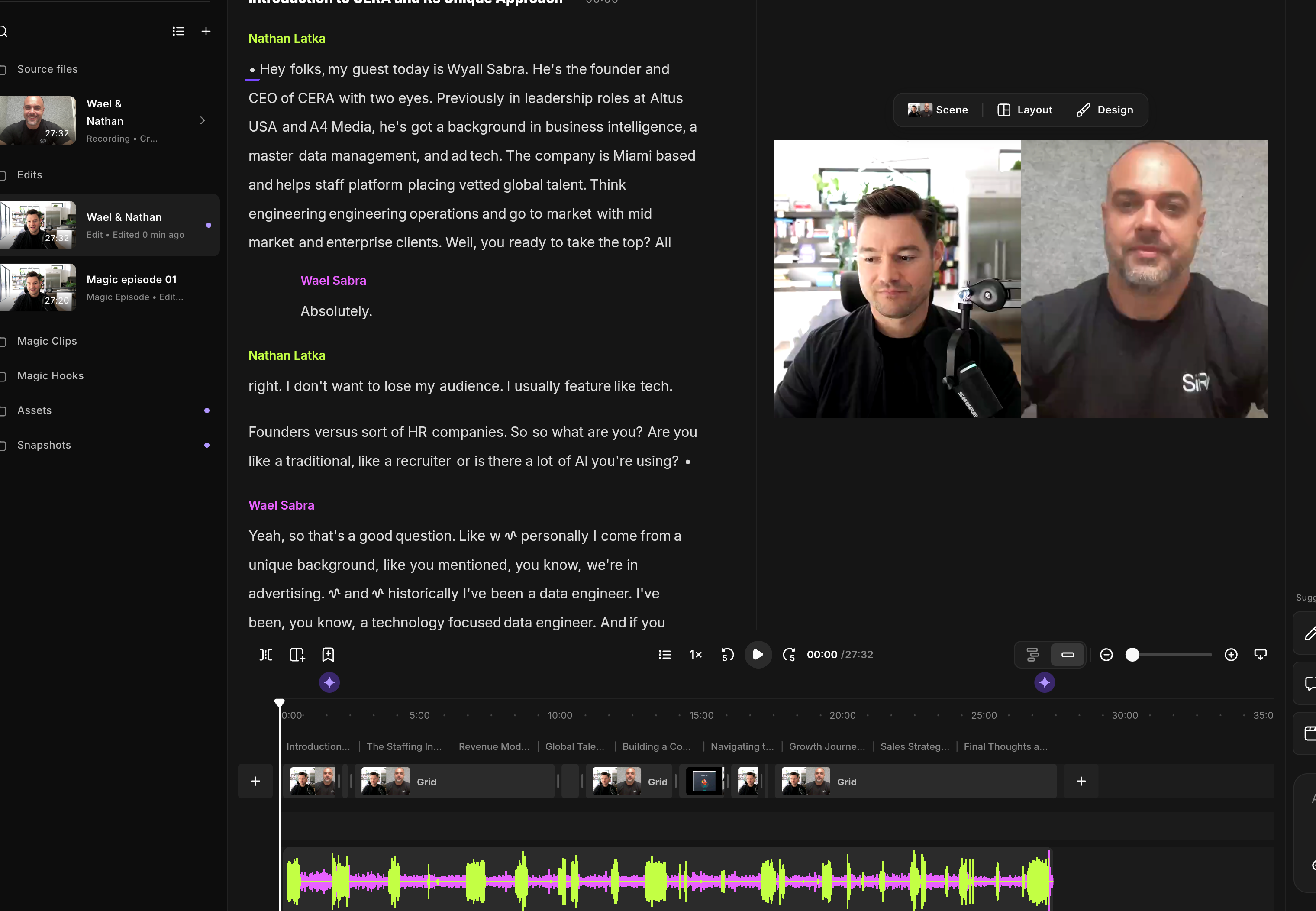
0:00Hey folks, my guest today is Wael Sabra. He's the founder and CEO of Siira, with two i's. Previously in leadership roles at Altus USA and A4 Media, he's got a background in business intelligence, a master data management, and ad tech. The company is Miami based and helps staff platform placing vetted global talent. Think engineering engineering operations and go to market with mid market and enterprise clients. Wael, you ready to take the top? All
Wael Sabra
0:25Absolutely.
Is Siira a Recruiter or a Tech Company?
Nathan Latka
0:27right. I don't want to lose my audience. I usually feature like tech. Founders versus sort of HR companies. So so what are you? Are you like a traditional, like a recruiter or is there a lot of AI you're using?
Wael Sabra
0:37Yeah, so that's a good question. Like w personally I come from a unique background, like you mentioned, you know, we're in advertising. and historically I've been a data engineer. I've been, you know, a technology focused data engineer. And if you think about the precursor of everything that we've have right now, from AI to machine learning to big data collection, it really started with getting people to click on more ads so that they buy more products online. and that has been the industry I grew up in that was what I got introduced to. And very quickly I found out that within the staffing industry, this does not exist, right? Like the a lot of the staffing industry, a lot a lot of the founders of the staffing industries you know come from a recruitment or HR background, so they're not tech forward. And the ones that are end up in, you know, the project space and creating projects for their clients. So we're kind of a unique beast here that we're in in win a we're an industry that is unique for this, you know, disruption with with a lot of data collection, AI, machine learning layered in on top to deliver a great service.
Nathan Latka
1:45Mm-hmm. Mm-hmm. and by the way, I see Jaron in the waiting room. th this will much work much better with just two of us. Does he know that I we're good with just you and me?
Wael Sabra
1:53Yeah, yeah, and he he knows we're good. I I think he just wanted to make sure that w that this is happening, that's all. And I'll
Nathan Latka
1:55Okay, great. Okay, perfect. Good, good, good. Yeah, okay. So so this makes sense to me. Now your background, I'm gonna pull up your LinkedIn here as we chat through it. Your background, it looks like you were a bit in banking, but you're a technical brain, it looks like. Is that right?
Wael Sabra
2:10That is correct, yes.
Nathan Latka
2:12Yeah. Okay. So again, it's very rare I see someone technical say, you what, I want to get into recruiting and HR. Usually they go do something sexy like foundation models or AI.
Wael Sabra
2:19Uh-huh. Yeah, it's so th that's a good question. we've you know, throughout my career I looked at I was on the acquisition side. I always wanted to start my own thing and I learned a lot from entrepreneurs that we you know, we worked with, we acquired their companies and so on. And the common theme across all of them has been, hey, enter the market with a product as a service first and then transition it as a transition it to a product. and kudos sort of extra points if you build the platform that transitions and moves forward an entire industry rather than solves a particular problem in a specific space. And learned a lot along the way. It just happened to be staffing. Yeah. You know, it following that rubric or following that method, I did not, you know, grow up saying I want to be in staffing. And and honestly historically also staffing has been a bad word. Right. And and a lot of people, you know, rightfully so, have called it a bad word because of the lack of you know, self-learning and intelligence that gets embedded usually within these within staffing companies. And we're attempting to change that, right? We're we're building an entire ecosystem to deliver great service both for candidates and for clients using our platform.
Nathan Latka
3:45Before we move forward real quick, I wanna make sure you look good in post production. Can you readjust your camera so your head's not getting cut off? Or just don't lean forward. Just make sure your whole head's in the shot. Yeah, yeah. There we go. You're good. Okay, cool.
Wael Sabra
3:54Gotcha, gotcha. Okay, thank you. That's good feedback. All right.
Nathan Latka
3:58So fast forward here to to twenty twenty six. I assume your big sort of hey, is this working or not is managing or measuring how many jobs you've placed. Is that the right metric?
Revenue, Profitability, and Scale in 2026
Wael Sabra
4:08we we look at it as in how many jobs we've we've placed and really, you know, in business the the success metric is the dollars, right? Like, you know, we've like I said, you know, we've learned a lot from entrepreneurs in the past. We've been profitable year one, and continue to be profitable and continue to be growing. We just broke our first you know, consistently half million dollar months. and we continue, you know, we I think we have overall lifetime about 2500 jobs that we've you know we've filled positions for. Some of them have multiple contractors and so on. right now we have about 150 on staff. those numbers you know are very interesting from a dollar side but also describe the opportunity that is ahead especially when we're looking at you know really changing an entire industry and not just focused again like on on solving a specific problem.
How the 20-Client, 150-Engineer Model Works
Nathan Latka
5:09When you say five hundred K revenue per month, what does it actually mean?
Wael Sabra
5:13that means you know, roughly around twenty clients at you know, whatever the math works out, you know, and on average, paying about six or seven contractors that they have on staff for that month. the promise that we have, part of the promise that we have, and there's a lot to unpack because we've been building this for the last five years, but part of the promise that we have to to clients is that. A lot of the way staffing works is if you think, you know, you you know, internally at a company, you're building something new, chances are you don't have the talent to build the new thing on staff. So you come to a company like Siira, but six months, eight months in, you built the thing that you need and now you need a different skill set. so part of our promise is that you can bring in talent in and out of your projects as you need them. it is you can certainly have them for a longer period of time, but usually that is the you know, we we see it around an an average twelve to fourteen months is where a talent stays on staff before the client asks to transition that talent to something else or to get those hours built against something else, right? So that this is our model, that's how we that is how we work.
Nathan Latka
6:31So while correct me if I'm wrong here, you've got 150 folks that are full-time at the business today. You then effectively rent them out in groups of six to seven people to your 20 paying clients and you're doing engineering work for them. Those 20 clients make up about $500,000 per month of revenue as of July 2026. Is that all right? Okay.
Wael Sabra
6:51That is correct. Yeah. Yeah.
Nathan Latka
6:53Okay. Why go this model? You know, a lot of agencies I talk to that do this model where they struggle is. They don't know how to ramp up or down their number of FTs because their clients are going, Hey, I want two people this month and ten people the next month. And it's a nightmare to go up and down so fast. How do you handle that?
Managing Supply and Demand in Staffing
Wael Sabra
7:09Yeah, you know, we we've been we've been lucky on two th on two ends. First is we really hit a need, especially when it comes to the technology folks that we're trying to provide, right? So bring in a data engineer right now and you're you know, we're fairly confident that that data engineering work is gonna recur, whether it is with client A or client B or C. it does become a challenge more on the demand side, right? Like this being able to constantly bring in clients to the platform. And the way we've done it, our our differentiator from day one when we provided the service is we started to build our platform. So today we have a self-serve platform. Anybody could go to one.siira.world, the the word one e and you know essentially get on the platform, open a rec with a few clicks and start getting matched matched to folks. So the way we've solved for that challenge. Is really it is a demand problem more than it is a supply problem and try to bring that demand in enough to cater for the supply that we have.
Nathan Latka
8:16So j I wanna make sure I'm I'm not missing something here. Six million dollars run rate, which would be five hundred
Wael Sabra
8:19Yep.
Nathan Latka
8:21thousand dollars per month of revenue times twelve, divided by a hundred and fifty full time folks, would mean if you're spending all your revenue just on headcount salary, the average employee is making forty thousand dollars per per month. I mean, sorry, per year. So
Wael Sabra
8:35Mm-hmm.
Nathan Latka
8:35is this talent in the US or is this outsourced talent somewhere else?
Global Talent Strategy and Location Preferences
Wael Sabra
8:40Yeah, so it the numbers don't really work out this way because you know a hundred fifty is a point in time. So that number may go up or down over time, depending on you know where where where the projects end and start. but the talent is really global, and it's global in nature. We we're really spread out evenly across the gro the globe. We do have talents in the US. And if you really think about it, the no client comes in and says, Hey, I wanna outsource to a specific country. Or to a specific region, usually they have a problem to solve, and they want that problem solved by the best talent that could be found anywhere around the world. And whether that talent ends up being in the same city, in the same country, you know, halfway around the world, we can still service that, right? A lot of our clients do you know specify, hey, I want certain regions because of time zone considerations, hey, I want the talent to be in the US because of specific skill sets. And we cater to that. Within our platform, the you know, the the the user can select and set a location of where their talent is.
Nathan Latka
9:48While where where is most of your talent located though? I mean, briefly scrolling through the folks that say they're working for you on LinkedIn, I'm seeing concentration in Lebanon. I'm seeing concentration in the United Kingdom, maybe some in Canada. I mean, where are your hot cities?
Wael Sabra
10:03y you know, again, like if we we really have a map that shows, you know, about even spread out across the world, there isn't a concentration in any specific cities. All of those roles are remote. you know, they're yeah. Yeah, no, I understand.
Nathan Latka
10:16Okay, but I'm seeing a lot and I'm just this is a good thing. I'm not like trying to get you in a gotcha question here. I feel like you're giving me a political answer. It looks like Lebanon is where you have a lot of folks based. Is that because that's where you launched, or why do I see Lebanon so much, so much on LinkedIn?
Why So Much of the Talent Is in Lebanon
Wael Sabra
10:28Well, I am originally Lebanese. that is part of my network that ended up there very early on. And we have great talent over there. And it is one of those markets that is you know, untapped and non-obvious. meaning that you have talent there that is highly skilled. you know, they they you know they can speak English very, very well. they understand they understand business, they understand the market. And it's been one of the places that is non-obvious to go to. to go and staff in. another market for us, you know, is Egypt or the UAE. again, countries that, you know, normally when you think of outsourcing or staffing, you know, you're thinking the you know, you think you're thinking East Asia, right? these are markets that have been fully saturated. so we went to markets that are have not been obvious. You know, I call them the long tail markets. we have great talent from Africa, for example, great talent from the Caribbean. so really the concentration of talent, I would not call it specific in any specific in any specific country, but we do have a lot of folks from Lebanon and yeah, we overskew there because of my origin.
Margin Structure and Pricing Transparency
Nathan Latka
11:39And how do you think about like let's say I'm a full stack developer, I'm really good at Flutter and PHP and I'm based in Lebanon. I wanna use your platform to to to get to get paid, right? To have work. So I join your team. What margin do you build on on every human hour?
Wael Sabra
11:54So it really depends on the it really depends on the hourly rates that we have on there. But our margins, you know, right now anywhere between twenty to thirty percent on on the hour, and we're transparent on that both to our clients and our candidates. So the way to think about it is that you know, that twenty to thirty percent margin historically in the staffing industry, and this is one of the things that I'm not sure if a lot of your listeners are from this industry. but or they may have used staffing in the past. But a lot of the margins that have baked usually into this industry have been upwards of the hundred, hundred, hundred and fifty percent. that is the norm. So we're that is part of when we surveyed this industry and said what is it right for? and there are three things that we found: quality, time, and quality, speed, and pricing. and those three things that are what we built our platform around.
Nathan Latka
12:52One of the things I'm trying to dig on here is what are you building at the business that would allow you to deliver more value to your customers and allow your margins to expand? So let me ask the question this way: I'm that Lebanese full stack developer of Flutter PHP. I say, why I'll do work for the company at a hundred bucks an hour. You say, Great. I think I can sell your hour, Nathan, for $120 per hour to one of our end customers.
Wael Sabra
13:18That's correct.
Nathan Latka
13:19Is there other though are you building tools to give me if I join you as the p as the developer that enables me to be more productive? So you can build my hourly rate instead of one hundred and twenty, hundred and thirty bucks an hour, you know, a hundred and eighty, one hundred and ninety, 'cause I'm delivering more value because of the software tools you've built to help me.
Platform Features: MySiira App and Candidate Upskilling
Wael Sabra
13:35Yeah, so there's there's two ways to think about that, right? The first is when we built the platform, we knew we had to take care of the client and the candidate equally. So within our user experience, first of all, the you know the application that we have, MySiira, allows a candidate to get matched to a job. So they're not actually them doing the work. The second part is throughout the engagement, there are biweekly surveys that
Nathan Latka
14:02Sorry, where is that by the way? Where is there can I show that here or the matching?
Wael Sabra
14:05Yeah, of course. If you go to my.siira.world, it's an app. It's not on it's it's it's not web based, it's an app on the phone. Yep. So
Nathan Latka
14:16Why do you do it this way?
Wael Sabra
14:18so it you know, we found out that a lot of the job applications that happen today happen on mobile. And we enable the full experience on mobile so that we keep the, you know, desktop side for work. So here is the single app. Yep, this is the perfect screen where you have your timesheets on the you know, timesheets on your phone, you have your support on your phone. The idea is that you're on the go, you hit a problem. Chances are you have this device with you and not your and and not your laptop, right? So we're there 247 to support throughout the to support the candidate throughout the process. But there's more that we do, right? So you ask the question like, hey, okay, how how do I improve my hourly rate? There are a lot of certification programs through the partners that we work with that we end up transferring over to some of our contractors that have specific skill sets. That, hey, you're a Flutter developer. If you get this certification, you are able to improve your hourly rate on your next engagement. And they do go through those certifications and they do you know, they do upload the certificate. Once the certification is uploaded here, then our system recognizes that and even recommends them. What is the right hourly rate for them now that they have the certification?
Nathan Latka
15:33Wha why do you care about certifications in an age where codex can do all this code for us quickly?
Work Graph and Technology Investment
Wael Sabra
15:39so you know it's a lot of the software side, yes, is is getting c commoditized and and and changed. A lot of the work that also ha you know, certifications is one angle to it. Another angle is, hey, what's what's my GitHub? Like put my add your GitHub to your you know, to your profile. Show us the work that you've done. Show us that you have been, you know, you have provided projects within this space, within this industry before. you asked about some of the things that we're doing that is different. And one of the things that is I'm incredibly proud of as CRO, I mean we're a staffing company, about eighty percent of our internal budget is on product and technology. a staffing company that is operating very well maintains a database. We maintain what we call a work graph or a graph. and that detects you know, if you think about it from you know borrowed from social media, it is not a new concept, but it's a new concept applied on staffing. So whenever there are signals that indicate a change in the experience, in the certifications, in the you know, in your g GitHub repo, all of those become signal that improves your match score to the next job that we have. everybody
Are Engineering Hours Useless in the Age of AI?
Nathan Latka
16:58What I'm trying to understand what trying to understand though, I'm I'm maybe asking the question in a bad way. If you're leaning on that, look, look, my I don't know how code. But you know what? When I forced my CTO to teach me how to use conductor to push PRs in a GitHub, I started pushing like crazy. And now I'm I'm lit it up on GitHub. That doesn't mean I'd be a great developer for a customer of of your, you know, of your company. Right. So what I'm trying to get at is like why do you still need to match one human for one engineering task on your platform?
Wael Sabra
17:29Okay. sorry, let me let me unpack that.
Nathan Latka
17:36Y yeah, well I'm I'm just asking what I think my audience is thinking, which is you sell engineering hours aren't isn't that useless in the age of AI? That's what I'm trying to dig deeper on.
Wael Sabra
17:48Got it. here's here's what we're seeing, and we do deliver AI projects. I mean we've we've we're we're deep on the AI side. I don't think anything could be built that has that goes beyond, you know, a single repo or a or an MVP that does not require some engineering talent right now. meaning that, you know, hey, you could Absolutely push to your repo, you know, a lot of code within a specific language and end up with one user. That is not what we're interested in. Or that is not what our clients are interested in. What their cli what our clients are interested in. Have you been able to build software that you know survives the you know survives the tested usage? and that is the part where again, a lot of the signals that we get, you know, of verified work in the past, is you know, is is again baked in. it is not just about how much you have in your repo, like I said. It is about all the signals all around that make you a great match for this role or that make the person a great match for this role. Somebody who has a non engineering background is not gonna be matched to a job that is, you know, requires someone with an engineering background. And of course, you know, you're absolutely right, you know, yeah.
Nathan Latka
19:08But that's wow, that's right, that's where I'm getting lost. If if you have a client that says I need a PHP developer and you see that I enlisted in Lebanon as a footarm PHP developer, but but Nathan Latka, the non-engineer, can also do PHP right now easily in Codex. So why do you care if they have a PHP certification or not? That's what I'm trying to get at.
Wael Sabra
19:25Well, the sir PHP may not be the right example, but fine. I'll I'll I'll I'll go with you there. you know, it's if a client is looking for a PHP developer, they're looking for somebody who has deployed platforms in the past that had a lot of usage with PHP. That does not happen today within within, you know, even if you're if you're using Codex to build a PHP app, chances are you are not gonna end up with a lot of users on an enterprise grade system. And that is what they're looking for. They're looking for someone who has again had that enterprise experience.
Launching in 2021 and Building the Platform
Nathan Latka
20:00Okay, that makes sense. That makes sense to me. So that makes sense. give me more of the backstory here. when did you launch this business?
Wael Sabra
20:07So we launched in 2021. in pre of course, you know, pre AI, but we knew that there is a chance that this experience could be enhanced and or or the the staffing experience could be enhanced end to end if it is put in a platform. So we started to build the platform in 2021 and we just launched our Siira One platform about 10 months ago.
Bootstrapped from Day One
Nathan Latka
20:32Okay, and are you bootstrapped or have you raised capital?
Wael Sabra
20:35we are fully bootstrapped, and this is something we're you know incredibly proud of. I invested twenty-seven thousand dollars into this business five years ago. my my co-founder John and I own a hundred percent of the business still, or a little bit under a hundred percent, because we have a couple of advisors. and like I said, you know, part of the advice that I got previously from entrepreneurs is that try to hold on to equity for as long as you can. The way we internalize that is we have to be profitable and be profitable early on. and that's what we've done.
Revenue History: 2021 to 2026
Nathan Latka
21:08Love that. What year did you break a million dollars of revenue? Do you remember? So twenty twenty one.
Wael Sabra
21:12Year one. Yes.
Nathan Latka
21:15Okay. And continue that story. What'd you do in twenty twenty two? Do you remember?
Wael Sabra
21:19So it was it has been doubling every year s since then. we had a bit of a slowdown, you know, it was affected by the economy. We were testing a lot on the go-to-market side and we still do. you know, one of the things that I learned from a along the way is that you know, as a tech tech founder, you try to focus too much on the product, you forget the go to market. and the go-to-market, you know, really costs probably as much as, if not more, than building the product itself. So a lot of the testing that we're doing right now is to try to figure out, all right, you know, we've built this great service, we'll build this great, we've built this great product. and the message is resonating. How do how do you get in front of a lot of people very quickly? And that has been the, you know, sort of the last the last piece of the business that we're trying to put together. 'Cause for the last five years it's been founder led between me and John, generating demand.
Nathan Latka
22:16Wow, I just want to make sure I get the numbers right. If you've doubled every year since twenty twenty one on a base of a million, that puts you at thirty six million of revenue today, which I know you're not at that. So you haven't doubled year over year consistently. So you know, you did two million in twenty twenty two. What'd you do in twenty twenty three? Do you remember?
Wael Sabra
22:30Sorry, yeah, so twenty three we did four. Mm-hmm. And then this you know, from twenty three till today we're up to six million. We're a little bit over six, but correct. Correct.
Nathan Latka
22:38Okay, got it. So between twenty twenty four and twenty twenty five, growth slowed a little bit. Okay. And you're saying that was because you guys are trying to figure out outbound?
Go-to-Market Challenges and Founder-Led Sales
Wael Sabra
22:47That's correct. So you know, we've we've had a couple I'm be very honest, we've had a couple of sales, you know, we're trying to move from founder led sales to hiring our first salesperson. And it has you know, it's it's not It is not easy finding the right salesperson along the way. So we're have tried different strategies to try to find those pockets of growth. so we continue, you know, John and I to be on the sales side, but that has been really the bottleneck because there's so much that one or two people can do from a founder perspective. And yeah, you know, trying to get outbound figured out, trying to get the right sales figured out, trying to get the right sales process figured out, that does take time.
Nathan Latka
23:31What have you tried that didn't work?
Wael Sabra
23:35keyword. I mean I always I always use this analogy. there's a lot of ways that could get you from point A to point B. If you're d if you want to buy a car, any car could get you from point A to point B. But few companies have built an ecosystem around trying to get you from point A to point B, right? Like, you know, Tesla, for example, you get in the car, you go. Yeah. of course.
Paid Acquisition Tests That Did Not Work
Nathan Latka
23:59Wow, sorry, can you just use real examples you went through? It's more valuable for my audience. What like what did you actually try that didn't work?
Wael Sabra
24:06Yep, keyword does not work.
Nathan Latka
24:08Well I don't know what you mean by that keyword.
Wael Sabra
24:09keyword sear keyword search, search Google does not work.
Nathan Latka
24:12programmatic SEO or paid SEO, paid search.
Wael Sabra
24:15Paid search does not work. and the reason it doesn't is because it's very competitive. a lot
Nathan Latka
24:20How much did you spend on that test?
Wael Sabra
24:24I mean upwards of twenty thousand.
Nathan Latka
24:26Okay. What else did you test?
Wael Sabra
24:30social when it comes to B2B. social, I mean Facebook and fa Facebook ads, those did not work. when we got into when we got into LinkedIn, we still d do a lot of testing on LinkedIn B2B. and what we found out there is that it partially doesn't work on you know, if you don't have your audience very tightly and narrowly defined, but that means it becomes very expensive, to do. So we're trying to find, okay, what is the right mix of still targeting the right audience and not end up and and not end up you know in a very expensive way. So I think we've spent north of a hundred fifty thousand total on paid strategies where we learned of what didn't work and we learned some of them that did.
Nathan Latka
25:17I like that. And now you said yes to coming on this podcast. Why'd you say yes to come on the show?
Wael Sabra
25:22Well listen, I you know, I saw a lot of podcasts before that you have you know, that that you have recorded. And I think it's the right platform for us because a lot of I think a lot of the listeners may be thinking, hey, it is gonna you know, I need to raise money to start my own business and that is not true. I need to it it doesn't take a lot of time. No, it actually does. Even today, you know, even with code being cheap, distribution is still as expensive if as it was before, if not b if not more. being in a noisy industry is something that I have extremely underestimated in the beginning, right? staffing is a very noisy industry. So those are things I think, you know, I I thought it would be valuable to share with your audience.
Nathan Latka
26:12We've loved your story. If folks wanna follow you online, where can they find ya?
Wael Sabra
26:17I am on LinkedIn. That is my only social platform that I use. you can find me at LinkedIn slash YL Sub.
Nathan Latka
26:24Guys, Wael is an engineer who said, You know what? A lot of other folks need engineering help. I can recruit a bunch of engineers and then help them get more engineering work done. He's got 150 engineers on staff today. And he's got 20 clients that you know work with on average six to seven of those FTs on his team. They, you know, he's doing about 500,000 bucks a month of revenue today. That's up from launched in 2021 to a million, 2022 did two million, doubled it in 2023 to 4 million, all after investing personally twenty seven grand. He now continues to scale. He's very profitable in lifetime. His platform's completed over twenty five hundred engineering and AI jobs. They've done this all completely bootstrapped. Wael, thank you for taking us to the top.
Wael Sabra
27:04Thank you, Nathan. Appreciate it. Take care.
Nathan Latka
27:06All right guys, cut. Wow, what'd you think? You have fun?
Wael Sabra
27:08I had fun. I had fun. No, you man, you're I I like the the the honesty of it and like the the pressing and like the non salesy angle to it, honestly.
Nathan Latka
27:18More fun.
Wael Sabra
27:19yeah, it's it's it it is more fun. I did not know that happens in the background because probably there's al already of it that is cut, but but no appreciate it.
Nathan Latka
27:25Yeah, yeah. No, it's great. It's great to have you on. We'll get into post production. I'll let you know when it's going live, okay? All right.
Wael Sabra
27:30Sounds great. Thank you, Nathan. Appreciate