
Founder Interview
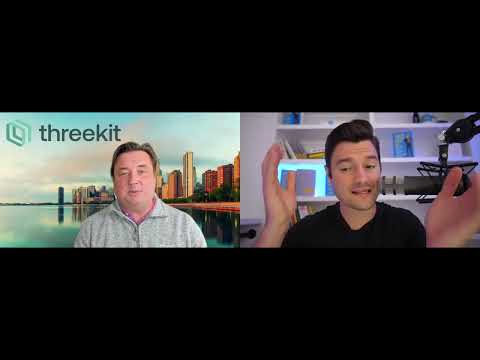
How ThreeKit Reached 220 Customers and $65M Raised with 120% Net Dollar Retention (Interview with CEO Matt Gorniak)
- Interview Date
- April 26, 2022
- Interviewee
- Matt GorniakCEO
Company Metrics at Interview Time
Total Funding Raised
$65M
Customers (2022)
220
Net Dollar Retention (2022)
120%
Team Size (2022)
120
Starting Price (SMB) (2022)
$18,000 per year
Historical Snapshot
These numbers were reported by Matt Gorniak during his interview with Nathan Latka recorded in April 2022 and represent a historical snapshot, not current figures. See ThreeKit’s current numbers.
Key Takeaways
- 01ThreeKit had 220 customers as of April 2022, including enterprise brands like TaylorMade and Crate and Barrel.
- 02The company raised $65M in total funding, including a $35M Series B closed in November 2021.
- 03Net dollar retention was above 120% at the time of the interview.
- 04ThreeKit passed $1M in revenue in 2020, the second year after relaunching the platform.
- 05The team had grown to 120 people by April 2022.
- 06Strategic investors in the Series B included ServiceNow, Salesforce, and Capgemini.
- 07TaylorMade made their full-year sales number in two months after launching with ThreeKit.
- 08Ben Houston, the CTO and founder, started the underlying visual effects technology in 2012.
- 09Matt Gorniak stated the company planned to exit 2022 above $10M in annual revenue.
Company Metrics at Time of Interview
| Metric | Value | Source |
|---|---|---|
| Total Funding Raised | $65M | Founder interview, April 2022 |
| Series B Round (2021) | $35M | Founder interview, April 2022 |
| Seed Round (2019) | $10M | Founder interview, April 2022 |
| Customers (2022) | 220 | Founder interview, April 2022 |
| Net Dollar Retention (2022) | 120% | Founder interview, April 2022 |
| Team Size (2022) | 120 | Founder interview, April 2022 |
| Revenue (2020) | $1M | Founder interview, April 2022 |
| SMB Starting Price (2022) | $18,000 per year | Founder interview, April 2022 |
| Average Contract Value (2022) | $18,000 | Founder interview, April 2022 |
| Year Founded | 2012 | Founder interview, April 2022 |
Growth Breakdown
Revenue
ThreeKit passed $1M in annual revenue in 2020, the second year after relaunching its SaaS platform. Matt Gorniak stated the company planned to exit 2022 above $10M in annual revenue, representing a doubling or more from the prior year.
Customers
The company served 220 customers at the time of the interview, ranging from small startups to large enterprise brands such as TaylorMade and Crate and Barrel. SMB customers typically start at $18,000 per year, while large enterprise engagements can reach $100,000 to $500,000 per year based on scope.
Team
ThreeKit had grown to 120 employees by April 2022. The team was built around combining product configuration expertise from Matt Gorniak's background at BigMachines and SteelBrick with the visual rendering technology developed by CTO and founder Ben Houston.
Funding
ThreeKit raised $65M in total funding, including a $10M Seed round in 2019, a $20M Series A in 2019, and a $35M Series B in November 2021. The Series B brought in strategic investors including ServiceNow, Salesforce, and Capgemini, all primary capital with no secondary.
Growth Strategy
Enterprise Focus with SMB Entry Point
ThreeKit pursued a dual-segment strategy, offering an SMB entry point at $18,000 per year to democratize visual commerce while targeting large enterprise brands where scope-based pricing could reach $100,000 to $500,000 per year. This allowed the company to grow both breadth of customers and depth of contract value.
Outcome-Driven Customer Success
Rather than goaling customer success managers on revenue targets, ThreeKit focused them on customer outcomes and NPS scores. The TaylorMade case study, where the brand made its full-year sales number in two months after launch, exemplified the ROI-first approach that drove 120% net dollar retention.
Strategic Investor Partnerships
ThreeKit brought in strategic investors including Salesforce, ServiceNow, and Capgemini in its Series B. These partnerships extended the company's reach beyond pure e-commerce into broader enterprise product visualization use cases such as servicing and field operations.
Platform Rebuild for Scale
When Matt Gorniak and his team joined, they rebuilt the platform from scratch as a headless architecture, enabling the company to scale across millions of product options and configurations. This technical foundation made it possible to serve both SMB and large enterprise customers on the same platform.
Riding the Post-COVID Digital Commerce Wave
ThreeKit positioned itself at the intersection of a structural shift toward digital-first commerce accelerated by the pandemic. Brands and manufacturers that had not previously invested in digital product visualization began experiencing FOMO as competitors who launched visual commerce saw outsized conversion and retention results.
Best Quotes
“TaylorMade, let's say, TaylorMade golf drivers. And and maybe let me let me give you the insight what happened to us because I I find the best ideas come from seeing things, you know, I also talk to entrepreneurs and ideally it's something you have an understanding of, right? You don't have to be an expert, but you see some patterns and the pattern we saw in the configuration space.”
“We're gonna exit much higher than that above 10 this year.”
“Yeah. I mean, we're we're guys that are gonna double or triple this year.”
“Yeah, and what we're seeing is, that's right. Above 120%,”
“I mean, that club that they powered with, they made their sales number in two months for the whole year. And the reason is like, you take the mumbo jumbo out of it. It's like, I can finally see all the club options and get the club I want. I get the club I want. I will not return it. Why would I? It's the one I want. That's kinda how that works.”
“So the platform so that's just a cool story that to make this work, you have to kind of bring two worlds together. So basically, Ben Houston is the founder of the company. He started 2012, and he was a top supplier of visual effects to Hollywood.”
“We do have a target, but not a revenue target. Like, they're not goaled on on making more money. They're they're goaled on making the customer happy. And yes, of course.”
“Yeah, it's still early. I mean, like, you know, they buy more, they're happy, obviously. And we do NPS scores. Okay. So it's a bunch of metrics in there. I'm just saying we're not comping them on saying, hey, get in there and start selling more. It's about obviously getting to the ROI, get to the outcome.”
What Happened Next
This interview captured ThreeKit at a moment of rapid growth in April 2022, with 220 customers, $65M raised, and a target to surpass $10M in annual revenue by year end. The figures and plans described here reflect what Matt Gorniak reported at that point in time and are not current. Visit the ThreeKit company profile on GetLatka for the latest available metrics and funding history.
View ThreeKit’s current profile and metricsFull Transcript
Chapters
- 0:00Introduction and Matt Gorniak's Background
- 0:34From Software Reviews to Visual Commerce
- 1:27Customer Examples: TaylorMade and Crate and Barrel
- 2:32What ThreeKit Does for E-Commerce Brands
- 6:35Pricing: SMB to Enterprise
- 7:59Company Founding and Platform History
- 9:50Customer Count and Market Momentum
- 11:14Revenue Trajectory and Growth Rate
- 12:54Fundraising History and Series B Details
- 14:11Strategic Investors: Salesforce, ServiceNow, Capgemini
- 15:00Metaverse and Digital Product Strategy
- 17:58Net Dollar Retention and Customer Success Model
- 19:36Famous Five Rapid-Fire Questions
- 21:41Closing Summary and Wrap-Up
Introduction and Matt Gorniak's Background
Nathan Latka
00:00Hey, folks. My guest today is Matt Gorniak. He's the CEO of ThreeKit, three d and augmented reality visualization software for products. He leads the company by building effective go to market strategies, teams, and partnerships. Prior to ThreeKit, he served as CRO, chief operating officer, and was cofounder of G2, a leading marketplace for business software reviews that has raised over a $100,000,000. He's also held global sales leadership positions at SteelBrick and BigMachines, cloud configure
00:24price quote, CPQ, platforms that were acquired by Salesforce and Oracle respectively. Matt, you ready to take us to the top?
Matt Gorniak
00:31Let's do it. I'm I'm amazed how much you can compact into this. This is great, Nathan.
From Software Reviews to Visual Commerce
Nathan Latka
00:34Yeah. No. We'll we'll have fun. So what what got you go from software reviews to visual commerce. Explain that leap for me.
Matt Gorniak
00:41Yeah. I mean, there's actually as you met my my business partner, and there's actually a couple of us who've done companies together led by him, you know. Anyway, but there's actually two threads. You know, g two, as you spoke to him, was I won't go deep into that, but that was more like scratching an itch of like, hey, how come this is happening this way? And, know, I know you're really keen on entrepreneurial stories and that's
01:03one of those like, wow, like why is this not fixed? Why is this not fixed? But there's like another thread in parallel as we like to build companies, which is company BigMachines got sold to Oracle and SteelBrick to Salesforce. Those were, you know, basically product configuration companies. So kind of like, how do you sell complex products? And that's kind of where ThreeKit falls in.
Nathan Latka
01:23So who's paying for the product today? Give me a customer example if you can.
Customer Examples: TaylorMade and Crate and Barrel
Matt Gorniak
01:27TaylorMade, let's say, TaylorMade golf drivers. And and maybe let me let me give you the insight what happened to us because I I find the best ideas come from seeing things, you know, I also talk to entrepreneurs and ideally it's something you have an understanding of, right? You don't have to be an expert, but you see some patterns and the pattern we saw in the configuration space. So think of our customers with BigMachines
01:52as like manufacturing company, they need a quote for a very complex product, right? This is like 2005 and 6 with BigMachines, right? Okay, you put this together. Well, what's it look like? Well, we can show you. It's too complicated. Okay, that's early. You're like this message. You're like, maybe one day people wanna see the product, you know, but it was sort of like not a must have. And then when we got into SteelBrick, we
02:15got into Salesforce. I was there for a couple of years with Godard integrating this. You start seeing this demand. And this is really obvious, Nathan, honestly, but it's one of the things that you have to need signals. People start demand to see the product. Like, let me give you a specific example. When you go on e commerce websites, right?
What ThreeKit Does for E-Commerce Brands
Nathan Latka
02:32Well, Matt, so can we get more specific? Can we talk about one of your current costs? So Crate and Barrel uses you. So let's be really specific. Sure. You're trying to buy a couch on Crate and Barrel. What are you what is ThreeKit doing to help Crate and Barrel?
Matt Gorniak
02:42Yeah. So visualize the product digitally. So think about you have every product, that microphone that you're talking into has many, many options. And when you go on the website of Crate and Barrel, you have couches, just their complex products. They have to be visually beautiful. You want to see the actual couch and therefore you have to see all the images of all the options and therefore lies the problem. Most, so that's we help them. We have
03:08TaylorMade with the golf clubs. A golf club has a 100,000 options. It's just different colors. It's just different grips, just different shafts. But really what that means is if you don't want to represent it, you got to do it digitally. Otherwise you just have a picture of a club, a picture of a couch of that microphone. And that was sort of like acceptable, like, but started we saw a trend right before COVID. And then after
03:31that pandemic, it's like, wait a minute. I'm online. Let's see that microphone. I just chose a blue one. I'm making it up with a sticker. Maybe you wanna personalize it, Nathan's special microphone. How come I don't see that? How come I still see the stock one? And that's kind of the thing we're solving.
Nathan Latka
03:48Oh, what's going on there, YouTube? Good to see you guys. Now imagine this. You love watching these interviews with SaaS founders, but imagine if we took all of the valuation data out from over 2,807 interviews I've done manually. Saves you a lot of time. Well, we've done this. We've built it into the beautiful interface inside of Founderpath. Check this out. I'll show you how you can access this in a second, but you log in, you connect
04:11your Stripe account, you see your valuation real time, you can see what it changed over the past eighty eight days and even set goals for valuation this year. Now the secret evaluation is there's many different ways to value a SaaS business. So the reason you're gonna see three or four different valuations inside of your Founderpath dashboard, this is all free by the way, is because depending on who's doing the buying of your SaaS company, you're gonna
04:35get a different valuation. A VC is gonna pay a different valuation, private equity firm is different. If you're gonna do a minority sale, that's different. And if you sell the whole business, that's a different valuation. You can see all those when I hover over here. Right? So the teal is what a VC would pay. Yellow is what private equity and red is if you sold the whole thing outright. Now what's cool about this is this is
04:57not built off random data. Again, you guys hear these interviews on YouTube. All these datas are built from real time valuation data points founders share with us on the show. So traction, 1,200,000 seed round, 3.7 raise. They sold 22% of their business. Go in here and filter by the event. Maybe you only wanna see companies that have sold the whole business. Well, here are a bunch that have been acquired, the valuation and the multiple. Maybe you're
05:23going out right now and you're raising your seed round. We'll go in here and look at all this recent seed deals that went down, what they raised, what valuation they raised at, and what percent that they sold. There's never been a larger dataset of SaaS valuations than what you can get now inside of Founderpath. And we're thrilled to bring it to you. Alright. We're gonna go back to the YouTube video here in a second, but if
05:45you wanna check this tool out, if you wanna jump in and sign up, you can check it out for free to get your valuation at this link. This link, founderpath.com/products/valuations. Or if you go to founderpath.com and hover over products, click on get your valuation here, and go ahead and sign up to give it a whirl. Again, all that valuation data live right inside the platform. I hope to see you there. Alright. Let's jump back into the
06:11interview. Understood. So, yeah, just to be clear, you're buying a thousand dollar Aerie sofa on Crate and Barrel. There's a bunch of metrics you can change. How big are the cushions? What's the fabric material? What's the hardware finish? What's the color? You change all these things, and ThreeKit enables Crate and Barrel to show you an accurate visual representation, which ideally increases conversion rate. What are these brands paying you, Matt, to use the software today on average,
06:34maybe per month or per year?
Pricing: SMB to Enterprise
Matt Gorniak
06:35Yeah. It differs very much. I mean, like we have an SMB segment. We wanna democratize this. And so it's really primarily based on scope. Like our SMB customers are much smaller. They have one product, let's say, and they're typically starting points, 18,000 a year. Okay. Big brands just in general, where the scope is just massive, you're talking a 100 to 500,000.
Nathan Latka
06:54So your biggest customer paying around 500,000 a year, how many, like are they paying based off number of SKUs or like what's the utility metric you're It's selling
Matt Gorniak
07:03like a total transformation. Like, yeah, it skews mostly like business scope is just giant, right? Whereas like an SMB customer, they have one product, right? You could have one, not even microphone. A lot of them make like, let's see a dog crate. We have a great customer making dog crates. And how do you sell it at high value? Usually these are high consideration items because you kind of want to understand, if I'm changing things, what does
07:27it look like? It's a high consideration. So in that case, they make dog crates, right? They're wonderful dog crates in that case to bring them to life. You know, they're a very small startup really, you need digital.
Nathan Latka
07:39Understood. To democratize, you can get started at about a thousand or $2,000 a month, all the way up to you'll paying $500,000 a year who are total change management, you know, hundreds of SKUs, thousands of options, etcetera.
Matt Gorniak
07:51That's right. Millions actually.
Nathan Latka
07:52Millions of options. Okay. And put this on a timeline for me. What year did you write the first line of code for the product?
Company Founding and Platform History
Matt Gorniak
07:59So the platform so that's just a cool story that to make this work, you have to kind of bring two worlds together. So basically, Ben Houston is the founder of the company. He started 2012, and he was a top supplier of visual effects to Hollywood. So like movies like, you know, ILM or or movies like Star Wars, The Force Awakens, he got a lot of credit for that. And then in 2015, he met a
08:24couple of folks from a small company called Shopify who joined the company and they said, hey, let's make this for e commerce. So the knowledge, sort of IP has been built over many years, but the platform itself is three and a half years old. So we kind of, when myself and Godard got into the company and we brought in with us, you know, the family and now we're 120 people, We decided that, hey, let's let's scuttle,
08:49you know, basically, let's create a brand new platform headless. Let's reimagine all this. So so the code is written three and a half years ago on a platform, although the IP, like the math, how to do that, it's been building up for a while. So it's really cool.
Nathan Latka
09:02And Ben would say the founding date is 2005 even. So he's been thinking about this for a long time. Sounds like
Matt Gorniak
09:07That's right. That's right.
Nathan Latka
09:09Okay, interesting. So is Ben still active at the company?
Matt Gorniak
09:12Yeah, he's our CTO, our founder, and that's kind of the marriage — you need the product complexity, which we brought from us from all these years of experience, all the companies I mentioned, and this beauty, like the ability to generate picture perfect representations at scale, that's where the platform came together. Yeah, so he's very much with us here. He's a thought leader by the way, He should have him on the show talk about where where this this
09:34whole world's going. It's really cool too. I mean, he's got an angle completely from visualization, which is really fun. Fun to listen to.
Nathan Latka
09:42And then it gets getting getting you know, fast forwarding to today. Right? So how many total customers are you serving today across these four or five different segments?
Customer Count and Market Momentum
Matt Gorniak
09:50Two twenty. Okay. And obviously growing. And what we're seeing is really interesting. Again, I'm telling you no news here with pandemic, this has started to become like major FOMO because yeah, I think people are realizing like my product just doesn't exist and the metaverse and NFTs, by the way, just to give you some fun buzzwords, that's obviously like way out there, but it's really challenging the brands and the manufacturers to think like, wait a minute, if
10:16I don't have a digital product version, it's better to send a real product. I mean, if you can experience it online, place it in the AR and then get it shipped, that's awesome. But also in the pure digital world, let's just not even, I mean, wherever you wanna go with this, but is it far, far away or just some far away? I'm not even ready for like web 2.0, what's happening with web 3.0. So it's really
10:39fascinating to see that pressure, the FOMO, because the one that unlocks it, you know, in the space, they're getting outsized returns, essentially is what we're seeing. And that's kind of a fascinating place to be right now.
Nathan Latka
10:54So before we dive deep, I wanna dive deeper into metaverse stuff, I wanna finish the regular non metaverse story of ThreeKit, right? So 220 customers paying between $18,000 a year on the low end and 500,000 a year on the high end. I mean, if we assume a $3,000 average ARPU, that puts you guys at something like 600,000 a month or about $7,000,000 run rate today. Is that in the right range of where you're at?
Revenue Trajectory and Growth Rate
Matt Gorniak
11:14We're gonna exit much higher than that above 10 this year.
Nathan Latka
11:17This year, you'll break 10, you think?
Matt Gorniak
11:19Yeah. Yeah.
Nathan Latka
11:20Interesting. And what would that if you hit 10,000,000 in run rate this December, where were you last December so we can calculate a growth rate?
Matt Gorniak
11:27Yeah. I mean, we're we're guys that are gonna double or triple this year. So
Nathan Latka
11:31Well, those are very different. Doubling and tripling are very different.
Matt Gorniak
11:34Oh, it depends on big deals. The deals are getting bigger. You know what I mean? So that kinda depends. We're still in the mode where we're gonna be way north of 10. But like I said, we have a plan together. We're I mean, we're happy with what we are, but like I said, you know, as as this is accelerating, you know, we'll see. But the numbers aren't that big yet where a a few big deals make
11:53a difference, you know?
Nathan Latka
11:54Fair enough. Fair enough. Now, Matt, you know, obviously it sounds like, you know, if you're at 5,000,000 last year, you finished this year with 10, that's doubling. Maybe you finish even bigger than 10,000,000, which should be closer to tripling, which is great. But taking back to that magic moment, do you remember the year you guys passed a million dollar run rate?
Matt Gorniak
12:07Yeah. That was second year, and that's always the hardest. You know?
Nathan Latka
12:11But what is the second year, though? 2013, 2014?
Matt Gorniak
12:15We got in there well, technically, the first plat I mean, I'm sort of ignoring the we had some early customers before the platform. It was the second year was 2020.
Nathan Latka
12:27Okay. So 2020. Yeah. So that would have been sort of right after you raised that series a, you broke a million dollar run rate.
Matt Gorniak
12:35Correct. And that's kind of where we brought in and really made this, I would say a SaaS business. Before this, it was pre platform and it was essentially, you know, bunch of cool utilities for visualizing e commerce. And we're like, well, won't scale. And that was the plan to begin with. I mean, that's no surprise.
Fundraising History and Series B Details
Nathan Latka
12:54Now before we jump into metaverse stuff with our last five minutes, you obviously haven't bootstrapped. I think Godard was one of your first checks into the business actually. How much have you raised to date and when was the last round?
Matt Gorniak
13:03So we actually that that's kind of what you heard from as well. I mean, the first seat kind of we did as a family, like our own money into it.
Nathan Latka
13:11Then That was 10,000,000 in 2019. Right?
Matt Gorniak
13:13That's right. Then we just raised 35,000,000 last November. So we're we're 65,000,000 in in all in. Yep. Yep.
Nathan Latka
13:22And how do you set the valuation on that first 10,000,000? Friends, family, Godard? I mean, how do you set a valuation?
Matt Gorniak
13:28Yeah. You try to do it well. I mean, you you wanna market in a sense. You know? I mean,
13:34also there's, I mean, you kind
Nathan Latka
13:35of mean, you're basically pre revenue at that point, right? I mean, that's a huge seed round. So it's really going off just your experience, which you guys have a ton of experience by the way, right?
Matt Gorniak
13:42That's right. I mean, you want to be really fair to everybody, you know? I think, I don't know, like at some point you kind of see what market is. I don't know. I mean, at some point it's everyone's happy with it. Obviously, the founder's happy with it for existing shareholders. I would say that one is kind of, you know, basically experience. I agree with you. Yeah. Yeah. The rest is market based.
Nathan Latka
14:00Okay. Got you. I was gonna say, so market for Series B these days, you're selling between 10 to 15% equity in the business. Were you guys sort of in that same range?
Matt Gorniak
14:07That's kind of, I think we follow the traditional path.
Nathan Latka
14:09Okay. All right. Let's What
Strategic Investors: Salesforce, ServiceNow, Capgemini
Matt Gorniak
14:11was cool about the last round, we also got, you know, strategics involved like ServiceNow and Salesforce and well, Salesforce was with us even prior on, but ServiceNow was cool, and Capgemini. So that was fun to see him in there. Think that was kind of the appeal like beyond e commerce, like let's visualize products across. I mean, in some ways it's very obvious. Like I want to see the product whether I buy it or service it or
14:35anyway, just a little tidbit there.
Nathan Latka
14:36That was kind No, no, it's helpful. And that was all primary capital, No secondary in the 35,000,000?
Matt Gorniak
14:41That's correct.
Nathan Latka
14:42Yeah. Yeah, that's great. By the way, I mean, if you're selling 10 to 15% raising 35,000,000, that's like a 300,000,000 valuation with around 5,000,000 in terms of run rate. I mean, you guys, that's a healthy, that's a 60x multiple. That's a pretty healthy multiple you got to grow into.
Matt Gorniak
14:54Yeah. No, I would say the space is big, you know? I mean, if you look at it, yeah, it's a big space. I mean, it's
Metaverse and Digital Product Strategy
Nathan Latka
15:00yeah. Okay. Talk metaverse. We only have three minutes left. I want to talk metaverse. Because I actually think this is like way more interesting than what you currently have built because the hard thing about metaverse is actually hiring animators to build experiences. You basically can build experiences on demand because you built this algorithm to create all these variations with one core base set of inputs, right? What's the metaverse play here?
Matt Gorniak
15:18Well, I would say like, would Now, so let me just take a step back. We help brands and manufacturers. Like we are a piece of the metaverse. I actually, the best way, Nathan, think about us, we're the on ramp to the metaverse. But truthfully, if you take a step back, also one more click back, if you want to do e commerce, B2C, B2B, let's just say, or transform your business or your brand. Again, we work with
15:41folks making forklifts and then very fancy handbags, right? So we cover it all. And we talked about Crate and Barrel and TaylorMade here. The ability to bring that product to life, it's a very specific experience. So the metaverse is a creator economy in some ways, which is you can come up with whatever you want, right? You draw things, you can create, but if you want these products to exist in the metaverse, they have to be
16:04very specific. With that, you have to visually configure them. That's sort of what we're finding. So the metaverse has an amazingly big vision. At first stage is e commerce. Are you ready for that? And 99% of the companies we work with, Nathan, are not ready for even e commerce. They have e commerce presence, but they don't understand how to bring the products to life right now.
Nathan Latka
16:23I mean, I just think for this though, for like where I think is very interesting is the product isn't actually the physical wood Crate and Barrel uses for the bottom of their couches. What's interesting is if I buy in Snoop Dogg's metaverse, the land next to him, and I now wanna furnish my house, I'm actually just buying the licensed Crate and Barrel design generated by ThreeKit, picking my cushion cover the distance and sticking it in my
16:43living room next to Snoop Dogg and his metaverse. Actually becomes the product, right?
Matt Gorniak
16:48So there's two paths, right? You you you do have a digital product. Maybe you want it shipped. Right? I mean, it could be, or it's a pure digital for digital, which has like teeth on the side of the couch. It becomes a pure digital brand, but still there's configurations, options, and maybe you wanna personalize it. Maybe you wanna make an NFT out of it. And so millions of options create. That's what we're seeing, right, digital to
17:10real because the brands and manufacturers have one advantage that can make you the product. So that's a strategy, right, which is you're in Snoop Dogg's house, you're configuring whatever you're configuring. And then by the way, wanna buy it or buy an NFT of it, or it's totally like random, right? Like a table with fur on it, right? And something wacky and you'll never ever buy that, but it's cool. It's your digital brand. It's your digital
17:31asset. And that's the interesting thing I think about the again, 99% of folks haven't even done web 2.0 yet in our world. But when you go into that world, it's like, who are gonna be the brands to actually rule that? I mean, you could have SD already happening. You and I can come up with the brand that's digital and that's like the considered a luxury watch for all I care. You know? Yeah. But it's a pure
17:52digital watch, and that's kind of the fascinating thing about that world. Like, who's gonna own? Who's gonna have a brand?
Net Dollar Retention and Customer Success Model
Nathan Latka
17:58Well, we'll see what happens. In the meantime, though, one one or two more questions here before we wrap up with the famous five. Obviously, net dollar retention is critical when you're selling to the enterprise. Are you guys above 110, 120% today?
Matt Gorniak
18:07Yeah, and what we're seeing is, that's right. Above 120%,
Nathan Latka
18:11just to be right.
Matt Gorniak
18:12What you're seeing is basically when, you know, the, I'll give you an example. Those are public case study with TaylorMade. I mean, that club that they powered with, they made their sales number in two months for the whole year. And the reason is like, you take the mumbo jumbo out of it. It's like, I can finally see all the club options and get the club I want. I get the club I want. I will not
18:33return it. Why would I? It's the one I want. That's kinda how that works. And Well, that's great.
Nathan Latka
18:38I mean, that's a that's a testament to the product. But then the second thing is how do you actually capture the product value in in in terms of expanded ACV on that account. Right?
Matt Gorniak
18:45Well, because there's many, many products. Right? So obviously, that's a conversion play on that product while there is other products that you have, and that's simply how this happens.
Nathan Latka
18:54Yeah. Do you give your CSMs, like on the TaylorMade account, do they give them a net dollar retention target?
Matt Gorniak
19:00We do have a target, but not a revenue target. Like, they're not goaled on on making more money. They're they're goaled on making the customer happy. And yes, of course.
Nathan Latka
19:08Quantified by what? I know everyone says happiness, but you have to quantify it somehow.
Matt Gorniak
19:12Yeah, it's still early. I mean, like, you know, they buy more, they're happy, obviously. And we do NPS scores. Okay. So it's a bunch of metrics in there. I'm just saying we're not comping them on saying, hey, get in there and start selling more. It's about obviously getting to the ROI, get to the outcome. For them, obviously, it's all about helping them grow and then good things happen. But there's hard metrics around it, just not revenue
19:35targets.
Famous Five Rapid-Fire Questions
Nathan Latka
19:36Makes sense, Matt. All right, we're out of time here. Famous Five, quick answers. Number one, favorite book.
Matt Gorniak
19:42Favorite book. Oh, I should have known that.
Nathan Latka
19:49Let's go next one.
Matt Gorniak
19:49I don't know.
Nathan Latka
19:50Number two number two, is there a CEO you're following or studying?
Matt Gorniak
19:54You know what? I I learned a lot from Godard, I will say. And but I would say, like, Elon Elon is just wacky to watch right now. I don't know what's I guess, I don't know that I I know what's going on, but it's just it's a fascinating time in history right now with what he's doing. And I don't know that I I would say I follow him, but I kinda just his moves are just interesting
20:19to watch, you know.
Nathan Latka
20:20Number three, favorite online tool for building a business.
Matt Gorniak
20:24Honestly, I think LinkedIn is is immensely powerful. Number number number
Nathan Latka
20:29four, how many hours of sleep do get every night?
Matt Gorniak
20:32Probably six to seven. I try to make that a priority.
Nathan Latka
20:36And situation, married, single, kids?
Matt Gorniak
20:38Married, one daughter.
Nathan Latka
20:40So Very cool. And how old are you, Matt?
Matt Gorniak
20:42I'm 47.
Nathan Latka
20:4447.
20:44Last question.
Matt Gorniak
20:45Is that old or young, Nathan?
Nathan Latka
20:46That's young. That's young. Something you wish you knew when you were 20.
Matt Gorniak
20:53You know, I think the one thing that I would tell myself is, and I've heard this from other folks that have done this before, growth happens over time, but I think when you're 20, you're so impatient, some actions that seem to not immediately create action, like a result, the investment feels like, oh, I want it faster, and it creates a lot of anxiety. In hindsight, if you do do the right things, kind of like a garden,
21:19I guess, I just didn't believe it. That made no sense to me. I mean, obviously it may not work out. That's why we're gonna celebrate our milestone because whatever percentage don't even get above 10, but it does work out at some point, good people doing good things, good decisions, but it create a lot of anxiety for me. I wanted that quick answer. You know? Like, let's go. Like, what's the magical move? And there really isn't one
21:38that I found. If you find me, call me. I'd love
Closing Summary and Wrap-Up
Nathan Latka
21:41to Guys, there we have it. Threekit.com launched in 2012 but really got going in 2019. Now two twenty enterprise customers Crate and Barrel who pay ThreeKit to show their couches and all the dimensions, the colors, the hardware types on the on the bottom feet, all that jazz accurately in a digital first world. The company will break $10,000,000 in revenue this year, up two x over December where they had a $5,000,000 run rate and raised their $35,000,000
22:03series b. 120 on the team today, looking to scale also thinking about potential metaverse play. We'll see what happens. Matt, thanks for taking us to the top.
Matt Gorniak
22:10Thanks, Nathan.
Nathan Latka
22:12One more thing before you go. We have a brand new show every Thursday at 1PM central. It's called Shark Tank for SaaS. We call it deal or bust. One founder comes on three hungry buyers. They try and do a deal live and the founder shares back end dashboards, their expenses, their revenue, ARPU CAC, LTV, you name it, they share it and the buyers try and make a deal live. It is fun to watch every Thursday one
22:37p. M. Central. Additionally, remember these recorded founder interviews go live. We release them here on YouTube every day at two p. M. Central. To make sure you don't miss any of that, make sure you click the subscribe button below here on YouTube, the big red button and then click the little bell notification to make sure you get notifications when we do go live. I wouldn't want you to miss breaking news in the SaaS world, whether it's
22:58an acquisition, a big fundraise, a big sale, a big profitability statement or something else. I don't want you to miss it. Additionally, if you wanna take this conversation deeper and further, we have by far the largest private Slack community for B2B SaaS founders. You want to get in there. We've probably talked about your tool if you're running a company or your firm if you're investing. You can go in there and quickly search and see what people
23:20are saying. Sign up for that at nathanlatka.com/slack. In the meantime, I'm hanging out with you here on YouTube. I'll be in the comments for the next thirty minutes. Feel free to let me know what you thought about this episode and if you enjoyed it, click the thumbs up. We get a lot of haters that are mad at how aggressive I am on these shows, but I do it so that we can all learn. We have to
23:40counter those people. We gotta push them away. Click the thumbs up below to counter them and know that I appreciate your guys'support. Alright. I'll be in the comments. See you.