
Founder Interview
How Xena Vision Raised $140K in Grant Funding to Build Next-Generation Emergency Recognition Technology for Airports (Interview with CEO Nazli Temur)
- Interview Date
- October 26, 2021
- Interviewee
- Nazli TemurCEO and Founder
Company Metrics at Interview Time
Revenue (2021) — All Customers in POC Phase
Pre-revenue
Total Grant Funding Raised (2021)
$140,000
Active POCs (2021)
5
Team Size (2021)
9
Capital Burned Since Founding (2019 to 2021)
$20,000
Historical Snapshot
These numbers were reported by Nazli Temur during her interview with Nathan Latka in October 2021 and are a historical snapshot, not current figures. See Xena Vision’s current numbers.
Key Takeaways
- 01Xena Vision raised $140,000 in grant funding with no equity sold, keeping 100% ownership.
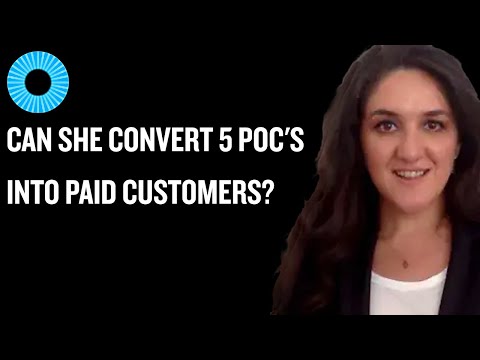
- 02The company had 5 active POCs at interview time across one airport, a municipality, a sports use case in China, and Airspeeder.
- 03Xena Vision was pre-revenue at the time of the interview, with all customers in POC phase.
- 04The team consisted of 9 people, largely university final-year students and fresh graduates.
- 05The company burned only $20,000 since its July 2019 founding, demonstrating strong capital efficiency.
- 06Nazli Temur founded Xena Vision on July 1, 2019, after graduating from university in 2012.
- 07The Airspeeder POC, focused on collision avoidance for flying cars, had been running for about two months at interview time.
- 08Nazli planned to close the first paying customer before the end of 2021.
- 09B2B company collaborators supplied office space and expensive equipment in kind, keeping the company's cash costs down.
Company Metrics at Time of Interview
| Metric | Value | Source |
|---|---|---|
| Total Grant Funding Raised (2021) | $140,000 | Founder interview, Oct 2021 |
| Capital Burned Since Founding (2019 to 2021) | $20,000 | Founder interview, Oct 2021 |
| Active POCs (2021) | 5 | Founder interview, Oct 2021 |
| Team Size (2021) | 9 | Founder interview, Oct 2021 |
| Year Founded | 2019 | Founder interview, Oct 2021 |
| Cameras in Municipality POC (2021) | 4 | Founder interview, Oct 2021 |
| Airspeeder POC Duration (2021) | 2 months | Founder interview, Oct 2021 |
Growth Breakdown
Revenue
Xena Vision was pre-revenue at the time of the interview. All five active customer relationships were in a proof-of-concept phase, with Nazli planning to convert at least one to a signed paying contract before the end of 2021.
Customers
Nazli counted roughly five POC customers at interview time and named four of them: one airport, a municipality of 3 million people in Bursa, Turkey, a sports accident recognition project in China, and a flying car company called Airspeeder running accident detection and collision avoidance. The Airspeeder POC had been running for approximately two months.
Team
Xena Vision had nine team members at interview time. Nazli kept costs low by working with final-year university students and fresh graduates who were eager to learn, and by securing in-kind support such as office space and equipment from B2B company collaborators.
Funding
The company raised $140,000 entirely in grant form, selling no equity. Most of it was awarded rather than banked at the time of the interview: Nazli said the $90,000 national R&D award had not yet arrived and was expected in two to three months, and that only part of the $25,000 telecom grant had been received. She reported burning only $20,000 since the July 2019 founding, reflecting a highly capital-efficient operating model supported by in-kind contributions and low-cost labor.
Growth Strategy
Grant Funding Over Equity
Nazli deliberately pursued non-dilutive grant funding, raising $140,000 without selling any equity. This allowed her to retain full ownership while funding early product development and team costs.
POC-First Customer Development
Rather than selling before the product was ready, Xena Vision ran structured proof-of-concept engagements with each customer to validate the AI on real-world data. This approach built credibility and customer relationships ahead of commercial contracts.
University Talent and In-Kind Partnerships
Nazli reduced cash burn by hiring final-year students and fresh graduates who were motivated by the technical challenge rather than high salaries. B2B company partners also provided office space and expensive equipment, further lowering operating costs.
Niche Vertical Focus with Scalable Use Cases
The company started with airports as its primary vertical, then expanded POCs to municipalities, sports venues, and flying car companies. Nazli described these as scalable use cases that could be deployed across the same underlying AI platform.
Camera-Based Recurring Revenue Model
Xena Vision planned to charge customers on a per-camera per-month basis, targeting large venues with many cameras to create a scalable recurring revenue stream once POCs converted to paid contracts.
Best Quotes
“It means like in the case it detects some emergency, it can able to react, like create the alarm and notify the people. So it's an active surveillance system.”
“Like it can be a terrorist attack and so on. But like our first customers are airports, in the airports, there can be some terrorist risk, but also someone can fall down and have heart attack in that large venue. So this both safety and security cases are covered.”
“Now it is almost kind of five, like one for airport, one for a 3,000,000 municipality in Bursa in Turkey.”
“Actually, have raised almost $140,000”
“I keep all the equity. This is all grant.”
“I I am single. I am married with my project.”
“I shouldn't wait. I I yes. I I delayed certain things, and I should have started that time. I have already actually, I had plans to be an entrepreneur that time, but I didn't know the name was being an entrepreneur.”
What Happened Next
This interview captured Xena Vision at an early pre-revenue stage in October 2021: five active POCs, no signed paying customers, and $140,000 in grants awarded — most of it, including a $90,000 award, not yet disbursed at the time of the recording. Nazli Temur was targeting her first commercial contract before the end of 2021. Visit the Xena Vision company profile on GetLatka for current metrics and any updates since this recording.
View Xena Vision’s current profile and metricsFull Transcript
Chapters
- 0:00Introduction and Background
- 0:29What Is Reactive Surveillance
- 0:43Use Cases: Airports, Safety, and Security
- 1:39Pricing Question and Pre-Revenue Status
- 2:44The Five Active POCs
- 4:01Camera Counts Across the POCs
- 4:36Grant Funding and Equity
- 5:15Team Structure and Cost Efficiency
- 6:11IP Ownership and Student Talent
- 7:26Founding Date and First Line of Code
- 9:43Targeting the First Paying Customer
- 11:39Famous Five: Books, Tools, and Habits
Introduction and Background
Nathan Latka
00:00Hey, folks. My guest today is Nazli Temur. She's been an entrepreneur since the age of 27, and now today, Founder of xena-vision. She's got a master's study in theoretical, master of computer science in France. She did a research internship at the Inria Sophia Antipolis in France and was a software engineer at Huawei R and D in Istanbul. She's now building next generation emergency recognition technology whose commitment is saving lives through reactive surveillance. Nazli, you ready to
00:25take us to the top?
Nazli Temur
00:27Yeah, thank you. You bet.
What Is Reactive Surveillance
Nathan Latka
00:29What does reactive surveillance mean?
Nazli Temur
00:32It means like in the case it detects some emergency, it can able to react, like create the alarm and notify the people. So it's an active surveillance system.
Use Cases: Airports, Safety, and Security
Nathan Latka
00:43For what? Like a terrorist attack or a fire or what?
Nazli Temur
00:47Like it can be a terrorist attack and so on. But like our first customers are airports, in the airports, there can be some terrorist risk, but also someone can fall down and have heart attack in that large venue. So this both safety and security cases are covered. And to increase the number of use cases, we can call like stadium,
01:16human safety stuff, like cardiac heart attack, again, the violence. And in the road, this is road accident recognition. All these things threat the human life. And it is crucial to just react on time. And so those are scalable use cases, which are deployed our system.
Pricing Question and Pre-Revenue Status
Nathan Latka
01:39And Nazli, you're starting with airports, we love a niche focus, obviously. What's the average airport paying you to use your technology per month?
Nazli Temur
01:49Just can I like, can you repeat the question?
Nathan Latka
01:53No problem. What's the average customer what's the average customer paying you per month to use your technology?
Nazli Temur
02:03Like, this this question, I couldn't understand. I'm sorry about this.
Nathan Latka
02:07Your price point. What's what are customers paying you per month?
Nazli Temur
02:11Paying you. Okay. You know the pain keyword? So I just mismatch with this pain and paying. Actually, is kind of a POC customer right now. Because, yeah, we developed an AI and this AI, we have to test it on customer data. So for each and every customer we have a POC phase, we test it in their data. So right now this is kind of pre revenue. We haven't generated revenue from the airports.
The Five Active POCs
Nathan Latka
02:44How many tests, POCs how are you running right now?
Nazli Temur
02:47Now it is almost kind of five, like one for airport, one for a 3,000,000 municipality in Bursa in Turkey. And also there is kind of this sport accident recognition in China for access leasures. And there is a flying car company, which is called Airspeeder and the accident detection collision avoidance for them also.
Nathan Latka
03:12And Nazli, if they start paying you, let's say the POC goes well, they start paying you revenue, what will they pay you? How big are the contracts potentially?
Nazli Temur
03:22Actually, the system is, how to say, they can run all these customer have large number of cameras and we expect them to pay by number of camera. Like we are right now, it is kind of a per month, one camera, We are thinking to charge to $1,000 for each camera.
03:50But this pricing is kind of,
03:54they are not going to start with thousand camera just right away. They gradually increase. This is our first
Camera Counts Across the POCs
Nathan Latka
04:01How many Nazli, how many across the five tests you're running right now, how many total cameras?
Nazli Temur
04:07Actually, like four camera for municipality right now. Four? Four. But this is I'm not say I'm going to say four camera. This is for intersection with the like, a large number of camera. Let's say total maybe 20.
04:29So for the airport, it is actually, the the number of camera right now, it is not clear how to say this.
Grant Funding and Equity
Nathan Latka
04:36Yeah, I see. Okay, no problem. So you're just getting started. Are you bootstrapping or have you raised capital?
Nazli Temur
04:43Actually, have raised almost $140,000
04:52This is $90,000 from a national R and D institution, and the other one is from the biggest telecom company of Turkey, just like two, three months before.
Nathan Latka
05:03Okay. Yeah. What How much equity did you sell? What valuation did you raise at?
Nazli Temur
05:09I keep all the equity. This is all grant.
Nathan Latka
05:13Okay.
Nazli Temur
05:14Yeah.
Team Structure and Cost Efficiency
Nathan Latka
05:15Okay. So it's all grant money. And how many people are on the team today?
Nazli Temur
05:20Nine.
Nathan Latka
05:21Got it. So how are you paying them?
Nazli Temur
05:23Actually, this is kind of
05:28We are not using money as the instrument all the time. This is a very kind of intellectual project, and we have a great know how inside. So we are working with the best university last students, last year students and fresh graduates. And they are not asking too much money from us, and they are very much eager to learn. And also we have some B2B company collaborations, they provide us some office and like expensive equipment support for
06:03developing our projects. And so we decreased a lot of cost to how to say,
IP Ownership and Student Talent
Nathan Latka
06:11Nazli, if a student at one of the universities does work for you, do you own the IP even though you're not paying them?
Nazli Temur
06:18I'm paying them, but it is like, you know, Turkish lira compared to dollar, it is not too much. So if it is 1,000 lira, it is like very few when we compare to the dollars. But for US or any other European country, you can think of a €1,000 in their place.
Nathan Latka
06:40Okay. And of the 140,000 you raised, do you have to pay that back or it was just a donation?
Nazli Temur
06:46It is all donation actually to develop the project because we are selected kind of for 4,500 out of 140.
06:58So like, actually the use cases and the progress on the product is like, this is really, I am the technical founder. And this is a really kind of cutting edge technical project. And this is what make people exciting about and spending their time, dedication and resources. But we not We may be a little slow to generate the revenue.
Founding Date and First Line of Code
Nathan Latka
07:26Nazli, what year did you write the first line of code?
Nazli Temur
07:31Could you please repeat this?
Nathan Latka
07:33When did you write the first line of code for the platform?
Nazli Temur
07:35Ten years before. No. It's like, I have graduated from university 2012, And I launched this two and a half year before. So I started this, can say, July 1 in 2019. And this is the official start date.
Nathan Latka
07:58Okay. And so how have you paid yourself between 2019 and 2020 and this year out of the grant money?
Nazli Temur
08:06Yeah, this is the grant money. It is kind of $20,000 for two years actually we spent. And then by
08:20achieving the first phase successfully, have the opportunity to get $90,000 too. We haven't spent this money, it's going to come in two and three months here. And we get this grant from the telecom provider. And again, $25,000 and we spend one out of third, and we are going to receive the end of kind of this month, the other part.
Nathan Latka
08:55So Nazli, of the 140,000 you've already raised, how much is still on the bank?
Nazli Temur
09:01Like, it is 90 plus, I can say, let me say, if we divide, let's say 15, 115, 15 I can say. We only spent 20,000.
Nathan Latka
09:24So Nazli of the 140,000 you've raised minus 20,000 you spent in 2019 and 2020, that means you still have 120,000 in the bank today.
Nazli Temur
09:34Yeah, yeah, exactly.
Nathan Latka
09:36Is I see.
Nazli Temur
09:37Yes. I'm kind of very efficient to generate resources without money.
Targeting the First Paying Customer
Nathan Latka
09:43I think that's super impressive. So when do you think you'll have your first paying customer? Not a POC, an actual signed closed contract.
Nazli Temur
09:51Actually, I'm planning to make it by this year and before this year.
09:58Customers, are actually how to say happy. I can say this also, I am a little obsessed with the technical kind of improvements. We are like, right now, one designer designed the customer real time reports for the customers, etcetera. This is kind of a surprise for them. So we are like, how to say, over preparing for them.
Nathan Latka
10:24How long have these POCs been running?
Nazli Temur
10:27Actually, like for this airspeeder, actually, for last two months, we have started.
Nathan Latka
10:35Is that the oldest one?
Nazli Temur
10:37The oldest one was the actually, Okay. The oldest one was the airport, but in between, my father passed away and this quite make this a little, make some things a little complicated. In between,
10:55we got some, we are selected to hype global acceleration for the sports and we get this access leasures and airspeeder and the municipality customers. So what we did, we increased the number of POC actually.
11:13The closing the sales, it's a little stress, it requires more energy. So I took more time on this POC and my comfort zone.
Nathan Latka
11:25Makes sense, Nazli. I'm sorry to hear that about your dad, but it's impressive the traction you've generated after that over the past year, and we're rooting for you. We hope these POCs turn into signed customers before the end of the year. Okay?
Nazli Temur
11:37Yeah. All right. Yes. All right.
Famous Five: Books, Tools, and Habits
Nathan Latka
11:39Let's wrap up with the famous five. Number one, what's your favorite business book?
Nazli Temur
11:45It is Zero to One.
Nathan Latka
11:47Number two, is there a CEO you're following or studying?
Nazli Temur
11:51This is Elon Musk.
Nathan Latka
11:54Number three, what's your favorite online tool for building xena vision?
Nazli Temur
11:59And air table, I can say. I have my living project plan.
12:04I love that.
Nathan Latka
12:05Number four, how many hours of sleep do you get every night?
Nazli Temur
12:09Actually,
12:11right now it is eight hours, but last year it was like two, three hours,
Nathan Latka
12:18That's not healthy.
Nazli Temur
12:20Yeah. But first first year was like very I was really passionate, very energetic and etcetera. But right now I spend more time, some time with family, myself and business.
Nathan Latka
12:32It's a healthy balance. And what's your situation Nazli, married, single, do you have any kids?
Nazli Temur
12:36I I am single. I am married with my project.
Nathan Latka
12:41And can I ask how old you are?
Nazli Temur
12:4431 years old.
12:4631.
Nathan Latka
12:47Last question. What's something you wish you knew when you were 20?
Nazli Temur
12:53I shouldn't wait. I I yes. I I delayed certain things, and I should have started that time. I have already actually, I had plans to be an entrepreneur that time, but I didn't know the name was being an entrepreneur.
Nathan Latka
13:13Guys, there you have it. Nazli launched her company xena-vision in 2019 to help folks like airports track incidents, both security risks and also safety hazards like someone falling or a terrorist threat. She has five POCs right now hoping to convert one of them to a paid customer before the end of the year. She's gonna price on a model that is a thousand dollars per camera per business. We'll see if she can convert these five POCs into
13:36paid accounts by the end the year. She has $140,000 raised. It was all a donation grant money. She's burned only $20,000 since 2019, so very capital efficient. Nazli, we're rooting for you. Thanks for taking us to the top.
Nazli Temur
13:48Thanks a lot.
Nathan Latka
13:51One more thing before you go. We have a brand new show every Thursday at 1PM central. It's called Shark Tank for SaaS. We call it deal or bust. One founder comes on, three hungry buyers. They try and do a deal live and the founder shares back end dashboards, their expenses, their revenue, ARPU CAC, LTV, you name it, they share it and the buyers try and make a deal live. It is fun to watch every Thursday one
14:15p. M. Central. Additionally, remember these recorded founder interviews go live. We release them here on YouTube every day at two p. M. Central to make sure you don't miss any of that. Make sure you click the subscribe button below here on YouTube, the big red button, and then click the little bell notification to make sure you get notifications when we do go live. I wouldn't want you to miss breaking news in the SaaS world, whether it's
14:37an acquisition, a big fundraise, a big sale, a big profitability statement or something else. I don't want you to miss it. Additionally, if you wanna take this conversation deeper and further, we have by far the largest private Slack community for B2B SaaS founders. You wanna get in there. We've probably talked about your tool if you're running a company or your firm if you're investing. You can go in there and quickly search and see what people are
14:59saying. Sign up for that at nathanlatka.com/slack. In the meantime, I'm hanging out with you here on YouTube. I'll be in the comments for the next thirty minutes. Feel free to let me know what you thought about this episode. And if you enjoyed it, click the thumbs up. We get a lot of haters that are mad at how aggressive I am on these shows, I do it so that we can all learn. We have to counter those
15:19people. We got to push them away. Click the thumbs up below to counter them and know that I appreciate your guys'support. Alright, I'll be in the comments. See you.