GitLab Revenue: From $10K Contracts to $634M, With the Whole Playbook on Tape
Two years before ringing the NASDAQ bell, Sid Sijbrandij counted his quota reps live on air from GitLab's public team page. The revenue history since — and the operating rules he disclosed on the way up — are the open-source business model proven in public numbers.
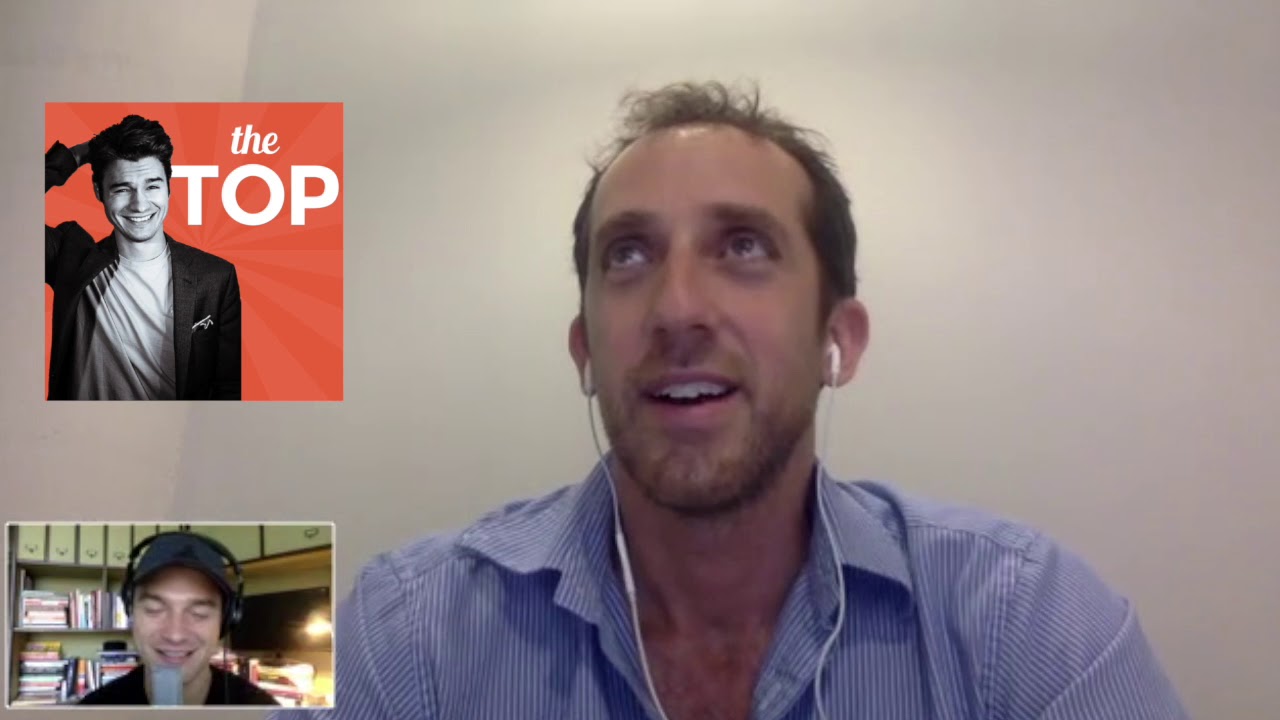
GitLab runs the most transparent company in enterprise software — its handbook is public, its team page updates “multiple times per day” — so when Nathan asked Sid Sijbrandij in September 2019 how many quota-carrying reps he had, the CEO simply opened his own website and counted on air: 55, alongside 393 engineers and 200+ vacancies, out of about 900 people in 55 countries with no offices at all. The revenue trail since then is nearly as public, and worth assembling in one place:
| When | Revenue | Marker |
|---|---|---|
| Sep 2019 | ~$120M run rate | $268M Series E at $2.75B post |
| Mar 2021 | ~$200M | Secondary at $6B valuation |
| Oct 2021 | ~$233M | NASDAQ IPO (~$800M raised) |
| Dec 2024 | $634M | Public company, growing ~30% |
The 2019 tape catches the machine two years pre-IPO, and Sijbrandij — a self-taught Ruby developer who commercialized an open-source project with its creator in 2012 — disclosed its rules with unusual precision.
The expansion physics of open core
GitLab’s numbers ran on land-tiny, expand-forever. Millions of free users across 100,000+ organizations; 10,000 paying customers at a ~$20K average he half-confirmed (“about that range”) and dismissed as “not a good number to look at” — a figure that sits awkwardly against the ~$120M run rate, which implies an average nearer $12K — because the distribution was the story: enterprise deals at 72% of ARR, with the largest accounts moving “from ten thousands to hundred thousands to million plus” in three years. Net retention had been an absurd ~175% and was still “north of 150” — two-thirds from seat growth, one-third from tier upgrades in the “buyer-based open core” model (executive features priced to executives). His Goldman Sachs anecdote made the mechanism concrete: a customer that planned 1,000 users in nine months and blew past 5,000. And his honest footnote is the part most founders would hide: he wanted the number to come down — “we’re doing a better job landing a bigger initial deal… the number is kind of too high.” (Context for how rare 150%+ is: our net-retention benchmarks.)
Rules of the machine
Three disclosed operating rules, each quotable on its own.
Recover customer acquisition cost “as soon as the customer pays their first invoice” — dipping below only when deliberately over-hiring sales capacity (8–9 month ramps, quotas from $300K to $2M, north of $1M for enterprise reps, with a target of 80% of reps at quota).
Burn was fine while growth ran 140%, “but a year, two years from now we want to stay north of that rule of 40.”
“Every time we raised, it wasn’t to expand our runway. The runway is always infinite — we always make sure we can get back to cash-flow break-even with the cash we have. Never depend on a future fundraise.”
The $268M Series E — closed at a 20x+ revenue multiple with public-market crossover investors — was sized “comparable to what we would raise if we went public,” buying optionality between IPO and direct listing.
The tape also documents the era’s cleanest secondary program: via NASDAQ Private Market, employees and alumni could sell up to 20% of vested shares at the preferred price — demand exceeded supply — a liquidity design other founders on our tapes (Wistia’s tender, Kahlow’s take-a-bite rule) approached from very different cap tables.
What the public numbers proved
GitLab IPO’d in October 2021 at roughly four times its Series E valuation, and the years since settled the tape’s open question.
Could an all-remote, open-core company selling a “single application for the DevOps lifecycle” keep compounding against Microsoft-owned GitHub? $634M by the end of 2024, still growing near 30%, says yes — with the AI-coding era turning the DevOps platform war into the industry’s hottest front.
The revenue multiple normalized like everyone’s (the 20x private print became a mid-single-digit public one — the same arithmetic as Gong’s valuation arc), but the business underneath did exactly what its operating rules were built to do.
Current data lives on GitLab’s GetLatka profile; the full September 2019 conversation is here. Sijbrandij’s answer to the final question — from a founder who would later navigate serious illness publicly and hand the CEO seat to a successor in 2024 — lands harder now than it did then: what he wished he’d known at 20 was simply, “It’s all gonna be okay.”
SourcesNathan’s September 2019 interview with Sid Sijbrandij; GitLab’s GetLatka profile and public-company figures through the end of 2024.