How Algolia Grew to $40M Revenue Making Engineers Answer Support Tickets
Search-as-an-API sounds like a product story. Algolia's growth was really an organizational bet: no support team, engineers facing customers directly, and a two-motion model where 300 enterprise accounts paid for everything else.
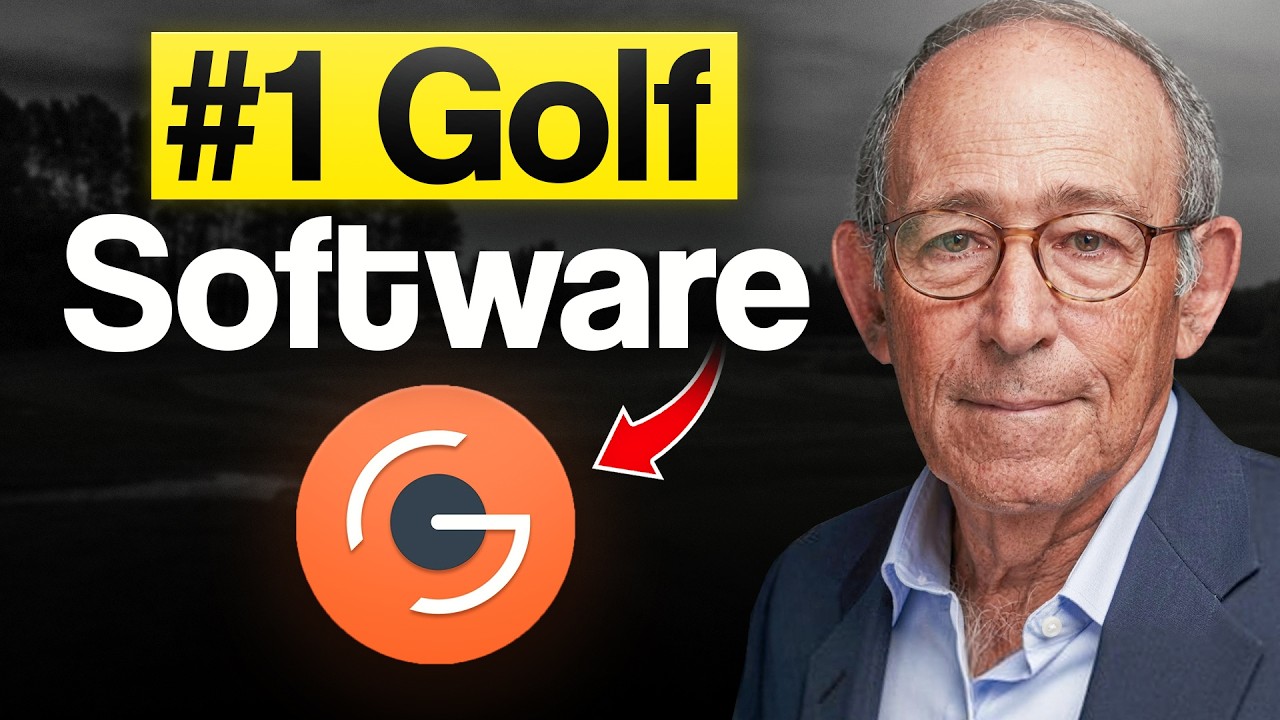
When Nathan role-played a $180K San Francisco engineer refusing to answer support tickets, Algolia co-founder and CEO Nicolas Dessaigne didn’t blink: “Actually, yes — you should.” From day one, Algolia had no support team. Customers with problems reached engineers directly, every engineer spent about a day a month on it, and Dessaigne considered the practice a product strategy, not a cost hack: “The product got way better than it would have if we had a support team… it’s such a satisfying feeling when your customer has an issue and you’re able to solve it and receive that heartfelt thanks.”
It worked on the numbers. By the August 2019 interview, the search-API company — powering the internal search on Medium, Twitch and Under Armour — had crossed $20M ARR in 2018 and was heading past $40M in 2019, roughly doubling, with a team of 300 across five offices and $74M raised.
Two motions, one revenue base
Algolia’s model split cleanly in half, and Dessaigne was precise about the asymmetry:
- About 6,000 paying customers — but 5% of them, roughly 300 enterprise accounts at $80–100K ACV, produced 80% of revenue.
- The long tail — self-served from $35 a month.
- The enterprise book — a full sales machine: SMB/mid-market/enterprise segments, roughly one SDR supporting two AEs.
- Pipeline as the metric that mattered — “at the end of the day, what matters is how many dollars we can close and get in the bank.”
That barbell — developer-led adoption at the bottom feeding six-figure contracts at the top — has since become the standard playbook for API companies. In 2019 it was still being invented, and the tape catches the mechanics mid-build: engineering entirely in Paris, sales out of San Francisco, London, New York and Atlanta, and a developer-first product doing the marketing a sales team can’t.
Usage, not seats
Pricing scaled on two axes — usage (search queries growing as the customer’s own traffic grew) and plan-gated features like personalization — with no seat model at all. The result: expansion that happened without a sales conversation.
What a customer paying $10K in year one typically paid in year two.
Where that expansion stacked to, with net-negative churn.
Blended: near zero on self-serve, “pretty high” on enterprise, healthy in aggregate.
“The beauty of the SaaS business,” as Dessaigne put it: “you start the year already knowing you’ll have more revenue than the year before without acquiring any new customers.” (Where those numbers sit against the rest of the market: our CAC benchmarks breakdown.)
On fundraising timing he gave the answer worth framing: a raise was coming “sometime next year,” because “you never want to raise when you have your back on the wall… at any point in time my goal is to have an option to become profitable.” He filed the whole question under “basically a math problem.”
The epilogue moved faster than the plan
The “next year” round arrived in two months: $110M in October 2019, followed by a $150M Series D in mid-2021 at a $2.25 billion valuation. Dessaigne himself handed the CEO seat to a successor in 2020 and moved to the board (and later to Y Combinator as a group partner) — the founder-led chapter this tape documents was, it turned out, its final year. The GetLatka dataset carries the line forward: revenue around $75M by 2023 and roughly $100M by the end of 2024, with headcount near 900 — solid compounding, though a visible step down from the doubling era, as search became a battleground between incumbents and AI-native retrieval.
Current data lives on Algolia’s GetLatka profile; the full August 2019 conversation is here.
His closing answer distilled twelve years of information-retrieval research at Exalead and Thales plus seven years of company-building into three words that explain the support policy, the engineering culture, and the barbell model all at once: “Optimize for learnings.”