
Founder Interview
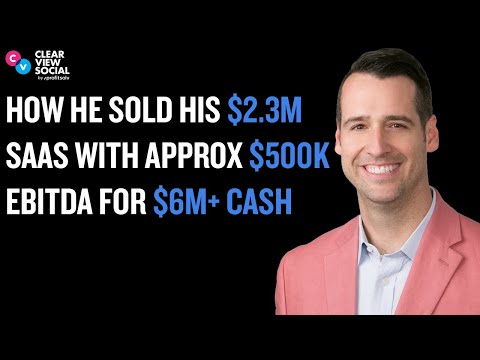
How Clearviewsocial Reached $2M ARR and Sold for 13x EBITDA in 2021 (Interview with CEO Adrian Dayton)
- Interview Date
- November 1, 2022
- Interviewee
- Adrian DaytonCEO
Company Metrics at Interview Time
ARR at Sale (2021)
$2M+
EBITDA Multiple at Exit (2021)
13x
Founder Ownership at Exit (2021)
60%
Team Size at Exit (2021)
15
EBITDA (post-sale, 2 years later) (2022)
$1M
Historical Snapshot
These numbers were reported by Adrian Dayton during his interview with Nathan Latka recorded in November 2022 and reflect a historical snapshot of Clearviewsocial at the time of its sale in March 2021, not current figures. See Clearviewsocial’s current numbers.
Key Takeaways
- 01Clearviewsocial launched in December 2013 and sold in March 2021, an eight-year journey
- 02The company scaled to over $2M in ARR before the sale
- 03EBITDA at time of sale was projected at between $400K and $700K for 2021
- 04The company sold at a 13x EBITDA multiple
- 05Deal structure was 70% cash upfront, 20% in year one earn out, and 10% in year two earn out
- 06Adrian owned 60% of the company at exit; employees held about 9% of a 15% option pool
- 07The company had 15 full-time employees at the time of sale and over 60,000 users in 12 countries
- 08Two years after the sale, Clearviewsocial hit $1M in EBITDA under new ownership
- 09Adrian hired a fractional CFO firm, Preferred CFO, two years before the sale to clean up the books at a cost of $5,000 to $6,000 per month for three months
- 10Adrian used a competing term sheet to drive up the final deal price and improve terms
Company Metrics at Time of Interview
| Metric | Value | Source |
|---|---|---|
| ARR at Sale (2021) | $2M+ | Founder interview, Nov 2022 |
| EBITDA at Sale (projected) (2021) | $400K to $700K | Founder interview, Nov 2022 |
| EBITDA Multiple (2021) | 13x | Founder interview, Nov 2022 |
| Founder Ownership at Exit (2021) | 60% | Founder interview, Nov 2022 |
| Employee Option Pool (set aside) (2021) | 15% | Founder interview, Nov 2022 |
| Employee Option Pool (awarded) (2021) | 9% | Founder interview, Nov 2022 |
| Team Size at Exit (2021) | 15 | Founder interview, Nov 2022 |
| Users at Exit (2021) | 60,000+ | Founder interview, Nov 2022 |
| Countries at Exit (2021) | 12 | Founder interview, Nov 2022 |
| Deal Structure: Cash Upfront (2021) | 70% | Founder interview, Nov 2022 |
| Deal Structure: Year One Earn Out (2021) | 20% | Founder interview, Nov 2022 |
| Deal Structure: Year Two Earn Out (2021) | 10% | Founder interview, Nov 2022 |
| EBITDA Under New Ownership (2022) | $1M | Founder interview, Nov 2022 |
| Angel Funding Raised | $1M | Founder interview, Nov 2022 |
| Fractional CFO Monthly Cost (2019) | $5,000 to $6,000 | Founder interview, Nov 2022 |
| Year Founded | 2013 | Founder interview, Nov 2022 |
| Scale to Sell Clients (at interview) (2022) | 9 | Founder interview, Nov 2022 |
Growth Breakdown
Revenue
Clearviewsocial grew to over $2M in ARR by the time of its sale in March 2021, having launched in December 2013. The company positioned itself as a social sharing platform for law firms and professional services, and Adrian described hitting a TAM ceiling after eating most of the addressable market.
Profitability
At the time of sale, projected 2021 EBITDA was between $400K and $700K, calculated on a forward-looking basis agreed upon with the buyer. Adrian noted that add-backs such as a company car and personal coaching resources added $200K to $300K to the EBITDA figure, which he felt meant he had slightly underpriced the company. Two years after the sale, Clearviewsocial reached $1M in EBITDA under new ownership.
Team
The company had 15 full-time employees at the time of sale. Employees held about 9% of a 15% option pool that had been set aside, and Adrian described the team as universally thrilled by the exit outcome.
Funding
Clearviewsocial took approximately $1M in angel funding over its life, which Adrian described as capital efficient given it was less than one times ARR. The company was acquired by a family office that buys and recapitalizes companies, and Adrian rolled a portion of his proceeds into the acquiring fund for a potential second bite at the apple.
Growth Strategy
Getting Numbers Into the Market Without Looking Desperate
Adrian shared his numbers on Nathan Latka's podcast before the sale, which surfaced multiple buyers without signaling a fire sale. He described this as a way to create FOMO among potential acquirers by letting the market discover the company's metrics organically rather than running a formal banker-led process.
Using Competing Term Sheets to Drive Price
Adrian received a term sheet from a private equity firm introduced through a friend who had sold their company, and a second term sheet from a buyer Nathan introduced on the show. Even though the second offer had worse terms, its existence pressured the first buyer to improve their price and structure a more favorable two-year earn out.
Cleaning Up Financials Two Years Before Sale
Adrian hired Preferred CFO, a fractional CFO firm based in Utah, two years before the sale to put the company's books in order. The engagement cost $5,000 to $6,000 per month for three months. The acquiring company's outside accounting firm called Clearviewsocial's financials the best they had ever seen from a small SaaS company, which Adrian credited with reducing buyer uncertainty during due diligence.
Maximizing EBITDA Through Add-Backs
During the sale process, Adrian identified $200K to $300K in add-backs, including a company car and personal coaching expenses, that were not core to the business. Adding these back materially increased the EBITDA figure used to calculate the purchase price, and Adrian noted he likely still underpriced the company even after doing so.
Structuring the Earn Out to Retain Upside Without Full-Time Commitment
Adrian negotiated a deal where 70% of the price was paid upfront and the earn out was tied to company performance rather than his personal participation. Because he owned 60% of the shares, he was entitled to earn out payments as long as the company hit its EBITDA targets, even if he was not actively working full time. This allowed him to work roughly twenty hours a week in year one and still collect the first earn out payment.
Best Quotes
“I kind of got to this point where I had put my team in place. We had a great product, and we kind of hit up against a TAM problem. So the industry just wasn't that big and we'd eaten most of the market. And after trying to pivot into other sectors, I just realized I just wasn't having fun anymore.”
“One of those people told me their whole story and they're like, By the way, I think our platform might want to buy your company, after I told them my numbers. I said, Okay, that's great. And then at the same time, I had a follow-up podcast with you where you said, What's your EBITDA? And you said, I think someone would write you a check for your company right now. And I was like, Let's go.”
“It doesn't matter if it's terrible. That's right. And they didn't know all the terms. They just knew the price. So, they had much better terms and they bumped up the price and structured a two year earn out so that I could get all the money I wanted for the company. And yeah, we had a deal.”
“By the way, clearviewsocial has now hit a million dollars in EBITDA in the two years since we sold. So we've had great success for them since then. And if I'd waited two years, yeah, I would have made more money, but it's like, I have I have no regrets. It was, like, the right thing at the right time.”
“This is this is the big my big learning through the process. I had tons of add backs that I didn't think of as EBITDA. But once I once I put all those those add backs back in, you know, like, I probably underpriced my company a little bit.”
“We sold the company that bought us, when they handed our finances to the outside accounting firm to do the due diligence, they literally said, We have a Christmas gift for you. These are the best finances we've ever seen from one of these small sized SaaS companies.”
What Happened Next
This interview was recorded in November 2022, roughly eighteen months after Clearviewsocial was sold in March 2021 at a 13x EBITDA multiple. At the time of the interview, Adrian had already left the company and launched Scale to Sell, an EOS implementation consultancy, with nine clients. The numbers here reflect the company as Adrian described it at exit and in the period immediately following. Visit the Clearviewsocial company profile on GetLatka for the most current available data.
View Clearviewsocial’s current profile and metricsFull Transcript
Chapters
- 0:00Introduction and Company Overview
- 1:06Quick Summary of the Pre-Sale Interview
- 1:47Why Adrian Decided to Sell
- 2:55How Adrian Found the Buyer
- 4:04Using Competing Term Sheets to Drive Price
- 8:46Deal Size and EBITDA Multiple
- 9:32Post-Sale EBITDA Growth Under New Ownership
- 10:54Add-Backs and EBITDA Calculation
- 11:43Deal Structure: Upfront Cash and Earn Out
- 15:24Adrian's Next Chapter: Scale to Sell
- 16:21Team Size and Employee Reactions to the Sale
- 16:36Option Pool and Employee Ownership
- 20:05Hiring a Fractional CFO Two Years Before Sale
- 21:50Famous Five Rapid Fire Questions
Introduction and Company Overview
Nathan Latka
00:00Clearviewsocial launched in 2013. They scaled up to 2021 to over $2,000,000 in ARR and ultimately were generating real EBITDA, 400 to 700 k per year. They sold for 13 x EBITDA in 2021. Adrian owned 60% of the business. Employees owned about 9% of a 15% option pool, so they celebrated. They're about 15 folks in that option pool as well. And, again, at the exit, Adrian then said, okay. 70% of the cash came up front, 20% in
00:27year two, and then the last in year three or and sorry. In year two, which he's just finishing out now, moving on to his next thing, which is helping and consulting companies hit that first million dollar mark. Hey, folks. My guest today is Adrian Dayton, and his passion is helping companies scale. He learned this by accident. Three years ago, he's asked to volunteer as a coach for a group of young entrepreneurs as part of EO Accelerator
00:46in Utah. He was hesitant because he was building his own SaaS company, but he then agreed. In his first year, he helped multiple young companies grow and reach a million bucks in revenue. In the process, he actually ended up selling his own company, clearviewsocial. At the time of sale, they had over 60,000 users in 12 countries. We had the pleasure of interviewing him back in 2020 presale. Now we're gonna get an update. Adrian, you ready to
01:04take us to the top?
Adrian Dayton
01:05Let's go.
Quick Summary of the Pre-Sale Interview
Nathan Latka
01:06Alright. So for folks who missed that article, I'm gonna give it a quick summary. Right? You had scaled about a 180 customers. You are effectively Hootsuite for lawyers. You had passed about a $2,000,000 run rate, and I believe you you have to correct me on this one. I think you are bootstrapped. Right?
Adrian Dayton
01:20We took we took a small amount of angel funding, you know, so it's kinda 50-50. Yeah.
Nathan Latka
01:25Like, but but small, like, under 500 a day.
Adrian Dayton
01:28Yeah. We we took about a million. Yeah.
Nathan Latka
01:30Okay. A million. Okay. I still call that capital efficient. You took less than one x your ARR.
Adrian Dayton
01:34Yeah. That's right. That's right.
Nathan Latka
01:35Okay. Fair enough. Okay. So I'd love for the next fifteen minutes to effectively be a crash course on how to sell your sub $5,000,000 SaaS company. Right? So let's start backwards. What was the date that you guys announced the closing?
Why Adrian Decided to Sell
Adrian Dayton
01:47Like, the sale of the company?
Nathan Latka
01:49Sale of the company.
Adrian Dayton
01:50Yeah. Yeah. So 03/22/2021.
Nathan Latka
01:54And you launched in what year?
Adrian Dayton
01:5612/20/2013.
Nathan Latka
02:00That's an eight year journey here. Okay? So, again, people, this is what it takes. Right? It's the long, slow journey. Right? So eight years. Now talk to me about why you decided to sell and how you met the buyer.
Adrian Dayton
02:12Yeah, absolutely. So I kind of got to this point where I had put my team in place. We had a great product, and we kind of hit up against a TAM problem. So the industry just wasn't that big and we'd eaten most of the market. And after trying to pivot into other sectors, I just realized I just wasn't having fun anymore. You know? And it was so much fun building it that it it just kinda was
02:35time. Right? So that's kinda what made me decide to sell. And also, we had turned the corner in in terms of positive EBITDA. And so it was like, not only am I feeling like I'm ready to sell, we have something that someone might buy.
Nathan Latka
02:48So how did you do that? Right? I mean, you were bored, so you wanted to sell, but you don't want everyone to think you wanna sell because you get that price.
How Adrian Found the Buyer
Adrian Dayton
02:55Yeah. You don't wanna think it's a fire sale. Right? So honestly, what I did is I reached out to a few friends that had sold their companies just to get advice.
03:06One of those people told me their whole story and they're like, By the way,
03:12I think our platform might want to buy your company, after I told them my numbers. I said, Okay, that's great. And then at the same time, I had a follow-up podcast with you where you said, What's your EBITDA? And you said, I think someone would write you a check for your company right now. And I was like, Let's go. I came on your program and you lined up three buyers. Actually, I haven't told you this, but
03:37it was a perfect storm. So this other friend who had sold their company, his private equity firm was interested in us. They're kind of dragging their feet. And then you brought to the table another buyer who right on the program made an offer. They sent over a term sheet. We had another term sheet from these guys. And the crazy thing is the buyer you introduced me to, their numbers, their terms were terrible, but the other guys
04:01didn't know that.
Nathan Latka
04:02Yeah. Gets the ball going.
Using Competing Term Sheets to Drive Price
Adrian Dayton
04:04It doesn't matter if it's terrible. That's right. And they didn't know all the terms. They just knew the price. So, they had much better terms and they bumped up the price and structured a two year earn out so that I could get all the money I wanted for the company. And yeah, we had a deal.
Nathan Latka
04:20That's amazing. Oh, what's going on there, YouTube? Good to see you guys. Now imagine this, you love watching these interviews with SaaS founders. But imagine if we took all of the valuation data out from over 2,807 interviews I've done manually saves you a lot of time. Well, we've done this. We've built it into the beautiful interface inside of Founderpath. Check this out. I'll show you how you can access this in a second, but you log in,
04:46you connect your Stripe account, you see your valuation real time. You can see what it changed over the past eighty eight days and even set goals for valuation this year. Now the secret evaluation is there's many different ways to value a SaaS business. So the reason you're gonna see three or four different valuations inside of your Founderpath dashboard, this is all free by the way, is because depending on who's doing the buying of your SaaS company,
05:11you're gonna get a different valuation. A VC is gonna pay a different valuation. Private equity firm is different. If you're gonna do a minority sale, that's different. And if you sell the whole business, that's a different valuation. You can see all those when I hover over here, Right? So the teal is what a VC would pay. Yellow is what private equity and red is if you sold the whole thing outright. Now what's cool about this is
05:32this is not built off random data. Again, you guys hear these interviews on YouTube. All these datas are built from real time valuation data points founders share with us on the show. So traction, 1,200,000 seed round, 3.7 raise. They sold 22% of their business. Go in here and filter by the event. Maybe you only wanna see companies that have sold the whole business. Well, here are a bunch that have been acquired, the valuation and the multiple.
05:58Maybe you're going out right now and you're raising your seed round. We'll go in here and look at all this recent seed deals that went down, what they raised, what valuation they raised at and what percent that they sold. There's never been a larger dataset of SaaS valuations than what you can get now inside of Founderpath. And we're thrilled to bring it to you. All right, We're gonna go back to the YouTube video here in a
06:20second, but if you wanna check this tool out, if you wanna jump in and sign up, you can check it out for free to get your valuation at this link. This link, founderpath.com/products/valuations. Or if you go to founderpath.com and hover over products, click on get your valuation here, and go ahead and sign up to give it a whirl. Again, all that valuation data live right inside the platform. I hope to see you there. Alright. Let's jump
06:46back into the interview. If I had sum that up, if you're listening right now and you're also tired and you've been working for eight years and you're doing $2,500,000 of ARR and you wanna sell, but you don't wanna look desperate, the trick is really to get your numbers out there in a way that is enticing, that doesn't say, hey. We're for sale. Here's our numbers. It's more like, hey. Here's our numbers. We're on a podcast like Nathan's
07:06or some other reason. Hey. We're I'm catching up with old friends sort of thing.
Adrian Dayton
07:10Yeah. Yeah. That's right. I mean and that's the thing is everyone's so guarded about their numbers, but if you can find some ways to get them out there. I think what you want me to say, Nathan, is trust Nathan with all your data. Give him all your numbers. No. But but it did help to get it out there, right, because I found other buyers. Now look. If my company had been a little bit bigger or we'd
07:30had, you know, been to 1,000,000 in EBITDA, it would have been simple. We could have hired a banker. We could have done a full process. They could have shopped the product. But really, like, when you're under 1,000,000 in EBITDA, you you have to be you you have to do a little more selling. Right? Like, had to get out and talk to people and find the right buyer for for where we were.
Nathan Latka
07:49Yeah. No. It's important. I mean, getting this FOMO thing going is is critical. Mean, I, full disclosure, have I won't name them, but I have founders who call on my show specifically because they want a reason to share their numbers live where it looks like I'm beating it out of them, but really they wanna share it because they want the market to know to induce bids. Right? So, like, that's a very good way to, like, use
08:07me to your effectively your advantage. But to your point, you sort of had some sort of number in mind, I imagine. Ignore the offers in the term sheet. How did you personally, Adrian, as a founder, eight years in, 2.5 in revenue, come to what your number was?
Adrian Dayton
08:22Yeah. It's a great question. I mean, I I think I think the reality is every single day you're running a SaaS company, you live with this stress, this fear of it all crashing down.
08:34And then you have this dream of some huge exit, you get private island money. You know what I mean? And so when it came down to it, it was like, okay,
Deal Size and EBITDA Multiple
Adrian Dayton
08:46what is a single, what's a double, what's a triple, what's a home run? And it's like, if my eight years ends in a successful sale, like, you know, I I kinda think of my sale as like a double, you know, as a solid double I got. Yeah. I mean, I had a I had an an amount of money in mind, and it was close enough to that number that it was kind of a no brainer.
Nathan Latka
09:06Can you obviously, this is get sensitive, but the more you can share, the better learning. I mean, can you share something that you're open to sharing that gives us a sense of what the deal size was?
Adrian Dayton
09:15So let me share this. Okay? So our EBITDA was between, let's just say, 400 and $700,000 at the time of the sale. And the framework that we were bought under is 13 times EBITDA.
Nathan Latka
09:30Okay. Interesting.
Post-Sale EBITDA Growth Under New Ownership
Adrian Dayton
09:32And so, I was able to negotiate because we're on a growth trajectory. By the way, clearviewsocial has now hit a million dollars in EBITDA in the two years since we sold. So we've had great success for them since then. And if I'd waited two years, yeah, I would have made more money, but it's like, I have I have no regrets. It was, like, the right thing at the right time. You know? But kind of
Nathan Latka
09:52How did you calculate that EBITDA? Was it like, okay. They're I'm gonna make this up. They're buying you in March. Take March profit, multiply by 12, or was it trailing twelve month total EBITDA added together was 400 k to 700 k?
Adrian Dayton
10:03Yeah. It really was projected 2021 EBITDA.
Nathan Latka
10:08Okay. And then a multiple of 13 x on that.
Adrian Dayton
10:11Yeah. That's right. That's right.
Nathan Latka
10:13And let's just win to get them a degree to a projection.
Adrian Dayton
10:16Yeah. That's right. But this is also the private equity game is this kind of EBITDA arbitrage. Because if they can buy companies at 13 x, they they put them all together into a bigger company, and then they can sell them for 20.
Nathan Latka
10:29Yep. Yep.
10:30Interesting.
Adrian Dayton
10:31Right. So it's like and I figured all of that out, like, a month before the deal closed. Right? Like, it took going through all the due diligence and realized, like, where their heads were at really on on the valuations.
Nathan Latka
10:40And your 2020 projected EBITDA, you said, was about between 400 and 700, about 500, 600 k, something like that?
Adrian Dayton
10:46Yeah. Around there.
Nathan Latka
10:47Interesting. How did you go about projecting that and building confidence in that number? Was there a top line growth? Was it cost cutting to get juice the monkey? Or
Add-Backs and EBITDA Calculation
Adrian Dayton
10:54This is this is the big my big learning through the process. I had tons of add backs that I didn't think of as EBITDA. But once I once I put all those those add backs back in, you know, like, I probably underpriced my company a little bit.
Nathan Latka
11:08Name them. That's this is great data. What name some add backs that surprise you.
Adrian Dayton
11:11Oh, just add backs like I had a company car and I had extra coaching resources that I used that didn't need to be part. And so it's like when I started adding all these things back, we're looking at 200 or $300,000 of EBITDA. And you times that by 13, it's a substantial number. And so once I had done all the financials for them and shown them what the real number was going to be, think they were
11:38doing cartwheels like, oh, this is better than they expected, you know, in terms of EBITDA.
Deal Structure: Upfront Cash and Earn Out
Nathan Latka
11:43Okay. And then let's go into actual deal structure. You mentioned you were there for two years and that you had to put in those two years to get the ultimate number you wanted. So let's say the total deal size was a 100%. What percent would you say was sort of, like, cash up front versus earn out versus, like, stock in the acquiring company?
Adrian Dayton
11:57Yeah. Yeah. So so the way they structured the deal, it was about 70% upfront, 20% year one, 10% year two. So I had a big incentive to do great in year one. But then the thing is if they hit the number in year two, I still get the money because it's based on my stock ownership, not on my participation.
Nathan Latka
12:19Tell me explain what that means.
Adrian Dayton
12:21Okay. So because I owned whatever 60% of the company as a shareholder, the way the deal was structured, all the shareholders got a first and second year earn out based on the performance of the company.
Nathan Latka
12:35I see. So you own 60% of clearview when it's sold.
Adrian Dayton
12:38When it's sold. Right. They bought 100% of it. But as a shareholder, I had rights that as long as we hit our EBITDA target in 2021, EBITDA target in 2022, which we haven't done yet, but they're on track. Right? It's like then I'm gonna get this. Yeah.
Nathan Latka
12:53Interesting. Okay. This makes a lot of sense. So there was no stock. You guys didn't take any stock in the acquiring company.
Adrian Dayton
12:58Well, so I had the option to roll in whatever money I wanted into the private equity fund. Right? And so I opted to take a chunk of that and roll it into the private equity firm. And when they have a recapitalization event, then I'll get a second bite of the apple.
Nathan Latka
13:14Did they give you premium terms as a private equity fund investor? Like, you know, bigger carry, less you know, it's enough two and twenty. It's like, you know, one and something else.
Adrian Dayton
13:22Well, it's not a true private equity firm. It's really a family office that buys up companies and recaps them every few years. So it's a cool model. Yeah. Yeah. So I have the same terms as all of the other kind of, you know, LPs or whatever.
Nathan Latka
13:37Interesting. Interesting. Okay. Interesting. Well so, I mean, I guess folks can do the math. Right? If EBITDA projected in 2021 was between 400 and 700, let's say it was just 500 k to make the math easy at a 13 x. It's like a 6.5 deal price of which 70% was upfront. So I think it's 4,500,000 cash upfront with a juice or kicker, you know, of another call it 1 to 2,000,000 you could earn over the
13:58next twenty four months effectively.
Adrian Dayton
14:01Yeah. So you're you're within 15% of all my numbers. Yeah.
Nathan Latka
14:04So why not leave? I get the Yeah. Why there's a lot of founders that, like, get these earn outs. And, like, because 30%, it's like your time is more valuable than the extra million you could earn over the next two years. So why not leave right when it closed?
Adrian Dayton
14:16Well, it's like my earn out in that first year, I didn't even have to stay a whole year. We closed end of March. I just had to stay till the end of December. And it's like, I have a great team. We have a great flow. Already was only working twenty hours a week because I had a great team. And so it was like, okay, I could keep my benefits, keep making money, and then guarantee that I
14:40get this first year earn out. Just it just made sense. By the by the beginning of the next year, I actually went to a ski event with Dan Martell with all his other to bald face out. He's he's probably invited.
Nathan Latka
14:52This is an intense this is not like a, you know, go little like a little ski event. This is like get in a helicopter with skis, drop you at top of the mountain, like almost die on your way down kind of
Adrian Dayton
15:00So so I'm with all these amazing entrepreneurs, you know, a full year into this earn out, and they're all living the life of their dreams, building their new things or onto the next adventure. And I got back from that trip and I was just like, dude, it's time for me to take my life back. And so I literally came back from that trip, gave my notice, and it took them a few months to find my replacement. Now
15:23I'm onto my next thing.
Adrian's Next Chapter: Scale to Sell
Nathan Latka
15:24What is your next thing?
Adrian Dayton
15:25Yeah. So what I loved, I loved building my company. And then three years ago, as you said, I started volunteering over the EO Accelerators, helping companies grow to a million dollars in revenue a year. And in that first group, I've had like seven people graduate already and hit that number. And I just doing I was doing it for free. Wasn't even getting paid, but I just loved it. And so so now what I do is my
15:49company is called Scale to Sell, and I am a professional EOS implementer, the entrepreneur operating system that follows basically the system laid out in Traction. So that's what I do full time now. So I launched it a few months ago.
16:04I already have nine clients and I just I love the work. I love helping companies and executive teams not go through all the suffering I went through in my first few years. Right? Because there's just there's a simple structure for growing and selling a company, and that's what I'm trying to help companies do.
Team Size and Employee Reactions to the Sale
Nathan Latka
16:21When you did sell your company, how many folks were on the team full time?
Adrian Dayton
16:26So we had 15 people.
Nathan Latka
16:28How did so for someone listening right now thinking about selling. Right? And and they're like, my gosh. How do I tell the team? Like, what about people that don't understand how their options work? Like, how do you do all that?
Option Pool and Employee Ownership
Adrian Dayton
16:36So this is obviously, there's some training around options and people options are complicated. But here was my biggest surprise in selling my company. Universally, all of my employees were so thrilled that we sold because it's like winning the world series. You know? It's like we build a company and we sold it. Right? Like, was so happy that we set this goal and we achieved it together.
Nathan Latka
17:00How much did they own at exit? The ESOP pool effectively? Like, 10%, 15, or nothing?
Adrian Dayton
17:05Yeah. So the so so the the ESOP pool was we had set aside about 15%, but we had only awarded about nine of the 15. Okay. Yeah.
Nathan Latka
17:13Fair enough. Fair enough. So got it. So good. I mean, on a $6,500,000 deal, right, 10, for that 600,000 to split amongst, you know, the employees that have been working for a couple of years.
Adrian Dayton
17:21Or three employees that they got the the biggest check they'd ever seen in their life. You know? It wasn't life changing, but it was a great outcome. You know?
Nathan Latka
17:27How did you teach them about things like taxes and how to process that and QSBS and all of this kind of stuff.
Adrian Dayton
17:35Yeah. I didn't really tell him about QSBS, but but because I think it was
Nathan Latka
17:41You're a lawyer. Come on. That's, like, the big thing.
Adrian Dayton
17:42No. I mean, only because as option holders, they don't get the advantages of QSBS.
Nathan Latka
17:48Is that because they're not they didn't get it on day one? They didn't have it for five years?
Adrian Dayton
17:52Right. So under QSBS, which, like, every every company, every software company out there, if you're not a c corp, like, change to a c corp immediately because you have to hold for five years as a c corp to get QSBS protection. So best advice anyone ever gave me was to to to have a a c corp, not an LLC so that I could get QSBS and not have to pay.
Nathan Latka
18:13So the reason, just to be clear, the reason your employees can't take advantage of that is because they were on vesting plans and options versus you had the common shares with prior five years to exit so you could take advantage of QSBS.
Adrian Dayton
18:26Right. And one of my employees, my first engineer, he left a few years before and he exercised his options.
Nathan Latka
18:32When he left?
Adrian Dayton
18:34Right. And so he had actual shares, but he didn't hold them for five years.
Nathan Latka
18:39For five years. Yeah.
Adrian Dayton
18:40Right. Right. So anyway. Yeah.
Nathan Latka
18:42Interesting.
Adrian Dayton
18:44So I didn't explain it to them because I don't think it wouldn't have made them any, I don't know, sadder or happier to know about
Nathan Latka
18:48If they wanted to optimize that for taxes, could they have rolled their earnings into the family office, like private equity fund and effectively hold those common shares until the five years hit and then take the
Adrian Dayton
18:59No. No. They couldn't. I mean, the big challenge is just that the whole point of options is that you maximize for taxes. Right? You give options so they don't have to pay taxes on them. Right? And if they if you pay have to pay taxes on those options, you're taking a huge risk if the company doesn't succeed. Right? So so I don't know. So I wish, though, I wish that option holders had better tax treatment because
19:25it seems kind of unfair that these option holders, they're taking all the same risks as the original entrepreneur in staying with this company, and then they get taxed with regular income. So I just don't think it's very equitable.
Nathan Latka
19:38What else for founders like you thinking about selling and they've got a team of 15, what else should they think about? Talk to me about the things that, like, surprise you that you never read about a blog. Just hit you over the side of head. It was a last minute emergency thing you had to get done before you you close the deal.
Adrian Dayton
19:50Yeah. So so probably the most expensive investment that was a 100% worth it was 2 years before sale, we hired a fractional CFO company to come in and completely completely clean up our books.
Hiring a Fractional CFO Two Years Before Sale
Nathan Latka
20:05Which firm? What's their URL?
Adrian Dayton
20:07So we used Preferred CFO. It's a local company here in Utah. They work nationally though. And they made sure all of our accrual postings and just everything was dialed in exactly the way a buyer wants to see it. Listen to this, we sold the company that bought us, when they handed our finances to the outside accounting firm to do the due diligence, they literally said, We have a Christmas gift for you. These are the best finances
20:35we've ever seen from one of these small sized SaaS companies.
Nathan Latka
20:39That's amazing. Okay. So preferredcfo.com, what did you pay them per month?
Adrian Dayton
20:44So they they're expensive upfront. So we paid them 5 or $6,000 a month, but that was just for the three months for them to clean up our books. Right? So once they did that, we actually transitioned to something else. But just to make sure your financials are dialed in and all of your accrual you know, all of your postings and the way your amortization sheets, charts are set up, I mean, it's just gonna leave less question
21:08marks in the minds of buyers.
Nathan Latka
21:10That makes sense. So you spend 18 to 24 k sort of getting everything cleaned from preferredcfo.com. What'd you move to after that then?
Adrian Dayton
21:16Yeah. You know, after that, they had created all the reports. We had a really good bookkeeper, and we're able to just use
Nathan Latka
21:24The same.
Adrian Dayton
21:25Right. I mean, had really good practice
Nathan Latka
21:27So internal bookkeeper.
Adrian Dayton
21:28Yeah. That's right.
Nathan Latka
21:30Okay. Interesting. And interesting. I love that approach. That makes tons of sense. Well, cleanliness does pay off and it helps to build that hygiene early on. Very cool, man. Well, Adrian, if people wanna connect with you now, where can they find you?
Adrian Dayton
21:42Yeah. You know, LinkedIn or Twitter is the best place. So Adrian Dayton, I'm the only Adrian Dayton on LinkedIn and Twitter. So, yeah, check check right there.
Famous Five Rapid Fire Questions
Nathan Latka
21:50Yeah. Let's wrap up here with the famous five. Number one favorite book, You Can't Say Traction.
Adrian Dayton
21:54No. No. I wouldn't yeah. Favorite book is
21:59damn, man. You gotta give me preparation for these questions.
Nathan Latka
22:01I know. If if you don't have one top of mind, we can skip it too.
Adrian Dayton
22:04So so I'm gonna go with the book Dune. So sci fi book for you there. Okay.
Nathan Latka
22:09That's good. Number two, is there a CEO you're following or studying?
Adrian Dayton
22:14CEO that I'm following, you know, there really isn't. Next question.
Nathan Latka
22:18Number number three, what's your favorite online tool when you're building clearview?
Adrian Dayton
22:23Yeah. Probably probably Trello. Mhmm. I love Trello for managing meetings and tasks.
Nathan Latka
22:28Number four, how many hours of sleep do get every night?
Adrian Dayton
22:30Eight hours every night.
Nathan Latka
22:32That's good. And situation, married, single kids?
Adrian Dayton
22:34Married, three kids.
Nathan Latka
22:36Three kiddos. And what are you? 42 now?
Adrian Dayton
22:3843.
Nathan Latka
22:3943. Very good.
22:41Last question.
Adrian Dayton
22:42My my birthday and credit card number. I'm gonna get a little worried.
Nathan Latka
22:44Yeah. Go What's something you wish you knew when you were 20?
Adrian Dayton
22:48I wish when I was 20, I knew the power of setting big long term goals.
Nathan Latka
22:55Guys, there you have it. Clearviewsocial launched in 2013. They scaled up to 2021 to over $2,000,000 in ARR and ultimately were generating real EBITDA, 400 to 700 k per year. They sold for 13 x EBITDA in 2021. Adrian owned 60% of the business. Employees owned about 9% of a 15% option pool, so they celebrated. There are about 15 folks in that option pool as well. And, again, at the exit, Adrian said, 70% of the cash came
23:22up front, 20% in year two, and then the last in year three or and sorry, in year two, which he's just finishing out now moving on to his next thing, which is helping and consulting companies hit that first million dollar mark. One more thing before you go. We have a brand new show every Thursday at 1PM central. It's called Shark Tank for SaaS. We call it deal or bust. One founder comes on, three hungry buyers, they
23:44try and do a deal live and the founder shares back end dashboards, their expenses, their revenue, ARPU, CAC, LTV, you name it, they share it and the buyers try and make a deal live. It is fun to watch every Thursday 1PM Central. Additionally, remember these recorded founder interviews go live. We release them here on YouTube every day at two p. M. Central. To make sure you don't miss any of that, make sure you click the subscribe
24:08button below here on YouTube, the big red button and then click the little bell notification to make sure you get notifications when we do go live. I wouldn't want you to miss breaking news in the SaaS world, whether it's an acquisition, a big fundraise, a big sale, a big profitability statement or something else. I don't want you to miss it. Additionally, if you want to take this conversation deeper and further, we have by far the largest
24:31private Slack community for B2B SaaS founders. You want to get in there. We've probably talked about your tool if you're running a company or your firm if you're investing. You can go in there and quickly search and see what people are saying. Sign up for that at nathanlatka.com/slack. In the meantime, I'm hanging out with you here on YouTube. I'll be in the comments for the next thirty minutes. Feel free to let me know what you thought
24:52about this episode. And if you enjoyed it, click the thumbs up. We get a lot of haters that are mad at how aggressive I am on these shows, but I do it so that we can all learn. We have to counter those people. We got to push them away. Click the thumbs up below to counter them and know that I appreciate your guys'support. All right. I'll be in the comments. See you.