Latka logo

Valuation

$6.5M

2024 Revenue

$5M(Est.)

Customers

180

Funding

$1.7M

Avg ACV

$27.8K

Team

10

Founded

2013

Clearviewsocial Revenue, Valuation & Funding (2024)

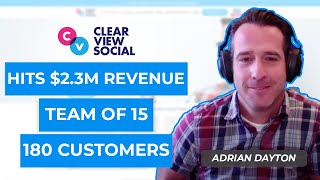
Clearviewsocial is a social media scheduling and amplification platform built for law firms, functioning as what its founder described as Hootsuite for lawyers. Founded in December 2013 in Utah, the company grew over eight years to more than $2 million in annual recurring revenue before being acquired by a family office in March 2021.

At the time of sale, Clearviewsocial had approximately 180 customers, more than 60,000 users across 12 countries, and a team of 15 employees. The company had taken roughly $1 million in angel funding over its life, keeping capital consumption well below one times ARR.

The acquisition was structured at 13 times projected 2021 EBITDA, with 70 percent of proceeds paid upfront and the remainder delivered through a two-year earn-out. Post-acquisition, the company reached $1 million in EBITDA within two years of the sale closing. Founder Adrian Dayton has since launched Scale to Sell, a consulting practice helping companies grow to and through their first exit.

Last updated

Clearviewsocial Revenue

Clearviewsocial reached more than $2 million in annual recurring revenue by the time of its March 2021 sale, an eight-year journey from its December 2013 founding. The host noted a figure of approximately $2.5 million in ARR in the final period, which Adrian Dayton did not dispute during the interview.

Clearviewsocial Revenue GrowthReported revenue / ARR over time · latest figure estimated$0$1.3M$2.5M$3.8M$5M$6.3M2013201520172019202120232024$0$1.5M$2.3M$2M$5MSource: GetLatka.com interview on Nov 1, 2022 with Adrian Dayton
YearMilestoneSource
2024Clearviewsocial Hit $5m revenue in June 2024Estimated
2021Clearviewsocial Hit $2m revenue in January 2021Watch[1]
2020Clearviewsocial Hit $2.3m revenue in October 2020
2019Clearviewsocial Hit $2.3m revenue in September 2019
2018Clearviewsocial Hit $1.5m revenue in March 2018
2013Launched with $0 revenue

Dayton told Latka that the company had turned the corner to positive EBITDA before the sale, with projected 2021 EBITDA of between $400,000 and $700,000. That figure was based on projected full-year 2021 performance at the time of the March closing, not trailing twelve months. Within two years of the sale, Clearviewsocial reached $1 million in EBITDA under the new ownership. Dayton noted that EBITDA add-backs of $200,000 to $300,000, including a company car and personal coaching expenses, were identified during the sale process and meaningfully increased the effective EBITDA used in valuation.

Clearviewsocial Valuation, Funding Rounds

Clearviewsocial reached a $6.5M valuation in 2021.

Clearviewsocial has raised $1.7M in total funding across 3 rounds, with its most recent round in 2015.

Clearviewsocial Capital Raised & ValuationCumulative capital raised and post-money valuation by roundCapital raised (cum.)Valuation$0$0$1.5M$400K$3M$800K$4.5M$1.2M$6M$1.6M$7.5M$2M201320142015201620172018201920202021$6.5MSource: GetLatka.com interview on Nov 1, 2022 with Adrian Dayton
YearRoundAmountValuation% SoldSource
2021AcquiredExit-$6.5M-
2015Funding round$423K--
2015Funding round$923K--
2014Funding round$375K--

Founder / CEO

Adrian Dayton

CEO

Adrian Dayton founded Clearviewsocial in December 2013 and served as its CEO through the March 2021 sale. He owned 60 percent of the company at exit. Dayton is a lawyer by training and was 43 years old at the time of the November 2022 interview.

Three years before the interview, Dayton began volunteering as a coach for the EO Accelerator program in Utah, helping early-stage entrepreneurs grow their companies. He was hesitant to take on the role while still running Clearviewsocial but agreed. In that first cohort, seven participants graduated and reached $1 million in annual revenue under his coaching.

Following the earn-out period, Dayton left Clearviewsocial and launched Scale to Sell, a consulting and EOS implementation practice focused on helping companies grow and prepare for acquisition. As of the November 2022 interview, Scale to Sell had nine clients and had been operating for a few months. Dayton described the business as a professional EOS implementer practice following the framework laid out in the book Traction. Net worth was not discussed in the interview, though Dayton held 60 percent of a company sold at an implied price of approximately $6.5 million, with earn-out payments contingent on company performance.

Q&A

QuestionAnswer
What's your age?44
Favorite online tool?-
Favorite book?-
Favorite CEO?-
Advice for 20 year old self-

Customers

At the time of the March 2021 sale, Clearviewsocial had approximately 180 customers and more than 60,000 users across 12 countries. Pricing and per-seat or per-account revenue figures were not discussed in the interview.

The company's customer base was concentrated in the legal sector, with the founder noting that Clearviewsocial had effectively eaten most of its addressable market by the time of sale, which contributed to the decision to exit rather than attempt further growth.

Clearviewsocial serves 180 customers.

Clearviewsocial Business Model

Clearviewsocial operated as a subscription SaaS business, generating annual recurring revenue from law firms and professional services clients. The company reached more than $2 million in ARR with approximately 180 customers, implying an average revenue per customer of roughly $11,000 annually, though Dayton did not state this figure directly and it is a GetLatka estimate derived by dividing $2 million ARR by 180 customers.

The company achieved positive EBITDA of between $400,000 and $700,000 on a projected 2021 basis, representing an EBITDA margin of roughly 20 to 35 percent on a $2 million revenue base, though the exact margin was not stated. EBITDA add-backs of $200,000 to $300,000 were identified during the sale process. Churn, gross margin, CAC, LTV, and burn rate were not discussed in the interview.

Two years before the sale, Dayton engaged Preferred CFO, a Utah-based fractional CFO firm, to clean up the company's books and ensure accrual accounting was properly structured for buyer due diligence. The engagement cost $5,000 to $6,000 per month for three months, totaling $18,000 to $24,000. After the cleanup, the company transitioned to an internal bookkeeper. The acquiring firm's outside accounting team described Clearviewsocial's financials as the best they had seen from a small SaaS company of its size.

Clearviewsocial Employees & Team Size

Clearviewsocial had 15 employees at the time of the March 2021 sale. The company had established an employee stock option pool of 15 percent, of which approximately 9 percent had been awarded to employees at exit.

Dayton noted that all employees were enthusiastic about the sale outcome. On an implied deal price of approximately $6.5 million, the 9 percent employee option pool represented roughly $585,000 to be distributed among option holders. Dayton described the checks as the biggest some employees had ever received, though not life-changing amounts. In the final period before the sale, Dayton was working approximately 20 hours per week, having built a team capable of running operations without his full-time involvement.

Clearviewsocial employs approximately 10 people as of 2026, down from 15 in 2021, including 3 sales reps that carry a quota. It serves 180 customers that rely on its solutions.

Clearviewsocial Team GrowthReported headcount over time04812162013201520172019202120232024001010Source: GetLatka.com interview on Nov 1, 2022 with Adrian Dayton
YearMilestoneSource
2024Reached 10 employees (October 2024)
2021Reached 15 employees (January 2021)
2020Reached 15 employees (October 2020)
2018Reached 15 employees (December 2018)
2018Reached 11 employees (March 2018)

Frequently Asked Questions about Clearviewsocial

What is Clearviewsocial's revenue?

Clearviewsocial generates an estimated $5M in annual revenue.

Who founded Clearviewsocial?

Clearviewsocial was founded by Adrian Dayton.

Who is the CEO of Clearviewsocial?

The CEO of Clearviewsocial is Adrian Dayton.

How much funding does Clearviewsocial have?

Clearviewsocial raised $1.7M across 3 rounds.

How many employees does Clearviewsocial have?

Clearviewsocial has 10 employees.

Where is Clearviewsocial headquarters?

Clearviewsocial is headquartered in Cottonwood Heights, Utah, United States.

Compare Clearviewsocial to the industry

Full Interview Transcripts

How he sold his $2.3m SaaS with approx $500k EBITDA for $6m+ CashNov 1, 2022

[00:00] Clearviewsocial launched in 2013. They scaled up to 2021 to over $2,000,000 in ARR and ultimately were generating real EBITDA, 400 to 700 k per year. They sold for 13 x EBITDA in 2021. Adrian owned 60% of the business. Employees owned about 9% of a 15% option pool, so they celebrated. They're about 15 folks in that option pool as well. And, again, at the exit, Adrian then said, okay. 70% of the cash came up front, 20% in [00:27] year two, and then the last in year three or and sorry. In year two, which he's just finishing out now, moving on to his next thing, which is helping and consulting companies hit that first million dollar mark. Hey, folks. My guest today is Adrian Dayton, and his passion is helping companies scale. He learned this by accident. Three years ago, he's asked to volunteer as a coach for a group of young entrepreneurs as part of EO Accelerator [00:46] in Utah. He was hesitant because he was building his own SaaS company, but he then agreed. In his first year, he helped multiple young companies grow and reach a million bucks in revenue. In the process, he actually ended up selling his own company, clearviewsocial. At the time of sale, they had over 60,000 users in 12 countries. We had the pleasure of interviewing him back in 2020 presale. Now we're gonna get an update. Adrian, you ready to [01:04] take us to the top? [01:05] >> Let's go. [01:06] Alright. So for folks who missed that article, I'm gonna give it a quick summary. Right? You had scaled about a 180 customers. You are effectively Hootsuite for lawyers. You had passed about a $2,000,000 run rate, and I believe you you have to correct me on this one. I think you are bootstrapped. Right? [01:20] >> We took we took a small amount of angel funding, you know, so it's kinda 50-50. Yeah. [01:25] Like, but but small, like, under 500 a day. [01:28] >> Yeah. We we took about a million. Yeah. [01:30] Okay. A million. Okay. I still call that capital efficient. You took less than one x your ARR. [01:34] >> Yeah. That's right. That's right. [01:35] Okay. Fair enough. Okay. So I'd love for the next fifteen minutes to effectively be a crash course on how to sell your sub $5,000,000 SaaS company. Right? So let's start backwards. What was the date that you guys announced the closing? [01:47] >> Like, the sale of the company? [01:49] Sale of the company. [01:50] >> Yeah. Yeah. So 03/22/2021. [01:54] And you launched in what year? [01:56] >> 12/20/2013. [02:00] That's an eight year journey here. Okay? So, again, people, this is what it takes. Right? It's the long, slow journey. Right? So eight years. Now talk to me about why you decided to sell and how you met the buyer. [02:12] >> Yeah, absolutely. So I kind of got to this point where I had put my team in place. We had a great product, and we kind of hit up against a TAM problem. So the industry just wasn't that big and we'd eaten most of the market. And after trying to pivot into other sectors, I just realized I just wasn't having fun anymore. You know? And it was so much fun building it that it it just kinda was [02:35] >> time. Right? So that's kinda what made me decide to sell. And also, we had turned the corner in in terms of positive EBITDA. And so it was like, not only am I feeling like I'm ready to sell, we have something that someone might buy. [02:48] So how did you do that? Right? I mean, you were bored, so you wanted to sell, but you don't want everyone to think you wanna sell because you get that price. [02:55] >> Yeah. You don't wanna think it's a fire sale. Right? So honestly, what I did is I reached out to a few friends that had sold their companies just to get advice. [03:06] >> One of those people told me their whole story and they're like, By the way, [03:12] >> I think our platform might want to buy your company, after I told them my numbers. I said, Okay, that's great. And then at the same time, I had a follow-up podcast with you where you said, What's your EBITDA? And you said, I think someone would write you a check for your company right now. And I was like, Let's go. I came on your program and you lined up three buyers. Actually, I haven't told you this, but [03:37] >> it was a perfect storm. So this other friend who had sold their company, his private equity firm was interested in us. They're kind of dragging their feet. And then you brought to the table another buyer who right on the program made an offer. They sent over a term sheet. We had another term sheet from these guys. And the crazy thing is the buyer you introduced me to, their numbers, their terms were terrible, but the other guys [04:01] >> didn't know that. [04:02] Yeah. Gets the ball going. [04:04] >> It doesn't matter if it's terrible. That's right. And they didn't know all the terms. They just knew the price. So, they had much better terms and they bumped up the price and structured a two year earn out so that I could get all the money I wanted for the company. And yeah, we had a deal. [04:20] That's amazing. Oh, what's going on there, YouTube? Good to see you guys. Now imagine this, you love watching these interviews with SaaS founders. But imagine if we took all of the valuation data out from over 2,807 interviews I've done manually saves you a lot of time. Well, we've done this. We've built it into the beautiful interface inside of Founderpath. Check this out. I'll show you how you can access this in a second, but you log in, [04:46] you connect your Stripe account, you see your valuation real time. You can see what it changed over the past eighty eight days and even set goals for valuation this year. Now the secret evaluation is there's many different ways to value a SaaS business. So the reason you're gonna see three or four different valuations inside of your Founderpath dashboard, this is all free by the way, is because depending on who's doing the buying of your SaaS company, [05:11] you're gonna get a different valuation. A VC is gonna pay a different valuation. Private equity firm is different. If you're gonna do a minority sale, that's different. And if you sell the whole business, that's a different valuation. You can see all those when I hover over here, Right? So the teal is what a VC would pay. Yellow is what private equity and red is if you sold the whole thing outright. Now what's cool about this is [05:32] this is not built off random data. Again, you guys hear these interviews on YouTube. All these datas are built from real time valuation data points founders share with us on the show. So traction, 1,200,000 seed round, 3.7 raise. They sold 22% of their business. Go in here and filter by the event. Maybe you only wanna see companies that have sold the whole business. Well, here are a bunch that have been acquired, the valuation and the multiple. [05:58] Maybe you're going out right now and you're raising your seed round. We'll go in here and look at all this recent seed deals that went down, what they raised, what valuation they raised at and what percent that they sold. There's never been a larger dataset of SaaS valuations than what you can get now inside of Founderpath. And we're thrilled to bring it to you. All right, We're gonna go back to the YouTube video here in a [06:20] second, but if you wanna check this tool out, if you wanna jump in and sign up, you can check it out for free to get your valuation at this link. This link, founderpath.com/products/valuations. Or if you go to founderpath.com and hover over products, click on get your valuation here, and go ahead and sign up to give it a whirl. Again, all that valuation data live right inside the platform. I hope to see you there. Alright. Let's jump [06:46] back into the interview. If I had sum that up, if you're listening right now and you're also tired and you've been working for eight years and you're doing $2,500,000 of ARR and you wanna sell, but you don't wanna look desperate, the trick is really to get your numbers out there in a way that is enticing, that doesn't say, hey. We're for sale. Here's our numbers. It's more like, hey. Here's our numbers. We're on a podcast like Nathan's [07:06] or some other reason. Hey. We're I'm catching up with old friends sort of thing. [07:10] >> Yeah. Yeah. That's right. I mean and that's the thing is everyone's so guarded about their numbers, but if you can find some ways to get them out there. I think what you want me to say, Nathan, is trust Nathan with all your data. Give him all your numbers. No. But but it did help to get it out there, right, because I found other buyers. Now look. If my company had been a little bit bigger or we'd [07:30] >> had, you know, been to 1,000,000 in EBITDA, it would have been simple. We could have hired a banker. We could have done a full process. They could have shopped the product. But really, like, when you're under 1,000,000 in EBITDA, you you have to be you you have to do a little more selling. Right? Like, had to get out and talk to people and find the right buyer for for where we were. [07:49] Yeah. No. It's important. I mean, getting this FOMO thing going is is critical. Mean, I, full disclosure, have I won't name them, but I have founders who call on my show specifically because they want a reason to share their numbers live where it looks like I'm beating it out of them, but really they wanna share it because they want the market to know to induce bids. Right? So, like, that's a very good way to, like, use [08:07] me to your effectively your advantage. But to your point, you sort of had some sort of number in mind, I imagine. Ignore the offers in the term sheet. How did you personally, Adrian, as a founder, eight years in, 2.5 in revenue, come to what your number was? [08:22] >> Yeah. It's a great question. I mean, I I think I think the reality is every single day you're running a SaaS company, you live with this stress, this fear of it all crashing down. [08:34] >> And then you have this dream of some huge exit, you get private island money. You know what I mean? And so when it came down to it, it was like, okay, [08:46] >> what is a single, what's a double, what's a triple, what's a home run? And it's like, if my eight years ends in a successful sale, like, you know, I I kinda think of my sale as like a double, you know, as a solid double I got. Yeah. I mean, I had a I had an an amount of money in mind, and it was close enough to that number that it was kind of a no brainer. [09:06] Can you obviously, this is get sensitive, but the more you can share, the better learning. I mean, can you share something that you're open to sharing that gives us a sense of what the deal size was? [09:15] >> So let me share this. Okay? So our EBITDA was between, let's just say, 400 and $700,000 at the time of the sale. And the framework that we were bought under is 13 times EBITDA. [09:30] Okay. Interesting. [09:32] >> And so, I was able to negotiate because we're on a growth trajectory. By the way, clearviewsocial has now hit a million dollars in EBITDA in the two years since we sold. So we've had great success for them since then. And if I'd waited two years, yeah, I would have made more money, but it's like, I have I have no regrets. It was, like, the right thing at the right time. You know? But kind of [09:52] How did you calculate that EBITDA? Was it like, okay. They're I'm gonna make this up. They're buying you in March. Take March profit, multiply by 12, or was it trailing twelve month total EBITDA added together was 400 k to 700 k? [10:03] >> Yeah. It really was projected 2021 EBITDA. [10:08] Okay. And then a multiple of 13 x on that. [10:11] >> Yeah. That's right. That's right. [10:13] And let's just win to get them a degree to a projection. [10:16] >> Yeah. That's right. But this is also the private equity game is this kind of EBITDA arbitrage. Because if they can buy companies at 13 x, they they put them all together into a bigger company, and then they can sell them for 20. [10:29] Yep. Yep. [10:30] Interesting. [10:31] >> Right. So it's like and I figured all of that out, like, a month before the deal closed. Right? Like, it took going through all the due diligence and realized, like, where their heads were at really on on the valuations. [10:40] And your 2020 projected EBITDA, you said, was about between 400 and 700, about 500, 600 k, something like that? [10:46] >> Yeah. Around there. [10:47] Interesting. How did you go about projecting that and building confidence in that number? Was there a top line growth? Was it cost cutting to get juice the monkey? Or [10:54] >> This is this is the big my big learning through the process. I had tons of add backs that I didn't think of as EBITDA. But once I once I put all those those add backs back in, you know, like, I probably underpriced my company a little bit. [11:08] Name them. That's this is great data. What name some add backs that surprise you. [11:11] >> Oh, just add backs like I had a company car and I had extra coaching resources that I used that didn't need to be part. And so it's like when I started adding all these things back, we're looking at 200 or $300,000 of EBITDA. And you times that by 13, it's a substantial number. And so once I had done all the financials for them and shown them what the real number was going to be, think they were [11:38] >> doing cartwheels like, oh, this is better than they expected, you know, in terms of EBITDA. [11:43] Okay. And then let's go into actual deal structure. You mentioned you were there for two years and that you had to put in those two years to get the ultimate number you wanted. So let's say the total deal size was a 100%. What percent would you say was sort of, like, cash up front versus earn out versus, like, stock in the acquiring company? [11:57] >> Yeah. Yeah. So so the way they structured the deal, it was about 70% upfront, 20% year one, 10% year two. So I had a big incentive to do great in year one. But then the thing is if they hit the number in year two, I still get the money because it's based on my stock ownership, not on my participation. [12:19] Tell me explain what that means. [12:21] >> Okay. So because I owned whatever 60% of the company as a shareholder, the way the deal was structured, all the shareholders got a first and second year earn out based on the performance of the company. [12:35] I see. So you own 60% of clearview when it's sold. [12:38] >> When it's sold. Right. They bought 100% of it. But as a shareholder, I had rights that as long as we hit our EBITDA target in 2021, EBITDA target in 2022, which we haven't done yet, but they're on track. Right? It's like then I'm gonna get this. Yeah. [12:53] Interesting. Okay. This makes a lot of sense. So there was no stock. You guys didn't take any stock in the acquiring company. [12:58] >> Well, so I had the option to roll in whatever money I wanted into the private equity fund. Right? And so I opted to take a chunk of that and roll it into the private equity firm. And when they have a recapitalization event, then I'll get a second bite of the apple. [13:14] Did they give you premium terms as a private equity fund investor? Like, you know, bigger carry, less you know, it's enough two and twenty. It's like, you know, one and something else. [13:22] >> Well, it's not a true private equity firm. It's really a family office that buys up companies and recaps them every few years. So it's a cool model. Yeah. Yeah. So I have the same terms as all of the other kind of, you know, LPs or whatever. [13:37] Interesting. Interesting. Okay. Interesting. Well so, I mean, I guess folks can do the math. Right? If EBITDA projected in 2021 was between 400 and 700, let's say it was just 500 k to make the math easy at a 13 x. It's like a 6.5 deal price of which 70% was upfront. So I think it's 4,500,000 cash upfront with a juice or kicker, you know, of another call it 1 to 2,000,000 you could earn over the [13:58] next twenty four months effectively. [14:01] >> Yeah. So you're you're within 15% of all my numbers. Yeah. [14:04] So why not leave? I get the Yeah. Why there's a lot of founders that, like, get these earn outs. And, like, because 30%, it's like your time is more valuable than the extra million you could earn over the next two years. So why not leave right when it closed? [14:16] >> Well, it's like my earn out in that first year, I didn't even have to stay a whole year. We closed end of March. I just had to stay till the end of December. And it's like, I have a great team. We have a great flow. Already was only working twenty hours a week because I had a great team. And so it was like, okay, I could keep my benefits, keep making money, and then guarantee that I [14:40] >> get this first year earn out. Just it just made sense. By the by the beginning of the next year, I actually went to a ski event with Dan Martell with all his other to bald face out. He's he's probably invited. [14:52] This is an intense this is not like a, you know, go little like a little ski event. This is like get in a helicopter with skis, drop you at top of the mountain, like almost die on your way down kind of [15:00] >> So so I'm with all these amazing entrepreneurs, you know, a full year into this earn out, and they're all living the life of their dreams, building their new things or onto the next adventure. And I got back from that trip and I was just like, dude, it's time for me to take my life back. And so I literally came back from that trip, gave my notice, and it took them a few months to find my replacement. Now [15:23] >> I'm onto my next thing. [15:24] What is your next thing? [15:25] >> Yeah. So what I loved, I loved building my company. And then three years ago, as you said, I started volunteering over the EO Accelerators, helping companies grow to a million dollars in revenue a year. And in that first group, I've had like seven people graduate already and hit that number. And I just doing I was doing it for free. Wasn't even getting paid, but I just loved it. And so so now what I do is my [15:49] >> company is called Scale to Sell, and I am a professional EOS implementer, the entrepreneur operating system that follows basically the system laid out in Traction. So that's what I do full time now. So I launched it a few months ago. [16:04] >> I already have nine clients and I just I love the work. I love helping companies and executive teams not go through all the suffering I went through in my first few years. Right? Because there's just there's a simple structure for growing and selling a company, and that's what I'm trying to help companies do. [16:21] When you did sell your company, how many folks were on the team full time? [16:26] >> So we had 15 people. [16:28] How did so for someone listening right now thinking about selling. Right? And and they're like, my gosh. How do I tell the team? Like, what about people that don't understand how their options work? Like, how do you do all that? [16:36] >> So this is obviously, there's some training around options and people options are complicated. But here was my biggest surprise in selling my company. Universally, all of my employees were so thrilled that we sold because it's like winning the world series. You know? It's like we build a company and we sold it. Right? Like, was so happy that we set this goal and we achieved it together. [17:00] How much did they own at exit? The ESOP pool effectively? Like, 10%, 15, or nothing? [17:05] >> Yeah. So the so so the the ESOP pool was we had set aside about 15%, but we had only awarded about nine of the 15. Okay. Yeah. [17:13] Fair enough. Fair enough. So got it. So good. I mean, on a $6,500,000 deal, right, 10, for that 600,000 to split amongst, you know, the employees that have been working for a couple of years. [17:21] >> Or three employees that they got the the biggest check they'd ever seen in their life. You know? It wasn't life changing, but it was a great outcome. You know? [17:27] How did you teach them about things like taxes and how to process that and QSBS and all of this kind of stuff. [17:35] >> Yeah. I didn't really tell him about QSBS, but but because I think it was [17:41] You're a lawyer. Come on. That's, like, the big thing. [17:42] >> No. I mean, only because as option holders, they don't get the advantages of QSBS. [17:48] Is that because they're not they didn't get it on day one? They didn't have it for five years? [17:52] >> Right. So under QSBS, which, like, every every company, every software company out there, if you're not a c corp, like, change to a c corp immediately because you have to hold for five years as a c corp to get QSBS protection. So best advice anyone ever gave me was to to to have a a c corp, not an LLC so that I could get QSBS and not have to pay. [18:13] So the reason, just to be clear, the reason your employees can't take advantage of that is because they were on vesting plans and options versus you had the common shares with prior five years to exit so you could take advantage of QSBS. [18:26] >> Right. And one of my employees, my first engineer, he left a few years before and he exercised his options. [18:32] When he left? [18:34] >> Right. And so he had actual shares, but he didn't hold them for five years. [18:39] For five years. Yeah. [18:40] >> Right. Right. So anyway. Yeah. [18:42] Interesting. [18:44] >> So I didn't explain it to them because I don't think it wouldn't have made them any, I don't know, sadder or happier to know about [18:48] If they wanted to optimize that for taxes, could they have rolled their earnings into the family office, like private equity fund and effectively hold those common shares until the five years hit and then take the [18:59] >> No. No. They couldn't. I mean, the big challenge is just that the whole point of options is that you maximize for taxes. Right? You give options so they don't have to pay taxes on them. Right? And if they if you pay have to pay taxes on those options, you're taking a huge risk if the company doesn't succeed. Right? So so I don't know. So I wish, though, I wish that option holders had better tax treatment because [19:25] >> it seems kind of unfair that these option holders, they're taking all the same risks as the original entrepreneur in staying with this company, and then they get taxed with regular income. So I just don't think it's very equitable. [19:38] What else for founders like you thinking about selling and they've got a team of 15, what else should they think about? Talk to me about the things that, like, surprise you that you never read about a blog. Just hit you over the side of head. It was a last minute emergency thing you had to get done before you you close the deal. [19:50] >> Yeah. So so probably the most expensive investment that was a 100% worth it was 2 years before sale, we hired a fractional CFO company to come in and completely completely clean up our books. [20:05] Which firm? What's their URL? [20:07] >> So we used Preferred CFO. It's a local company here in Utah. They work nationally though. And they made sure all of our accrual postings and just everything was dialed in exactly the way a buyer wants to see it. Listen to this, we sold the company that bought us, when they handed our finances to the outside accounting firm to do the due diligence, they literally said, We have a Christmas gift for you. These are the best finances [20:35] >> we've ever seen from one of these small sized SaaS companies. [20:39] That's amazing. Okay. So preferredcfo.com, what did you pay them per month? [20:44] >> So they they're expensive upfront. So we paid them 5 or $6,000 a month, but that was just for the three months for them to clean up our books. Right? So once they did that, we actually transitioned to something else. But just to make sure your financials are dialed in and all of your accrual you know, all of your postings and the way your amortization sheets, charts are set up, I mean, it's just gonna leave less question [21:08] >> marks in the minds of buyers. [21:10] That makes sense. So you spend 18 to 24 k sort of getting everything cleaned from preferredcfo.com. What'd you move to after that then? [21:16] >> Yeah. You know, after that, they had created all the reports. We had a really good bookkeeper, and we're able to just use [21:24] The same. [21:25] >> Right. I mean, had really good practice [21:27] So internal bookkeeper. [21:28] >> Yeah. That's right. [21:30] Okay. Interesting. And interesting. I love that approach. That makes tons of sense. Well, cleanliness does pay off and it helps to build that hygiene early on. Very cool, man. Well, Adrian, if people wanna connect with you now, where can they find you? [21:42] >> Yeah. You know, LinkedIn or Twitter is the best place. So Adrian Dayton, I'm the only Adrian Dayton on LinkedIn and Twitter. So, yeah, check check right there. [21:50] Yeah. Let's wrap up here with the famous five. Number one favorite book, You Can't Say Traction. [21:54] >> No. No. I wouldn't yeah. Favorite book is [21:59] >> damn, man. You gotta give me preparation for these questions. [22:01] I know. If if you don't have one top of mind, we can skip it too. [22:04] >> So so I'm gonna go with the book Dune. So sci fi book for you there. Okay. [22:09] That's good. Number two, is there a CEO you're following or studying? [22:14] >> CEO that I'm following, you know, there really isn't. Next question. [22:18] Number number three, what's your favorite online tool when you're building clearview? [22:23] >> Yeah. Probably probably Trello. Mhmm. I love Trello for managing meetings and tasks. [22:28] Number four, how many hours of sleep do get every night? [22:30] >> Eight hours every night. [22:32] That's good. And situation, married, single kids? [22:34] >> Married, three kids. [22:36] Three kiddos. And what are you? 42 now? [22:38] >> 43. [22:39] 43. Very good. [22:41] Last question. [22:42] >> My my birthday and credit card number. I'm gonna get a little worried. [22:44] Yeah. Go What's something you wish you knew when you were 20? [22:48] >> I wish when I was 20, I knew the power of setting big long term goals. [22:55] Guys, there you have it. Clearviewsocial launched in 2013. They scaled up to 2021 to over $2,000,000 in ARR and ultimately were generating real EBITDA, 400 to 700 k per year. They sold for 13 x EBITDA in 2021. Adrian owned 60% of the business. Employees owned about 9% of a 15% option pool, so they celebrated. There are about 15 folks in that option pool as well. And, again, at the exit, Adrian said, 70% of the cash came [23:22] up front, 20% in year two, and then the last in year three or and sorry, in year two, which he's just finishing out now moving on to his next thing, which is helping and consulting companies hit that first million dollar mark. One more thing before you go. We have a brand new show every Thursday at 1PM central. It's called Shark Tank for SaaS. We call it deal or bust. One founder comes on, three hungry buyers, they [23:44] try and do a deal live and the founder shares back end dashboards, their expenses, their revenue, ARPU, CAC, LTV, you name it, they share it and the buyers try and make a deal live. It is fun to watch every Thursday 1PM Central. Additionally, remember these recorded founder interviews go live. We release them here on YouTube every day at two p. M. Central. To make sure you don't miss any of that, make sure you click the subscribe [24:08] button below here on YouTube, the big red button and then click the little bell notification to make sure you get notifications when we do go live. I wouldn't want you to miss breaking news in the SaaS world, whether it's an acquisition, a big fundraise, a big sale, a big profitability statement or something else. I don't want you to miss it. Additionally, if you want to take this conversation deeper and further, we have by far the largest [24:31] private Slack community for B2B SaaS founders. You want to get in there. We've probably talked about your tool if you're running a company or your firm if you're investing. You can go in there and quickly search and see what people are saying. Sign up for that at nathanlatka.com/slack. In the meantime, I'm hanging out with you here on YouTube. I'll be in the comments for the next thirty minutes. Feel free to let me know what you thought [24:52] about this episode. And if you enjoyed it, click the thumbs up. We get a lot of haters that are mad at how aggressive I am on these shows, but I do it so that we can all learn. We have to counter those people. We got to push them away. Click the thumbs up below to counter them and know that I appreciate your guys'support. All right. I'll be in the comments. See you.

ClearView Is HootSuite for Lawyers, Hits $2.3m Revenue, Would Look at Exiting for $6mOct 6, 2020

Introduction hello everybody my guest today is adrian dayton he's an internationally recognized speaker on social media and business development at the end of 2013 he launched clearview social assass software business clearview social makes it easy for professionals to share on social media and is currently in use by over 50 000 professionals worldwide adrian you ready to take us to the top let's do it all right so you came back on this is actually over a year ago it was april 29th 29th of 2018. you're articulated at that Currently serving 180 customers point you guys passed about 147 customers how you guys doing today so we're doing well um we've now crossed 180 customers um the year like the full year after we talked uh we just we crushed it we had a great year and uh and then then march we couldn't hit a bump in the road this year you know well but everyone did i think a little bit right with coved so we'll talk about that bump here in a second but when you say 180 customers have you changed anything significant about your pricing average acv back when you last came on was about 10 grand are you still charging about 10 grand a year on average yeah so our acv has risen which has been good so our acv is up over 13 000 now and if anything the biggest shift has been more of a laser focused on mid to large size companies i mean uh really middle market um i think when we're growing we take anyone as a customer which i think is pretty common um what we saw is a lot of our churn um a high percentage of that churn was those very small clients that we didn't serve as well as as our ideal clients so even though we saw churn in terms of logos we ended up with a rising acv at the end of the year yeah yeah well so take me through sort of your revenue growth journey since 2018 would you let's go forward to 2019 what'd you finish 2019 with in terms of run rate yeah so we finished 2019 just over 2.3 million in our run rate and what are you at today Monthly recurring revenue so unfortunately we've taken a step back we're about 50 000 below that in terms of ar or mrr in terms of arr 2.25 yeah so it's been pretty close to flat in fact um our logo churn in 2020 has been almost exactly the same as it was um it's just that without without the same size of upgrades and without the same size of new business coming on it's just hurt more you know so i mean that's been part of the frustration is our software is like this lifeline for professionals during covid they can't market they can't go out to event they can't go to conferences and so for the first eight weeks after covet hit our usage was just set records every single week and so all of our customers are happy that are using the software just tough to get new customers to bite the bullet and write a check you know times like this so what is gross churn these days so our logo turns about 10 um overall churn is about 14 on revenue in the year monthly or annually no that's that's annually okay and every other year before this we've had net negative revenue churn right which i expect will return to as soon as when i don't know when you have when is the pandemic scheduled to end when do you have that on that i wish if if i knew that i'd be buying a lot of lottery tickets right now i'm sure i'm sure yeah so it's been a challenge right so so like our focus has been on keeping our customers happy increasing usage you know and we've been hitting all-time high usage numbers which is great you know um and we know that the money will follow just not yet so 14 churn do you have more than 14 of expansion on those same old customers or no no so um so whereas in past years average upgrades were about 10 of ar each year for from current customers um now we're we have in our contracts a seven percent annual upgrade and and we're just like we're lucky to get that seven percent into your now so build that into your contracts it's an auto like sort of like rent where rent can increase two percent over your 30 years yes yeah and obviously like netflix or like consumer brands can't get away with that but because we're so heavily invested in in these more niche industries um most of the other products that they're buying have those built-in increases which is awesome right as long as we keep them happy we get these set increases every year so that's that's been super helpful during covert because otherwise i mean it's just been hard to come by new dollars yup now have you raised any additional capital or you you still just have what you had adrian did you raise an additional our pricing is still very we did not we've not well uh are we counting ppp money as additional capital i mean that's the only kind of mini raise we did yeah yeah how much ppv so we got 270 000 okay and it was a lifesaver yeah was it a lifesaver yeah for sure sure i mean we we gotta we actually hired one more additional person with the help of the pvp money and um you know to to ride out this period and to have revenues be flat we feel like it's a win for us and for our team yeah so you you launched company i believe back in like 2013 2014 you'd raise money in 2014 and 2015. i think last time he's coming on your city raised about 1.4 1.5 million total yeah that's right that's right 1.2 from angels and about 300 000 from a government loan okay got it got it did you have to pay back the loan or no we did yeah so it was like a four percent interest rate so um yeah yeah it was great i mean i had to personally guarantee it but we're almost done paying it off so that's great right so so what's the i mean you've gone from 147 customers 180 over the past sort of year and a half two years but but they're bigger customers which is great are you profitable today are still burning cash yeah so we're profitable but um but we're right on the line i mean this was going to be going to be right this is going to be our breakout year i mean every dollar we we increased this year was going to be pure profit based on our model you know um and and so a little bit disappointing how covet hit us but we were built such that we didn't need to grow to survive um we just needed to grow uh you know to start making some money which i know is kind of a novel thought for sas companies but um we're really in a position to start doing that this year and um yeah so that's kind of where we are in terms of like we're ebitda positive um but just barely making money is obviously directly correlated to team size because there's fixed expenses there in terms of salaries what's your team size today how many full-time people yeah so we have 15 full-time people and three part-time interns how many engineers so we have four engineers and then one ux ui designer and then we also brought on our first full-time product manager this year oh very cool now adrian at this price point 13 000 average acvs can you can you incentivize sales people do you have any quota carrying sales reps or no yeah we do we do so we currently have we currently have uh two quote occurring sales people and one uh business development rep that supports that i see so let me ask you i mean this is a magic moment for a lot of sas coming because if you get your sales quota people hiring right you can scale if you can keep feeding them leads what do you set quota at for these two sales reps yeah so the quota per salesperson is about 25 000 arr per month in sales so like three hundred thousand a couple of deals a month oh yeah i kind of lost you for a second there no but you're saying so twenty five thousand a month means a sales person should be adding about three hundred thousand dollars in new arr every single year yeah absolutely absolutely and that's three times what what what they're getting paid in base with benefits what about base plus commission so their on target earnings are about 150 000 a year so what most sas companies that are able to like hit escape velocity your ratio is 150k to a quota of 300k most it's a four or 5x multiple why can't you push up those quotas why can't you get them closing 50k and are per month yeah that's a great question i mean i think that our biggest um our biggest challenge i mean it's a like a dirty term that i hate but it's just like it's total addressable market so our product fits very well for a unique type of company and we don't have an infinite number of leads you know and it's not for lack of trying to get them it's just that it's difficult to find like our our right customer but when we have product market fit it's we it's super easy to sell into those those types of companies you know so yeah i mean i've been chasing that you know escape velocity i've been i've been chasing that kind of scalability where i can really kind of you know i would love to bring on two more sales people and maintain those quotas um but we just we've had a challenge getting the lead flow that would allow for that yeah and are you when you add up the salesperson commissions plus all your other sort of marketing and and customer acquisition stuff um expenses Customer acquisition cost what would you put fully weighted calc at to get a new 13 000 client closed well and so this is the problem in the current market we're currently paying 25 000 to get a 13 000 customer and that's and that's been through the pandemic pre-pandemic we were closer to nine or ten thousand dollars as a cac yeah when you told me back in 2018 your cac was like three grand now your acv average was lower at 10 grand but your payback period is way shorter four months versus 24 months today yeah yeah so so the the cost of acquisition has gone up and it's partly uh the impact of a maturing market i mean for our first four years everybody we sold to they had never heard of anything like us and they didn't compare us against anything else right if they liked it they bought it you know now probably half the deals we're going up against a couple of competitors so obviously that's increasing the cost of acquisition yeah adrian would you sell this whole company if you got a six million all cash up for an offer that's probably in the problem the ballpark of where of where i i would be i would listen to that but personally i guess because most sales it's really personal right you from like a mental state and life perspective like are you ready to like sort of take a bit of a cash out and go take the learnings from clearview and jump into like your next big idea yeah i mean that's a hard question to answer i mean i think i mean so i'll give you kind of my two-part answer right on the one side um i would love to move past and call this business a success right like cash in my chips this was a single and let's try for a double or let's try for a triple you know what i mean yeah um and i apologize for the baseball terminology but just like um to start with no sas experience and to build this thing that we've scaled to you know almost you know hopefully 2.5 million by the end of the year here um i just feel like it's been an awesome adventure but at the same time i can't imagine 20 years from now that i'm still just like beating my sales people to hit quota each month like i just that doesn't sound like like a like the best adventure that my life could be you know how much equity do you own in the company fully diluted yes i own more than half of the company okay that's great okay okay got it so yeah a six million cash up front would mean you know call it three million in your pocket post tax something like you know 1.8 to 2 million i mean that's that's meaningful yeah yeah and i get calls every week from you know there's two types of buyers or two types of kind of people that want to write me checks right now i talk to companies well i want to write me checks is i'm using that term loosely right but um your customers are the best by the way those are the ones that you want checks from right right right so so it's either these companies that they're looking for sas niche sas companies that have a million a year in ebitda right that they can just buy that revenue at a discounted rate because they're looking for founders anxious to sell or you have kind of vc growth oriented investors that are looking to write me a five million dollar check to grow my company faster right but um but you know neither of them are a great fit for me right now like i just need to grow more right like i just need to grow to like once i'm at 5 million i'll check boxes for both of those parties and then i can just decide like where i want to go next look i have no insider information but i i just think someone like emmerich atagora or you know you know laura at edgar i mean there's so many companies in this space where picking you up and adding to 3 million in ar pretty quickly even if they have to pay a little premium for it it just feels like a no-brainer because just looking at just pure scale you know a 10 million our sas company is worth more than a company doing 3 million in ar with the exact same economics right absolutely and i thought that exact same thing and not only that you know we have a we're retaining our customers for 90 months on average right so our our customer base is is very loyal and and and also the legal space and accounting space these are not industries that are easy to break into right like like we've dominated these two markets and so you know the the ideal kind of partner or kind of acquisition partner would be someone that wants access to those markets especially if they had other products to sell to those customers because are you selling many elite lawyers so so law firms are probably 70 of our customers oh including about 30 of the top 100 law firms in the country and then accounting firms are our next biggest group and then we have staffing and recruiting firms and and then we have technology companies so we have a number of sumo logic that just went they just had their ipo they're a customer of ours um and so really any any company that really wants to leverage their thought leadership and they really want their people to become better marketers marketers and messengers for the company um is a really good fit for us yeah this all makes sense man you're in an interesting space and we'll see what happens let's wrap up here with the famous five number one favorite business book favorite business book um i think well the book that i share with most most entrepreneurs that are building their businesses is traction by gina wickman love that number two is there a ceo you're following or studying yeah uh that's a good question i mean i think i probably i know it's i think this was my answer last time and i hate that it's my answer but like i think more about the way steve jobs thought but i also love warren buffett as well if i can use him as my ceo let's use warren buffett this time number two is there a what's your favorite online tool for building the company besides your own yeah um favorite online tool for building my company um would probably be sales loft i think it's pretty pretty awesome sales tool yep kyle and the team down there buying something special just passed 50 million bucks in ar we'll see what happens there number four how many hours of sleep are i get every night you know i like to sleep um i go to bed early and get up early so at seven and a half that's good and situation married single kids married with three kids oh wow how old are you so i'm 41 41 very good and last question what's something you wish you when you were 20. when i was 20 i wish i knew um how much amazon was going to grow i don't know no no when i was 20 i mean i i don't really have any regrets um from when i was 20 um but i wish i had started learning the things i'm learning now right i just i wish i had started my journey learning about entrepreneurship just earlier you know yep guys clear view social social media for illegal folks top 30 30 of the top 100 in the country use them they've got 180 customers today they just passed 2.2 million in terms of ar cobit has made them flat but again they've done this pretty capital efficiently they are profitable today uh they've only raised about 1.2 million in true equity on top of another 300 000 as a government grant four percent interest rate 15 people on the team four engineers two quota carrying sales reps a little less than uh 100 net revenue retention but nothing crazy as adrian looks to scale where every extra dollar they bring in now will be basically pure profit adrian thanks for taking us to the top thanks chapman nathan this is fun one more thing before you go we have a brand new show every thursday at 1 pm central it's called shark tank for sas we call it deal or bust one founder comes on three hungry buyers they try and do a deal live and the founder shares back end dashboards their expenses their revenue arpu cac ltv you name it they share it and the buyers try and make a deal live it is fun to watch every thursday 1 pm central additionally remember these recorded founder interviews go live we release them here on youtube every day at 2 p.m central to make sure you don't miss any of that make sure you click the subscribe button below here on youtube the big red button and then click the little bell notification to make sure you get notifications when we do go live i wouldn't want you to miss breaking news in the sas world whether it's an acquisition a big fundraise a big sale a big profitability statement or something else i don't want you to miss it additionally if you want to take this conversation deeper and further we have by far the largest private slack community for b2b sas founders you want to get in there we've probably talked about your tool if you're running a company or your firm if you're investing you can go in there and quickly search and see what people are saying sign up for that at nathan lacka dot com forward slash slack in the meantime i'm hanging out with you here on youtube i'll be in the comments for the next 30 minutes feel free to let me know what you thought about this episode if you enjoyed it click the thumbs up we get a lot of haters that are mad at how aggressive i am on these shows but i do it so that we can all learn we have to counter those people we got to push them away click the thumbs up below to counter them and know that i appreciate your guys support all right i'll be in the comments see ya

How to Make a Big Impact by Switching from Consulting to SaaSApr 9, 2015

hello everyone my guest today is Adrian Dayton he's the founder of Clearview social and author of two books on social media for lawyers his software is being used by over 20,000 professionals including 25 of the of the hundred largest law firms in the United States Adrian are you ready to take it to the top let's do it all right so let's cut right to this min every year we put out a report on get Latka calm it ranks companies by fastest growing but I don't like dilly-dally we go right for a are our numbers because that's the most true metric right and you say Nathan we should be on this thing we're going like crazy and I said Adrienne's come on the show we'll talk about it so tell me give us give us the the clickbait first and then let's learn more about the story so what's total ARR now what yeah yes a total era were just under 1.5 million era okay and what were you at 12 months ago so 12 months ago we were about 900,000 ARR okay very good now let's back into this story what's the company do yeah yeah so we make it really simple for companies to get their employees sharing to social media so a designated marketer within your company they sent out an email queue through our software that prompts everyone to click one button and it will schedule out all the sharing across all the employees in your in your organization okay and this you're focused in one industry it sounds like which is the legal one correct yeah so it's really become professional services law firms accounting firms recruiting firms any any company that kind of sells their their you know their brainpower you know in terms of consulting professional services that's that's where really we found our sweet spot yep and and base of what my research team gave me I mean if someone's running a professional services firm with 30 employees in the past when the CEO puts out some press release or something that goes out about a big milestone they then maybe email our post in slack and say hey guys go post this you've built this better way to get the team to share the social content yeah that's right so best-case scenario existing companies they send out an email hey everybody go to our LinkedIn page go to our Twitter page like and retweet what we've shared yep instead this sends an email they just click a single button not only does it make sure it gets done but we have great analytics attached so we can tell them the names of companies that are clicking on what they've shared we can have a leaderboard gamify it so there's a saying in business what gets measured gets managed right now you're telling people to post a social but if they do it no one's gonna know no one's no one's to pat him on the back right no one's saying hey why are you sharing because there's no visibility behind it with Clearview everything's measured and so it helps create organizational change and get people sharing yeah so whatever you're paying you for this on average per month so the average customers spending well the annual spend is about nine thousand a year okay and you only sell annual plans so it is basically a monthly payment but they get they basically pay a penalty per paying monthly so we make it really simple really easy for them to just prepay annually and about now that we since we've made that switch about 90 percent of them choose to pay annually which has been really great for cash flow and how many customers do you have today so today we have one hundred and forty-seven customers yet 147 customers paying you again nine grand per month or nine grand per year or 750 per month puts here right around a hundred and twenty ish grand per month which is that run rate of about 1.5 million per year up from you said again about nine hundred yeah or 75 grand at the end of December 2016 so good growth where's most of the growth coming from most of the growth is coming from it's still the legal accounting and recruiting spaces what's been cool though is as our product has has developed more we're now starting to get larger enterprise size professional services firms so even though nine grams are average we have a handful of firms that are spending $60,000 a year and and they're using this across enterprises multiple offices multiple admins and that's been really cool because obviously we get 10 more customers like that you know and and and and that really increases our growth rate when did you launch the company so we launched just over four years ago so December of 2013 and what I mean where was your head at this point where you just frustrated but you know working in a law firm and quit I mean where were you at yeah yeah so 2009 I was sitting at my desk as a lawyer economic downturn hit and one day the head of my department came to my and shared with me a few words I'll never forget he said you're fired and I called my wife and she's crying because I have a baby and not was the baby the baby's like a year old well okay I'm like honey yeah well and tell me how drastic it was so like what I want to know how much were you making and then when you got fired yeah I mean I was making with bonus like maybe 80 grand a year so in Buffalo that's plenty of money you know and so we had student loans we had a baby my wife wasn't working yeah we had a house payment and I said honey it's okay I've got an idea I am gonna start a business teaching lawyers how to use Twitter and she just she just cried harder you know but she she was really supportive and over the next few months I wrote the first book on social media for lawyers and my consulting business just exploded so I was just consulting and I went from in the first year I made about a hundred grand a year and I grew it doubled almost every year tells you in about $400,000 a year consulting to large law firms all over the world and I was making great money like what's great money what do me like ten grand per engagement or what I mean what's great money yeah I mean yeah I was making seventy five hundred dollars a day to go and work with these firms yep and obviously I couldn't sell 20 days a month but sometimes I would sell you know you know five to ten days a month and I would just you know I had months where I would just absolutely crush it and I had no expenses all the money just came right into my account and I mean a lot of people would say like why did you ever start a company like that sounds like a pretty great lifestyle and obviously lifestyle was good but I felt like I wasn't having the impact that I could with like a product yep and so your time was a factor that's right that's right and so I was limited and you know the months where I made 50 60 grand in a month I was traveling non-stop I you know I didn't get to see my family and so I really thought instead of these firms just paying me once to spend a couple days with them what if they could keep paying me every single month right that that's the dream right yeah and so I raised some some angel some money from angels just a little bit of my first my first round was you know it was a hundred thousand dollars of my own money but I raised a three hundred dollars of additional money and that's how I had my first engineer and an appointment setter there's just the three of us then after you need an appointment center so they literally just I gave them a physical book of every law firm in the country that was over a certain size right and she just called him and said do you know Adrian dating because I've written a lot a lot of people know me already and they'd say yeah we know him and he'd say he wants to talk to you can I set up a time so she just set up meetings for me I love that like and like that's how I got my first you know probably 20-30 clients just disappointments that are just setting up meetings and then I used my network as well yeah so would you what have you raised today total so to date including we took a loan this last year for our growth just under 1.4 million that includes a loan or that's all equity that includes the loan how much the loan the loan was for $300,000 and why did you do that well it's just a 4% interest and we'd have to give up any equity who'd you work with you guys welcome to a banker well no no it's actually a local Development Association here in Erie County in Buffalo so it's just a federal loan 4% interest as long as it creates jobs you can qualify for it so great not exactly yeah I did have to personally guarantee it which is it which a but which is a bummer but your wife cried harder that's right that's right I mean I've already put in a couple hundred thousand dollars of my own money and four years of my life into this company so it's like we we got to go all in you know so I'm you know I'm just pushing to grow and the biggest challenge is just scaling out our sales team and getting people that can be as passionate about the product and knowledgeable about as I am what's your team today so our team today is eleven people we have three engineers one UX UI designer two customer success people three sales people including me an SDR you know appointment setter who's just crushing it and then one Marketing Coordinator you know that's sold all in Erie know we've got one employee in Phoenix Arizona we got one employee in Raleigh but the rest of us are here in Buffalo New York I love that okay good and tell me a little bit about churn yeah so churn is an issue I mean it's interesting a lot of people the problem with churn is is they quit using your product and buy something else that's not that's not our problem at all the only reason we lose customers is because they never started using it right they buy it and they never start sending out the emails to get people sharing and so they get to the end of the year and it's like oh we didn't use this so they cancel our churn is annually our churn is about 14% but we start key industries legal in accounting it's closer to 10% so just that's 14% of logo churn per per year so so when you say logo churn just that's yeah logo churn that's right we're just talking about low pitch right yeah because we in terms of revenue we're not you know we're growing so we have a negative and and we get enough upgrades that the upgrades more than offset so we have negative negative churn in that sense yeah do you yeah you have negative net revenue churn before before you look at expansion what are you turning in revenue annually before we look at expansion yeah I mean we're churning about a hundred thousand dollars a year okay in ARR yeah they are on the 1.5 so I mean that's less than 10 percent less than yeah that's right revenue is quite small yeah 7 percent gross revenue churn annually which means if your net negative turn you know throughout the year you're growing or you're adding or expanding by more than well more than 7 percent each year to make up for that loss correct yeah that's great ok and what do you when you are bring on these new customers what are you paying to acquire them yeah so it's a good question and I don't say it's a good question because I'm stalling but I say it's a good question because our market is finite so law firms and accounting firms and recruiting firms that are a fit for us there are only about 3,000 total customers like that's our addressable market mm-hmm and so what you know when you when you talk about clinic cost of client acquisition well it's about three thousand dollars but if we spent twice as much we couldn't acquire necessarily acquire twice as many customers because the market is is just limited in terms of the size so it'd be clear when you what was that three thousand number that's what you pay to acquire a customer yeah that's what we pay to acquire a customer okay got it and if they're spending 700 bucks a month or about 9 grand a year you're getting that back in about three four months which is healthy pay absolutely yeah less than six months and what you're saying is you could they're there you couldn't infinitely get customers at three grand a pop because they don't exist yeah and this is kind of the next step for us and we don't have enough cash to build out if you say like how can we triple in size in the next year yes well it would really require that we have a major cash infusion so that we could build on bring on sales people to go after these other verticals how many - how much cash would we need yeah I don't know I mean we'd probably need at least a million dollars to really expand he's at these other industries and so we're this inflection point where we're trying to decide we have a second product we're coming out within the next month do we go deeper into this industry right increase the the annual price for each customer or do we increase the number of industries that we're going after yeah I mean and we're trying to do both but um you know we never had the luxury of being written a check for you know two million dollars with a three year runway like okay hopefully in three years you can make something happen are you in are gonna burning cash right now we are burning a little bit of cash like less than 10k per month yeah like 10 to 20,000 20 that's not horrible and and each month to service your debt about how much are you paying just debt service Oh like just a few thousand dollars okay I mean I mean looking at your numbers I mean this is this happens all the time by the way CEO is calling my show and they go Nathan you release the show this morning cuz we got all this inbound from investors wanting to invest I'm telling you this is this is going to happen to you because I think your economics are healthy you've raised one point four but for hundreds debt which is paying a couple grand a month to service the other 300 was a lot that you put in so you only have a million raise even in other words you have less raise than what your AR RS which a lot of companies can't say they raise way more than their AR so you've got room I would not be shocked if you get some kind of deal off of this and I'm gonna ask for something very simple I only want five percent five no I'm just I'm just kidding I'm just kidding I'm last few economics questions here before we wrap up lifetime value what do you soon these guys are working yeah so the tough thing about the legal industry and accounting industry is it's really tough to get you think about law firms though they have tons of money it's to get them to buy anything but once they buy something they use it forever right yeah so I'm not gonna say the lifetime value is infinity but I think the lifetime value is they're gonna use this for for at least five to seven years so you think hoping north of forty-five grand oh absolutely yeah the lifetime values over fifty grand and um and it's borne that out right the the firm's that use our product successfully they would never consider leaving it behind because it's the one simple product that just works for them right you know it makes good sense um what do you have to get new users to do in the first week to make sure they get sticky yeah so they just have to do two things they've got to click on the link the invite to the software that they get and they've got to click the share button you know schedule their first share and you know when we do a big kick-off we give all the materials all the emails for the marketers to send out in advance we we do video training and webinars to kick it off and you know we get about half of them half the people added within organizations to add and about half the half start sharing and become active so you know some firms may say oh well only 25% of our users are active well before that less than 2% of your users were sharing to social media so you know that's that's how we so success for us is that we have 25% of their users you know active successful use of the product yeah that's pretty good Adrian let's wrap up here with the famous five number one what's last business book that you read last business principles by Ray Dalio yeah that's a good one number two is there a CEO you're following or studying yeah CEO I mean you know I probably think more about I know it's like such a cliche answer but I probably follow you know I read Steve Jobs book just about the way he made decisions about product about I know that's cliche but that's okay number three how many are sorry what's your favorite online tool for building your business um favorite online tool for building my business you know I really like I've just become involved with Dan Martel's sass growth network what's it called I don't remember the exact name but it's pretty amazing good yeah his growth network good number three how many hours asleep take it every night um according to my iPhone I get about six-and-a-half so that's pretty good and what's the situation married single you have kid I hope you're still married and you have a kid right I'm married I have three children now okay girls five girl boy and a two-year-old daughter and Helen are you um I am 39 all right Adrian take us home last question what he was your 20 year old self no I wish the 20 year old version of me knew to double down on on the business books I should just got started earlier on that stuff there you guys have a double down on the business books from Adrian Clearview social at social media for lawyers he got fired back in 2013 from his law firm he was going had to go all in you know his wife wasn't working at a little child and he's going what do I do well he starts selling consulting to legal firms on Twitter he he raised 300 grand hired an appointment scheduler would go charge 2500 bucks per day realized quickly professional services doesn't scale said let me build a SAS platform he's now up to about 11 people base mostly in Buffalo New York building out their software they were doing about 75 grand per month 12 13 months ago in December 2016 today there are over 1.5 million bucks in ARR that's over 125 grand per month so healthy growth churn is about 1 to 2 percent per month in terms of logo churn 7% gross revenue churn annually CAC is three grants that are getting paid back in about four months from these customers 147 of them that pay on average nine grand per year or 750 per month so healthy growth who are rooting for you Adrian thanks for taking us to the top Thank You daven

Data and Sources

All figures on this page are taken directly from interviews or are estimates from public sources and proprietary models. Not financial advice. Read full disclaimer.

Claim this profile