
Founder Interview
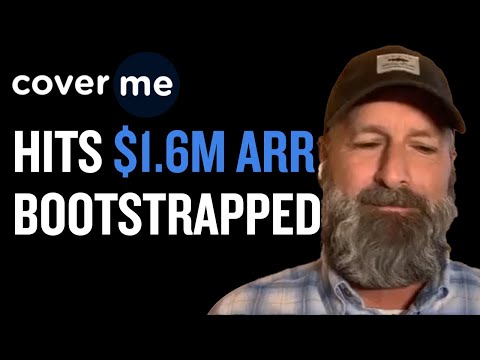
How CoverMe Bootstrapped to 36 Customers and a Projected $1.6M Revenue Year on a 22-Person Team (Interview with Founder and CEO Gregg Phillips)
- Interview Date
- August 4, 2021
- Interviewee
- Gregg PhillipsFounder and CEO
Company Metrics at Interview Time
Revenue (2021, projected)
$1.6M
Customers (2021)
36
Team Size (2021)
22
Engineers (2021)
13
Line of Credit
$1.125M
Historical Snapshot
These numbers come from Gregg Phillips during the interview recorded in August 2021 and are a historical snapshot, not current figures. The $1.6M revenue figure was his projection for a year that had not yet finished. See CoverMe’s current numbers.
Key Takeaways
- 01CoverMe was founded in 2016 and generated $180K in its first year of revenue
- 02CoverMe expected to finish 2021 at about $1.6M in revenue with no outside equity raised, and Gregg said ARR would land a little heavier than that
- 03Gregg and his co-founders invested approximately $800,000 of their own capital into the business
- 04The team grew to 22 people, including 13 engineers and 2 quota-carrying sales reps
- 05CoverMe serves 36 customers across hospitals and nursing homes as of August 2021
- 06A nursing home brings in around $25,000 a year, and Gregg noted that very few operators run only one home - most have two, three or four
- 07The company secured a $1.125M line of credit to smooth cash flow between $1M and $2.5M ARR
- 08Gregg believes CoverMe is approximately 50% below market pricing on both hospital and nursing home contracts
- 09Gregg planned to start looking at a first raise of $4M to $5M in Q4 2021 and floated a possible valuation of maybe $12M, adding that they were "still fuzzing around about it"
Company Metrics at Time of Interview
| Metric | Value | Source |
|---|---|---|
| Revenue (first year) (2016) | $180K | Founder interview, Aug 2021 |
| Revenue (2021, projected) | $1.6M | Founder interview, Aug 2021 |
| Customers (2021) | 36 | Founder interview, Aug 2021 |
| Team Size (2021) | 22 | Founder interview, Aug 2021 |
| Engineers (2021) | 13 | Founder interview, Aug 2021 |
| Sales Reps with Quota (2021) | 2 | Founder interview, Aug 2021 |
| Founder Capital Invested | $800K | Founder interview, Aug 2021 |
| Line of Credit | $1.125M | Founder interview, Aug 2021 |
| Sales Rep Commission (Year 1) (2021) | 10% | Founder interview, Aug 2021 |
| Year Founded | 2016 | Founder interview, Aug 2021 |
Growth Breakdown
Revenue
Revenue: CoverMe generated $180K in its first year of revenue in 2016 and expected to finish 2021 at about $1.6M, with ARR running a little heavier than that, bootstrapped throughout. The team added $170,000 in ARR from three new customers in the month prior to the interview.
Customers
Customers: The company had 36 customers across hospitals and nursing homes at the time of the interview. Gregg put hospital pricing at between $5,000 and $12,500 a month depending on the size of the hospital, and said a nursing home might bring in around $25,000 a year, adding that the company believes it is about 50% beneath the market on both.
Team
The team grew to 22 people, with 13 engineers and 2 quota-carrying sales reps. Gregg and one co-founder each contribute roughly half their time to sales alongside the dedicated sales team.
Funding
CoverMe was built entirely on $800,000 of founder capital and a $1.125M line of credit used to smooth cash flow. The company was planning to explore its first outside equity raise of $4M to $5M in Q4 2021.
Growth Strategy
Bootstrapped Focus on Product and Market Understanding
For the first five years, CoverMe operated in a development-centric mode, investing founder capital to deeply understand the healthcare payment market before scaling sales. This allowed the team to build an AI-driven marketplace covering government programs, hospital financial assistance, and commercial finance options.
Pivot to a Broader Marketplace Model
The company shifted from a narrow niche into a full patient payment marketplace, enabling hospitals and nursing homes to connect patients with finance solutions, drug discount programs, and community assistance programs in real time. This expanded the addressable market and increased the value proposition per contract.
Sales Team Build-Out with Quota and Commission
CoverMe established a structured sales team with two quota-carrying reps, each earning a base salary plus 10% commission on first-year revenue and residuals. Gregg described the ability to sell a meaningful volume of product as achievable for a rep working the market actively.
Pricing Expansion
Gregg identified that CoverMe is approximately 50% below market on both hospital and nursing home pricing. The company was planning price increases supported by new value propositions being added to the marketplace, expecting customers to absorb the increases based on demonstrated ROI.
Targeting Multi-Site Nursing Home Operators
CoverMe began focusing on nursing home operators who manage multiple facilities, recognizing that a single operator with two to four homes multiplies contract value. The company was working to right-size its pricing for this segment to accelerate growth on the nursing home side.
Best Quotes
“I have. I actually started as a healthcare administrator. I ran parts of the Health and Human Services Commission in Texas. And one thing I realized was that government in particular is really, really bad at eligibility and enrollment and all of these things that are out there.”
“I'm not a stupid person, but I can't figure this out. So we took some of the lessons we learned from enrollment. We took some of the lessons we learned from eligibility over the last thirty or forty years and really turned them into an AI driven solution that helps people find ways to pay for their health care in real time.”
“This year, we will finish the year at about $1.6 million. Our ARR will be a little bit heavier than that because we're really diving off into a, I guess, we sort of consider this game time. And so we're amping up our sales and marketing efforts. I have a new sales director, we have a new marketing director.”
“$1,125,000 total in a line of credit.”
“The future of CoverMe and the future of where this company ends up is really in the hands of some of these young, smart people that are developing the marketplace and developing all the products in the future. So it's been great.”
What Happened Next
This interview captures CoverMe at a specific moment in August 2021, when the company was on track to finish the year at about $1.6M in revenue across 36 customers and was preparing to explore its first outside equity raise. Gregg Phillips had been through cancer treatment and said he was going in the following Thursday to find out whether it was all gone. For current revenue, customer count, team size, and funding status, visit the live CoverMe company profile.
View CoverMe’s current profile and metricsFull Transcript
Chapters
- 0:00Introduction and Company Overview
- 0:17Origin Story: Healthcare Administration to Health Tech
- 0:46Building the AI-Driven Payment Marketplace
- 1:29Payment Sources: Government, Hospital, and Commercial Finance
- 2:36First Revenue in 2016 and Early Growth
- 5:172021 Revenue and Sales Team Expansion
- 5:44Team Size, Engineers, and Sales Structure
- 7:44Battling Cancer and the Team Stepping Up
- 9:14Bootstrapped Journey and Line of Credit
- 10:38Plans to Raise in Q4 2021
- 11:32Customer Count: 36 Hospitals and Nursing Homes
- 12:12Pricing by Customer Segment and Market Opportunity
- 13:10Famous Five: Books, Mentors, and Personal Life
Introduction and Company Overview
Nathan Latka
00:00Hey, folks. My guest today is Gregg Phillips. He's the Founder and CEO of CoverMe, a health tech SaaS company using AI to help people find payment sources for health care bills in a real time marketplace. He's bootstrapped and profitable. The team has doubled along with revenue each of the last four years. Gregg, you're ready to take us to the top?
Gregg Phillips
00:15I'm ready to go. Let's do it.
Origin Story: Healthcare Administration to Health Tech
Nathan Latka
00:17All right. What gave you the idea to do this? Did you have a health scare yourself and a bunch of medical bills or what happened?
Gregg Phillips
00:22I have. I actually started as a healthcare administrator. I ran parts of the Health and Human Services Commission in Texas. And one thing I realized was that government in particular is really, really bad at eligibility and enrollment and all of these things that are out there. And, and so once I got out and sort of escaped, I thought, well, I'm gonna try to make I'm gonna try to make a living in government. And then as this
Building the AI-Driven Payment Marketplace
Gregg Phillips
00:46group grew on and on and on, I realized, you know what? You can't scale this. I can't do it. And so as we started easing off into long term care and easing off into the hospitals, About that time I got sick, I had cancer, had all kinds of nonsense going on and fussing and fighting with the insurance companies about what they would pay and why they would pay something and why they wouldn't. Like, this is absolutely
01:08insane. I'm not a stupid person, but I can't figure this out. So we took some of the lessons we learned from enrollment. We took some of the lessons we learned from eligibility over the last thirty or forty years and really turned them into an AI driven solution that helps people find ways to pay for their health care in real time.
Payment Sources: Government, Hospital, and Commercial Finance
Nathan Latka
01:29What are some of those ways to pay for health care in real time?
Gregg Phillips
01:32Well, you've got a plethora of government programs ranging from Medicaid, Medicare, you've got workers'comp, you've got all kinds of government based programs. But there are also these days, you know, tons and tons of hospital based programs. So the hospitals need to have ways to get people to pay for their healthcare that can't. So they have financial assistance programs, they have charity programs, they have cash discount programs, They have all sorts of other programs. And then
02:00finally, the commercial finance markets have really stepped up to the plate in a pretty big way here, providing all sorts of low interest, no interest loans to help people pay for their hospital bills. And it's starting to make a difference, starting to make an impact. The hospitals need it because they need to keep their cash flow moving. Patients need it because people like me don't want to spend our life savings on our health care bills. And
02:27once that's, you know, once you sort of blend all that together, pop a little AI in on top of it and a whole lot of work and voila, you've got a real time solution.
First Revenue in 2016 and Early Growth
Nathan Latka
02:36So when did you guys get your first dollar revenue? What year?
Gregg Phillips
02:412016, our first dollar in this business.
Nathan Latka
02:462016. Wow. And how much revenue do that year? Do you remember?
Gregg Phillips
02:50Yeah. Like a 180,000. It was really, really spooky, spooky and scary. We we had come out of doing, I tell people at the time that I crashed and burned this business a couple times, one of the ways I did it was, was saying, I'm not going to do any more state based business ever again, I don't like working with state governments, I'm just not going to do it. Rather than sort of easing into that pronouncement, I
03:13just said, Okay, we're done. That's it. I'm cutting it off. And then we started looking around like, Okay, now what do we do? So we went into a very dev centric timeframe, really over the last five years where we've spent a lot of time really trying to own and understand the market, but also growing because we decided to bootstrap and push our own, you know, some of our own capital upfront.
Nathan Latka
03:36How much of your own money did you put in?
Gregg Phillips
03:38We put in about 800,000 total.
Nathan Latka
03:40How'd that feel? Was it scary?
Gregg Phillips
03:42It was a little scary, know, at times more scary than others. But as we began to realize just how significant the market was, and we sort of made a pivot from just being a very narrow niche to now where we actually provide a marketplace for our patients where they can go, or our hospitals, where they can take their patients into the marketplace and not only find them finance solutions, but we can find them drug discount programs.
04:10We can find them community programs that help and serve them and really help make the patient's health journey a little bit better.
Nathan Latka
04:17Gregg, who is we? You mentioned co founders. Is there a bunch of you guys?
Gregg Phillips
04:21There's two of us or the
Nathan Latka
04:22You three split it 33, 33, 33 or what?
Gregg Phillips
04:27No. I own a little bit more than a majority and my two co founders own the rest.
Nathan Latka
04:31Okay. And so where did you go? I mean, were you, like, super wealthy from a family or something? Where did you get $800,000 to put in the business?
Gregg Phillips
04:38Yeah, just over time. I'm kind of an old entrepreneur. So over time we had tried to do some different things. And I had built a couple of small sort of tech companies that were centered around automating different pieces and parts of healthcare and automating that back in the day, automated the training process. Back before learning management systems were cool, we did a literacy training program that we pushed worldwide, trained 250,000 people everywhere from from Kenya to
05:09The Ukraine to to the jungles in Thailand using the using satellite discs and buying transponder time. So
2021 Revenue and Sales Team Expansion
Nathan Latka
05:17Wow. Okay. So that makes sense. You use $800,000 to get the MVP, you do $1.60 or $180,000 your first year. How much revenue do you do this year, you think?
Gregg Phillips
05:25This year, we will finish the year at about $1.6 million. Our ARR will be a little bit heavier than that because we're really diving off into a, I guess, we sort of consider this game time. And so we're amping up our sales and marketing efforts. I have a new sales director, we have a new marketing director.
Team Size, Engineers, and Sales Structure
Nathan Latka
05:44How many people total are on the team?
Gregg Phillips
05:4622.
Nathan Latka
05:47And how many folks are engineers?
Gregg Phillips
05:49Oh gosh, 13.
Nathan Latka
05:50And how many salespeople?
Gregg Phillips
05:52Three plus half of me and half of my co one of my co founders.
Nathan Latka
05:59How many of the three or four have a quota?
Gregg Phillips
06:03Two.
Nathan Latka
06:04Okay, do have a quota. What's their quota target?
Gregg Phillips
06:07Have just, this is newly established, so you're here and here first. So anybody that's complaining that you might publish this, you feel free to do it. What decided to do was, look, we think the market is significant here. And we've tested into this enough with our products to really understand that if somebody's really working this
06:29market, either in the hospital side or on the nursing home separate sides. The ability to sell a million dollars worth of the product is easy and doable. So we pay them a pretty good base, a decent base, we pay them $100,000 as a base, and then 10% on first year of the revenue, and then there's some residuals.
Nathan Latka
06:52That's great. And just to understand your growth rate, so if you're going to finish the year at 1.6 in terms of AR, like what was your monthly revenue just last month?
Gregg Phillips
06:59Oh, let's see, I can tell you, we just added three new customers, so we added $170,000 in revenue last month.
Nathan Latka
07:10In ARR?
Gregg Phillips
07:11In ARR, correct.
Nathan Latka
07:13Got it. So you added to about 22,500 of MRR, but what was total MRR last month?
Gregg Phillips
07:20One point or excuse me, one one, 100 and I think.
Nathan Latka
07:2631,000. And where was it exactly one year ago in the middle of COVID?
Gregg Phillips
07:30Oh, we struggled a little bit last year. We dipped all the way down when we were dragging around about a 100 a month.
Nathan Latka
07:36Okay.
Gregg Phillips
07:37And it was a tough time. I was sick and had cancer and, you know, everybody was struggling through things and selling into hospitals.
Battling Cancer and the Team Stepping Up
Nathan Latka
07:44You just had cancer. This was just last year.
Gregg Phillips
07:47Yeah, in fact, next Thursday, I go in to see if it's all gone. So- Oh, wow. See how it goes.
Nathan Latka
07:55Well, hope you're well and it's all better and you're super healthy now.
Gregg Phillips
07:59I'll you what, One of the greatest things of all, Nathan, that happened during all of this effort for me personally, I'd say, sort of chokes me up a little bit to think about it. As an entrepreneur, you sort of have this belief that, you know, I'm sort of important to my company. And if I'm not here, what's going to happen? It's amazing the way some of the leaders in this company stepped up, My co founders in
08:25particular, but also people really across the board from our automated testing teams to our chief architects really stepped up into or into fill some roles that were kind of leadership roles in a way that I had left, you know, as a void. I was working maybe halftime or so, but people really stepped up. And I think the most valuable lesson that I personally learned during all of this was, I do have a few ideas. And the
08:54company was in large part founded on a few of my ideas. But the future of CoverMe and the future of where this company ends up is really in the hands of some of these young, smart people that are developing the marketplace and developing all the products in the future. So it's been great.
Bootstrapped Journey and Line of Credit
Nathan Latka
09:14I love hearing that. That's wonderful. And you've done all this bootstrapped, right?
Gregg Phillips
09:17We did.
Nathan Latka
09:18Yeah. Any plans to raise or you're going stay bootstrapped?
Gregg Phillips
09:21Yeah. When we first set out, you know, actually sort of sought counsel from you, you probably don't even remember it, but when we first started dragging into this thing, you know, I was really focused on, I don't want to raise. I want to keep this equity for myself and for my co founders. And so we embarked on that. But we had this pact between us that from 0 to 1,000,000 in ARR, we would try to just
09:46keep blowing ourselves the money, generate as much cash as we can to keep the thing moving. Between one and two, one and two point five, we thought if we need to borrow, get some commercial debt or we need a line of credit or something like that to sort of even out the cash flow, we'll do that, which we did.
Nathan Latka
10:02How much did you raise in debt?
Gregg Phillips
10:04$1,125,000 total in a line of credit.
Nathan Latka
10:07Okay.
Gregg Phillips
10:08And I don't think there's any I don't think we have any of it out right now.
Nathan Latka
10:14I'll double check on that.
Gregg Phillips
10:16But anyway, our point was that once we got to that 2,000,000, 2,500,000 range, we felt like our margins were strong enough to support
10:26getting us there, but also that would put us in a good position and a good place to start to scale this thing. And that's where we find ourselves down. We're going to start looking at that raise in Q4.
Plans to Raise in Q4 2021
Nathan Latka
10:38How much is the right amount?
Gregg Phillips
10:40We're still fuzzing around about it. Know, to scale this thing and do it right, think we need 4 or 5,000,000.
Nathan Latka
10:47Yep. Yep. And what do you think the valuation could be?
Gregg Phillips
10:52Well, we're sitting down to talk about this here in about a month or so, but you know, I think we're probably realistically looking at maybe maybe one point, maybe 12,000,000.
11:07Pre No, you're good.
Nathan Latka
11:09No worries.
11:11Do you think if you raise 5,000,000 on a 12,000,000 pre something like that?
Gregg Phillips
11:15Yeah, something like that. We're still fuzzing around about it. One of the exciting things about where we are today is that bringing in these new salespeople and watching them perform quickly and out of the gate has really given us some confidence to start to make other investments and do other things we need to do.
Customer Count: 36 Hospitals and Nursing Homes
Nathan Latka
11:32How many customers
11:33are they managing now? How many customers total?
Gregg Phillips
11:3636 total.
Nathan Latka
11:38Okay. And they're hospitals, right?
Gregg Phillips
11:40Hospitals and nursing homes. A little bit different. They're slightly different markets in part because of the way they're funded. So a nursing home might bring it, you know, might bring us 25,000 or so a year, a couple thousand a month for a home. But because very few operators only have one home, they might have two, three or four. We're just now getting into understanding that market a little bit better and maybe right sizing our pricing that
Pricing by Customer Segment and Market Opportunity
Gregg Phillips
12:12will allow us to bring in some additional nurse stems. So that's exciting to us and we're excited about it. We think we can get that revenue per contract, I'll call it as we call it up to probably the 50 or 60 range on the nursing home side. On the hospital side, it's a little bit different because we have several different products. Hospital size, depending on the size of the hospital ranges between 5,000 a month and maybe
12:3612,500 a month. Have one that's a little bit bigger than that. But all in all, shakes out to around between the two of them together, hospitals are about, give or take a little bit, about 100,000 a year and nursing homes are about 25,000 a year. We think we're about 50% beneath the market on both of them. So we're going to start looking at some price increases. We've got some new value props that we're adding into marketplace. And we
13:03think our customers will easily be able to absorb it based on the ROI for our product offering.
Famous Five: Books, Mentors, and Personal Life
Nathan Latka
13:10Gregg, it's a hell of a story, man. We're rooting for you. Let's wrap up here with the Famous Five. Number one, favorite book.
Gregg Phillips
13:16Man, after I got sick, I started reading the Bible two years ago. Next week, I will have read the Bible for 732 days in a row. So something I get leadership
13:30ideas from, I get commitment ideas from, and all sorts of feel good components to that. So that's an easy one.
Nathan Latka
13:39Gregg, is there a Founder you're following or studying?
Gregg Phillips
13:42You know, Nathan, I don't want to blow your horn too much, man. And I guess people have probably done this. I haven't listened to all your podcasts, but you have been very important to us in our growth. We look to not only your Slack channels for ideas and some of your founders that you connect us with, but also reading your book and listening to your podcast. We have more good ideas from you than just about anybody
14:03else in the space.
Nathan Latka
14:04Oh, man. I appreciate that, Gregg. Thanks so much. I'll pass it on to my team. We have a great support system running the whole thing. I appreciate that. Number three, what's your favorite online tool for building CoverMe?
Gregg Phillips
14:14Oh, that's easy. There's a San Diego based startup called Rehinged. They are a spinout from a VC company out there, and these guys are absolutely killing it. They take data and they apply AI to it and push it into sort of an easy to use dashboard for marketing purposes. And in fact, I just invested some of my own money into that deal. Rehans is going to be a superstar in that space.
Nathan Latka
14:39Interesting. They have a very, very AI heavy site. So it does not surprise me, very interesting. What's your situation? Married single kids?
Gregg Phillips
14:49Man, that's complicated. I've got two great kids. I've got two amazing grandkids. I'm really good at my job, but not super great at relationships. You
Nathan Latka
14:57know, you and me both.
Gregg Phillips
14:59Get through life and it's all good.
Nathan Latka
15:01So not married, two kids. Is that right?
Gregg Phillips
15:04That's right.
Nathan Latka
15:04And how old are you, Gregg?
Gregg Phillips
15:06I am I'll be 61 next month.
Nathan Latka
15:0961 years young. I love that. And how much are you sleeping these days? How many hours?
Gregg Phillips
15:14Five or six hours.
Nathan Latka
15:15Okay. Pretty good. Alright. Take us home here. Someone you wish you knew when you were 20.
Gregg Phillips
15:20Man, I wish I wish I would have known that you don't have to work for other people, that you could do this yourself. If you just get in, be committed, stay going where you go, and keep your eyes on the prize, and always step toward the fire, you know, anybody could do this.
Nathan Latka
15:35Guys, we're thinking positive thoughts. Gregg is going to go into his doctor next week and get the all clear. He battled cancer hardcore last year and realized the problems associated with paying bills. It's a nightmare. He's a smart dude, but it's hard to figure out. That's why I built CoverMe. CoverMe is now growing very quick. They were doing $100,000 a month about a year ago, now doing $131,000 a month across 36 hospitals and nursing homes who
15:56pay them to help their patients figure out ways to pay more effectively using things like workers'comp, Medicare, cash discount programs, charities, things like that. They've done this bootstrapped, which we love on a team of 22 people. Gregg owns about 55% of the business. Gregg, thanks for taking us to the top.
Gregg Phillips
16:11Nathan, thanks for everything.
Nathan Latka
16:14One more thing before you go. We have a brand new show every Thursday at 1PM central. It's called Shark Tank for SaaS. We call it deal or bust. One founder comes on, three hungry buyers, they try and do a deal live, the founder shares back end dashboards, their expenses, their revenue, ARPU CAC, LTV, you name it, they share it and the buyers try and make a deal live. It is fun to watch every Thursday 1PM Central.
16:40Additionally, remember these recorded founder interviews go live. We release them here on YouTube every day at 2PM Central. To make sure you don't miss any of that, make sure you click the subscribe button below here on YouTube, the big red button and then click the little bell notification to make sure you get notifications when we do go live. I wouldn't want you to miss breaking news in the SaaS world, whether it's an acquisition, a big fundraise,
17:02a big sale, a big profitability statement or something else. I don't want you to miss it. Additionally, if you wanna take this conversation deeper and further, we have by far the largest private Slack community for B2B SaaS founders. You want to get in there. We've probably talked about your tool if you're running a company or your firm if you're investing. You can go in there and quickly search and see what people are saying. Sign up for
17:23that at nathanlatka.com/slack. In the meantime, I'm hanging out with you here on YouTube. I'll be in the comments for the next thirty minutes. Feel free to let me know what you thought about this episode and if you enjoyed it, click the thumbs up. We get a lot of haters that are mad at how aggressive I am on these shows, but I do it so that we can all learn. We have to counter those people. We got
17:43to push them away. Click the thumbs up below to counter them and know that I appreciate your guys'support. All right. I'll be in the comments. See you.