
Founder Interview
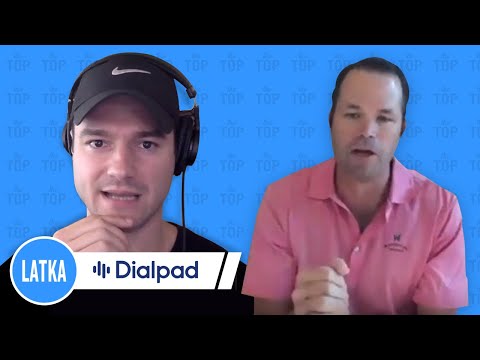
How Dialpad Reached Over 60,000 Paying Customers and Net Revenue Retention North of 125% (Interview with Co-Founder Craig Walker)
- Interview Date
- October 9, 2019
- Interviewee
- Craig WalkerCo-Founder
Company Metrics at Interview Time
Total Customers (All Products) (2019)
Over 60,000
Net Revenue Retention (2019)
North of 125%
Total Funding Raised (2019)
About $122M
Team Size (2019)
500
Avg Contract Value (Mid-Market) (2019)
About $50,000 per year
Historical Snapshot
These numbers were reported by Craig Walker during the interview recorded in October 2019 and are a historical snapshot, not current figures. See Dialpad’s current numbers.
Key Takeaways
- 01Dialpad was founded in 2011 and had raised about $122M in all-equity funding by October 2019
- 02The company had over 60,000 paying customers across all products including UberConference as of 2019
- 03Net revenue retention was north of 125% as of 2019
- 04The average mid-market customer paid about $50,000 per year
- 05Total team size was 500 people, including 150 engineers and 75 quota-carrying reps
- 06Dialpad had offices in San Francisco, Vancouver, Kitchener-Waterloo, and Bangalore
- 07Box was Dialpad's first major customer, starting with a $5,000 per month order
- 08Dialpad acquired TalkIQ roughly two years before the interview to add real-time AI transcription and coaching
- 09Investors included Google Ventures (Series A), Andreessen Horowitz (Series B), Amasia (Series C) and ICONIQ Capital (Series D)
- 10UberConference was built internally and launched in 2012 as a freemium conferencing product
Company Metrics at Time of Interview
| Metric | Value | Source |
|---|---|---|
| Year Founded | 2011 | Interview, Oct 2019 |
| Total Customers (All Products) (2019) | Over 60,000 | Interview, Oct 2019 |
| Engineers (2019) | 150 | Interview, Oct 2019 |
| Quota-Carrying Reps, Including CSMs (2019) | 75 | Interview, Oct 2019 |
| Team Size (2019) | 500 | Interview, Oct 2019 |
| Net Revenue Retention (2019) | North of 125% | Interview, Oct 2019 |
| Avg Contract Value (Mid-Market) (2019) | About $50,000 per year | Interview, Oct 2019 |
| Total Funding Raised (2019) | About $122M | Interview, Oct 2019 |
| Series D Round (2018) | $50M | Interview, Oct 2019 |
| Vancouver Office Headcount (2019) | About 90 | Interview, Oct 2019 |
| Kitchener-Waterloo Office Headcount (2019) | About 30 | Interview, Oct 2019 |
| Bangalore Office Headcount (2019) | 30 to 40 | Interview, Oct 2019 |
| AE Credit Window for Expansion (2019) | First 6 months post-close | Interview, Oct 2019 |
Growth Breakdown
Customers
By October 2019 Dialpad had over 60,000 paying companies across all products including UberConference. Craig Walker noted that stripping out UberConference and looking at Dialpad specifically brings that number down to a smaller figure. Counting free users too, he said, would add hundreds of thousands more.
Revenue Retention
Net revenue retention was north of 125% as of 2019, the number Walker said he tracks, and he described churn as very low but did not have the churn figures to hand. The expansion happens inside existing accounts: a customer often starts at headquarters and adds satellite offices later, and Dialpad's CSMs carry a quota for that growth.
Team
Dialpad had 500 employees total as of October 2019, with 150 engineers spread across San Francisco, Vancouver, Kitchener-Waterloo, and Bangalore. The go-to-market team included 75 quota-carrying reps of various types including AEs and CSMs.
Funding
Dialpad had raised about $122M in all-equity financing by October 2019, all of it to the balance sheet, across a Series A from Google Ventures, a Series B from Andreessen Horowitz, a Series C from Amasia and a Series D from ICONIQ Capital. Walker stated the company still had a substantial portion of the most recent $50M Series D in the bank and was just beginning to deploy it at the time of the interview.
Growth Strategy
Multi-Product Expansion
Dialpad grew by offering multiple products including its core phone system, a contact center product, and UberConference, allowing it to enter accounts through different buyers such as heads of sales, support, or IT. Selling the whole company's phone system to the head of IT is a top-down deal, while the "mid up" motion sells a sales or support org a solution for its own piece.
AI Differentiation via TalkIQ Acquisition
Dialpad acquired TalkIQ roughly two years before the interview to embed real-time transcription, sentiment analysis, and sales coaching directly into every call. Walker emphasized that training the AI on each customer's specific lexicon and product names made the system uniquely accurate compared to generic voice datasets.
Freemium Entry with UberConference
UberConference launched in 2012 as a freemium viral conferencing product, whose heavy usage now gives Dialpad a large body of training data for its AI systems. Walker described it as a great entryway into the company and its broader product suite.
CSM-Led Expansion with AE Handoff
After a sale closes, AEs retain credit for expansion during the first six months to incentivize a smooth land-and-expand motion, after which CSMs carrying their own quota take over account growth. Walker said the company had iterated on this model and the current structure had CSMs owning expansion revenue.
Flat SaaS Pricing to Remove Friction
Dialpad deliberately avoided usage-based billing, offering unlimited usage at a flat SaaS price to eliminate the bill-shock common in legacy telephony. Walker said this was a core philosophy to make the product feel like a normal SaaS subscription rather than a traditional phone bill.
Best Quotes
“Pure play SaaS. We believe that business communications are, yeah, the way you work has changed entirely over the last ten years and your communications have to go with it.”
“We acquired this company called TalkIQ about two years ago. They were funded by Salesforce and a couple other great VCs. ... You get real time transcription, real time sentiment analysis, real time coaching.”
“Average customer at the mid market, you know, let's call it about $50,000 a year for their team.”
“Yeah, so we have over 60,000, customers using our products.”
“So if you add it all up, about $122,000,000”
“Yeah, I love the VC questions, this is awesome. But yeah, we have net revenue of expansion of north of like 125%. So really kinda very healthy on the expansion side. That's the number I track.”
“Yeah, whole company is 500 folks.”
What Happened Next
This interview captured Dialpad at a specific moment in October 2019, when the company had over 60,000 paying customers across all products, about $122M raised, and a team of 500 people. Craig Walker said the company was only just starting to spend its $50M Series D, which it raised to grow the AI team and R&D and to expand its go-to-market. Visit the Dialpad company profile on GetLatka for current metrics and any developments after this recording.
View Dialpad’s current profile and metricsRun a software or AI company? Get interviewed by Nathan Latka and tell the story behind your numbers.
Full Transcript
Chapters
- 0:18Host Intro and Guest Welcome
- 0:47Origin Story: Starting Dialpad from Scratch
- 1:41What Dialpad Does: Cloud-Native AI Communications
- 2:24TalkIQ Acquisition and Real-Time AI
- 4:36Average Contract Value and Upsell Products
- 7:34Customer Count: Over 60,000 Paying Companies
- 9:35Funding History: About $122M, All Equity
- 10:48Net Revenue Retention North of 125%
- 13:58Team Size, Engineers, and Sales Reps
- 15:29ICONIQ Round, Runway and Burn Rate
- 19:08Revenue Growth Rate Discussion
- 21:03AI Moat and Voice Data Advantage
- 23:41Famous Five Rapid-Fire Questions
Nathan Latka
00:00Just got done editing this interview. You guys are gonna love it. Before I do that though, I want you to know that I'm going to be in the comments for the next thirty minutes or so answering your questions. If there's additional questions you want me to ask the CEO next time I interview them, leave them below. Or if you're just loving the data points I get CEOs to share, click the thumbs up button below. That's your
Host Intro and Guest Welcome
Nathan Latka
00:18way of telling me you're loving this stuff, I'll get you more of it. Additionally, again, I'll be in the comments answering any questions you have. Alright. For thirty minutes. Enjoy the interview. Hello, everyone. My guest today is Craig Walker. He's got twenty plus years of experience as an entrepreneur, venture capitalist, corporate executive, CEO, and attorney. He was the first entrepreneur in residence at Google Ventures and CEO of Dialpad Communications before it became Yahoo Voice. He also
00:40founded Grand Central Communications, which was acquired by Google and became Google Voice. Craig, you ready to take us to the top?
Craig Walker
00:46I'm ready to go.
Origin Story: Starting Dialpad from Scratch
Nathan Latka
00:47So did you spin this bad boy out of Yahoo Voice or did you start something new from scratch?
Craig Walker
00:51No. Started something new from scratch and the hardest thing with any startup is getting a great name or URL. And so we ended up buying the name back from Yahoo. They've been sitting on it ten years.
Nathan Latka
01:02Well, they could use all the cash in the world right now. So I'm... Now were you able, I mean, you have to pay a pretty penny or did you work out a nice deal?
Craig Walker
01:10No, it was a great deal. One of my buddies was still at Yahoo. You know, we got acquired in 2005. I called him in about 2013 and he was like the one remaining guy. I'm like, Hey, is there any way I can buy this back? And they made a pretty decent deal. This was right before they got acquired by Verizon. So they were, they were open minded, I'd say.
Nathan Latka
01:29Less than $100 for the domain or, or more?
Craig Walker
01:29Less.
Nathan Latka
01:29Oh, wow. Okay. I would say that's a pretty good deal for a pronounceable domain name. That's great.
Craig Walker
01:36Yeah. But ends in.com seven letters and it's somewhat related to your industry.
What Dialpad Does: Cloud-Native AI Communications
Nathan Latka
01:41It's pretty good. All right. Tell us about the company. So, so what do you guys do and are you pure play SaaS?
Craig Walker
01:46Yeah. Pure play SaaS. We believe that business communications are, yeah, the way you work has changed entirely over the last ten years and your communications have to go with it. So all kind of mobile first served out of the cloud, but beyond that, phone companies always used to be about just connecting two people and have a high quality call. We we have added artificial intelligence to all your calls, so now it's about not just having a
02:12high quality call, but, hey, taking notes automatically from that call, flagging follow-up action items from that call, and just pulling a lot of value out of that conversation that's pretty much lost today.
TalkIQ Acquisition and Real-Time AI
Nathan Latka
02:24Let's not get too deep here, but I am curious to go into the tech. So are you basic, I mean, are you transcribing real time and there's sentiment analysis? How many hours of voice have you put into the machine to train the algorithm?
Craig Walker
02:35Yeah. So we acquired this company called TalkIQ about two years ago. They were funded by Salesforce and a couple other great VCs. And so we acquired them, built them into our telephony agency. You get real time transcription, real time sentiment analysis, real time coaching. So if someone asks me a question or has a sales objection, I can get a battle card of how to handle that, how to handle that question or objection. And yeah, that's, that's
03:03literally built into all the, all the calls and it just kind of happens naturally.
Nathan Latka
03:08Now that was a $50,000,000 deal with, with TalkIQ. I assume was, I mean, was that all cash up front or stock involved?
Craig Walker
03:14No, there was a lot of that with stock. I mean, the end of the day, the value is you have this trillion dollar industry of phone conversations and putting those two together, you're able to change what happens on those calls. I think everyone wanted the stock upside rather than just a cash out.
Nathan Latka
03:30Yeah, because they had raised $22,000,000 in venture capital, A 50,000,000 is an okay exit for 22 raise, but not great. Those VCs would rather say, you know what, we'll convert into something in a Dialpad. We really believe in what they're going after. It's not a write down then.
Craig Walker
03:41Yeah, for sure. That is legitimately not an exit. Like the ultimate exit is what goes into Dialpad and then happens.
Nathan Latka
03:47Yep. Very interesting. Now did you... The asset in TalkIQ, right? So you add a lot of things to Dialpad but did they have a massive library of voice data? I mean, that's, that's really, who's going win this space is who has the largest sample size.
Craig Walker
04:01Exactly. Well, that was the beauty of putting them into Dialpad because we already have hundreds and hundreds of millions of minutes a month going through the system. So once we put those two together, we're training that engine every single day, every single minute, every single, you know, every single hour. So it's almost like, you're right though. Like, it's like hours on the freeway of self driving cars. Like it just takes millions and millions, millions of hours
04:26to get that good. The good news is it's like, I've seen it just over the last six months go from good to great. And I just can't wait to see what keeps happening because it just gets better.
Average Contract Value and Upsell Products
Nathan Latka
04:36So what's the sweet spot, right? So if I forced you into an average, which I know are dangerous in these kinds of sales, because you probably have power laws happening all over the place, but the average customer is gonna pay you what per year to use the technology?
Craig Walker
04:48Average customer at the mid market, you know, let's call it about $50,000 a year for their team.
Nathan Latka
04:55Okay, and what are you upselling against? So teams, so number of seats, what are their upsells?
Craig Walker
05:00Okay, so you have your phone system that you, is kind of the baseline, you can replace a phone system, and then we have a call center product or a contact center product that does a support version or a sales version, which is literally just placing a of calls, receiving a ton of calls, allowing supervisors to coach, and having the AI included in all of that. So those are the big ones. Then we also have a conferencing
05:24product called UberConference that does very, very seamless, super easy conference calling, and it too has the same transcription and AI.
Nathan Latka
05:33Did you guys acquire UberConference or did you build that internally?
Craig Walker
05:36No, we built that internally. And back in the days before we bought the name Dialpad, we had this idea that it was going be Uber Communications, UberConference, Uber Meeting, Uber Voice, and then Uber became Uber. So we had to change all of our, all of our plans.
Nathan Latka
05:51I want to know who you paid to do the jingle where, I mean, I still remember it's like, you know, it's like, you've been waiting on the line. You're waiting on your conference call.
Craig Walker
05:51That
06:01was the, that was the greatest free marketing ever. So my co founder Alex Cornell wrote that one weekend and he asked me if he could, and he played it, wrote it, did it all himself. We put it in the product on Monday morning and it's never left. It's like, you didn't go on Twitter today.
Nathan Latka
06:16It's so funny.
Craig Walker
06:18It's amazing.
Nathan Latka
06:19I love that. All right, good. So that's your, now that obviously enabled you, was that your first foray into capturing large amounts of voice data for you to start training your systems?
Craig Walker
06:29Yeah, that was, I mean, that launched in 2012, so that was far before, you know, training any AI systems. But yeah, that was, it's a great entryway into the products, it's a great entryway into the company, it's a freemium viral product, so it is a ton of usage, ton of users, ton of high velocity stuff that legitimately gives us a ton of training data now.
Nathan Latka
06:51Yeah, okay. So when was founding year of Dialpad?
Craig Walker
06:552011.
Nathan Latka
06:562011, okay, good. And then walk me through like the first five customers. Remember how you got them?
Craig Walker
07:02Yeah, so Box was our first real customer and UberConference was our only product at the time and everything else had been like five seat, 10 seat, you know, really scrappy stuff. Then they came in with a $5,000 a month order and I legitimately blew my mind. Could not believe someone was gonna give us that much money. And now you look back at it and we have we have multiple multimillion dollar deals and that first 5,000 of
07:28those still really, really stands out as like, oh my God, like this is a real thing that real businesses are willing to pay for.
Customer Count: Over 60,000 Paying Companies
Nathan Latka
07:34And so now how many customers have you scaled to today, seven, eight years later?
Craig Walker
07:38Yes, we have over, oh no, it's getting all choppy.
Nathan Latka
07:44I hope, hopefully you've You're good, over how many?
Craig Walker
07:46Okay, I'm good. Yeah, so we have over 60,000, customers using our products.
Nathan Latka
07:52That, I mean, that's healthy, right? So when you look at the sales motion, right? You look at Expensify, which has this kind of the same number, they obviously are going bottoms up hardcore. The janitor submits a receipt, they then upsell to the team. Are you bottoms up or top down?
Craig Walker
08:07You know, it depends, like if you're trying to sell the, the nice thing having a couple different products, the call center versus the phone system. Call center, you can go in and sell at any time, go sell to the head of sales, go sell to the head of support. Trying to do the whole company's phone system is is total tops down, right? Like, that's the head of IT, he's gonna do a full switch, rip out his
08:31legacy stuff, and is gonna switch everything to the cloud. That's a top down one. The bottoms up though, kind of like mid up is you go into like the sales org or the support org and you sell them a specific solution for their piece.
Nathan Latka
08:44Are you upselling any usage based kind of upselling? You mentioned product based upselling and seat based upselling, but any usage based?
Craig Walker
08:51You know, we've, to date we've included unlimited usage in all of our products. We've kind of hated the fact that telephony is this, is this world where you have, you know, like these, you think it's going be one price and it turns out to be another when you get your bill. We always wanted to turn that into just a normal SaaS. You, when we say it's X, it is X. So there is no kind of upsell
09:13on usage. Just, we just let you use.
Nathan Latka
09:16That's good. Now those 60,000 number you gave me, are those paid seats across logos or is that the total number of brands, the total number of logos using you?
Craig Walker
09:23That's the total number of brands, different companies using the product. Yeah.
Nathan Latka
09:27That's great. And all paid, no free?
Craig Walker
09:29All paid. Like if we included free, it's, it's, you know, it's hundreds of thousands more than that.
Funding History: About $122M, All Equity
Nathan Latka
09:35That's great. Okay, talk to me about, again, how you funded this bad boy. So did you bootstrap in the beginning or how much have you raised to date?
Craig Walker
09:41Yeah, so I was running the Google Voice product and then left Google to go do this, but I was lucky enough Google Ventures let me be their entrepreneur in residence. So I got to spend the first six months still getting paid by Google, working on the idea. And then Google Ventures did our series A, Andreessen Horowitz did our series B, group out of Singapore called Dimasia did our series C, then ICONIQ Ventures did our series D.
10:06So if you add it all up, about $122,000,000
Nathan Latka
10:06All equity?
Craig Walker
10:06All equity.
Nathan Latka
10:11All to the balance sheet or any secondary?
Craig Walker
10:13All to the balance sheet.
Nathan Latka
10:15Really? Okay. I mean, I would have guessed that ICONIQ round, would have started seeing at least maybe some go to secondary considering those early folks have been in for what, eight years now, right?
Craig Walker
10:23Yeah, that's right. But I think at the end of the day, it's still this massive upside and it's still this giant, you know, voice and telecommunications is one of the last massive markets. It's yet to really make a significant migration to the cloud. So if we can get this right, and if we can get the right product market fit and the right everything, like the sky's the limit. So at the end of the day, don't think
10:46anyone was looking to get out.
Net Revenue Retention North of 125%
Nathan Latka
10:48When you look at, you know, considering your contract size, you said the average husk are paying call it $4,000 a month or about $50,000 per year. You should see some healthy expansion revenue in those kinds of cohorts. So when you look at your net revenue retention number and you peel it back, what is gross revenue churn on the cohort from a year ago and what have you expanded that same cohort by?
Craig Walker
11:05Yeah, I love the VC questions, this is awesome. But yeah, we have net revenue of expansion of north of like 125%. So really kinda very healthy on the expansion side. That's the number I track. I need to pull in my CFO for any more details.
Nathan Latka
11:22No. It's okay. I mean, guess I guess there, guess what I try and test out when I ask that question really is there are some companies where their gross revenue churn, because maybe SMB is like 50% annually, but their expansion is like 100% on the cohort. So net revenue retention is still 150. I'm just generally trying to get a sense of like what the ratio is between your gross revenue churn versus the expansion to get to
11:43the 125.
Craig Walker
11:44Yeah, it's, churn is very low. So like, I was at, I don't know if you went to the SaaStr Conference, but Bessemer did this pretty good display of like, here are all the benchmarks of every B2B SaaS company on all these churn metrics and retention and expansion. And we were, we were on the far right of good on every single one of those. So I just, again, I don't have the numbers off the top of my head.
Nathan Latka
12:08That's okay. Can you say definitely less than 10% gross revenue churn annually?
Craig Walker
12:13Yeah, I'd say definitely less than 10%.
Nathan Latka
12:15Okay, got it. So let's assume worst case, it is 10% expansion would then have to be at least 35% to get your 125 number.
Craig Walker
12:21Yeah, that's about right.
Nathan Latka
12:22Are you driving that? So there's a lot of people I've had on in a 50 to 100,000,000 ARR range where they're starting to drive expansion revenue and they're relying on their customer success managers to do that. And those CSMs are actually carrying a quota to drive more usage. Do you have CSMs and do they carry a quota?
Craig Walker
12:37We do have CSMs, and they do carry a quota. It is, it's funny you go back, we've gone back and forth a little bit between whether we have account managers with quota, CSMs without quota, CSMs working with sales reps with quota. It's it's always kinda like you're tweaking and tuning those things all the time. Currently, it is CSM.
Nathan Latka
12:59Okay. Interesting. So let me see if I can play this back to you because this is something that there's no right answer. Everyone's testing different things. You... Once a sale is made, the AE passes it off to the CSM. So between months twelve and twenty four and thirty six of the customer's life, it's the CSM's job to drive adoption, cross product adoption and expansion revenue.
Craig Walker
13:17That's right. And we do give our AEs credit for the first six months expansion.
Nathan Latka
13:17Oh, interesting.
Craig Walker
13:17Yeah. Cause I mean, lot of times you have a land and expander, like the first implementation isn't like, isn't the contract value. So we'll say, you know, they'll say, look, I want to put it into headquarters first and then next month we'll go put it in a satellite office and we'll deal with this other stuff. So for that we give
13:40that, that's we basically say the credit to that goes to the initial sale, and so the AE, the AE is the person they spent the most time with getting to the line of closing the deal. So them being the natural for six months, kind of like point of contact makes sense. CSMs are involved at that point, but six months after then they take over.
Team Size, Engineers, and Sales Reps
Nathan Latka
13:58Okay. So quantify, roll that all up for me. What's the total team size today?
Craig Walker
14:03Oh boy, of the whole company?
Nathan Latka
14:05Whole company.
Craig Walker
14:05Yeah, whole company is 500 folks.
Nathan Latka
14:07Okay. And how many of them are quota carrying reps of some sort?
Craig Walker
14:1275 of some sort.
Nathan Latka
14:14Oh wow. Okay. And then how many engineers?
Craig Walker
14:16150.
Nathan Latka
14:18All in the valley?
Craig Walker
14:20No, no, no, hell no.
Nathan Latka
14:21I was going say Craig, I'm not envious of your balance sheet right now, let's just put it that way.
Craig Walker
14:25No kidding, so we started in Downtown San Francisco and so we do have a kind of like core original hardcore engineering in San Francisco, but we opened an office in Vancouver, British Columbia, They've been fantastic. We have about 90 people there, and then when we acquired TalkIQ, they had an office in Kitchener, Waterloo, Canada, which is right at the University of Waterloo above Toronto. I think we have about 30 folks there. And then we also have
14:56engineers in Bangalore where we have another 30 to 40 folks there.
Nathan Latka
15:01So question for you, these different economic regions will give different incentives for R and D spend. Canada, you always have SR&ED financing. Do you take advantage of any of these localized economic programs or no?
Craig Walker
15:11No, no. TalkIQ did before we acquired them, but once we did the, whatever the rules and regulations didn't allow it. It turned out to be the SR&ED credits were going to be, for whatever reason, and we looked into it, I don't know why we didn't qualify once we acquired them, but we affirmably didn't.
ICONIQ Round, Runway and Burn Rate
Nathan Latka
15:29Yep. Okay, cool. Well, before we kind of wrap up here with the famous five, the last round you did with ICONIQ. So that would have been, I think 50,000,000 in 2018, right? So over a year ago, I mean, means right now you're either in acquisition talks with Salesforce, right? Or you're raising capital, which one is it?
Craig Walker
15:46Neither right now.
Nathan Latka
15:47Come on, I don't believe you.
Craig Walker
15:49Yeah. No, there's the... Look, it's a really exciting time, it's a really exciting space. Our job is just to head and stand and go execute, so we still have a ton of the ton of the ICONIQ capital in the bank. So we'll just use that for a while and and get to, you know, get to a better location before we do either of those
Nathan Latka
16:07So can I ask you a question? That 50,000,000 you raise, right? You're a VC, so you know most recommendation is raised for at least 18 months of runway. Did you intentionally raise for way more? How many months did you plan for on the 50,000,000?
Craig Walker
16:18You know, when we raised the 50,000,000, it's not like you're out of money when you raise and then you go, right? It was, we have plenty of money in the bank and then we decided we had just integrated the TalkIQ piece and said, okay, let's put, bring some more capital into the company and grow the AI team and really kind of grow the R and D efforts and then expand some go to market motions. But so
16:40we didn't really say, okay, this is going to buy us till, till why? There's a lot of assumptions of growth and churn and burn and all these other things that go into it. But at the end of the day, we're now twelve months past that or fourteen, fifteen months past that, and we're just starting to spend it now. You know, it was, we were not starting from zero, so it had plenty of additional cushion in.
Nathan Latka
17:04Yeah, so if you're just starting to spend the 50,000,000 you raised about a year and half ago, that means you have, you know, call it $45,000,000 to $50,000,000 in the bank right now, basically you're now just jumping into?
Craig Walker
17:11In the ballpark, yeah.
Nathan Latka
17:12Yeah, okay, and what are you comfortable, I mean driving burn to? Can you live with a million dollars a month in burn as you drive growth or is that too much?
Craig Walker
17:20I could live with a million dollars a month of burn.
Nathan Latka
17:20And why?
Craig Walker
17:20Yeah, I mean, that be, that would be forty months of, forty months of, of go to market and R and D and maturing product, maturing market, and you know, what we see is every legacy company moving to the cloud and getting off their on premise stuff. So, you know, thirty, forty months of burn is a wonderful place to have.
Nathan Latka
17:43Yeah, no, I agree. And then I think I have something wrong here. So 60,000 customers, you told me earlier, ARPU or ACV average is about $4,000 a month. Now, obviously if I multiply $4,000 a month times 60,000, that would mean you're doing a 250,000,000 a month in revenue.
Craig Walker
17:55250,000,000 a month.
Nathan Latka
17:57So Craig, you're really killing it, but no, that's obviously overestimated. Which of those numbers is not accurate or wrong?
Craig Walker
18:02The 60,000 is different companies using the product or using all of our products. So if you were to say, if you were to take UberConference and that includes years and years of UberConference companies, if you were to go with Dialpad specifically and take the UberConferencing out, that number comes, the 60,000 comes down to a smaller number. So, and then the number I gave you was not UberConference revenue.
Nathan Latka
18:02I see.
18:28Okay. So when you, when you look at just Dialpad customers, you're talking more like 5,000, 10,000 range?
Craig Walker
18:34That range sounds about right.
Nathan Latka
18:35Okay. And then last question I've got for you. So, the Forbes reported the valuation, we only had $70,000,000 raise was around kind of $250,000,000 bucks. Have you broken a billion dollar valuation on the ICONIQ round or do you think that's probably next year or next raise?
Craig Walker
18:48Yeah, we don't talk about our valuations, but, but I, you know, we don't, and we certainly don't focus on trying to be a unicorn. I think those, like the focus on valuation as a private company is a, is pretty terrible focus and gets people in, in the wrong spot. So our job is just go kick ass and then we'll see what the markets are like when we go raise money.
Revenue Growth Rate Discussion
Nathan Latka
19:08What have you grown revenue out of the past twelve months? You're still at a 100% year over year or are you too big to be doing that every year now?
Craig Walker
19:14That's getting, that's, that gets harder and harder to do is the, is the denominator grows. We're really happy with the growth rates that we have.
Nathan Latka
19:21Okay. Can you say it was between 50 and 100% in the past twelve months?
Craig Walker
19:25Yeah, you're in the ballpark.
Nathan Latka
19:27Okay. Let me ask you a different question. Over the next twelve months, are you happy with 50% year over year growth based off your size or do you need to push it?
Craig Walker
19:33Hell yeah. I mean, percent year over year growth is fantastic. I mean, go look at the last 30,
19:41SaaS IPOs, think other than Zoom, which is the world's greatest IPO in the history of of the Valley, I think anything like, you know, they're averaging around 30, 28, 30, 32% going into an IPO. So, yeah, anything north of that is really attractive.
Nathan Latka
19:58I mean, basically went from 150 to 300 raising no extra capital to pay the 18 months prior to IPO is incredible. A 100% year over year growth at that scale.
Craig Walker
20:07That kind of brings tears to everyone's eyes. Yeah. I mean, he's a really, really good dude on top of it. So, so like, it's, it's great to see, I mean, it's just, it was just really refreshing to see someone be able to do that. And I think it fires everyone up.
Nathan Latka
20:21Can you break a 100,000,000 next year in terms of revenue or does that feel like a stretch goal?
Craig Walker
20:26Yeah, no, we could, we could definitely do that.
Nathan Latka
20:28And last question, any talks to acquire DialSource or DialogTech, both interesting companies in your space?
Craig Walker
20:34No, it's easy or easy. First of all, I've done a million podcasts. This is like the most insightful or best questions ever.
Nathan Latka
20:42Is that, I don't know if it's a good thing or a bad thing, don't want you to hate me at the end of it.
Craig Walker
20:46No, it's hysterical because like you get a lot of people asking questions and it's clear that they may not really understand the underlying why they're asking the questions or they were told to ask it, like, this is like sitting through like a series E, Chin Avenue ballot. But no, we're not
Nathan Latka
20:46You have
AI Moat and Voice Data Advantage
Nathan Latka
21:03real, mean, Craig, the reason I'm asking is like, you are a rare example where you could literally argue whoever acquires the largest database of voice data the fastest because of economies of scale, if your AI machine learning is quick enough to ingest that cohort, that sample size, you really can build a defensible moat. So if that was the case, you would go buy as much voice data as you possibly could.
Craig Walker
21:24Yeah, I mean at a certain point, I mean at a certain point you have a minimum amount of training data you need for any language, right? And then at a certain point you have an overwhelmingly almost too much data to analyze. Like at the end of the day,
21:40your incremental gains, it's like lowering your golf score, right? Going from an 18 to a 12 is actually okay and relatively easy to do, but a 12 to an eight is like four times harder, and an eight to a six is eight times harder. Like it just gets harder and harder and harder. So you're getting these incremental gains. But no, you're right. Like we benchmark against Google's speech ASR, benchmark against their standard and their enhanced, and
22:08we exceed their standard, we're right at their enhanced levels. Ours is totally, one of the things that's really unique about ours is it gets trained on your specific company. So you, like, let's say customer A signs up for Dialpad, they can put in their own lexicon, their own dictionary, their own names of their products, their own names of their competitors, what they want their own battle cards to say, and then it's going to train on your
22:34specific data and no one else in the industry can do that. So that's what makes it really, really impressive is, you you could be some funky pharmaceutical company with weird product names and all of a sudden everything's just going to work really, really well for you and your support guys and your sales guys because it's trained on your specific data. That to me is the most, you know, kind of the most compelling interesting piece about it
22:56rather than just this generic dataset of, know, a 100,000,000 people saying, okay, Google, what time is it? Or, you know, okay, you know, Alexa play, you know, Foo Fighters on Spotify. Like it's a much better training set than just these random inputs to these other devices.
Nathan Latka
23:14Yep. Yep. And I hear you. All right. Good stuff. So so no talks to acquire any any DialSource DialogTech next twelve months. I'm not gonna see a TechCrunch headline tomorrow and then go, Craig, what the hell? Why didn't you give me the story?
Craig Walker
23:24Well, if there were, I wouldn't tell you. It's not gonna... I guess my answer is the same either way.
Nathan Latka
23:31Well, there you go, guys. You have to watch the YouTube video. Watch Craig's body language to see if one of those acquisitions are happening anytime soon.
Craig Walker
23:38My eyes are dark around the room. Arms crossed.
Famous Five Rapid-Fire Questions
Nathan Latka
23:41All right, Craig, let's wrap up with easy questions. Five famous five here. Number one, favorite business book.
Craig Walker
23:47Hard Thing About Hard Things.
Nathan Latka
23:49Number two, is there a CEO you're following or studying?
Craig Walker
23:52No, but Bezos impresses the hell out of me.
Nathan Latka
23:55Yep.
23:56Number three, what's your favorite online tool for building your company?
Craig Walker
23:59Oh, that's a great question. You know, I find myself using like random stuff, Trello and Lucidchart are two of the ones that I use a lot.
Nathan Latka
24:09Okay, Number three, how many hours...
Craig Walker
24:11Four.
Nathan Latka
24:12How many hours of sleep do get every night?
Craig Walker
24:14Used to be about four hours a night, now it's up to about seven.
Nathan Latka
24:16That's much healthier. And what's your situation, married, single kids?
Craig Walker
24:21Twenty six and a half years married, three kids, two in college, one in high school.
Nathan Latka
24:26Holy mackerel, you're a busy man, and how old are you?
Craig Walker
24:2954.
Nathan Latka
24:30Take us home, what do you wish your 20 year old self knew?
Craig Walker
24:34Boy, geez, great question.
24:39Yeah, I don't know, my 20 year old self, probably I wish I had, because like I'm running a tech company and I was a social studies major and I went to law school. And so like, I like, I don't know if it's a blessing or a curse, I really like, it'd probably be better to understand the tech a little bit more, but at the end of the day, it's also better for me to not, and then
24:59I'll just talk to my engineers. I'm like, look, I don't know how you're gonna do this, but it would be really cool if this happened when this happened, and it kind of gives me this level of abstraction. So yeah, I think I'd have been like a computer science major instead of a social studies major, but I wouldn't have had nearly as much fun.
Nathan Latka
25:16Guys, there you have it, Dialpad launched in 2011. UberConference is one of their brands altogether between the brands. They have over 60,000 customers caught between five and ten thousand on Dialpad alone paying, you know, several thousand a month to use the technology. They raised $120,000,000 to do this. Totally comfortable burning up to 1,000,000 a month. Obviously gives them plenty of runway. Still have between 45 and 50,000,000 in the bank from that last run they did over
25:36a year ago. Healthy growth, 500 folks on the team right now, 150 engineers, 75 quota carrying reps, whether they're CSMs or AEs and net revenue retention really healthy at 125%. Craig, thanks for
25:47taking us to the top.
Craig Walker
25:47Thank you.
Nathan Latka
25:51These CEOs rarely give these kinds of interviews. I hit them hard. I get the data, and I wanna do it more. So if you wanna get more of this stuff, make sure you subscribe up here. And then additionally, go check out one of my other CEO interviews right now.